




1. Search Result
Search Result
Results for "

Gly-Gly-Leu

" in MedChemExpress (MCE) Product Catalog:

43

Inhibitors & Agonists

48

Peptides

4

Natural
Products

Cat. No. Product Name Target Research Areas Chemical Structure
  • HY-W048840

    H-Gly-Gly-Leu-OH

    Amino Acid Derivatives Others
    Gly-Gly-Leu is a peptide with 3 amino acid.
    Gly-Gly-Leu
  • HY-P3051

    Reverse Transcriptase Inflammation/Immunology
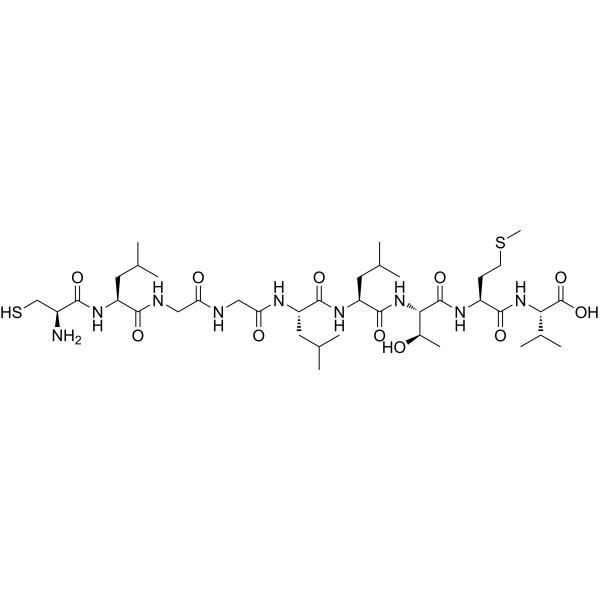
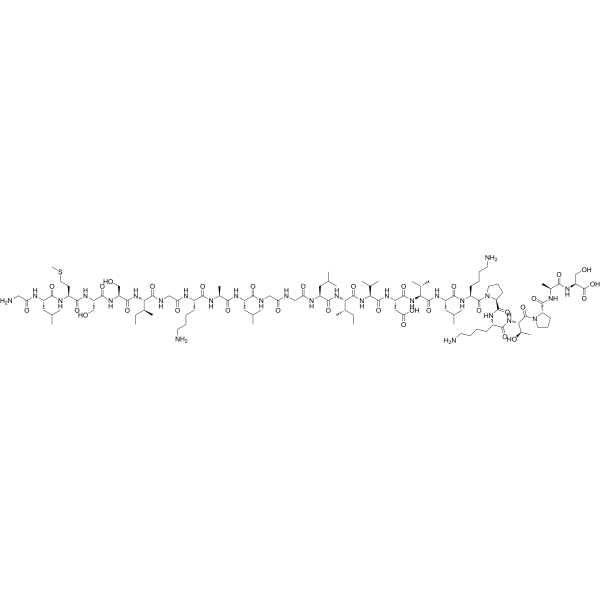
    CKS-17 is a synthetic retroviral envelope peptide. CKS-17 has the highly conserved amino acid sequences occurring within the transmembrane envelope protein of many animal and human retroviruses. CKS-17 acts as an immunomodulatory epitope and exhibits suppressive properties for numerous immune functions .
    CKS-17
  • HY-P5557

    Bacterial Necroptosis Infection Inflammation/Immunology
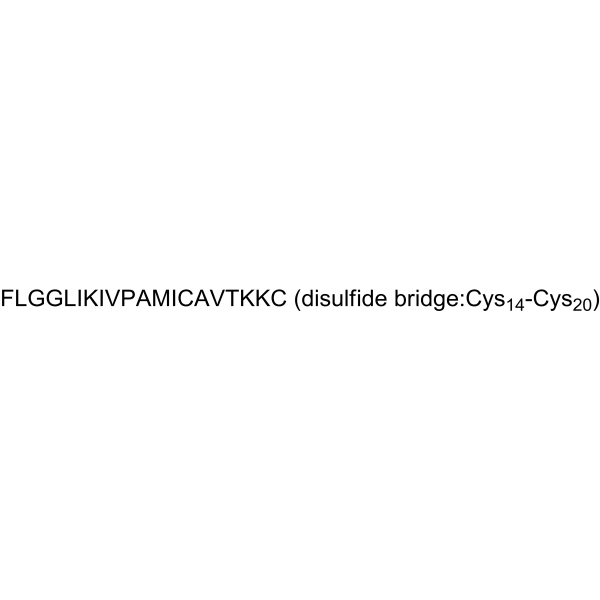
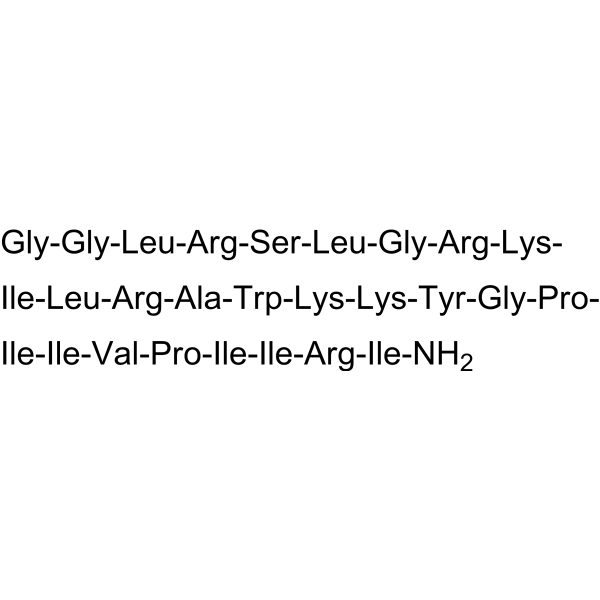
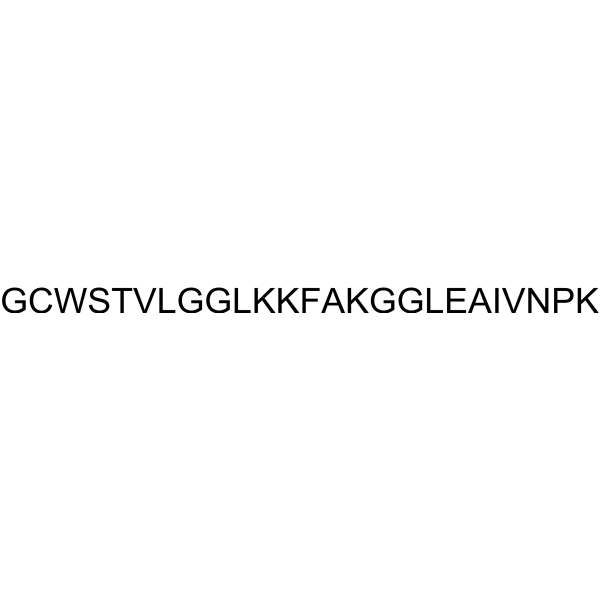
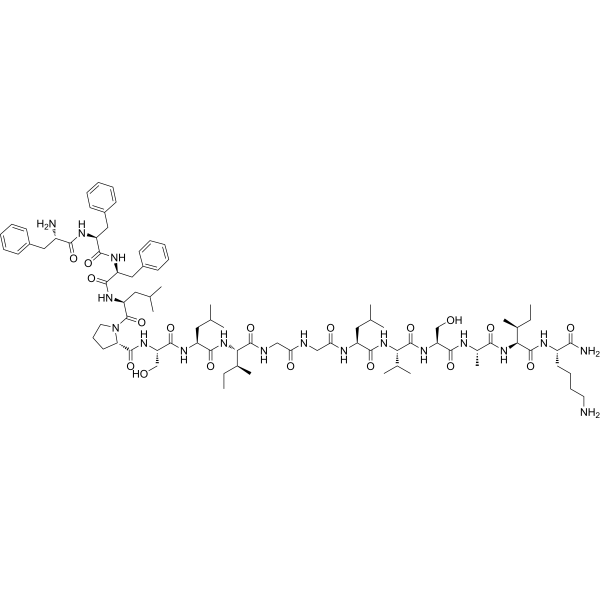
    TP4 (Nile tilapia piscidin) is an orally active amphipathic α-helical cationic antimicrobial peptide. TP4 (Nile tilapia piscidin) exerts broad-spectrum bactericidal activity against Gram-positive and Gram-negative bacteria by disrupting cell membrane structures, and also exhibits certain hemolytic activity. TP4 (Nile tilapia piscidin) regulates the innate immune system and enhances the expression of lysozymes, cytokines and antioxidant enzymes to resist bacterial infection. TP4 (Nile tilapia piscidin) also stimulates the proliferation of keratinocytes and fibroblasts, and significantly promotes the healing of wounds infected with MRSA. TP4 (Nile tilapia piscidin) can be used in research related to bacterial infection, peritonitis, wound healing and other fields .
    TP4 (Nile tilapia piscidin)
  • HY-P5470

    EBV IFNAR Inflammation/Immunology
    LMP2A (426-434) is a HLA-A2-restricted cytotoxic T lymphocyte (CTL) epitope of Epstein-Barr virus (EBV) latent membrane protein 2A (LMP2A). LMP2A (426-434) can trigger an immune response in individuals expressing different HLA-A*02 subtypes (A*02:01, A*02:03, A*02:06 and A*02:07). LMP2A (426-434) can induce a strong IFN-γ secretion response, stimulating the production of a high proportion of CD8 + IFN-γ + T cells. LMP2A (426-434) induces specific CTLs to effectively kill target cells expressing LMP2A. LMP2A (426-434) can be used to study EBV-related malignant tumors (such as Hodgkin's disease and nasopharyngeal carcinoma) .
    LMP2A (426-434)
  • HY-P4848

    Antibiotic Infection
    Dermcidin-1L (human) is an antibiotic peptide secreted by sweat glands. Dermcidin-1L (human) has antimicrobial activity. Dermcidin-1L (human) can be used for the research of inflammatory skin disorders .
    Dermcidin-1L (human)
  • HY-P10413

    Androgen Receptor Metabolic Disease Endocrinology
    SHBG 141-161 is a GPRC6A receptor agonist. SHBG 141-161 mimics the action of GPRC6A endogenous agonist uncarboxylated osteocalcin by binding to GPRC6A and promoting downstream signaling to increase testosterone and insulin secretion. SHBG 141-161 also reduces the affinity of GPRC6A to GDP protein by binding to the outer cell domain of GPRC6A thus affecting the dynamics of signal transduction. SHBG 141-161 can be used to study GPRC6A in energy metabolism and endocrine regulation .
    SHBG(141–161)
  • HY-P0305

    Prion protein (106-126)

    Prion Protein Infection
    PrP (106-126) is a peptide corresponding to the prion protein (PrP) amyloidogenic region, and its biochemical properties resemble the infectious form of prion protein.
    PrP (106-126)
  • HY-P4399

    Bacterial ClpP Others
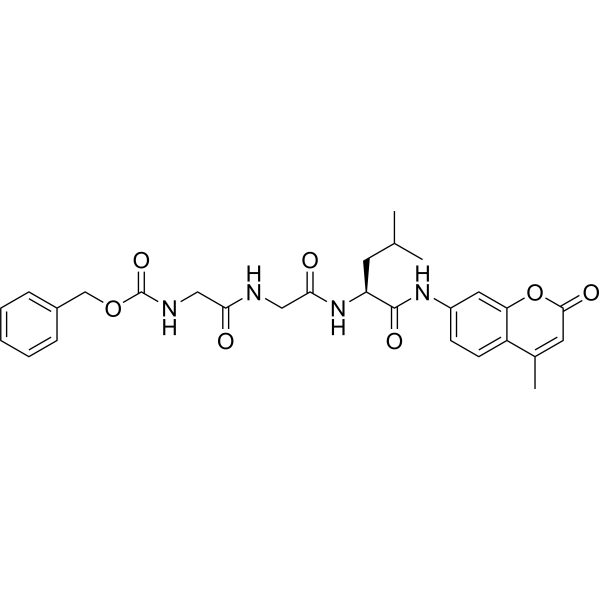
    Z-Gly-Gly-Leu-AMC is the substrate of ClpP1 and ClpP2, to detect the enzymatic activity in the presence of the activating peptide Z-Leu-Leu .
    Z-Gly-Gly-Leu-AMC
  • HY-P4204

    Bacterial Infection
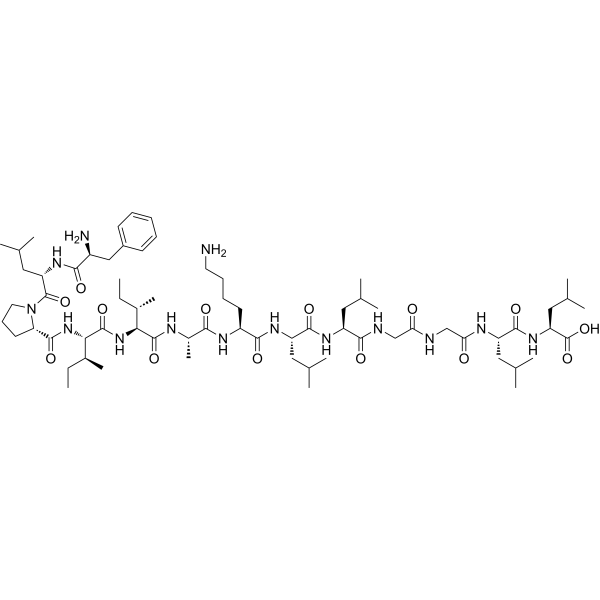
    Ranalexin is an antimicrobial peptide. Ranalexin inhibits S. aureus, E. coli, P. aerugiaosa with MICs of 4, 32, 128 μg/mL .
    Ranalexin
  • HY-P10979

    Neuropeptide S Receptor Neurological Disease
    Buccalin is a neuropeptide that colocalizes with small molecule cardioactive peptides in neuronal B15. When exogenously applied to the ARC neuromuscular junction, Buccalin reduces the amplitude of muscle contraction induced by motor neuron firing and acts only presynaptically. Buccalin has no effect on the rate of muscle relaxation and reduces motor neuron-induced ARC excitatory junction potentials without affecting contraction produced by direct acetylcholine action on the muscle .
    Buccalin
  • HY-P5720

    Bacterial Infection
    Peptide 5e is an antimicrobial peptide. Peptide 5e inhibits E. coli, S. aureus, and C. albicans with MIC values of 30, 5, 25 μg/mL respectively .
    Peptide 5e
  • HY-P3149

    TNF Receptor Inflammation/Immunology
    LEESGGGLVQPGGSMK, a proteolysis peptide, is a component of Infliximab. LEESGGGLVQPGGSMK can be used for quantitative analysis of Infliximab. Infliximab is a chimeric monoclonal IgG1 antibody that specifically binds to TNF-α .
    LEESGGGLVQPGGSMK
  • HY-P5577

    Antibiotic Bacterial Infection Cancer
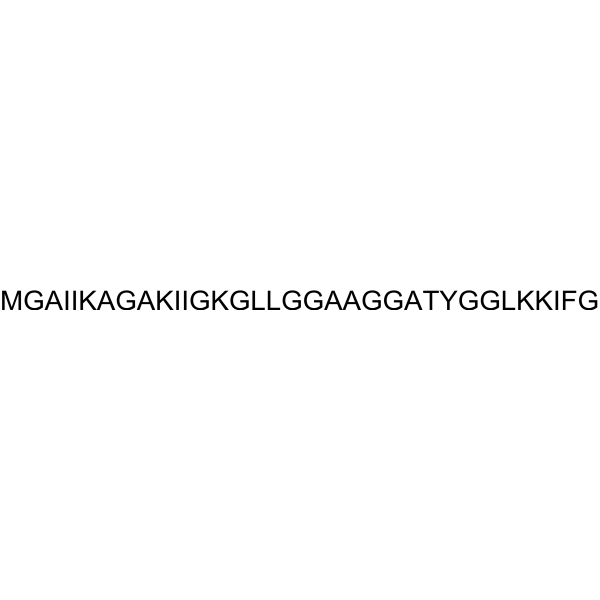
    Aurein 5.2 is an antibiotic antimicrobial peptide .
    Aurein 5.2
  • HY-P5288

    Antibiotic Infection Cancer
    BMAP-28 is an antibiotic peptide and an inducer of the mitochondrial permeability transition pore. BMAP-28 induces cell death through opening of the mitochondrial permeability transition pore. BMAP-28 can be used in study of microbial infections and cancer .
    BMAP-28
  • HY-P5206

    Bacterial Infection
    Garvicin KS, GakB is a peptide at sizes of 34 amino acids to form bacteriocin garvicin KS (GarKS), with other 2 peptides, GakA, and GakC. Garvicin KS, GakB inhibits fibroblast viability and proliferation. Garvicin KS, GakB with GakA, is a potent combination with good peptide stability, antimicrobial efficacy, and fibroblast viability/proliferation effects. Garvicin KS peptides inhibit MSSA with MIC values in the order GakB >GakC >GakA .
    Garvicin KS, GakB
  • HY-P4110

    iGluR Metabolic Disease Inflammation/Immunology
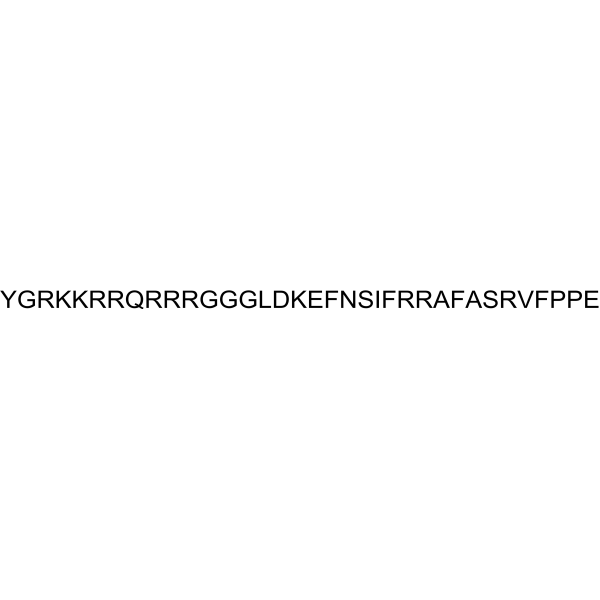
    TAT-NSF222 Fusion Peptide is a fusion polypeptide with two domains, a TAT domain, which enters cells through macropinocytosis, and an NSF domain that inhibits N-ethylmaleimide-sensitive factor (NSF). TAT-NSF222 Fusion Peptide is an exocytosis inhibitor .
    TAT-NSF222 Fusion Peptide
  • HY-P5615

    Bacterial Infection
    XT-2 peptide is an antimicrobial peptide derived from skin secretions of Xenopus tropicalis. XT-2 peptide has strong activity against E.coli, the vaule of MIC is 8 μM .
    XT-2 peptide
  • HY-P5715

    Bacterial Infection
    Im6 is an antimicrobial peptide. Im6 is active against S. aureus and B.subtilis (Gram-positive bacterial) .
    Im6
  • HY-P5663

    Bacterial Infection
    Bombinin H-BO1 is an antimicrobial peptide derived from toad Bombina orientalis skin secretions. Bombinin H-BO1 is active against Candida albicans, and the MIC value is 256 mg/L .
    Bombinin H-BO1
  • HY-P5556

    Bacterial Infection
    KAMP-19, a keratin-derived antimicrobial peptide, is an antimicrobial peptide against P. aeruginosa. .
    KAMP-19
  • HY-P5675

    Bacterial Infection
    Bombinin H7 is an antimicrobial peptide derived from skin secretions of Bombina. Bombinin H7 is active against Bacillus megaterium Bm11 with a lethal concentration of 25.2 μM .
    Bombinin H7
  • HY-P5610

    Bacterial Infection
    Maximin Hv is an antimicrobial peptide derived from toad Bombina maxima .
    Maximin Hv
  • HY-P5616

    Bacterial Infection
    Maximin H1 is an antimicrobial peptide derived from the skin secretions of Chinese red belly toad Bombina maxima. Maximin H1 has activity against Escherichia coli ATCC25922, Staphylococcus aureus ATCC2592, Bacillus pyocyaneus CMCCB1010 and Candida albicans ATCC2002, the MIC values are 9, 4.5, 9, 4.5 μg/ml, respectively .
    Maximin H1
  • HY-P5684

    Bacterial Infection
    Maximin H39 is an antimicrobial peptide. MaximinH39 has antibacterial activity against C. albicans, S. aureus, B. subtilis (MIC: 9.4, 9.4, 18.8 μg/mL). Maximin H39 has hemolytic activities against human and rabbit red cells .
    Maximin H39
  • HY-P5673

    Bacterial Infection
    Bombinin H1 is an antimicrobial peptide derived from the skin of moth Bombina variegata. The lethal concentrations of Bombinin H1 against Escherichia coli D21 and Staphylococcus aureus Cowan 1 are 3.8 and 2.1 μM, respectively .
    Bombinin H1
  • HY-P5619

    Bacterial Infection
    Maximin H3 is an antimicrobial peptide derived from the skin secretions of Chinese red belly toad Bombina maxima. Maximin H3 has activity against Escherichia coli ATCC25922, Staphylococcus aureus ATCC2592, Bacillus pyocyaneus CMCCB1010 and Candida albicans ATCC2002, the MIC values are 20, 10, 20, 5 μg/ml, respectively .
    Maximin H3
  • HY-P5674

    Bacterial Infection
    Bombinin H2 is an antimicrobial peptide derived from the skin of moth Bombina variegata .
    Bombinin H2
  • HY-P5618

    Bacterial Infection
    Maximin H2 is an antimicrobial peptide derived from the skin secretions of Chinese red belly toad Bombina maxima. Maximin H2 has activity against Escherichia coli ATCC25922, Staphylococcus aureus ATCC2592, Bacillus pyocyaneus CMCCB1010 and Candida albicans ATCC2002, the MIC values are 20, 2, 4, 2 μg/ml, respectively .
    Maximin H2
  • HY-P5677

    Bacterial Infection
    Bombinin H5 is an antimicrobial peptide derived from the skin of moth Bombina variegata .
    Bombinin H5
  • HY-P5655

    Bacterial Infection
    Maximin H4 is an antimicrobial peptide derived from the skin secretions of Chinese red belly toad Bombina maxima. Maximin H4 has activity against Escherichia coli ATCC25922, Staphylococcus aureus ATCC2592, Bacillus pyocyaneus CMCCB1010 and Candida albicans ATCC2002, the MIC values are 12, 6, 12, 6 μg/ml, respectively .
    Maximin H4
  • HY-P5676

    Bacterial Infection
    Bombinin H3 is an antimicrobial peptide derived from the skin of moth Bombina variegata. The lethal concentrations of Bombinin H3 against Escherichia coli D21 and Staphylococcus aureus Cowan 1 are 3.7 and 2.4 μM, respectively .
    Bombinin H3
  • HY-P5678

    Bacterial Infection
    Bombinin H4 is an antimicrobial peptide derived from the skin of moth Bombina variegata. The lethal concentrations of Bombinin H4 against Escherichia coli D21 and Staphylococcus aureus Cowan 1 are 4.8 and 3.3 μM, respectively .
    Bombinin H4
  • HY-P5697

    Bacterial Infection
    Tilapia piscidin 3 is an antimicrobial peptide with antibacterial activity against gram-positive and -negative bacteria (MIC: 2.44, 2.44, 9.78, 19.55, 0.61 μg/mL for V. vulnificus 204, V. alginolyticus, S. agalactiae 819, E. faecalis BCRC 10066, S. agalactiae BCRC 10787). Tilapia piscidin 3 has hemolytic activity in fish red blood cells .
    Tilapia piscidin 3
  • HY-P10402

    Bacterial Infection Cancer
    BMAP 28, bovine is an antibacterial peptide. BMAP 28, bovine exhibits antimicrobial activity against gram-positive and gram-negative bacteria, by increasing cell membrane permeability, and causing leakage of cell contents. BMAP 28, bovine exhibits cytotoxicity to cancer cells and activated human lymphocytes. BMAP 28, bovine induces apoptosis through depolarization of mitochondrial membrane potential .
    BMAP 28 (bovine)
  • HY-P5612

    Bacterial Infection
    Maximin 8 is a antimicrobial peptide that can be found in B. maxima .
    Maximin 8
  • HY-P5683

    Bacterial Infection
    Maximin 45 is an antimicrobial peptide. Maximin 41 has antibacterial activity against S. aureus, E. coli, B. subtilis (MIC: 4.7, 9.4, 75 μg/mL). Maximin 45 has hemolytic activities against human and rabbit red cells .
    Maximin 45
  • HY-P5671

    Bacterial Infection
    Maximin 32 is an antimicrobial peptide derived from the toad brain. Maximin 32 is active against Staphylococcus aureus and Escherichia coli, with MIC values of 9.4, 18.8 μg/mL, respectively .
    Maximin 32
  • HY-P10869
    dCNP
    1 Publications Verification

    Natriuretic Peptide Receptor (NPR) Inflammation/Immunology Cancer
    dCNP binds to NPR-B/C receptor, activates cGMP signaling pathway, and regulates vascular function. dCNP exhibits anti-hypoxia property through downregulation of hypoxia-related genes expressions like HIF1α and HIF2α. dCNP inhibits the induction of tumor stroma and exhibits anti-fibrosis activity. dCNP upregulates CTLs, NK cells, and conventional type 1 dendritic cells in tumors, and activates immune responses .
    dCNP
  • HY-P11109

    Antibiotic Bacterial Infection
    RL-37 is an alpha-helical antimicrobial peptide. RL-37 can be isolated for rhesus monkey bone marrow. RL-37 rapidly permeabilizes the membranes of Escherichia coli ML-35p and lysed liposomes. RL-37 has effective antibacterial activity against staphylococci, such as wild-type and Methicillin (HY-121544)-resistant S. aureus strains and S. epidermidis ATCC 49741. RL-37 can be used for human skin infections research .
    RL-37
  • HY-P11555

    Biochemical Assay Reagents Others
    GR-16 is a quantitative peptide of ovalbumin .
    GR-16
  • HY-P11409

    Apoptosis Caspase Neurological Disease
    Prion Protein (118-135), human is the 118-135 fragment of human prion protein. Prion Protein (118-135), human induces Apoptosis. Prion Protein (118-135), human stimulates caspase-3 and -9 activities. Prion Protein (118-135), human is cytotoxic to retinal neurons. Prion Protein (118-135), human exerts neurotoxic effects .
    Prion Protein (118-135), human
  • HY-P3051A

    Drug Derivative Infection Inflammation/Immunology
    CKS-17 (dimer) is the dimer of CKS-17 (HY-P3051). CKS-17 (dimer) can be prepared by introducing a naturally occurring cysteine at the carboxyl terminus and dimerizing via a cysteine-disulfide bond. CKS-17 is a synthetic retroviral envelope peptide. CKS-17 has a highly conserved amino acid sequence present in the transmembrane envelope proteins of numerous animal and human retroviruses. As an immunomodulatory epitope, CKS-17 exhibits inhibitory properties on a variety of immune functions .
    CKS-17 (dimer)
  • HY-P11139

    Lac705β

    Bacterial Infection
    Lactocin 705β (Lac705β) is a peptide segment that can form class IIb bacteriocins Lactocin 705 with Lac705α (HY-P11138) . Lactocin 705β has no antibacterial activity when used alone. Lactocin 705β can be used for research on bacterial infections .
    Lactocin 705β

Inquiry Online

Your information is safe with us. * Required Fields.

Salutation


Country or Region *

Applicant Name *


Organization Name *

Department *


Email Address *


Product Name *

Cat. No.


Requested quantity *

Phone Number *


Remarks

Inquiry Online

Inquiry Information

Product Name:
Cat. No.:
Quantity:
MCE Japan Authorized Agent:

