
1. Search Result
Search Result
Results for "

HCT-15

" in MedChemExpress (MCE) Product Catalog:

42

Inhibitors & Agonists

1

Peptides

1

Inhibitory Antibodies

11

Natural
Products

1

Isotope-Labeled Compounds

1

Oligonucleotides

Cat. No. Product Name Target Research Areas Chemical Structure
  • HY-N0538

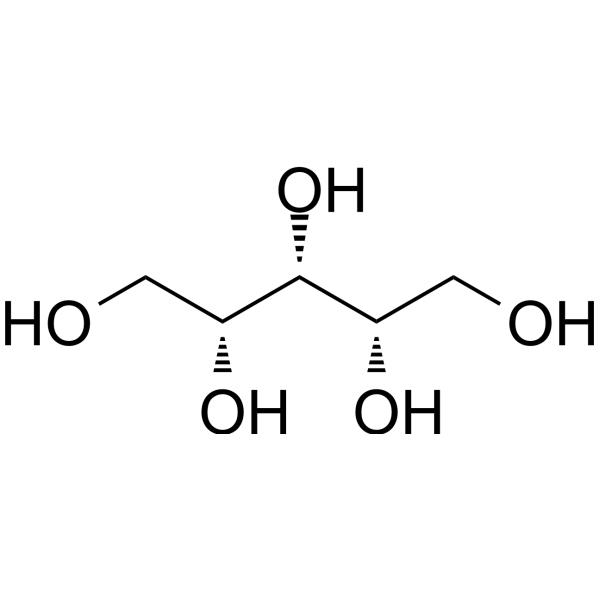
    Xylite

    Environmental Pollutants Endogenous Metabolite Bacterial Autophagy Atg7 Atg8/LC3 Metabolic Disease Cancer
    Xylitol can be classified as a polyol and sugar alcohol, exhibiting inhibitory activity on cancer cell proliferation. It induces autophagy (Autophagy) and cell death in A549 cells by activating the autophagy signaling pathway, as evidenced by the increased expression of LC3-II and Atg5-Atg12 upon Xylitol treatment. Additionally, Xylitol inhibits acetaldehyde production by Candida species, thereby reducing their carcinogenic potential. In vivo, Xylitol induces alterations in the gut microbiota of mice, which may enhance cholesterol accumulation and upregulate hepatic ChREBP, while also slowing tumor growth in the B16F10 melanoma C57BL/6 mouse model .
    Xylitol
  • HY-14543
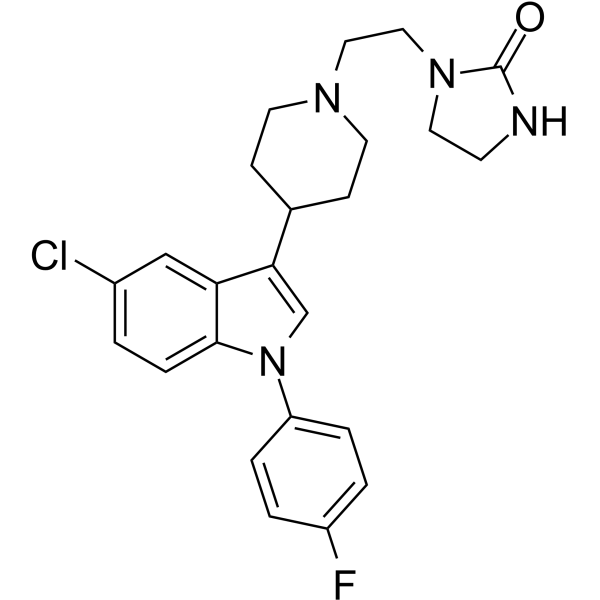
    Sertindole
    3 Publications Verification

    Lu 23-174

    5-HT Receptor Dopamine Receptor Adrenergic Receptor Autophagy Neurological Disease Cancer
    Sertindole (Lu 23-174) is an orally active 5-HT2A, 5-HT2C, dopamine D2, and αl-adrenergic receptors antagonist. Sertindole shows antipsychotic activity and anti-proliferative activity to multiple cancer cells .
    Sertindole
  • HY-101055
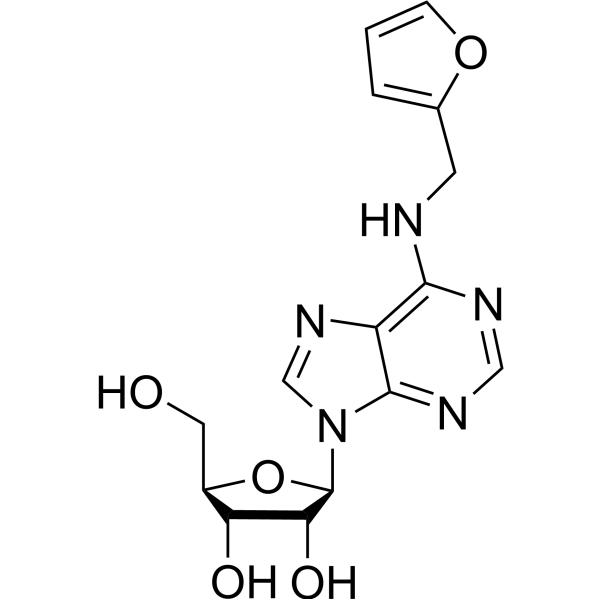
    Kinetin riboside
    3 Publications Verification

    N6-Furfuryladenosine

    Apoptosis Cancer
    Kinetin riboside, a cytokinin analog, can induce apoptosis in cancer cells. It inhibits the proliferation of HCT-15 cells with an IC50 of 2.5 μM.
    Kinetin riboside
  • HY-122639
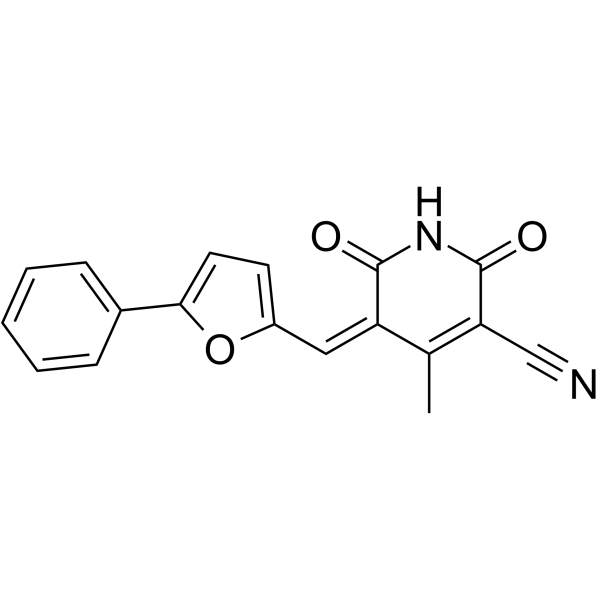
    ZINC05007751
    3 Publications Verification

    NEKs Cancer
    ZINC05007751 is a potent NIMA-related kinase NEK6 inhibitor with an IC50 of 3.4 μM. ZINC05007751 shows antiproliferative activity against a panel of human cancer cell lines, and displays a synergistic effect with Cisplatin and Paclitaxel in a BRCA2 mutated ovarian cancer cell line. ZINC05007751 is very selective against NEK1 and NEK6 with no significant activity was observed against NEK2, NEK7, and NEK9 .
    ZINC05007751
  • HY-132259
    Depatuxizumab mafodotin
    1 Publications Verification

    ABT-414

    Antibody-Drug Conjugates (ADCs) EGFR Cancer
    Depatuxizumab mafodotin (ABT-414) is an antibody-drug conjugate (ADC). Depatuxizumab mafodotin specifically targets the epidermal growth factor receptor (EGFR). Depatuxizumab mafodotin can be used in the study of glioma, head and neck squamous cell carcinoma, non-small cell lung cancer, epidermoid carcinoma of the skin, and squamous cell carcinoma of the tongue .
    Depatuxizumab mafodotin
  • HY-B0327
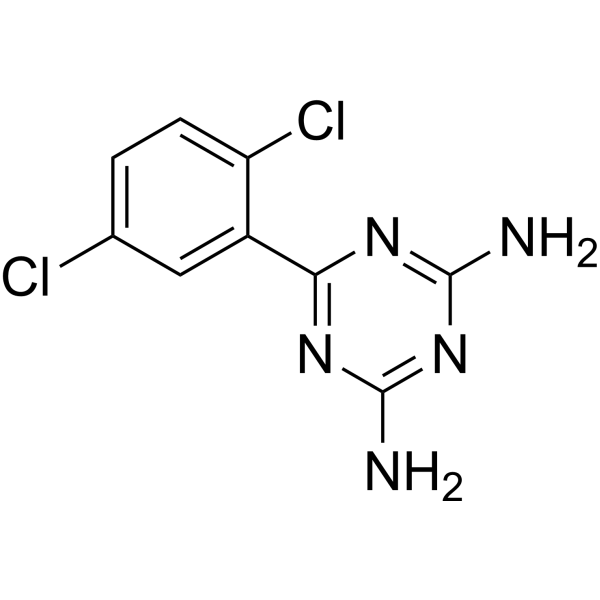
    Irsogladine
    3 Publications Verification

    Dicloguamine

    Phosphodiesterase (PDE) NF-κB AP-1 TRP Channel Interleukin Related Inflammation/Immunology Cancer
    Irsogladine (Dicloguamine) is an orally active gastric mucosal protective agent. Irsogladine inhibits breast cancer recurrence and lung metastasis in nude mice . Irsogladine inhibits the transcriptional activities of NF-κB and AP-1, suppresses the activities of PDE and PDE4 to elevate intracellular cAMP levels, and activates TRPV1 and KATP channels. Irsogladine enhances iNOS expression, NO production, and the activation of cAMP-responsive elements. Irsogladine inhibits the development and progression of intestinal polyps in Apc-mutant mice. Irsogladine alleviates oxidative stress, increases gastric mucosal blood flow, and stimulates the production of endogenous prostaglandins. Irsogladine promotes insulin secretion in MIN6 cells. Irsogladine inhibits tumor angiogenesis, cancer cell proliferation, and the production of proinflammatory cytokines. Irsogladine exerts protective effects on astrocytes in ethanol/hydrochloric acid-induced gastric ulcers in mice. Irsogladine prevents colitis in IL-10 gene-deficient mice by reducing the production of IL-12 and IL-23. Irsogladine upregulates gap junction intercellular communication in pancreatic cancer cells via the PKA pathway. Irsogladine is applicable to research related to breast cancer, intestinal polyposis, gastric ulcer, spontaneous colitis, glioma, liver cancer, and pancreatic cancer [5][6] .
    Irsogladine
  • HY-121254

    Environmental Pollutants Acyltransferase Cancer
    GERI-BP002-A is an inhibitor of acyl-CoA:cholesterol acyltransferase (ACAT) produced by Aspergillus fumigatus F93, which can be used in cancer research .
    GERI-BP002-A
  • HY-P10436

    Raf Cancer
    Braftide is an allosteric inhibitor for BRAF kinase by targeting the dimer interface of BRAF kinase and inhibiting the formation of BRAF dimers. Braftide inhibits wild-type BRAF and oncogenic BRAF G469A with IC50 of 364 nM and 172 nM, respectively. Braftide inhibits MAPK signaling pathway, inhibits proliferation of KRAS mutant tumor cells (EC50 is 7.1 and 6.6 μM, for HCT116 and HCT-15), in combination of TAT sequence. Braftide can be used for cancer research .
    Braftide
  • HY-177742

    Molecular Glues Phosphoglycerate Dehydrogenase (PHGDH) Cancer
    LXH-3-71 is a PHGDH degrader. LXH-3-71 acts as a molecular glue to enhance the interaction of the PHGDH-DDB1-CRL E3 ligase complex, triggering ubiquitination and proteasomal degradation of PHGDH. LXH-3-71 regulates the stemness of colorectal cancer cells and inhibits tumor proliferation and colony formation. LXH-3-71 can be used in the research of colorectal cancer .
    LXH-3-71
  • HY-169021

    JNK Cancer
    JNK-1-IN-3 (Compound 9e) is an inhibitor of JNK1 that downregulates JNK1 gene expression and inhibits the protein levels of its phosphorylated form, concurrently reducing the expression of its downstream targets, c-Jun and c-Fos, in tumors while restoring p53 activity. JNK-1-IN-3 exhibits broad-spectrum antiproliferative activity, particularly with high inhibitory activity against renal and breast cancer cell lines, demonstrating both in vivo and in vitro anticancer activity .
    JNK-1-IN-3
  • HY-126493

    Drug-Linker Conjugates for ADC Microtubule/Tubulin Cancer
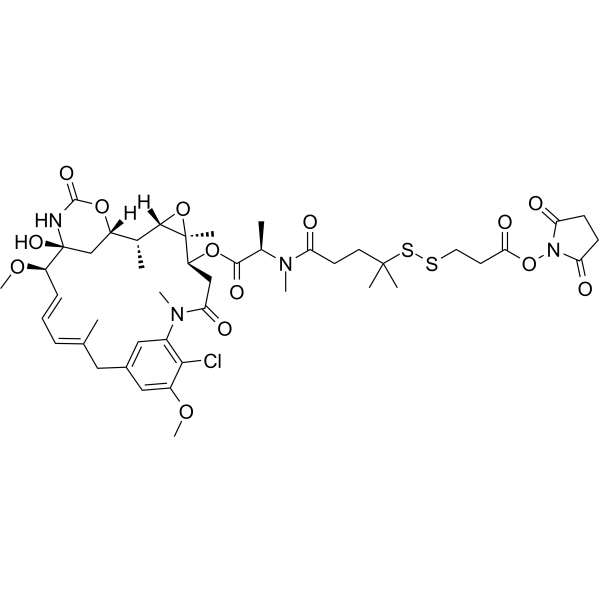
    DM4-SPDP is a Drug-Linker Conjugates for ADC. DM4-SPDP consists of the ADC cytotoxin DM4 (HY-12454) and a linker SPDP (HY-100216). DM4-SPDP can be used for synthesis of ADCs .
    DM4-SPDP
  • HY-101741

    A-289099

    Microtubule/Tubulin Apoptosis Cancer
    A-259745 is an orally active antimitotic agent that binds to the colchicine-binding site of tubulin. A-259745 exhibits potent in vitro cytotoxic activity against both multi-drug-resistant and non-multi-drug-resistant cancer cell lines, with ED50 values of 0.018 μM against HCT-15 and 0.028 μM against NCI-H460 cell lines. A-259745 inhibits tubulin polymerization, disrupts the dynamic equilibrium of the mitotic spindle, arrests dividing cells in metaphase, and subsequently induces apoptosis. A-259745 shows dose-dependent antitumor efficacy in murine tumor models. A-259745 can be used for the study of cancer .
    A-259745
  • HY-W278944

    Drug Derivative Cancer
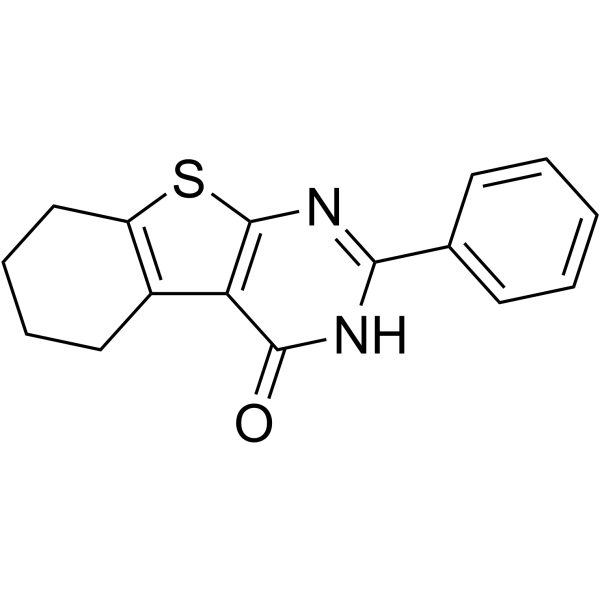
    Antiproliferative agent-15 is an thienopyrimidine derivated anticancer agent. Antiproliferative agent-15 shows antiproliferative activity against human colon (HCT116 and HCT15) and brain (LN-229 and GBM-10) cancer cell lines .
    Antiproliferative agent-15
  • HY-N6578

    Others Cancer
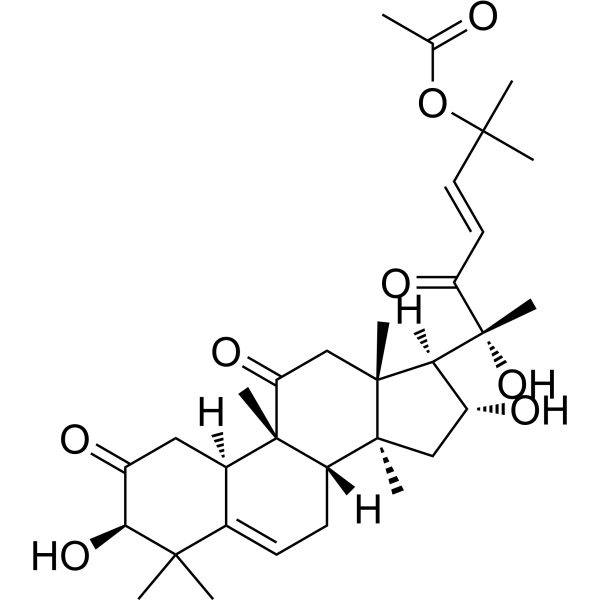
    3-epi-Isocucurbitacin B (Compound 5) is a cucurbitane triterpene derived from Trichosanthes kirilowii. 3-epi-Isocucurbitacin B shows significant cytotoxicity to human tumor cells A-549, SK-OV-3, SK-MEL-2, XF-498 and HCT15 .
    3-epi-Isocucurbitacin B
  • HY-179257

    p97 Cancer
    p97-IN-2 (Compound 14) is a p97 ATPase (IC50 = 0.6 μM) inhibitor. p97-IN-2 can inhibit cell proliferation, such as HCT15 (IC50 = 1.1 μM) and SW403 (IC50 = 0.8 μM) cells. p97-IN-2 can be used for cancer research .
    p97-IN-2
  • HY-179452

    Ras CDK Mitochondrial Metabolism Cancer
    KRAS G13D-IN-2 (compound 8B) is a potent orally active KRAS G13D inhibitor with IC50 values of 1.95 μM (HCT-116 G13D) and 2.16 μM (HCT-15 G13D). KRAS G13D-IN-2 induces G1-phase arrest and mitochondrial membrane depolarization. KRAS G13D-IN-2 induces senescence through CDK6/TWIST1 inhibition. KRAS G13D-IN-2 inhibits tumor growth in murine models. KRAS G13D-IN-2 can be used for KRAS G13D-mutant colorectal cancer research .
    KRAS G13D-IN-2
  • HY-147891

    Apoptosis Cancer
    Angiogenesis inhibitor 3 (compound 8) is a potent angiogenesis inhibitor. Angiogenesis inhibitor 3 inhibits the proliferation of HUVEC and HCT-15 cells, with IC50 values of 1.00 and 0.71 μM. Angiogenesis inhibitor 3 induces the apoptosis of HUVEC and HCT-15 cells. Angiogenesis inhibitor 3 shows anticancer activity, and suppresses the invasion of cancer cells. Angiogenesis inhibitor 3 inhibits the angiogenesis in zebrafish embryos .
    Angiogenesis inhibitor 3
  • HY-147890

    Apoptosis Cancer
    Angiogenesis inhibitor 2 (compound 72) is a potent angiogenesis inhibitor. Angiogenesis inhibitor 2 inhibits the proliferation of HUVEC and HCT-15 cells, with IC50 values of 1.93 and 0.21 μM. Angiogenesis inhibitor 2 induces the apoptosis of HUVEC and HCT-15 cells. Angiogenesis inhibitor 2 shows anticancer activity, and suppresses the invasion of cancer cells. Angiogenesis inhibitor 2 inhibits the angiogenesis in zebrafish embryos .
    Angiogenesis inhibitor 2
  • HY-144872

    Drug Derivative Cancer
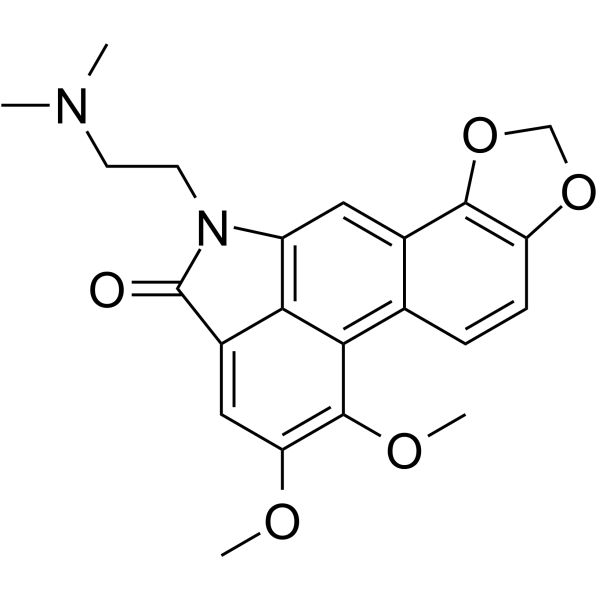
    RJ-34, an aristolactam analogue, exhibits potent antitumor activities against a broad array of cancer cell lines with GI50 values in the subnanomolar range (GI50 <0.1 nM for A431, MES-SA, MES-SA/DX5, HCT-15, and HCT-15/CLO2 cells) .
    RJ-34
  • HY-159149

    Reactive Oxygen Species (ROS) Apoptosis Cancer
    Antitumor agent-182 (Compound 12a) decreases mitochondrial membrane potential (MMP) and enhances ROS levels. Antitumor agent-182 arrests the cell cycle at G0/G1 phase, induces apoptosis in HeLa. Antitumor agent-182 inhibits the proliferation of HeLa, PC-3 and HCT-15 with IC50s of 8.83, 10.07 and 7.84 μM, respectively .
    Antitumor agent-182
  • HY-N3179

    Others Others
    Norcepharadione B is an alkaloid that can be isolated from Houttuynia cordata. Norcepharadione B exhibits moderate cytotoxicity against A-549, SK-OV-3, SK-MEL-2, XF-498 and HCT-15 cell line with ED50s of 40, 26.4, 40, 14.2 and 38.2 μg/mL, respectively .
    Norcepharadione B
  • HY-N15636

    (-)-Coccinine

    Serotonin Transporter P-glycoprotein Neurological Disease Cancer
    Coccinine ((-)-Coccinine) is a weak inhibitor of SERT (IC50: 196.3 μM; Ki: 106.8 μM) and P-gp (IC50: 0.96 mM). Coccinine exhibits significant anti-tumor activity against various cancer cell lines, such as breast cancer (MCF7, Hs578T, MDA-MB-231), colon cancer (HCT-15), and lung cancer (A549). Coccinine can be used in the research of tumors and neurological diseases .
    Coccinine
  • HY-162714

    P-glycoprotein Cancer
    C3N-Dbn-Trp2 is an inhibitor for ATP-binding cassette transporter ABCB1. C3N-Dbn-Trp2 inhibits the ABCB1-mediated Rhodamine 123 (HY-D0816) efflux in cells HEK293T and HCT-15 with IC50 of 5.9 µM and 2.2 µM. C3N-Dbn-Trp2 inhibits the Doxorubicin (HY-15142A) efflux, enhances the cytotoxicity of Doxorubicin in ABCB1-expressing cells .
    C3N-Dbn-Trp2
  • HY-123898

    Tyrosinase Endogenous Metabolite Cancer
    Cepharadione B (compound 22) is a natural compound isolated from the leaves of Piper sanctum. Cepharadione B is a tyrosinase inhibitor with an IC50 value of 170 μM, and inhibits cell growth in A-549, SK-OV-3, SK-MEL-2, XF-498 and HCT-15 cells .
    Cepharadione B
  • HY-155522

    Carbonic Anhydrase Cancer
    WES-1 (Compound 8g) is an inhibitor of carbonic anhydrase IX (Ki: 55.9 μM). WES-1 has broad spectrum anti-proliferative activity against the cancer cells, such as leukemia (K-562 and MOLT-4), non-small cell lung cancer (NCI–H460), colon cancer (HCT 116 and HCT-15) and melanoma (LOX IMVI) cell lines .
    WES-1
  • HY-N12589

    Others Cancer
    8-epi-Helenalin is a semitterpene lactone with anti-tumor activity that can be isolated from Inula britannicaL. var. chinensis (Rupr.) Reg. and the ED50 values of 8-epi-Helenalin for HL-60, A549, MCF7, HCT-15, SK-OV-3 and Malme-3M are 12.2 μM, 53.8 μM, 9.1 μM, 8.7 μM, 18.7 μM and 8.3 μM, respectively. 8-epi-Helenalin can be used for anti-tumor studies .
    8-epi-Helenalin
  • HY-124451

    Environmental Pollutants Apoptosis Autophagy Cancer
    2-Chloronaphthalene, serving as an intermediate in organic synthesis, is classified as a persistent organic pollutant. 2-Chloronaphthalene can induce apoptosis and autophagy, while inhibiting cell proliferation. 2-Chloronaphthalene leads to cell death through the interplay between autophagy and apoptosis .
    2-Chloronaphthalene
  • HY-101055R

    N6-Furfuryladenosine (Standard)

    Reference Standards Apoptosis Cancer
    Kinetin riboside (Standard) is the analytical standard of Kinetin riboside. This product is intended for research and analytical applications. Kinetin riboside, a cytokinin analog, can induce apoptosis in cancer cells. It inhibits the proliferation of HCT-15 cells with an IC50 of 2.5 μM.
    Kinetin riboside (Standard)
  • HY-101055S

    N6-Furfuryladenosine-d5

    Isotope-Labeled Compounds Apoptosis Cancer
    Kinetin riboside-d5 (N6-Furfuryladenosine-d5) is the deuterium labeled Kinetin riboside (HY-101055). Kinetin riboside, a cytokinin analog, can induce apoptosis in cancer cells. It inhibits the proliferation of HCT-15 cells with an IC50 of 2.5 μM .
    Kinetin riboside-d5
  • HY-N1614

    Others Others
    1 α-hydroxytorilin (compound 3) is a sesquiterpenoid. 1 α-hydroxytorilin can be isolated from Torilis japonica. 1α-hydroxytorilin has cytotoxicity against human A549, SK-OV-3, SK-MEL-2, and HCT15 tumor cells with ED50 values of 20.52, 18.24, 17.48, 42.54 μg/mL, respectively .
    1α-Hydroxytorilin
  • HY-N12349

    Others Others
    Glucozaluzanin C is a lignan isolated from the MeOH extract of the roots of Ainsliaea acerifolia (Compositae). Glucozaluzanin C has ED50 value of 2.45 μg/mL, 1.37μg/mL, 0.40 μg/mL, 1.41 μg/mL, 1.43 μg/mL for A549 cells, SK-OV-3 cells, SK-MEL-2 cells, XF498 cells, HCT15 cells, respectively .
    Glucozaluzanin C
  • HY-N9101

    Others Cancer
    4,4'-Dihydroxy-3,3',9-trimethoxy-9,9'-epoxylignan is a lignans that can be isolated from the Viburnum foetidum. 4,4'-Dihydroxy-3,3',9-trimethoxy-9,9'-epoxylignan has cytotoxicity against A549, SK-OV-3, SKMEL-2 and HCT15 cell line with IC50s of 67.14, 67.38, 64.11 and 76.31 μg/mL, respectively .
    4,4'-Dihydroxy-3,3',9-trimethoxy-9,9'-epoxylignan
  • HY-117039

    VEGFR Cancer
    YM-359445 dihydroxybutanedioate is an orally active VEGFR2 tyrosine kinase inhibitor, with an IC50 of 8.5 nM. YM-359445 dihydroxybutanedioate shows a complete inhibition of vascular permeability induced by VEGF. YM-359445 dihydroxybutanedioate shows antitumor activity against both lung cancer and Paclitaxel (HY-B0015)-resistant colon cancer .
    YM-359445 dihydroxybutanedioate
  • HY-159518

    Reactive Oxygen Species (ROS) Mitochondrial Metabolism Apoptosis Cancer
    ROS inducer 4 (compound TE3) is a mitochondrial inhibitor. ROS inducer 4 causes a series of mitochondria-related physiological changes in tumors, such as mitochondrial fragmentation, explosive generation and accumulation of ROS, decreased mitochondrial membrane potential, decreased ATP content, and activation of ROS-mediated apoptotic signaling in mitochondria .
    ROS inducer 4
  • HY-111251

    Microtubule/Tubulin Apoptosis Cancer
    4SC-207 is a potent, orally active microtubule inhibitor. 4SC-207 inhibits microtubule growth to inhibit tumor cell proliferation in vitro and in vivo, and promotes a mitotic delay/arrest, followed by apoptosis or aberrant divisions. 4SC-207 inhibits tumor growth in taxane resistant xenograft mouse models. 4SC-207 can be used for cancer research, such as colon adenocarcinoma and other malignancies .
    4SC-207
  • HY-159085

    P-glycoprotein Cancer
    P-gp inhibitor 24 (Compound 10) is an inhibitor for P-glycoprotein (P-gp)), that inhibits the P-gp mediated fluorescent dye efflux. P-gp inhibitor 24 exhibits multidrug resistance (MDR) reversal effect, enhances the cytotoxicity of Vincristine (HY-N0488) and Etoposide (HY-13629) in cancer cells .
    P-gp inhibitor 24
  • HY-120027

    Microtubule/Tubulin Apoptosis Cancer
    Kribb3 is an inhibitor for microtubule. KRIBB3 inhibits the proliferation of cancer cells with GI50 of 0.2-2.5 μM, arrests cell cycle at G2/M phase, and induces apoptosis in HCT-116. Kribb3 exhibits antitumor activity in mouse models .
    Kribb3
  • HY-14543R

    Lu 23-174 (Standard)

    5-HT Receptor Dopamine Receptor Adrenergic Receptor Autophagy Reference Standards Neurological Disease Cancer
    Sertindole (Standard) is the analytical standard of Sertindole. This product is intended for research and analytical applications. Sertindole (Lu 23-174) is an orally active 5-HT2A, 5-HT2C, dopamine D2, and αl-adrenergic receptors antagonist. Sertindole shows antipsychotic activity and anti-proliferative activity to multiple cancer cells .
    Sertindole (Standard)
  • HY-182759

    DNA Alkylator/Crosslinker Topoisomerase Caspase Bcl-2 Family Apoptosis Cancer
    MN33-47 is a multi-target anti-tumor compound with broad-spectrum anti-proliferative activity. MN33-47 relieves the inhibition of the mitochondrial apoptosis pathway by downregulating the anti-apoptotic protein Bcl-2, while activating caspase-3 and inhibiting Topoisomerase I activity, thereby promoting its degradation through the ubiquitin-proteasome and autophagy-lysosome pathways. MN33-47 can also induce DNA cross-linking and G2/M cell cycle arrest, inhibit cancer cell migration and activate the mitochondrial apoptosis pathway, thus exerting potent anti-tumor effects. MN33-47 can improve the water solubility of SN-38 (HY-13704), and exhibits dose-dependent tumor growth inhibition effects in CT26 tumor-bearing mouse models without obvious toxic and side effects. MN33-47 can be used in related studies on colorectal adenocarcinoma, cervical adenocarcinoma, hepatocellular carcinoma, alveolar basal epithelial adenocarcinoma, gastric cancer and colon cancer .
    MN33-47
  • HY-N16866

    Drug Derivative Others
    Gossypetin 3,8,3′-trimethyl ether is a natural flavonoid.
    Gossypetin 3,8,3′-trimethyl ether
  • HY-181011

    PROTACs Phosphatase Apoptosis Reactive Oxygen Species (ROS) Cancer
    PROTAC Cdc25 degrader-1 (Compound D3) is an efficient Cdc25 PROTAC degrader. Its DC50 values for Cdc25A, Cdc25B, and Cdc25C are 0.97, 2.02, and 4.67 μM respectively. PROTAC Cdc25 degrader-1 induces cell cycle arrest and apoptosis in cancer cells and inhibits cell migration ability. PROTAC Cdc25 degrader-1 significantly increases the ROS level. PROTAC Cdc25 degrader-1 can be used for the study of colorectal adenocarcinoma .
    PROTAC Cdc25 degrader-1
  • HY-P991980

    H2Mab-141, H2Mab-19

    EGFR Cancer
    H2Mab-139 (H2Mab-141;H2Mab-19) is an anti-HER2 monoclonal antibody. H2Mab-139 specifically binds to HER2 on various cancer cells. H2Mab-139 can detect HER2 overexpression in colorectal cancer via flow cytometry and immunohistochemical analysis. H2Mab-139 exhibits anti-tumor activity in mouse oral cancer and breast cancer xenografts. H2Mab-139 is applicable to research related to multiple cancers including colon cancer, oral cancer, and breast cancer .
    H2Mab-139

Inquiry Online

Your information is safe with us. * Required Fields.

Salutation


Country or Region *

Applicant Name *


Organization Name *

Department *


Email Address *


Product Name *

Cat. No.


Requested quantity *

Phone Number *


Remarks

Inquiry Online

Inquiry Information

Product Name:
Cat. No.:
Quantity:
MCE Japan Authorized Agent:

