

1. Search Result
Search Result
Results for "

HIV virus

" in MedChemExpress (MCE) Product Catalog:

256

Inhibitors & Agonists

2

Screening Libraries

2

Fluorescent Dyes

3

Biochemical Assay Reagents

38

Peptides

7

Inhibitory Antibodies

22

Natural
Products

3

Recombinant Proteins

17

Isotope-Labeled Compounds

1

Click Chemistry

6

Oligonucleotides

Cat. No. Product Name Target Research Areas Chemical Structure
  • HY-P0281

    TAT(47-57); HIV-1 TAT protein (47-57)

    HIV Infection
    TAT (YGRKKRRQRRR) is derived from the transactivator of transcription (TAT) of human immunodeficiency virus-1 (HIV-1) and is a cell-penetrating peptide. TAT can increase the yields and the solubility of heterologous proteins .
    TAT
  • HY-109137
    Selgantolimod
    1 Publications Verification

    GS-9688

    Toll-like Receptor (TLR) HBV Infection
    Selgantolimod (GS-9688) is an orally active, potent and selective toll-like receptor 8 (TLR8) agonist for the treatment of hepatitis B virus (HBV) and human immunodeficiency virus (HIV) infection .
    Selgantolimod
  • HY-B1422
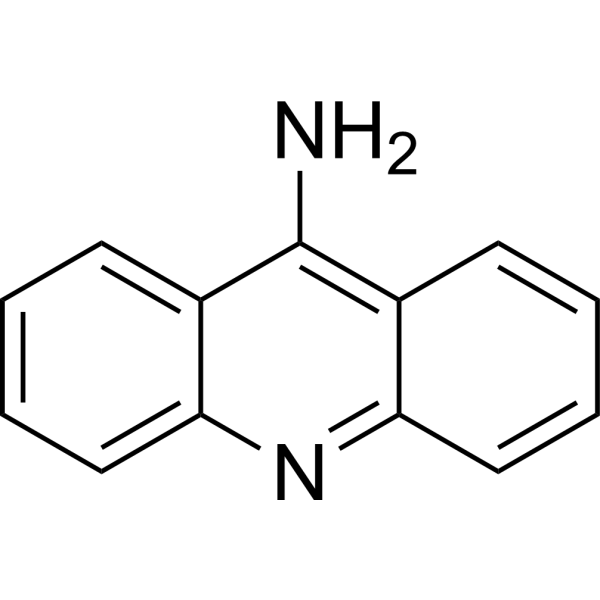
    9-Aminoacridine
    4 Publications Verification

    Aminacrine

    Bacterial HIV Infection
    9-Aminoacridine, a fluorescent probe, acts as an indicator of pH for quantitative determination of transmembrane pH gradients (inside acidic). 9-Aminoacridine is an antimicrobial. 9-Aminoacridine exerts its antimicrobial activity by interacting with specific bacterial DNA and disrupting the proton motive force in K. pneumoniae. 9-Aminoacridine is a HIV-1 inhibitor and inhibits HIV LTR transcription highly dependent on the presence and location of the amino moiety. 9-Aminoacridine inhibits virus replication in HIV-1 infected cell lines. 9-Aminoacridine is used as a Rifampin (RIF; HY-B0272) adjuvant for the multidrug-resistant K. pneumoniae infections .
    9-Aminoacridine
  • HY-125474
    Carrageenan
    1 Publications Verification

    Environmental Pollutants HIV HSV Infection Cancer
    Carrageenan is an antiviral and anticancer agent. Carrageenan inhibits herpes simplex virus (HSV), HIV, and hepatitis A virus (HAV) by directly binding to the viral capsid to block the attachment of viruses such as HPV to HSPG factors on the cell surface. Carrageenan delays and arrests cell cycle progression, exhibits cytotoxicity against HeLa cancer cells, and can be applied to studies related to cervical cancer, genital warts, hepatitis A, and other conditions. Carrageenan also induces acute non-immune inflammation, triggers a three-phase inflammatory response involving the release of multiple proinflammatory mediators, and causes persistent edema, hyperalgesia, and neutrophil recruitment in mice .
    Carrageenan
  • HY-12687
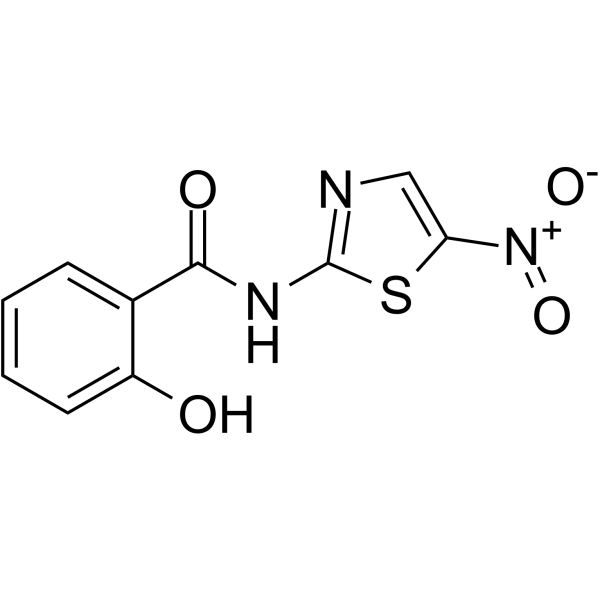
    Tizoxanide
    10+ Cited Publications

    TIZ

    Bacterial HIV Autophagy Parasite IKK Influenza Virus Infection Cancer
    Tizoxanide (TIZ) is the active metabolite of Nitazoxanide, which is a thiazolide anti-infective compound against anaerobic bacteria, protozoa, and a range of viruses. Tizoxanide (TIZ) has anti-HIV-1 activities and potent inhibition of both HBV and HCV replication with values EC50 of 0.46μM and 0.15 μM, respectively. Tizoxanide also exerts anti-inflammatory effects by inhibiting the production of pro-inflammatory cytokines and suppressing of the activation of the NF-κB and the MAPK signaling pathways in LPS-treated macrophage cells .
    Tizoxanide
  • HY-78726
    Fosamprenavir
    4 Publications Verification

    Amprenavir phosphate; GW 433908

    Drug Intermediate HIV HIV Protease Infection
    Fosamprenavir is an orally active inhibitor targeting HIV-1 protease and is a prodrug of Amprenavir (HY-17430). Fosamprenavir is hydrolyzed into Amprenavir (VX-478) by cell phosphatases in the intestinal epithelium. Amprenavir binds to the active site of HIV-1 protease, preventing the processing of viral gag and gag-pol polyprotein precursors, thereby inhibiting the formation of mature infectious virus particles and exerting anti-HIV-1 infection activity. Fosamprenavir can be used for the study of human immunodeficiency virus (HIV-1) infection .
    Fosamprenavir
  • HY-14267

    UK-453061

    HIV Reverse Transcriptase Infection
    Lersivirine (UK-453061) is potent and selective non-nucleoside reverse transcription inhibitor (NNRTI; IC50=119 nM) with excellent efficacy against NNRTI-resistant viruses. Lersivirine exhibits potent antiretroviral activity against wild-type HIV virus and clinically relevant NNRTI-resistant strains .
    Lersivirine
  • HY-B1408
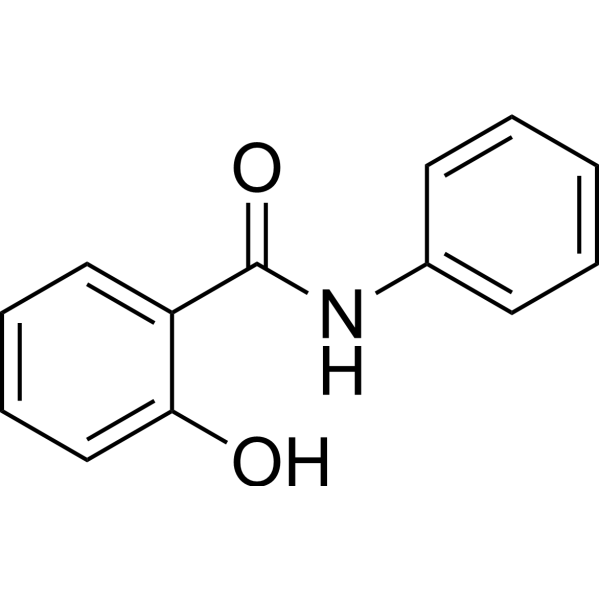
    Salicylanilide
    5 Publications Verification

    2-Hydroxybenzanilide

    Environmental Pollutants HIV Integrase HIV Infection
    Salicylanilide demonstrates a wide range of biological activities including antiviral potency which can inhibit HIV virus by targeting HIV-1 integrase or reverse transcriptase.
    Salicylanilide
  • HY-17431
    Fosamprenavir Calcium Salt
    4 Publications Verification

    GW433908G

    Drug Intermediate HIV HIV Protease Infection
    Fosamprenavir Calcium Salt (GW433908G) is an orally active inhibitor targeting HIV-1 protease and is a prodrug of Amprenavir (HY-17430). Fosamprenavir Calcium Salt is hydrolyzed into Amprenavir (VX-478) by cell phosphatases in the intestinal epithelium. Amprenavir binds to the active site of HIV-1 protease, preventing the processing of viral gag and gag-pol polyprotein precursors, thereby inhibiting the formation of mature infectious virus particles and exerting anti-HIV-1 infection activity. Fosamprenavir Calcium Salt can be used for the study of human immunodeficiency virus (HIV-1) infection .
    Fosamprenavir Calcium Salt
  • HY-107801
    Inosine pranobex
    1 Publications Verification

    Imunovir; Delimmun; Groprinosin

    Interleukin Related HSV HIV HPV Infection Inflammation/Immunology
    Inosine pranobex is an orally active immunomodulator. Inosine pranobex has broad-spectrum antiviral activity. Inosine pranobex inhibits human immunodeficiency virus (HIV), herpes simplex virus (HSV), vaccinia virus (VACV), human tumor virus (HPV), Cytomegalovirus, influenza virus (INFV), parainfluenza virus (PIV), and Epstein-Barr virus .
    Inosine pranobex
  • HY-13269
    BMS-707035
    1 Publications Verification

    HIV HIV Integrase Infection Inflammation/Immunology
    BMS-707035 is a potent orally active HIV-1 integrase strand transfer inhibitor (INSTI). BMS-707035 has enzyme inhibitory with an IC50 value of 3 nM. BMS-707035 also has weak CYP inhibiton and antiviral activity. BMS-707035 can be used for the research of human immunodeficiency virus-1 (HIV-1) .
    BMS-707035
  • HY-P1491

    HIV Infection
    HIV-1 TAT (48-60) is a cell-penetrating peptide derived from the human immunodeficient virus (HIV)-1 Tat protein residue 48-60. It has been used to deliver exogenous macromolecules into cells in a non-disruptive way.
    HIV-1 TAT (48-60)
  • HY-14134
    BMS-378806
    5+ Cited Publications

    BMS-806

    HIV Infection
    BMS-378806 is a potent HIV-1 attachment inhibitor that interferes with CD4-gp120 interactions. BMS-378806 selectively inhibits the binding of HIV-1 gp120 to the CD4 receptor with EC50 of 0.85-26.5 nM in virus.
    BMS-378806
  • HY-P4122A

    HIV Others
    TAT (47-57), FAM-labeled acetate is a 5(6)-Carboxyfluorescein (HY-15940)-labeled TAT (HY-P0281). TAT (YGRKKRRQRRR) is derived from the transactivator of transcription (TAT) of human immunodeficiency virus-1 (HIV-1) and is a cell-penetrating peptide .
    TAT (47-57), FAM-labeled acetate
  • HY-P4122

    HIV Others
    TAT (47-57), FAM-labeled is a 5(6)-Carboxyfluorescein (HY-15940)-labeled TAT (HY-P0281). TAT (YGRKKRRQRRR) is derived from the transactivator of transcription (TAT) of human immunodeficiency virus-1 (HIV-1) and is a cell-penetrating peptide .
    TAT (47-57), FAM-labeled
  • HY-P0281A

    TAT(47-57) TFA; HIV-1 TAT protein (47-57) TFA

    HIV Infection
    TAT TFA (YGRKKRRQRRR) is derived from the transactivator of transcription (TAT) of human immunodeficiency virus (HIV-1) and is a cell-penetrating peptide. TAT can increase the yields and the solubility of heterologous proteins .
    TAT TFA
  • HY-102026

    NSC 102811

    HIV Nucleoside Antimetabolite/Analog Antibiotic Infection Cancer
    Formycin A (NSC 102811), a purine nucleoside antibiotic, is a potent human immunodeficiency virus type 1 (HIV-1) inhibitor with an EC50 of 10 μM. Formycin A shows antitumor and antiviral activities .
    Formycin A
  • HY-P2260B

    HIV Infection
    Tat-beclin 1 scrambled is the scrambled part and a scrambled control of Tat-beclin 1 (HY-P2260), which is derived from a region of the autophagy protein, beclin 1. beclin 1 induces autophagy via binding human immunodeficiency virus, HIV-1 Nef and interacting with negative regulator GAPR-1 (GLIPR2). Tat-beclin 1 decreases the accumulation of polyglutamine expansion protein aggregates and the replication of several pathogens, such as HIV-1. Tat-beclin 1 also reduces mortality in mice infected with chikungunya or West Nile virus .
    Tat-beclin 1 scrambled
  • HY-19232

    HIV Protease Inflammation/Immunology
    R-87366 is a water-soluble human immunodeficiency virus (HIV) protease inhibitor. R-87366 has potent inhibitory for HIV protease with a Ki value of 11 nM. R-87366 can be used for the research of anti-human immunodeficiency virus (HIV) .
    R-87366
  • HY-106395

    SC-52151

    HIV Protease HIV Infection
    Telinavir (SC-52151) is a potent and selective HIV protease inhibitor. Telinavir inhibits lymphotropic, monocytotropic strains and field isolates of HIV type 1 (HIV-1), HIV-2, and simian immunodeficiency virus with EC50s of 26 ng/mL (43 nM). Telinavir is highly protein bound in human plasma and exhibits low partitioning into erythrocytes .
    Telinavir
  • HY-106958

    HBY 097

    HIV Reverse Transcriptase Infection
    Talviraline is a non-nucleoside reverse transcriptase (NNRT) inhibitor that is primarily used to inhibit the replication of human immunodeficiency virus type 1 (HIV-1). Talviraline inhibits the viral replication process by binding to a specific site of HIV-1 reverse transcriptase (RT). Talviraline can be used to study the potential countermeasures and safety of HIV-1 infection .
    Talviraline
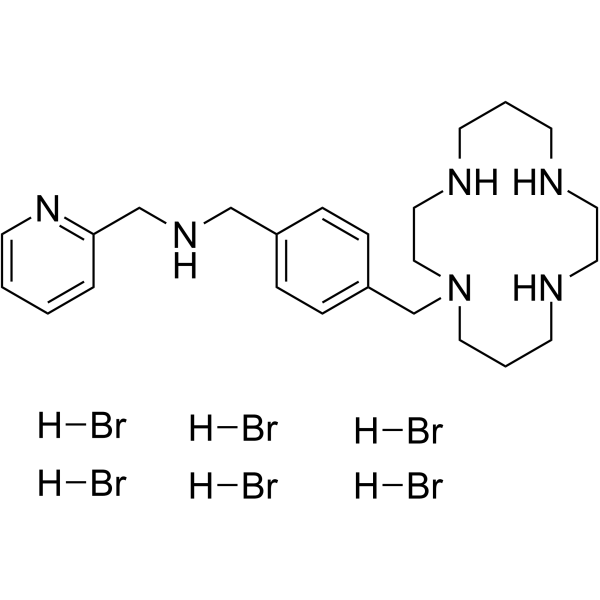
  • HY-124618A
    FGI-106 tetrahydrochloride
    1 Publications Verification

    Flavivirus Dengue Virus HCV HIV Infection
    FGI-106 tetrahydrochloride is a potent and broad-spectrum inhibitor with inhibitory activity against multiple viruses. FGI-106 tetrahydrochloride is active against Ebola, Rift Valley and Dengue Fever viruses with EC50s of 100 nM, 800 nM and 400-900 nM, respectively. FGI-106 tetrahydrochloride also inhibits non-hemorrhagic fever viruses HCV and HIV-1 with EC50s of 200 nM and 150 nM, respectively .
    FGI-106 tetrahydrochloride
  • HY-100079

    Mutagenic impurity of tenofovir disoproxil

    Drug Intermediate Infection
    9-Propenyladenine is a mutagenic impurity in tenofovir disoproxil fumarate. Tenofovir is an antiretroviral agent known as nucleotide analogue reverse transcriptase inhibitors, which block reverse transcriptase, a crucial virus enzyme in HIV-1 and HBV.
    9-Propenyladenine
  • HY-14891

    GSK2248761; FDV

    HIV Reverse Transcriptase Infection
    Fosdevirine (GSK2248761) is is a potent, selective, non-nucleoside reverse transcriptase inhibitor (NNRTI) of human immunodeficiency virus type 1 (HIV-1) replication with low nanomolar activity in vitro. Fosdevirine shows good activity against a broad range of HIV-1 strains, including efavirenz (HY-10572)-resistant clinical isolates .
    Fosdevirine
  • HY-78726S

    Amprenavir phosphate-d4; GW 433908-d4

    Isotope-Labeled Compounds Drug Intermediate HIV HIV Protease Infection
    Fosamprenavir-d4 is the Deuterium-labeled Fosamprenavir (HY-78726). Fosamprenavir is an orally active inhibitor targeting HIV-1 protease and is a prodrug of Amprenavir (HY-17430). Fosamprenavir is hydrolyzed into Amprenavir (VX-478) by cell phosphatases in the intestinal epithelium. Amprenavir binds to the active site of HIV-1 protease, preventing the processing of viral gag and gag-pol polyprotein precursors, thereby inhibiting the formation of mature infectious virus particles and exerting anti-HIV-1 infection activity. Fosamprenavir can be used for the study of human immunodeficiency virus (HIV-1) infection .
    Fosamprenavir-d4
  • HY-106395A

    (Rac)-SC-52151

    HIV Protease HIV Infection
    (Rac)-Telinavir ((Rac)-SC-52151) is a racemate of Telinavir (HY-106395A). Telinavir (SC-52151) is a potent and selective HIV protease inhibitor. Telinavir inhibits lymphotropic, monocytotropic strains and field isolates of HIV type 1 (HIV-1), HIV-2, and simian immunodeficiency virus with EC50s of 26 ng/mL (43 nM). Telinavir is highly protein bound in human plasma and exhibits low partitioning into erythrocytes .
    (Rac)-Telinavir
  • HY-131607

    CBV-TP; (-)-Carbovir triphosphate; (-)-Carbovir 5′-triphosphate

    HIV Infection Inflammation/Immunology
    Carbovir triphosphate (CBV-TP) is a phosphorylated metabolite. Carbovir triphosphate can be used for the research of human immunodeficiency virus (HIV) .
    Carbovir triphosphate
  • HY-P2260C

    HIV Infection
    Tat-beclin 1 scrambled TFA is the scrambled part and a scrambled control of Tat-beclin 1 (HY-P2260), which is derived from a region of the autophagy protein, beclin 1. beclin 1 induces autophagy via binding human immunodeficiency virus, HIV-1 Nef and interacting with negative regulator GAPR-1 (GLIPR2). Tat-beclin 1 decreases the accumulation of polyglutamine expansion protein aggregates and the replication of several pathogens, such as HIV-1. Tat-beclin 1 also reduces mortality in mice infected with chikungunya or West Nile virus .
    Tat-beclin 1 scrambled TFA
  • HY-100079A

    (Z)-Mutagenic Impurity of Tenofovir Disoproxil

    HIV Infection
    (Z)-9-Propenyladenine is a mutagenic impurity in tenofovir disoproxil fumarate. Tenofovir is an antiretroviral agent known as nucleotide analogue reverse transcriptase (NtART) inhibitor, which blocks reverse transcriptase, a crucial virus enzyme in HIV-1 and HBV.
    (Z)-9-Propenyladenine
  • HY-147314

    HIV Src Infection
    HIV-IN-6 is a HIV-Ⅰ viral replication inhibitor by targeting Src family kinases (SFK) that interact with Nef protein of the virus, such as Hck .
    HIV-IN-6
  • HY-P2251

    HIV Microtubule/Tubulin Infection Inflammation/Immunology Cancer
    T-peptide, a Tuftsin analog, can be used for the research of human immunodeficiency virus (HIV) infection. T-peptide prevents cellular immunosuppression and improves survival rate in septic mice. T-peptide also can inhibit the growth of residual tumor cells after surgical resection .
    T-peptide
  • HY-156578

    DGK HIV Infection Cancer
    DGKα-IN-8 (Example 51) is a DGKα inhibitor (IC50=22.491 nM; EC50=0.256 nM). DGKα-IN-8 can be used to study cancer, including solid tumors, and viral infections, such as HIV or hepatitis B virus infection .
    DGKα-IN-8
  • HY-128660

    HCV Dengue Virus Influenza Virus Infection
    RYL-634 is a potent broad-spectrum antiviral agent. RYL-634 exerts its antiviral effect by inhibiting the activity of human dihydroorotate dehydrogenase (HsDHODH) and blocking the supply of pyrimidines required for viral replication. RYL-634 shows significant inhibition against many viruses, with the EC50 values against DENV, ZIKV, EV71, HCV and HIV are 7 nM, 20 nM, 4 nM, 5 nM and 13 nM respectively. RYL-634 can be used for the study of various virus infection-related diseases .
    RYL-634
  • HY-14361

    HIV Reverse Transcriptase Infection
    MK-4965 is a nonnucleoside reverse transcriptase inhibitor (NNRTI). MK-4965 displays excellent activities against not only HIV-1 wild-type (WT) virus but also against a broad panel of NNRTI-resistant viruses and can be used for the research of HIV-1 infection .
    MK-4965
  • HY-19194

    HIV Protease Infection
    A-80987 is an inhibitor of human immunodeficiency virus type 1 (HIV-1) protease .
    A-80987
  • HY-P0281B

    TAT(47-57) acetate; HIV-1 TAT protein (47-57) acetate

    HIV Infection
    TAT (TAT(47-57)) acetate is derived from the transactivator of transcription (TAT) of human immunodeficiency virus-1 (HIV-1) and is a cell-penetrating peptide. TAT acetate can increase the yields and the solubility of heterologous proteins .
    TAT acetate
  • HY-152560

    HIV Infection
    HIV-1 inhibitor-55 (compound 4d) inhibits WT HIV-1 with an EC50 value of 8.6 nM. HIV-1 inhibitor-55 also shows inhibitory potency against single and double HIV-1 mutants. HIV-1 inhibitor-55 can be used for the research of virus infection .
    HIV-1 inhibitor-55
  • HY-100212

    AG1776; KNI-764

    HIV HIV Protease Infection
    JE-2147 (AG1776) is a potent dipeptide protease inhibitor with a Ki of 0.33 nM for HIV-1 protease. JE-2147 has effective activities against a wide spectrum of HIV-1, HIV-2, simian immunodeficiency virus, and various clinical HIV-1 strains in vitro .
    JE-2147
  • HY-152539

    HIV Infection
    HIV-1 inhibitor-54 is a potent HIV-1 inhibitor. HIV-1 inhibitor-54 has anti-HIV activity in MT-4 cells against WT HIV-1 (strain IIIB) with an EC50 value of 0.032 μM. HIV-1 inhibitor-54 can be used for the research of virus infection .
    HIV-1 inhibitor-54
  • HY-P1753

    HIV Infection
    VIR-165 is a modified form of virus inhibitory peptide (VIRIP) that binds the fusion peptide of the gp41 subunit and prevents its insertion into the target membrane. VIRIP inhibits a wide variety of human immunodeficiency virus type 1 (HIV-1) strains .
    VIR-165
  • HY-150549

    HIV Protease HIV Infection Inflammation/Immunology
    HIV-1 protease-IN-6 (compound 17d) is a potent HIV-1 protease inhibitor, with an IC50 of 21 pM and a Ki of 4.7 pM, respectively. HIV-1 protease-IN-6 exhibits potent antiviral activity to DRV (darunavir)-resistant variant, even more than wild type virus .
    HIV-1 protease-IN-6
  • HY-106920

    KNI 272; Kynostatin; NSC 651714

    HIV Protease Infection
    Kynostatin 272 (KNI 272) is a potent HIV protease inhibitor. Kynostatin 272 inhibits the activity of the HIV protease by simulating the substrate transition state of the HIV protease, thus preventing a key step in the replication of the HIV virus. Kynostatin 272 provides an important research foundation for the development of drugs for HIV and AIDS .
    Kynostatin 272
  • HY-P2054

    HIV Protease Infection
    Mvt-101 is a hexapeptide-based inhibitor of HIV-1 protease. Mvt-101 is also reduced-peptide-bond inhibitor. Mvt-101 inhibits reproduction of the HIV virus by blocking protease action .
    Mvt-101
  • HY-14135

    BMS 043

    HIV Infection Inflammation/Immunology
    BMS 488043 (BMS 043) is an orally active and well-tolerated inhibitor of the attachment of human immunodeficiency virus type 1 (HIV-1) to CD4+ lymphocytes .
    BMS 488043
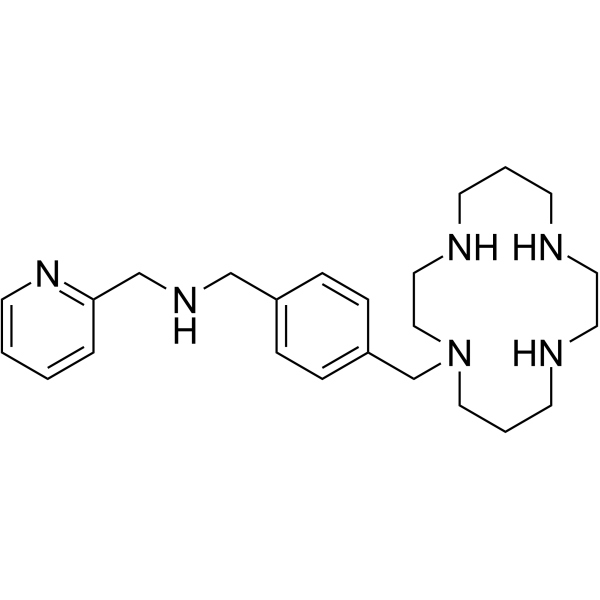
  • HY-124618

    Flavivirus Dengue Virus HCV HIV Infection
    FGI-106 is a potent and broad-spectrum inhibitor with inhibitory activity against multiple viruses. FGI-106 is active against Ebola, Rift Valley and Dengue Fever viruses with EC50s of 100 nM, 800 nM and 400-900 nM, respectively. FGI-106 also inhibits non-hemorrhagic fever viruses HCV and HIV-1 with EC50s of 200 nM and 150 nM, respectively .
    FGI-106
  • HY-B1408R

    2-Hydroxybenzanilide (Standard)

    HIV Integrase HIV Reference Standards Infection
    Salicylanilide (Standard) is the analytical standard of Salicylanilide. This product is intended for research and analytical applications. Salicylanilide demonstrates a wide range of biological activities including antiviral potency which can inhibit HIV virus by targeting HIV-1 integrase or reverse transcriptase.
    Salicylanilide (Standard)
  • HY-139989

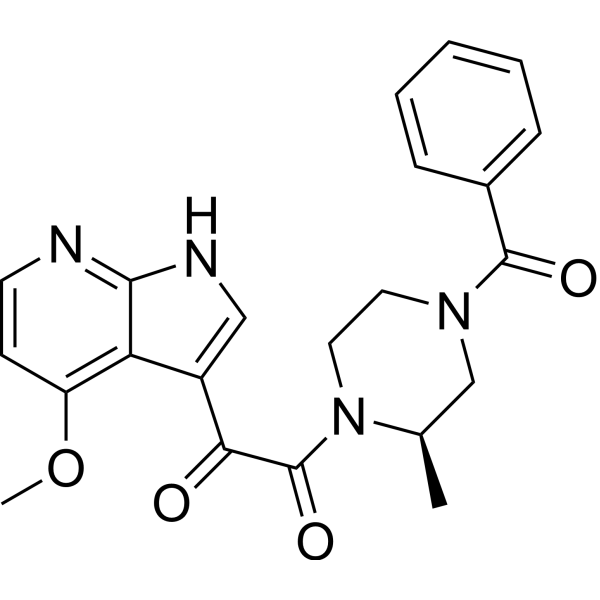
    HIV Infection
    NBD-14270, a pyridine analogue, is a potent HIV-1 entry antagonist with an IC50 of 180 nM against 50 HIV-1 Env-pseudotyped viruses. NBD-14270 binds to HIV-1 gp120 and shows potent antiviral activity. NBD-14270 shows low cytotoxicity (CC50>100 μM) .
    NBD-14270
  • HY-P35433

    T-1249

    HIV Inflammation/Immunology
    Tifuvirtide (T-1249) is a peptide human immunodeficiency virus type-1 (HIV-1) fusion inhibitor. Tifuvirtide is a synthetically designed hybrid retroviral envelope polypeptide. Tifuvirtide has antiretroviral activity. Tifuvirtide can be used for the research of HIV infection .
    Tifuvirtide
  • HY-139158

    HIV Infection
    Ainuovirine is a second-generation non-nucleoside reverse transcriptase inhibitor (NNRTI). Ainuovirine inhibits HIV replication by non-competitively binding to HIV reverse transcriptase and blocking the reverse transcription process of viral RNA. Ainuovirine can be used for human immunodeficiency virus (HIV) type 1 infection .
    Ainuovirine
  • HY-178201

    HIV Pyroptosis Infection
    JLJ648 is a Gag-Pol dimerizer with antiviral activity. JLJ648 can inhibit HIV replication and induce infected cell pyroptosis. JLJ648 can be used for the research of infection, such as HIV (human immunodeficiency virus) .
    JLJ648

Inquiry Online

Your information is safe with us. * Required Fields.

Salutation


Country or Region *

Applicant Name *


Organization Name *

Department *


Email Address *


Product Name *

Cat. No.


Requested quantity *

Phone Number *


Remarks

Inquiry Online

Inquiry Information

Product Name:
Cat. No.:
Quantity:
MCE Japan Authorized Agent:

