



Tizoxanide
Based on 13 publication(s) in Google Scholar
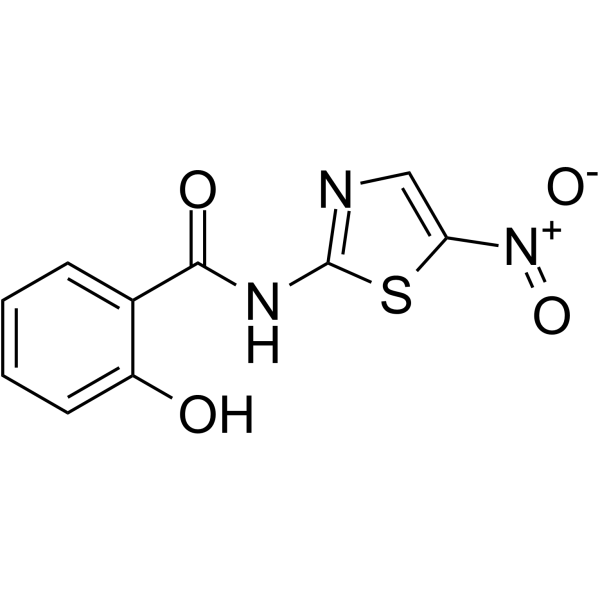
Tizoxanide (TIZ) is the active metabolite of Nitazoxanide, which is a thiazolide anti-infective compound against anaerobic bacteria, protozoa, and a range of viruses. Tizoxanide (TIZ) has anti-HIV-1 activities and potent inhibition of both HBV and HCV replication with values EC50 of 0.46μM and 0.15 μM, respectively. Tizoxanide also exerts anti-inflammatory effects by inhibiting the production of pro-inflammatory cytokines and suppressing of the activation of the NF-κB and the MAPK signaling pathways in LPS-treated macrophage cells.
For research use only. We do not sell to patients.
- Purity : 99.97%
- CAS No.: 173903-47-4
- Formula: C10H7N3O4S
- Molecular Weight:265.25
-
Storage:Powder -20°C, 3 years , 4°C, 2 years ; In solvent -80°C, 2 years , -20°C, 1 year

To place orders, for customer services and technical support, please contact: MedChemExpress USA
Tel: 609-228-6898 E-mail: [email protected] [email protected]


-
 Biological Activity
-
Chemical Information
-
Solvent & Solubility
- Protocols
- Purity & Documentation
- References
-
 Help & FAQs


-
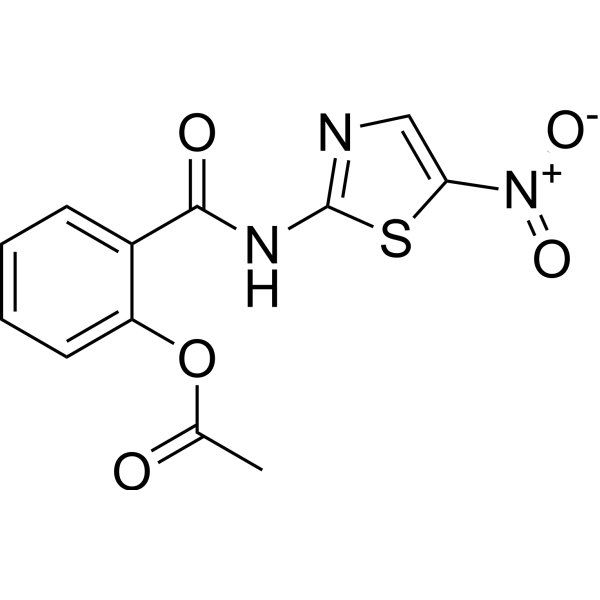
HY-B0217
NitazoxanideAnthelmintic Agent -
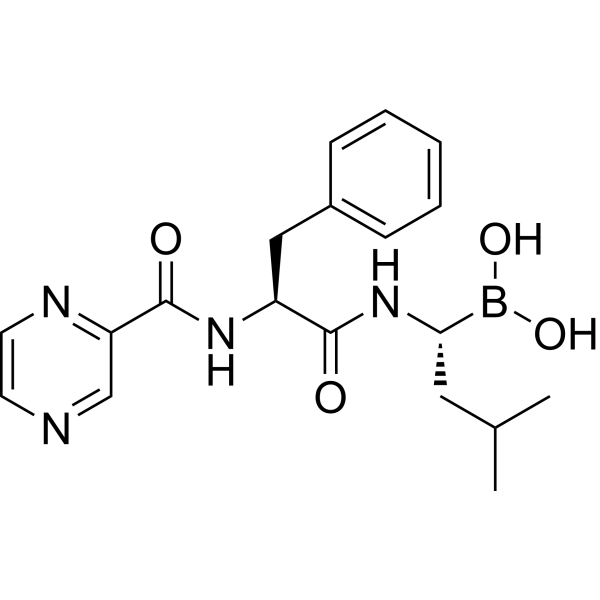
HY-10227
BortezomibProteasome Inhibitor -
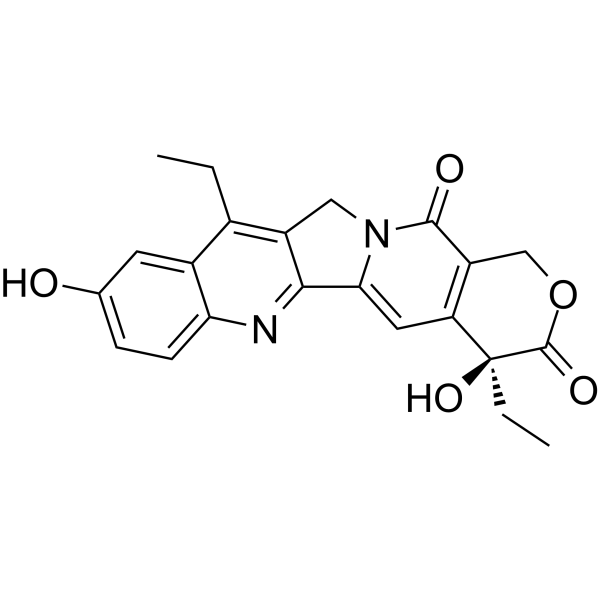
HY-13704
SN-38Topoisomerase I Inhibitor -
HY-50907
ABT-737Bcl-2 Family Inhibitor/BH3 Mimetic -
HY-10583
Y-27632 dihydrochlorideROCK Inhibitor -
HY-12687R
Tizoxanide (Standard)Anti-HIV Activity -
HY-B0497
NiclosamideAntihelminthic Agent -
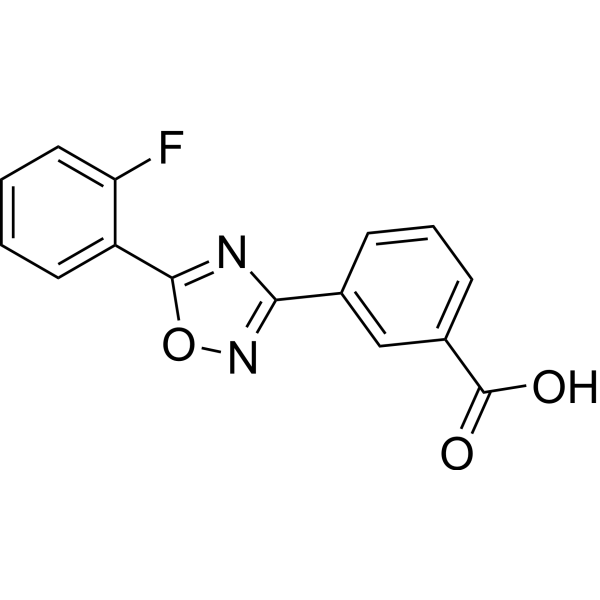
HY-14832
AtalurenCFTR Inhibitor -
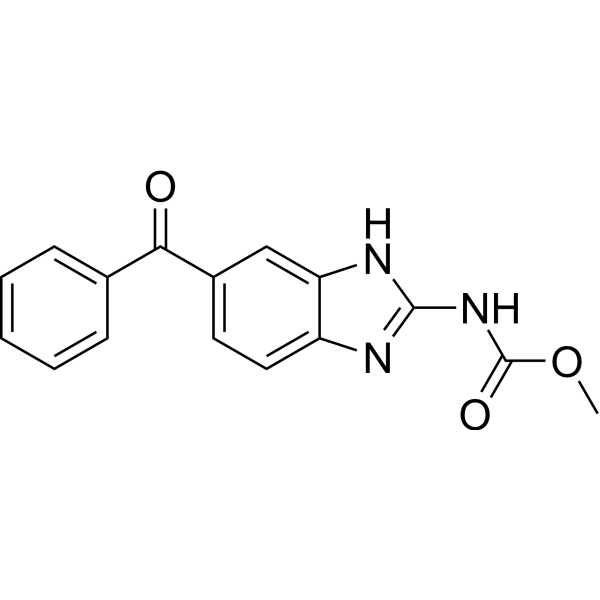
HY-17595
MebendazoleApoptosis Inducer -
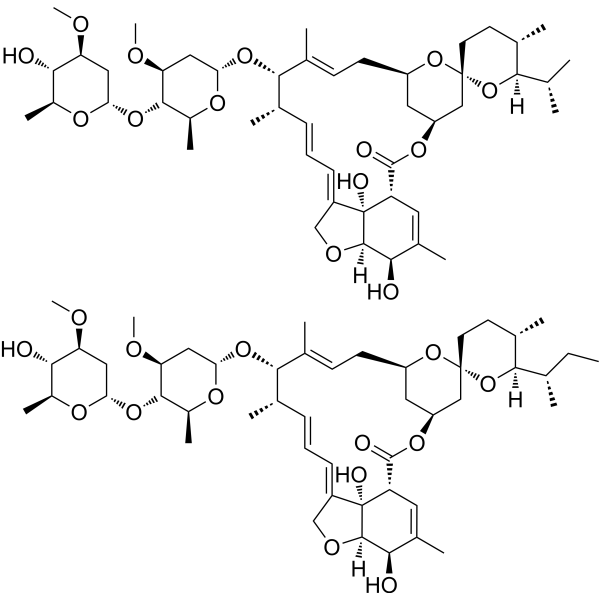
HY-15310
IvermectinAnti-parasite Agent -
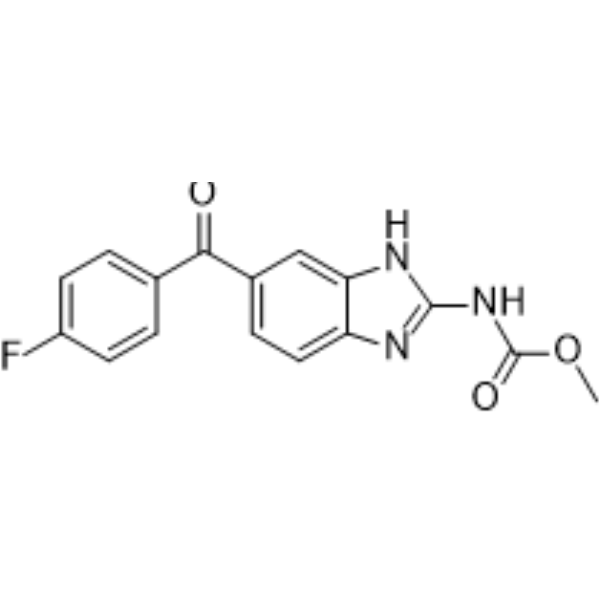
HY-B0294
FlubendazoleTubulin Polymerization Inhibitor -
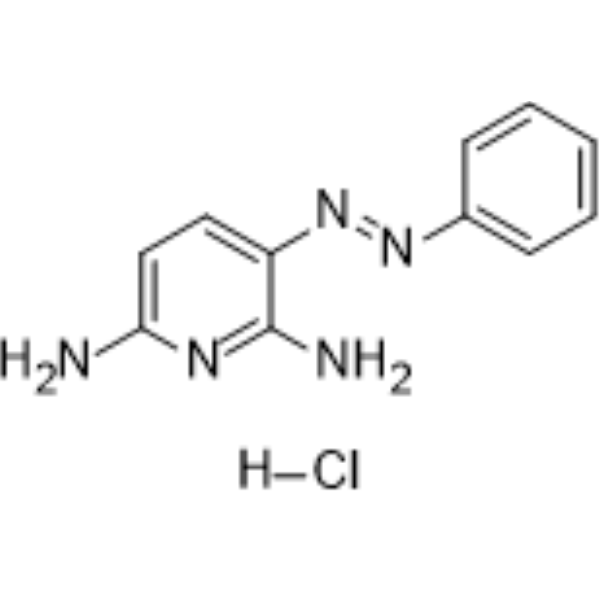
HY-B0985
Phenazopyridine hydrochlorideAnalgesic
Publications Citing Use of MedChemExpress (MCE) Tizoxanide
More- Acta Pharm Sin B. 2025 Mar;15(3):1397-1414. [Abstract]
- Acta Pharm Sin B. 2024 Jul;14(7):3266-3280. [Abstract]
- Acta Pharm Sin B. 2022 Mar;12(3):1322-1338. [Abstract]
- EBioMedicine. 2022 Aug;82:104148. [Abstract]
- ACS Environ Au. 2025 Aug 5;5(6):573-582. [Abstract]
- Br J Pharmacol. 2023 Jan;180(1):62-79. [Abstract]
- Anal Chem. 2025 Jun 3;97(21):11099-11109. [Abstract]
- Biochem Pharmacol. 2024 Jun:224:116205. [Abstract]
- Chem Biol Interact. 2024 May 25:395:111013. [Abstract]
- Virology. 2018 May:518:398-405. [Abstract]
- Biomed Chromatogr. 2020 Feb;34(2):e4716. [Abstract]
- Research Square Preprint. 2021 Aug.
- SSRN. 2021 Feb 2.
All Parasite Isoforms
More

Biological Activity
Description
IC50 & Target
|
HIV-1 |
Cellular Effect
|
Cell Line

|
Type | Value | Description | References |
|---|---|---|---|---|
| HeLa | IC50 |
29.8 μM
Compound: TIZ
|
Cytotoxicity against human HeLa cells assessed as inhibition of cell viability measured after 48 hrs by MTT assay
Cytotoxicity against human HeLa cells assessed as inhibition of cell viability measured after 48 hrs by MTT assay
|
[PMID: 34055214] |
| HepG2 2.2.15 | CC50 |
>100 μM
Compound: 2
|
Cytotoxicity against human HepG2(2.2.15) cells after 24 hrs by neutral red dye uptake assay
Cytotoxicity against human HepG2(2.2.15) cells after 24 hrs by neutral red dye uptake assay
|
[PMID: 21553812] |
| HepG2 2.2.15 | EC50 |
0.15 μM
Compound: 2
|
Antiviral activity against Hepatitis B virus infected in human HepG2(2.2.15) cells assessed as decrease in extracellular viral DNA measured 24 hrs after last dose
Antiviral activity against Hepatitis B virus infected in human HepG2(2.2.15) cells assessed as decrease in extracellular viral DNA measured 24 hrs after last dose
|
[PMID: 21553812] |
| HepG2 2.2.15 | EC50 |
0.46 μM
Compound: 2
|
Antiviral activity against Hepatitis B virus infected in human HepG2(2.2.15) cells assessed as decrease in intracellular viral DNA measured 24 hrs after last dose
Antiviral activity against Hepatitis B virus infected in human HepG2(2.2.15) cells assessed as decrease in intracellular viral DNA measured 24 hrs after last dose
|
[PMID: 21553812] |
| Huh-7 | CC50 |
14 μM
Compound: 2
|
Cytotoxicity against human Huh7.5 cells after 3 days by neutral red dye assay
Cytotoxicity against human Huh7.5 cells after 3 days by neutral red dye assay
|
[PMID: 22059983] |
| Vero | CC50 |
388 μM
Compound: TIZ
|
Cytotoxicity against african green monkey Vero cells after 72 hrs by MTT assay
Cytotoxicity against african green monkey Vero cells after 72 hrs by MTT assay
|
[PMID: 21397502] |
| Vero | CC50 |
388 μM
Compound: Tizoxanide
|
Cytotoxicity against African green monkey Vero cells after 48 hrs by MTT assay
Cytotoxicity against African green monkey Vero cells after 48 hrs by MTT assay
|
[PMID: 25801157] |
In Vitro
Tizoxanide (TIZ) induces mild mitochondrial uncoupling and activate AMPK in hepatocytes[1].
Tizoxanide (TIZ) inhibits hepatitis C virus (HCV) replication in HCV replicon systems[3].
MedChemExpress (MCE) has not independently confirmed the accuracy of these methods. They are for reference only. Further protocols information, click here.
-
Cell Line:HepG2 cells
-
Concentration:1-25 µmol/L
-
Incubation Time:24 h
-
Result:Induced mitochondrial uncoupling and AMPK activation not due to the non-specific cytotoxicity in HepG2 cells at concentrations less than 25 µmol/L.
-
Cell Line:HepG2 cells
-
Concentration:10 µmol/L
-
Incubation Time:24 h
-
Result:Promoted the nuclear translocation of TFEB by activating AMPK in HepG2 cells.
-
Cell Line:HepG2 cells
-
Concentration:1-25 µmol/L
-
Incubation Time:24 h
-
Result:Induced the increase transcription of SQSTM1/P62 in HepG2 cells.
-
Cell Line:HepG2 cells
-
Concentration:1-25 µmol/L
-
Incubation Time:24 h
-
Result:Activated AMPK and increased phosphorylation of ACC in HepG2 cells.
-
Cell Line:RP7 cells, NTZ-11 and TIZ-9 cell lines
-
Concentration:The initial drug concentration was 0.02 µM, followed by 0.05, 0.1, 0.5, and 1 µM, and subsequent weekly increases of 1 µM until a final concentration of 11 µM.
-
Incubation Time:3 days
-
Result:Againsted HCV replication in RP7 cells (IC50: 0.16), NTZ-11 (IC50:1.2) and TIZ-9 cell lines (IC50: 1.5)
In Vivo
MedChemExpress (MCE) has not independently confirmed the accuracy of these methods. They are for reference only.
-
Animal Model:Sprague Dawley rats[2]
-
Dosage:10 mg/kg
-
Administration:Tizoxanide (10 mg/kg; i.v.)
-
Result:Could pass the BBB and distribute to the brain tissue.


Chemical Information
-
CAS No. 173903-47-4
-
Appearance Solid
-
Molecular Weight 265.25
-
Formula C10H7N3O4S
-
Color White to yellow
-
SMILES
O=C(NC1=NC=C([N+]([O-])=O)S1)C2=CC=CC=C2O
-
Synonyms
TIZ
-
Shipping
Room temperature in continental US; may vary elsewhere.
-
Storage
Powder -20°C 3 years 4°C 2 years In solvent -80°C 2 years -20°C 1 year


Publications (13)
-
Journal Impact Factor
-
Most Recent
-
Acta Pharm Sin B
Nitazoxanide protects against heart failure with preserved ejection and metabolic syndrome induced by high-fat diet (HFD) plus L-NAME "two-hit" in mice. [Abstract]2025 Mar;15(3):1397-1414. PMID: 40370562 -
Acta Pharm Sin B
The clinical antiprotozoal drug nitazoxanide and its metabolite tizoxanide extend Caenorhabditis elegans lifespan and healthspan. [Abstract]2024 Jul;14(7):3266-3280. PMID: 39027239 -
Acta Pharm Sin B
Anthelmintics nitazoxanide protects against experimental hyperlipidemia and hepatic steatosis in hamsters and mice. [Abstract]2022 Mar;12(3):1322-1338. PMID: 35530137 -
EBioMedicine
2022 Aug;82:104148. PMID: 35834886 -
ACS Environ Au
Machine Learning-Assisted Recognition of Environmental Sulfur-Containing Chemicals in Nontargeted Mass Spectrometry Analysis of Inadequate Mass Resolution. [Abstract]2025 Aug 5;5(6):573-582. PMID: 41277996 -
Br J Pharmacol
Repurposing nitazoxanide as a novel anti-atherosclerotic drug based on mitochondrial uncoupling mechanisms. [Abstract]2023 Jan;180(1):62-79. PMID: 36082580 -
Anal Chem
Exposome-Scale Investigation of Cl-/Br-Containing Chemicals Using High-Resolution Mass Spectrometry, Multistage Machine Learning, and Cloud Computing. [Abstract]2025 Jun 3;97(21):11099-11109. PMID: 40401576 -
Biochem Pharmacol
2024 Jun:224:116205. PMID: 38615918 -
Chem Biol Interact
Nitazoxanide protects against experimental ulcerative colitis through improving intestinal barrier and inhibiting inflammation. [Abstract]2024 May 25:395:111013. PMID: 38663798 -
Virology
2018 May:518:398-405. PMID: 29625403 -
Biomed Chromatogr
Analysis of tizoxanide, active metabolite of nitazoxanide, in rat brain tissue and plasma by UHPLC-MS/MS. [Abstract]2020 Feb;34(2):e4716. PMID: 31633824 -
-


Solvent & Solubility
In Vitro:
DMSO : 25 mg/mL (94.25 mM; ultrasonic and warming and heat to 60°C; Hygroscopic DMSO has a significant impact on the solubility of product, please use newly opened DMSO)
Ethanol : < 1 mg/mL (insoluble)
Please refer to the solubility information to select the appropriate solvent. Once prepared, please aliquot and store the solution to prevent product inactivation from repeated freeze-thaw cycles.
Storage method and period of stock solution: -80°C, 2 years; -20°C, 1 year. When stored at -80°C, please use it within 2 years. When stored at -20°C, please use it within 1 year.
Please refer to the solubility information to select the appropriate solvent. Once prepared, please aliquot and store the solution to prevent product inactivation from repeated freeze-thaw cycles.
Storage method and period of stock solution: -80°C, 2 years; -20°C, 1 year. When stored at -80°C, please use it within 2 years. When stored at -20°C, please use it within 1 year.
Concentration (start) × Volume (start) = Concentration (final) × Volume (final)
In Vivo:
For the following dissolution methods, please prepare the working solution directly:
It is recommended to prepare fresh solutions and use them promptly within a short period of time.
The percentages shown for the solvents indicate their volumetric ratio in the final prepared solution. If precipitation or phase separation occurs during preparation, heat and/or sonication can be used to aid dissolution.
Add each solvent one by one: 15% Cremophor EL 85% Saline
Solubility: 5 mg/mL (18.85 mM); Suspended solution; Need ultrasonic and warming and heat to 60°C
Add each solvent one by one: 17% Solutol HS-15 in Saline
Solubility: 5 mg/mL (18.85 mM); Suspended solution; Need ultrasonic and warming and heat to 60°C

Protocols
-
Anaerobic Bacterial Culture
Anaerobic bacterial culture detects viable bacteria that can grow under oxygen-depleted conditions; the readout is visible colony formation or broth turbidity after incubation in a chamber, jar, pouch, bag, or roll-tube system that maintains anaerobiosis. Oxygen control is central to the method because recovery depends on limiting oxygen exposure during collection, transport, inoculation, and incubation.
-
LPS-Induced Endotoxemia/Systemic Inflammation
Lipopolysaccharide (LPS)-induced endotoxemia is a widely used in vivo model of acute systemic inflammation in which LPS, a Gram-negative bacterial endotoxin, activates innate immune signaling primarily through TLR4, leading to rapid and transient induction of pro-inflammatory cytokines such as TNF-α, IL-6, and IL-1β in circulation and tissues. This cytokine surge is commonly used as a measurable readout of systemic inflammatory activation and immune dysregulation, and is typically assessed within hours after intraperitoneal LPS administration in mouse models of endotoxemia. The model captures key features of systemic inflammatory response syndrome, including cytokine release, immune cell activation, and downstream tissue responses, and has been used to evaluate anti-inflammatory interventions such as cytokine modulation, lipid mediators, and immune cell-targeting therapies.
-
Research Protocol for Inflammation-related Diseases
The NLRP3 inflammasome is a cytosolic innate immune signaling platform that integrates priming signals and danger-signal activation to promote caspase-1 activation, maturation of IL-1β and IL-18, and gasdermin D-mediated pyroptotic cell death. The core experimental logic is to determine whether inflammatory disease phenotypes are driven by increased NLRP3 expression, ASC-containing inflammasome assembly, caspase-1 cleavage, GSDMD cleavage, and extracellular release of IL-1β/IL-18 rather than by nonspecific cell injury alone. The pathway is strongly linked to inflammation-related disease phenotypes because monosodium urate crystals activate NALP3/NLRP3 inflammasome signaling in gout-like crystal inflammation, cholesterol crystals activate NLRP3 inflammasomes in atherogenesis models, and DSS-induced intestinal inflammation has been reported to involve NLRP3 inflammasome activity. However, experimental colitis studies also show context-dependent protective effects of NLRP3 inflammasome co


Purity & Documentation
-
Data Sheet (282 KB)
-
SDS (393 KB)
- English - EN (393 KB)
- Français - FR (393 KB)
- Deutsch - DE (393 KB)
- Norwegian - NO (393 KB)
- Español - ES (393 KB)
- Swedish - SV (393 KB)
- Italian - IT (393 KB)
- Korean - KR (393 KB)
- Portuguese - PT (393 KB)
-
Handling Instructions (2659 KB)
References
[1]. Fengfeng Li, et al. Anthelmintics nitazoxanide protects against experimental hyperlipidemia and hepatic steatosis in hamsters and mice. Acta Pharm Sin B. 2022 Mar;12(3):1322-1338. [Content Brief]
[2]. Sixun Guo, et al. Analysis of tizoxanide, active metabolite of nitazoxanide, in rat brain tissue and plasma by UHPLC-MS/MS. Biomed Chromatogr. 2020 Feb;34(2):e4716. [Content Brief]
[3]. Brent E Korba, et al. Potential for hepatitis C virus resistance to nitazoxanide or tizoxanide. Antimicrob Agents Chemother. 2008 Nov;52(11):4069-71. [Content Brief]
[4]. Brent E Korba, et al. Nitazoxanide, tizoxanide and other thiazolides are potent inhibitors of hepatitis B virus and hepatitis C virus replication. [Content Brief]
[5]. Jiaoqin Shou, et al. Tizoxanide Inhibits Inflammation in LPS-Activated RAW264.7 Macrophages via the Suppression of NF-κB and MAPK Activation. Inflammation. 2019 Aug;42(4):1336-1349. [Content Brief]
[6]. Korba BE, et al. Nitazoxanide, tizoxanide and other thiazolides are potent inhibitors of hepatitis B virus and hepatitis C virus replication. Antiviral Res. 2008 Jan;77(1):56-63. [Content Brief]
[7]. Korba BE, et al. Potential for hepatitis C virus resistance to nitazoxanide or tizoxanide. Antimicrob Agents Chemother. 2008 Nov;52(11):4069-71. [Content Brief]
[8]. Ashton LV, et al. In Vitro Susceptibility of Canine Influenza A (H3N8) Virus to Nitazoxanide and Tizoxanide. Vet Med Int. 2010 Aug 12;2010. pii: 891010. [Content Brief]
[9]. Trabattoni D, et al. Thiazolides Elicit Anti-Viral Innate Immunity and Reduce HIV Replication. Sci Rep. 2016 Jun 2;6:27148. [Content Brief]


Complete Stock Solution Preparation Table
Please refer to the solubility information to select the appropriate solvent. Once prepared, please aliquot and store the solution to prevent product inactivation from repeated freeze-thaw cycles.
Storage method and period of stock solution: -80°C, 2 years; -20°C, 1 year. When stored at -80°C, please use it within 2 years. When stored at -20°C, please use it within 1 year.
| Optional Solvent | Concentration Solvent Mass | 1 mg | 5 mg | 10 mg | 25 mg |
|---|---|---|---|---|---|
| DMSO | 1 mM | 3.7700 mL | 18.8501 mL | 37.7003 mL | 94.2507 mL |
| 5 mM | 0.7540 mL | 3.7700 mL | 7.5401 mL | 18.8501 mL | |
| 10 mM | 0.3770 mL | 1.8850 mL | 3.7700 mL | 9.4251 mL | |
| 15 mM | 0.2513 mL | 1.2567 mL | 2.5134 mL | 6.2834 mL | |
| 20 mM | 0.1885 mL | 0.9425 mL | 1.8850 mL | 4.7125 mL | |
| 25 mM | 0.1508 mL | 0.7540 mL | 1.5080 mL | 3.7700 mL | |
| 30 mM | 0.1257 mL | 0.6283 mL | 1.2567 mL | 3.1417 mL | |
| 40 mM | 0.0943 mL | 0.4713 mL | 0.9425 mL | 2.3563 mL | |
| 50 mM | 0.0754 mL | 0.3770 mL | 0.7540 mL | 1.8850 mL | |
| 60 mM | 0.0628 mL | 0.3142 mL | 0.6283 mL | 1.5708 mL | |
| 80 mM | 0.0471 mL | 0.2356 mL | 0.4713 mL | 1.1781 mL |


Tizoxanide Related Classifications
HY-12687 Related Classifications
 Powered by Bioz