1. Search Result
Search Result
Pathways Recommended: Membrane Transporter/Ion Channel
Results for "

High membrane permeability

" in MedChemExpress (MCE) Product Catalog:

28

Inhibitors & Agonists

2

Screening Libraries

8

Fluorescent Dyes

3

Biochemical Assay Reagents

2

Peptides

3

Natural
Products

Targets Recommended:
Cat. No. Product Name Target Research Areas Chemical Structure
  • HY-D0989
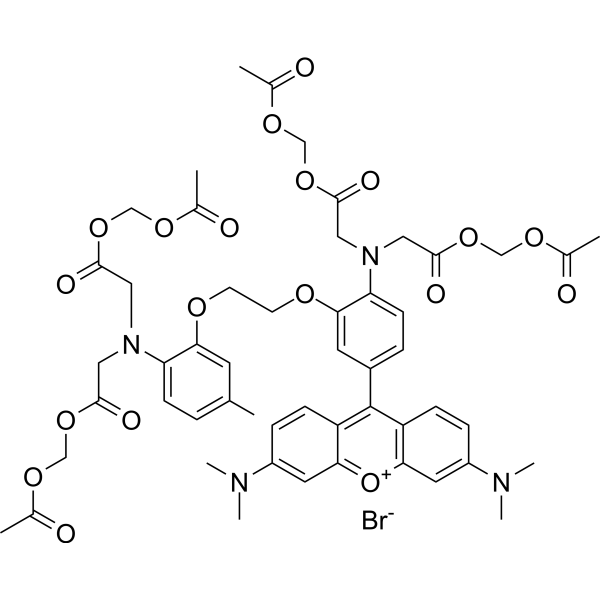
    Rhod-2 AM
    Maximum Cited Publications
    33 Publications Verification

    Fluorescent Dye Others
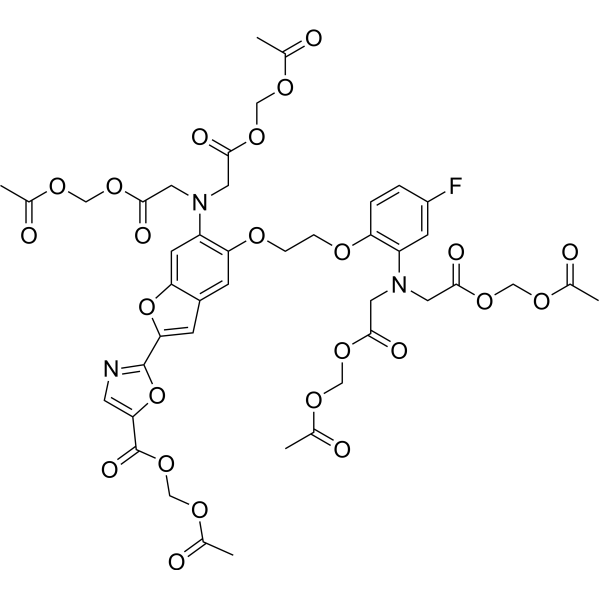
    Rhod-2 is a high-affinity visible light excitation wavelength Ca 2+ fluorescent probe, Rhod-2, AM is an acetyl methyl ester derivative of Rhod-2, which has cell membrane permeability and can easily enter cells with simple culture. Once it enters the cell, it is sheared by its lactesterase to produce Rhod-2 without membrane permeability, which remains in the cell to perform the corresponding physiological functions. Maximum excitation/emission wavelength: 549/578 nm .
    Rhod-2 AM
  • HY-B1102
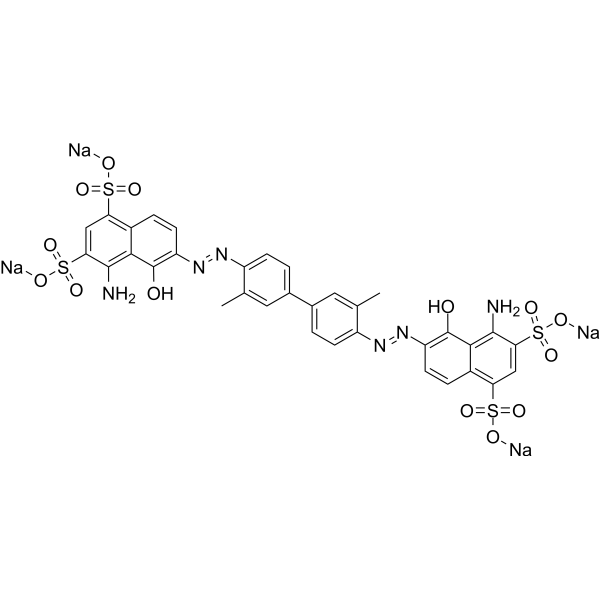
    Evans Blue
    25+ Cited Publications

    Direct Blue 53; T-1824; C.I. 23860

    EAAT iGluR Cardiovascular Disease Neurological Disease
    Evans Blue (Direct Blue 53) is a potent inhibitor of L-glutamate uptake via the membrane bound excitatory amino acid transporter (EAAT). Evans Blue is a L-glutamate and kainate receptor-mediated currents inhibitor. Evans Blue has a strong affinity towards serum albumin, making it a high molecular weight protein tracer. Evans Blue is also used to study BBB (blood-brain barrier) permeability .
    Evans Blue
  • HY-B0573
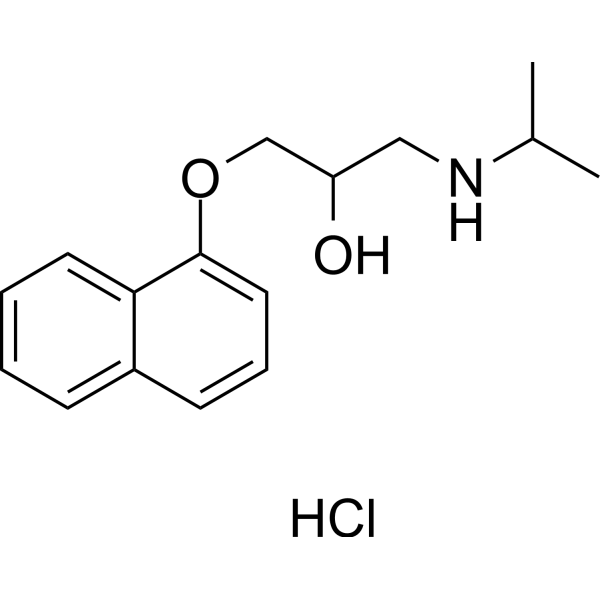
    Propranolol hydrochloride
    40+ Cited Publications

    Adrenergic Receptor Bacterial Cardiovascular Disease Infection Neurological Disease Metabolic Disease Cancer
    Propranolol hydrochloride is a nonselective and BBB-permeableβ-adrenergic receptor (βAR) antagonist, has high affinity for the β1AR and β2AR with Ki values of 1.8 nM and 0.8 nM, respectively. Propranolol hydrochloride inhibits [ 3H]-DHA binding to rat brain membrane preparation with an IC50 of 12 nM. Propranolol hydrochloride is used for study of hypertension, pheochromocytoma, myocardial infarction, cardiac arrhythmias, angina pectoris, and hypertrophic cardiomyopathy .
    Propranolol hydrochloride
  • HY-B0573B
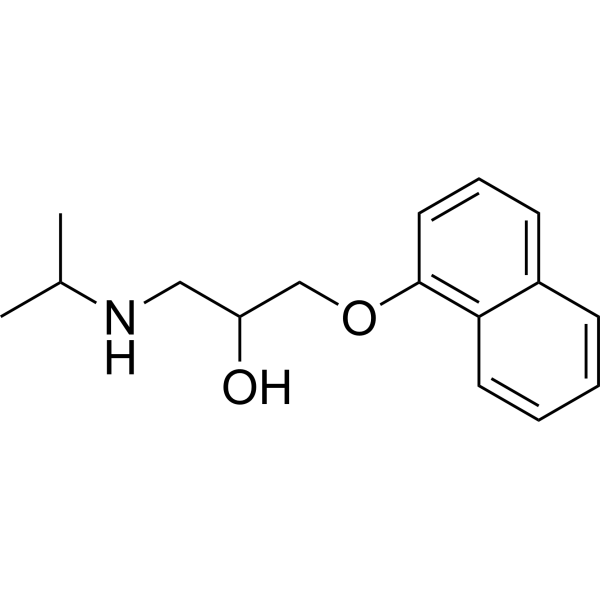
    Propranolol
    40+ Cited Publications

    Adrenergic Receptor Bacterial Cardiovascular Disease Infection Neurological Disease Metabolic Disease Cancer
    Propranolol is a nonselective and BBB-permeable β-adrenergic receptor (βAR) antagonist, has high affinity for the β1AR and β2AR with Ki values of 1.8 nM and 0.8 nM, respectively . Propranolol inhibits [ 3H]-DHA binding to rat brain membrane preparation with an IC50 of 12 nM . Propranolol is used for the study of hypertension, pheochromocytoma, myocardial infarction, cardiac arrhythmias, angina pectoris, and hypertrophic cardiomyopathy .
    Propranolol
  • HY-141511
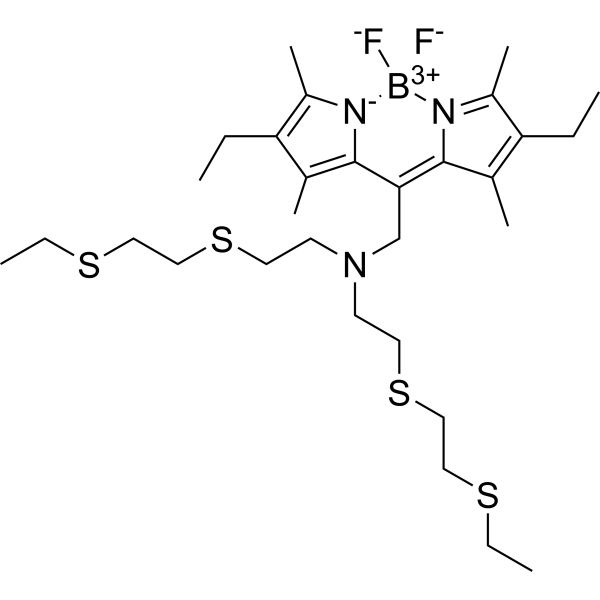
    Coppersensor 1
    25+ Cited Publications

    Fluorescent Dye Neurological Disease Cancer
    Coppersensor-1 (CS1) is a membrane-permeable fluorescent dye. Coppersensor-1 has a picomolar affinity for Cu + with high selectivity over competing cellular metalions. Coppersensor-1 as a probe, can selective and sensitive detection of copper(I) ions (Cu +) in biological samples, including live cells. Coppersensor-1 can be used for the research of imaging of severe diseases such as cancer, cardiovascular disorders and neurogenerative diseases .
    Coppersensor 1
  • HY-N16308

    Fluorescent Dye Others
    ER-Laurdan is a derivative of the membrane-permeable fluorescent probe Laurdan (HY-D0080) that targets the endoplasmic reticulum (ER). As a membrane fluidity reporter, ER-Laurdan specifically localizes to the ER luminal membrane, and exhibits a prominent solvatochromic response to fluidity changes caused by membrane packing and exogenous saturated fatty acid stress. ER-Laurdan shows no overlapping localization with mitochondria, enables quantitative analysis of ER membrane fluidity via generalized polarization ratio measurement, and allows automatic signal masking with the help of ER markers. With high specificity and quantitative capability, ER-Laurdan serves as an important tool for investigating metabolic disorders and associated changes in the physical properties of cell membranes .
    ER-Laurdan
  • HY-101379A
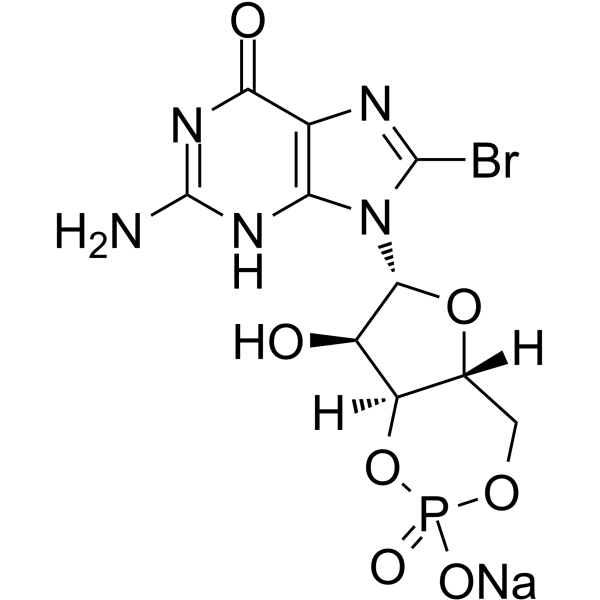
    8-Bromo-cGMP sodium
    5+ Cited Publications

    Calcium Channel Cardiovascular Disease Neurological Disease
    8-Bromo-cGMP sodium, a membrane-permeable analogue of cGMP, is a PKG (protein kinase G) activator. 8-Bromo-cGMP sodium significantly inhibits Ca 2+ macroscopic currents and impairs insulin release stimulated with high K + . 8-Bromo-cGMP sodium has antinociceptive effects and results in vasodilator responses .
    8-Bromo-cGMP sodium
  • HY-DY1020

    Fluorescent Dye Others
    Rhod-2 (solution) is a high-affinity visible light excitation wavelength Ca 2+ fluorescent probe, Rhod-2, AM is an acetyl methyl ester derivative of Rhod-2, which has cell membrane permeability and can easily enter cells with simple culture. Once it enters the cell, it is sheared by its lactesterase to produce Rhod-2 without membrane permeability, which remains in the cell to perform the corresponding physiological functions. Maximum excitation/emission wavelength: 549/578 nm .
    Solvent and concentration: DMSO: 1 mM
    Rhod-2 AM (solution)
  • HY-16694
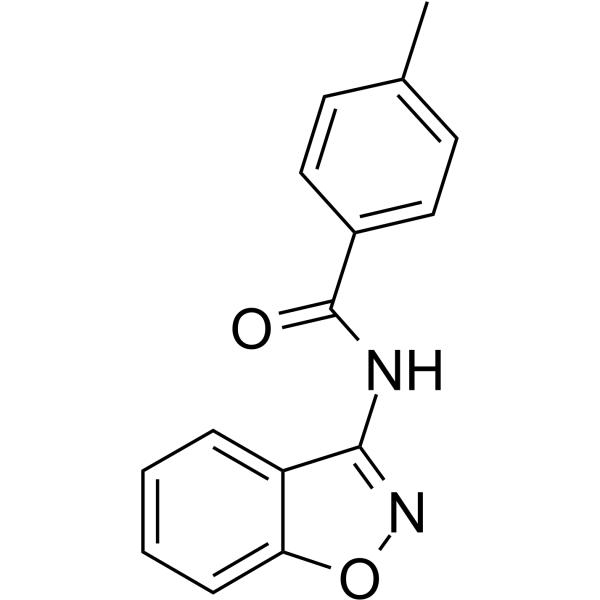
    BAMB-4
    1 Publications Verification

    ITPKA-IN-C14

    Phosphatase Cancer
    BAMB-4 (ITPKA-IN-C14) is a specific and membrane-permeable ITPKA inhibitor. BAMB-4 has high stability and membrane permeability and against the inositol-1,4,5-trisphosphate (InsP3) kinase activity of inositol-1,4,5-trisphosphate-3-kinase A (ITPKA) with an IC50 value of 20 μM. BAMB-4 can be used for the research of metastasis of lung cancer .
    BAMB-4
  • HY-D2346
    HBmito Crimson
    3 Publications Verification

    Fluorescent Dye Others
    HBmito Crimson is a deep red fluorescent probe (λex: 658 nm, λem: 678 nm) for the inner mitochondrial membrane. HBmito Crimson is a cell membrane-permeable probe with high selectivity for the mitochondrial inner membrane, suitable for specific fluorescence staining of the inner mitochondrial membrane in living cells. HBmito Crimson has high photostability and brightness, suitable for long-term dynamic fluorescence imaging.
    HBmito Crimson
  • HY-119033

    MAGL Inflammation/Immunology
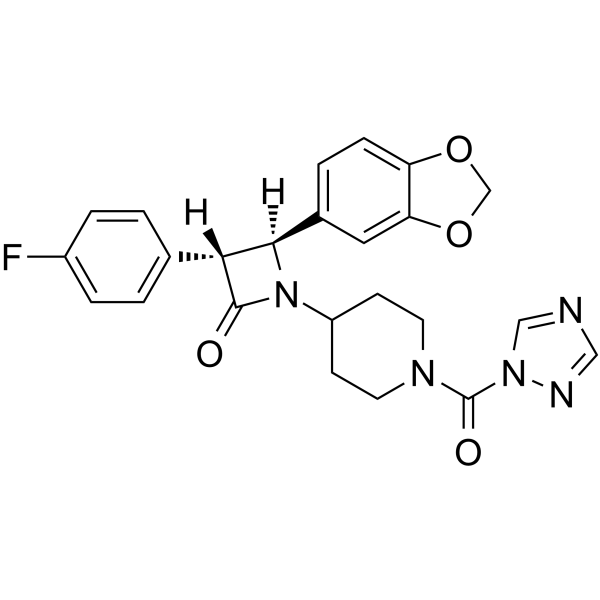
    MGL-IN-1 is a potent and selective irreversible MGL (β-lactam-based monoacylglycerol lipase) inhibitor. MGL-IN-1 alleviates symptoms in a MS model in vivo and exhibits analgesic effects in an acute inflammatory pain model in vivo. MGL-IN-1 displays high membrane permeability and brain penetrant .
    MGL-IN-1
  • HY-134345

    8-(4-Chlorophenylthio)-cGMP-AM

    PKG Neurological Disease
    8-pCPT-cGMP-AM (8-(4-Chlorophenylthio)-cGMP-AM) is a highly membrane permeable prodrug of the PKG agonist 8-pCPT-cGMP, which increases the membrane permeability of cGMP and is converted to its active form by esterase hydrolysis within the cell, thereby activating PKG. 8-pCPT-cGMP-AM can be used to explore the role of cGMP signaling in neural plasticity and memory formation .
    8-pCPT-cGMP-AM
  • HY-148246

    TGF-β Receptor Cancer
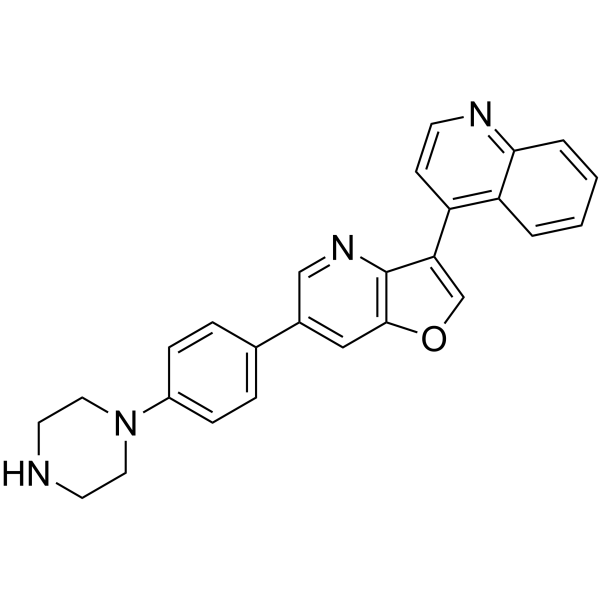
    MU1700, a chemical probe, is an orally active and potent ALK1/2 inhibitor with IC50s of 13 nM and 6 nM, respectively. MU1700 shows cell membrane permeability and high brain permeability .
    MU1700
  • HY-D2317

    Fluorescent Dye Others
    HaloFlipper 30 is a fluorescent probe that covalently reacts with HaloTag fusion proteins to form an ester bond, which allows the probe to be stably attached to membrane structures. HaloFlipper 30 has high specificity, precision and good cell permeability .
    HaloFlipper 30
  • HY-151247

    GnRH Receptor Cancer
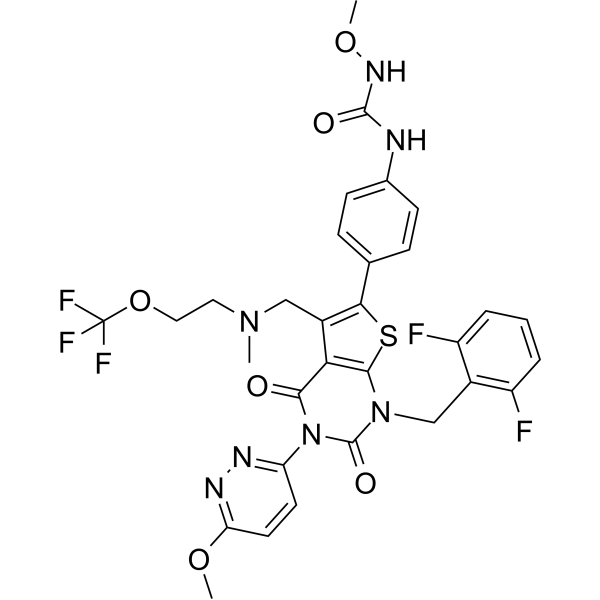
    GnRH-R antagonist 1 (compound 21a) is an orally safe and membrane-permeable GnRH-R antagonist with high binding affinity (IC50=0.57 nM) and potent in vitro antagonistic activity (IC50=2.18 nM). GnRH-R antagonist 1 can be used in studies of advanced prostate cancer and premature LH peaks preventing .
    GnRH-R antagonist 1
  • HY-W016758

    1-Butyl-3-methylimidazolium chloride

    Bacterial Infection
    [BMIM]Cl (1-butyl-3-methylimidazolium chloride) is an alkyl-imidazolium chloride compound and a persistent aquatic pollutant. [BMIM]Cl exhibits antimicrobial activity against S. aureus (MIC = 25 mM), E. coli (MIC = 50 mM), and P. aeruginosa (MIC = 100 mM). It possesses moderate membrane permeability and cytotoxicity, directly affecting microorganisms and mammalian cells at high concentrations, but can inhibit the function of complex ecosystems (e.g., anaerobic digestion) even at environmentally relevant low concentrations by disrupting microbial community structures. [BMIM]Cl can be used in research related to bacterial infections .
    [BMIM]Cl
  • HY-P10362

    Bacterial Infection
    Temporin-GHd exhibits antibacterial activity against Streptococcus mutans (MIC=13.1 μM; MBC=26 μM). Temporin-GHd increases the permeability of the bacterial cell membrane, causing membrane damage and leakage of cellular contents. Temporin-GHd disrupts preformed biofilms at high concentrations. Temporin-GHd can bind to bacterial DNA, inhibiting DNA migration .
    Temporin-GHd
  • HY-D2953

    CLIP-CPY

    Fluorescent Dye Others
    BC-CPY is a CLIP-tagged probe based on the pyridine-benzoanthrone (CPY) fluorophore (Ex/Em: 580 nm/610 nm). BC-CPY has excellent cell membrane permeability, enabling deep imaging, low phototoxicity and high signal-to-noise ratio. BC-CPY can be used for super-resolution microscopy imaging of living cells .
    BC-CPY
  • HY-100168R

    Reference Standards Phospholipase Others
    BAPTA (Standard) is the analytical standard of BAPTA. This product is intended for research and analytical applications. BBAPTA is a selective and cell-impermeant chelator for calcium. BAPTA, as calcium indicator, has high selectivity against magnesium and calcium. BAPTA is widely used as an intracellular buffer for investigating the effects of Ca 2+ release from intracellular stores or influx via Ca 2+-permeable channels in the plasma membrane. BAPTA can also inhibit phospholipase C activity independently of their role as Ca 2+ chelators .
    BAPTA (Standard)
  • HY-100168AR

    Reference Standards Phospholipase Others
    BAPTA tetrasodium (Standard) is the analytical standard of BAPTA tetrasodium. This product is intended for research and analytical applications. BAPTA tetrasodium is a selective and cell-impermeant chelator for calcium. BAPTA tetrasodium, as calcium indicator, has high selectivity against magnesium and calcium. BAPTA tetrasodium is widely used as an intracellular buffer for investigating the effects of Ca 2+ release from intracellular stores or influx via Ca 2+-permeable channels in the plasma membrane. BAPTA tetrasodium can also inhibit phospholipase C activity independently of their role as Ca 2+ chelators .
    BAPTA tetrasodium (Standard)
  • HY-116163

    CYM50202

    Endogenous Metabolite Others
    ML350 (CYM50202) is a highly potent OPRK1 antagonist with selectivity and broad biological applications. With IC50 values of 9-16 nM, ML350 shows high selectivity for OPRK1, with selectivity of 219-382-fold and 20-35-fold relative to OPRD1 and OPRM1, respectively. ML350 exhibited favorable characteristics in in vivo pharmacokinetic analysis, including high passive membrane permeability and moderate human plasma protein binding. Extensive screening of ML350 against multiple ion channels, receptors, and transporters showed that it does not have adverse off-target effects .
    ML350
  • HY-159492

    5-HT Receptor Neurological Disease
    5-HT7 receptor ligand 2 (compound 32) is an arylpiperazinehydrazine ligand for 5-HT7R (Ki=178 nM). 5-HT7 receptor ligand 2 has good membrane permeability, low hepatotoxicity and cardiotoxicity, and high plasma protein binding. 5-HT7 receptor ligand 2 shows neuroprotective effects in SH-SY5Y cells and can be used for the study of central nervous system related diseases .
    5-HT7 receptor ligand 2
  • HY-174454

    P-glycoprotein Infection
    Antitrypanosomal agent 24 is a benzothiazole amidoxime with strong and selective antitrypanosomal activity (IC50 = 0.92 μM). Antitrypanosomal agent 24 is a substrate of the P-glycoprotein efflux pump. Antitrypanosomal agent 24 has high membrane permeability and good metabolic stability. Antitrypanosomal agent 24 binds to DNA/RNA by intercalation .
    Antitrypanosomal agent 24
  • HY-100168BR

    Reference Standards Phospholipase Others
    BAPTA tetrapotassium (Standard) is the analytical standard of BAPTA tetrapotassium (HY-100168B). This product is intended for research and analytical applications. BAPTA tetrapotassium is a selective and cell-impermeant chelator for calcium. BAPTA tetrapotassium, as calcium indicator, has high selectivity against magnesium and calcium. BAPTA tetrapotassium is widely used as an intracellular buffer for investigating the effects of Ca 2+ release from intracellular stores or influx via Ca 2+-permeable channels in the plasma membrane. BAPTA tetrapotassium can also inhibit phospholipase C activity independently of their role as Ca 2+ chelators .
    BAPTA tetrapotassium (Standard)
  • HY-DY1087

    Fluorescent Dye Cancer
    Coppersensor 1 (solution) is a membrane-permeable fluorescent dye. Coppersensor-1 has a picomolar affinity for Cu + with high selectivity over competing cellular metalions. Coppersensor-1 as a probe, can selective and sensitive detection of copper(I) ions (Cu +) in biological samples, including live cells. Coppersensor-1 can be used for the research of imaging of severe diseases such as cancer, cardiovascular disorders and neurogenerative diseases .
    Solvent and concentration: DMSO: 2 mM
    Coppersensor 1 (solution)
  • HY-101379AR

    Calcium Channel Reference Standards Cardiovascular Disease Neurological Disease
    8-Bromo-cGMP (sodium) (Standard) is the analytical standard of 8-Bromo-cGMP (sodium) (HY-101379A). This product is intended for research and analytical applications. 8-Bromo-cGMP sodium, a membrane-permeable analogue of cGMP, is a PKG (protein kinase G) activator. 8-Bromo-cGMP sodium significantly inhibits Ca2+ macroscopic currents and impairs insulin release stimulated with high K+ . 8-Bromo-cGMP sodium has antinociceptive effects and results in vasodilator responses .
    8-Bromo-cGMP sodium (Standard)
  • HY-P11615

    Bacterial Infection
    FuK is a WK2-analog antimicrobial peptide modified with fluorinated unnatural amino acids. FuK has an LD50 of 72.34 mg/kg in mice, shows no hemolytic activity, with high stability against trypsin, chymotrypsin, and saline environments. FuK exerts bactericidal effects by enhancing the permeability of bacterial outer membranes, inducing depolarization of cytoplasmic membranes, and disrupting membrane potential balance against bacterias such as Staphylococcus aureus, Escherichia coli, Klebsiella pneumoniae, and MRSA. FuK exhibits synergistic antimicrobial activity with polymyxin B (HY-149179), vancomycin (HY-B0671), and ciprofloxacin (HY-B0356), and also inhibits Ciprofloxacin-induced bacterial drug resistance. FuK has in vivo safety, effectively reduces bacterial load and inflammatory cell infiltration in a mouse MRSA model, and promotes collagen fiber formation in skin wounds .
    FuK
  • HY-D1737

    Bacterial Infection
    RADA is a fluorescent D-amino acid (FDAA) with high photostability and thermostability, which emits yellow-to-orange fluorescence. RADA shows low outer membrane permeability in wild-type Gram-negative Escherichia coli, but it targets penicillin-binding proteins and L,D-transpeptidases, mimics the interaction between acyl acceptors and enzyme intermediates, and integrates into peptidoglycan during biosynthesis. As a peptidoglycan labeling reagent, RADA metabolically integrates into the nascent peptidoglycan of live bacterial cells, labels the peptidoglycan at the poles and lateral walls of mycobacteria, and enables visualization of peptidoglycan synthesis and remodeling processes. RADA serves as a non-specific stain for fixed cells, is non-toxic to bacterial cells, and its red-shifted excitation/emission spectra reduce phototoxicity. RADA also supports virtual pulse-chase labeling experiments and stochastic optical reconstruction microscopy for sub-diffraction-limited imaging of bacterial cell walls .
    RADA

Inquiry Online

Your information is safe with us. * Required Fields.

Salutation


Country or Region *

Applicant Name *


Organization Name *

Department *


Email Address *


Product Name *

Cat. No.


Requested quantity *

Phone Number *


Remarks

Inquiry Online

Inquiry Information

Product Name:
Cat. No.:
Quantity:
MCE Japan Authorized Agent:

