



BAMB-4
Based on 1 publication(s) in Google Scholar
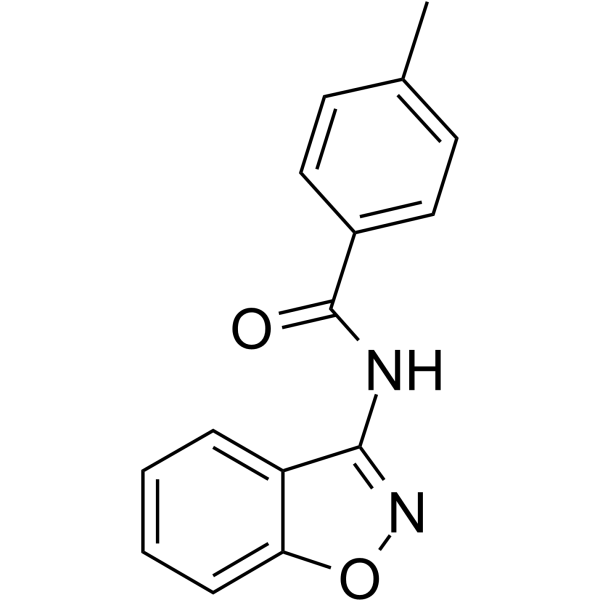
BAMB-4 (ITPKA-IN-C14) is a specific and membrane-permeable ITPKA inhibitor. BAMB-4 has high stability and membrane permeability and against the inositol-1,4,5-trisphosphate (InsP3) kinase activity of inositol-1,4,5-trisphosphate-3-kinase A (ITPKA) with an IC50 value of 20 μM. BAMB-4 can be used for the research of metastasis of lung cancer.
For research use only. We do not sell to patients.
- Purity : 99.99%
- CAS No.: 891025-25-5
- Formula: C15H12N2O2
- Molecular Weight:252.27
-
Storage:Powder -20°C, 3 years , 4°C, 2 years ; In solvent -80°C, 2 years , -20°C, 1 year

To place orders, for customer services and technical support, please contact: MedChemExpress USA
Tel: 609-228-6898 E-mail: [email protected] [email protected]


-
 Biological Activity
-
Chemical Information
-
Solvent & Solubility
- Protocols
- Purity & Documentation
- References
-
 Help & FAQs


-
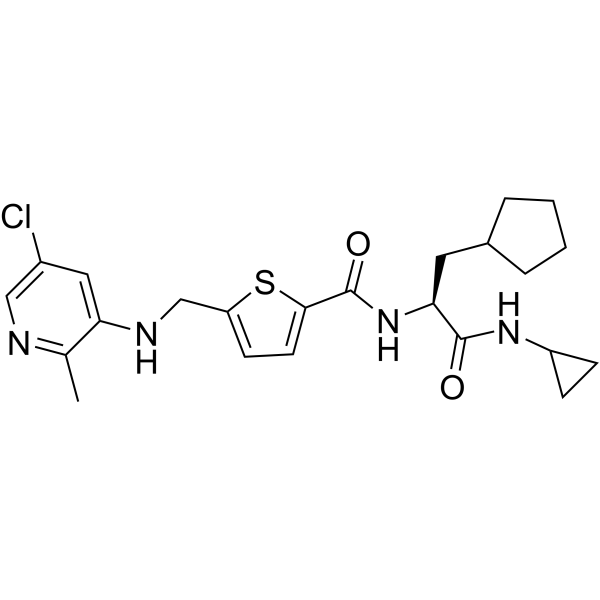
HY-15832
GSK 2830371Wip1 Phosphatase Inhibitor -
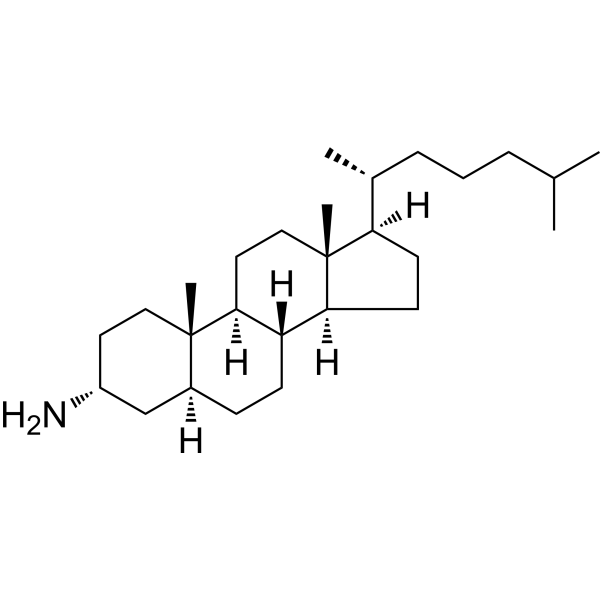
HY-19776
3α-AminocholestanePhosphatase Inhibitor -
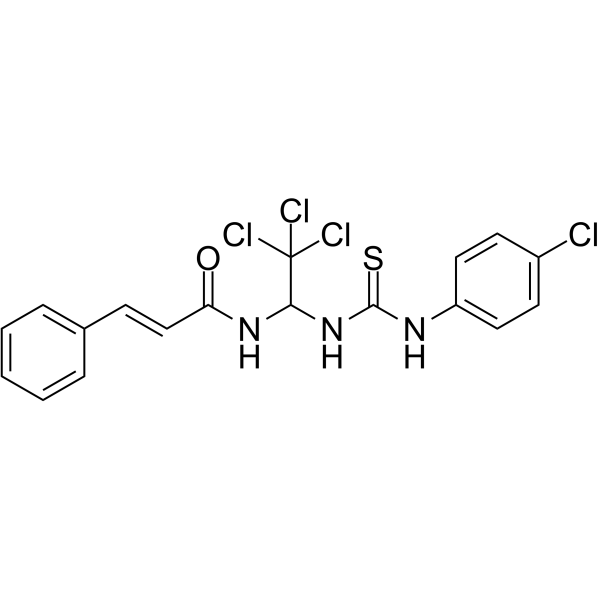
HY-15969
Sal003eIF2α Phophatase Inhibitor -
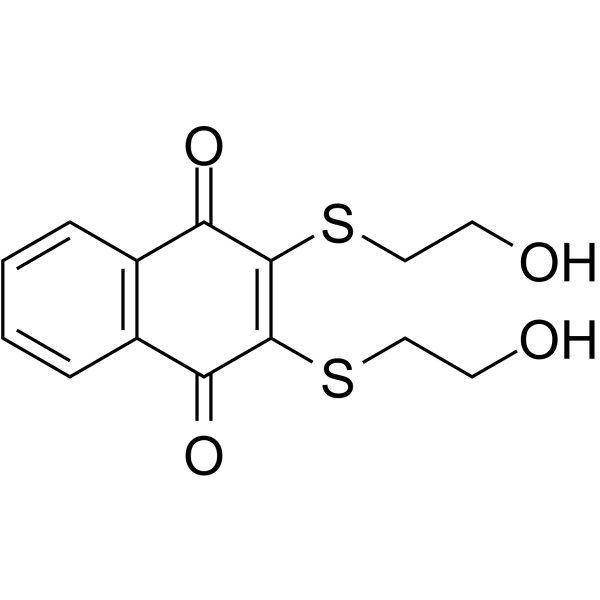
HY-108543
NSC 95397Cdc25 Phosphatase Inhibitor -
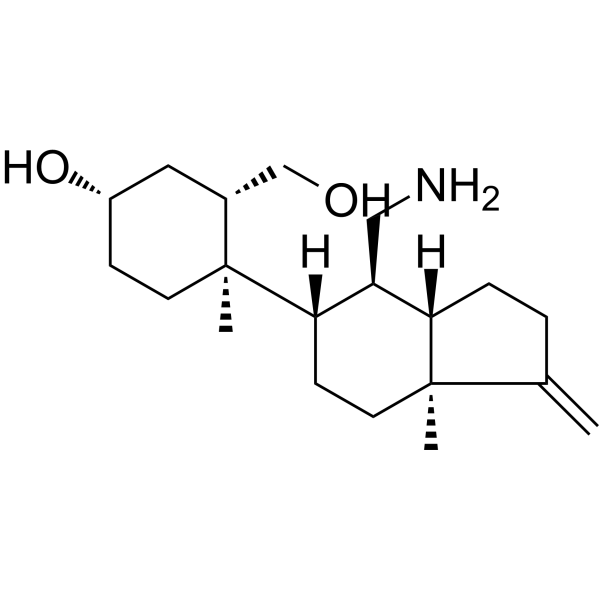
HY-109011
RosiptorSHIP1 Activator -
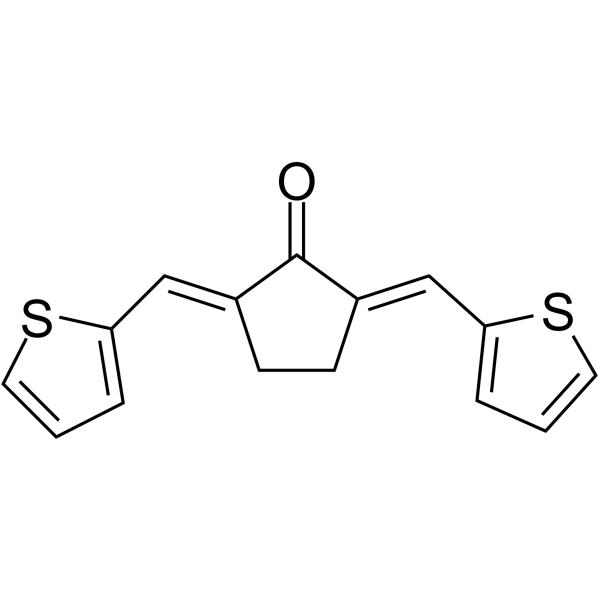
HY-15880
CCT007093PPM1D/Wip1 Inhibitor -
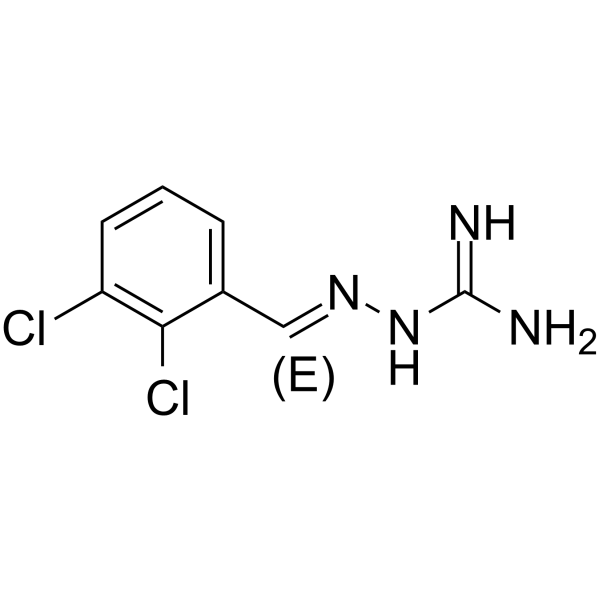
HY-123960
Raphin1Phosphatase Inhibitor -
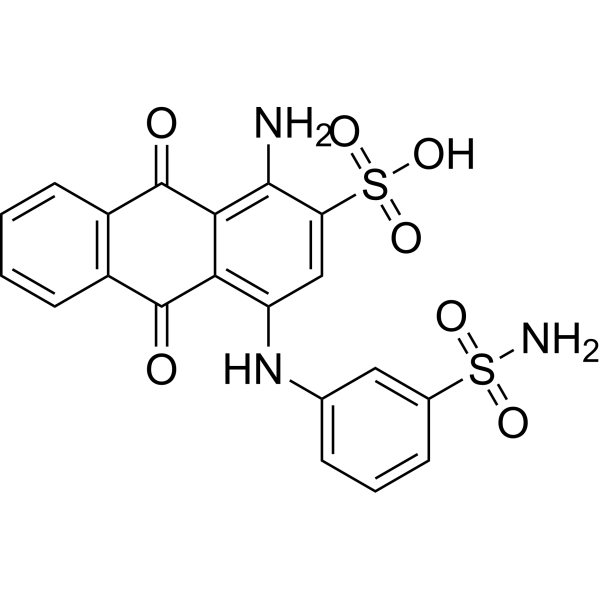
HY-19819
NSC117079PHLPP Inhibitor -
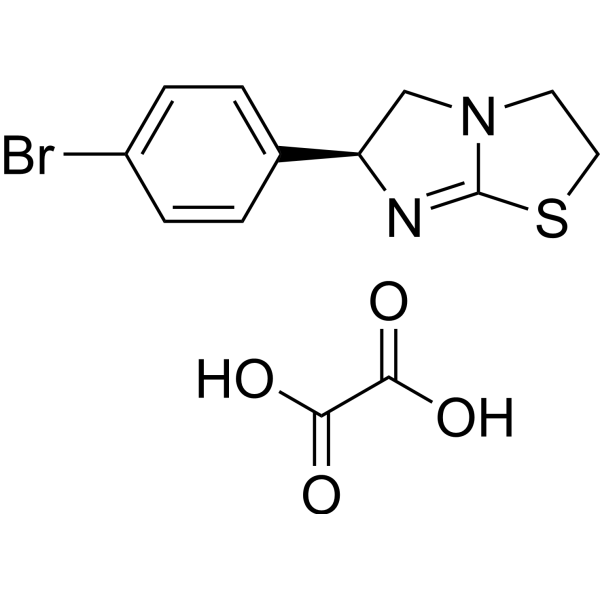
HY-19695
(-)-p-Bromotetramisole oxalateAlkaline Phosphatase Inhibitor -
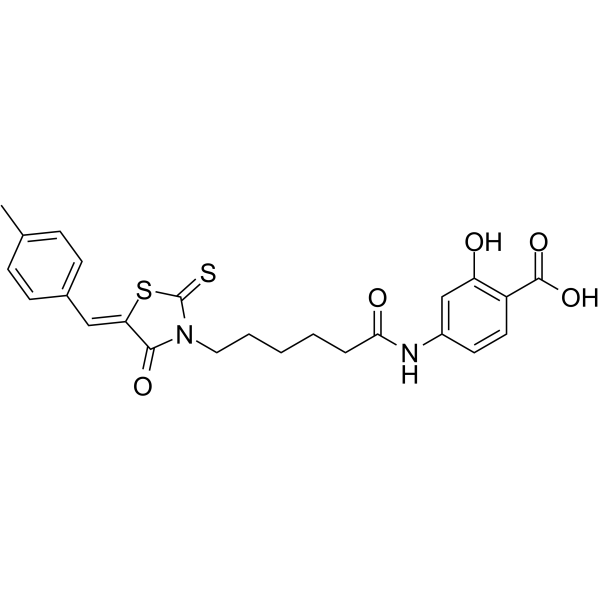
HY-101510
F1063-0967DUSP26 Inhibitor -
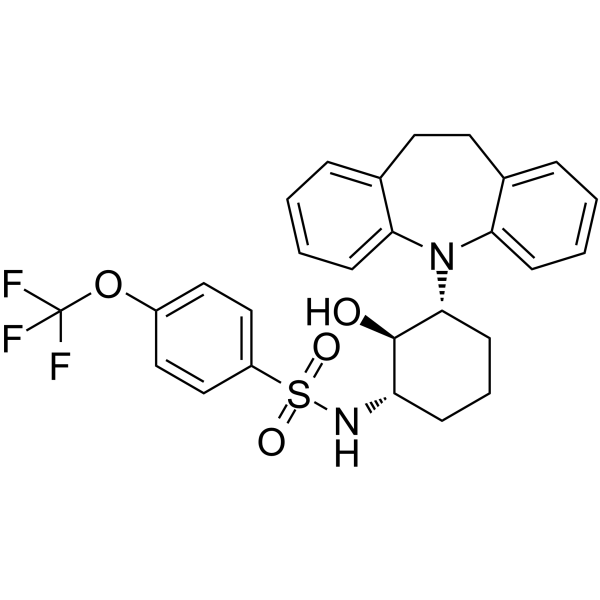
HY-120272
SMAP-2PP2A Activator -
HY-18685
CPDASHIP2 Inhibitor
Publications Citing Use of MedChemExpress (MCE) BAMB-4
More

Biological Activity
Description
IC50 & Target
IC50: 37 μM (ITPKA); 20 μM (InsP3 kinase)[1]
In Vitro
BAMB-4 (0.3-40 μM) has ITPKA inhibiton effect with an IC50 value of 37 μM[1].
BAMB-4 (40 μM) inhibits InsP3 kinase activity with an IC50 value of 20 μM[1].
BAMB-4 (100 μM, overnight) has high specificity and the high cellular uptake[1].
BAMP-4 (0, 10, 20 and 40 μM) shows increased Km and decreased V max [1].
BAMP-4 (0-30 μM) is a mixed type inhibitor with respect to ATP and InsP3 and does not only affect binding of ATP but also binding of InsP3, which affects turnover of two substrate exhibit a higher inhibition specifcity[1].
MedChemExpress (MCE) has not independently confirmed the accuracy of these methods. They are for reference only.


Chemical Information
-
CAS No. 891025-25-5
-
Appearance Solid
-
Molecular Weight 252.27
-
Formula C15H12N2O2
-
Color White to off-white
-
SMILES
O=C(C1=CC=C(C)C=C1)NC2=NOC3=CC=CC=C23
-
Synonyms
ITPKA-IN-C14
-
Shipping
Room temperature in continental US; may vary elsewhere.
-
Storage
Powder -20°C 3 years 4°C 2 years In solvent -80°C 2 years -20°C 1 year


Publications (1)
-
Journal Impact Factor
-
Most Recent
-
Phytomedicine
Tongmai Yishen Formula alleviates post-stroke depression by restoring neuronal homeostasis in the lateral habenula via the ITPKA signaling pathway. [Abstract]2026 Jan 21:153:157866. PMID: 41655549


Solvent & Solubility
In Vitro:
DMSO : ≥ 40 mg/mL (158.56 mM; Hygroscopic DMSO has a significant impact on the solubility of product, please use newly opened DMSO)
* "≥" means soluble, but saturation unknown.
Please refer to the solubility information to select the appropriate solvent. Once prepared, please aliquot and store the solution to prevent product inactivation from repeated freeze-thaw cycles.
Storage method and period of stock solution: -80°C, 2 years; -20°C, 1 year. When stored at -80°C, please use it within 2 years. When stored at -20°C, please use it within 1 year.
Please refer to the solubility information to select the appropriate solvent. Once prepared, please aliquot and store the solution to prevent product inactivation from repeated freeze-thaw cycles.
Storage method and period of stock solution: -80°C, 2 years; -20°C, 1 year. When stored at -80°C, please use it within 2 years. When stored at -20°C, please use it within 1 year.
Concentration (start) × Volume (start) = Concentration (final) × Volume (final)
In Vivo:
Select the appropriate dissolution method based on your experimental animal and administration route.
- For the following dissolution methods, please ensure to first prepare a clear stock solution using an In Vitro approach and then sequentially add co-solvents:
- To ensure reliable experimental results, the clarified stock solution can be appropriately stored based on storage conditions. As for the working solution for In Vivo experiments, it is recommended to prepare freshly and use it on the same day.
- The percentages shown for the solvents indicate their volumetric ratio in the final prepared solution. If precipitation or phase separation occurs during preparation, heat and/or sonication can be used to aid dissolution.
In Vivo Dissolution Calculator
Please enter the basic information of animal experiments:
-
-
-
-
Recommended: Prepare an additional quantity of animals to account for potential losses during experiments.
Please enter your animal formula composition:
-
%DMSO +
Recommended: Keep the proportion of DMSO in working solution below 2% if your animal is weak.
-
%+
-
+%Tween-80 + +
-
%Saline +
The co-solvents required include: DMSO, . All of co-solvents are available by MedChemExpress (MCE). , Tween 80. All of co-solvents are available by MedChemExpress (MCE).
Working solution concentration: 0.22 mg/mL
Method for preparing stock solution: mg drug dissolved in μL DMSO. Stock solution concentration: mg/mL.
1. Take μL DMSO stock solution;
2. Add μL .
μL , mix evenly;
3. Then add μL Tween 80, mix evenly;
4. Then add μL
Please ensure that the stock solution in the first step is dissolved to a clear state, and add co-solvents in sequence. You can use ultrasonic heating (ultrasonic cleaner, recommended frequency 20-40 kHz), vortexing, etc. to assist dissolution.


Purity & Documentation
-
Data Sheet (275 KB)
-
SDS (393 KB)
- English - EN (393 KB)
- Français - FR (393 KB)
- Deutsch - DE (393 KB)
- Norwegian - NO (393 KB)
- Español - ES (393 KB)
- Swedish - SV (393 KB)
- Italian - IT (393 KB)
- Korean - KR (393 KB)
- Portuguese - PT (393 KB)
-
Handling Instructions (2659 KB)
References


Complete Stock Solution Preparation Table
Please refer to the solubility information to select the appropriate solvent. Once prepared, please aliquot and store the solution to prevent product inactivation from repeated freeze-thaw cycles.
Storage method and period of stock solution: -80°C, 2 years; -20°C, 1 year. When stored at -80°C, please use it within 2 years. When stored at -20°C, please use it within 1 year.
| Optional Solvent | Concentration Solvent Mass | 1 mg | 5 mg | 10 mg | 25 mg |
|---|---|---|---|---|---|
| DMSO | 1 mM | 3.9640 mL | 19.8200 mL | 39.6401 mL | 99.1002 mL |
| 5 mM | 0.7928 mL | 3.9640 mL | 7.9280 mL | 19.8200 mL | |
| 10 mM | 0.3964 mL | 1.9820 mL | 3.9640 mL | 9.9100 mL | |
| 15 mM | 0.2643 mL | 1.3213 mL | 2.6427 mL | 6.6067 mL | |
| 20 mM | 0.1982 mL | 0.9910 mL | 1.9820 mL | 4.9550 mL | |
| 25 mM | 0.1586 mL | 0.7928 mL | 1.5856 mL | 3.9640 mL | |
| 30 mM | 0.1321 mL | 0.6607 mL | 1.3213 mL | 3.3033 mL | |
| 40 mM | 0.0991 mL | 0.4955 mL | 0.9910 mL | 2.4775 mL | |
| 50 mM | 0.0793 mL | 0.3964 mL | 0.7928 mL | 1.9820 mL | |
| 60 mM | 0.0661 mL | 0.3303 mL | 0.6607 mL | 1.6517 mL | |
| 80 mM | 0.0496 mL | 0.2478 mL | 0.4955 mL | 1.2388 mL | |
| 100 mM | 0.0396 mL | 0.1982 mL | 0.3964 mL | 0.9910 mL |


BAMB-4 Related Classifications
HY-16694 Related Classifications
 Powered by Bioz