1. Search Result
Search Result
Results for "

Hormone-dependent cancers

" in MedChemExpress (MCE) Product Catalog:

29

Inhibitors & Agonists

3

Peptides

3

Natural
Products

6

Isotope-Labeled Compounds

Cat. No. Product Name Target Research Areas Chemical Structure
  • HY-13632
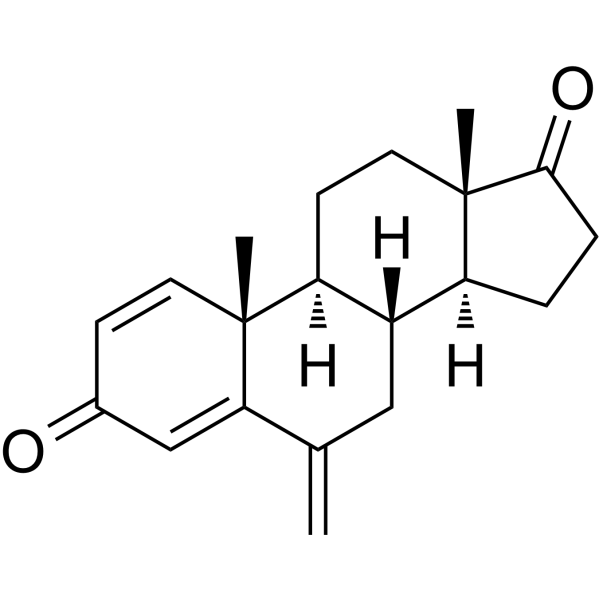
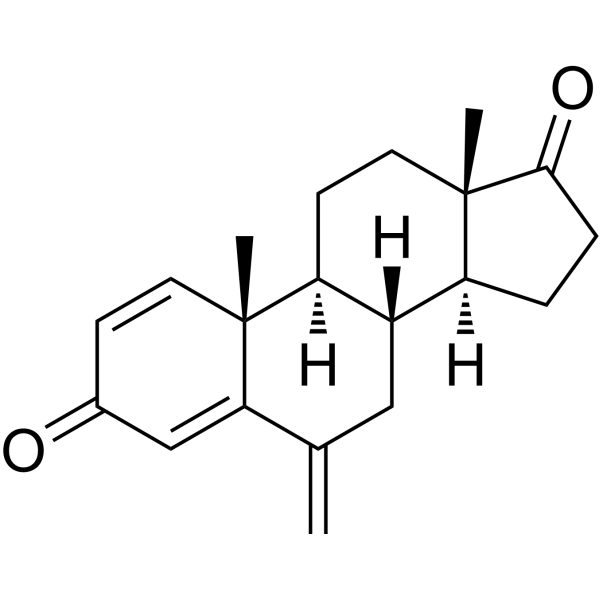
    Exemestane
    Maximum Cited Publications
    7 Publications Verification

    FCE 24304; EXE

    Cytochrome P450 Endocrinology Cancer
    Exemestane (FCE 24304) is a selective, irreversible and orally active steroidal aromatase inhibitor with IC50s of 30 nM and 40 nM for human placental and rat ovarian aromatase, respectively. Exemestane can be used for hormone-dependent breast cancer research .
    Exemestane
  • HY-16474

    TAK-385

    GnRH Receptor Endocrinology Cancer
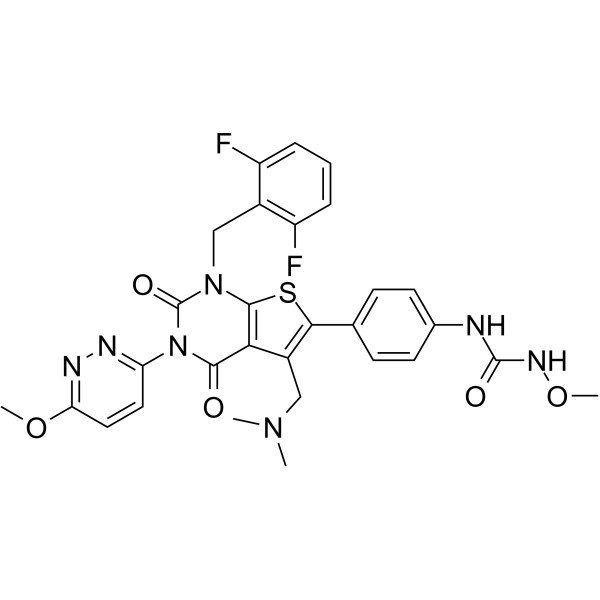
    Relugolix (TAK-385)?is a potent, orally active, nonpeptidic gonadotropin-releasing hormone (GnRH) antagonist. Relugolix possesses high affinity and potent antagonistic activity for human receptor (binding IC50=0.33 nM) and monkey receptor (IC50=0.32 nM) compared with TAK-013 (HY-100209) . Relugolix is used for the study of sex-hormone-dependent diseases, such as including endometriosis, uterine fibroids and prostate cancer et al .
    Relugolix
  • HY-125209

    DNA/RNA Synthesis Cancer
    TH5427 is a promising, targeted inhibitor that can be used to further study NUDT5 activity and ADP-ribose metabolism. TH5427, blocks progestin-dependent, PAR-derived nuclear ATP synthesis and subsequent chromatin remodeling, gene regulation and proliferation in breast cancer cells. NUDT5 is recently identified as a rheostat of hormone-dependent gene regulation and proliferation in breast cancer cells .
    TH5427
  • HY-P2161B
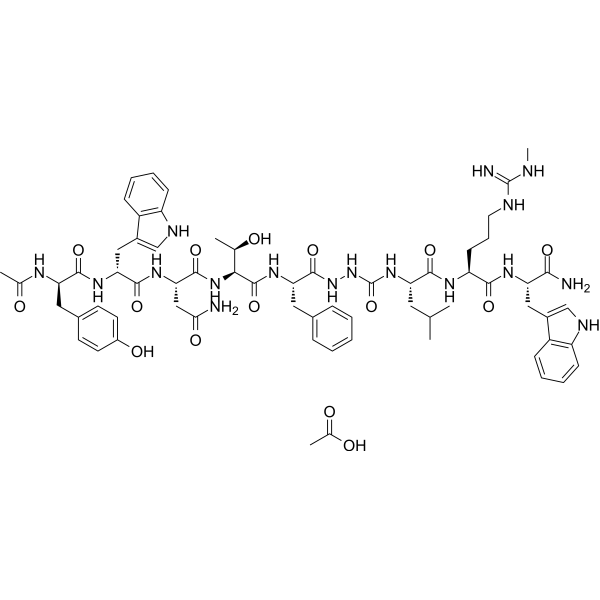
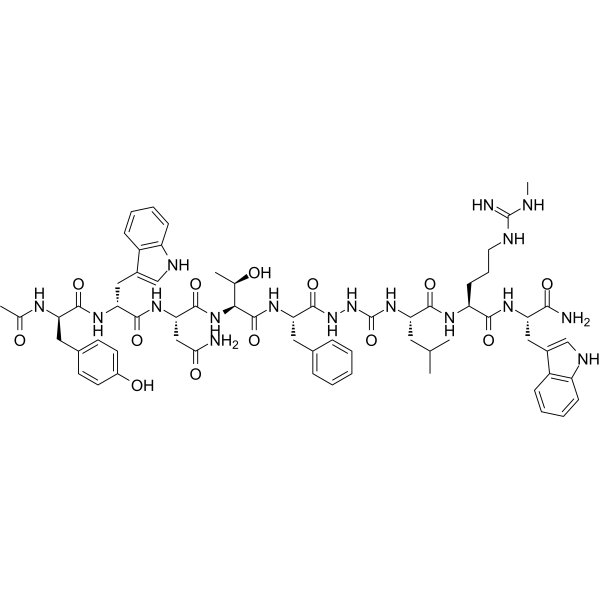
    TAK-683 acetate
    4 Publications Verification

    Kisspeptin Receptor Cancer
    TAK-683 acetate is a potent full KISS1 receptor (KISS1R) agonist (IC50=170 pM) with improved metabolic stability. TAK-683 acetate is a nonapeptide metastin analog, exhibits agonistic activities to KISS1R with EC50 values of 0.96 nM and 1.6 nM for human and rat, respectively . TAK-683 acetate depletes GnRH in the hypothalamus and reduces plasma FSH, LH, and testosterone levels in vivo, it has the potential for the study of hormone-dependent prostate cancer .
    TAK-683 acetate
  • HY-13632R
    Exemestane (Standard)
    Maximum Cited Publications
    7 Publications Verification

    FCE 24304(Standard); EXE (Standard)

    Cytochrome P450 Reference Standards Endocrinology Cancer
    Exemestane (Standard) is the analytical standard of Exemestane. This product is intended for research and analytical applications. Exemestane (FCE 24304) is a selective, irreversible and orally active steroidal aromatase inhibitor with IC50s of 30 nM and 40 nM for human placental and rat ovarian aromatase, respectively. Exemestane can be used for hormone-dependent breast cancer research .
    Exemestane (Standard)
  • HY-P2161

    Kisspeptin Receptor Cancer
    TAK-683 is a potent full KISS1 receptor (KISS1R) agonist (IC50=170 pM) with improved metabolic stability. TAK-683 is a nonapeptide metastin analog, exhibits agonistic activities to KISS1R with EC50 values of 0.96 nM and 1.6 nM for human and rat, respectively . TAK-683 depletes GnRH in the hypothalamus and reduces plasma FSH, LH, and testosterone levels in vivo, it has the potential for the study of hormone-dependent prostate cancer .
    TAK-683
  • HY-179450

    Cytochrome P450 Cancer
    Aromatase-IN-7 (compound 75) is a potent and selective aromatase inhibitor (IC50 = 5.78 nM), exhibiting potency comparable to Letrozole (HY-14248). Aromatase-IN-7 exhibits potent aromatase inhibition both in vitro and in vivo. Aromatase-IN-7 can be used for hormone-dependent breast cancer (HDBC) research .
    Aromatase-IN-7
  • HY-16474R

    TAK-385 (Standard)

    Reference Standards GnRH Receptor Endocrinology Cancer
    Relugolix (Standard) is the analytical standard of Relugolix. This product is intended for research and analytical applications. Relugolix (TAK-385) is a potent, orally active, nonpeptidic gonadotropin-releasing hormone (GnRH) antagonist. Relugolix possesses high affinity and potent antagonistic activity for human receptor (binding IC50=0.33 nM) and monkey receptor (IC50=0.32 nM) compared with TAK-013 (HY-100209) . Relugolix is used for the study of sex-hormone-dependent diseases, such as including endometriosis, uterine fibroids and prostate cancer et al .
    Relugolix (Standard)
  • HY-125916

    Endogenous Metabolite Cancer
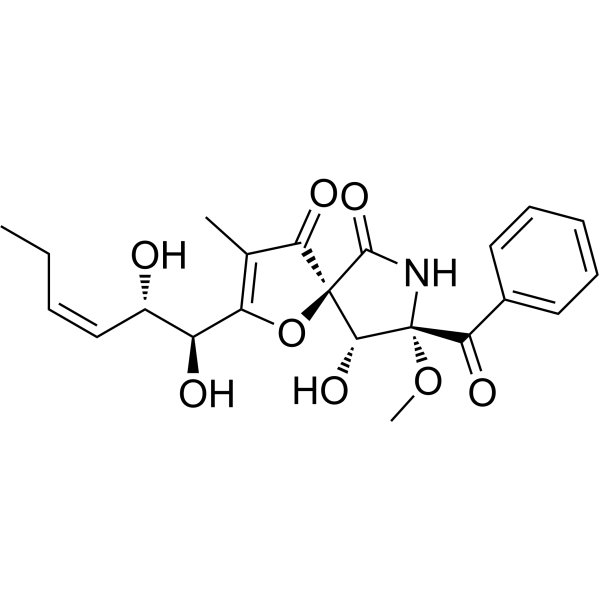
    Pseurotin A is a secondary metabolite of Aspergillus and other fungi. Pseurotin A is a competitive inhibitor of chitin synthase and a neuritogenic agent. Pseurotin A inhibits IgE production (IC50 = 3.6 μM). Pseurotin A inhibits the PCSK9-LDLr interaction. Pseurotin A shows dose-dependent reduction of PCSK9, along with increased LDLR levels in hormone-dependent breast cancer cell lines. Pseurotin A exhibits antitumor activity .
    Pseurotin A
  • HY-178419

    GnRH Receptor Cancer
    GnRH-R antagonist-3 (Compound 37) is a Gonadotropin releasing hormone receptor (GnRH-R) antagonist with IC50s of 94 and 275 nM for rat and human GnRH-R, respectively. GnRH-R antagonist-3 can be used for hormone dependent diseases such as endometriosis, breast and prostate cancer research .
    GnRH-R antagonist-3
  • HY-16474S

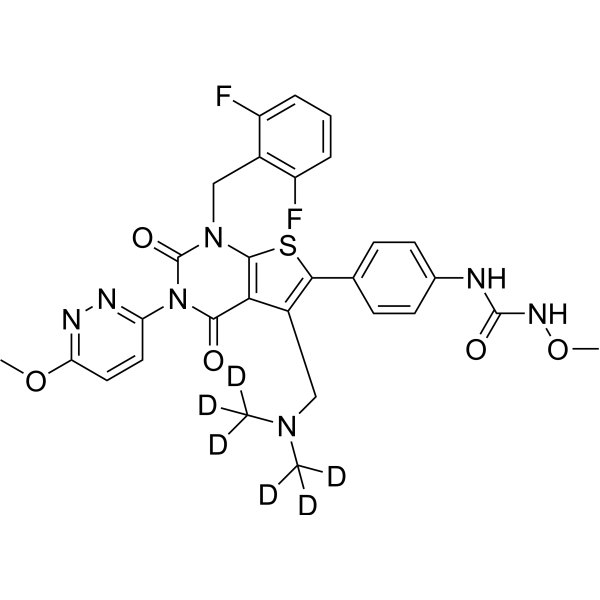
    TAK-385-d6

    Isotope-Labeled Compounds GnRH Receptor Endocrinology Cancer
    Relugolix-d6 is deuterium labeled Relugolix. Relugolix (TAK-385)?is a potent, orally active, nonpeptidic gonadotropin-releasing hormone (GnRH) antagonist. Relugolix possesses high affinity and potent antagonistic activity for human receptor (binding IC50=0.33 nM) and monkey receptor (IC50=0.32 nM) compared with TAK-013 (HY-100209) . Relugolix is used for the study of sex-hormone-dependent diseases, such as including endometriosis, uterine fibroids and prostate cancer et al .
    Relugolix-d6
  • HY-176270

    17β-HSD Neurological Disease Cancer
    ESC1002755 is a 17β-HSD10 inhibitor with an IC50 of 19 nM. ESC1002755 has significant enzyme specificity with non-/uncompetitive inhibition against the cofactor NADH. ESC1002755 shows minimal cytotoxicity towards the HEK293 at 50 μM. ESC1002755 is promising for Alzheimer’s disease and hormone-dependent cancers (such as prostate, bone and colorectal cancer) research .
    ESC1002755
  • HY-150542

    Steroid Sulfatase Cancer
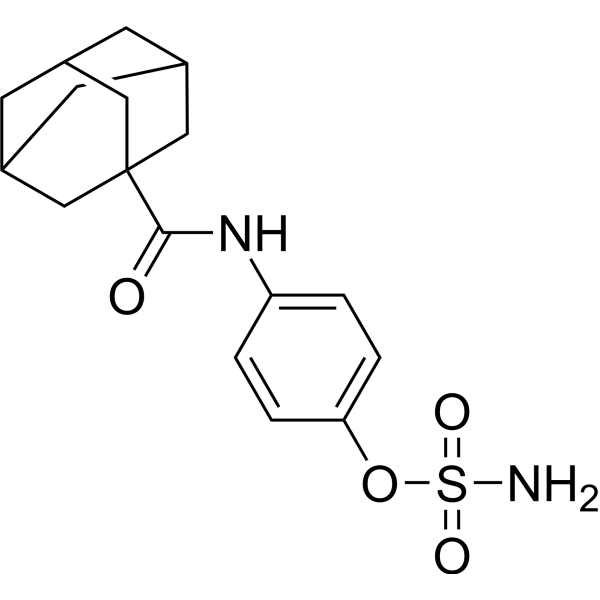
    Steroid sulfatase -IN-2 is an active steroid sulfatase (STS) inhibitor with an IC50 value of 109.5 nM. Steroid sulfatase-IN-2 can be used for the research of hormone-dependent cancers, such as estrogen-dependent breast and endometrial cancer .
    Steroid sulfatase-IN-2
  • HY-N8366

    Phosphatase Endocrinology Cancer
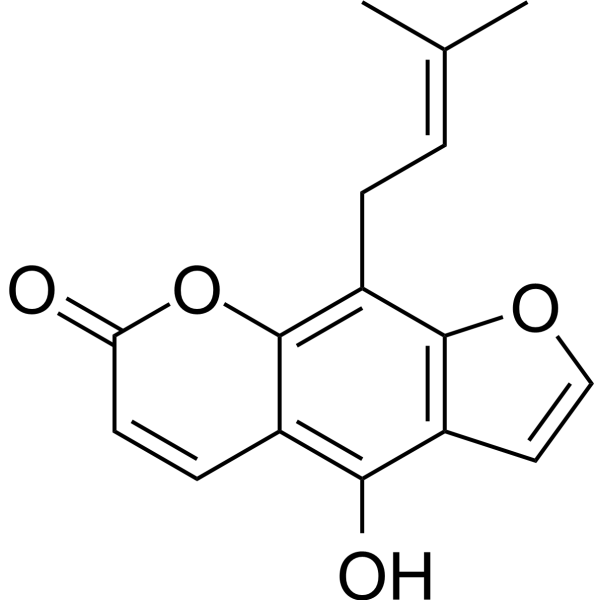
    Alloisoimperatorin (Compound 5) is a phytoestrogen that can be isolated from Angelica dahurica. Alloisoimperatorin can induce alkaline phosphatase (AP) activity with an EC50 of 0.8 μg/mL. Alloisoimperatorin can be used in the study of hormone-dependent cancers and the alleviation of menopausal symptoms .
    Alloisoimperatorin
  • HY-13632S

    FCE 24304-d2; EXE-d2

    Isotope-Labeled Compounds Cytochrome P450 Endocrinology Cancer
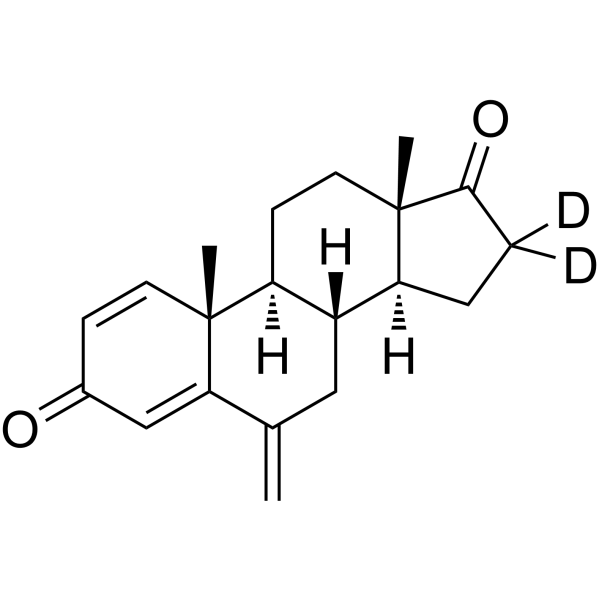
    Exemestane-d2 is the deuterium labeled Exemestane. Exemestane (FCE 24304) is a selective, irreversible and orally active steroidal aromatase inhibitor with IC50s of 30 nM and 40 nM for human placental and rat ovarian aromatase, respectively. Exemestane can be used for hormone-dependent breast cancer research .
    Exemestane-d2
  • HY-13632S2

    FCE 24304-d3; EXE-d3

    Isotope-Labeled Compounds Cytochrome P450 Endocrinology Cancer
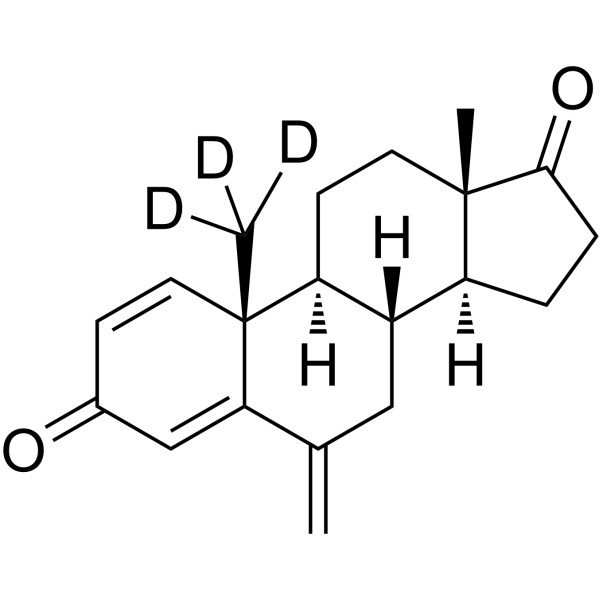
    Exemestane-d3 is the deuterium labeled Exemestane. Exemestane (FCE 24304) is a selective, irreversible and orally active steroidal aromatase inhibitor with IC50s of 30 nM and 40 nM for human placental and rat ovarian aromatase, respectively. Exemestane can be used for hormone-dependent breast cancer research .
    Exemestane-d3
  • HY-13632S1

    FCE 24304-13C3; EXE-13C3

    Isotope-Labeled Compounds Cytochrome P450 Endocrinology Cancer
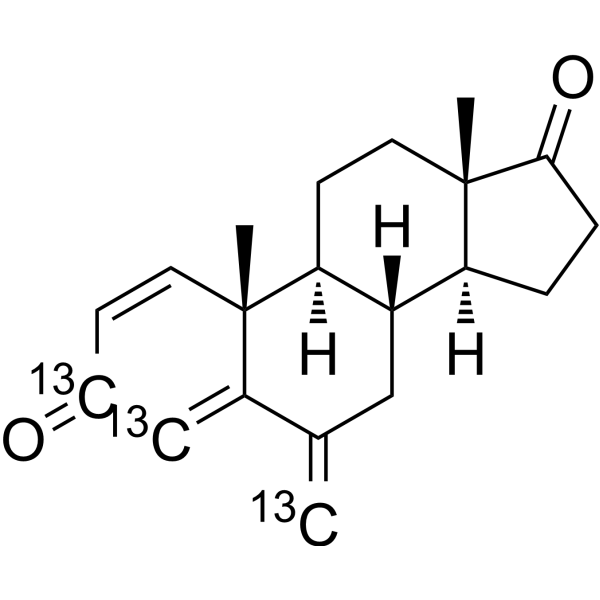
    Exemestane- 13C3 is the 13C-labeled Exemestane. Exemestane (FCE 24304) is a selective, irreversible and orally active steroidal aromatase inhibitor with IC50s of 30 nM and 40 nM for human placental and rat ovarian aromatase, respectively. Exemestane can be used for hormone-dependent breast cancer research .
    Exemestane-13C3
  • HY-13632S6

    FCE 24304-d4; EXE-d4

    Isotope-Labeled Compounds Cytochrome P450 Endocrinology Cancer
    Exemestane-d4 (FCE 24304-d4) is deuterium labeled Exemestane. Exemestane (FCE 24304) is a selective, irreversible and orally active steroidal aromatase inhibitor with IC50s of 30 nM and 40 nM for human placental and rat ovarian aromatase, respectively. Exemestane can be used for hormone-dependent breast cancer research .
    Exemestane-d4
  • HY-13632S5

    FCE 24304-13C,d2; EXE-13C,d2

    Cytochrome P450 Isotope-Labeled Compounds Endocrinology Cancer
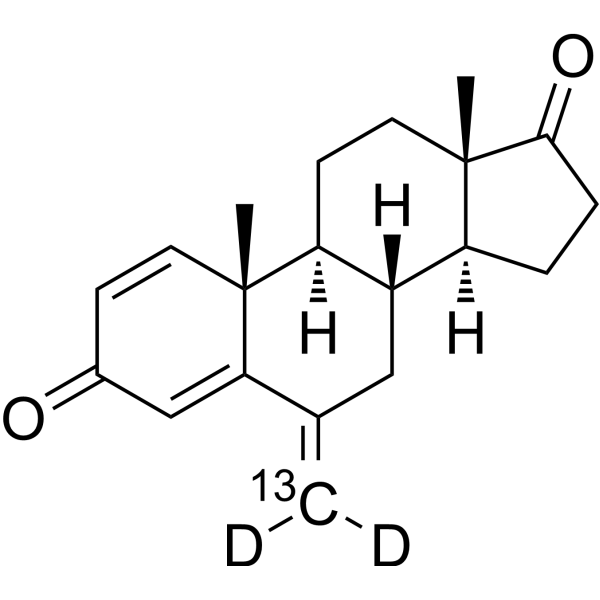
    Exemestane- 13C,d2 is 13C and deuterated labeled Exemestane (HY-13632). Exemestane (FCE 24304) is a selective, irreversible and orally active steroidal aromatase inhibitor with IC50s of 30 nM and 40 nM for human placental and rat ovarian aromatase, respectively. Exemestane can be used for hormone-dependent breast cancer research .
    Exemestane-13C,d2
  • HY-W267205

    17β-HSD Endocrinology Cancer
    3-Acetyl-7-Hydroxycoumarin (Compound 2) is a high selective 17-beta-hydroxysteroid dehydrogenase type 1 (17β-HSD1) inhibitor. 3-Acetyl-7-Hydroxycoumarin shows a significant improvement of the inhibitory potency, with 57% inhibition of 17β-HSD1 at 6 μM. 3-Acetyl-7-Hydroxycoumarin is promising for research of hormone-dependent diseases, such as breast cancer and endometriosis .
    3-Acetyl-7-Hydroxycoumarin
  • HY-155535

    17β-HSD Neurological Disease
    17β-HSD10-IN-2 (compound 11) is a benzothiazolylurea-based inhibitor,targeting to 17β-hydroxysteroid dehydrogenase type 10 (17β-HSD10),a multifunctional mitochondrial enzyme. 17β-HSD10-IN-2 don't lead to mitochondrial off-targets and cytotoxic or neurotoxic effects. 17β-HSD10 inhibitors can be used for research in Alzheimer's disease (AD) and hormone-dependent cancer .
    17β-HSD10-IN-2
  • HY-P2161A

    Kisspeptin Receptor Cancer
    TAK-683 TFA is a potent full KISS1 receptor (KISS1R) agonist (IC50=170 pM) with improved metabolic stability. TAK-683 TFA is a nonapeptide metastin analog, exhibits agonistic activities to KISS1R with EC50 values of 0.96 nM and 1.6 nM for human and rat, respectively . TAK-683 TFA depletes GnRH in the hypothalamus and reduces plasma FSH, LH, and testosterone levels in vivo, it has the potential for the study of hormone-dependent prostate cancer .
    TAK-683 TFA
  • HY-178418

    GnRH Receptor Cancer
    GnRH-R antagonist-2 (Compound 44c) is a Gonadotropin releasing hormone receptor (GnRH-R) antagonist with IC50s of 43 and 88 nM for rat and human GnRH-R, respectively. GnRH-R antagonist-2 can be used for hormone dependent diseases such as endometriosis, breast and prostate cancer research .
    GnRH-R antagonist-2
  • HY-181408

    Steroid Sulfatase Cancer
    Steroid sulfatase-IN-11 is a steroid sulfatase inhibitor, which functionally inhibits steroid sulfatase activity, reducing the enzyme's ability to hydrolyze steroid sulfates. Steroid sulfatase-IN-11 can be used for the research of hormone-dependent cancers .
    Steroid sulfatase-IN-11
  • HY-149486

    FGFR Cancer
    FGFR1 inhibitor 7 (compound 5) is an inhibitor of FGFR1 Tyrosine Kinase with IC50 value of 0.33 nM. FGFR1 inhibitor 7 shows broad-spectrum cytotoxicity agasinst human cancer cell lines, and inhibits MOLT3 cells with IC50 of 2.1 μM .
    FGFR1 inhibitor 7
  • HY-43322

    17β-HSD Cancer
    7-Coumaryl triflate is a type 17β-HSD1 inhibitor of 17β-hydroxysteroid dehydrogenase. Its IC50 is 360 nM and Ki is 173 nM. 7-Coumaryl triflate shows selectivity for 17β-HSD2 and has no detectable affinity for ERα or ERβ. 7-Coumaryl triflate can be used in related research on hormone-dependent breast cancer .
    7-Coumaryl triflate
  • HY-179686

    Cytochrome P450 Cancer
    CYP11A1-IN-2 (Compound 61) is a selective cholesterol side-chain cleavage enzyme (CYP11A1) inhibitor. CYP11A1-IN-2 can inhibitor steroid biosynthesis and can be used for the research of steroid hormone-dependent cancers, such as prostate cancer .
    CYP11A1-IN-2
  • HY-175554

    Cytochrome P450 Aryl Hydrocarbon Receptor Cancer
    CYP1B1-IN-10 (Compound 15C) is a highly selective human cytochrome P450 1B1 (hCYP1B1) inhibitor (IC50=0.11 μM). CYP1B1-IN-10 is promising for research of hormone-dependent tumors (e.g., breast and ovarian cancers) .
    CYP1B1-IN-10
  • HY-119080

    Progesterone Receptor Endocrinology Cancer
    CP8754 is an orally active, selective human progesterone receptor (hPR) antagonist that blocks progesterone-mediated signaling pathways. CP8754 competitively inhibits the binding of [ 3H]-progesterone to hPR. And in vitro, CP8754 inhibits progesterone-dependent exogenous luciferase and endogenous alkaline phosphatase expression; while in vivo, CP8754 inhibits rabbit endometrial transformation. CP8754 does not significantly bind to human glucocorticoid receptors (hGR), estrogen receptors (hER), or rat androgen receptors (rAR). CP8754 can be used in the study of progesterone-related diseases such as breast cancer, endometriosis, uterine fibroids, and meningioma, as well as hormone-dependent tumors .
    CP8754

Inquiry Online

Your information is safe with us. * Required Fields.

Salutation


Country or Region *

Applicant Name *


Organization Name *

Department *


Email Address *


Product Name *

Cat. No.


Requested quantity *

Phone Number *


Remarks

Inquiry Online

Inquiry Information

Product Name:
Cat. No.:
Quantity:
MCE Japan Authorized Agent:

