1. Search Result
Search Result
Results for "

In silico

" in MedChemExpress (MCE) Product Catalog:

23

Inhibitors & Agonists

3

Natural
Products

Cat. No. Product Name Target Research Areas Chemical Structure
  • HY-N8599
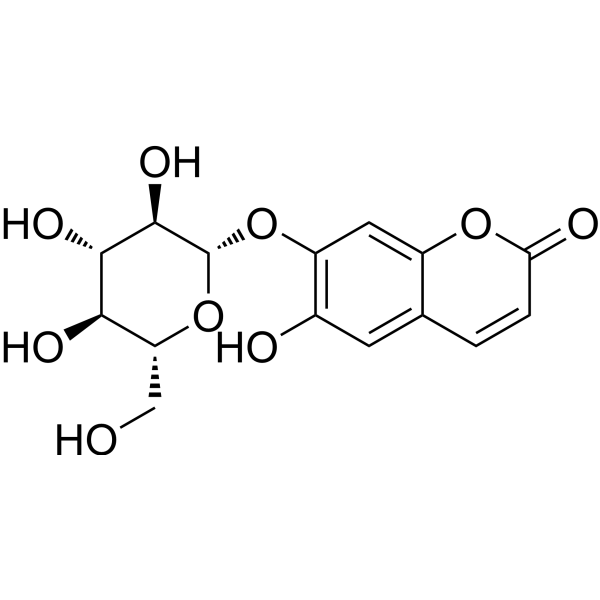
    Cichoriin
    2 Publications Verification

    Amylases Glycosidase Lipase Dipeptidyl Peptidase p38 MAPK PPAR P2Y Receptor NOD-like Receptor (NLR) SARS-CoV Pyroptosis GLUT Angiotensin-converting Enzyme (ACE) NF-κB Infection Metabolic Disease Inflammation/Immunology
    Cichoriin is an orally active coumarin glycoside with broad biological activities. Cichoriin exhibits inhibitory activities against α-amylase, α-glucosidase, pancreatic lipase and DPP-IV, with IC50 values of 5.76, 2.94, 16.83 and 9.16 μg/mL, respectively. Cichoriin significantly improves metabolic dysfunction-associated steatohepatitis (MASH) in mice by activating the AMPK signaling pathway. Cichoriin upregulates PPAR-γ in adipose tissue and alleviates obesity and associated cardiorenal injury in rats. Cichoriin blocks monosodium urate crystal-induced activation of the NLRP3 inflammasome and cell pyroptosis by inhibiting P2Y14R (IC50 = 8.47 nM). In silico virtual screening reveals that Cichoriin has a strong binding affinity for SARS-CoV-2 .
    Cichoriin
  • HY-N7645

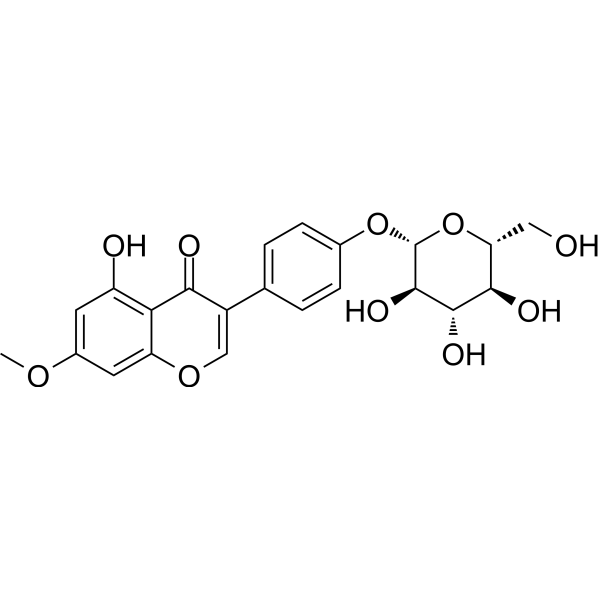
    Trifoside; PrunetIn 4′-O-β-D-glucopyranoside

    Others Cancer
    Prunetrin (Trifoside) is a flavonoid identified as a potential anti-prostate cancer agent in in silico screening .
    Prunetrin
  • HY-W157689
    IDE-IN-2
    1 Publications Verification

    Proteolytic Enzyme IDE Infection Metabolic Disease Cancer
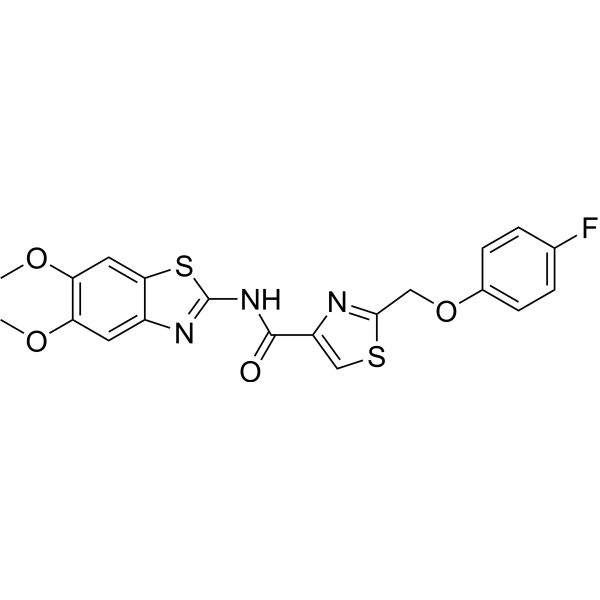
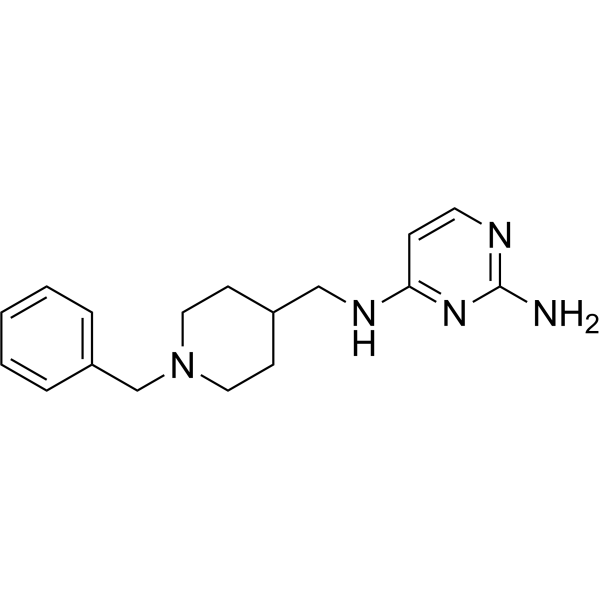
    IDE-IN-2 (Compound 4) is an inhibitor for insulin-degrading enzyme. IDE-IN-2 is predicted to have CYP3A4, CYP2C19, hERG, NADP+, HIF1α and histidine kinase inhibitory activities, and has potential biological activity in anti-diabetic, anti-tumor, anti-bacterial aspects, according to the in silico prediction .
    IDE-IN-2
  • HY-18298

    EGFR Cancer
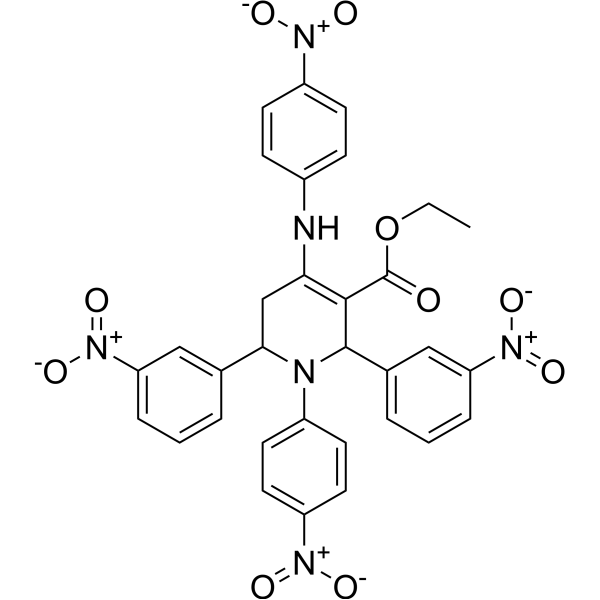
    PD 173955 analog 1 (Compound 26) is an analog of PD 173955 (HY-10395). PD 173955 analog 1 is an inhibitor for EGFR kinase, which exhibits antitumor and toxicological properties. PD 173955 analog 1 exhibits an in silico IC50 of 0.19 μM .
    PD 173955 analog 1
  • HY-178955

    EGFR HSP PI3K Caspase Apoptosis CDK ERK Akt Cancer
    EGFR-IN-182 (Compound 4) is an EGFR inhibitor with an IC50 value of 199 nM. EGFR-IN-182 inhibits HSP90 and PI3K, with IC50 values of 5.007 and 13.596 μM respectively. EGFR-IN-182 exhibits strong anti-proliferative activity against MCF-7 and MDA-MB-231 cells. EGFR-IN-182 downregulates Cyclin D1, inducing cell cycle arrest; it enhances the activity of caspase-9, inducing cell apoptosis. EGFR-IN-182 downregulates the expressions of ERK and AKT. EGFR-IN-182 can be used for research on breast cancer .
    EGFR-IN-182
  • HY-161462

    ERK p38 MAPK Cancer
    ERK2/p38α MAPK-IN-1 (Compound 1, In silico Hit-2) is a potent and selective ERK2 and p38α MAPK inhibitor, with an IC50 of 82 μM for ERK2. ERK2/p38α MAPK-IN-1 binds to the allosteric site of ERK2 and p38α MAPK in distinct manners. ERK2/p38α MAPK-IN-1 can be used for the research of type 2 diabetes .
    ERK2/p38α MAPK-IN-1
  • HY-117413

    ULK Cancer
    SR-17398 is an inhibitor for Unc-51-Like Kinase 1 (ULK1) with an IC50 of 22.4 μM .
    SR-17398
  • HY-155241

    Glycosidase Amylases Metabolic Disease
    α-Amylase/α-Glucosidase-IN-4 (compound 5) is a dual inhibitor of α-glucosidase (Glucosidase) and α-amylase (Amylases) with IC50s of 0.15 μM and 1.10 μM, respectively. α-Amylase/α-Glucosidase-IN-4 has potential antidiabetic activity .
    α-Amylase/α-Glucosidase-IN-4
  • HY-N8890

    Beta-secretase γ-secretase Others
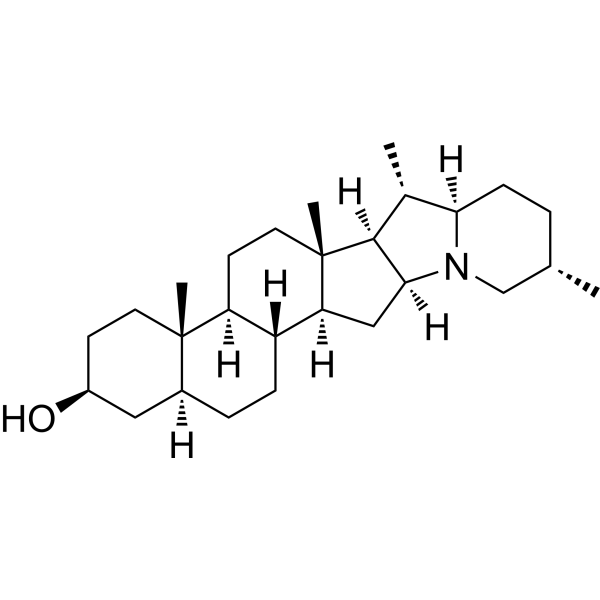
    Demissidine is an alkaloid that can be isolated from potato . Demissidine is a promising dual inhibitors against β- and γ-secretase proteins in silico .
    Demissidine
  • HY-155349

    Cholinesterase (ChE) Neurological Disease
    AChE/BuChE-IN-4(compound 4a) is a multitarget-directed AChE/BuChE inhibitor againstAChEandBuChE, with the IC50 of 2.08 and 7.41 μM .
    AChE/BuChE-IN-4
  • HY-178924

    Bacterial Infection
    Antibacterial agent 298 exhibits significant antibacterial activity against Pseudomonas putida (ATCC 25922) with an IC50 4.48 µg/mL. Antibacterial agent 298 shows strong antibiofilm activity. Antibacterial agent 298 also inhibits approximately 50% of biofilm formation in L. lactis and P. putida. Antibacterial agent 298 can be used for the study of Bacterial infections caused by multidrug-resistant bacteria (MDR) .
    Antibacterial agent 298
  • HY-161064

    Dihydrofolate reductase (DHFR) Cancer
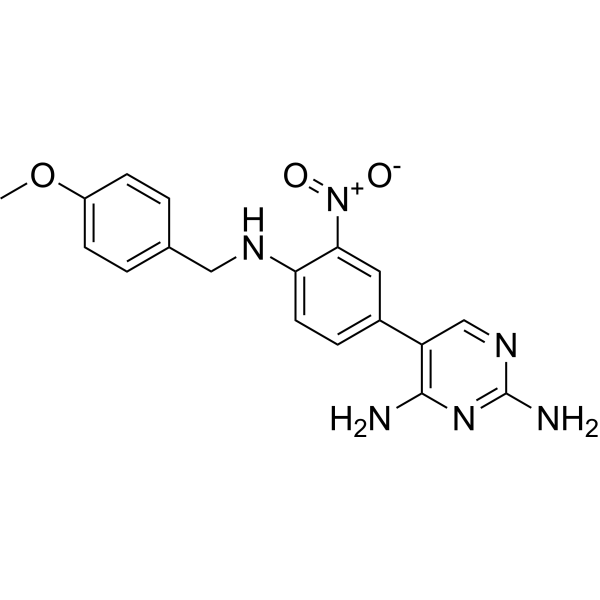
    DHFR-IN-15 (compound 34) is a dihydrofolate reductase (DHFR) inhibitor with potential anticancer activity. DHFR-IN-15 effectively binds to DHFR in cells, reducing DHFR levels to 10 nM .
    DHFR-IN-15
  • HY-161063

    Dihydrofolate reductase (DHFR) Cancer
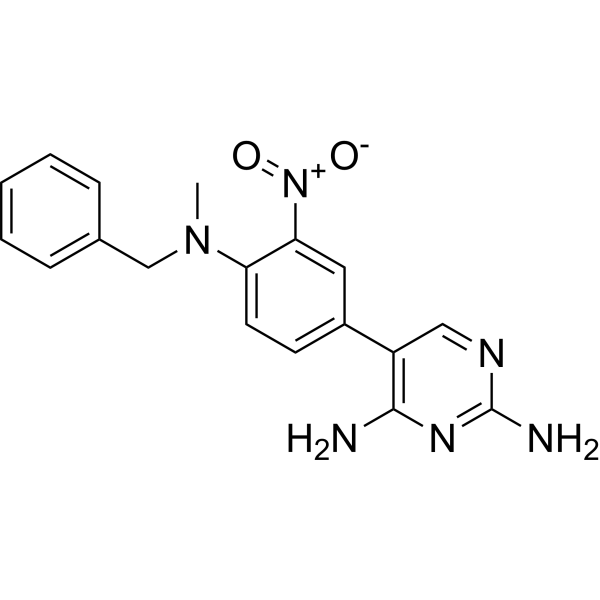
    DHFR-IN-14 (compound 32) is a pyrimethamine (Pyr)-type, dihydrofolate reductase (DHFR) inhibitor with potential anticancer activity .
    DHFR-IN-14
  • HY-163380

    Carbonic Anhydrase Neurological Disease
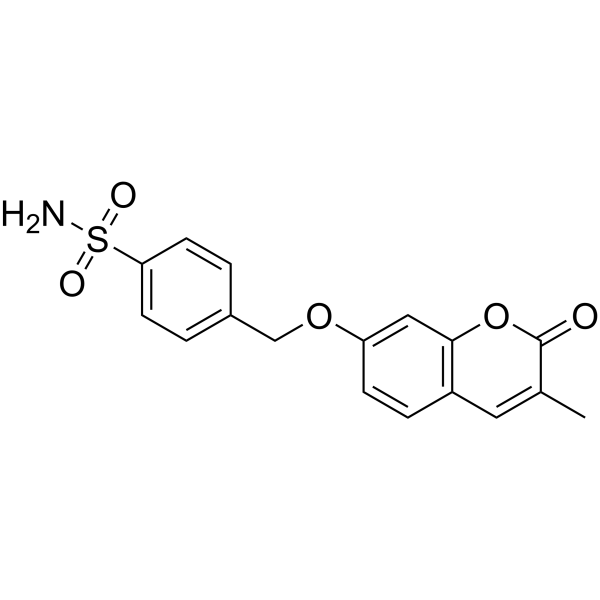
    CA/MAO-B-IN-1 (Compound 78) is a dual inhibitor for human brain carbonic anhydrases (CA) and Monoamine Oxidase-B (MAO-B), with IC50s of 8.8 and 7.0 nM, respectively. CA/MAO-B-IN-1 reveals a human oral absorption of 71.9% through in silico prediction .
    CA/MAO-B-IN-1
  • HY-172678

    5-HT Receptor mTOR Autophagy Neurological Disease
    PUC-10 is a 5-HT6 receptor antagonist with a Ki of 14.6 nM and an IC50 of 32 nM. In silico predictions suggest that PUC-10 is orally active and can cross the blood-brain barrier. PUC-10 can induce autophagy in SH-SY5Y cells by inhibiting the mTOR pathway. PUC-10 can be used in the research of neurological disorders .
    PUC-10
  • HY-157382

    Cholinesterase (ChE) Amyloid-β MMP Neurological Disease
    AChE-IN-51 (compound 8C) is an orally active, non-competitive inhibitor of AChE and BChE (IC50: 84 nM, 97 nM). It also inhibits MMP-2 and amyloid Aβ1-42 aggregates (IC50: 724 nM, 302 nM). AChE-IN-51 has low cytotoxicity and in silico predicted blood-brain barrier permeability. Can be used for research on diseases such as Alzheimer's disease (AD) .
    AChE-IN-51
  • HY-163879

    Monoamine Oxidase Reactive Oxygen Species (ROS) Ferroptosis Neurological Disease
    hMAO-B-IN-9 (Compound 25c) is a non-competitive inhibitor for monoamine oxidase B (MAO-B) with an IC50 of 1.58 µM (hMAO-B). hMAO-B-IN-9 forms complex with iron ions as a chelator, and inhibits Erastin (HY-15763)-induced ferroptosis. hMAO-B-IN-9 exhibits antioxidant activity by downregulating the level of reactive oxygen species (ROS). hMAO-B-IN-9 improves cognitive function in mice, without significant toxicity (30 mg/kg). hMAO-B-IN-9 is blood-brain barrier permeable, according to the in silico prediction .
    hMAO-B-IN-9
  • HY-179487

    Glycosidase Metabolic Disease
    α-Glucosidase-IN-102 (Compound 8e) is a competitive inhibitor of α-glucosidase with an IC50 value of 36.2 μM. α-Glucosidase-IN-102 can be used for research on diabetes .
    α-Glucosidase-IN-102
  • HY-179699

    Caspase Apoptosis Cancer
    Procaspase-3 activator 1 is a potent procaspase-3 activator. Procaspase-3 activator directly activates procaspase-3 through zinc chelation, thereby inducing apoptosis and inhibiting cancer cell proliferation. Procaspase-3 activator 1 can be used for the research of non-small cell lung cancer (NSCLC) and melanoma .
    Procaspase-3 activator 1
  • HY-180778

    Insecticide Cholinesterase (ChE) Infection
    Insecticidal agent 28 (Compound 10) is an insecticide targeting the Culex pipiens. Insecticidal agent 28 exhibits LC₅₀ values for killing larvae and adults of 40.15 ppm and 55.02 ppm respectively. Insecticidal agent 28 inhibits the acetylcholinesterase (AchE) of the Anopheles gambiae. Insecticidal agent 28 shows lower cytotoxicity .
    Insecticidal agent 28
  • HY-180823

    Topoisomerase EGFR Apoptosis Caspase Bcl-2 Family Cancer
    Topoisomerase II/EGFR-IN-2 (Compound 3) is an inhibitor of Topoisomerase IIα (IC50 = 0.122 μM) and EGFR-TK WT (IC50 = 16.8 μM). Topoisomerase II/EGFR-IN-2 inhibits the proliferation of HeLa and HepG2 cells, inducing cell cycle arrest and apoptosis. Topoisomerase II/EGFR-IN-2 upregulates caspase-3 and Bax, and downregulates Bcl-2. Topoisomerase II/EGFR-IN-2 can be used to study liver cancer and cervical cancer .
    Topoisomerase II/EGFR-IN-2
  • HY-181824

    Bacterial Infection
    Cholera toxin-IN-1 is a potent competitive inhibitor of cholera toxin B subunit (CTB) with an IC50 value of 11.78 μM. Cholera toxin-IN-1 forms stable hydrogen bonds and hydrophobic interactions. Cholera toxin-IN-1 competitively blocks the binding of CTB to GM1 ganglioside. Cholera toxin-IN-1 can be used for the research of cholera .
    Cholera toxin-IN-1
  • HY-182763

    EGFR Raf Caspase Apoptosis Bcl-2 Family Cancer
    EGFR/BRAFV600E-IN-7 is a dual EGFR and BRAF V600E kinase inhibitor with human IC50 values of 0.12 μM, 0.80 μM, 1.20 μM for EGFR and 0.05 μM, 0.22 μM, 0.78 μM for BRAF V600E.EGFR/BRAFV600E-IN-7 interacts with key ATP-binding site residues of EGFR and BRAF V600E, including hydrogen bonding with EGFR Met769 and BRAF V600E Cys532.EGFR/BRAFV600E-IN-7 induces apoptosis via caspase-3/8/9 activation, modulates Bax and Bcl-2 expression, scavenges free radicals, and exhibits antiproliferative activity against human cancer cell lines.EGFR/BRAFV600E-IN-7 displays drug-likeness with no PAINS/Brenk structural alerts per in silico predictions.EGFR/BRAFV600E-IN-7 can be used for the research of colon cancer, pancreatic cancer, lung cancer, breast cancer .
    EGFR/BRAFV600E-IN-7

Inquiry Online

Your information is safe with us. * Required Fields.

Salutation


Country or Region *

Applicant Name *


Organization Name *

Department *


Email Address *


Product Name *

Cat. No.


Requested quantity *

Phone Number *


Remarks

Inquiry Online

Inquiry Information

Product Name:
Cat. No.:
Quantity:
MCE Japan Authorized Agent:

