1. Search Result
Search Result
Results for "

L-02

" in MedChemExpress (MCE) Product Catalog:

19

Inhibitors & Agonists

1

Peptides

10

Natural
Products

1

Isotope-Labeled Compounds

Cat. No. Product Name Target Research Areas Chemical Structure
  • HY-N3431

    AMPK PD-1/PD-L1 FXR Reactive Oxygen Species (ROS) Cardiovascular Disease
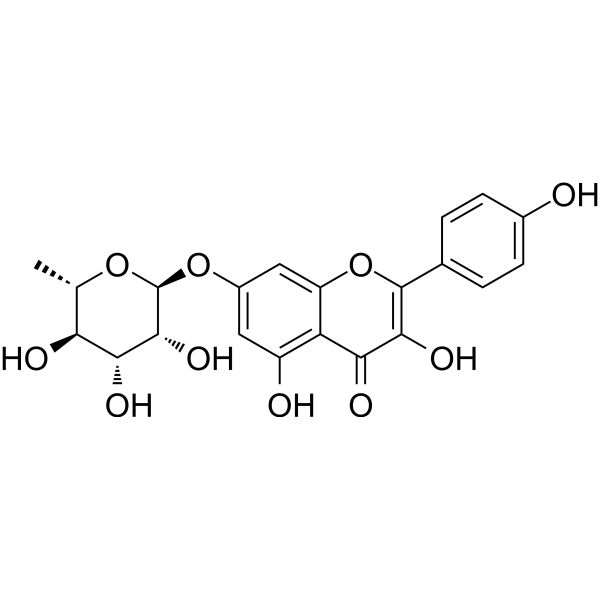
    Kaempferol-7-O-rhamnoside is a PD-1/PD-L1 inhibitor and farnesoid X receptor (FXR) agonist. Kaempferol-7-O-rhamnoside demonstrates cardioprotective potential targeting the AMPKα1 signaling pathway. Kaempferol-7-O-rhamnoside significantly upregulates the mRNA expression of AMPKα1 in H9c2 cardiomyocytes. Kaempferol-7-O-rhamnoside reverses APAP-induced reduction of glutathione (GSH) content and increase of ROS production in L02 cells. Kaempferol-7-O-rhamnoside has the potential for heart failure .
    Kaempferol-7-O-rhamnoside
  • HY-N4170
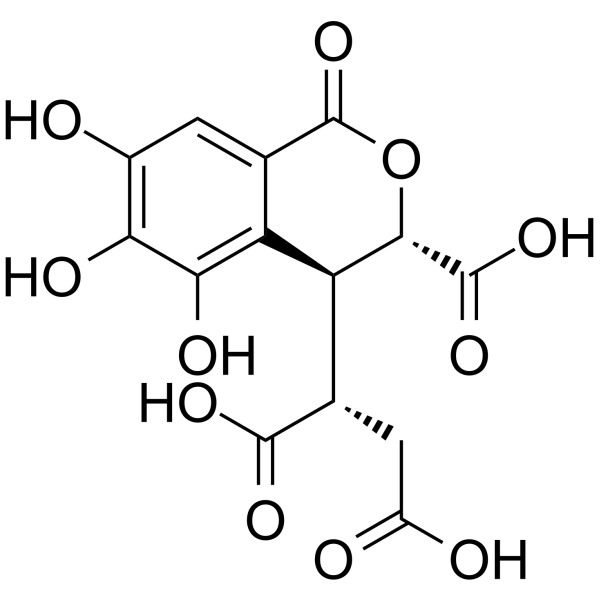
    Chebulic acid
    2 Publications Verification

    Keap1-Nrf2 Reactive Oxygen Species (ROS) Metabolic Disease
    Chebulic acid is a phenolic acid compound isolated from Terminalia chebula with strong antioxidant activity, which breaks protein cross-links induced by advanced glycation end products (AGEs) and inhibits the formation of AGEs. Chebulic acid is effective in controlling elevated metabolic parameters, oxidative stress, and liver damage, supporting its beneficial role in asthma, diabetes, and liver protection .
    Chebulic acid
  • HY-N1778
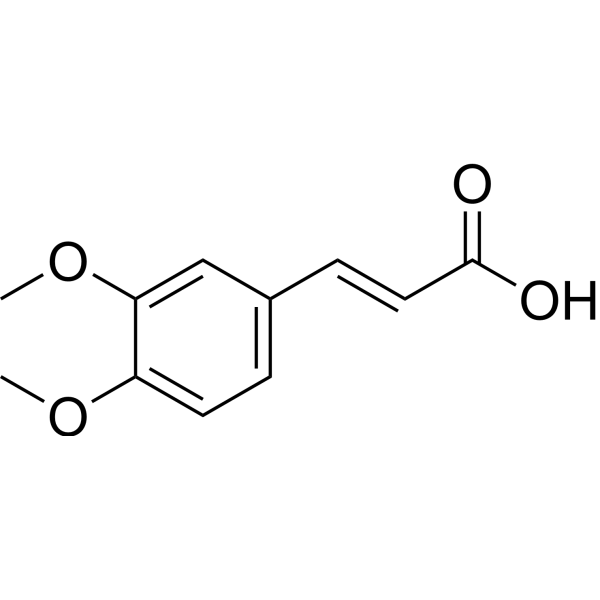
    3,4-Dimethoxycinnamic acid
    1 Publications Verification

    O-Methylferulic acid

    Reactive Oxygen Species (ROS) Virus Protease Infection Cancer
    3,4-Dimethoxycinnamic acid (O-Methylferulic acid) is a monomer extracted and purified from Securidaca inappendiculata Hassk. 3,4-Dimethoxycinnamic acid exerts anti-apoptotic effects on L-02 cells via the ROS-mediated signaling pathway . Anti-apoptotic effects .
    3,4-Dimethoxycinnamic acid
  • HY-N6066

    Calcium Channel NF-κB Pregnane X Receptor (PXR) Cytochrome P450 Interleukin Related Cardiovascular Disease Inflammation/Immunology
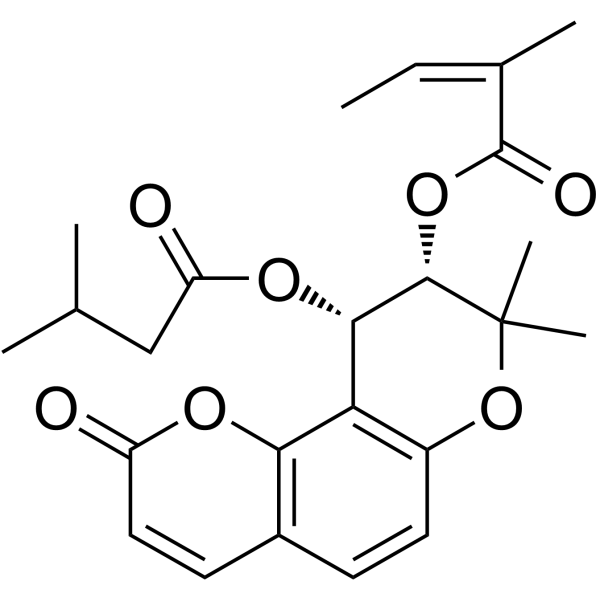
    Praeruptorin E is an orally active pyranocoumarin compound. Praeruptorin E can be isolated from the dried roots of Peucedanum praeruptorum Dunn. Praeruptorin E reduces the expression of NF-κB. Praeruptorin E upregulates the expression of PXR and CYP3A4. Praeruptorin E inhibits Th2 cytokines, TNF-α, IL6, MPO, and blocks the Ca 2+ slow channel. Praeruptorin E promotes pulmonary tissue repair and relaxes porcine coronary artery strips. Praeruptorin E protects mice from lipopolysaccharide- and hydrochloric acid-induced acute lung injury. Praeruptorin E can be used in studies related to asthma and acute lung injury .
    Praeruptorin E
  • HY-N4124

    NO Synthase TNF Receptor Interleukin Related Metabolic Disease Inflammation/Immunology
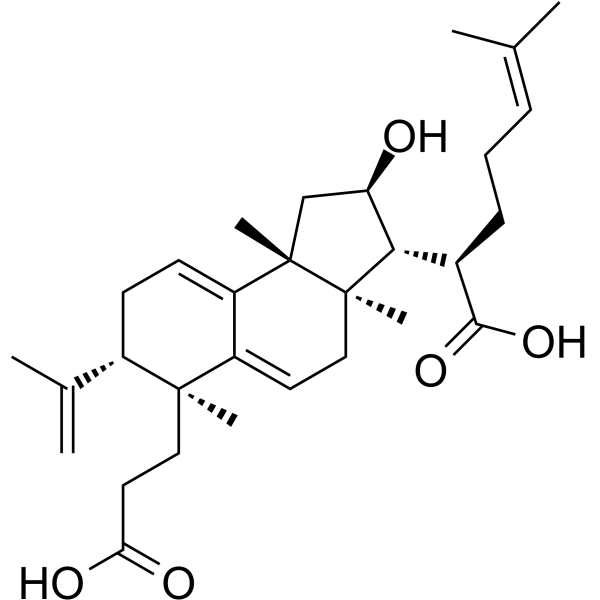
    Poricoic acid B is a triterpenoid compound that can be isolated from Poria cocos. Poricoic acid B inhibits intracellular lipid accumulation and reduces the levels of hepatocyte injury markers. Poricoic acid B inhibits the production of NO, TNF-α, IL-1β and IL-6, thereby exerting anti-inflammatory activity. Poricoic acid B can be used in the research of metabolic dysfunction-associated fatty liver disease and inflammatory diseases [3].
    Poricoic acid B
  • HY-N1778A
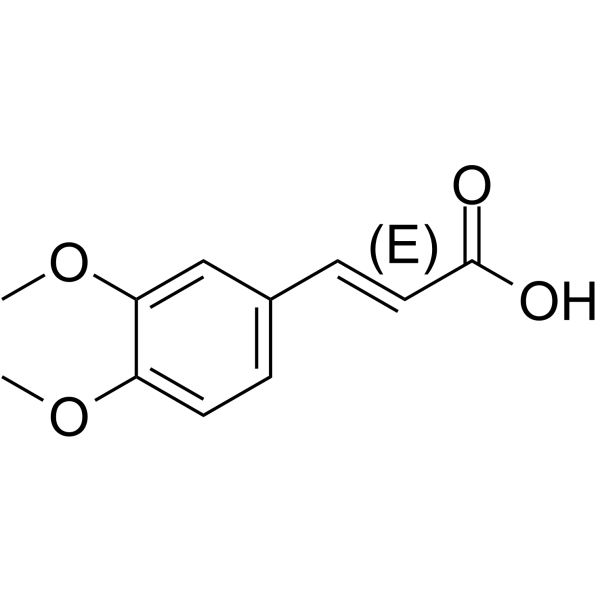
    (E)-3,4-Dimethoxycinnamic acid
    1 Publications Verification

    (E)-O-Methylferulic acid

    Reactive Oxygen Species (ROS) Virus Protease Infection Cancer
    (E)-3,4-Dimethoxycinnamic acid is the less active isomer of 3,4-Dimethoxycinnamic acid. 3,4-Dimethoxycinnamic acid exerts anti-apoptotic effects on L-02 cells via the ROS-mediated signaling pathway . Anti-apoptotic effects .
    (E)-3,4-Dimethoxycinnamic acid
  • HY-146594

    NOD-like Receptor (NLR) Inflammation/Immunology
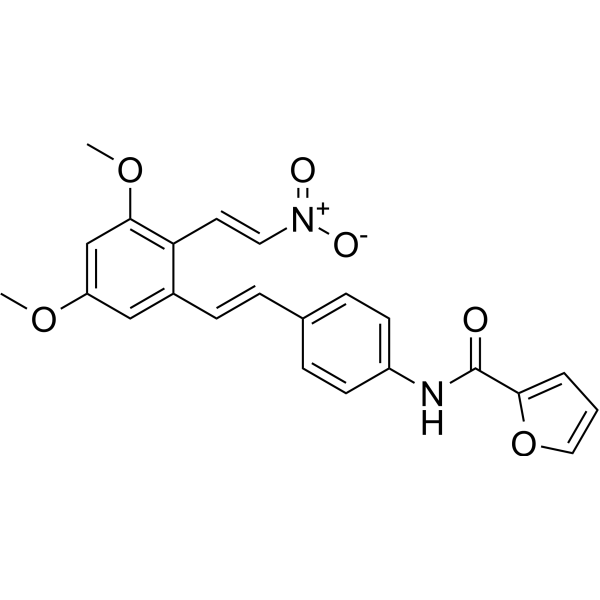
    NLRP3-IN-8 (compound 27) is an orally active, directly binding NLRP3 inflammasome inhibitor with an IC50 value of 1.23 μM against IL-1 β. NLRP3-IN-8 has good metabolic stability to liver microsomes (t1/2 = 138.63 min), and has almost no toxicity (against L02: IC50 > 100 μM) .
    NLRP3-IN-8
  • HY-N3765

    Apoptosis Metabolic Disease
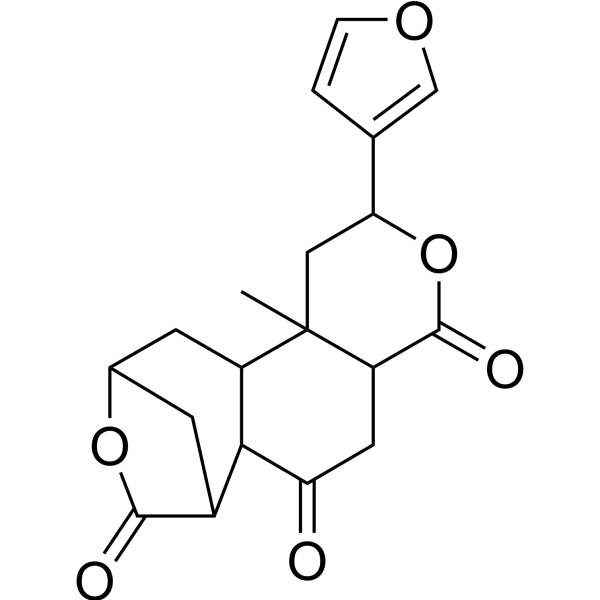
    Diosbulbin D is a potential hepatotoxic compound that can be isolated from Dioscorea bulbifera L.. Diosbulbin D induces apoptosis in L-02 cells .
    Diosbulbin D
  • HY-N16513

    Others Metabolic Disease
    Muurol-4-ene-3,8-dione (Compound 2), a sesquiterpene, is one of the main hepatotoxic components in Eupatorium adenophorum. Muurol-4-ene-3,8-dione has an inhibitory effect on the growth of both the normal human hepatocyte cell L02 and the human hepatocellular carcinoma cell HepG2 with IC50 values of 87.52 and 104.48 μM .
    Muurol-4-ene-3,8-dione
  • HY-W777084

    (E)-O-Methylferulic acid-13C3

    Reactive Oxygen Species (ROS) Cancer
    (E)-3,4-Dimethoxycinnamic acid- 13C3 ((E)-O-Methylferulic acid- 13C3) is the 13C-labeled (E)-3,4-Dimethoxycinnamic acid (HY-N1778A). (E)-3,4-Dimethoxycinnamic acid is the less active isomer of 3,4-Dimethoxycinnamic acid. 3,4-Dimethoxycinnamic acid exerts anti-apoptotic effects on L-02 cells via the ROS-mediated signaling pathway . Anti-apoptotic effects .
    (E)-3,4-Dimethoxycinnamic acid-13C3
  • HY-P3148

    p62 Atg8/LC3 Apoptosis Autophagy Reactive Oxygen Species (ROS) JNK Bcl-2 Family Caspase Metabolic Disease
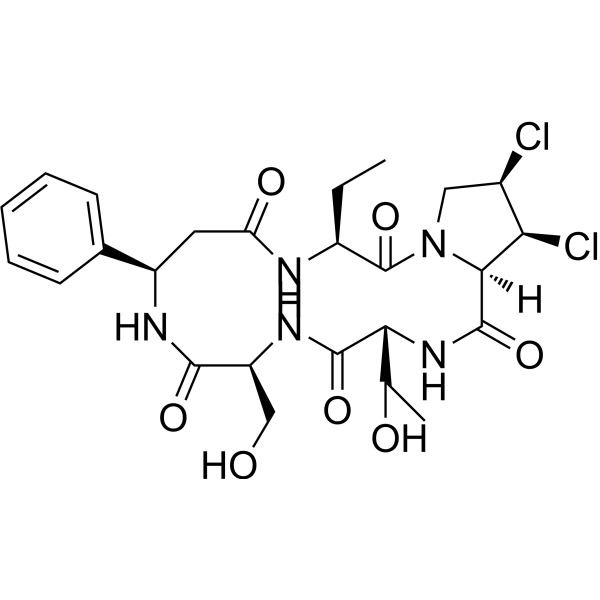
    Astin B is a orally active and potent cyclic pentapeptide, that can be isolated from Aster tataricus. Astin B has hepatotoxic effects in vitro and in vivo and that hepatic injury was primarily mediated by apoptosis in a mitochondria/caspase-dependent manner. Astin B induces autophagy in L-02 cells, increases LC3-II and decreases p62 expression .
    Astin B
  • HY-N1778AR

    (E)-O-Methylferulic acid (Standard)

    Reference Standards Reactive Oxygen Species (ROS) Virus Protease Infection Cancer
    (E)-3,4-Dimethoxycinnamic acid is the less active isomer of 3,4-Dimethoxycinnamic acid. 3,4-Dimethoxycinnamic acid exerts anti-apoptotic effects on L-02 cells via the ROS-mediated signaling pathway . Anti-apoptotic effects .
    (E)-3,4-Dimethoxycinnamic acid (Standard)
  • HY-138958

    Bacterial Virus Protease Infection
    HT1171 is a potent and selective inhibitor of mycobacterium tuberculosis proteasome. HT1171 shows strong anti-tuberculosis activity against Mycobacterium tuberculosis H37Rv with an MIC90 of 2 μg/mL and an MIC of 4 μg/mL. When HT1171 concentration is 100 μM, the inhibition rate of human normal hepatocytes L02 is 53.8%. HT1171 can be used in the research of antitubercular agent .
    HT1171
  • HY-163404

    Bacterial Infection Inflammation/Immunology
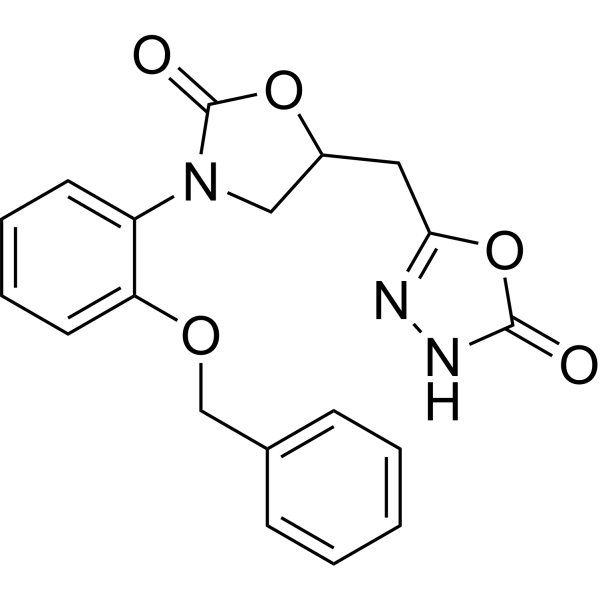
    Urease-IN-13 (compound d8) is an inhibitor of urease with an IC50 value of 1.21 μM. Urease-IN-13 can be used in the study of infectious gastritis and gastric ulcer .
    Urease-IN-13
  • HY-163923

    Apoptosis Cancer
    Apoptosis inducer 24 (Compound 4) inhibits the proliferation of gastric cancer cells with IC50 of 1.2-4.8 μM. Apoptosis inducer 24 arrests cell cycle at G2/M phase, induces apoptosis in cell BGC-823, and causes mitochondrial dysfunction. Apoptosis inducer 24 exhibits antitumor efficacy in mice, without significant toxicity (LD50 is 91.2 mg/kg) .
    Apoptosis inducer 24
  • HY-N4170R

    Reference Standards Keap1-Nrf2 Reactive Oxygen Species (ROS) Metabolic Disease
    Chebulic acid (Standard) is the analytical standard of Chebulic acid (HY-N4170). This product is intended for research and analytical applications. Chebulic acid is a phenolic acid compound isolated from Terminalia chebula with strong antioxidant activity, which breaks protein cross-links induced by advanced glycation end products (AGEs) and inhibits the formation of AGEs. Chebulic acid is effective in controlling elevated metabolic parameters, oxidative stress, and liver damage, supporting its beneficial role in asthma, diabetes, and liver protection .
    Chebulic acid (Standard)
  • HY-182053

    Apoptosis Drug Derivative NF-κB Wnt Cancer
    Antiproliferative agent-76 (Compound II-2) is an 8-sulfonamidoquinoline derivative and a selective anticancer agent. Antiproliferative agent-76 blocks the NF-κB and WNT signaling pathways. Antiproliferative agent-76 promotes cancer cell Apoptosis. Antiproliferative agent-76 exhibits anticancer activity against colorectal cancer and leukemia .
    Antiproliferative agent-76
  • HY-181459

    PARP DNA/RNA Synthesis Reactive Oxygen Species (ROS) Apoptosis Cancer
    PARP1-IN-55 is a potent and selective PARP1 inhibitor with an IC50 value of 0.019 μM. PARP1-IN-55 exhibits anti-proliferative selective activity against MCF-7 breast cancer cells (IC50 = 3.6 μM). PARP1-IN-55 inhibits the PARP1-mediated DNA damage repair pathway, induces ROS accumulation, disrupts mitochondrial membrane potential, induced apoptosis and suppresses cancer cell migration, invasion, and colony formation. PARP1-IN-55 can be used for the study of breast cancer .
    PARP1-IN-55
  • HY-183716

    Drug Derivative Cancer
    Mito-TP-2 is a triptolide (HY-32735) derivative. Mito-TP-2 exhibits concentration-dependent cytotoxicity in cancer cells. Mito-TP-2 is selectively driven and accumulated into the mitochondria of tumor cells by mitochondrial transmembrane potential and exerts specific mitochondrial toxicity. Mito-TP-2 can be used for the research of liver cancer, breast cancer, and non-small cell lung cancer .
    Mito-TP-2

Inquiry Online

Your information is safe with us. * Required Fields.

Salutation


Country or Region *

Applicant Name *


Organization Name *

Department *


Email Address *


Product Name *

Cat. No.


Requested quantity *

Phone Number *


Remarks

Inquiry Online

Inquiry Information

Product Name:
Cat. No.:
Quantity:
MCE Japan Authorized Agent:

