



Poricoic acid B

Based on 1 Customer Validation
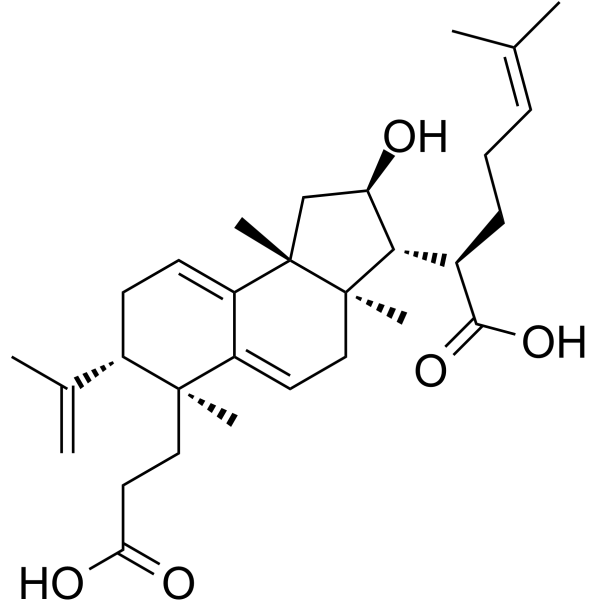
Poricoic acid B is a triterpenoid compound that can be isolated from Poria cocos. Poricoic acid B inhibits intracellular lipid accumulation and reduces the levels of hepatocyte injury markers. Poricoic acid B inhibits the production of NO, TNF-α, IL-1β and IL-6, thereby exerting anti-inflammatory activity. Poricoic acid B can be used in the research of metabolic dysfunction-associated fatty liver disease and inflammatory diseases[3].
For research use only. We do not sell to patients.
- Purity : 98.60%
- CAS No.: 137551-39-4
- Formula: C30H44O5
- Molecular Weight:484.67
-
Storage:
4°C, protect from light
* In solvent : -80°C, 6 months; -20°C, 1 month (protect from light)

To place orders, for customer services and technical support, please contact: MedChemExpress USA
Tel: 609-228-6898 E-mail: [email protected] [email protected]


-
 Biological Activity
-
Chemical Information
-
Solvent & Solubility
- Protocols
- Purity & Documentation
- References
-
 Help & FAQs


-
HY-N2995
Poricoic acid ANatural Product -
HY-N0371
Pachymic acidTriterpenoid Compound -
HY-N2499
Dehydrotumulosic acidPoria cocos Component -
HY-N0610A
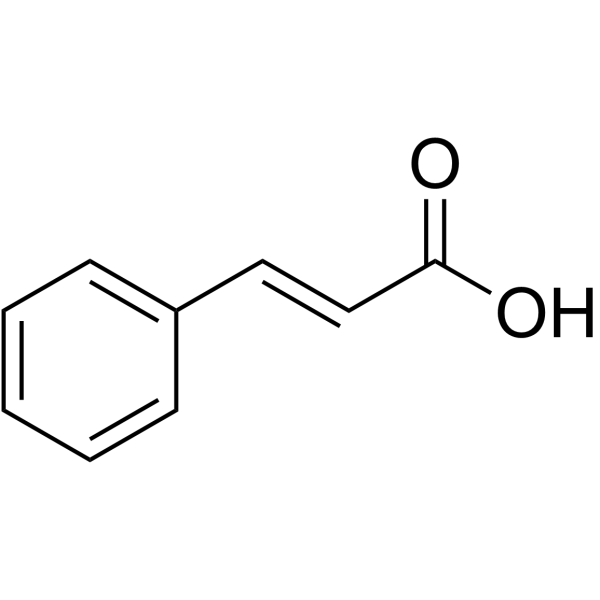
Cinnamic acidEndogenous Metabolite -
HY-N2163
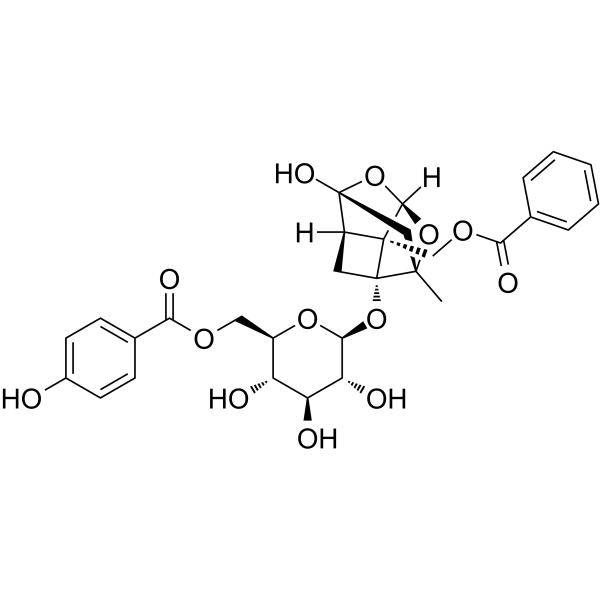
Mudanpioside CPDI Inhibitor -
HY-N2991
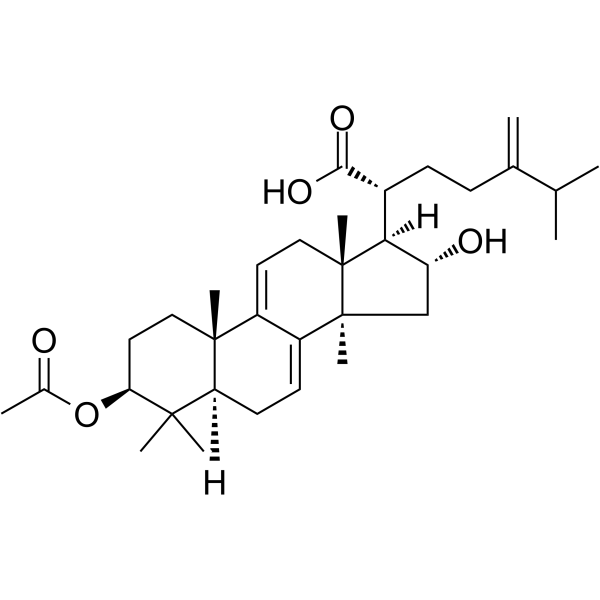
Dehydropachymic acidAutophagy Inducer -
HY-N0201
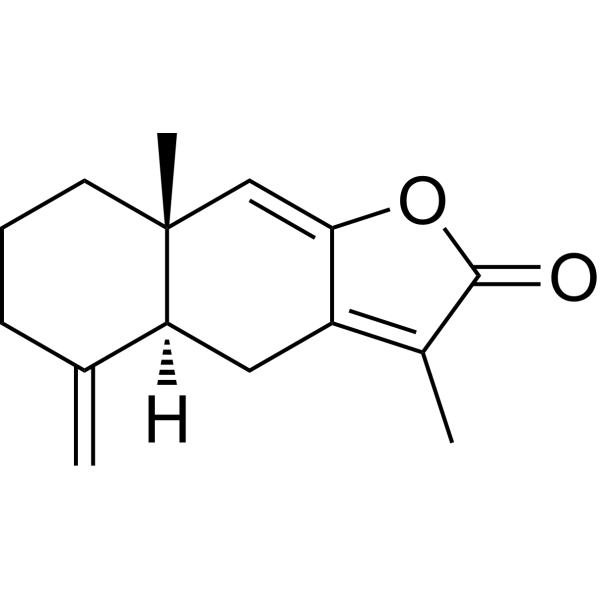
Atractylenolide ITLR4 Antagonist


Biological Activity
Description
Cellular Effect
|
Cell Line

|
Type | Value | Description | References |
|---|---|---|---|---|
| HL-60 | IC50 |
>100 μM
Compound: 10
|
Cytotoxicity against human HL60 cells after 48 hrs by MTT assay
Cytotoxicity against human HL60 cells after 48 hrs by MTT assay
|
[PMID: 19746919] |
In Vitro
Poricoic acid B (25-100 μM; 24 h) inhibits lipid accumulation in fat emulsion-induced steatotic L-02 hepatocytes and reduces the levels of hepatocyte injury markers[1].
Poricoic acid B (0-40 μg/mL; 24 h) inhibits LPS (HY-D1056)-induced NO production in RAW 264.7 cells and reduces the secretion of proinflammatory cytokines TNF-α, IL-1β and IL-6 in the cells[3].
MedChemExpress (MCE) has not independently confirmed the accuracy of these methods. They are for reference only. Further protocols information, click here.
-
Cell Line:LPS-induced RAW 264.7 mouse macrophage cells
-
Concentration:10, 20, 40 μg/mL
-
Incubation Time:24 h (co-incubated with LPS)
-
Result:Decreased TNF-α secretion significantly across all concentrations, with the lowest level at 20 μg/mL (32% reduction compared to the LPS-treated group).
Showed no significant difference in IL-1β secretion at 10 μg/mL; reduced IL-1β secretion by 41% at 20 μg/mL and 77% at 40 μg/mL compared to the LPS-treated group.
Reduced IL-6 secretion by 30%, 53%, and 66% at 10, 20, and 40 μg/mL respectively, compared to the LPS-treated group.


Chemical Information
-
CAS No. 137551-39-4
-
Appearance Solid
-
Molecular Weight 484.67
-
Formula C30H44O5
-
Color White to light yellow
-
SMILES
O=C(O)CC[C@@]1(C)[C@H](C(C)=C)CC=C2[C@]3(C)C[C@@H](O)[C@H]([C@H](C(O)=O)CC/C=C(C)\C)[C@@]3(C)CC=C21
-
Structure Classification
-
Initial Source
-
Shipping
Room temperature in continental US; may vary elsewhere.
-
Storage
4°C, protect from light
* In solvent : -80°C, 6 months; -20°C, 1 month (protect from light)


Solvent & Solubility
In Vitro:
DMSO : 250 mg/mL (515.81 mM; Need ultrasonic; Hygroscopic DMSO has a significant impact on the solubility of product, please use newly opened DMSO)
Please refer to the solubility information to select the appropriate solvent. Once prepared, please aliquot and store the solution to prevent product inactivation from repeated freeze-thaw cycles.
Storage method and period of stock solution: -80°C, 6 months; -20°C, 1 month (protect from light). When stored at -80°C, please use it within 6 months. When stored at -20°C, please use it within 1 month.
Please refer to the solubility information to select the appropriate solvent. Once prepared, please aliquot and store the solution to prevent product inactivation from repeated freeze-thaw cycles.
Storage method and period of stock solution: -80°C, 6 months; -20°C, 1 month (protect from light). When stored at -80°C, please use it within 6 months. When stored at -20°C, please use it within 1 month.
Concentration (start) × Volume (start) = Concentration (final) × Volume (final)

Protocols
-
3T3-L1 preadipocyte-to-adipocyte differentiation
3T3-L1 preadipocytes are induced to differentiate after growth arrest using adipogenic media containing insulin, dexamethasone, and IBMX; differentiation is assessed by lipid-droplet accumulation, triglyceride increase, Oil Red O staining, and adipocyte-marker induction such as PPARγ and C/EBPα.
-
Cotton Pellet Granuloma
Cotton pellet granuloma is a classical in vivo chronic inflammation model used to evaluate the anti-inflammatory potential of test substances by measuring their ability to inhibit granuloma tissue formation around an implanted foreign body (cotton pellet) in rodents. The method is based on the biological response to a sterile implanted material, which induces proliferative phase inflammation characterized by fibroblast proliferation and collagen-rich granuloma formation, and the final readout reflects the extent of chronic inflammatory tissue growth surrounding the pellet. In multiple preclinical pharmacological evaluations, inhibition of cotton pellet-induced granuloma formation has been used as an indicator of anti-inflammatory activity in both synthetic and natural product screening contexts.
-
Carrageenan-Induced Paw Edema
Carrageenan-induced paw edema is an acute inflammation model in which intraplantar injection of carrageenan induces localized inflammatory swelling characterized by vascular permeability, leukocyte infiltration, and production of inflammatory mediators such as prostaglandins and cytokines, making it widely used to evaluate anti-inflammatory agents in vivo. The resulting paw volume or thickness increase is quantified over time as a direct readout of inflammatory intensity and drug efficacy, typically reflecting cyclooxygenase-mediated prostaglandin-driven edema formation and immune cell recruitment in peripheral tissue[20].
-
Research Protocol for Inflammation-related Diseases
The NLRP3 inflammasome is a cytosolic innate immune signaling platform that integrates priming signals and danger-signal activation to promote caspase-1 activation, maturation of IL-1β and IL-18, and gasdermin D-mediated pyroptotic cell death. The core experimental logic is to determine whether inflammatory disease phenotypes are driven by increased NLRP3 expression, ASC-containing inflammasome assembly, caspase-1 cleavage, GSDMD cleavage, and extracellular release of IL-1β/IL-18 rather than by nonspecific cell injury alone. The pathway is strongly linked to inflammation-related disease phenotypes because monosodium urate crystals activate NALP3/NLRP3 inflammasome signaling in gout-like crystal inflammation, cholesterol crystals activate NLRP3 inflammasomes in atherogenesis models, and DSS-induced intestinal inflammation has been reported to involve NLRP3 inflammasome activity. However, experimental colitis studies also show context-dependent protective effects of NLRP3 inflammasome co
-
Research Protocol for Metabolic Diseases
AMP-activated protein kinase, AMPK, is a conserved cellular energy sensor that responds to reduced cellular energy status and coordinates metabolism by increasing ATP-generating catabolic pathways while suppressing ATP-consuming anabolic processes. In metabolic disease research, the AMPK pathway is experimentally relevant because it regulates hepatic lipid synthesis, fatty acid oxidation, glucose production, skeletal-muscle glucose disposal, mTORC1-linked biosynthesis, autophagy, mitochondrial homeostasis, and whole-body energy balance. The central pathway logic is that energy stress, metformin, exercise-like stimulation, or direct AMPK activators increase AMPKα Thr172 phosphorylation and downstream substrate phosphorylation, including ACC and RAPTOR. Phosphorylation of ACC suppresses lipogenesis and supports fatty acid oxidation, whereas phosphorylation of RAPTOR suppresses mTORC1 signaling and links cellular energy status to growth and protein synthesis control. The pathway is linked
-
Lipid Droplets: Oil Red O/Sudan Dye Lipid Staining
Lipid droplets are intracellular organelles with a neutral-lipid core that stores triacylglycerols and sterol esters, and Oil Red O or Sudan dyes detect these hydrophobic lipid deposits by partitioning into retained lipids in fresh or frozen specimens. Oil Red O stains neutral triglycerides and lipids in frozen tissue sections or air-dried cytologic preparations, while Sudan Black B has also been used as a histochemical fat stain for lipid-rich tissue structures.
-
Pyroptosis Solutions
Pyroptosis is a lytic inflammatory cell-death pathway executed by gasdermin pores, most classically through inflammasome-mediated activation of caspase-1, cleavage of gasdermin D, membrane pore formation, LDH release, and secretion of IL-1β and IL-18. The canonical pathway is commonly modeled by priming cells with an inflammatory signal such as LPS to induce pro-IL-1β and inflammasome components, followed by an activation signal such as ATP or nigericin to activate NLRP3, ASC speck formation, caspase-1 cleavage, GSDMD cleavage, cytokine release, and pyroptotic membrane rupture. The non-canonical pathway is triggered when cytosolic LPS activates mouse caspase-11 or human caspase-4/5, leading to GSDMD cleavage and pyroptosis, and this can secondarily activate NLRP3-dependent IL-1β release. Pyroptosis is linked to inflammatory injury, infection, cancer, liver disease, ocular disease, placental inflammation, and other disease phenotypes, but unresolved questions include which gasdermin fam


Purity & Documentation
-
Data Sheet (279 KB)
-
SDS (252 KB)
- English - EN (252 KB)
- Français - FR (252 KB)
- Deutsch - DE (252 KB)
- Norwegian - NO (252 KB)
- Español - ES (252 KB)
- Swedish - SV (252 KB)
- Italian - IT (252 KB)
- Korean - KR (252 KB)
- Portuguese - PT (252 KB)
-
Handling Instructions (2659 KB)
References
[2]. Dong H, et al. Enrichment and separation of antitumor triterpene acids from the epidermis of Poria cocos by pH-zone-refining counter-current chromatography and conventional high-speed counter-current chromatography. J Sep Sci. 2015;38(11):1977-1982. [Content Brief]
[3]. Zhang L, et al. Anti-Inflammatory Activity of Four Triterpenoids Isolated from Poriae Cutis. Foods. 2021 Dec 20;10(12):3155. [Content Brief]


Complete Stock Solution Preparation Table
Please refer to the solubility information to select the appropriate solvent. Once prepared, please aliquot and store the solution to prevent product inactivation from repeated freeze-thaw cycles.
Storage method and period of stock solution: -80°C, 6 months; -20°C, 1 month (protect from light). When stored at -80°C, please use it within 6 months. When stored at -20°C, please use it within 1 month.
| Optional Solvent | Concentration Solvent Mass | 1 mg | 5 mg | 10 mg | 25 mg |
|---|---|---|---|---|---|
| DMSO | 1 mM | 2.0633 mL | 10.3163 mL | 20.6326 mL | 51.5815 mL |
| 5 mM | 0.4127 mL | 2.0633 mL | 4.1265 mL | 10.3163 mL | |
| 10 mM | 0.2063 mL | 1.0316 mL | 2.0633 mL | 5.1581 mL | |
| 15 mM | 0.1376 mL | 0.6878 mL | 1.3755 mL | 3.4388 mL | |
| 20 mM | 0.1032 mL | 0.5158 mL | 1.0316 mL | 2.5791 mL | |
| 25 mM | 0.0825 mL | 0.4127 mL | 0.8253 mL | 2.0633 mL | |
| 30 mM | 0.0688 mL | 0.3439 mL | 0.6878 mL | 1.7194 mL | |
| 40 mM | 0.0516 mL | 0.2579 mL | 0.5158 mL | 1.2895 mL | |
| 50 mM | 0.0413 mL | 0.2063 mL | 0.4127 mL | 1.0316 mL | |
| 60 mM | 0.0344 mL | 0.1719 mL | 0.3439 mL | 0.8597 mL | |
| 80 mM | 0.0258 mL | 0.1290 mL | 0.2579 mL | 0.6448 mL | |
| 100 mM | 0.0206 mL | 0.1032 mL | 0.2063 mL | 0.5158 mL |


Poricoic acid B Related Classifications
HY-N4124 Related Classifications
 Powered by Bioz