21 Results for "

L02 cells

" in MedChemExpress (MCE) Product Catalog:
Products (21)

21 Results for "L02 cells" in MCE Product Catalog:

1
1 Cited Publications
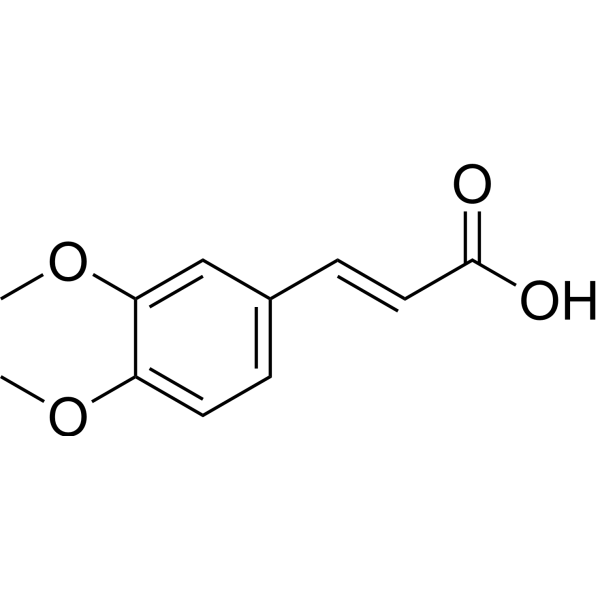
Cat. No.: HY-N1778
CAS No.: 2316-26-9
Synonyms: O-Methylferulic acid
3,4-Dimethoxycinnamic acid (O-Methylferulic acid) is a monomer extracted and purified from Securidaca inappendiculata Hassk. 3,4-Dimethoxycinnamic acid exerts anti-apoptotic effects on L-02 cells via the ROS-mediated signaling pathway . Anti-apoptotic effects .
loading...
    loading...
1
1 Cited Publications
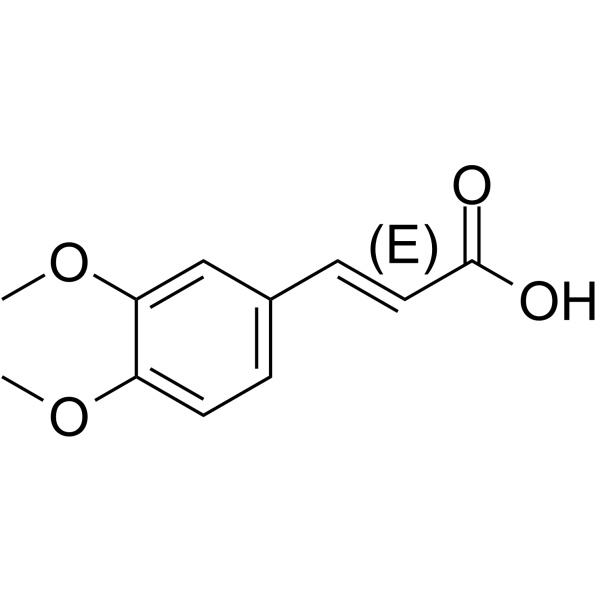
Cat. No.: HY-N1778A
CAS No.: 14737-89-4
Synonyms: (E)-O-Methylferulic acid
(E)-3,4-Dimethoxycinnamic acid is the less active isomer of 3,4-Dimethoxycinnamic acid. 3,4-Dimethoxycinnamic acid exerts anti-apoptotic effects on L-02 cells via the ROS-mediated signaling pathway . Anti-apoptotic effects .
loading...
    loading...
Cat. No.: HY-Y0651
CAS No.: 7757-83-7
Sodium sulfite is an inorganic salt used as an antioxidant and preservative. Sodium sulfite is also used in sulfonation and sulfomethylation reactions. Sodium sulfite can also be used as a bleaching agent, desulfurizer, and dechlorinator. Sodium sulfite inhibits hepatocyte proliferation, promotes hepatocyte apoptosis and necrosis, and impairs mitochondrial integrity. Sodium sulfite induces superoxide anion production, primes neutrophils for enhanced superoxide anion generation, and induces neutrophil gene expression. Sodium sulfite can be used in studies related to pulmonary inflammation and gastric tissue injury .
loading...
    loading...
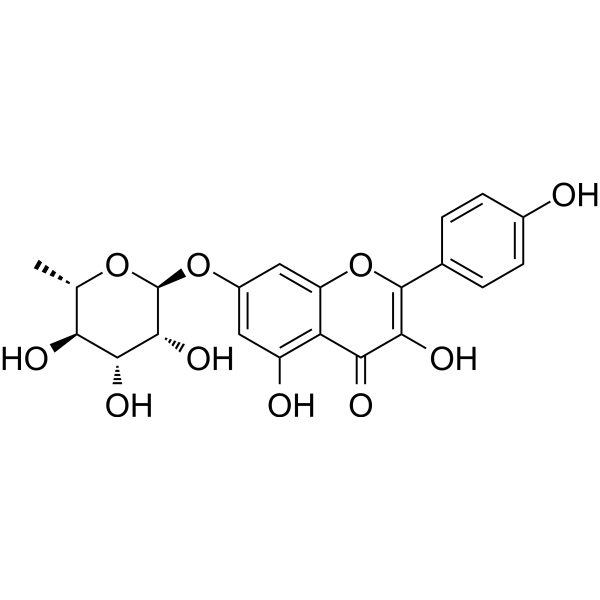
Cat. No.: HY-N3431
CAS No.: 20196-89-8
Kaempferol-7-O-rhamnoside is a PD-1/PD-L1 inhibitor and farnesoid X receptor (FXR) agonist. Kaempferol-7-O-rhamnoside demonstrates cardioprotective potential targeting the AMPKα1 signaling pathway. Kaempferol-7-O-rhamnoside significantly upregulates the mRNA expression of AMPKα1 in H9c2 cardiomyocytes. Kaempferol-7-O-rhamnoside reverses APAP-induced reduction of glutathione (GSH) content and increase of ROS production in L02 cells. Kaempferol-7-O-rhamnoside has the potential for heart failure .
loading...
    loading...
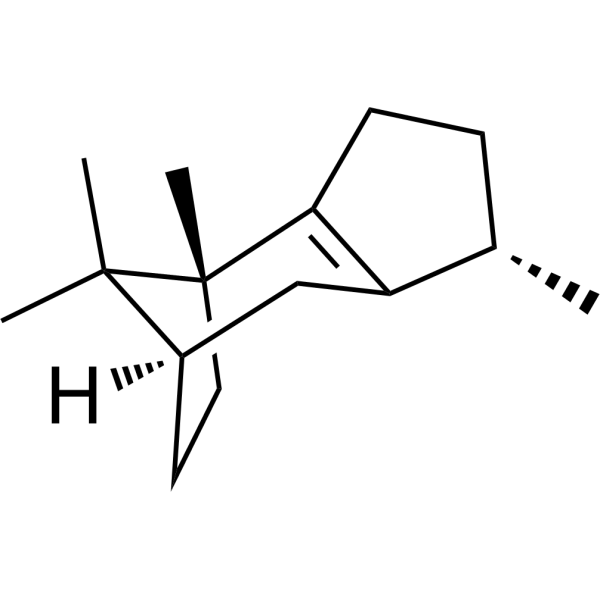
Cat. No.: HY-N12378
CAS No.: 514-51-2
β-Patchoulene is an orally active anti-inflammatory, antioxidant, and anti-apoptotic agent. β-Patchoulene inhibits the NF-κB, TLR4, and cAMP/PKA/CREB signaling pathways; activates the Sirt1/Nrf2 and AMPK signaling pathways; and targets Fas/FasL, Caspase-3, ERK1/2, ROCK1/MLC2 for inhibition. β-Patchoulene regulates cytokine secretion, inflammatory cell infiltration, lipid peroxidation, cell polarization, gut microbiota, and lipid metabolism, restores barrier function, mitochondrial function, and cell viability, and exhibits repellent activity against Spodoptera exigua larvae. β-Patchoulene can be used in research related to various inflammatory, ischemic, fibrosis-associated diseases, as well as hepatocellular carcinoma .
loading...
    loading...
Cat. No.: HY-N3765
CAS No.: 66756-57-8
Target:  

Apoptosis

Research Areas:  

Metabolic Disease

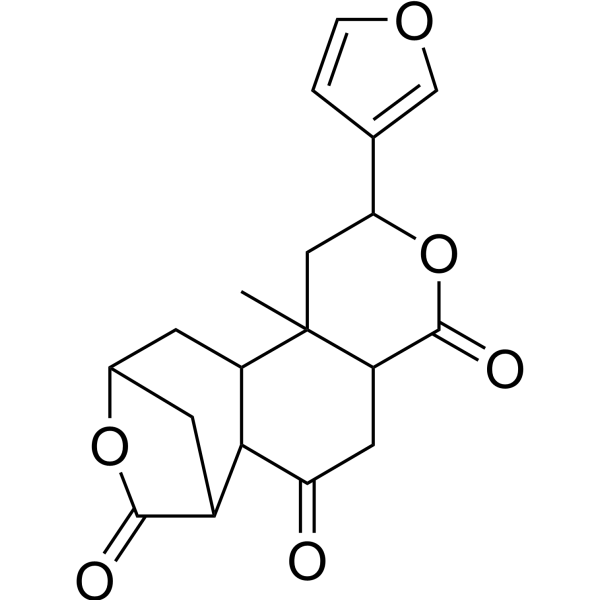
Diosbulbin D is a potential hepatotoxic compound that can be isolated from Dioscorea bulbifera L.. Diosbulbin D induces apoptosis in L-02 cells .
loading...
    loading...
Cat. No.: HY-N16513
CAS No.: 105181-07-5
Muurol-4-ene-3,8-dione (Compound 2), a sesquiterpene, is one of the main hepatotoxic components in Eupatorium adenophorum. Muurol-4-ene-3,8-dione has an inhibitory effect on the growth of both the normal human hepatocyte cell L02 and the human hepatocellular carcinoma cell HepG2 with IC50 values of 87.52 and 104.48 μM .
loading...
    loading...
Cat. No.: HY-W777084
CAS No.: 1185241-38-6
Synonyms: (E)-O-Methylferulic acid-13C3
(E)-3,4-Dimethoxycinnamic acid- 13C3 ((E)-O-Methylferulic acid- 13C3) is the 13C-labeled (E)-3,4-Dimethoxycinnamic acid (HY-N1778A). (E)-3,4-Dimethoxycinnamic acid is the less active isomer of 3,4-Dimethoxycinnamic acid. 3,4-Dimethoxycinnamic acid exerts anti-apoptotic effects on L-02 cells via the ROS-mediated signaling pathway . Anti-apoptotic effects .
loading...
    loading...
Cat. No.: HY-N1778AR
CAS No.: 14737-89-4
Synonyms: (E)-O-Methylferulic acid (Standard)
(E)-3,4-Dimethoxycinnamic acid is the less active isomer of 3,4-Dimethoxycinnamic acid. 3,4-Dimethoxycinnamic acid exerts anti-apoptotic effects on L-02 cells via the ROS-mediated signaling pathway . Anti-apoptotic effects .
loading...
    loading...
Cat. No.: HY-176194
Target:  

Collagen c-Fms PDGFR Src

Research Areas:  

Inflammation/Immunology

Antifibrotic agent 1 is an orally active anti-idiopathic pulmonary fibrosis (IPF) agent. Antifibrotic agent 1 effectively attenuates IPF-related processes, including TGF-β induced EMT and FMT processes, as well as pro-fibrotic M2 polarization. Antifibrotic agent 1 selectively inhibits CSF-1R, PDGFR-α and Src family kinases (SFKs), while sparing VEGFRs, FGFRs and Abl to minimize off-target toxicity. Antifibrotic agent 1 has potent anti-fibrotic activity in Bleomycin (BLM) (HY-108345)-induced pulmonary fibrosis mice model .
loading...
    loading...
Cat. No.: HY-136855
CAS No.: 652968-37-1
Purity:  95.00%
MitoPBN is a AMPK/SIRT3/PGC-1α axis modulator, reactive oxygen species scavenger and mitochondrial function enhancer. MitoPBN increases the phosphorylation level of AMPK, restores SIRT3 expression and reverses the down-regulation of PGC-1α, thereby promoting mitochondrial biogenesis. MitoPBN regulates glucose metabolism, reduces blood glucose by inhibiting hepatic gluconeogenesis and increasing hepatic glucose uptake, while scavenging mitochondrial superoxide anion/hydrogen peroxide, maintaining membrane potential and increasing ATP production. MitoPBN also reduces cell apoptosis, improves sperm motility, survival rate and membrane integrity, but may induce reductive stress in cryopreserved sperm at high concentrations. MitoPBN is widely applicable to research related to diabetes and type 2 diabetes .
loading...
    loading...
Cat. No.: HY-P3148
CAS No.: 151201-76-2
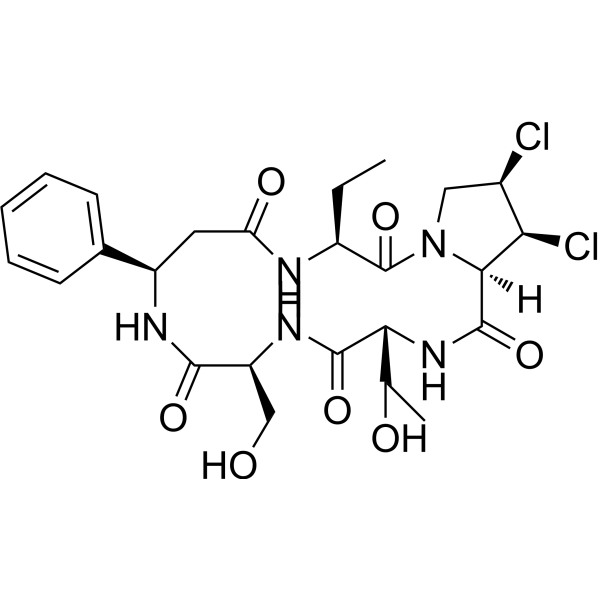
Astin B is a orally active and potent cyclic pentapeptide, that can be isolated from Aster tataricus. Astin B has hepatotoxic effects in vitro and in vivo and that hepatic injury was primarily mediated by apoptosis in a mitochondria/caspase-dependent manner. Astin B induces autophagy in L-02 cells, increases LC3-II and decreases p62 expression .
loading...
    loading...
Cat. No.: HY-151596
CAS No.: 2769156-00-3
Purity:  99.71%
Research Areas:  

Neurological Disease

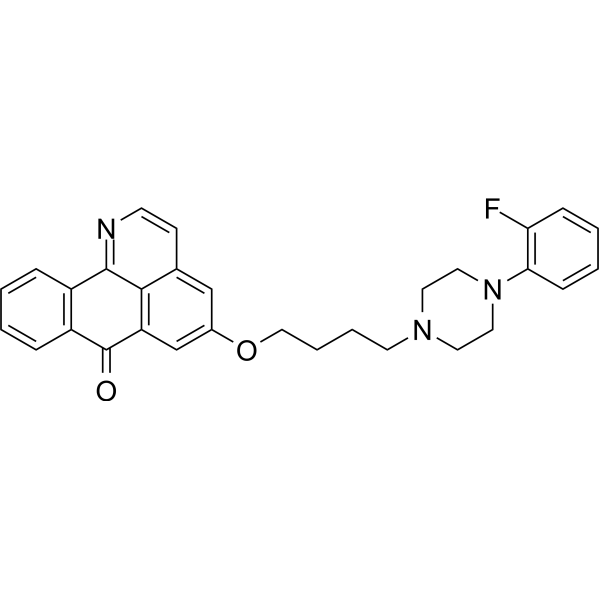
MAO-A/5-HT2AR-IN-1 (compound I14) is a potent MAO-A and 5-HT2AR dual inhibitor, with IC50 values of 0.004 and 0.014 μM, respectively. MAO-A/5-HT2AR-IN-1 is a potential antidepressant agent .
loading...
    loading...
Cat. No.: HY-P6177
CAS No.: 855790-98-6
Target:  

Dipeptidyl Peptidase

Research Areas:  

Inflammation/Immunology

SGP8 (IAVPGEVA) is an octapeptide produced by hydrolysis of soybean 11S globulin, which has the effects of regulating lipid metabolism, inflammation and fibrosis. SGP8 (IAVPGEVA) exhibits inhibitory activity against DPP4 and inhibits the JNK-c-Jun signaling pathway, and has the ability to inhibit non-alcoholic steatohepatitis (NASH) .
loading...
    loading...
Cat. No.: HY-181894
CAS No.: 3126891-03-7
Target:  

PPAR

XYQ3-B11 is a potent PPARα agonist with an EC50 of 8.33 μM. XYQ3-B11 activates PPARα. XYQ3-B11 can be used for the research of dyslipidemia .
loading...
    loading...
Cat. No.: HY-182051
CAS No.: 3110847-73-6
HDAC3 degrader-2 is a selective HDAC3 degrader. HDAC3 degrader-2 inhibits the activation of the NLRP3 inflammasome by degrading HDAC3, thereby reducing the maturation of IL-1β and caspase-1. HDAC3 degrader-2 exhibits anti-inflammatory activity. HDAC3 degrader-2 can be used in research related to endotoxin shock, colitis and gouty arthritis .
loading...
    loading...
Cat. No.: HY-182817
Research Areas:  

Cancer

Len-604 is a FGFR inhibitor with IC50 values of 9.71 nM, 9.93 nM, 29.80 nM and 14.48 nM against FGFR4, FGFR1, FGFR2 and FGFR3, respectively. Len-604 reduces the phosphorylation levels of FGFR4 and ERK, and induces DNA damage and apoptosis in cancer cells. Len-604 is applicable to research related to liver cancer .
loading...
    loading...
Cat. No.: HY-183768
Target:  

PROTACs FAK

Research Areas:  

Cancer

PROTAC FAK degrader 5 is a potent PROTAC degrader targeting FAK, with a DC50 of 11.65 nM. PROTAC FAK degrader 5 induces FAK protein degradation, selectively inhibits colony formation of human colorectal cancer HCT116 cells, and blocks the proliferation of human umbilical vein endothelial HUVEC cells, exhibiting anti-angiogenic activity. PROTAC FAK degrader 5 can be used in the research of colorectal cancer and angiogenesis .
loading...
    loading...
Cat. No.: HY-182289
Target:  

Glycosidase

Research Areas:  

Metabolic Disease

LY-23 is an orally active α-glucosidase inhibitor (Ki = 0.05 μM), with IC50 values of 0.18 μM, 0.14 μM and 0.51 μM against maltase, sucrase and isomaltase, respectively. LY-23 reduces the level of postprandial blood glucose elevation. LY-23 is applicable to research related to postprandial hyperglycemia .
loading...
    loading...
Cat. No.: HY-184452
BNNC is a Photomolecular glue . BNNC selectively releases (R)-CR8 (HY-18340) (a Cyclin K molecular glue) and BSS-Et in hypoxic tumor microenvironments, thereby triggering Cyclin K degradation dependent on the ubiquitin-proteasome pathway. BNNC generates ROS and singlet oxygen in hypoxic tumor cells under light irradiation. BNNC enhances DNA damage and Apoptosis through the combined effects of Cyclin K degradation and phototherapy. BNNC enhances the tumor selectivity of molecular glue via specific activation in hypoxic tumor microenvironments. BNNC can be used in breast cancer-related research .
loading...
    loading...

