



MitoPBN

Based on 1 Customer Validation
MitoPBN is a AMPK/SIRT3/PGC-1α axis modulator, reactive oxygen species scavenger and mitochondrial function enhancer. MitoPBN increases the phosphorylation level of AMPK, restores SIRT3 expression and reverses the down-regulation of PGC-1α, thereby promoting mitochondrial biogenesis. MitoPBN regulates glucose metabolism, reduces blood glucose by inhibiting hepatic gluconeogenesis and increasing hepatic glucose uptake, while scavenging mitochondrial superoxide anion/hydrogen peroxide, maintaining membrane potential and increasing ATP production. MitoPBN also reduces cell apoptosis, improves sperm motility, survival rate and membrane integrity, but may induce reductive stress in cryopreserved sperm at high concentrations. MitoPBN is widely applicable to research related to diabetes and type 2 diabetes.
For research use only. We do not sell to patients.
- Purity : 95.00%
- CAS No.: 652968-37-1
- Formula: C33H37BrNO2P
- Molecular Weight:590.53
-
Storage:
-20°C, sealed storage, away from moisture
* In solvent : -80°C, 6 months; -20°C, 1 month (sealed storage, away from moisture)


To place orders, for customer services and technical support, please contact: MedChemExpress USA
Tel: 609-228-6898 E-mail: [email protected] [email protected]


-
 Biological Activity
-
Chemical Information
-
Solvent & Solubility
- Protocols
- Purity & Documentation
- References
-
 Help & FAQs


-
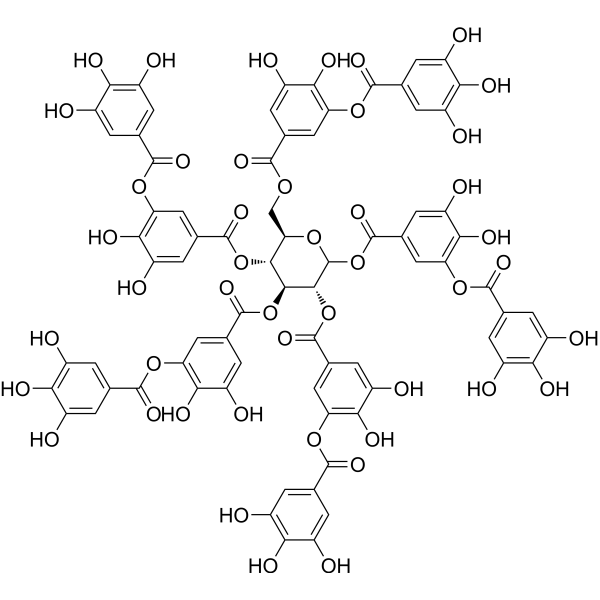
HY-B2136
Tannic acidhERG Channel Blocker -
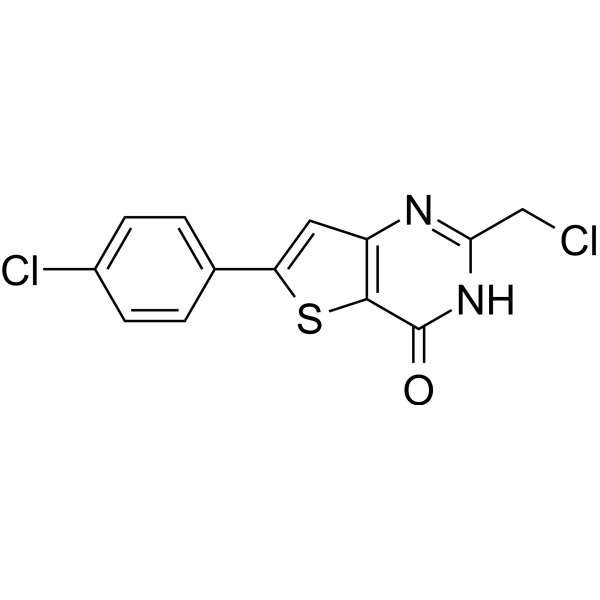
HY-162065
N6F11Ferroptosis Inducer -
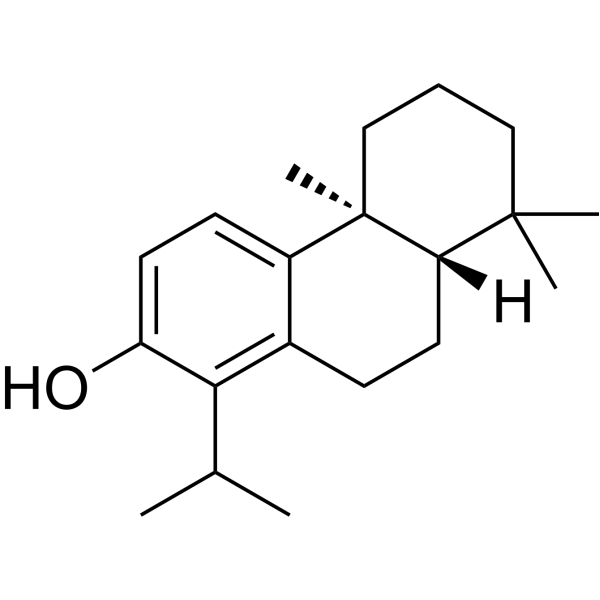
HY-N1136
(+)-TotarolDiterpenoid -
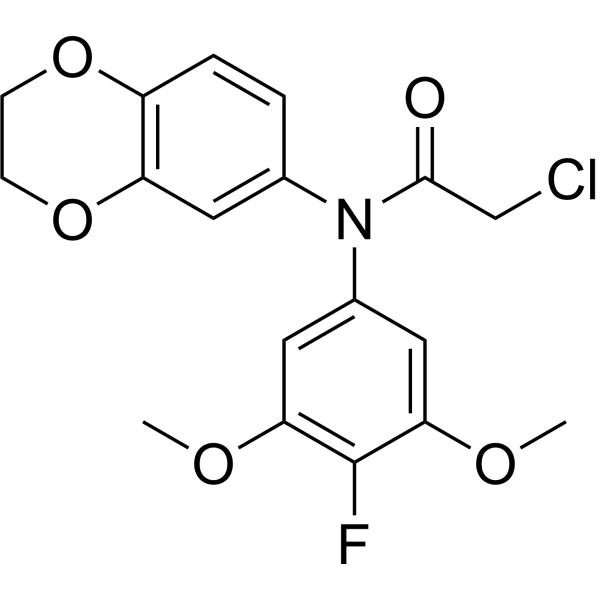
HY-155663
GPX4-IN-5GPX4 Inhibitor -
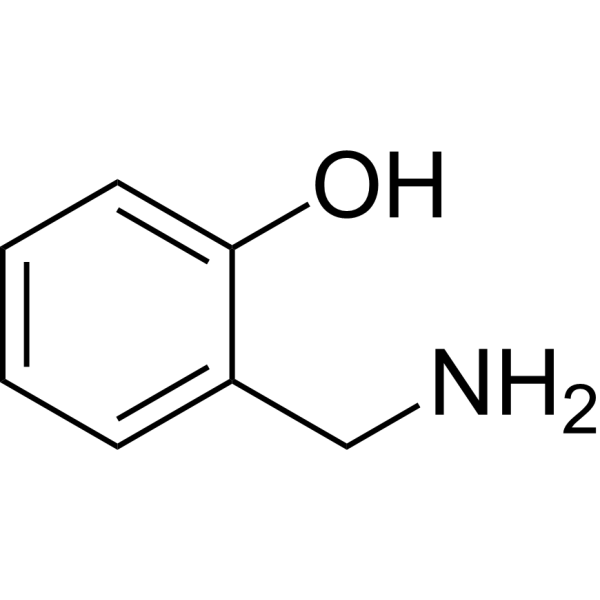
HY-34350
2-(Aminomethyl)phenolAntioxidant -
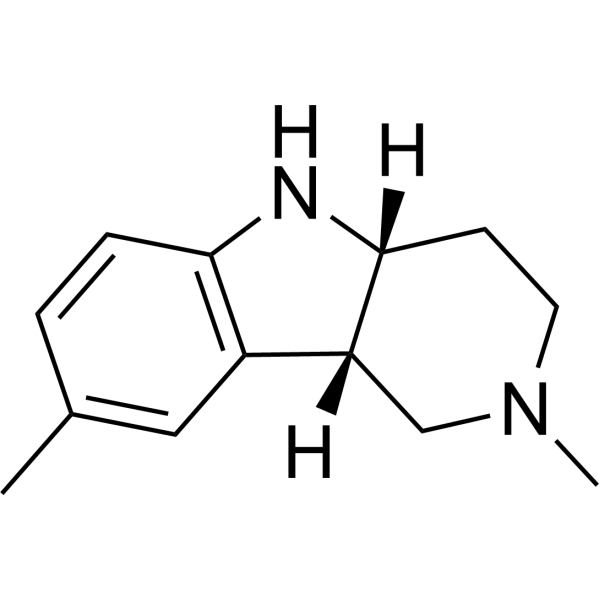
HY-W067572
StobadineAntioxidant -
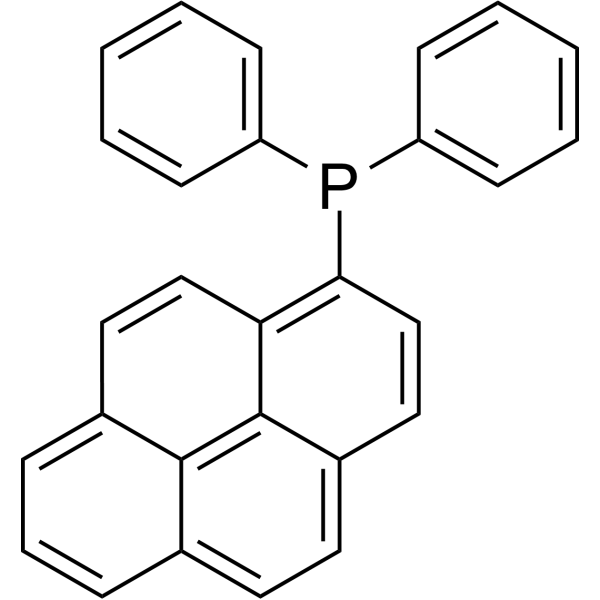
HY-118159
Diphenyl-1-pyrenylphosphinefluorescent probe -

HY-130743
Dieugenol -

HY-W587743
N1-Acetyl-5-methoxykynuramine hydrochlorideMelatonin Metabolites
All AMPK Isoforms
More

Biological Activity
Description
IC50 & Target
|
SIRT3 |
In Vitro
MitoPBN (40 μmol/l; 24 h) upregulates the AMPK/SIRT3/PGC-1α axis in STZ-treated primary mouse hepatocytes by increasing phosphorylated PGC-1α, phosphorylated AMPK, total AMPK, SIRT3, and NRF1 protein levels[1].
MitoPBN (40 μmol/l; 24 h) restores mitochondrial number in H2O2-stressed primary mouse hepatocytes, which was reduced by oxidative stress[1].
MitoPBN (100-150 μmol/L; ≥7 days) supplementation of isolated Ghezel ram sperm cryopreservation extender significantly improves post-thaw sperm motility, membrane integrity, mitochondrial activity, viability, antioxidant capacity, and ATP content while reducing ROS levels, abnormal sperm, and apoptosis, with 150 μmol/L being the optimal concentration[2].
MitoPBN (1-100 μmol/l; 3 h) potently scavenges peroxyl and carbon-centered free radicals in a cell-free in vitro system, as demonstrated by H2O2 consumption and adduct formation[3].
MitoPBN (5-20 μmol/l; 24 h) protects STZ-stressed L02 liver cells from cytotoxicity, with greater efficiency than PBN, and liposomal encapsulation as Nano-MitoPBN significantly reduces the effective protective concentration[3].
MitoPBN (40 μmol/l) inhibits hypoxia-induced mitophagy in L02 liver cells by reducing protein expression of LC3B and ATG5[3].
MedChemExpress (MCE) has not independently confirmed the accuracy of these methods. They are for reference only. Further protocols information, click here.
-
Cell Line:Streptozotocin (HY-13753) -stressed L02 human liver cells
-
Concentration:5, 20 μm
-
Incubation Time:24 h
-
Result:Protected L02 cells from Streptozotocin (STZ)-induced cytotoxicity.
Showed lower protective efficiency than Nano-MitoPBN, with 5 μmol/l Nano-MitoPBN achieving a comparable effect to 40 μmol/l free MitoPBN.
Exhibited greater protective efficiency than PBN, requiring a lower concentration to rescue cell survival.
In Vivo
Free MitoPBN (2.5 mg/kg; i.p.; daily; 8 weeks) reduces random blood glucose levels and improves oral glucose tolerance in high-fat diet-induced type 2 diabetic C57BL/6J mice[3].
MedChemExpress (MCE) has not independently confirmed the accuracy of these methods. They are for reference only.
-
Animal Model:Sperm cryopreservation induced Ghezel rams sheep model (sexually mature)[2]
-
Dosage:100 µmol/L; 150 µmol/L; 200 µmol/L; 250 µmol/L
-
Administration:added to tris extender for semen dilution prior to cryopreservation
-
Result:Effects at 100 µM
Increased total motility to 52.36%, progressive motility to 24.82%, membrane integrity to 50.01%, mitochondrial activity to 46.16%, and sperm viability to 48.99%.
Elevated total antioxidant capacity (TAC) to 1.85 mmol/L and glutathione peroxidase (GPx) activity to 61.16 U/mg.
Decreased ROS levels to 2.95 ×10³ cpm/106 sperm, abnormal sperm to 19.23%, and apoptotic sperm to 20.10%.
Increased straight-line velocity (VSL) to 55.24 µm/s and ATP content to 90 pmol/106 sperm.
Effects at 150 µmol/L (Optimal Dose)
Achieved highest total motility (54.16%), progressive motility (26.77%), membrane integrity (52.54%), mitochondrial activity (50.26%), and sperm viability (52.20%).
Maximized TAC to 1.93 mmol/L and GPx activity to 63.36 U/mg.
Reduced ROS levels to their lowest point at 2.80 ×10³ cpm/106 sperm, with abnormal sperm at 18.82% and apoptotic sperm at 18.70%.
Reached peak average path velocity (VAP) of 68.82 µm/s, VSL of 55.24 µm/s, and maximum ATP content of 116.29 pmol/106 sperm.
Effects at Higher Concentrations (200 & 250 µmol/L)
200 µmol/L (Diminishing Returns):
Showed increased sperm viability (44.12%) and ATP content, with reduced apoptotic sperm (~25%), but offered no significant improvements in motility, membrane integrity, or antioxidant markers compared to the 100 and 150 µmol/L doses.
250 µmol/L (Ineffective):
Did not provide significant beneficial effects on measured sperm parameters relative to the control group.


Chemical Information
-
CAS No. 652968-37-1
-
Appearance Solid
-
Molecular Weight 590.53
-
Formula C33H37BrNO2P
-
Color White to off-white
-
SMILES
[O-]/[N+](C(C)(C)C)=C\C1=CC=C(OCCCC[P+](C2=CC=CC=C2)(C3=CC=CC=C3)C4=CC=CC=C4)C=C1.[Br-]
-
Shipping
Room temperature in continental US; may vary elsewhere.
-
Storage
-20°C, sealed storage, away from moisture
* In solvent : -80°C, 6 months; -20°C, 1 month (sealed storage, away from moisture)


Solvent & Solubility
In Vitro:
DMF : 25 mg/mL (42.33 mM; Need ultrasonic and warming)
Please refer to the solubility information to select the appropriate solvent. Once prepared, please aliquot and store the solution to prevent product inactivation from repeated freeze-thaw cycles.
Storage method and period of stock solution: -80°C, 6 months; -20°C, 1 month (sealed storage, away from moisture). When stored at -80°C, please use it within 6 months. When stored at -20°C, please use it within 1 month.
Please refer to the solubility information to select the appropriate solvent. Once prepared, please aliquot and store the solution to prevent product inactivation from repeated freeze-thaw cycles.
Storage method and period of stock solution: -80°C, 6 months; -20°C, 1 month (sealed storage, away from moisture). When stored at -80°C, please use it within 6 months. When stored at -20°C, please use it within 1 month.
Concentration (start) × Volume (start) = Concentration (final) × Volume (final)

Protocols
-
Western Blot
Western blotting (WB) is a commonly used experimental method in molecular biology, biochemistry, and immunogenetics for identifying and quantifying target proteins. It combines gel electrophoresis with immunoassay, enabling researchers to analyze protein expression, post-translational modifications, and molecular weight.
-
RNA extraction experimental
By lysing cells, releasing RNA, and removing impurities such as proteins and DNA, high-purity RNA products are finally obtained. The commonly used traditional method is the guanidine isothiocyanate/phenol/chloroform method (Trizol), which is suitable for a variety of animal materials including animal tissues, microorganisms, cultured cells, etc., and most plant materials.
-
Mitochondrial membrane-potential fluorescent assay
Mitochondrial membrane potential fluorescent assays estimate ΔΨm in living cells using lipophilic cationic dyes such as TMRM, TMRE, rhodamine 123, and JC-1, which accumulate in mitochondria according to membrane polarization; loss of signal after FCCP or CCCP treatment is interpreted as mitochondrial depolarization. TMRM/TMRE and rhodamine 123 are commonly used for semi-quantitative live-cell microscopy or flow cytometry, while JC-1 can report a shift from red aggregate fluorescence to green monomer fluorescence during depolarization; interpretation requires controls because dye concentration, quenching mode, cell type, dye efflux, and mitochondrial mass can affect fluorescence independently of ΔΨm.
-
Annexin V plus membrane-impermeant dye apoptosis staining
Annexin V-based apoptosis assays rely on the detection of phosphatidylserine (PS) externalization from the inner leaflet of the plasma membrane to the outer leaflet, an early biochemical hallmark of apoptosis. Fluorescently labeled Annexin V binds PS in a calcium-dependent manner, enabling identification of early apoptotic cells by flow cytometry or fluorescence microscopy. When combined with a membrane-impermeant DNA-binding dye (e. g. , propidium iodide), this approach allows discrimination between viable (Annexin V−/dye−), early apoptotic (Annexin V+/dye−), and late apoptotic or necrotic (Annexin V+/dye+) cell populations by assessing membrane integrity and PS exposure.
-
ROS/oxidative-stress fluorescent staining
ROS/oxidative-stress fluorescent staining uses cell-permeant fluorogenic probes that become fluorescent after oxidation inside cells or tissues; commonly used examples include DCFH-DA/DCFDA for broad cellular oxidant detection, DHE for superoxide-related signal detection, MitoSOX for mitochondrial superoxide-related signal detection, and CellROX probes for oxidative-stress-associated fluorescence readouts. The assay detects probe oxidation rather than a single ROS species unless the probe and analysis method have been chemically validated for that species. DCFH-DA enters cells, is deacetylated by intracellular esterases to DCFH, and produces fluorescent DCF after oxidation, so the readout is used as an operational measure of total cellular oxidative stress rather than a species-specific ROS measurement. DHE and MitoSOX can report superoxide-related oxidation, but red fluorescence alone can include non-specific ethidium-like oxidation products; HPLC or optimized spectral approaches are
-
Sperm Thawing for Functional Recovery
Sperm thawing for functional recovery is a post-cryopreservation procedure designed to restore and measure sperm motility, viability, membrane/acrosome integrity, DNA integrity, and usable motile sperm yield after freezing-induced injury; published human studies show that cryopreservation reduces motility and viability and can damage the plasmalemma, acrosome, tail, and DNA integrity. The experimental readout is generated by comparing post-thaw motility recovery, viability, acrosomal status, DNA integrity, and recovered motile sperm after thawing and optional sperm-selection steps; thawing at 40°C improved motility recovery compared with 20-37°C without significant differences in viability, ATP content, acrosomal status, or DNA integrity in one human donor-semen study.
-
Research Protocol for Metabolic Diseases
AMP-activated protein kinase, AMPK, is a conserved cellular energy sensor that responds to reduced cellular energy status and coordinates metabolism by increasing ATP-generating catabolic pathways while suppressing ATP-consuming anabolic processes. In metabolic disease research, the AMPK pathway is experimentally relevant because it regulates hepatic lipid synthesis, fatty acid oxidation, glucose production, skeletal-muscle glucose disposal, mTORC1-linked biosynthesis, autophagy, mitochondrial homeostasis, and whole-body energy balance. The central pathway logic is that energy stress, metformin, exercise-like stimulation, or direct AMPK activators increase AMPKα Thr172 phosphorylation and downstream substrate phosphorylation, including ACC and RAPTOR. Phosphorylation of ACC suppresses lipogenesis and supports fatty acid oxidation, whereas phosphorylation of RAPTOR suppresses mTORC1 signaling and links cellular energy status to growth and protein synthesis control. The pathway is linked
-
Kinase activity and phosphorylation assays
Kinase activity assays measure the ability of kinases to transfer phosphate groups from ATP to specific substrates, while phosphorylation assays detect the presence and levels of phosphorylated proteins. Common methods include radiolabeled ATP incorporation (e. g. ,), ADP release detection via bioluminescence (e. g. ,[3]), enzyme-linked immunosorbent assays (ELISA) for phospho-specific epitopes (e. g. ,[6]), and microtiter-based formats for high-throughput screening (e. g. ,[8]). The ADP-Glo assay quantifies kinase activity by measuring ADP produced during phosphorylation using a luciferase-based system. Radiometric assays involve autoradiography or scintillation counting after incorporation of 32P-labeled ATP into substrate proteins. ELISA-based approaches rely on phospho-specific antibodies to detect activated kinases in cell lysates or purified samples.
-
Detection of Apoptosis
Apoptosis, also called programmed cell death, is generally characterized by distinct morphological characteristics.
-
TUNEL staining for apoptotic DNA fragmentation
TUNEL staining detects DNA strand breaks by using terminal deoxynucleotidyl transferase to add labeled nucleotides to exposed 3′-OH DNA termini, generating either microscopic staining in fixed cells or tissue sections, or fluorescence/cytometric signal in cell suspensions. TUNEL positivity reflects DNA fragmentation but should not be interpreted alone as definitive apoptosis, because TUNEL can also label necrotic, autolytic, mechanically damaged, or DNA-repair-associated DNA breaks.
-
Fluorescent plasma-membrane potential dye assay
Fluorescent plasma-membrane potential dye assays measure changes in cell membrane potential using voltage-sensitive dyes whose fluorescence changes when cells depolarize or hyperpolarize. Anionic bis-oxonol dyes such as DiBAC4(3) enter depolarized cells more readily and show increased fluorescence after intracellular binding, while hyperpolarization reduces dye accumulation and fluorescence. FMP/FLIPR membrane-potential dyes are used for faster, homogeneous microplate assays of ion-channel or receptor-mediated membrane-potential changes.
-
Mitochondrial membrane-potential and mitochondrial mass staining
Mitochondrial membrane potential staining measures the electrochemical polarization across the mitochondrial inner membrane in live cells using lipophilic cationic fluorescent probes; early rhodamine-based work showed that selective mitochondrial dye accumulation is lost when the mitochondrial transmembrane potential is dissipated. JC-1 reports mitochondrial polarization by shifting from green monomer fluorescence to red J-aggregate fluorescence as dye concentration increases within energized mitochondria; therefore, the red/green fluorescence ratio is used as a relative readout of mitochondrial membrane potential. TMRE or TMRM staining provides a single-channel relative readout because these cationic rhodamine esters accumulate in polarized mitochondria, and lower fluorescence indicates reduced mitochondrial polarization when acquisition and dye-loading conditions are controlled. Mitochondrial mass staining is commonly performed with MitoTracker Green FM or related MitoTracker dyes as
-
Apoptosis Solutions
Apoptosis is a regulated, generally non-lytic cell-death pathway that removes unwanted, damaged, infected, or abnormal cells through coordinated morphological changes, caspase activation, DNA fragmentation, and membrane remodeling. The intrinsic apoptosis pathway is controlled mainly by mitochondrial outer membrane permeabilization, BCL-2 family proteins, cytochrome c release, apoptosome formation, caspase-9 activation, and downstream executioner caspase-3/7 activation. The extrinsic apoptosis pathway is initiated by death receptors such as Fas, TNFR, and TRAIL receptors, which recruit adaptor proteins and activate caspase-8 before engaging executioner caspases or mitochondrial amplification through BID cleavage. Apoptosis is linked to many phenotypes, including cancer cell killing, tissue homeostasis, immune regulation, neurodegeneration, infection response, and treatment-induced cytotoxicity; unresolved questions include how apoptosis interacts with necroptosis, pyroptosis, ferroptos
-
Protocol for Kinase activity and phosphorylation assays
Kinase activity assays measure transfer of phosphate from ATP to a protein or peptide substrate, generating phosphorylated substrate, ADP, or incorporated radiolabeled phosphate as the readout; phosphorylation assays measure site-specific phosphorylation in cells or tissues as a proxy for kinase-pathway activation, inhibition, or substrate regulation. Phosphorylation can be detected by phospho-specific Western blot, immunoprecipitation kinase assay, phospho-immunofluorescence, phospho-flow cytometry, luminescent ADP detection, radiolabeled ATP incorporation, or reporter-based pathway assays, and these readouts can be applied to cancer cells, primary neurons, mouse tumors, organoids, inflammatory macrophages, ferroptosis studies, and mitophagy studies when the kinase target is biologically relevant.


Purity & Documentation
-
Data Sheet (280 KB)
-
SDS (252 KB)
- English - EN (252 KB)
- Français - FR (252 KB)
- Deutsch - DE (252 KB)
- Norwegian - NO (252 KB)
- Español - ES (252 KB)
- Swedish - SV (252 KB)
- Italian - IT (252 KB)
- Korean - KR (252 KB)
- Portuguese - PT (252 KB)
-
Handling Instructions (2659 KB)
References
[1]. Wu M, et al. Compartmentally scavenging hepatic oxidants through AMPK/SIRT3-PGC1α axis improves mitochondrial biogenesis and glucose catabolism. Free Radic Biol Med. 2021;168:117-128. [Content Brief]
[2]. Mehdipour M, et al. Mitochondrial specific antioxidant MitoPBN mitigates oxidative stress and improves mitochondrial function in cryopreserved ram sperm. Sci Rep. 2025;15(1):10526. Published 2025 Mar 27. [Content Brief]
[3]. Wu M, et al. Liver-targeted Nano-MitoPBN normalizes glucose metabolism by improving mitochondrial redox balance. Biomaterials. 2019;222:119457. [Content Brief]


Complete Stock Solution Preparation Table
Please refer to the solubility information to select the appropriate solvent. Once prepared, please aliquot and store the solution to prevent product inactivation from repeated freeze-thaw cycles.
Storage method and period of stock solution: -80°C, 6 months; -20°C, 1 month (sealed storage, away from moisture). When stored at -80°C, please use it within 6 months. When stored at -20°C, please use it within 1 month.
| Optional Solvent | Concentration Solvent Mass | 1 mg | 5 mg | 10 mg | 25 mg |
|---|---|---|---|---|---|
| DMF | 1 mM | 1.6934 mL | 8.4670 mL | 16.9339 mL | 42.3348 mL |
| 5 mM | 0.3387 mL | 1.6934 mL | 3.3868 mL | 8.4670 mL | |
| 10 mM | 0.1693 mL | 0.8467 mL | 1.6934 mL | 4.2335 mL | |
| 15 mM | 0.1129 mL | 0.5645 mL | 1.1289 mL | 2.8223 mL | |
| 20 mM | 0.0847 mL | 0.4233 mL | 0.8467 mL | 2.1167 mL | |
| 25 mM | 0.0677 mL | 0.3387 mL | 0.6774 mL | 1.6934 mL | |
| 30 mM | 0.0564 mL | 0.2822 mL | 0.5645 mL | 1.4112 mL | |
| 40 mM | 0.0423 mL | 0.2117 mL | 0.4233 mL | 1.0584 mL |


MitoPBN Related Classifications
HY-136855 Related Classifications
 Powered by Bioz