



7757-83-7

Chemical Structure
Sodium sulfite
- CAS No.: 7757-83-7
- Formula:Na2SO3
- Molecular Weight:126.04
IUPAC Name: sodium sulfite
InChIKey: OXGVFZQJXCCXKX-UHFFFAOYSA-N
SMILES: O=S(O[Na])([Na])=O
Biological Activity: Sodium sulfite is an inorganic salt used as an antioxidant and preservative. Sodium sulfite is also used in sulfonation and sulfomethylation reactions. Sodium sulfite can also be used as a bleaching agent, desulfurizer, and dechlorinator. Sodium sulfite inhibits hepatocyte proliferation, promotes hepatocyte apoptosis and necrosis, and impairs mitochondrial integrity. Sodium sulfite induces superoxide anion production, primes neutrophils for enhanced superoxide anion generation, and induces neutrophil gene expression. Sodium sulfite can be used in studies related to pulmonary inflammation and gastric tissue injury[1][2][3].
| Cat. No. | Product Name | Purity | Description | Pricing | |||||||||||||||||||
|---|---|---|---|---|---|---|---|---|---|---|---|---|---|---|---|---|---|---|---|---|---|---|---|
|
|
Sodium sulfite | 98.15% | Sodium sulfite is an inorganic salt used as an antioxidant and preservative. Sodium sulfite is also used in sulfonation and sulfomethylation reactions. Sodium sulfite can also be used as a bleaching agent, desulfurizer, and dechlorinator. Sodium sulfite inhibits hepatocyte proliferation, promotes hepatocyte apoptosis and necrosis, and impairs mitochondrial integrity. Sodium sulfite induces superoxide anion production, primes neutrophils for enhanced superoxide anion generation, and induces neutrophil gene expression. Sodium sulfite can be used in studies related to pulmonary inflammation and gastric tissue injury. | ||||||||||||||||||||
|
loading...
/
|
|||||||||||||||||||||||
|
|
Sodium sulfite-34S | Sodium sulfite-34S is the 34S-labeled Sodium sulfite (HY-Y0651). Sodium sulfite is an inorganic salt used as an antioxidant and preservative. Sodium sulfite is also used in sulfonation and sulfomethylation reactions. Sodium sulfite can also be used as a bleaching agent, desulfurizer, and dechlorinator. Sodium sulfite inhibits hepatocyte proliferation, promotes hepatocyte apoptosis and necrosis, and impairs mitochondrial integrity. Sodium sulfite induces superoxide anion production, primes neutrophils for enhanced superoxide anion generation, and induces neutrophil gene expression. Sodium sulfite can be used in studies related to pulmonary inflammation and gastric tissue injury. | |||||||||||||||||||||
|
loading...
/
|
|||||||||||||||||||||||
-
Similarity Score 0.81
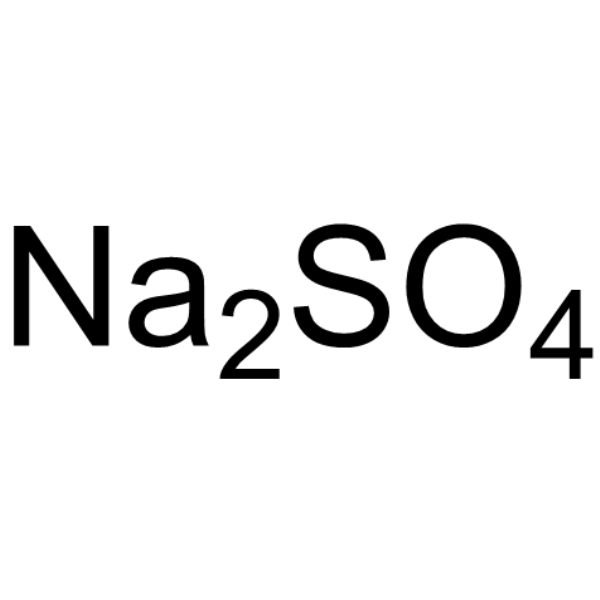 HY-Y0317ESodium sulfate anhydrous, United States Pharmacopeia (USP) Reference Standard
-
Similarity Score 0.75
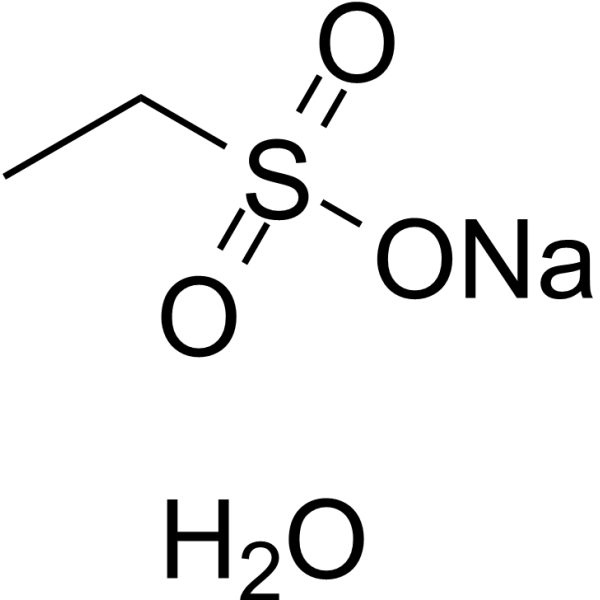 HY-W250192Ethanesulfonic acid sodium salt monohydrate
-
Similarity Score 0.73
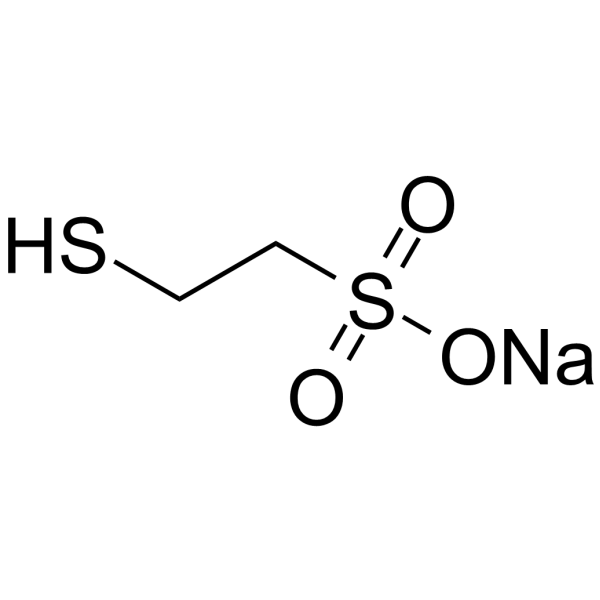 HY-13679Sodium 2-mercaptoethanesulfonate
-
Similarity Score 0.69
 HY-W004702RMethyl methanesulfonate (Standard)
-
Similarity Score 0.66
 HY-Y1083HPotassium sulfate, 99%
-
Similarity Score 0.66
 HY-W094464Lithium sulfate
-

Explore the MedChemAI to find more analogs


References
- [1]. Han X, et al. Mechanism analysis of toxicity of sodium sulfite to human hepatocytes L02. Mol Cell Biochem. 2020;473(1-2):25-37. [Content Brief]
- [2]. Labbé P, et al. Functional responses of human neutrophils to sodium sulfite (Na2SO3) in vitro. Hum Exp Toxicol. 1998 Nov;17(11):600-5. [Content Brief]
- [3]. Oshimo M, et al. Sodium sulfite causes gastric mucosal cell death by inducing oxidative stress. Free Radic Res. 2021;55(6):731-743. [Content Brief]



