1. Search Result
Search Result
Results for "

LX-2

" in MedChemExpress (MCE) Product Catalog:

33

Inhibitors & Agonists

3

Natural
Products

Cat. No. Product Name Target Research Areas Chemical Structure
  • HY-129389
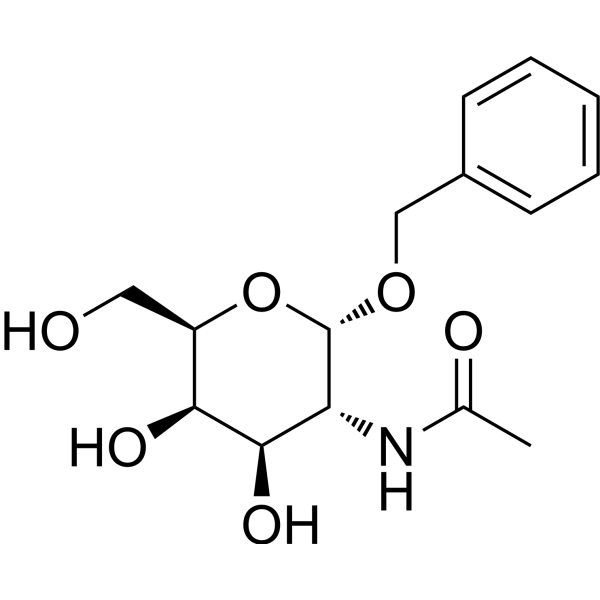
    Benzyl-α-GalNAc
    5+ Cited Publications

    Glycosyltransferase Cancer
    Benzyl-α-GalNAc is a potent O-glycosylation inhibitor. Benzyl-α-GalNAc effectively inhibits the proliferation and activation of LX-2 cells and suppresses the expression of collagen I/III, which has good potential for investigation in liver fibrosis. Benzyl-α-GalNAc also significantly enhances the anti-tumour activity of 5-Fluorouracil (HY-90006) (e.g. pancreatic cancer) by inhibiting O-glycosylation [2] .
    Benzyl-α-GalNAc
  • HY-W008947
    SEW​2871
    Maximum Cited Publications
    9 Publications Verification

    LPL Receptor ERK Akt Neurological Disease Metabolic Disease Inflammation/Immunology
    SEW2871 is an orally active, potent, highly selective S1P1 (sphingosine-1-phosphate type 1 receptor) agonist, with an EC50 of 13.8 nM. SEW2871 activates ERK, Akt, and Rac signaling pathways and induces S1P1 internalization and recycling. SEW2871 reduces lymphocyte numbers in blood. SEW2871 can be used for the research of diabetes, Alzheimer’s disease, liver fibrosis, and inflammatory responses [2].
    SEW​2871
  • HY-19796
    Icomidocholic acid
    1 Publications Verification

    Aramchol; C20-FABAC

    Stearoyl-CoA Desaturase (SCD) Metabolic Disease
    Icomidocholic acid (Aramchol) is a lipid molecule synthesized from cholic acid and arachidic acid. Icomidocholic acid is an orally active SCD1 inhibitor and cholesterol solubilizer with antifibrotic effects. Icomidocholic acid can reduce liver fat content, dissolve cholesterol crystals and prevent gallstone formation. Icomidocholic acid can be used in the study of nonalcoholic fatty liver disease (NAFLD) and nonalcoholic steatohepatitis (NASH) [2] .
    Icomidocholic acid
  • HY-156815

    Orphan GPCR Neurological Disease Inflammation/Immunology
    YL-365 is a potent and selective GPR34 antagonist with an IC50 of 17 nM. YL-365 binds to a portion of the orthosteric binding pocket of GPR34 and induces allosteric changes that stabilize the receptor in an inactive conformation. YL-365 down-regulates expression of the proinflammatory gene iNOS in M1 microglia and suppresses proinflammatory responses. YL-365 reduces mechanical allodynia in a dose-dependent manner in a mouse model of neuropathic pain. YL-365 can be used for the research of neuropathic pain .
    YL-365
  • HY-107582

    Ser/Thr Protease Calcium Channel PKC Cancer
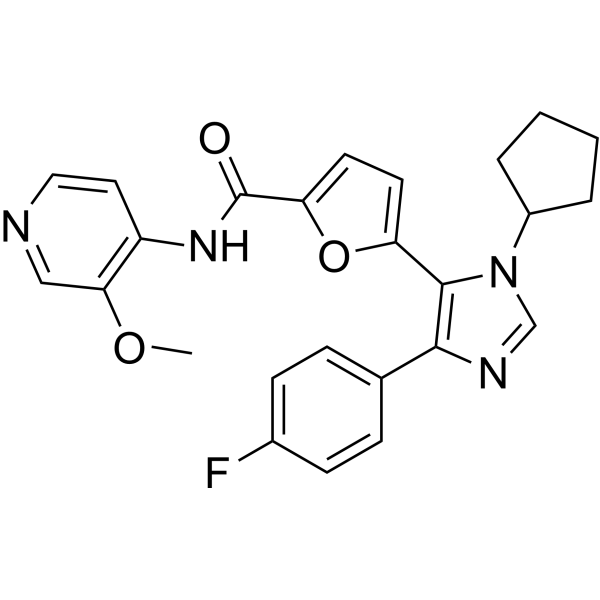
    JW480 is a selective KIAA1363/AADACL1 inhibitor with oral activity, featuring IC50 values of 12 nM against human KIAA1363, 20 nM against mouse KIAA1363. JW480 blocks lipid deacetylase activity to restrain HAG metabolism and lowers retinyl ester hydrolase function in hepatic stellate cells. JW480 reduces MAGE lipid levels and inhibits migration, invasion, survival and tumor growth of prostate cancer cells. JW480 lowers PKCδ phosphorylation, facilitates HAGP accumulation, diminishes platelet aggregation, dense granule secretion and Ca 2+ flux, delays arterial thrombosis and prolongs tail bleeding time in rats. JW480 can be used for the study of prostate cancer and thrombosis [2] .
    JW480
  • HY-N0546
    Ligustroflavone
    2 Publications Verification

    Nuezhenoside

    CaSR RIP kinase Mixed Lineage Kinase TGF-beta/Smad Cardiovascular Disease Neurological Disease Metabolic Disease Endocrinology
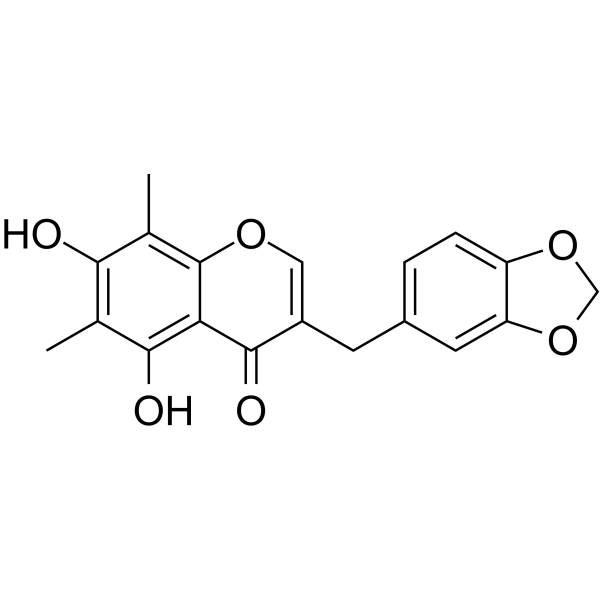
    Ligustroflavone is an orally active flavonoid compound. Ligustroflavone can be extracted from Ligustrum lucidum. Ligustroflavone antagonizes the calcium-sensing receptor (CaSR), inhibits the RIPK1/RIPK3/MLKL pathway, and downregulates TGF-β/Smad signaling. Ligustroflavone regulates calcium metabolism, protects bone tissue, reduces cerebral ischemic injury, and inhibits liver fibrosis. Ligustroflavone can be used in the study of diabetic osteoporosis, ischemic stroke, and liver fibrosis [2] .
    Ligustroflavone
  • HY-N7543

    HIV Endothelin Receptor Infection Metabolic Disease
    Schisantherin D is a lignan. Schisantherin D can be isolated from Kadsura interior. Schisantherin D downregulates the expression of ETBR and inhibits the secretion of ECM and ET-1. Schisantherin D alleviates EtOH + ET-1-induced hepatocyte cytotoxicity. Schisantherin D potently inhibits HIV replication in cells [2].
    Schisantherin D
  • HY-133669

    Discoidin Domain Receptor Cancer
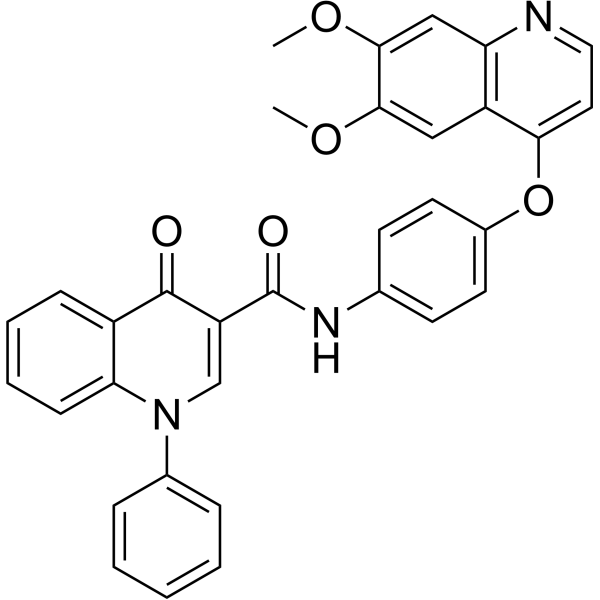
    DDR1-IN-5 is a selective Discoidin Domain Receptor family, member 1 (DDR1) inhibitor with an IC50 of 7.36 nM. DDR1-IN-5 inhibits auto-phosphorylation DDR1b (Y513) with an IC50 of 4.1 nM. DDR1-IN-5 has anti-cancer activity . DDR1-IN-5 is a click chemistry reagent, it contains an Alkyne group and can undergo copper-catalyzed azide-alkyne cycloaddition (CuAAc) with molecules containing Azide groups.
    DDR1-IN-5
  • HY-133670

    Discoidin Domain Receptor Cancer
    DDR1-IN-6 is a selective Discoidin Domain Receptor family, member 1 (DDR1) inhibitor with an IC50 of 9.72 nM. DDR1-IN-6 inhibits auto-phosphorylation DDR1b (Y513) with an IC50 of 9.7 nM. DDR1-IN-6 has anti-cancer activity . DDR1-IN-6 is a click chemistry reagent, it contains an Alkyne group and can undergo copper-catalyzed azide-alkyne cycloaddition (CuAAc) with molecules containing Azide groups.
    DDR1-IN-6
  • HY-156523

    MAP4K Cancer
    TNIK&MAP4K4-IN-1 (compound A-39) is a dual inhibitor of TNIK and MAP4K4/HGK with IC50s of 1.29 nM and <10 nM,respectively,in human hepaticstellate cell LX-2. TNIK&MAP4K4-IN-1 can be used for cancer and fibrosis inhibition .
    TNIK&MAP4K4-IN-1
  • HY-179410

    Galectin Others
    Galectin-3-IN-7 is a selective Galectin-3 inhibitor with a Kd of 5.7 nM and shows 390-fold selectivity over Gal-1. Galectin-3-IN-7 can downregulate profibrotic signaling such as ACTA2, COL1A2, and FN1 in TGFβ-stimulated LX2 hepatic stellate cells. Galectin-3-IN-7 can be used for the research of fibrosis .
    Galectin-3-IN-7
  • HY-169927

    Ferroptosis Inflammation/Immunology
    Ferroptosis-IN-16 (Compound 13l) is a specific inhibitor for ferroptosis with an EC50 of 0.7 nM and 0.9 nM in ES-2 cell and LX-2 cell. Ferroptosis-IN-16 ameliorates Acetaminophen (HY-66005)-induced acute liver injury in mouse model, and exhibits good metabolic stability in mouse liver microsomes .
    Ferroptosis-IN-16
  • HY-170543

    Galectin EGFR Apoptosis Inflammation/Immunology
    Dual Galectin-3/EGFR-IN-1 (Compound 29) is the dual inhibitor for Galectin-3 and EGFR with the KD of 52.29 μM and 3.31 μM. Dual Galectin-3/EGFR-IN-1 inhibits TGF-β-induced hepatic stellate cell (HSCs) activation, induces apoptosis in LX-2 cell, and exhibits anti-liver fibrotic efficacy .
    Dual Galectin-3/EGFR-IN-1
  • HY-176737

    TGF-beta/Smad Inflammation/Immunology
    TGF-β1/Smad-IN-1 (compound C9) is a potent TGF-β1/Smad inhibitor. TGF-β1/Smad-IN-1 inhibits the expression of fibrosis markers (α-SMA and COL1A1) induced by TGF-β1. TGF-β1/Smad-IN-1 shows antifibrotic effects. TGF-β1/Smad-IN-1 has the potential for the research of hepatic fibrosis .
    TGF-β1/Smad-IN-1
  • HY-149816

    Interleukin Related TNF Receptor NF-κB Inflammation/Immunology
    Anti-inflammatory agent 41 (13a) significantly inhibit lipopolysaccharide (LPS)-induced expression of the proinflammatory cytokines IL-6 and TNF-α on J774A.1, THP-1 and LX-2 cells, and inhibits the activation of the NF-κB pathway .
    Anti-inflammatory agent 41
  • HY-175033

    Epigenetic Reader Domain Phosphatase c-Myc Apoptosis Inflammation/Immunology
    BRD4-IN-11 is an orally active and selective BRD4 inhibitor (IC50 = 26.35 nM (BD1), IC50 = 72.81 nM (BD2)). BRD4-IN-11 is approximately 3- to 18-fold more potent against BRD4 than againstBRD2, BRD3, and BRDT. BRD4-IN-11 enhances H2S release and inhibits the upregulation of fibrotic markers (α-SMA and fibronectin), c-Myc, and CDC25B. BRD4-IN-11 reduces apoptosis in LO2 hepatocytes. BRD4-IN-11 significantly improves liver and lung function in a hepatopulmonary fibrosis model and can be used to study hepatopulmonary fibrosis .
    BRD4-IN-11
  • HY-W008947R

    Reference Standards LPL Receptor ERK Akt Neurological Disease Metabolic Disease Inflammation/Immunology
    SEW2871 is an orally active, potent, highly selective S1P1 (sphingosine-1-phosphate type 1 receptor) agonist, with an EC50 of 13.8 nM. SEW2871 activates ERK, Akt, and Rac signaling pathways and induces S1P1 internalization and recycling. SEW2871 reduces lymphocyte numbers in blood. SEW2871 can be used for the research of diabetes, Alzheimer’s disease, liver fibrosis, and inflammatory responses [2].
    SEW​2871 (Standard)
  • HY-149899

    VD/VDR Others
    VDR agonist 2 (compound 16i) is a VDR (vitamin D receptor) agonist that can effectively inhibit TGF-β1-induced activation of hepatic stellate cells (HSC). VDR agonist 2 has significant anti-hepatic fibrosis effects both in vitro and in vivo .
    VDR agonist 2
  • HY-162605

    STAT HSP Cancer
    CYD0682 is an analog of Oridonin (HY-N0004). CYD0682 attenuates STAT3 activation and ECM production via an HSP90 pathway in hepatic stellate cells .
    CYD0682
  • HY-149053

    P-glycoprotein Cancer
    OY-101 is an orally active, potent and specific P-glycoprotein (P-gp) inhibitor. OY-101 can sensitize drug-resistant tumors and effectively reverse tumor multidrug resistance. OY-101 is improvements in water-solubility, cytotoxicity, and reversal activity compared to Tetrandrine (HY-13764) .
    OY-101
  • HY-145855

    TGF-β Receptor Inflammation/Immunology
    J-1063 is a potent, selective and orally active ALK5 inhibitor with an IC50 of 0.039 µM. J-1063 shows anti-fibrotic effect by the inhibition of inflammatory infiltration, collagen deposition, and hepatocytes necrosis. J-1063 has the potential for the research of liver fibrosis .
    J-1063
  • HY-163429

    TGF-β Receptor p38 MAPK Inflammation/Immunology Cancer
    J-1149 is a potent ALK5 inhibitor, with an IC50 value of 0.017 μM. J-1149 also shows weak p38α MAP kinase inhibitory activity, with an IC50 value of 0.435 μM. J-1149 can be used for liver fibrosis research .
    J-1149
  • HY-163778

    NF-κB Inflammation/Immunology
    ZM600 is a potent and orally active antihepatic fibrosis agent. ZM600 decreases the LPS (HY-D1056) induced protein expression of collagen I, α-SM, p-p65. ZM600 has the potential for the research of liver fibrosis .
    ZM600
  • HY-147195

    HMG-CoA Reductase (HMGCR) Cardiovascular Disease Metabolic Disease Inflammation/Immunology
    QH536 (Compound 29) is a potent HMGCR degrader with an EC50 of 0.22 μM. QH536 has no side-effect of inducing cholesterol accumulation in cells. QH536 shows anti-inflammatory and can be used for cardiovascular disease and nonalcoholic steatohepatitis research .
    QH536
  • HY-163403

    VEGFR Cardiovascular Disease Cancer
    VEGFR-2-IN-43 (compound 16) is an orally active inhibitor of VEGFR2, with an IC50 of 39.91 μM. VEGFR-2-IN-43 can be used for wet age-related macular degeneration (w-AMD) disease research .
    VEGFR-2-IN-43
  • HY-107582R

    Reference Standards Ser/Thr Protease Calcium Channel PKC Cancer
    JW480 (Standard) is the analytical standard of JW480 (HY-107582). This product is intended for research and analytical applications. JW480 is a potent and selective inhibitor of a serine hydrolase enzyme KiAA1363 .
    JW480 (Standard)
  • HY-183549

    Apoptosis Ferroptosis Cancer
    Ferroptosis/apoptosis inducer-4 is a pyridine-hydrazone-derived Cu (II) complex and a synergistic inducer of ferroptosis and apoptosis. Ferroptosis/apoptosis inducer-4 exerts anti-tumor proliferation and anti-metastasis effects with extremely low systemic toxicity. Ferroptosis/apoptosis inducer-4 disrupts cellular redox homeostasis by depleting glutathione and generating hydroxyl radicals through the Cu 2+/Cu + redox cycle. Ferroptosis/apoptosis inducer-4 also triggers mitochondrial dysfunction and endoplasmic reticulum stress, which in turn lead to Ca 2+ release, mitochondrial Ca 2+ overload, and the formation of a ROS−Ca 2+ self-amplifying feedback loop. Ferroptosis/apoptosis inducer-4 can be used in studies related to cervical cancer .
    Ferroptosis/apoptosis inducer-4
  • HY-181655

    Cathepsin Metabolic Disease
    Anti-hepatic fibrosis agent 3 is an orally active anti-hepatic fibrosis compound targeting Cathepsin D. Anti-hepatic fibrosis agent 3 shows an IC50 of 53.18 μM against COL1A1-promoter and a Kd of 8.86 μM for binding to Cathepsin D. Anti-hepatic fibrosis agent 3 directly binds to and promotes the degradation of Cathepsin D, with no significant effect on Cathepsin B or Cathepsin L. Anti-hepatic fibrosis agent 3 inhibits hepatic stellate cell activation and reduces extracellular matrix deposition and inflammatory cytokine expression. Anti-hepatic fibrosis agent 3 exhibits remarkable anti-fibrotic activity in rat BDL and mouse CDAHFD-induced hepatic fibrosis models. Anti-hepatic fibrosis agent 3 can be used for the study of hepatic fibrosis .
    Cathepsin D degrader 1
  • HY-181808

    AMPK TGF-beta/Smad Collagen Metabolic Disease
    HSF1/AMPK activator 1 is a compound that modulates the HSF1/AMPK axis and the TGF-β1/Smad signaling pathway. HSF1/AMPK activator 1 exhibits anti-hepatic fibrosis activity and metabolic stability. HSF1/AMPK activator 1 inhibits fibrosis formation and cell proliferation in activated hepatic stellate cells. HSF1/AMPK activator 1 alleviates liver injury and hepatic fibrosis symptoms in fibrotic mice. HSF1/AMPK activator 1 is applicable to research related to hepatic fibrosis .
    HSF1/AMPK activator 1
  • HY-N11736

    Collagen Metabolic Disease
    12-O-Tiglyl-phorbol 13-dodecanoate (TD13) is a potential inhibitor with anti-hepatic fibrosis activity, and it belongs to a series of derivatives of oral APOL2 inhibitors and anti-hepatic fibrosis agents. It shows no obvious toxicity in preclinical models. Compounds of the 12-O-Tiglyl-phorbol 13-dodecanoate series inhibit the expression of fibronectin, type I collagen and α-smooth muscle actin in hepatic stellate cells. 12-O-Tiglyl-phorbol 13-dodecanoate can be isolated from the Euphorbiaceae plant Euphorbia fischeriana, and it is applicable to the research of hepatic fibrosis .
    12-O-Tiglyl-phorbol 13-dodecanoate
  • HY-181486

    VD/VDR Metabolic Disease
    VDR agonist 5 is an oral active VDR agonist. VDR agonist 5 activates VDR-mediated signaling to reduce liver fibrosis progression. VDR agonist 5 does not induce hypercalcemia. VDR agonist 5 can be used for the research of hepatic fibrosis .
    VDR agonist 5
  • HY-183069

    GLUT PI3K Akt Apoptosis Bcl-2 Family Cancer
    FKL-137 is a GLUT1 and PI3K/AKT signaling pathway inhibitor. FKL-137 binds to GLUT1, reduces glucose uptake and lactate secretion, downregulates glucose metabolism-related proteins, and inhibits erythroleukemia cell proliferation. FKL-137 downregulates PI3K, p-PI3K, AKT, p-AKT levels, disrupts the PI3K/AKT-GLUT1 positive feedback loop, and suppresses erythroleukemia cell proliferation. FKL-137 induces apoptosis via upregulated Bax, Cleaved-PARP and downregulated Bcl-2, PARP. FKL-137 can be used for the research of erythroleukemia .
    FKL-137
  • HY-182038

    VD/VDR TGF-beta/Smad Collagen Hippo (MST) Metabolic Disease
    TGF-β1/Smad3-IN-2 is an orally active antifibrotic agent. TGF-β1/Smad3-IN-2 has high affinity for VDR and can inhibit the TGFβ/SMAD3 signaling pathway. TGF-β1/Smad3-IN-2 inhibits hepatic stellate cell activation, reduces extracellular matrix deposition, and alleviates liver fibrosis in a bile duct ligation mouse model. TGF-β1/Smad3-IN-2 can be used for the research of liver fibrosis .
    TGF-β1/Smad3-IN-2

Inquiry Online

Your information is safe with us. * Required Fields.

Salutation


Country or Region *

Applicant Name *


Organization Name *

Department *


Email Address *


Product Name *

Cat. No.


Requested quantity *

Phone Number *


Remarks

Inquiry Online

Inquiry Information

Product Name:
Cat. No.:
Quantity:
MCE Japan Authorized Agent:

