
20 Results for "

Microbiology

" in MedChemExpress (MCE) Product Catalog:
Products (20)

20 Results for "Microbiology" in MCE Product Catalog:

5
5 Cited Publications
Cat. No.: HY-K1023

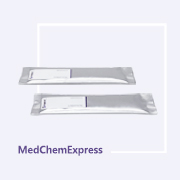
MCE PBS Powder (1 L of 1×) consists of NaCl, KCl and Phosphate, and is widely used in immunoassay, microbiology and protein experiments. The 20 pouches are defined as the base specification. All larger sizes correspond to incremental volumes of this base.

loading...
    loading...
1
1 Cited Publications
Cat. No.: HY-W110798
CAS No.: 115-39-9
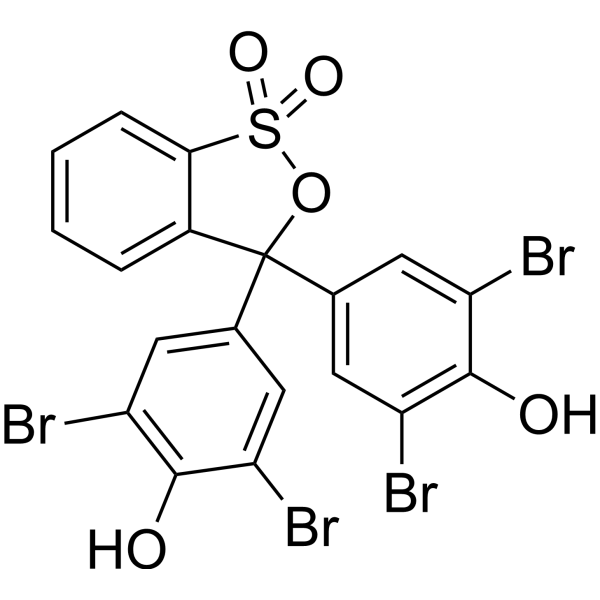
Bromophenol blue indicator (3.0-4.6) is a synthetic dye commonly used as an acid-base indicator with a transition range of pH 3.0-4.6. Bromophenol blue indicator (3.0-4.6) is water soluble and changes color from yellow to blue as the pH of the solution changes from acidic to basic. Its unique chemical properties make it an important ingredient in a variety of scientific applications, especially in biochemistry and molecular biology. In addition, it can be used as a stain in microbiology and histology. However, Bromophenol blue indicator (3.0-4.6) has potential irritating and staining properties.
loading...
    loading...
1
1 Cited Publications
Cat. No.: HY-P10208A
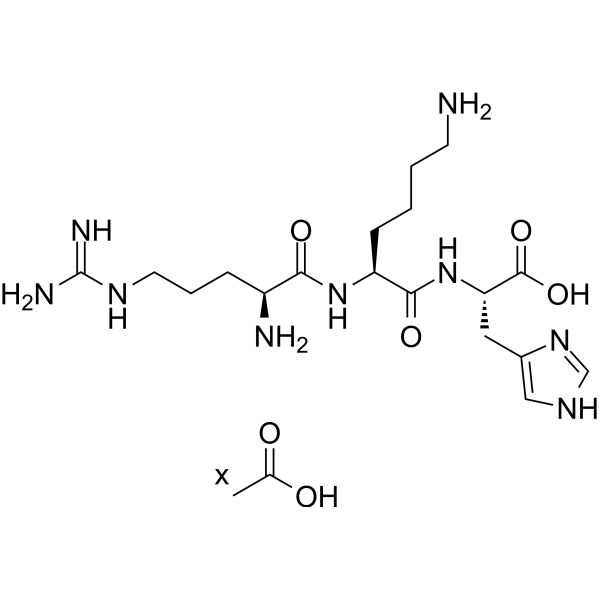
RKH acetate exerts protective effects against sepsis-induced death and organ damage. RKH acetate can directly bind to Toll-like receptor 4 (TLR4) and block TLR4 signal transduction in immune cells .
loading...
    loading...
1
1 Cited Publications
Cat. No.: HY-K1024

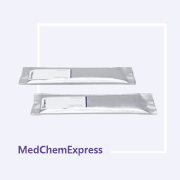
MCE PBS Powder (2 L of 1×) consists of NaCl, KCl and Phosphate, and is widely used in immunoassay, microbiology and protein experiments. The 10 pouches are defined as the base specification. All larger sizes correspond to incremental volumes of this base.

loading...
    loading...
Cat. No.: HY-W134423
CAS No.: 9002-18-0
Agar, microbiology tested, for cell culture (powder) is a jelly like substance that contains agarose and agar gel. Agar, microbiology tested, for cell culture (powder) can be isolated from the cell walls of red algae species such as Gelidium and Gracilaria (Ogonori). The gelation and melting of Agar, microbiology tested, for cell culture (powder) is based on the hydrogen bridge (physical gels), so the gelation is reversible. Agar, microbiology tested, for cell culture (powder) is widely used in food additives, plant tissue culture, microorganisms culture media, fingerprint recognition, and medical fields .
loading...
    loading...
Cat. No.: HY-D0003
CAS No.: 28983-56-4
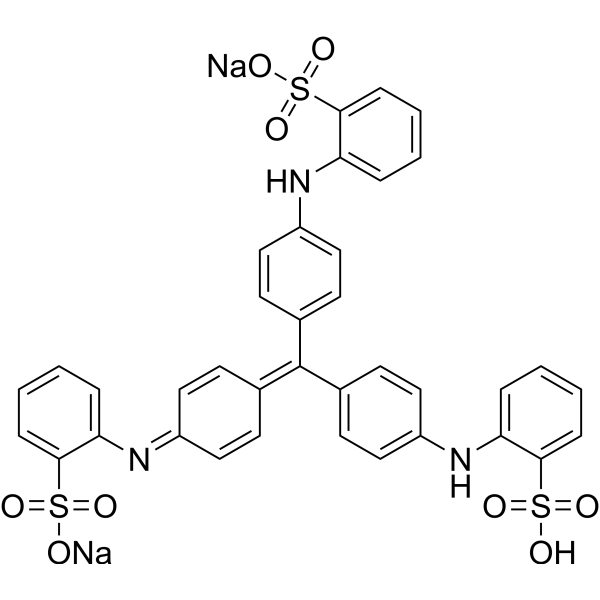
Methyl blue belongs to the group of triaminotriphenylmethane dyes. Methyl blue is widely used as antiseptic dye in polychrome staining method and has applications in histological and microbiological staining solutions. Methyl blue has been used as a model to study the effect of various catalysts on photodegradation of dyes .
loading...
    loading...
Cat. No.: HY-111532B
Purity:  98.15%
Target:  

ClpP Drug Isomer

Research Areas:  

Infection Cancer

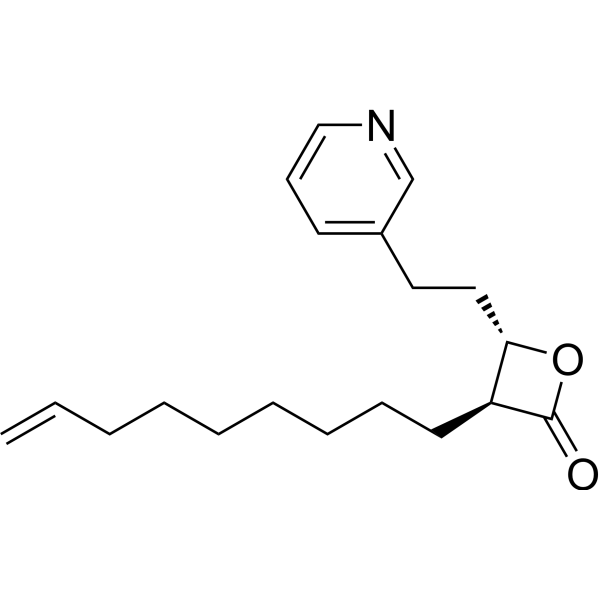
(3S,4S)-A2-32-01 (compound 24 (S,S)) is the low/inactive (S,S)-enantiomer of A2-32-01. A2-32-01 is a potent caseinolytic protease (ClpP) inhibitor. (3S,4S)-A2-32-01 is applicable for oncology and microbiology research .
loading...
    loading...
Cat. No.: HY-W134423A
CAS No.: 9002-18-0
Agar, microbiology tested, for cell culture (granular) is a hydrocolloid with gelling ability. Agar, microbiology tested, for cell culture (granular) can be used to prepare microbial culture media (for bacteria, yeasts and molds) .
loading...
    loading...
Cat. No.: HY-W039760
CAS No.: 17773-10-3
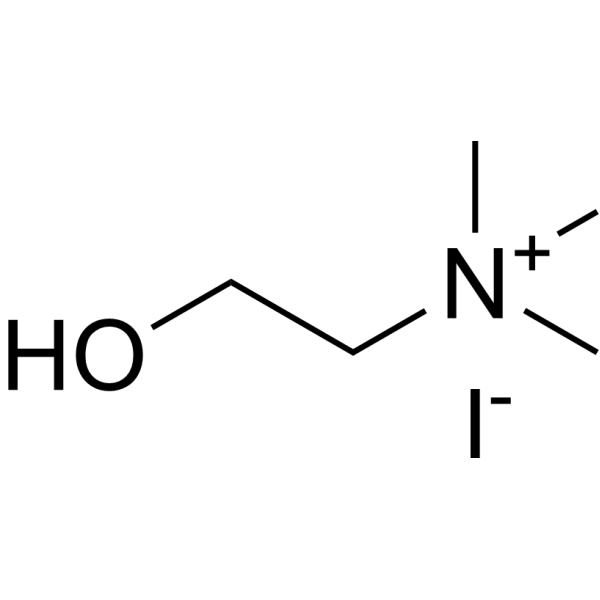
2-Hydroxy-N,N,N-trimethylethan-1-aminium iodide, also known as choline iodide, is a quaternary ammonium salt commonly used in organic synthesis and biochemical research. It is a water-soluble compound derived from choline, an essential nutrient found in many foods. Choline iodide has been used as a source of choline groups in various chemical reactions and in microbiology as a selective agent for isolating bacteria. In addition, its potential role in cognitive impairment and liver disease has also been studied.
loading...
    loading...
Cat. No.: HY-106958
CAS No.: 163451-80-7
Synonyms: HBY 097
Research Areas:  

Infection

Talviraline is a non-nucleoside reverse transcriptase (NNRT) inhibitor that is primarily used to inhibit the replication of human immunodeficiency virus type 1 (HIV-1). Talviraline inhibits the viral replication process by binding to a specific site of HIV-1 reverse transcriptase (RT). Talviraline can be used to study the potential countermeasures and safety of HIV-1 infection .
loading...
    loading...
Cat. No.: HY-P2917B
CAS No.: 9030-66-4
Synonyms: GyK, Flavobacterium meningosepticum
Target:  

Endogenous Metabolite

Research Areas:  

Metabolic Disease

Glycerol kinase, Flavobacterium meningosepticum (GyK, Flavobacterium meningosepticum) is a thermostable glycerol kinase isolated from Flavobacterium meningosepticum. Glycerol kinase, Flavobacterium meningosepticum catalyzes the first step in glycerol metabolism by converting triol to glycerol-3-p (G3P). Glycerol kinase, Flavobacterium meningosepticum is essential for regulating glycerol uptake in cells that is independent of channels or facilitators and is useful for biochemical studies .
loading...
    loading...
Cat. No.: HY-W250306
CAS No.: 4197-24-4
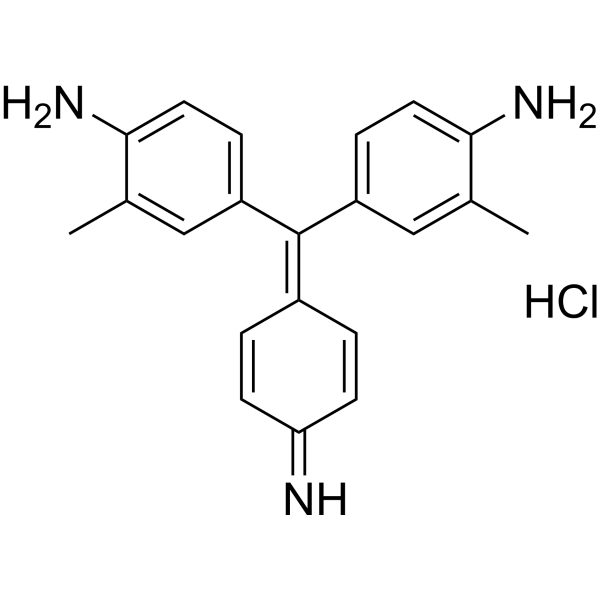
Carbol fuchsin is a histological stain used in microbiology to distinguish acid-fast bacteria from non-acid-fast bacteria. It is a mixture of basic fuchsin, phenol, and water and is commonly used in the Ziehl-Neelsen staining technique for the detection of tuberculosis and other mycobacterial infections. Carbol fuchsin stains the cell walls of acid-fast bacteria bright red, while other cells are unstained or slightly stained. This makes it easier to see and identify these microbes under a microscope. Carbol fuchsin is also used in veterinary medicine and phytopathology for similar purposes.
loading...
    loading...
Cat. No.: HY-W127357
CAS No.: 126-53-4
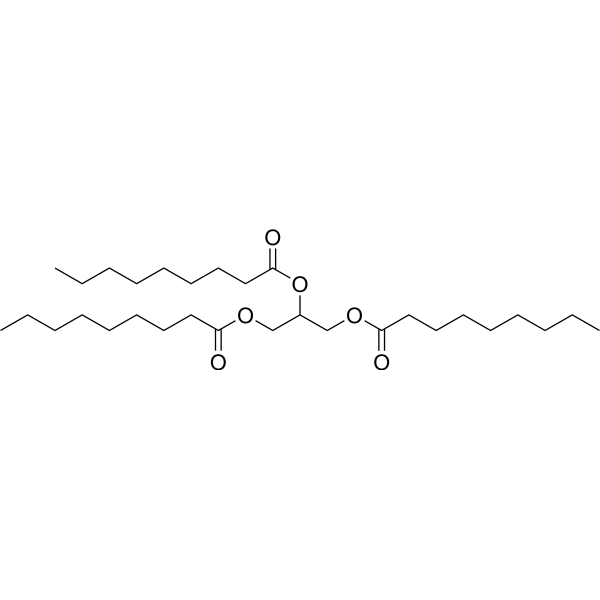
Glyceryl trinonanoate is a triacylglycerol containing nonanoic acid at the sn-1, sn-2 and sn-3 positions. It has been found in Schizochytrium biomass. 1 1,2,3-Trinonanoyl-rac-glycerol increases blood levels of the ketone body D-(-)-3-hydroxybutyrate in neonatal rhesus monkeys. 2|1. Mioso, R., Toledo Marante, FJ, González, JE, et al. Schizochytrium sp. metabolite analysis. Oleaginous microbial sources of biodiesel by GC-MS. braz. J. Microbiology. 45(2), 403-409 (2014).|2. Tetrick, MA, Greer, FR and Benevenga, NJ Blood D- ( )-3-Hydroxybutyric acid concentration. Compare. medicine. 60(6), 486-490 (2010).
loading...
    loading...
Cat. No.: HY-139158
CAS No.: 1097628-00-6
Target:  

HIV

Research Areas:  

Infection

Ainuovirine is a second-generation non-nucleoside reverse transcriptase inhibitor (NNRTI). Ainuovirine inhibits HIV replication by non-competitively binding to HIV reverse transcriptase and blocking the reverse transcription process of viral RNA. Ainuovirine can be used for human immunodeficiency virus (HIV) type 1 infection .
loading...
    loading...
Cat. No.: HY-W288676
CAS No.: 207727-11-5
6-Fluoro-3-indolyl-β-D-galactopyranoside is a chromogenic enzyme substrate commonly used in microbiology to detect the expression of β-galactosidase in bacterial colonies.
loading...
    loading...
Cat. No.: HY-115848
CAS No.: 314030-54-1
Target:  

Filovirus

Research Areas:  

Infection

Antiviral agent 12 is a antiviral compound. Antiviral agent 12 inhibits Ebola virus entry into host cells by binding to surface glycoprotein, EC50 is 3.9 μM. Antiviral agent 12 can be used in the study of Ebola virus .
loading...
    loading...
Cat. No.: HY-138145
CAS No.: 6748-68-1
8-Acetyl-7-hydroxycoumarin is a coumarin-like compound found in Mexican patchouli (Tagetes lucida) that has anti-bacterial and anti-fungal activities .
loading...
    loading...
Cat. No.: HY-W250177
CAS No.: 7173-54-8
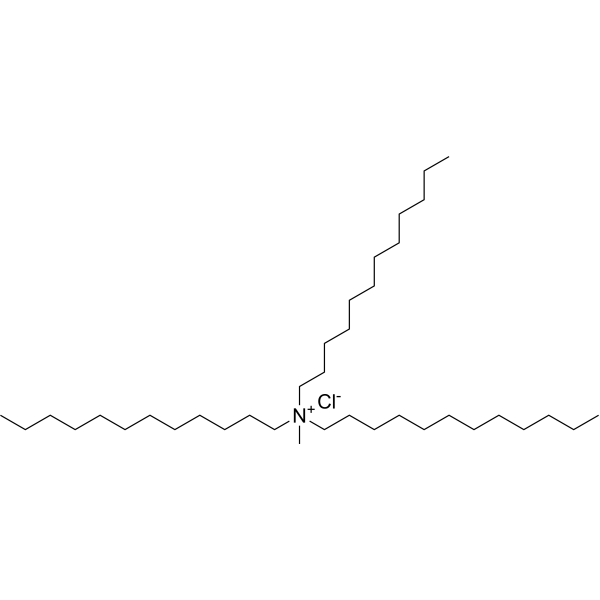
Tridodexylmethylammonium chloride, also known as TDMAC, is a cationic surfactant commonly used in various industrial and research applications. It belongs to the family of quaternary ammonium compounds and has a positively charged head and a hydrophobic tail, which allows it to be used as a detergent, emulsifier and antimicrobial. Known for its ability to disrupt cell membranes, TDMAC is frequently used in microbiology for the selective isolation and identification of bacteria.
loading...
    loading...
Cat. No.: HY-W250187
CAS No.: 15163-30-1
DDMAB, or didodecyldimethylammonium bromide, is a cationic surfactant commonly used in a variety of industrial and research applications. It belongs to the family of quaternary ammonium compounds and has a positively charged head and a hydrophobic tail, which allows it to be used as a detergent, emulsifier and antimicrobial. Known for its ability to disrupt cell membranes, DDMAB is commonly used in microbiology to selectively isolate and identify bacteria. It is also used in nanotechnology to synthesize metal nanoparticles and other materials. In addition, DDMAB has the ability to interact with and penetrate cell membranes, which has potential applications in drug delivery, gene therapy, and other medical fields.
loading...
    loading...
Cat. No.: HY-N10527
CAS No.: 75645-26-0
Synonyms: Globoisotetraose
Target:  

Others

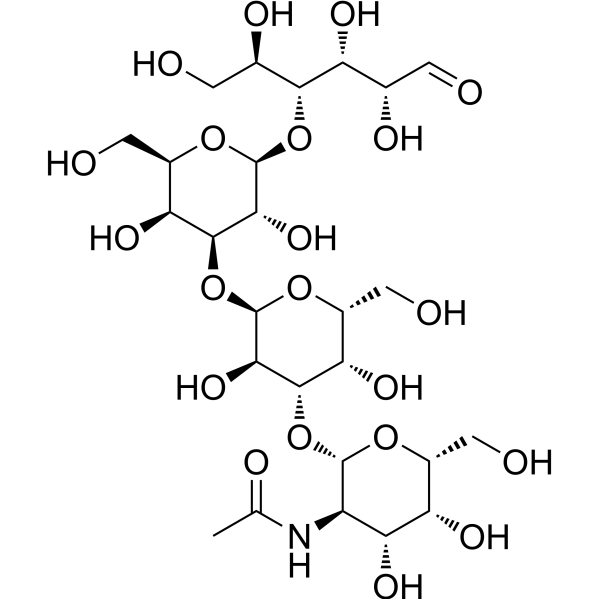
Isoglobotetraose (Globoisotetraose) is the oligosaccharide moiety of human glycosphingolipids. Synthesis process: globotetraose (GalNAcβ1→3Galα1→4Galβ1→4Glc) and isoglobotetraose (GalNAcβ1→3Galα1→3Galβ1→4Glc) .
loading...
    loading...
  • 1

