
Search Result
Results for "
Molecular gel
" in MedChemExpress (MCE) Product Catalog:
-
- HY-D0021
-
|
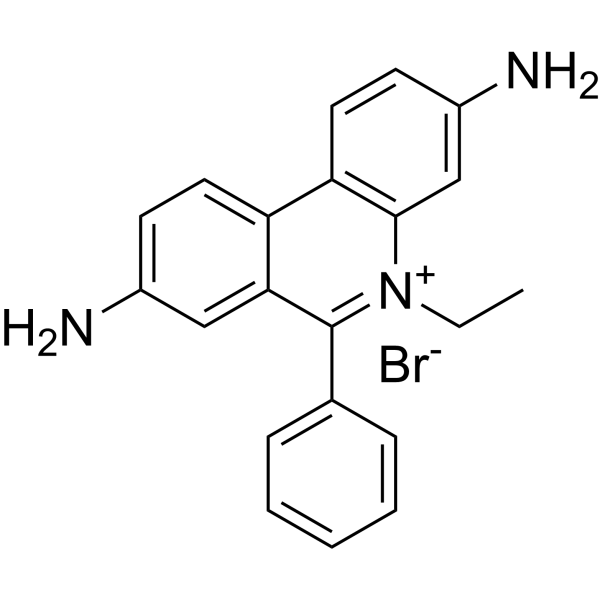
EtBr; Homidium bromide
|
DNA Stain
|
Others
|
|
EthD bromide is an intercalating agent commonly used as a fluorescent tag (nucleic acid stain) in molecular biology laboratories for techniques such as agarose gel electrophoresis.
|
-
-
- HY-W088070A
-
|
|
Biochemical Assay Reagents
|
Others
|
|
Agarose,Low melting point is a kind of agarose, a kind of polysaccharide that can be derived from seaweed. It is commonly used in molecular biology and biochemistry to isolate and purify DNA and RNA fragments. Agarose,Low melting point is a low melting point agarose, which is suitable for the recovery of large DNA fragments and enzymatic reactions in gels and other applications. In addition, it has been used in various techniques, such as pulsed field gel electrophoresis and capillary electrophoresis for analyzing genetic material.
|
-
-
- HY-DY1050
-
|
|
DNA Stain
|
Others
|
Ethidium bromide (solution) is an intercalating agent commonly used as a fluorescent tag (nucleic acid stain) in molecular biology laboratories for techniques such as agarose gel electrophoresis. Solvent and Concentration: Sterile water: 10 mg/Ml
|
-
-
- HY-Y1309
-
|
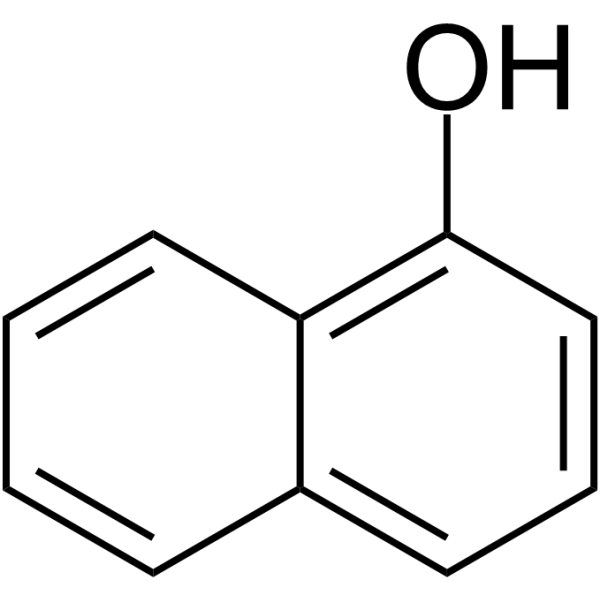
Furro ER; NSC 9586; Nako TRB
|
Environmental Pollutants
Endogenous Metabolite
|
Others
|
|
1-naphthol (Furro ER) is an excited state proton transfer (ESPT) fluorescent molecular probe. 1-naphthol can sense the hydrophobic domains in micellar aggregation and accurately sense the sol-gel transition. 1-naphthol can be used to study the thermally induced microenvironmental changes and hydration levels of Pluronic F127 (PF127) in different microenvironments in aqueous media .
|
-
-
- HY-W134328
-
|
Dextran blue (MW 2000000)
|
Biochemical Assay Reagents
|
Others
|
|
Blue dextran (Dextran blue) (MW 2000000) is a high-molecular-weight long-chain polymer of D-glucose. Blue dextran (MW 2000000) serves as an important model macromolecular drug and molecular weight estimation marker, and can be used as a standard for gel permeation chromatography. The release of Blue dextran (MW 2000000) from alginate microspheres is regulated by preparation conditions; its release rate in a pH 6.8 environment is significantly faster than that in pH 1.2, and it exhibits release characteristics close to zero-order kinetics under this condition .
|
-
-
- HY-D0947
-
|
|
DNA Stain
|
Others
|
|
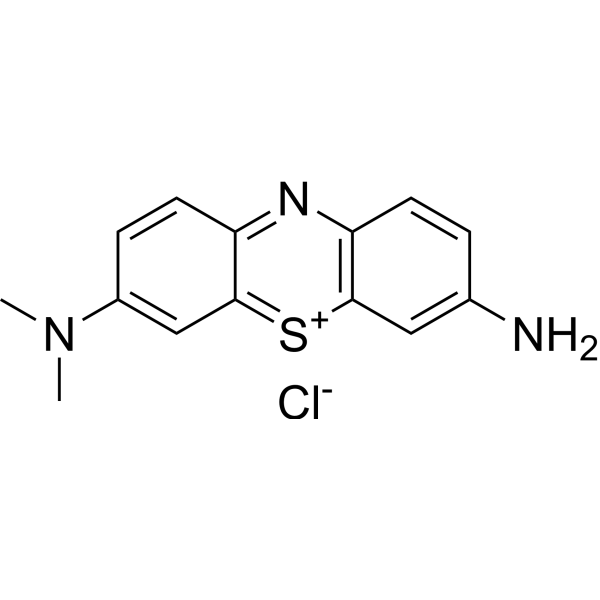
Azure A chloride is a phenothiazine dye. Azure A chloride is an alternative DNA dye used for the separation of DNA and protein fragments in agarose gel electrophoresis and PAGE. Azure A chloride can be chemisorbed on the surface of mild steel according to the Langmuir adsorption isotherm to form a protective film. Azure A chloride binds to double-stranded DNA in a non-cooperative manner via weak intercalation, triggering molecular conformational disturbance, restricted rotational motion, and changes in optical activity .
|
-
-
- HY-W460471
-
|
|
Biochemical Assay Reagents
|
Others
|
|
Tris Buffered Saline is a common buffer reagent in molecular biology, consisting of Tris and NaCl. Tris Buffered Saline can adjust pH and ionic strength and is widely used in DNA/RNA extraction, PCR and protein electrophoresis. Tris Buffered Saline can purify and protect nucleic acid materials and improve reaction efficiency and concentration. In protein electrophoresis, Tris Buffered Saline stabilizes gels and maintains pH. Overall, Tris Buffered Saline offers versatility, good solubility, and low toxicity in molecular biology applications.
|
-
-
- HY-156045C
-
|
|
Biochemical Assay Reagents
|
Others
|
|
Cross-linked dextran G 200 is a hydrophilic gel based on molecular size exclusion and targeted macromolecular separation. Cross-linked dextran G 200 works through the gel permeation mechanism, and the cross-linked structure forms a three-dimensional network with a specific pore size, achieving separation based on the molecular hydrodynamic volume. Cross-linked dextran G 200 can be used to adjust the osmotic solute distribution coefficient and the ability to maintain osmotic equilibrium, such as in gel filtration chromatography for purification and analysis of biomacromolecules such as proteins and nucleic acids . Cross-linked dextran G 200 can also be used as a gel filtration filler (particle size range: 40-120 μm; globular protein separation range: 5-600 kDa) .
|
-
-
- HY-156045B
-
|
|
Biochemical Assay Reagents
|
Others
|
|
Cross-linked dextran G 150 is a hydrophilic gel based on molecular size exclusion and targeted for the separation of macromolecules. Cross-linked dextran G 150 functions through the gel permeation mechanism, where the cross-linked structure forms a three-dimensional network with specific pore diameters, achieving separation based on the molecular volumetric flow. Cross-linked dextran G 150 can be used to regulate the distribution coefficient of permeating solutes and maintain the permeation balance, such as in gel filtration chromatography for the purification and analysis of biological macromolecules like proteins and nucleic acids. Cross-linked dextran G 150 can also be used as a gel filtration filler (particle size range: 40-120 μm; spherical protein separation range: 5-300 kDa) .
|
-
-
- HY-149561
-
|
|
E3 Ligase Ligand-Linker Conjugates
|
Others
|
|
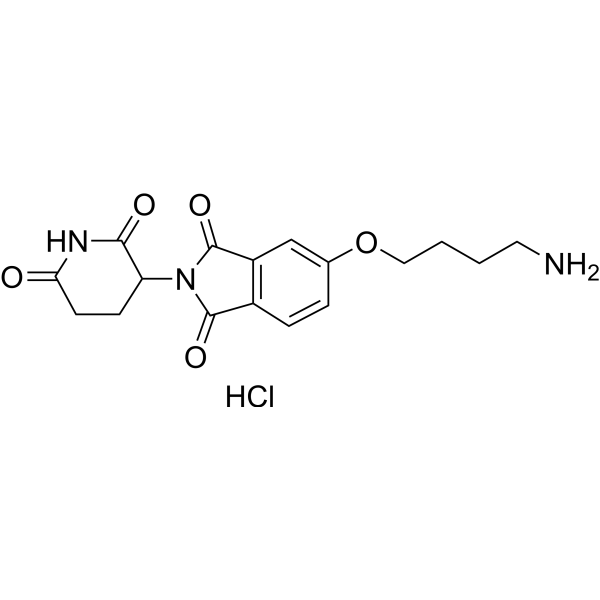
Thalidomide-5-O-C4-NH2 hydrochloride is a synthetic E3 ligase ligand-linker conjugate, consisting of a cereblon ligand based on Thalidomide (HY-14658) and a linker .
|
-
-
- HY-149559
-
|
|
E3 Ligase Ligand-Linker Conjugates
Autophagy
Apoptosis
|
Cancer
|
|
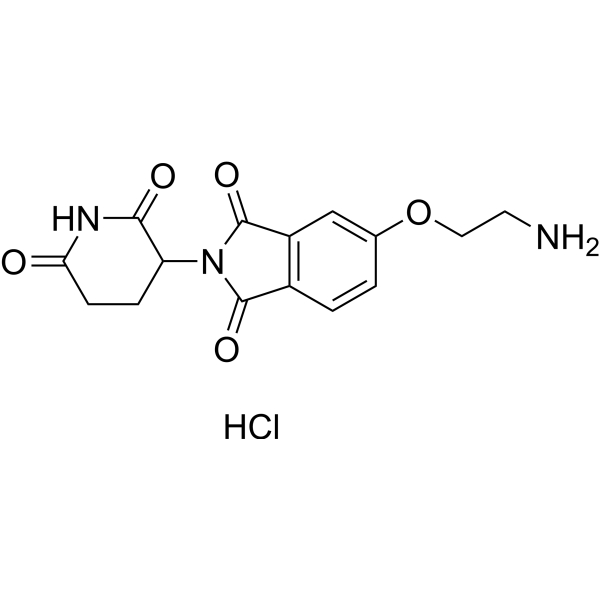
Thalidomide-5-O-C2-NH2 hydrochloride is the Thalidomide (HY-10984)-based cereblon ligand used in the recruitment of CRBN protein.Thalidomide-5-O-C2-NH2 hydrochloride can be connected to the ligand for protein by a linker to form PROTACs .
|
-
-
- HY-Y0850U8
-
|
Polyvinyl alcohol (Mw 47000, 98-99% hydrolyzed, ~1000 polymerization); Poly(Ethenol) (Mw 47000, 98-99% hydrolyzed, ~1000 polymerization)
|
Biochemical Assay Reagents
|
Others
|
|
PVA (Mw 47000, 98-99% hydrolyzed, ~1000 polymerization) is a polyvinyl alcohol with molecular weight of 47000 with hydrolysis properties. Hydrolysis degree refers to the conversion rate of acetic acid group hydrolysis to hydroxyl group in the original polyvinyl acetate, PVA (Mw 47000, 98-99% hydrolyzed, ~1000 polymerization). In addition, polyvinyl alcohol is obtained from polymerization of vinyl acetate to remove acetic acid group by hydrolysis. Polyvinyl alcohol with different degrees of hydrolysis can be self-crosslinked to form frozen gels and used as biological excipients .
|
-
-
- HY-156159
-
|
|
E3 Ligase Ligand-Linker Conjugates
Autophagy
Apoptosis
|
Cancer
|
|
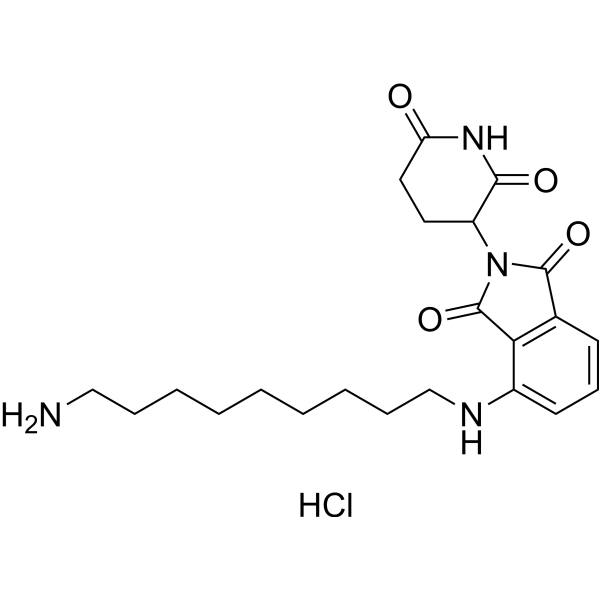
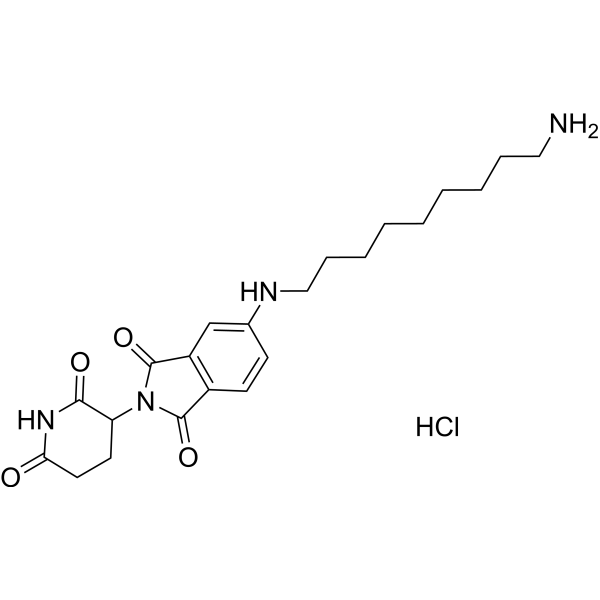
Thalidomide-NH-C9-NH2 hydrochloride is the Thalidomide (HY-10984)-based cereblon ligand used in the recruitment of CRBN protein.Thalidomide-NH-C9-NH2 hydrochloride can be connected to the ligand for protein by a linker to form PROTACs .
|
-
-
- HY-149562
-
|
|
E3 Ligase Ligand-Linker Conjugates
Autophagy
Apoptosis
|
Cancer
|
|
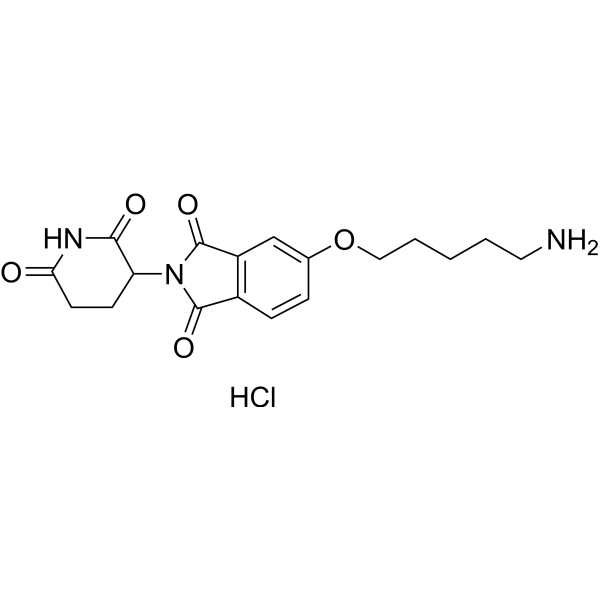
Thalidomide-5-O-C5-NH2 hydrochloride is the Thalidomide (HY-10984)-based cereblon ligand used in the recruitment of CRBN protein.Thalidomide-5-O-C5-NH2 hydrochloride can be connected to the ligand for protein by a linker to form PROTACs .
|
-
-
- HY-155265
-
|
|
E3 Ligase Ligand-Linker Conjugates
|
Cancer
|
|
Pomalidomide-5-C9-NH2 hydrochloride is the Pomalidomide-based cereblon (CRBN) ligand used in the recruitment of CRBN protein.Pomalidomide-5-C9-NH2 hydrochloride can be connected to the ligand for protein by a linker to form PROTAC .
|
-
-
- HY-149563
-
|
|
E3 Ligase Ligand-Linker Conjugates
Autophagy
Apoptosis
|
Cancer
|
|
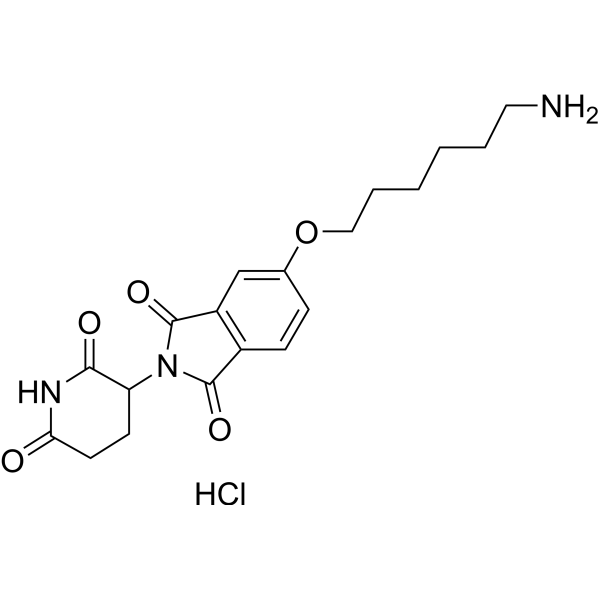
Thalidomide-5-O-C6-NH2 hydrochloride is the Thalidomide (HY-10984)-based cereblon ligand used in the recruitment of CRBN protein.Thalidomide-5-O-C6-NH2 hydrochloride can be connected to the ligand for protein by a linker to form PROTACs .
|
-
-
- HY-155263
-
|
|
E3 Ligase Ligand-Linker Conjugates
|
Cancer
|
|
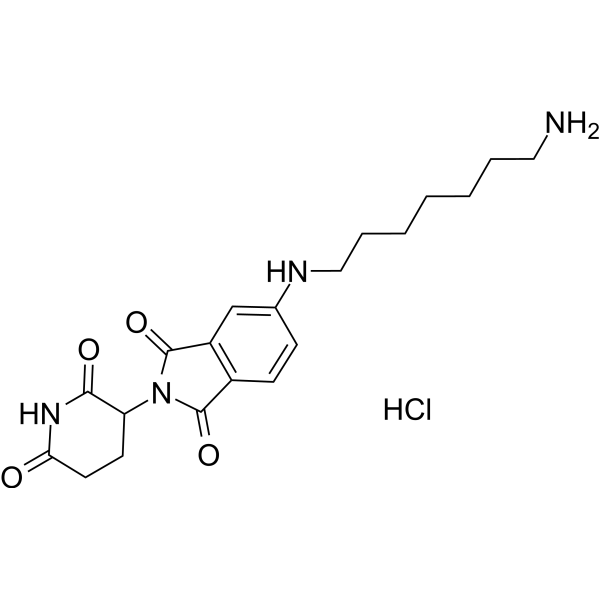
Pomalidomide-5-C7-NH2 hydrochloride is the Pomalidomide-based cereblon (CRBN) ligand used in the recruitment of CRBN protein. Pomalidomide-5-C7-NH2 hydrochloride can be connected to the ligand for protein by a linker to form PROTAC .
|
-
-
- HY-155258
-
|
|
E3 Ligase Ligand-Linker Conjugates
|
Cancer
|
|
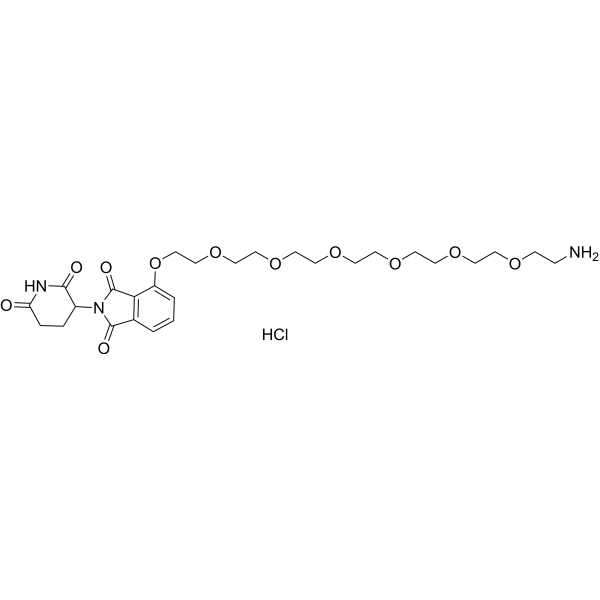
Pomalidomide-PEG7-NH2 hydrochloride is the Pomalidomide-based cereblon (CRBN) ligand used in the recruitment of CRBN protein.Pomalidomide-PEG7-NH2 hydrochloride can be connected to the ligand for protein by a linker to form PROTAC .
|
-
-
- HY-148662
-
|
|
E3 Ligase Ligand-Linker Conjugates
|
Cancer
|
|
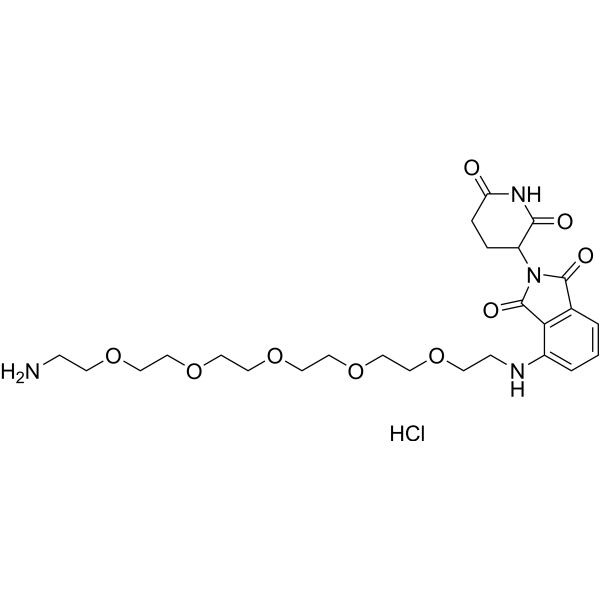
Pomalidomide-PEG5-C2-NH2 hydrochloride is the Pomalidomide-based cereblon (CRBN) ligand used in the recruitment of CRBN protein.Pomalidomide-PEG5-C2-NH2 hydrochloride can be connected to the ligand for protein by a linker to form PROTAC .
|
-
-
- HY-177761
-
|
|
Molecular Glues
|
Cancer
|
|
GSPT1 degrader-15 (Compound Lib-B-15O) is a potent and highly selective GSPT1 molecular gel degrader, with a DC50 of 154 nM. GSPT1 degrader-15 has almost no effect on the expression of other proteins. GSPT1 degrader-15 exhibits significant anti-proliferative activity against leukemia cells and lymphoma cells. GSPT1 degrader-15 can be used in leukemia and lymphoma research .
|
-
-
- HY-D0021S
-
|
EtBr-d5; Homidium-d5 bromide
|
Isotope-Labeled Compounds
DNA Stain
|
Others
|
|
EthD-d5 bromide is the deuterium labeled Ethidium bromide. EthD bromide is an intercalating agent commonly used as a fluorescent tag (nucleic acid stain) in molecular biology laboratories for techniques such as agarose gel electrophoresis.
|
-
-
- HY-165517
-
|
|
Others
|
Cardiovascular Disease
|
|
Methyl acetimidate is an imidoester that can inhibit the formation of sickle cells. Methyl acetimidate enhances the oxygen affinity and gelling properties of high molecular weight hemoglobin (HMW Hb) by modifying the amino groups of hemoglobin, thereby suppressing the formation of sickle cells. Methyl acetimidate can be used in research related to anemia .
|
-
-
- HY-153802A
-
|
|
Apoptosis
Phosphodiesterase (PDE)
Molecular Glues
|
Cancer
|
|
Antitumor agent-100 (compound A6) hydrochloride is an orally potent apoptosis inducer and molecular gel targeting PDE3A-SLFN12 (IC50: 0.3 μM) with antitumor activity. Antitumor agent-100 hydrochloride binds to the PDE3A enzyme pocket to recruit and stabilize SLFN12, thereby preventing protein translation and leading to apoptosis .
|
-
-
- HY-153802
-
|
|
Apoptosis
Phosphodiesterase (PDE)
|
Cancer
|
|
Antitumor agent-100 (compound A6) is an orally available apoptosis inducer and molecular gel targeting PDE3A-SLFN12 (IC50: 0.3 μM) with antitumor activity. Antitumor agent-100 binds to the PDE3A enzyme pocket to recruit and stabilize SLFN12, thereby preventing protein translation and leading to apoptosis .
|
-
-
- HY-149569
-
|
|
E3 Ligase Ligand-Linker Conjugates
Autophagy
Apoptosis
|
Cancer
|
|
Thalidomide-5-O-C12-NH2 hydrochloride is the Thalidomide (HY-10984)-based cereblon ligand used in the recruitment of CRBN protein.Thalidomide-5-O-C12-NH2 hydrochloride can be connected to the ligand for protein by a linker to form PROTACs .
|
-
-
- HY-153337A
-
|
|
E3 Ligase Ligand-Linker Conjugates
|
Cancer
|
|
Pomalidomide-C11-NH2 hydrochloride is the Pomalidomide-based cereblon (CRBN) ligand used in the recruitment of CRBN protein.Pomalidomide-C11-NH2 hydrochloride can be connected to the ligand for protein by a linker to form PROTAC .
|
-
-
- HY-155256
-
|
|
E3 Ligase Ligand-Linker Conjugates
Autophagy
Apoptosis
|
Cancer
|
|
Thalidomide-5-PEG6-NH2 hydrochloride is the Thalidomide (HY-10984)-based cereblon ligand used in the recruitment of CRBN protein.Thalidomide-5-PEG6-NH2 hydrochloride can be connected to the ligand for protein by a linker to form PROTACs .
|
-
-
- HY-149576
-
|
|
E3 Ligase Ligand-Linker Conjugates
Autophagy
Apoptosis
|
Cancer
|
|
Thalidomide-4-O-C14-NH2 hydrochloride is the Thalidomide (HY-10984)-based cereblon ligand used in the recruitment of CRBN protein.Thalidomide-4-O-C14-NH2 hydrochloride can be connected to the ligand for protein by a linker to form PROTACs .
|
-
-
- HY-155267
-
|
|
E3 Ligase Ligand-Linker Conjugates
|
Cancer
|
|
Pomalidomide-5-C11-NH2 hydrochloride is the Pomalidomide-based cereblon (CRBN) ligand used in the recruitment of CRBN protein.Pomalidomide-5-C11-NH2 hydrochloride can be connected to the ligand for protein by a linker to form PROTAC .
|
-
-
- HY-155270
-
|
|
E3 Ligase Ligand-Linker Conjugates
|
Cancer
|
|
Pomalidomide-5-C14-NH2 hydrochloride is the Pomalidomide-based cereblon (CRBN) ligand used in the recruitment of CRBN protein. Pomalidomide-5-C14-NH2 hydrochloride can be connected to the ligand for protein by a linker to form PROTAC .
|
-
-
- HY-149566
-
|
|
E3 Ligase Ligand-Linker Conjugates
Autophagy
Apoptosis
|
Cancer
|
|
Thalidomide-5-O-C9-NH2 hydrochloride is the Thalidomide (HY-10984)-based cereblon ligand used in the recruitment of CRBN protein.Thalidomide-5-O-C9-NH2 hydrochloride can be connected to the ligand for protein by a linker to form PROTACs .
|
-
-
- HY-155268
-
|
|
E3 Ligase Ligand-Linker Conjugates
|
Cancer
|
|
Pomalidomide-5-C12-NH2 hydrochloride is the Pomalidomide-based cereblon (CRBN) ligand used in the recruitment of CRBN protein.Pomalidomide-5-C12-NH2 hydrochloride can be connected to the ligand for protein by a linker to form PROTAC .
|
-
-
- HY-156161
-
|
|
E3 Ligase Ligand-Linker Conjugates
Autophagy
Apoptosis
|
Cancer
|
|
Thalidomide-NH-C13-NH2 hydrochloride is the Thalidomide (HY-10984)-based cereblon ligand used in the recruitment of CRBN protein.Thalidomide-NH-C13-NH2 hydrochloride can be connected to the ligand for protein by a linker to form PROTACs .
|
-
-
- HY-149567
-
|
|
E3 Ligase Ligand-Linker Conjugates
Autophagy
Apoptosis
|
Cancer
|
|
Thalidomide-5-O-C10-NH2 hydrochloride is the Thalidomide (HY-10984)-based cereblon ligand used in the recruitment of CRBN protein.Thalidomide-5-O-C10-NH2 hydrochloride can be connected to the ligand for protein by a linker to form PROTACs .
|
-
-
- HY-149564
-
|
|
E3 Ligase Ligand-Linker Conjugates
Autophagy
Apoptosis
|
Cancer
|
|
Thalidomide-5-O-C7-NH2 hydrochloride is the Thalidomide (HY-10984)-based cereblon ligand used in the recruitment of CRBN protein.Thalidomide-5-O-C7-NH2 hydrochloride can be connected to the ligand for protein by a linker to form PROTACs .
|
-
-
- HY-149574
-
|
|
E3 Ligase Ligand-Linker Conjugates
Autophagy
Apoptosis
|
Cancer
|
|
Thalidomide-4-O-C12-NH2 hydrochloride is the Thalidomide (HY-10984)-based cereblon ligand used in the recruitment of CRBN protein.Thalidomide-4-O-C12-NH2 hydrochloride can be connected to the ligand for protein by a linker to form PROTACs .
|
-
-
- HY-155255
-
|
|
E3 Ligase Ligand-Linker Conjugates
Autophagy
Apoptosis
|
Cancer
|
|
Thalidomide-5-PEG2-NH2 hydrochloride is the Thalidomide (HY-10984)-based cereblon ligand used in the recruitment of CRBN protein.Thalidomide-5-PEG2-NH2 hydrochloride can be connected to the ligand for protein by a linker to form PROTACs .
|
-
-
- HY-130949B
-
|
|
Ligands for E3 Ligase
|
Cancer
|
|
Thalidomide-4-O-C7-NH2 hydrochloride is the Thalidomide (HY-10984)-based cereblon ligand used in the recruitment of CRBN protein.Thalidomide-4-O-C7-NH2 hydrochloride can be connected to the ligand for protein by a linker to form PROTACs .
|
-
-
- HY-155266
-
|
|
E3 Ligase Ligand-Linker Conjugates
|
Cancer
|
|
Pomalidomide-5-C10-NH2 hydrochloride is the Pomalidomide-based cereblon (CRBN) ligand used in the recruitment of CRBN protein.Pomalidomide-5-C10-NH2 hydrochloride can be connected to the ligand for protein by a linker to form PROTAC .
|
-
-
- HY-130963B
-
|
|
E3 Ligase Ligand-Linker Conjugates
|
Cancer
|
|
Thalidomide-4-O-C10-NH2 hydrochloride is the Thalidomide (HY-10984)-based cereblon ligand used in the recruitment of CRBN protein.Thalidomide-4-O-C10-NH2 hydrochloride can be connected to the ligand for protein by a linker to form PROTACs .
|
-
-
- HY-155257
-
|
|
E3 Ligase Ligand-Linker Conjugates
Autophagy
Apoptosis
|
Cancer
|
|
Thalidomide-5-PEG7-NH2 hydrochloride is the Thalidomide (HY-10984)-based cereblon ligand used in the recruitment of CRBN protein.Thalidomide-5-PEG7-NH2 hydrochloride can be connected to the ligand for protein by a linker to form PROTACs .
|
-
-
- HY-149571
-
|
|
E3 Ligase Ligand-Linker Conjugates
Autophagy
Apoptosis
|
Cancer
|
|
Thalidomide-5-O-C14-NH2 hydrochloride is the Thalidomide (HY-10984)-based cereblon ligand used in the recruitment of CRBN protein.Thalidomide-5-O-C14-NH2 hydrochloride can be connected to the ligand for protein by a linker to form PROTACs .
|
-
-
- HY-149573
-
|
|
E3 Ligase Ligand-Linker Conjugates
Autophagy
Apoptosis
|
Cancer
|
|
Thalidomide-4-O-C11-NH2 hydrochloride is the Thalidomide (HY-10984)-based cereblon ligand used in the recruitment of CRBN protein.Thalidomide-4-O-C11-NH2 hydrochloride can be connected to the ligand for protein by a linker to form PROTACs .
|
-
-
- HY-156160
-
|
|
E3 Ligase Ligand-Linker Conjugates
Autophagy
Apoptosis
|
Cancer
|
|
Thalidomide-NH-C10-NH2 hydrochloride is the Thalidomide (HY-10984)-based cereblon ligand used in the recruitment of CRBN protein.Thalidomide-NH-C10-NH2 hydrochloride can be connected to the ligand for protein by a linker to form PROTACs .
|
-
-
- HY-149565
-
|
|
E3 Ligase Ligand-Linker Conjugates
Autophagy
Apoptosis
|
Cancer
|
|
Thalidomide-5-O-C8-NH2 hydrochloride is the Thalidomide (HY-10984)-based cereblon ligand used in the recruitment of CRBN protein.Thalidomide-5-O-C8-NH2 hydrochloride can be connected to the ligand for protein by a linker to form PROTACs .
|
-
-
- HY-149560
-
|
|
E3 Ligase Ligand-Linker Conjugates
Autophagy
Apoptosis
|
Cancer
|
|
Thalidomide-5-O-C3-NH2 hydrochloride is the Thalidomide (HY-10984)-based cereblon ligand used in the recruitment of CRBN protein.Thalidomide-5-O-C3-NH2 hydrochloride can be connected to the ligand for protein by a linker to form PROTACs .
|
-
-
- HY-149572
-
|
|
E3 Ligase Ligand-Linker Conjugates
Autophagy
Apoptosis
|
Cancer
|
|
Thalidomide-4-O-C9-NH2 hydrochloride is the Thalidomide (HY-10984)-based cereblon ligand used in the recruitment of CRBN protein.Thalidomide-4-O-C9-NH2 hydrochloride can be connected to the ligand for protein by a linker to form PROTACs .
|
-
-
- HY-149570
-
|
|
E3 Ligase Ligand-Linker Conjugates
Autophagy
Apoptosis
|
Cancer
|
|
Thalidomide-5-O-C13-NH2 hydrochloride is the Thalidomide (HY-10984)-based cereblon ligand used in the recruitment of CRBN protein.Thalidomide-5-O-C13-NH2 hydrochloride can be connected to the ligand for protein by a linker to form PROTACs .
|
-
-
- HY-149568
-
|
|
E3 Ligase Ligand-Linker Conjugates
Autophagy
Apoptosis
|
Cancer
|
|
Thalidomide-5-O-C11-NH2 hydrochloride is the Thalidomide (HY-10984)-based cereblon ligand used in the recruitment of CRBN protein.Thalidomide-5-O-C11-NH2 hydrochloride can be connected to the ligand for protein by a linker to form PROTACs .
|
-
-
- HY-130965B
-
|
|
E3 Ligase Ligand-Linker Conjugates
Autophagy
Apoptosis
|
Cancer
|
|
Thalidomide-PEG3-NH2 hydrochloride is the Thalidomide (HY-10984)-based cereblon ligand used in the recruitment of CRBN protein.Thalidomide-PEG3-NH2 hydrochloride can be connected to the ligand for protein by a linker to form PROTACs .
|
-
- HY-156170
-
|
|
E3 Ligase Ligand-Linker Conjugates
Autophagy
Apoptosis
|
Cancer
|
|
Thalidomide-5-NH-PEG5-NH2 hydrochloride is the Thalidomide (HY-10984)-based cereblon ligand used in the recruitment of CRBN protein. Thalidomide-5-NH-PEG5-NH2 hydrochloride can be connected to the ligand for protein by a linker to form PROTACs .
|
-
- HY-156172
-
|
|
E3 Ligase Ligand-Linker Conjugates
Autophagy
Apoptosis
|
Cancer
|
|
Thalidomide-NH-PEG6-NH2 hydrochloride is the Thalidomide (HY-10984)-based cereblon ligand used in the recruitment of CRBN protein.Thalidomide-NH-PEG6-NH2 hydrochloride can be connected to the ligand for protein by a linker to form PROTACs .
|
-
- HY-156171
-
|
|
E3 Ligase Ligand-Linker Conjugates
Autophagy
Apoptosis
|
Cancer
|
|
Thalidomide-5-NH-PEG6-NH2 hydrochloride is the Thalidomide (HY-10984)-based cereblon ligand used in the recruitment of CRBN protein.Thalidomide-5-NH-PEG6-NH2 hydrochloride can be connected to the ligand for protein by a linker to form PROTACs .
|
-
- HY-155269
-
|
|
E3 Ligase Ligand-Linker Conjugates
|
Cancer
|
|
Pomalidomide-5-C13-NH2 hydrochloride is a Pomalidomide (HY-10984)-based E3 ubiquitin ligase cereblon (CRBN) ligand for recruiting cereblon proteins. Pomalidomide-5-C13-NH2 hydrochloride can be connected to protein ligands through a linker to form PROTAC.
|
-
- HY-149575
-
|
|
E3 Ligase Ligand-Linker Conjugates
Autophagy
Apoptosis
|
Cancer
|
|
Thalidomide-4-O-C13-NH2 hydrochloride is the Thalidomide (HY-10984)-based cereblon ligand used in the recruitment of CRBN protein.Thalidomide-4-O-C13-NH2 hydrochloride can be connected to the ligand for protein by a linker to form PROTACs .
|
-
- HY-170593
-
|
|
Molecular Glues
|
Metabolic Disease
|
|
ChREBPα/14-3-3 regulator-1 (Compound 43) is a selective molecular gel that can stabilize the interaction of carbohydrate response element binding protein (ChREBP) with 14-3-3 proteins (EC50: 3.8 μM). ChREBPα/14-3-3 regulator-1 effectively protects β cells from glucolipotoxicity and maintains cell function, and can be used in the study of type 2 diabetes .
|
-
- HY-Y1309S1
-
|
Furro ER-d7; NSC 9586-d7; Nako TRB-d7
|
Isotope-Labeled Compounds
Endogenous Metabolite
|
Others
|
|
1-Naphthol-d7 (Furro ER-d7) is the deuterium labeled Naphthol (HY-Y1309). 1-Naphthol (Furro ER) is an excited state proton transfer (ESPT) fluorescent molecular probe. 1-naphthol can sense the hydrophobic domains in micellar aggregation and accurately sense the sol-gel transition. 1-naphthol can be used to study the thermally induced microenvironmental changes and hydration levels of Pluronic F127 (PF127) in different microenvironments in aqueous media .
|
-
- HY-180538
-
|
|
Molecular Glues
E1/E2/E3 Enzyme
|
Others
|
|
MRT-31619 is a molecular gel degrader (MGD) targeting CRBN. MRT-31619 drives the self-dimerization of the E3 ligase by mimicking the degradation subunit, and promotes its rapid, effective and selective degradation through the ubiquitin-proteasome system .
|
-
- HY-180836
-
|
|
Molecular Glues
IKZF Family
Apoptosis
|
Cancer
|
|
DIX-01 is a molecular gel degrader that can simultaneously induce the degradation of IKZF1/3 and GSPT1 mediated by CRBN. Its DC50 values are: IKZF1 (19.80 nM), IKZF3 (45.31 nM), and GSPT1 (120.1 nM). DIX-01 exhibits nanomolar-level potent anti-proliferative activity in various cancer cell lines. DIX-01 induces apoptosis in MV4-11 cells and significantly inhibits the growth of leukemia cells in zebrafish. DIX-01 can be used for the study of malignant hematological tumors .
|
-
- HY-180898
-
|
|
DGK
ERK
IFNAR
Interleukin Related
Molecular Glues
|
Inflammation/Immunology
|
|
AHL-7160 is a covalent DGKα inhibitor that possesses dual functions of enzyme activity inhibition (IC₅₀ ≈ 12 nM) and molecular gel-mediated degradation. AHL-7160 can rapidly recruit endogenous DGKα to the cell membrane (EC₅₀ = 39 nM), and this effect has isozyme selectivity. AHL-7160 can stereospecifically block phosphatidylcholine acid (PA) production mediated by DGKα (IC₅₀ = 340 nM). AHL-7160 enhances T cell activation and promotes anti-tumor immune responses. AHL-7160 can be used for research on immunotherapy .
|
-
-
- HY-D0021
-
|
EtBr; Homidium bromide
|
蛍光色素
|
|
EthD bromide is an intercalating agent commonly used as a fluorescent tag (nucleic acid stain) in molecular biology laboratories for techniques such as agarose gel electrophoresis.
|
-
- HY-DY1050
-
|
|
蛍光色素
|
Ethidium bromide (solution) is an intercalating agent commonly used as a fluorescent tag (nucleic acid stain) in molecular biology laboratories for techniques such as agarose gel electrophoresis. Solvent and Concentration: Sterile water: 10 mg/Ml
|
-
- HY-D0947
-
|
|
蛍光色素
|
|
Azure A chloride is a phenothiazine dye. Azure A chloride is an alternative DNA dye used for the separation of DNA and protein fragments in agarose gel electrophoresis and PAGE. Azure A chloride can be chemisorbed on the surface of mild steel according to the Langmuir adsorption isotherm to form a protective film. Azure A chloride binds to double-stranded DNA in a non-cooperative manner via weak intercalation, triggering molecular conformational disturbance, restricted rotational motion, and changes in optical activity .
|
-
- HY-W088070A
-
|
|
生化学アッセイ試薬
|
|
Agarose,Low melting point is a kind of agarose, a kind of polysaccharide that can be derived from seaweed. It is commonly used in molecular biology and biochemistry to isolate and purify DNA and RNA fragments. Agarose,Low melting point is a low melting point agarose, which is suitable for the recovery of large DNA fragments and enzymatic reactions in gels and other applications. In addition, it has been used in various techniques, such as pulsed field gel electrophoresis and capillary electrophoresis for analyzing genetic material.
|
-
- HY-W134328
-
|
Dextran blue (MW 2000000)
|
生化学アッセイ試薬
|
|
Blue dextran (Dextran blue) (MW 2000000) is a high-molecular-weight long-chain polymer of D-glucose. Blue dextran (MW 2000000) serves as an important model macromolecular drug and molecular weight estimation marker, and can be used as a standard for gel permeation chromatography. The release of Blue dextran (MW 2000000) from alginate microspheres is regulated by preparation conditions; its release rate in a pH 6.8 environment is significantly faster than that in pH 1.2, and it exhibits release characteristics close to zero-order kinetics under this condition .
|
-
- HY-W460471
-
|
|
生化学アッセイ試薬
|
|
Tris Buffered Saline is a common buffer reagent in molecular biology, consisting of Tris and NaCl. Tris Buffered Saline can adjust pH and ionic strength and is widely used in DNA/RNA extraction, PCR and protein electrophoresis. Tris Buffered Saline can purify and protect nucleic acid materials and improve reaction efficiency and concentration. In protein electrophoresis, Tris Buffered Saline stabilizes gels and maintains pH. Overall, Tris Buffered Saline offers versatility, good solubility, and low toxicity in molecular biology applications.
|
-
- HY-156045C
-
|
|
生化学アッセイ試薬
|
|
Cross-linked dextran G 200 is a hydrophilic gel based on molecular size exclusion and targeted macromolecular separation. Cross-linked dextran G 200 works through the gel permeation mechanism, and the cross-linked structure forms a three-dimensional network with a specific pore size, achieving separation based on the molecular hydrodynamic volume. Cross-linked dextran G 200 can be used to adjust the osmotic solute distribution coefficient and the ability to maintain osmotic equilibrium, such as in gel filtration chromatography for purification and analysis of biomacromolecules such as proteins and nucleic acids . Cross-linked dextran G 200 can also be used as a gel filtration filler (particle size range: 40-120 μm; globular protein separation range: 5-600 kDa) .
|
-
- HY-156045B
-
|
|
生化学アッセイ試薬
|
|
Cross-linked dextran G 150 is a hydrophilic gel based on molecular size exclusion and targeted for the separation of macromolecules. Cross-linked dextran G 150 functions through the gel permeation mechanism, where the cross-linked structure forms a three-dimensional network with specific pore diameters, achieving separation based on the molecular volumetric flow. Cross-linked dextran G 150 can be used to regulate the distribution coefficient of permeating solutes and maintain the permeation balance, such as in gel filtration chromatography for the purification and analysis of biological macromolecules like proteins and nucleic acids. Cross-linked dextran G 150 can also be used as a gel filtration filler (particle size range: 40-120 μm; spherical protein separation range: 5-300 kDa) .
|
-
- HY-Y0850U8
-
|
Polyvinyl alcohol (Mw 47000, 98-99% hydrolyzed, ~1000 polymerization); Poly(Ethenol) (Mw 47000, 98-99% hydrolyzed, ~1000 polymerization)
|
生化学アッセイ試薬
|
|
PVA (Mw 47000, 98-99% hydrolyzed, ~1000 polymerization) is a polyvinyl alcohol with molecular weight of 47000 with hydrolysis properties. Hydrolysis degree refers to the conversion rate of acetic acid group hydrolysis to hydroxyl group in the original polyvinyl acetate, PVA (Mw 47000, 98-99% hydrolyzed, ~1000 polymerization). In addition, polyvinyl alcohol is obtained from polymerization of vinyl acetate to remove acetic acid group by hydrolysis. Polyvinyl alcohol with different degrees of hydrolysis can be self-crosslinked to form frozen gels and used as biological excipients .
|
| 製品番号 |
製品名 |
Category |
Target |
構造式 |
-
- HY-D0021S
-
|
|
|
EthD-d5 bromide is the deuterium labeled Ethidium bromide. EthD bromide is an intercalating agent commonly used as a fluorescent tag (nucleic acid stain) in molecular biology laboratories for techniques such as agarose gel electrophoresis.
|
-
-
- HY-Y1309S1
-
|
|
|
1-Naphthol-d7 (Furro ER-d7) is the deuterium labeled Naphthol (HY-Y1309). 1-Naphthol (Furro ER) is an excited state proton transfer (ESPT) fluorescent molecular probe. 1-naphthol can sense the hydrophobic domains in micellar aggregation and accurately sense the sol-gel transition. 1-naphthol can be used to study the thermally induced microenvironmental changes and hydration levels of Pluronic F127 (PF127) in different microenvironments in aqueous media .
|
-
入力情報は安全に管理されます. ※ 必須入力項目.
Inquiry Information
- 製品名:
- 製品番号:
- 数量:
- MCE 日本正規代理店:

