


10 Results for "

N-Acetyl-L-tyrosine

" in MedChemExpress (MCE) Product Catalog:
Products (10)

10 Results for "N-Acetyl-L-tyrosine" in MCE Product Catalog:

Cat. No.: HY-W012382
CAS No.: 537-55-3
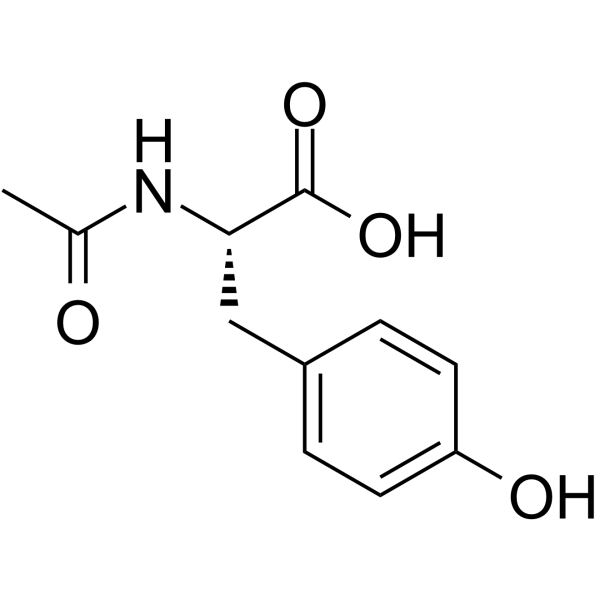
N-Acetyl-L-tyrosine is an orally active endogenous mitochondrial stress response regulator that can permeate the cell membrane by passive diffusion. N-Acetyl-L-tyrosine induces low-level reactive oxygen species (ROS) generation by transiently perturbing mitochondrial membrane potential, triggering reverse signaling to activate FoxO and Keap1 pathways. As a result, N-Acetyl-L-tyrosine enhances the expression of antioxidant enzyme genes, exerting anti-stress and cytoprotective effects. N-Acetyl-L-tyrosine can improve heat stress tolerance, inhibit tumor growth, and regulate energy metabolism. N-Acetyl-L-tyrosine can be used in the research of aging, metabolic diseases (such as diabetes), and cancer .
loading...
    loading...
4
4 Cited Publications
Cat. No.: HY-P2161B
Target:  

Kisspeptin Receptor

Research Areas:  

Cancer

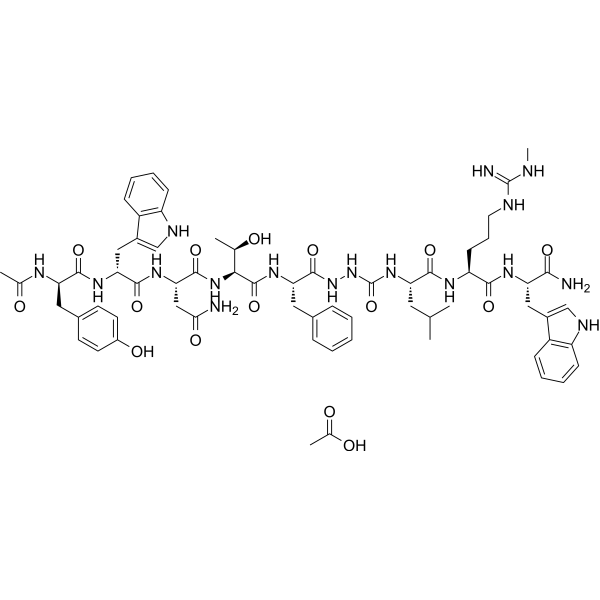
TAK-683 acetate is a potent full KISS1 receptor (KISS1R) agonist (IC50=170 pM) with improved metabolic stability. TAK-683 acetate is a nonapeptide metastin analog, exhibits agonistic activities to KISS1R with EC50 values of 0.96 nM and 1.6 nM for human and rat, respectively . TAK-683 acetate depletes GnRH in the hypothalamus and reduces plasma FSH, LH, and testosterone levels in vivo, it has the potential for the study of hormone-dependent prostate cancer .
loading...
    loading...
Cat. No.: HY-W236261
CAS No.: 840-97-1
Synonyms: ATEE
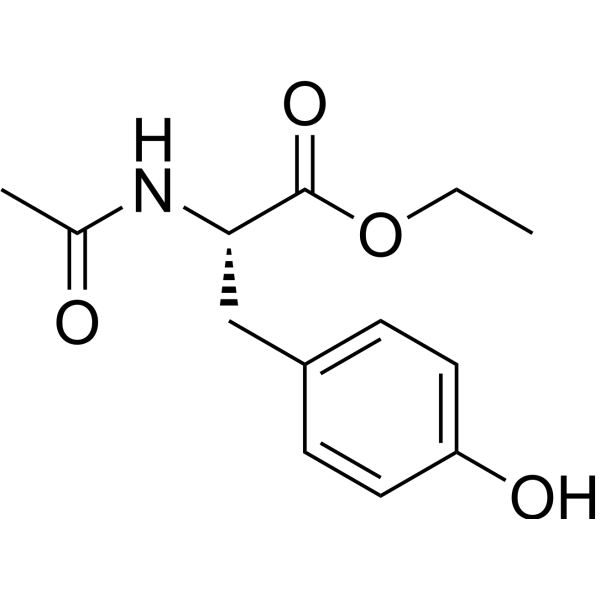
N-Acetyl-L-tyrosine ethyl ester (ATEE) is a compound commonly used as a food flavoring and supplement. It is an ester of tyrosine, an amino acid found in many proteins. N-Acetyl-L-tyrosine ethyl ester is sweet, nutty and caramelized and is commonly used to enhance the flavor of baked goods, dairy products and beverages. Potential health benefits of N-Acetyl-L-tyrosine ethyl ester include its antioxidant properties and ability to improve cognitive function.
loading...
    loading...
Cat. No.: HY-W012382S
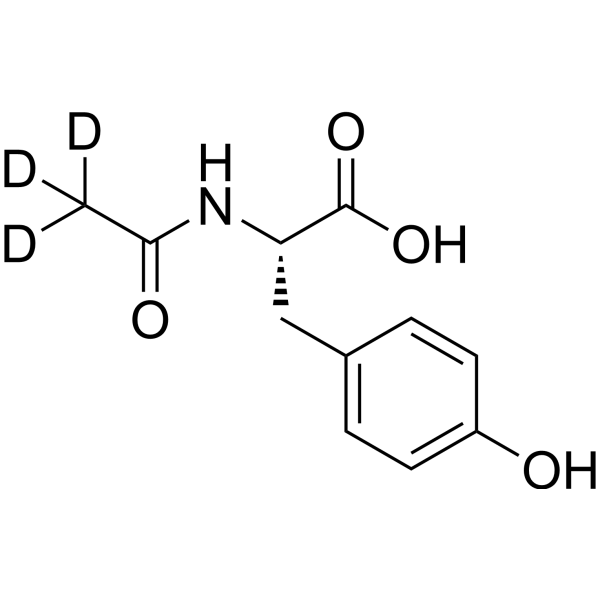
N-Acetyl-L-tyrosine-d3 is the deuterated form of N-Acetyl-L-tyrosine (HY-W012382). N-Acetyl-L-tyrosine is an orally active endogenous mitochondrial stress response regulator that can permeate the cell membrane by passive diffusion. N-Acetyl-L-tyrosine induces low-level reactive oxygen species (ROS) generation by transiently perturbing mitochondrial membrane potential, triggering reverse signaling to activate FoxO and Keap1 pathways. As a result, N-Acetyl-L-tyrosine enhances the expression of antioxidant enzyme genes, exerting anti-stress and cytoprotective effects. N-Acetyl-L-tyrosine can improve heat stress tolerance, inhibit tumor growth, and regulate energy metabolism. N-Acetyl-L-tyrosine can be used in the research of aging, metabolic diseases (such as diabetes), and cancer .
loading...
    loading...
Cat. No.: HY-W012382R
CAS No.: 537-55-3
N-Acetyl-L-tyrosine (Standard) is the analytical standard of N-Acetyl-L-tyrosine (HY-W012382). This product is intended for research and analytical applications. N-Acetyl-L-tyrosine is an orally active endogenous mitochondrial stress response regulator that can permeate the cell membrane by passive diffusion. N-Acetyl-L-tyrosine induces low-level reactive oxygen species (ROS) generation by transiently perturbing mitochondrial membrane potential, triggering reverse signaling to activate FoxO and Keap1 pathways. As a result, N-Acetyl-L-tyrosine enhances the expression of antioxidant enzyme genes, exerting anti-stress and cytoprotective effects. N-Acetyl-L-tyrosine can improve heat stress tolerance, inhibit tumor growth, and regulate energy metabolism. N-Acetyl-L-tyrosine can be used in the research of aging, metabolic diseases (such as diabetes), and cancer .
loading...
    loading...
Cat. No.: HY-P5544
CAS No.: 60230-21-9
Synonyms: N-Acetylmuramyl-L-Ala-γ-D-Glu-meso-diaminopimelic acid
Research Areas:  

Others

M-TriDAP (N-Acetylmuramyl-L-Ala-γ-D-Glu-meso-diaminopimelic acid) is a NOD1/2 agoist and biological active peptide .
loading...
    loading...
Cat. No.: HY-P2161
CAS No.: 872719-49-8
Target:  

Kisspeptin Receptor

Research Areas:  

Cancer

TAK-683 is a potent full KISS1 receptor (KISS1R) agonist (IC50=170 pM) with improved metabolic stability. TAK-683 is a nonapeptide metastin analog, exhibits agonistic activities to KISS1R with EC50 values of 0.96 nM and 1.6 nM for human and rat, respectively . TAK-683 depletes GnRH in the hypothalamus and reduces plasma FSH, LH, and testosterone levels in vivo, it has the potential for the study of hormone-dependent prostate cancer .
loading...
    loading...
Cat. No.: HY-P2115
CAS No.: 127932-90-5
Target:  

GnRH Receptor

Research Areas:  

Cancer

Ramorelix is a luteinizing-hormone-releasing hormone (LHRH) antagonist. Ramorelix can inhibit tumor progression in vivo. Ramorelix can be studied in anti-cancer research .
loading...
    loading...
Cat. No.: HY-P5544A
Synonyms: N-Acetylmuramyl-L-Ala-γ-D-Glu-meso-diaminopimelic acid TFA
Research Areas:  

Others

M-TriDAP (N-Acetylmuramyl-L-Ala-γ-D-Glu-meso-diaminopimelic acid) TFA is a NOD1/2 agoist and biological active peptide .
loading...
    loading...
Cat. No.: HY-P2161A
Target:  

Kisspeptin Receptor

Research Areas:  

Cancer

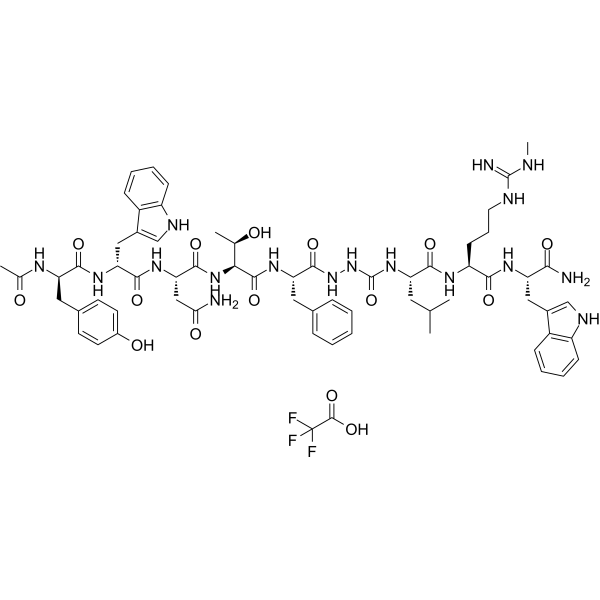
TAK-683 TFA is a potent full KISS1 receptor (KISS1R) agonist (IC50=170 pM) with improved metabolic stability. TAK-683 TFA is a nonapeptide metastin analog, exhibits agonistic activities to KISS1R with EC50 values of 0.96 nM and 1.6 nM for human and rat, respectively . TAK-683 TFA depletes GnRH in the hypothalamus and reduces plasma FSH, LH, and testosterone levels in vivo, it has the potential for the study of hormone-dependent prostate cancer .
loading...
    loading...

