8 Results for "

N-acetyl-lysine

" in MedChemExpress (MCE) Product Catalog:
Products (8)

8 Results for "N-acetyl-lysine" in MCE Product Catalog:

4
4 Cited Publications
Cat. No.: HY-P2161B
Target:  

Kisspeptin Receptor

Research Areas:  

Cancer

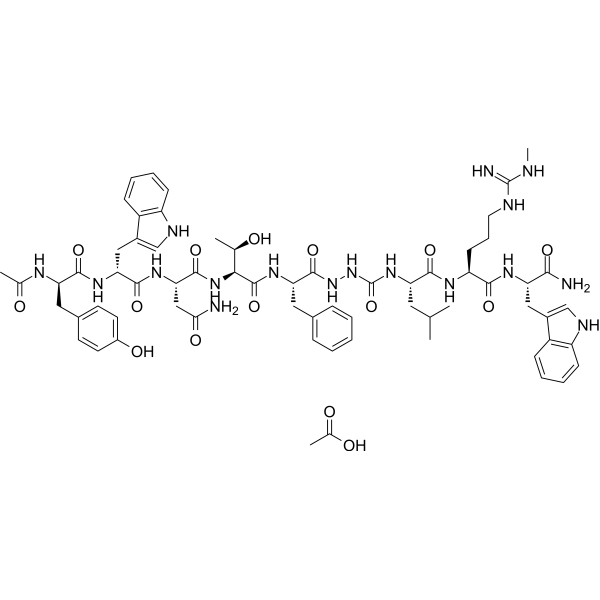
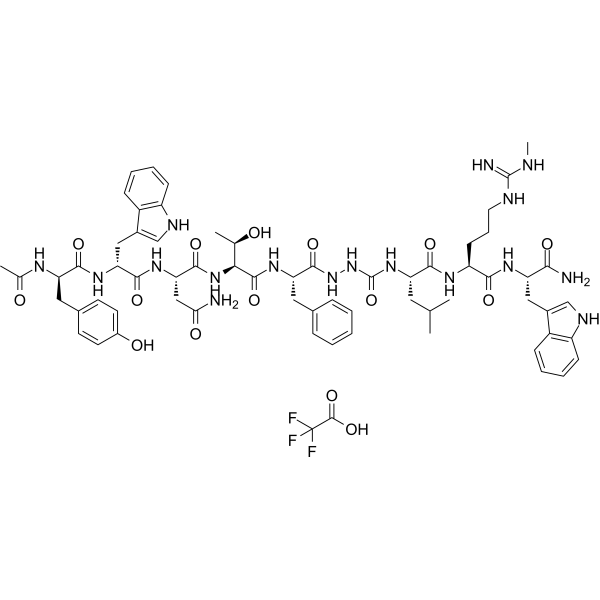
TAK-683 acetate is a potent full KISS1 receptor (KISS1R) agonist (IC50=170 pM) with improved metabolic stability. TAK-683 acetate is a nonapeptide metastin analog, exhibits agonistic activities to KISS1R with EC50 values of 0.96 nM and 1.6 nM for human and rat, respectively . TAK-683 acetate depletes GnRH in the hypothalamus and reduces plasma FSH, LH, and testosterone levels in vivo, it has the potential for the study of hormone-dependent prostate cancer .
loading...
    loading...
Cat. No.: HY-P5544
CAS No.: 60230-21-9
Synonyms: N-acetylmuramyl-L-Ala-γ-D-Glu-meso-diaminopimelic acid
Research Areas:  

Others

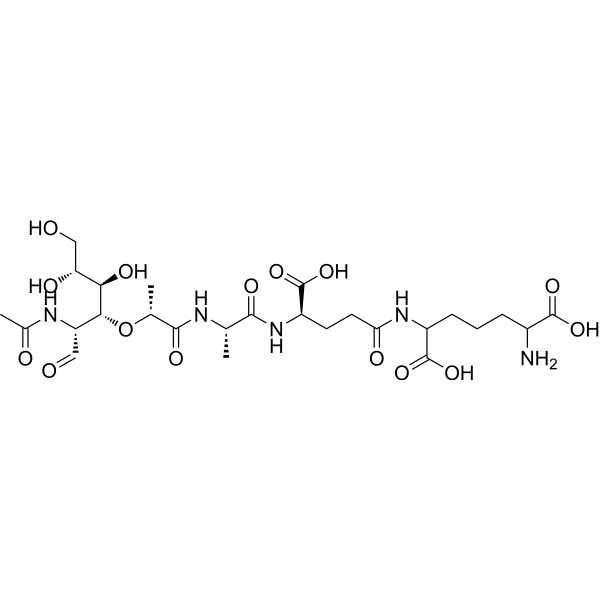
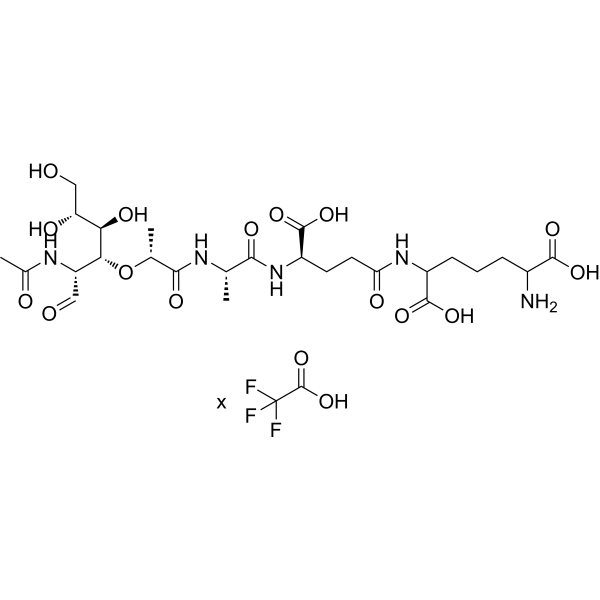
M-TriDAP (N-Acetylmuramyl-L-Ala-γ-D-Glu-meso-diaminopimelic acid) is a NOD1/2 agoist and biological active peptide .
loading...
    loading...
Cat. No.: HY-N2620
CAS No.: 33237-37-5
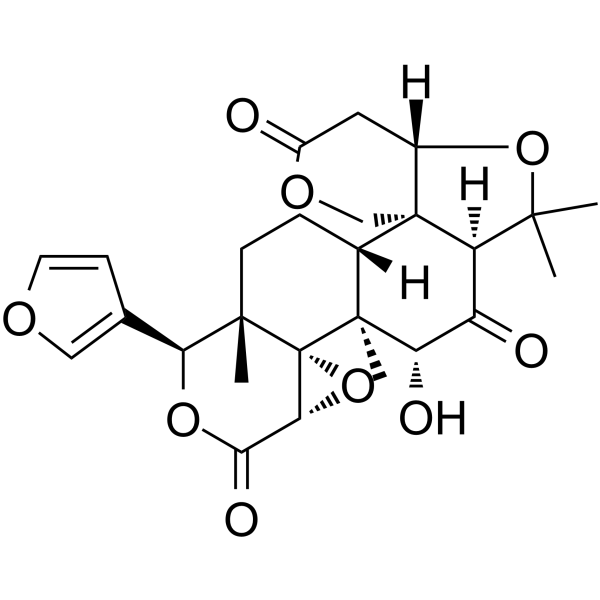
Rutaevin is an antifungal toxin and CYP3A4 inactivator. Rutaevin requires NADPH-dependent bioactivation to generate cis-but-2-ene-1,4-dial, which then covalently modifies and mechanism-based inactivates human CYP3A4 (IC50=4.48 μM, Ki=15.98 μM), and interacts with substances such as glutathione. Rutaevin disrupts the cellular structure of Sirococcus conigenus, accumulates linearly in resistant larch after pathogen exposure, and induces liver toxicity in mice via oral administration. Rutaevin can be applied to research in fields related to larch shoot blight and other associated areas .
loading...
    loading...
Cat. No.: HY-P2161
CAS No.: 872719-49-8
Target:  

Kisspeptin Receptor

Research Areas:  

Cancer

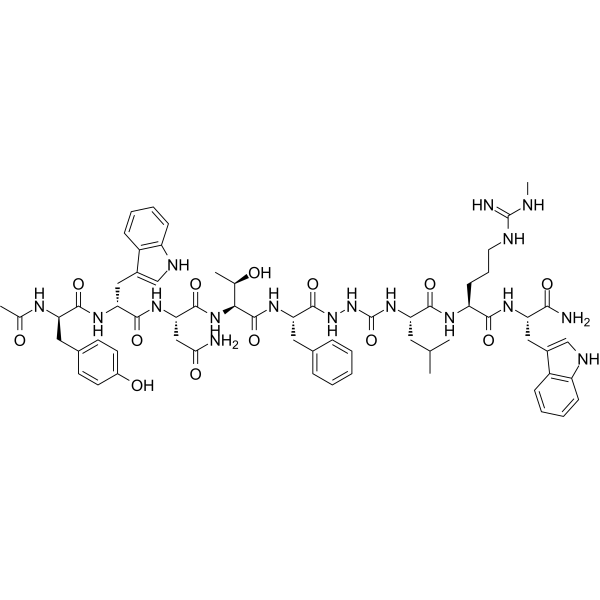
TAK-683 is a potent full KISS1 receptor (KISS1R) agonist (IC50=170 pM) with improved metabolic stability. TAK-683 is a nonapeptide metastin analog, exhibits agonistic activities to KISS1R with EC50 values of 0.96 nM and 1.6 nM for human and rat, respectively . TAK-683 depletes GnRH in the hypothalamus and reduces plasma FSH, LH, and testosterone levels in vivo, it has the potential for the study of hormone-dependent prostate cancer .
loading...
    loading...
Cat. No.: HY-P2115
CAS No.: 127932-90-5
Target:  

GnRH Receptor

Research Areas:  

Cancer

Ramorelix is a luteinizing-hormone-releasing hormone (LHRH) antagonist. Ramorelix can inhibit tumor progression in vivo. Ramorelix can be studied in anti-cancer research .
loading...
    loading...
Cat. No.: HY-P5544A
Synonyms: N-acetylmuramyl-L-Ala-γ-D-Glu-meso-diaminopimelic acid TFA
Research Areas:  

Others

M-TriDAP (N-Acetylmuramyl-L-Ala-γ-D-Glu-meso-diaminopimelic acid) TFA is a NOD1/2 agoist and biological active peptide .
loading...
    loading...
Cat. No.: HY-P2161A
Target:  

Kisspeptin Receptor

Research Areas:  

Cancer

TAK-683 TFA is a potent full KISS1 receptor (KISS1R) agonist (IC50=170 pM) with improved metabolic stability. TAK-683 TFA is a nonapeptide metastin analog, exhibits agonistic activities to KISS1R with EC50 values of 0.96 nM and 1.6 nM for human and rat, respectively . TAK-683 TFA depletes GnRH in the hypothalamus and reduces plasma FSH, LH, and testosterone levels in vivo, it has the potential for the study of hormone-dependent prostate cancer .
loading...
    loading...
Cat. No.: HY-W040536
CAS No.: 6440-58-0
Synonyms: Dimethyloldimethyl hydantoin
DMDM hydantoin (Dimethyloldimethyl hydantoin) is a hydantoin-derived formaldehyde-releasing preservative and allergen. DMDM hydantoin releases formaldehyde via hydrolysis in water, including under physiological pH conditions, and the release amount is affected by pH, concentration, composition, temperature and storage duration. DMDM hydantoin exerts bactericidal effects by mediating the cross-linking of proteins, RNA and DNA through the released formaldehyde, thereby inhibiting metabolism and cell division. DMDM hydantoin can induce allergic contact dermatitis directly, via the released formaldehyde, or through both pathways simultaneously. DMDM hydantoin is skin-irritating, and the released formaldehyde brings toxicological risks including carcinogenicity, mutagenicity and reproductive toxicity after entering the body. DMDM hydantoin can be used in studies related to allergic contact dermatitis .
loading...
    loading...

