38 Results for "

Neurotensin Receptor

" in MedChemExpress (MCE) Product Catalog:
Products (38)

38 Results for "Neurotensin Receptor" in MCE Product Catalog:

5
5 Cited Publications
Cat. No.: HY-P0234
CAS No.: 39379-15-2
Target:  

Neurotensin Receptor

Research Areas:  

Endocrinology Cancer

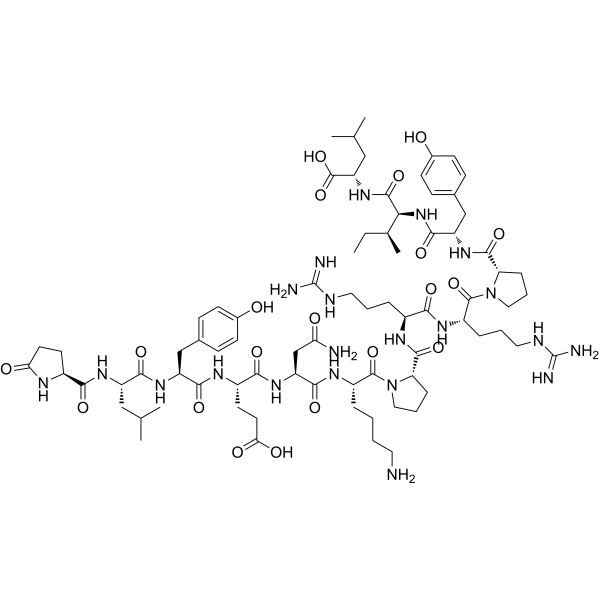
Neurotensin, a gut tridecapeptide, acts as a potent cellular mitogen for various colorectal and pancreatic cancers which possess high-affinity neurotensin receptors (NTR).
loading...
    loading...
1
1 Cited Publications
Cat. No.: HY-P0251
CAS No.: 60482-95-3
Target:  

Neurotensin Receptor

Research Areas:  

Neurological Disease

Neurotensin (8-13) is an active fragment of Neurotensin. Neurotensin(8-13) results in a decrease in cell-surface NT1 receptors (NTR1) density.
loading...
    loading...
1
1 Cited Publications
Cat. No.: HY-107664
CAS No.: 184162-64-9
Purity:  99.16%
Target:  

Neurotensin Receptor

Research Areas:  

Neurological Disease

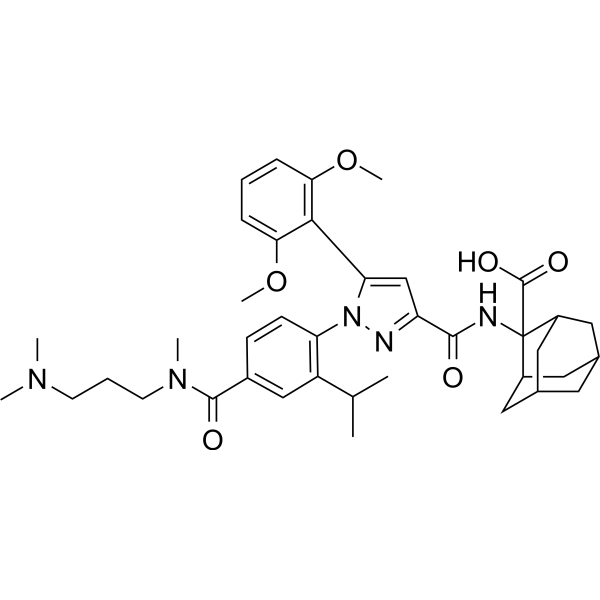
SR 142948 is an orally active and selective non-peptide neurotensin receptor (NT) antagonist with IC50s of 1.19 nM, 0.32 nM, 3.96 nM in h-NTR1-CHO cells, HT-29 cells, and adult rat brain, respectively. SR 142948 antagonizes NT-induced inositol monophosphate formation in HT-29 cells with an IC50 of 3.9 nM. SR 142948 blocks hypothermia, analgesia and steering behavior induced by NT in vivo. SR 142948 shows blood-brain permeability and can be used in study of psychiatric disorders .
loading...
    loading...
1
1 Cited Publications
Cat. No.: HY-107664A
Purity:  98.6%
Target:  

Neurotensin Receptor

Research Areas:  

Neurological Disease

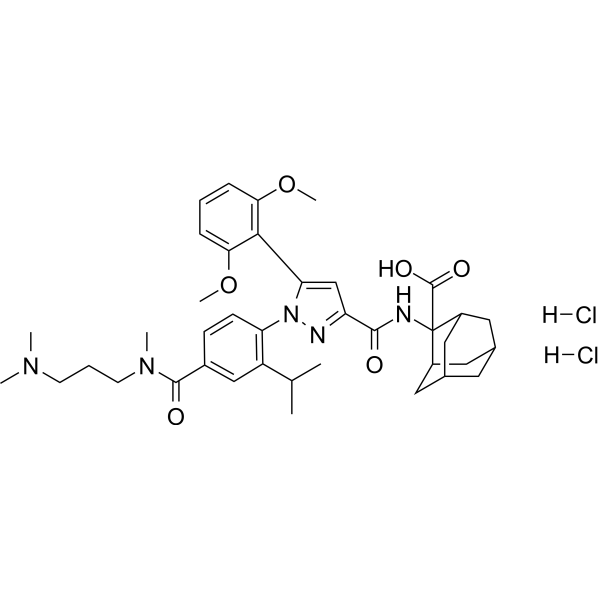
SR 142948 dihydrochloride is an orally active and selective non-peptide neurotensin receptor (NT) antagonist with IC50s of 1.19 nM, 0.32 nM, 3.96 nM in h-NTR1-CHO cells, HT-29 cells, and adult rat brain, respectively. SR 142948 dihydrochloride antagonizes NT-induced inositol monophosphate formation in HT-29 cells with an IC50 of 3.9 nM. SR 142948 dihydrochloride blocks hypothermia, analgesia and steering behavior induced by NT in vivo. SR 142948 dihydrochloride shows blood-brain permeability and can be used in study of psychiatric disorders .
loading...
    loading...
1
1 Cited Publications
Cat. No.: HY-P83498
Synonyms: 100 kDa NT Receptor; Glycoprotein 95; Gp95; LDLCQ6; Neurotensin Receptor 3; NT3; NTR3; SORT 1; Sortilin 1

Host:  

Rabbit

Application:  

WB, IHC-P

Reactivity:  

Human, Rat

loading...
    loading...
Cat. No.: HY-14277A
CAS No.: 79547-78-7
Purity:  99.3%
Synonyms: R 50547 hydrochloride
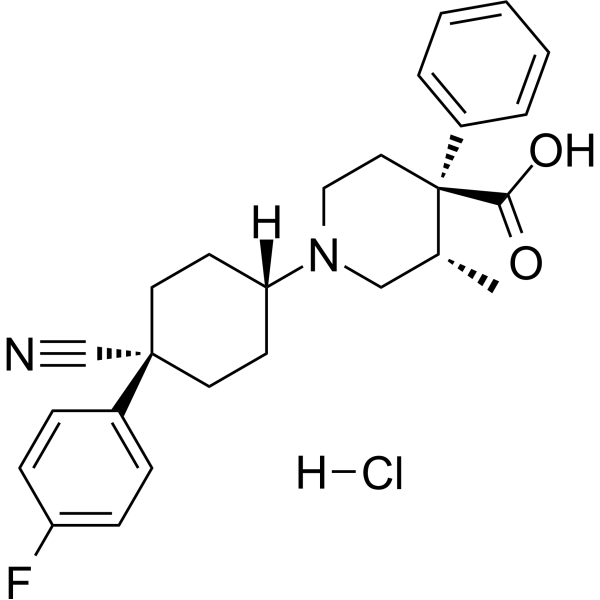
Levocabastine (R 50547) hydrochloride is a potent and selective histamine H1-receptor antagonist. Levocabastine hydrochloride is also a selective, high affinity neurotensin receptor subtype 2 (NTR2) antagonist, with a Ki of 17 nM for mNTR2. Levocabastine hydrochloride can act as a VLA-4 antagonist, interferes with conjunctival eosinophil infiltration in allergic conjunctivitis (AC) .
loading...
    loading...
Cat. No.: HY-P0066
CAS No.: 229180-41-0
Target:  

Neurotensin Receptor

Research Areas:  

Neurological Disease

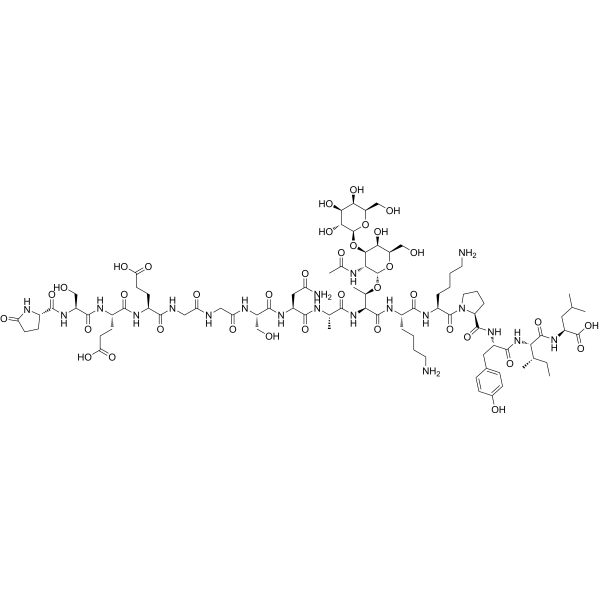
Contulakin G is an O-glycosylated invertebrate neurotensin. Contulakin-G is a weaker agonist for the neurotensin receptor. Contulakin G is also a potent antinociceptive agent .
loading...
    loading...
Cat. No.: HY-P2544
CAS No.: 139026-64-5
Synonyms: JMV438
Target:  

Neurotensin Receptor

Research Areas:  

Neurological Disease

[Lys8, Lys9]-Neurotensin (8-13) (JMV438), a Neurotensin analog, exerts its analgesic effects through activation of the G protein-coupled receptors NTS1 and NTS2, with Ki values of 0.33 nM and 0.95 nM for hNTS1 and hNTS2 receptors, respectively .
loading...
    loading...
Cat. No.: HY-P1256C
Target:  

Neurotensin Receptor

Research Areas:  

Neurological Disease

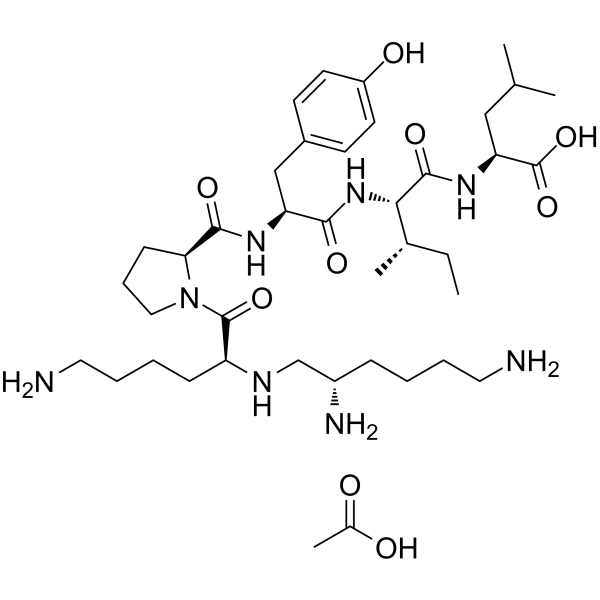
JMV 449 acetate is a potent neurotensin receptor agonist. JMV 449 acetate shows an IC50 of 0.15 nM for inhibition of 125I-neurotensin binding to neonatal mouse brain and an EC50 of 1.9 nM in contracting the guinea-pig ileum. JMV 449 acetate has highly potent and long-lasting hypothermic and analgesic effects in the mouse .
loading...
    loading...
Cat. No.: HY-12436
CAS No.: 1623002-61-8
Purity:  98.2%
Target:  

Neurotensin Receptor

Research Areas:  

Neurological Disease

NTRC-824 (Compound 5) is a potent, selective and neurotensin-like nonpeptide neurotensin receptor type 2 (NTS2) antagonist with an IC50 of 38 nM and a Ki of 202 nM. NTRC-824 is >150-fold selectivity for NTS2 over NTS1 (Ki >30 μM) .
loading...
    loading...
Cat. No.: HY-124831
CAS No.: 1811503-67-9
Target:  

Neurotensin Receptor

Research Areas:  

Neurological Disease

NTRC-844 (compound 8) is a selective antagonist of neurotensin receptor type 2 (NTS2),with the EC50 of 238 nM. NTRC-844 plays an important role in analgesic animal research .
loading...
    loading...
Cat. No.: HY-P1256
CAS No.: 139026-66-7
Target:  

Neurotensin Receptor

Research Areas:  

Neurological Disease

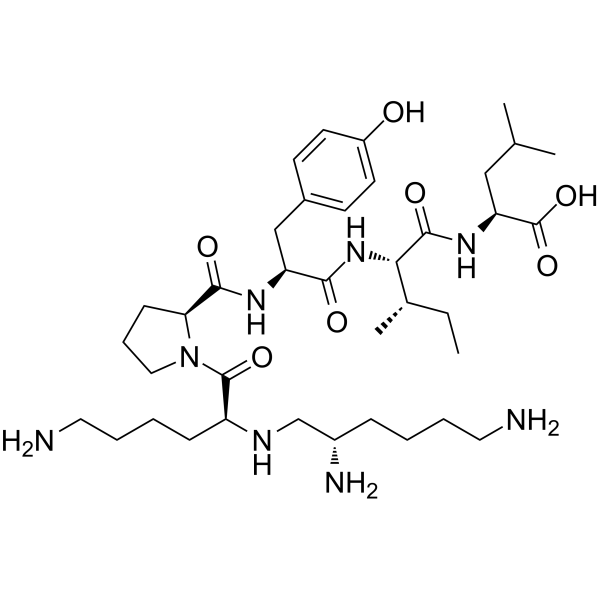
JMV 449 is a potent neurotensin receptor agonist. JMV 449 shows an IC50 of 0.15 nM for inhibition of [ 125I]-neurotensin binding to neonatal mouse brain and an EC50 of 1.9 nM in contracting the guinea-pig ileum. JMV 449 has highly potent and long-lasting hypothermic and analgesic effects in the mouse .
loading...
    loading...
Cat. No.: HY-14277
CAS No.: 79516-68-0
Synonyms: R 50547
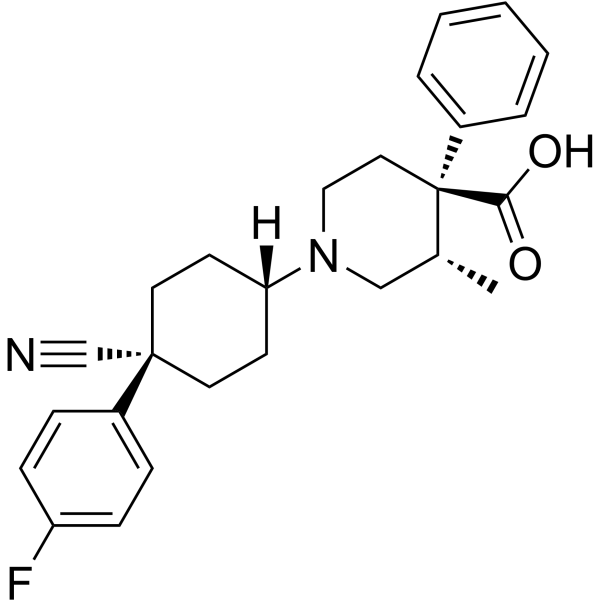
Levocabastine (R 50547) is a potent and selective histamine H1-receptor antagonist. Levocabastine hydrochloride is also a selective, high affinity neurotensin receptor subtype 2 (NTR2) antagonist, with a Ki of 17 nM for mNTR2. Levocabastine can act as a VLA-4 antagonist, interferes with conjunctival eosinophil infiltration in allergic conjunctivitis (AC) .
loading...
    loading...
Cat. No.: HY-153958
CAS No.: 1613113-44-2
Purity:  99.76%
Research Areas:  

Cancer

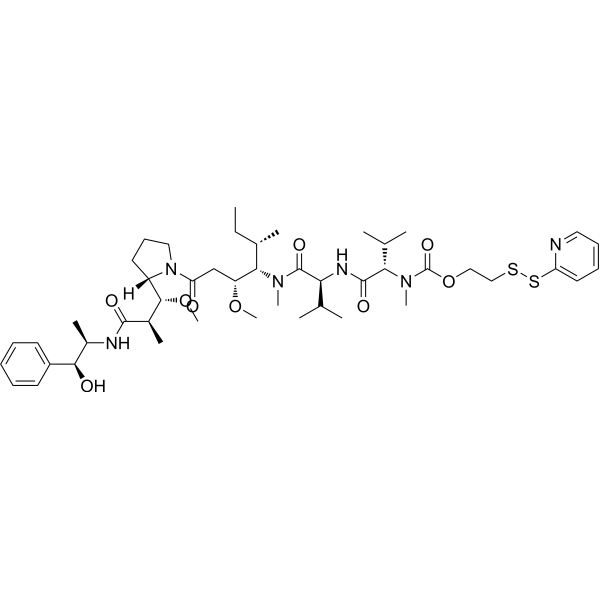
PDS-MMAE (Compound 5’) is a modified MMAE (HY-15162). PDS-MMAE can be used for preparation of neurotensin receptor binding conjugates .
loading...
    loading...
Cat. No.: HY-P10767
CAS No.: 2468971-42-6
Target:  

Neurotensin Receptor

Research Areas:  

Neurological Disease

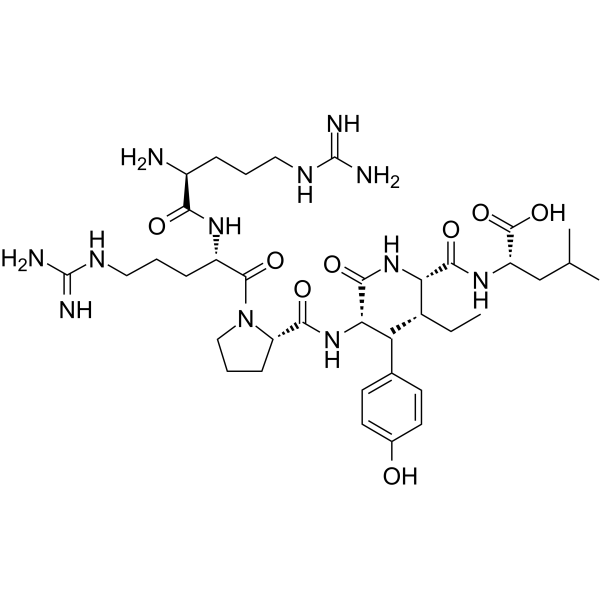
MD01-67 is a selective macrocyclic compound targeting the neurotensin receptor type 2 (NTS2), with Ki of 2.9 nM. MD01-67 exhibits analgesic and tactile hypersensitivity reducing activity in rats acute/persistent/chronic inflammatory pain models .
loading...
    loading...
Cat. No.: HY-W269700
CAS No.: 26462-22-6
Synonyms: L-Isoleucyl-L-leucine
Target:  

Drug Intermediate

Research Areas:  

Neurological Disease

Ile-Leu-OH (L-Isoleucyl-L-leucine) is a hydrophobic dipeptide fragment and is a component of the neurotensin C-terminal heptapeptide Pro-Arg-Arg-Pro-Tyr-Ile-LeuOH .
loading...
    loading...
Cat. No.: HY-137525
CAS No.: 1643879-88-2
Target:  

Neurotensin Receptor

Research Areas:  

Neurological Disease

NTRC-808 is a nonpeptide selective GPCR neurotensin receptor type 2 (NTS2) partial agonist with an EC50 of 14 nM and Ki of 88 nM. NTRC-808 has higher selectivity for NTS2 than for NTS1. NTRC-808 has antipsychotic and analgesic activity .
loading...
    loading...
Cat. No.: HY-107664B
Target:  

Neurotensin Receptor

Research Areas:  

Neurological Disease

SR 142948 TFA is an orally active and selective non-peptide neurotensin receptor (NT) antagonist with IC50s of 1.19 nM, 0.32 nM, 3.96 nM in h-NTR1-CHO cells, HT-29 cells, and adult rat brain, respectively. SR 142948 TFA antagonizes NT-induced inositol monophosphate formation in HT-29 cells with an IC50 of 3.9 nM. SR 142948 TFA blocks hypothermia, analgesia and steering behavior induced by NT in vivo. SR 142948 TFA shows blood-brain permeability and can be used in study of psychiatric disorders .
loading...
    loading...
Cat. No.: HY-P0251A
CAS No.: 2952825-79-3
Target:  

Neurotensin Receptor

Research Areas:  

Neurological Disease

Neurotensin (8-13) is an active fragment of Neurotensin. Neurotensin(8-13) TFA results in a decrease in cell-surface NT1 receptors (NTR1) density.
loading...
    loading...
Cat. No.: HY-160726
CAS No.: 2315261-99-3
Polymethacrylate Copolymer N−C4−52−6.9 is a polymer that consists of hydrophobic butylmethacrylate and cationic methacroylcholine chloride monomers. Polymethacrylate Copolymer N−C4−52−6.9 is able to solubilise lipid bilayers into nanodiscs. Polymethacrylate Copolymer N−C4−52−6.9 can be utilized in structure and functional studies on membrane proteins .
loading...
    loading...