17 Results for "

PDMS

" in MedChemExpress (MCE) Product Catalog:
Products (17)

17 Results for "PDMS" in MCE Product Catalog:

3
3 Cited Publications
Cat. No.: HY-112629
CAS No.: 688348-25-6
Purity:  98.76%
Research Areas:  

Inflammation/Immunology

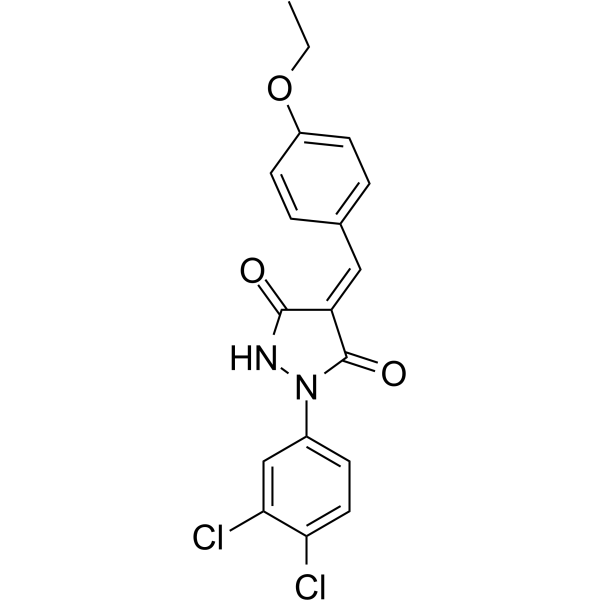
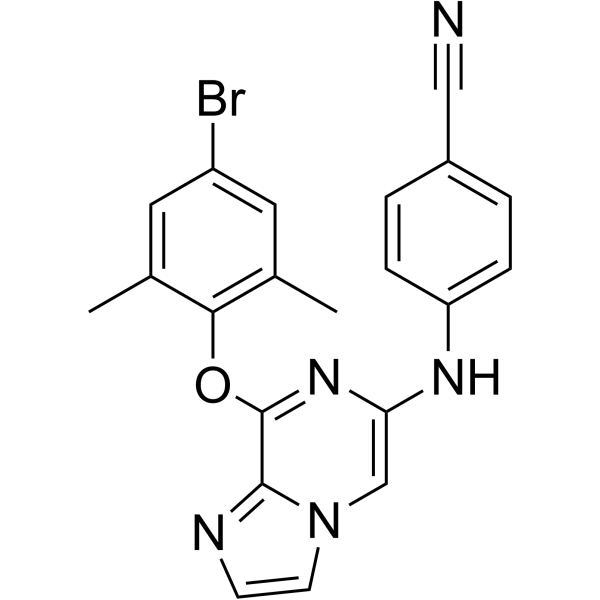
PDM2 is a selective, high-affinity aryl hydrocarbon receptor (AhR) antagonist with an Ki of 1.2±0.4 nM.
1
1 Cited Publications
Cat. No.: HY-N7922
CAS No.: 91485-02-8
Synonyms: Decarboxyellagic acid
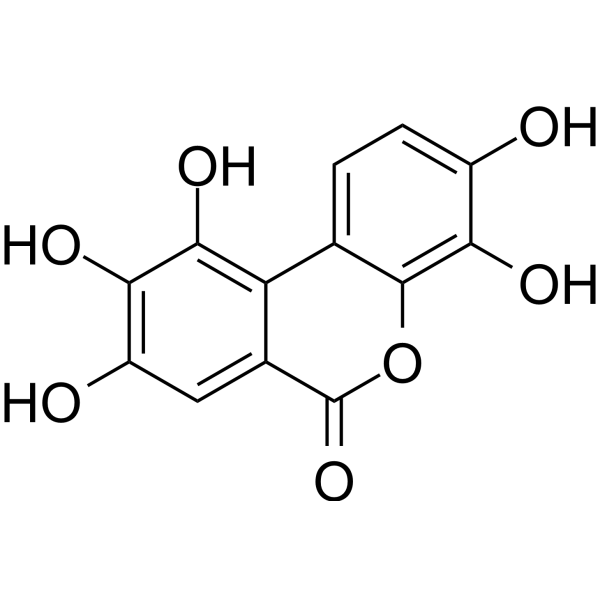
Urolithin M5 (Decarboxyellagic acid) is an orally active influenza virus neuraminidase inhibitor and neuroprotective agent, with IC50 values of 174.8 μM (HK68), 191.5 μM (pdm09), 243.2 μM (WSN) and 257.1 μM (PR8) against four influenza virus neuraminidases, respectively. Urolithin M5 inhibits viral neuraminidase activity, thereby blocking influenza virus replication (including oseltamivir (HY-13317)-resistant strains), protecting infected mammals from death and improving pulmonary edema. Urolithin M5 forms a hydrogen-bond stabilized complex with IGF1R, and binds to MAPK14, AKT1, NFKB1 and EGFR. Urolithin M5 reduces reactive oxygen species production, inhibits neuronal apoptosis, restores mitochondrial transmembrane potential, and promotes neurite outgrowth of damaged neuronal cells. Urolithin M5 can be used in research related to influenza virus infection and Alzheimer's disease .
Cat. No.: HY-137383
CAS No.: 102568-43-4
Purity:  99.72%
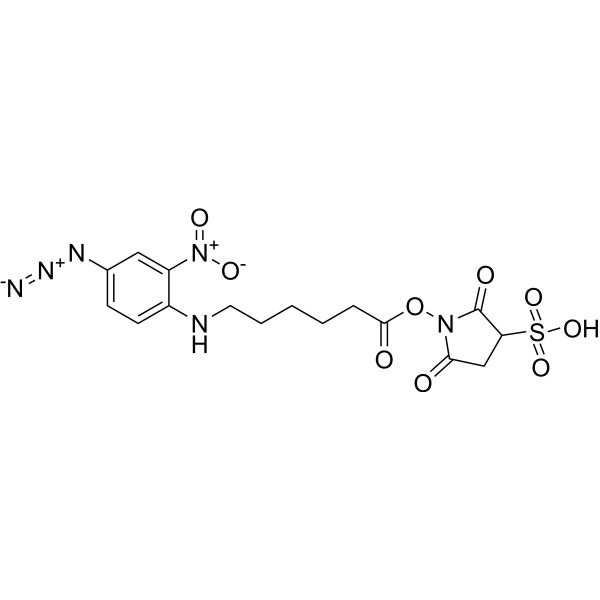
Sulfo-SANPAH is a primary amine-nitrobenzene azide cross-linker. Sulfo-SANPAH improves the functionalization process of PDMS surfaces, is covalently bound to the PAAm gel surface. Sulfo-SANPAH is widely used to crosslink ECM proteins to various substrates, including acrylic-based hydrogels, such as polyacrylamide hydrogels. Sulfo-SANPAH facilitates covalent binding through its negatively charged sulfonate group on its N-hydroxysuccinimide ester ring and a photoactivated phenyl azide group that is highly reactive with nucleophiles and free radicals .
Cat. No.: HY-D1725
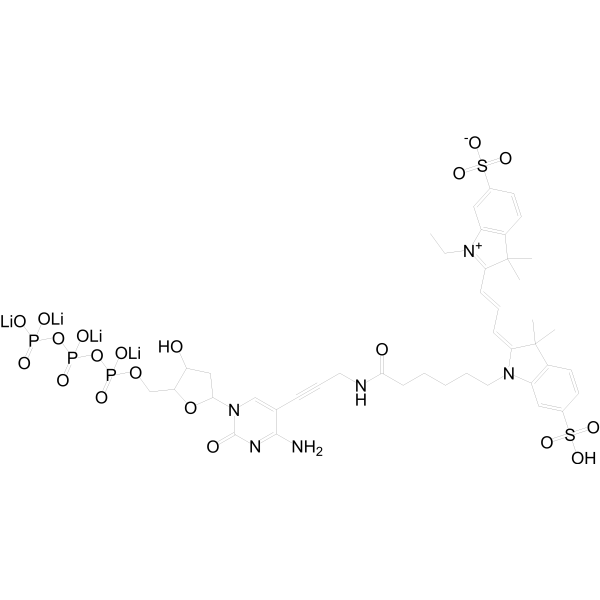
Cy3-dCTP is a directly fluorescently labeled deoxyribonucleotide, in which Cy3 is a cyanine fluorescent dye. Cy3-dCTP is used for direct enzymatic labeling of DNA and cDNA: with the aid of DNA polymerases, this modified nucleotide is incorporated into the extending DNA strand during processes such as reverse transcription, PCR, nick translation or random primer labeling .
Cat. No.: HY-104035H
CAS No.: 63148-62-9
Synonyms: Poly(dimethylsiloxane) (PDMS), viscosity 10 cSt (25 °C); Dimethylsilcone fluid, viscosity 10 cSt (25 °C)
Dimethyl silicone oil, viscosity 10 cSt (25 °C) (Poly(dimethylsiloxane) (PDMS), viscosity 10 cSt (25 °C); Dimethylsilcone fluid, viscosity 10 cSt (25 °C)) is a low-viscosity polydimethylsiloxane fluid with high thermal stability. Dimethyl silicone oil, viscosity 10 cSt (25 °C) can be used as a laboratory bath solution, calibration solution, defoamer, and also has applications in the biomedical field, such as as an intraocular solution.
Cat. No.: HY-104035E
CAS No.: 63148-62-9
Synonyms: Poly(dimethylsiloxane) (PDMS), viscosity 100 cSt (25 °C); Dimethylsilcone fluid, viscosity 100 cSt (25 °C)
Dimethyl silicone oil, viscosity 100 cSt (25 °C) (Poly(dimethylsiloxane) (PDMS), viscosity 100 cSt (25 °C); Dimethylsilcone fluid, viscosity 100 cSt (25 °C)) is a transparent, colorless, and inert polydimethylsiloxane liquid with stable properties. Dimethyl silicone oil, viscosity 100 cSt (25 °C) exhibits high dielectric strength and excellent lubrication, cushioning, and thermal conductivity. Dimethyl silicone oil, viscosity 100 cSt (25 °C) can be used in cosmetics, lubricants, and electronics.
Cat. No.: HY-102043
CAS No.: 2095312-08-4
Research Areas:  

Neurological Disease

PDM-631 is a selective and orally active PDE2A inhibitor with blood-brain barrier penetration. PDM-631 exhibits potent inhibitory activity against human and rat recombinant PDE2A with IC50 values of 1.5 nM and 4.2 nM, respectively. PDM-631 increases cGMP levels in the rat cerebral cortex. PDM-631 can be used for the study of schizophrenia and neurodegenerative disorders .
Cat. No.: HY-176166
CAS No.: 3058330-82-5
Target:  

mTOR PROTACs Autophagy

Research Areas:  

Cancer

PD-M6 is a mTOR PROTAC degrader (DC50: 4.8 μM). PD-M6 promotes ubiquitination and degradation of mTOR. PD-M6 downregulates MAPKAP1 and CASTOR1, and induces Autophagy. PD-M6 inhibits the proliferation of cervical cancer, breast cancer and liver cancer cell lines. PD-M6 can be used for the research of cervical cancer, breast cancer and liver cancer .
Cat. No.: HY-112554
CAS No.: 1032508-03-4
Purity:  99.93%
Target:  

Phosphatase

Research Areas:  

Others

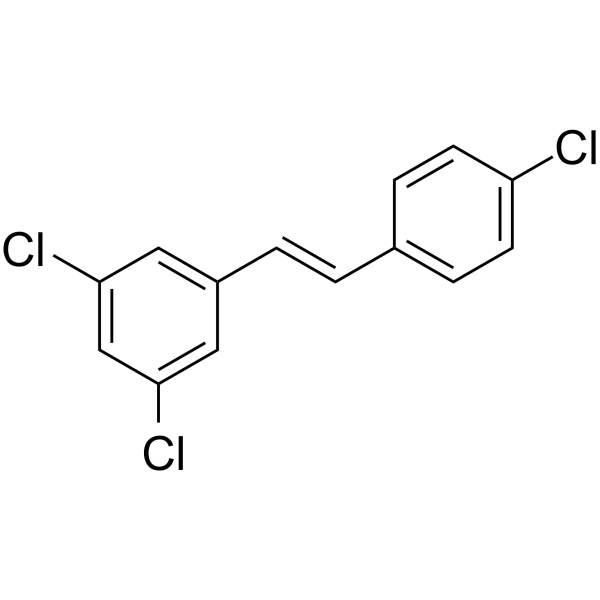
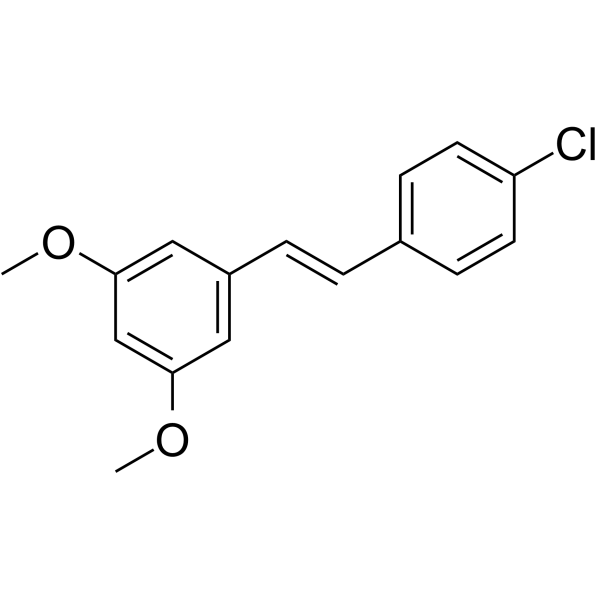
PDM11 is a derivative of antioxidant resveratrol. PDM11 do not exhibit any significant protective effect against oxidation of linoleate micelles initiated by radiolysis-generated hydroxyl radicals. PDM11 is inactive in resveratrol activity assays .
Cat. No.: HY-P10975
CAS No.: 2484874-12-4
Research Areas:  

Infection

P9R is an antiviral peptide. P9R has broad-spectrum antiviral activities against the coronaviruses (SARS-CoV-2, MERS-CoV and SARS-CoV), A(H1N1)pdm09, A(H7N9) virus, and rhinovirus. P9R directly binds to viruses and inhibits virus-host endosomal acidification. P9R significantly protects mice from A(H1N1)pdm09 infection without generating drug-resistant virus. P9R can be used for pH-dependent respiratory viruses research .
Cat. No.: HY-100858
CAS No.: 433238-84-7
Target:  

Influenza Virus

Research Areas:  

Infection

PP7 is a potent PB1-PB2 interaction inhibitor with an IC50 of 8.6 μM, and their inhibition against viral polymerase activity (IC50=9.5 μM). PP7 shows antiviral activities against influenza A virus (IAV), including A(H1N1)pdm09 (EC50=1.4 μM), A(H7N9) and A(H9N2) subtypes .
Cat. No.: HY-160111
CAS No.: 1404488-48-7
Research Areas:  

Neurological Disease

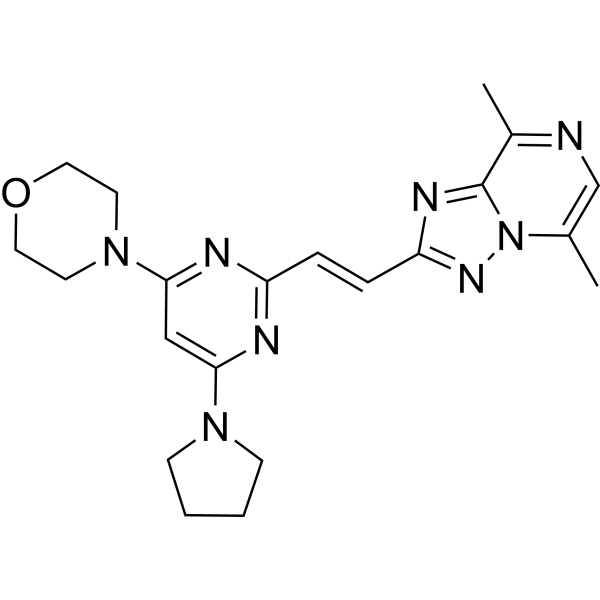
PDM-042 is a potent, selective, and orally active phosphodiesterase 10A (PDE10A) inhibitor. PDM-042 shows potent inhibitory activities for human and rat PDE10A with IC50 values of less than 1 nM and more than 1000-fold selectivity against other phosphodiesterases. PDM-042 can be used for the research of schizophrenia .
Cat. No.: HY-129773
Target:  

PROTAC Linkers

Research Areas:  

Cancer

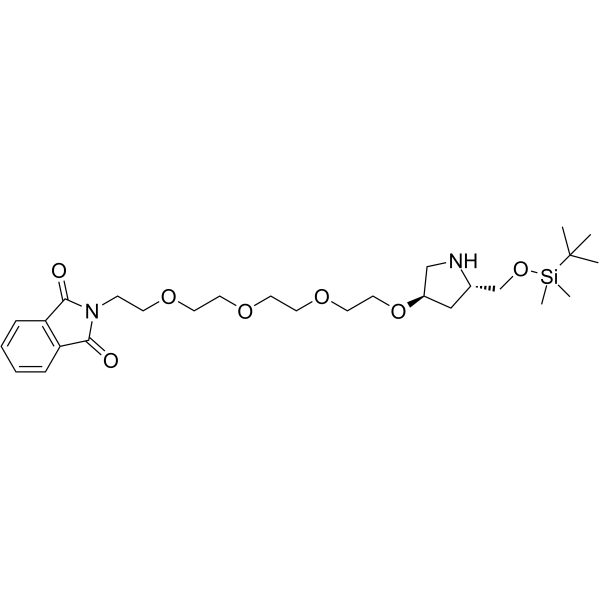
Phthalimide-PEG4-PDM-OTBS is a PROTAC linker, which refers to the PEGs composition. Phthalimide-PEG4-PDM-OTBS can be used in the synthesis of a series of PROTACs. PROTACs contain two different ligands connected by a linker; one is a ligand for an E3 ubiquitin ligase and the other is for the target protein. PROTACs exploit the intracellular ubiquitin-proteasome system to selectively degrade target proteins .
Cat. No.: HY-155476
CAS No.: 1627115-50-7
Target:  

Influenza Virus

Research Areas:  

Infection

Influenza virus-IN-8 (compound A4) is an inhibitor of influenza virus (Influenza Virus) that induces viral nucleoprotein (NP) aggregation and prevents its nuclear accumulation. Influenza virus-IN-8 has broad-spectrum anti-influenza activity and can inhibit the replication and transcription of influenza A virus. Influenza virus-IN-8 also inhibits Oseltamivir (HY-13317)-resistant H1N1/pdm09 strains .
Cat. No.: HY-W150930
CAS No.: 7597-22-0
Research Areas:  

Cancer

mTOR ligand 1 (compound T2) is a PROTAC target protein ligand (Ligands for Target Protein for PROTACs). mTOR ligand 1 can serve as an active control for MHY1485 (HY-B0795, the target protein ligand of PD-M6 (HY-176166) .
Cat. No.: HY-176167
CAS No.: 3058330-88-1
Research Areas:  

Cancer

mTOR ligand 1-C6-amino is a conjugate of a target protein ligand (HY-B0795) and a linker (HY-W008296). mTOR ligand 1-C6-amino can be used to synthesize PROTAC PD-M6 (HY-176166) .
Cat. No.: HY-180525
Target:  

Influenza Virus

Research Areas:  

Infection

PB2-IN-2 is an orally active PB2 inhibitor with RNA-dependent RNA Polymerase (RNP) IC50 = 0.2 nM, LRA (Ligand Receptor Assay) EC50 = 0.8 nM, Cytopathic Effect (CPE) EC50 = 0.1 nM. PB2-IN-2 exhibits broad-spectrum, nanomolar antiviral potency against a panel of influenza A strains (including H1N1pdm09, Lyon/1337/2007/H1N1, Tex12-Like/H3N2, PR/8/34/H1N1, WSN/1933/H1N1, rPR8(H1N1)/H7N9 with EC50 = 1.5, 3.6, 3.7, 13.8, 2.9 and 9.8 nM and all the CC50 values > 2 μM. PB2-IN-2 possesses an excellent pharmacokinetic profile and metabolic stability. PB2-IN-2 can be used for anti-influenza research .
  • 1

