25 Results for "

Palmitoylcarnitine

" in MedChemExpress (MCE) Product Catalog:
Products (25)

25 Results for "Palmitoylcarnitine" in MCE Product Catalog:

2
2 Cited Publications
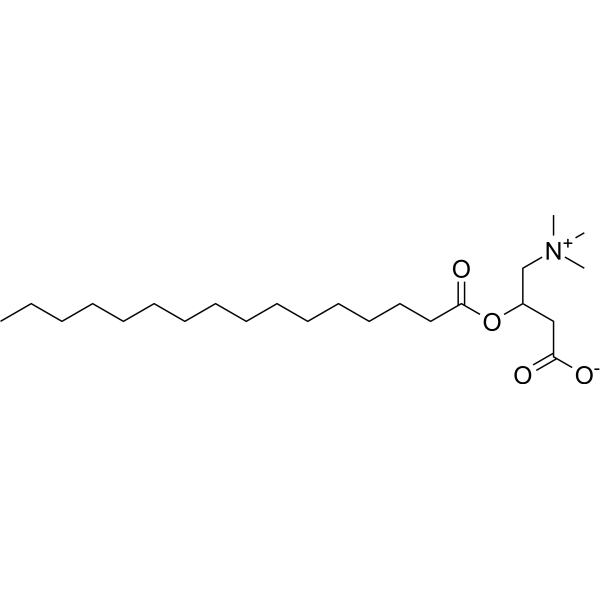
Cat. No.: HY-126357
CAS No.: 1935-18-8
Palmitoylcarnitine is a C16:0 long-chain acylcarnitine and an intermediate product of fatty acid oxidation. The level of Palmitoylcarnitine in human prostate cancer tissues is higher than that in non-cancerous tissues. Palmitoylcarnitine can be used in studies related to lipid metabolism associated with prostate cancer .
loading...
    loading...
2
2 Cited Publications
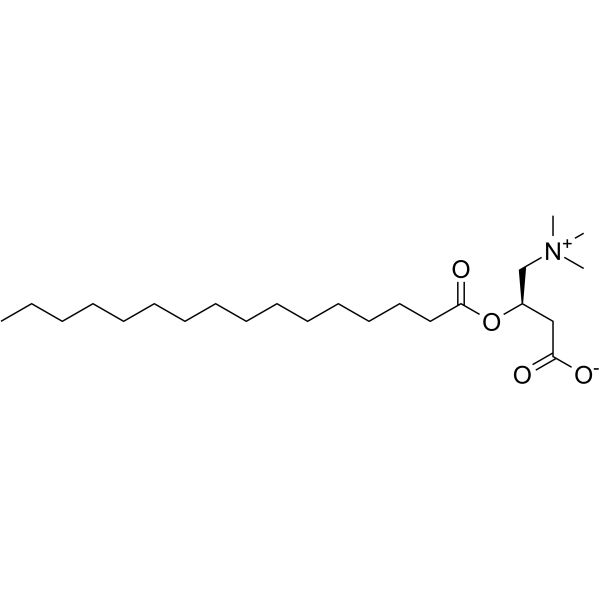
Cat. No.: HY-113147
CAS No.: 2364-67-2
Purity:  99.88%
L-Palmitoylcarnitine, a long-chain acylcarnitine and a fatty acid metabolite, accumulates in the sarcolemma and deranges the membrane lipid environment during ischaemia. L-Palmitoylcarnitine inhibits KATP channel activity, without affecting the single channel conductance, through interaction with Kir6.2 .
loading...
    loading...
2
2 Cited Publications
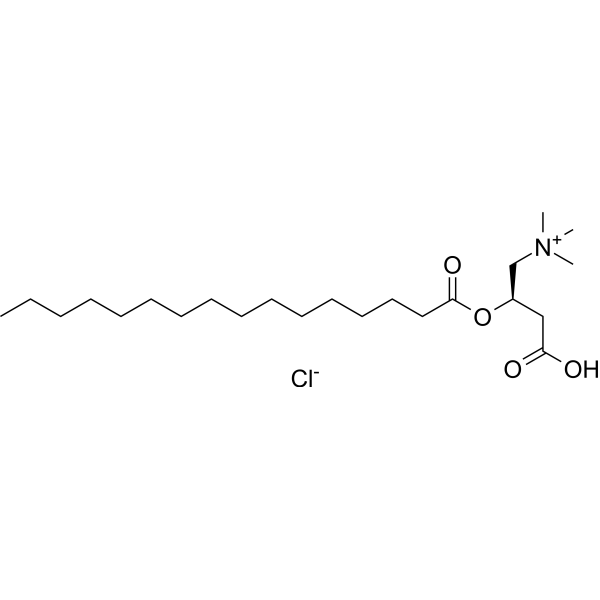
Cat. No.: HY-113147A
CAS No.: 18877-64-0
Purity:  ≥98.0%
L-Palmitoylcarnitine chloride, a long-chain acylcarnitine and a fatty acid metabolite, accumulates in the sarcolemma and deranges the membrane lipid environment during ischaemia. L-Palmitoylcarnitine chloride inhibits KATP channel activity, without affecting the single channel conductance, through interaction with Kir6.2 .
loading...
    loading...
2
2 Cited Publications
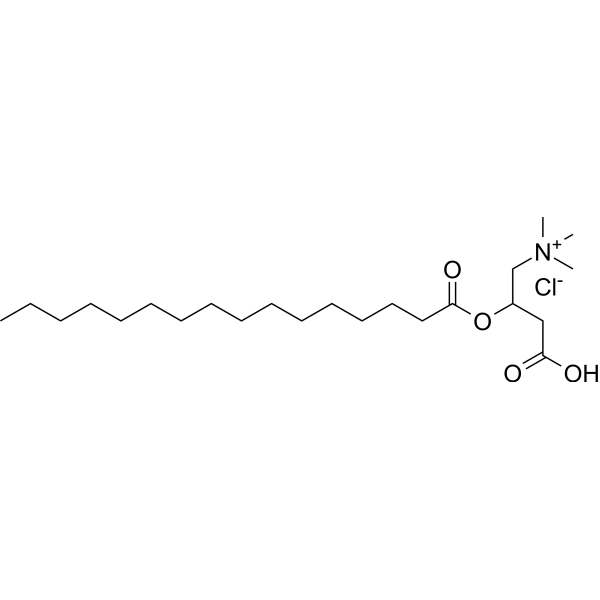
Cat. No.: HY-101017
CAS No.: 6865-14-1
Purity:  ≥98.0%
Palmitoylcarnitine chloride is a C16:0 long-chain acylcarnitine and an intermediate product of fatty acid oxidation. The level of Palmitoylcarnitine chloride in human prostate cancer tissues is higher than that in non-cancerous tissues. Palmitoylcarnitine chloride can be used in studies related to lipid metabolism associated with prostate cancer .
loading...
    loading...
2
2 Cited Publications
Cat. No.: HY-113147B
Purity:  ≥98.0%
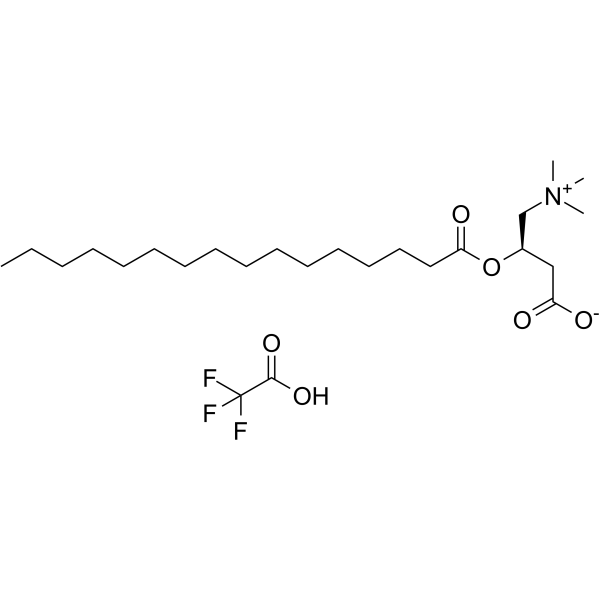
L-Palmitoylcarnitine TFA, a long-chain acylcarnitine and a fatty acid metabolite, accumulates in the sarcolemma and deranges the membrane lipid environment during ischaemia. L-Palmitoylcarnitine TFA inhibits KATP channel activity, without affecting the single channel conductance, through interaction with Kir6.2 .
loading...
    loading...
1
1 Cited Publications
Cat. No.: HY-P10441A
Target:  

Peptides

Research Areas:  

Inflammation/Immunology

S-palm P0(180–199) (TFA) is a peptide that enhances MHC II-restricted responses. S-palm P0(180–199) (TFA) can be used to establish models of chronic inflammatory demyelinating polyneuropathy (CIDP) and chronic experimental autoimmune neuritis (c-EAN). S-palm P0(180–199) (TFA) is used for studying autoimmune-mediated neuroinflammatory diseases .
loading...
    loading...
Cat. No.: HY-113147AS
CAS No.: 1334532-26-1
Purity:  99.83%
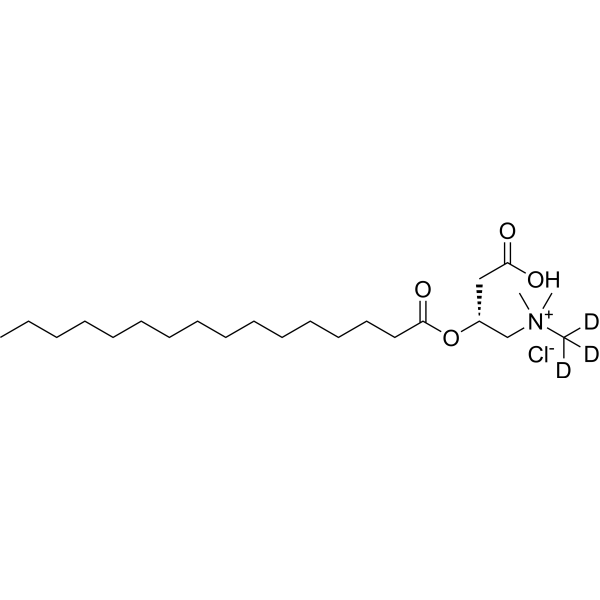
L-Palmitoylcarnitine-d3 hydrochloride is the deuterium labeled L-Palmitoylcarnitine hydrochloride. L-Palmitoylcarnitine hydrochloride, a long-chain acylcarnitine and a fatty acid metabolite, accumulates in the sarcolemma and deranges the membrane lipid environment during ischaemia. L-Palmitoylcarnitine hydrochloride inhibits KATP channel activity, without affecting the single channel conductance, through interaction with Kir6.2 .
loading...
    loading...
Cat. No.: HY-P0064
CAS No.: 221227-05-0
Synonyms: Palmitoyl Tetrapeptide-7
Target:  

Interleukin Related

Research Areas:  

Inflammation/Immunology

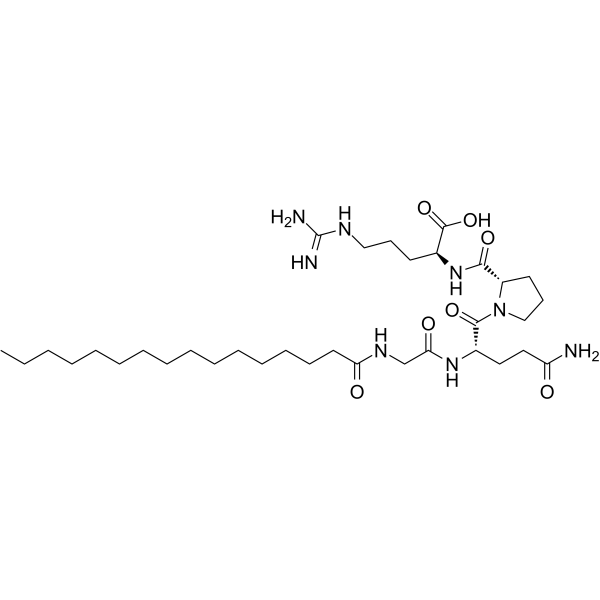
Palmitoyl Tetrapeptide-3 (Palmitoyl Tetrapeptide-7) is a synthetic peptide corresponding to amino acids 341-344 of the human immunoglobulin heavy chain, with the ability to stimulate phagocytosis. Palmitoyl tetrapeptide-3 reduces interleukin-6 (IL-6) secretion in keratinocytes and inhibits the UVB radiation-exposure inflammatory response of skin. Palmitoyl tetrapeptide-3 It also has anti-inflammatory and anti-aging effects, reducing skin wrinkles by promoting the production of elastic fibers in the papillary dermis .
loading...
    loading...
Cat. No.: HY-P10932A
Research Areas:  

Neurological Disease

pGk13a TFA is an azide (azide group can be combined with fluorophore)-containing amphiphilic membrane labeling probe. pGk13a TFA enables high-resolution imaging of cell membranes in the ultrastructural membrane expansion microscopy (umExM) technique, facilitating the observation of membrane-associated structures and proteins. pGk13a TFA can be used for neuronal structural studies .
loading...
    loading...
Cat. No.: HY-P10031
Target:  

GLP Receptor GCGR

Research Areas:  

Metabolic Disease

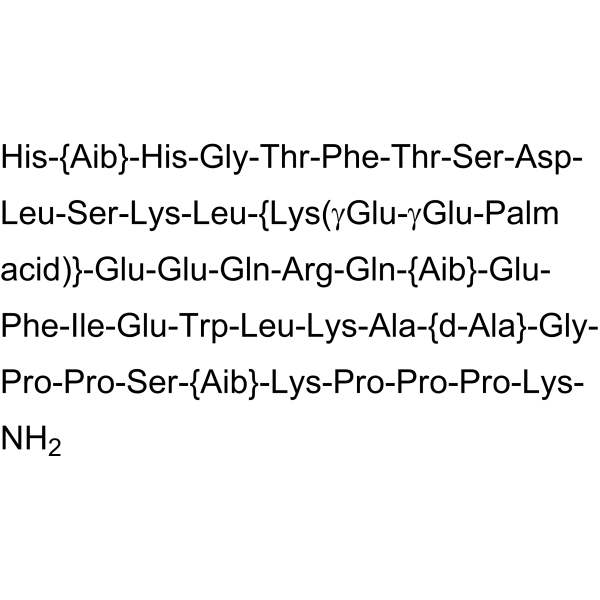
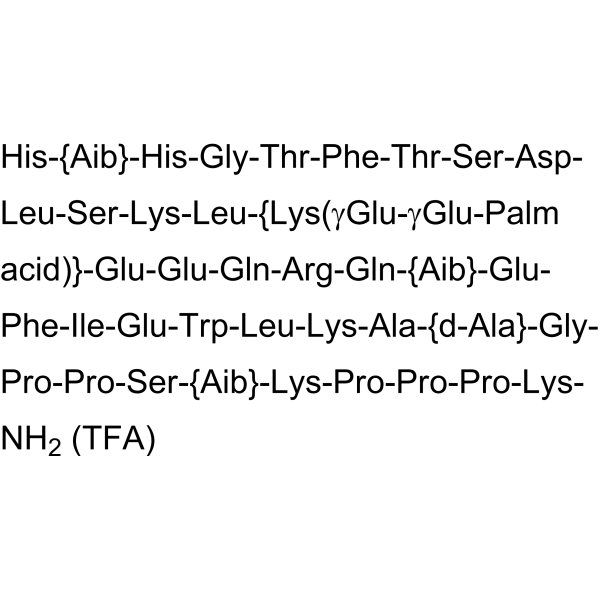
SAR441255 is a GLP-1R/GCGR/GIPR agonist, with human EC50 values of 1.03 pM, 1.01 pM, and 0.73 pM, respectively. SAR441255 stimulates receptor activity and drives cAMP accumulation. SAR441255 can be used for the research of type 2 diabetes, obesity .
loading...
    loading...
Cat. No.: HY-P10932
Research Areas:  

Neurological Disease

pGk13a is an amphipathic membrane-labeling probe containing an azide group, which can bind to fluorophores. pGk13a enables high-resolution imaging of cell membranes in the ultrastructure expansion microscopy (umExM) technique, facilitating the observation of membrane-associated structures and proteins. pGk13a is applicable to neuronal structure research .
loading...
    loading...
Cat. No.: HY-P10380
palm11-PrRP31 is a lipidized endogenous appetite inhibitory neuropeptide (PrRP) analogue. palm11-PrRP31 is GPR10 (EC50=39 pM) and NPFF-R2 effective dual agonists. palm11-PrRP31 is able to mimic the natural function of PrRP by binding to these receptors to reduce food intake. palm11-PrRP31 can be used as a potential anti-obesity agent and for the study of neuropeptide-receptor interaction .
loading...
    loading...
Cat. No.: HY-P10031A
Target:  

GLP Receptor GCGR

Research Areas:  

Metabolic Disease

SAR441255 TFA is a GLP-1R/GCGR/GIPR agonist, with human EC50 values of 1.03 pM, 1.01 pM, and 0.73 pM, respectively. SAR441255 TFA stimulates receptor activity and drives cAMP accumulation. SAR441255 TFA can be used for the research of type 2 diabetes, obesity .
loading...
    loading...
Cat. No.: HY-113147AR
CAS No.: 18877-64-0
L-Palmitoylcarnitine (chloride) (Standard) is the analytical standard of L-Palmitoylcarnitine (chloride). This product is intended for research and analytical applications. L-Palmitoylcarnitine chloride, a long-chain acylcarnitine and a fatty acid metabolite, accumulates in the sarcolemma and deranges the membrane lipid environment during ischaemia. L-Palmitoylcarnitine chloride inhibits KATP channel activity, without affecting the single channel conductance, through interaction with Kir6.2[1].
loading...
    loading...
Cat. No.: HY-101017A
CAS No.: 28330-02-1
Research Areas:  

Metabolic Disease

D-Palmitoylcarnitine (chloride) is an ester product.
loading...
    loading...
Cat. No.: HY-113147S1
CAS No.: 2847775-90-8
L-Palmitoylcarnitine-d9 is deuterium labeled L-Palmitoylcarnitine. L-Palmitoylcarnitine, a long-chain acylcarnitine and a fatty acid metabolite, accumulates in the sarcolemma and deranges the membrane lipid environment during ischaemia. L-Palmitoylcarnitine inhibits KATP channel activity, without affecting the single channel conductance, through interaction with Kir6.2 .
loading...
    loading...
Cat. No.: HY-152013S
CAS No.: 2692623-98-4
L-Palmitoylcarnitine-d3-1 (hydrochloride) is deuterium labeled L-Palmitoylcarnitine (chloride). L-Palmitoylcarnitine chloride, a long-chain acylcarnitine and a fatty acid metabolite, accumulates in the sarcolemma and deranges the membrane lipid environment during ischaemia. L-Palmitoylcarnitine chloride inhibits KATP channel activity, without affecting the single channel conductance, through interaction with Kir6.2 .
loading...
    loading...
Cat. No.: HY-P10380A
palm11-PrRP31 TFA is a lipidized endogenous appetite inhibitory neuropeptide (PrRP) analogue. palm11-PrRP31 TFA is GPR10 (EC50=39 pM) and NPFF-R2 effective dual agonists. palm11-PrRP31 TFA is able to mimic the natural function of PrRP by binding to these receptors to reduce food intake. palm11-PrRP31 TFA can be used as a potential anti-obesity agent and for the study of neuropeptide-receptor interaction .
loading...
    loading...
Cat. No.: HY-101017R
CAS No.: 6865-14-1
Eslicarbazepine acetate (Standard) is the analytical standard of Eslicarbazepine acetate. This product is intended for research and analytical applications. Eslicarbazepine acetate (BIA 2-093), an antiepileptic agent, is a dual a dual Inhibitor of β-Secretase and voltage-gated sodium channel.
loading...
    loading...
Cat. No.: HY-P10441
CAS No.: 1240687-76-6
Target:  

Peptides

Research Areas:  

Inflammation/Immunology

S-palm P0(180-199) is a polypeptide that increases MHC Class II limiting reactions. S-palm P0(180-199) can be used to establish a model of chronic inflammatory demyelinating multiple radiculopathy (CIDP) .
loading...
    loading...

