Search Result
Results for "
Quinazoline
" in MedChemExpress (MCE) Product Catalog:
3
Isotope-Labeled Compounds
| Cat. No. |
Product Name |
Target |
Research Areas |
Chemical Structure |
-
- HY-B0371F
-
|
|
Adrenergic Receptor
|
Cardiovascular Disease
Metabolic Disease
Endocrinology
|
|
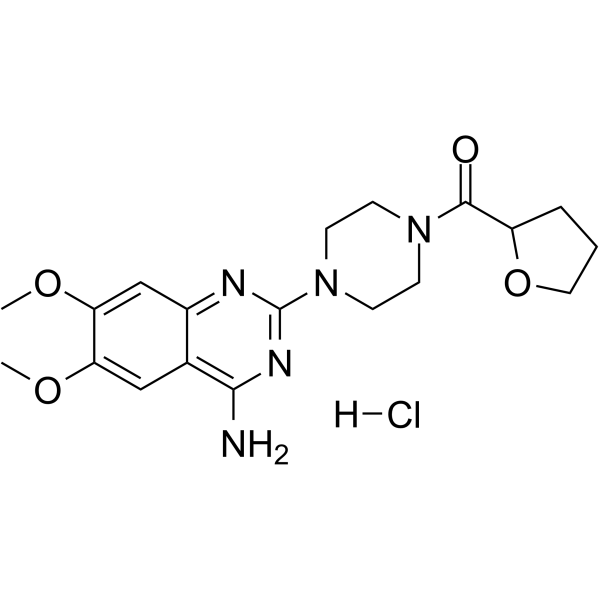
Terazosin hydrochloride is a quinazoline derivative and a competitive and orally active α1-adrenoceptor antagonist. Terazosin hydrochloride works by relaxing blood vessels and the opening of the bladder. Terazosin hydrochloride has the potential for benign prostatic hyperplasia (BPH) and high blood pressure treatment .
|
-
-
- HY-B0098
-
-
-
- HY-N6607
-
-
-
- HY-10929
-
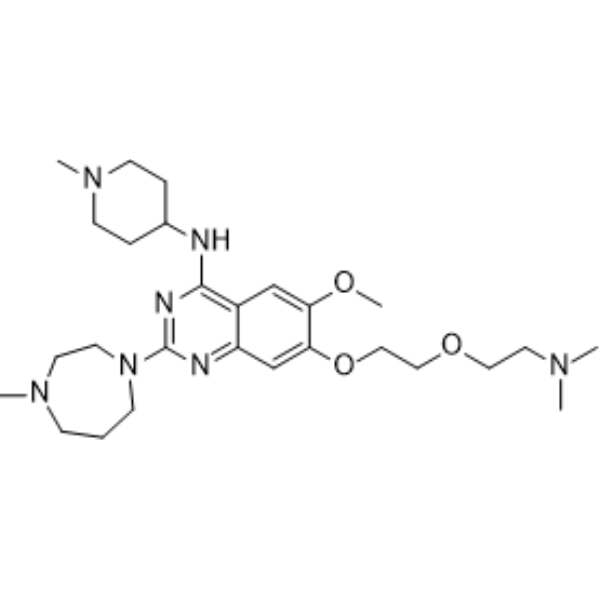
UNC0224
2 Publications Verification
|
Histone Methyltransferase
|
Cancer
|
|
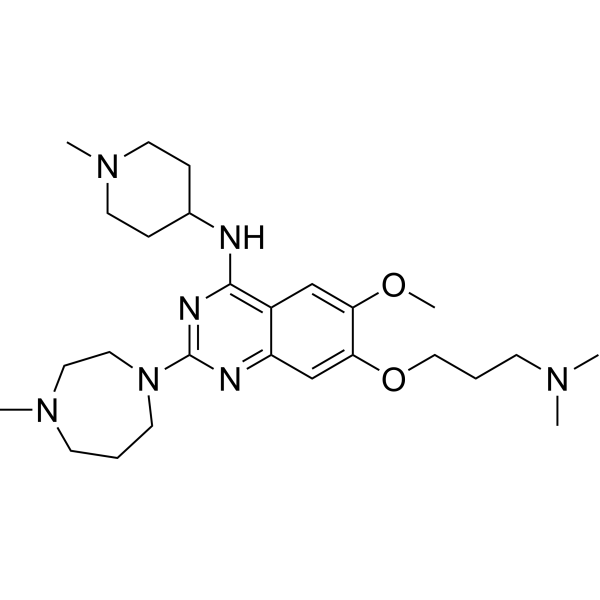
UNC0224 is a potent and selective histone methyltransferase G9a inhibitor with a Ki of 2.6 nM, an IC50 of 15 nM and a Kd of 23 nM. UNC0224 also potently inhibits b>GLP with assay-dependent IC50 values of 20-58 nM. UNC0224 is inactive against SET7/9, SET8/PreSET7, PRMT3 and JMJD2E .
|
-
-
- HY-N1103
-
|
Peganine
|
Bacterial
PI3K
Akt
|
Infection
Inflammation/Immunology
|
|
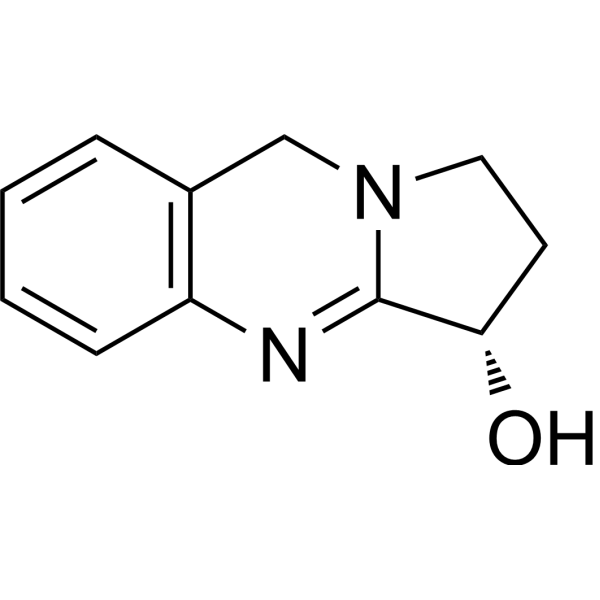
Vasicine (peganine) is a quinazoline alkaloid isolated from Justicia adhatoda. Vasicine activates PI3K/Akt signaling pathway, exhibits antioxidant, anti-inflammatory and antibacterial activities .
|
-
-
- HY-10930
-
UNC0321
2 Publications Verification
|
Histone Methyltransferase
GCGR
Apoptosis
|
Cancer
|
|
UNC0321 is a potent and selective histone methyltransferase G9a inhibitor with a Ki of 63 pM and with assay-dependent IC50 values of 6-9 nM. UNC0321 also inhibits GLP with assay-dependent IC50 values of 15-23 nM. UNC0321 has anti-apoptotic activity and has potential application in diabetic vascular complications .
|
-
-
- HY-N1100
-
|
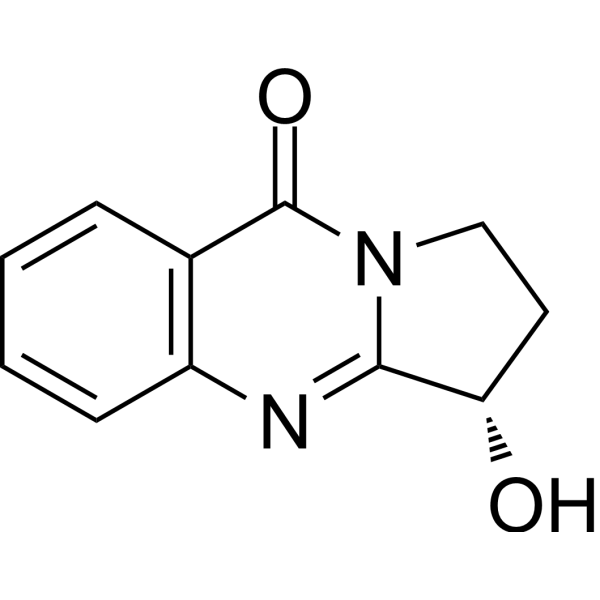
(-)-Vasicinone
|
Others
|
Neurological Disease
|
|
Vasicinone is a quinazoline alkaloid isolated from the Adhatoda vasica. Vasicinone is a potential agent for Parkinson's disease and possibly other oxidative stress-related neurodegenerative disorders .
|
-
-
- HY-B0371
-
-
-
- HY-B0371A
-
|
|
Adrenergic Receptor
|
Cardiovascular Disease
Metabolic Disease
Endocrinology
|
|
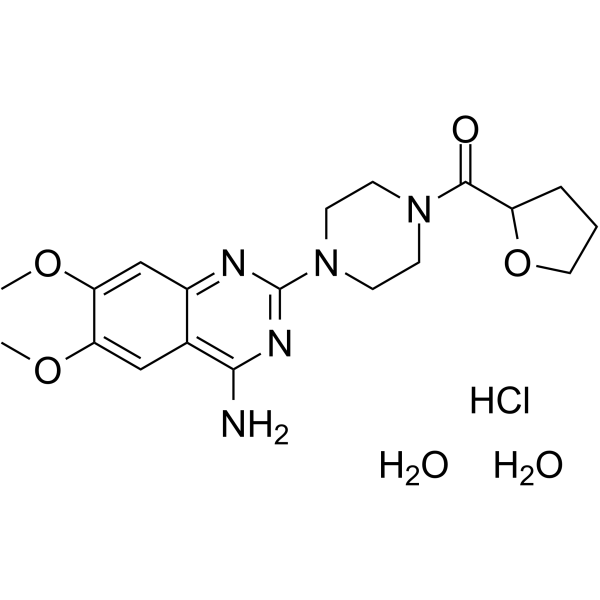
Terazosin hydrochloride dihydrate is a quinazoline derivative and a competitive and orally active α1-adrenoceptor antagonist. Terazosin hydrochloride dihydrate works by relaxing blood vessels and the opening of the bladder. Terazosin hydrochloride dihydrate has the potential for benign prostatic hyperplasia (BPH) and high blood pressure treatment .
|
-
-
- HY-B0098A
-
-
-
- HY-13427
-
|
AST-1306 (TsOH)
|
EGFR
|
Cancer
|
|
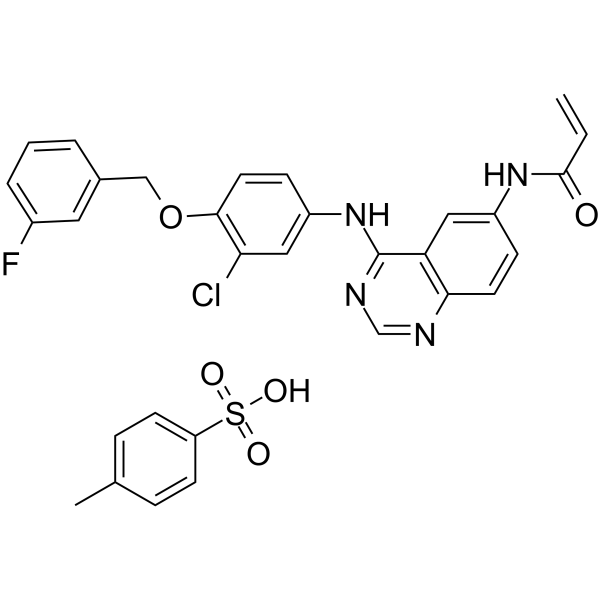
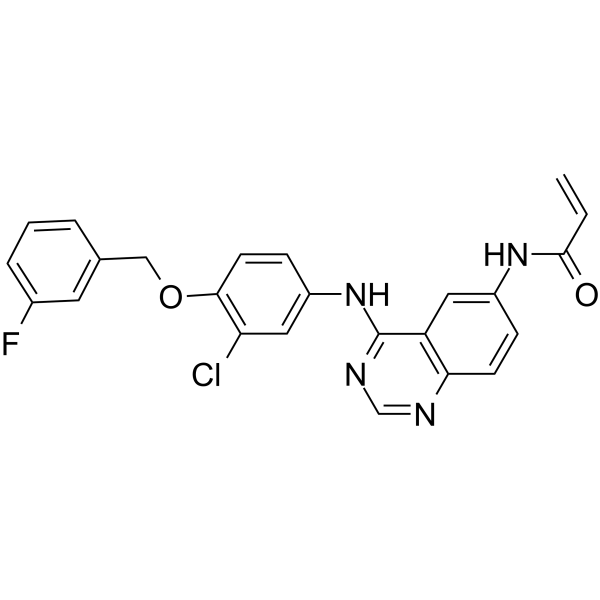
Allitinib tosylate (AST-1306 (TsOH)) is an orally active and irreversible EGFR and ErbB2 inhibitor with IC50s of 0.5 and 3 nM, respectively. Allitinib tosylate also inhibits ErbB4 with an IC50 of 0.8 nM. Allitinib tosylate is an anilino-quinazoline compound and has anti-cancer activity
|
-
-
- HY-107364
-
MTX-211
3 Publications Verification
Mol 211
|
EGFR
PI3K
|
Cancer
|
|
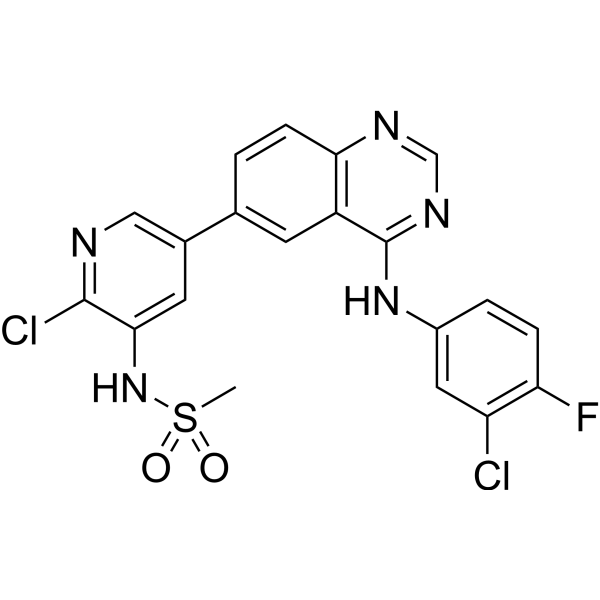
MTX-211 (Mol 211) is a dual inhibitor of EGFR and PI3K with IC50 values of <100 nM. MTX-211 can be used for the research of cancer and other diseases .
|
-
-
- HY-15375
-
|
AST-1306; ALS 1306
|
EGFR
|
Cancer
|
|
Allitinib (AST-1306) is an orally active and irreversible EGFR and ErbB2 inhibitor with IC50s of 0.5 and 3 nM, respectively. Allitinib also inhibits ErbB4 with an IC50 of 0.8 nM. Allitinib is an anilino-quinazoline compound and has anti-cancer activity .
|
-
-
- HY-N2106
-
|
|
NF-κB
COX
PGE synthase
NO Synthase
|
Inflammation/Immunology
|
|
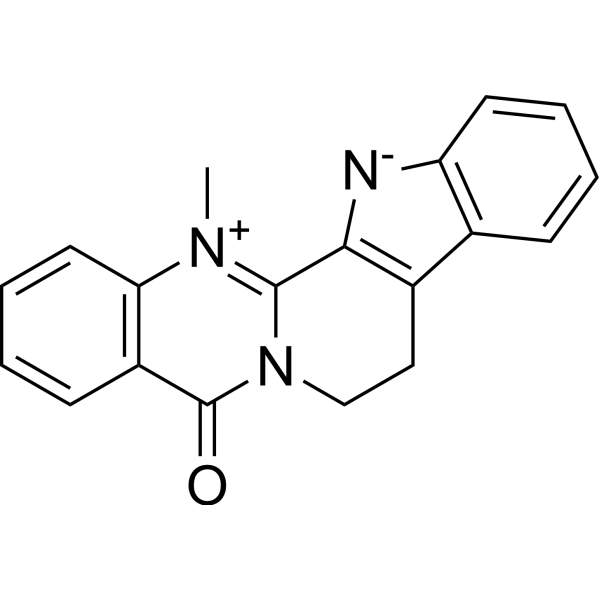
Dehydroevodiamine is a major bioactive quinazoline alkaloid isolated from Evodiae Fructus, has an antiarrhythmic effect in guinea-pig ventricular myocytes . Dehydroevodiamine inhibits LPS-induced iNOS, COX-2, prostaglandin E2 (PGE2) and nuclear factor-kappa B (NF-κB) expression in murine macrophage cells .
|
-
-
- HY-155107
-
|
|
Mitochondrial Metabolism
Bacterial
|
Infection
|
|
ND-011992 is a reversible, selective quinazoline-type inhibitor targeting quinone reductases and quinol oxidases. ND-011992 inhibits respiratory complex I and bo3 oxidase in addition to bd-I and bd-II oxidases in E. coli strain BL21*Δcyo with the IC50 of 0.12, 2.47, 0.63 and 1.3 μM, respectively. ND-011992 can be used for tuberculosis study .
|
-
-
- HY-108419
-
|
|
JNK
|
Cancer
|
|
WHI-P258, a quinazoline compound, binds to the active site of JAK3 with an estimated Ki of 72 µM. WHI-P258 does not inhibit JAK3 and does not affect the thrombin-induced aggregation of platelets even at 100 μM .
|
-
-
- HY-N1103A
-
|
Peganine hydrochloride
|
Bacterial
PI3K
Akt
|
Infection
Inflammation/Immunology
|
|
Vasicine hydrochloride (peganine hydrochloride) is a quinazoline alkaloid isolated from Justicia adhatoda. Vasicine hydrochloride activates PI3K/Akt signaling pathway, exhibits antioxidant, anti-inflammatory and antibacterial activities .
|
-
-
- HY-117397
-
-
-
- HY-N6607R
-
|
|
Reference Standards
Leukotriene Receptor
NO Synthase
NF-κB
COX
TNF Receptor
Interleukin Related
|
Inflammation/Immunology
Cancer
|
|
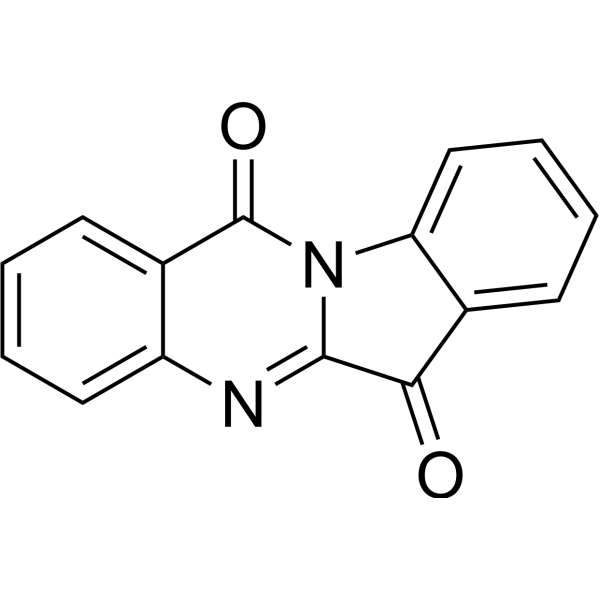
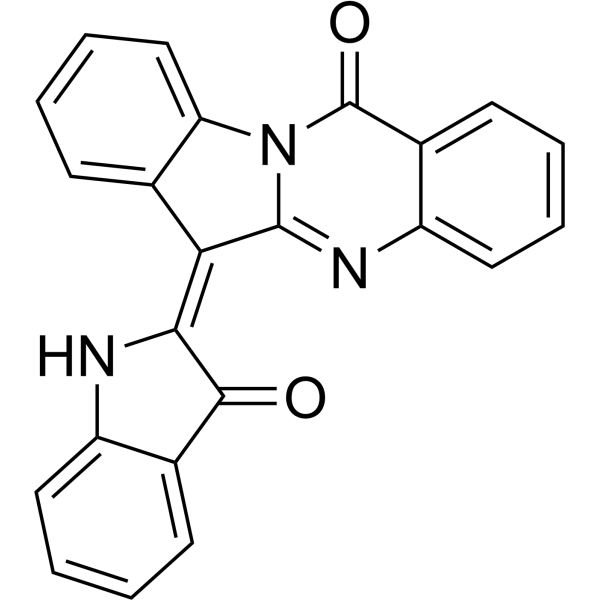
Tryptanthrin (Standard) is the analytical standard of Tryptanthrin. This product is intended for research and analytical applications. Tryptanthrin is an indole quinazoline that could be an alkaloid from indigo-bearing plants. Tryptanthrin is a potent and orally active cellular Leukotriene (LT) biosynthesis inhibitor. Tryptanthrin has anticancer activity. Tryptanthrin suppresses the expression levels of NOS1, COX-2, and NF-κB and regulates the expression levels of IL-2, IL-10, and TNF-α .
|
-
-
- HY-101931
-
|
|
VEGFR
|
Cancer
|
|
hVEGF-IN-1, a quinazoline derivative, could specifically bind to the G-rich sequence in the internal ribosome entry site A (IRES-A) and destabilize the G-quadruplex structure. hVEGF-IN-1 binds to the IRES-A (WT) with a Kd of 0.928 μM in SPR experiments. hVEGF-IN-1 could hinder tumor cells migration and repress tumor growth by decreasing VEGF-A protein expression .
|
-
-
- HY-B0371S
-
|
|
Isotope-Labeled Compounds
Adrenergic Receptor
|
Metabolic Disease
Endocrinology
|
|
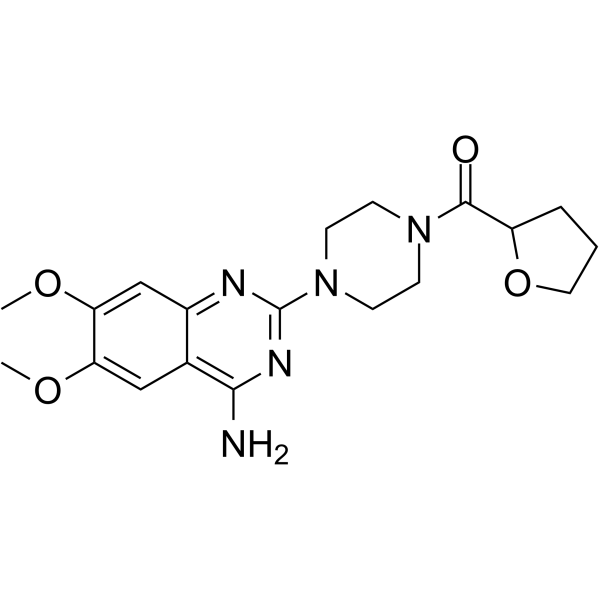
Terazosin-d8 is deuterium labeled Terazosin. Terazosin is a quinazoline derivative and a competitive and orally active α1-adrenoceptor antagonist. Terazosin works by relaxing blood vessels and the opening of the bladder. Terazosin has the potential for benign prostatic hyperplasia (BPH) and high blood pressure treatment .
|
-
-
- HY-14375
-
|
|
NAMPT
|
Cancer
|
|
CB 300919 is a quinazoline-based antitumour agent with high activity in the CH1 human ovarian tumour xenograft. CB 300919 has a continuous exposure (96 h) growth inhibition IC50 value of 2 nM in human CH1 ovarian tumor xenograft . CB 300919 is a click chemistry reagent, it contains an Alkyne group and can undergo copper-catalyzed azide-alkyne cycloaddition (CuAAc) with molecules containing Azide groups.
|
-
-
- HY-178054
-
|
|
Keap1-Nrf2
Drug Derivative
|
Neurological Disease
|
|
LMDP10 is an orally active 3-amino quinazoline derivative with Keap1-Nrf2 pathway activation activity. LMDP10 binds to Keap1 to inhibit Keap1-Nrf2 interaction, thereby activating the Nrf2 pathway. LMDP10 elevates Nrf2, SOD, and GSH levels, reduces MDA and TNF-α levels, attenuates neurodegeneration, and improves memory function in Alzheimer’s disease (AD) rats. LMDP10 can be used for the study of AD .
|
-
-
- HY-W007977
-
|
|
Drug Intermediate
|
Cancer
|
|
4-Chloro-6,7-bis(2-methoxyethoxy)quinazoline (Compound 11 and 15) is a building block and synthetic intermediate, which can be used as a precursor in the synthesis of receptor tyrosine kinase (RTK) inhibitors, dual RTK and histone deacetylase (HDAC) inhibitors, and anticancer agents. 4-Chloro-6,7-bis(2-methoxyethoxy)quinazoline can also be used to synthesize EGFR inhibitors, including Erlotinib (HY-50896), with antiproliferative activity .
|
-
-
- HY-W010778
-
|
|
Drug Derivative
|
Others
|
|
N-[3-chloro-4-[(3-fluorophenyl)methoxy]phenyl]-6-iodo-quinazolin-4-amine is a quinazoline derivative that has also been used in the design, synthesis and biological evaluation of quinazoline-phosphoramidate mustard conjugates as anticancer drugs.
|
-
-
- HY-156287
-
|
|
Glycosidase
|
Cancer
|
|
GCase modulator-1 (compound 9g), a derivative of Quinazoline, is a modulator of GCase (Glucosidase) (AC50=2.23 μM) .
|
-
-
- HY-W014967
-
|
|
Biochemical Assay Reagents
|
Others
|
|
5-Bromoanthranilonitrile is an organic compound that reacts with sodium hydride in dimethyl sulfoxide to produce a 4-amino-2-(2-aminophenyl)quinazoline analogue .
|
-
-
- HY-W739267
-
-
-
- HY-19291
-
-
-
- HY-129427
-
|
|
Adrenergic Receptor
|
Cardiovascular Disease
|
|
DC-015 is a selective and orally active alpha 1-adrenoceptor antagonist on plasma lipid and vascular reactivity in hyperlipidaemic rodent model. DC-015 is a synthesized quinazoline derivative. DC-015 decreases mean arterial pressure in rats. DC-015 has antihypertensive activity .
|
-
-
- HY-178464
-
|
|
RIP kinase
Mixed Lineage Kinase
Necroptosis
|
Neurological Disease
Inflammation/Immunology
|
|
RIPK1-IN-34 is a selective, brain-penetrant RIPK1 inhibitor (IC50 = 126.70 nM) with almost no inhibitory effect on RIPK3 (IC50 > 10, 000 nM). RIPK1-IN-34 offers substantial neuroprotection by inhibiting the phosphorylation of RIPK1, RIPK3, and mixed lineage kinase domain-like pseudokinase (MLKL) within the necroptosis pathway. RIPK1-IN-34 shows the neuroprotective effect in a rat middle cerebral artery occlusion (MCAO) model. RIPK1-IN-34 can be used for the study of anti-acute ischemic stroke (AIS) .
|
-
-
- HY-178942
-
|
|
VEGFR
EGFR
Apoptosis
Bcl-2 Family
Caspase
MDM-2/p53
|
Cancer
|
|
EGFR/VEGFR2-IN-9 (Compound 9b) is an inhibitor of VEGFR-2 (IC50 = 1.325 μM) and EGFR (IC50 = 1.891 μM). EGFR/VEGFR2-IN-9 significantly inhibits the proliferation of multiple cancer cell lines, particularly leukemia cells. EGFR/VEGFR2-IN-9 upregulates the expression levels of Bax, caspase-3, and p53, while downregulating the expression of Bcl-2. EGFR/VEGFR2-IN-9 induces apoptosis and arrests the cell cycle in the G1 phase. EGFR/VEGFR2-IN-9 can be used to investigate anti-tumor angiogenesis and multi-drug resistant cancers .
|
-
-
- HY-W482839
-
-
-
- HY-W488313R
-
|
6-Chloro-4-(2-chlorophenyl)-2-Quinazolinecarboxaldehyde (Standard)
|
Reference Standards
|
|
|
6-Chloro-4-(2-chlorophenyl)quinazoline-2-carbaldehyde (Standard) is the analytical standard of 6-Chloro-4-(2-chlorophenyl)quinazoline-2-carbaldehyde. This product is intended for research and analytical applications.
|
-
-
- HY-117397R
-
|
XDE-436 (Standard); EL-436 (Standard)
|
Reference Standards
Parasite
|
Infection
|
|
Fenazaquin (Standard) is the analytical standard of Fenazaquin. This product is intended for research and analytical applications. Fenazaquin (XDE-436; EL-436) is a quinazoline acaricide .
|
-
-
- HY-106554
-
|
|
Adrenergic Receptor
|
Cardiovascular Disease
|
|
Trimazosin is an orally active, quinazoline derivative which is structurally related to prazosin. Trimazosin shows hypotensive effect by selectively block α1-adrenoceptors .
|
-
-
- HY-12122
-
|
|
NO Synthase
|
Neurological Disease
|
|
AR-C102222 is a spirocyclic fluoropiperidine quinazoline selective iNOS inhibitor. AR-C102222 can be used for the research of neuropathic pain .
|
-
-
- HY-106554A
-
|
|
Adrenergic Receptor
|
Cardiovascular Disease
|
|
Trimazosin hydrochloride hydrate is an orally active, quinazoline derivative which is structurally related to prazosin. Trimazosin shows hypotensive effect by selectively block α1-adrenergic receptor .
|
-
-
- HY-N1100R
-
|
(-)-Vasicinone (Standard)
|
Reference Standards
Others
|
Neurological Disease
|
|
Vasicinone (Standard) is the analytical standard of Vasicinone. This product is intended for research and analytical applications. Vasicinone is a quinazoline alkaloid isolated from the Adhatoda vasica. Vasicinone is a potential agent for Parkinson's disease and possibly other oxidative stress-related neurodegenerative disorders .
|
-
-
- HY-B0371FR
-
|
|
Reference Standards
Adrenergic Receptor
|
Cardiovascular Disease
Metabolic Disease
Endocrinology
|
|
Terazosin (hydrochloride) (Standard) is the analytical standard of Terazosin (hydrochloride). This product is intended for research and analytical applications. Terazosin hydrochloride is a quinazoline derivative and a competitive and orally active α1-adrenoceptor antagonist. Terazosin hydrochloride works by relaxing blood vessels and the opening of the bladder. Terazosin hydrochloride has the potential for benign prostatic hyperplasia (BPH) and high blood pressure treatment .
|
-
-
- HY-B0371AR
-
|
|
Reference Standards
Adrenergic Receptor
|
Metabolic Disease
Endocrinology
|
|
Terazosin (hydrochloride dihydrate) (Standard) is the analytical standard of Terazosin (hydrochloride dihydrate). This product is intended for research and analytical applications. Terazosin hydrochloride dihydrate is a quinazoline derivative and a competitive and orally active α1-adrenoceptor antagonist. Terazosin hydrochloride dihydrate works by relaxing blood vessels and the opening of the bladder. Terazosin hydrochloride dihydrate has the potential for benign prostatic hyperplasia (BPH) and high blood pressure treatment .
|
-
-
- HY-169743
-
|
|
Others
|
Others
|
|
Pegamine is a quinazoline-quinoline alkaloid that can be isolated from Peganum nigellastrum .
|
-
-
- HY-163421
-
|
|
Potassium Channel
|
Cancer
|
|
hERG-IN-2 (Compound 1) is a potent hERG inhibitor, with an IC50 of < 2 μM. hERG-IN-2 can be used for the research of cancer .
|
-
-
- HY-B0098S
-
-
-
- HY-131449
-
|
|
Adrenergic Receptor
|
Others
|
|
Terazosin dimer impurity dihydrochloride, a dimer of Terazosin, is an impurity of Terazosin. Terazosin is a quinazoline derivative and a competitive and orally active α1-adrenoceptor antagonist .
|
-
-
- HY-W010224R
-
|
|
Reference Standards
Endogenous Metabolite
|
Metabolic Disease
|
|
Vasicine (hydrochloride) (Standard) is the analytical standard of Vasicine (hydrochloride). This product is intended for research and analytical applications. Vasicine hydrochloride (peganine hydrochloride) is a quinazoline alkaloid isolated from Justicia adhatoda. Vasicine (peganine) possesses anti- tuberculosis activity .
|
-
-
- HY-B0098AR
-
-
-
- HY-147967
-
|
|
EGFR
|
Cancer
|
|
EGFR-IN-63 is an EGFR inhibition (IC50: 0.096 μM) and it has anticancer activity in MCF-7 cells (IC50: 2.49 μM).
|
-
-
- HY-175220
-
|
|
VEGFR
Apoptosis
EGFR
mTOR
|
Cancer
|
|
4-TCPA is a potent VEGFR2 inhibitor. 4-TCPA induces apoptosis and cell cycle arrest, likely through inhibition of VEGFR2 and EGFR signaling with additional effects on the mTOR pathway. 4-TCPA can inhibit the vitality and proliferation of various cancer cell lines. 4-TCPA can be used for the study of cancers such as lung cancer, breast cancer and leukemia .
|
-
-
- HY-N1103AR
-
|
Peganine hydrochloride (Standard)
|
Reference Standards
Bacterial
PI3K
Akt
|
Infection
Inflammation/Immunology
|
|
Vasicine (hydrochloride) (Standard) is the analytical standard of Vasicine (hydrochloride). This product is intended for research and analytical applications. Vasicine hydrochloride (peganine hydrochloride) is a quinazoline alkaloid isolated from Justicia adhatoda. Vasicine hydrochloride activates PI3K/Akt signaling pathway, exhibits antioxidant, anti-inflammatory and antibacterial activities .
|
-
- HY-N2106R
-
|
|
Reference Standards
NF-κB
COX
PGE synthase
NO Synthase
|
Inflammation/Immunology
|
|
Dehydroevodiamine is a major bioactive quinazoline alkaloid isolated from Evodiae Fructus, has an antiarrhythmic effect in guinea-pig ventricular myocytes . Dehydroevodiamine inhibits LPS-induced iNOS, COX-2, prostaglandin E2 (PGE2) and nuclear factor-kappa B (NF-κB) expression in murine macrophage cells .
|
-
- HY-163524
-
|
|
Apoptosis
|
Cancer
|
|
NAE-IN-2 (compound III-26) is N2–(1-benzylpiperidin-4-yl)quinazoline-2,4-diamine derivative, and inhibits Cullin1 and Cullin3. NAE-IN-2 inhibits migration and induces cell apoptosis of gastric cancer cells .
|
-
- HY-144075
-
|
|
JAK
|
Inflammation/Immunology
|
|
JAK-IN-19 is a potent JAK inhibitor (PBMC IFNγ pIC50=7.2 and HLF Eotaxin pIC50=7.7). JAK-IN-19 has good retentive properties in the lung via mitigating being metabolized by Aldehyde Oxidase (AO), with diminished VEGFR2 selectivity (VEGFR2 pIC50=7.0, Aurora B pIC50=5.8) .
|
-
- HY-175177
-
|
|
Apoptosis
Caspase
β-catenin
|
Cancer
|
|
Xiap-casp7 PPI-IN-1 is a reversible XIAP: CASP7 inhibitor with specifically disrupting the interaction between XIAP and CASP7. XIAP-CASP7 PPI-IN-1 selectively induce MCF-7 and other caspase-3 down-regulation (CASP3/DR) triple-negative breast cancer cell apoptosis. XIAP-CASP7 PPI-IN-1 overcomes chemoresistance via down-regulating β-catenin and its associated ABC transporters in Paclitaxel (HY-B0015)-resistant MCF-7 cells. XIAP-CASP7 PPI-IN-1 can be used for the study of breast cancer .
|
-
- HY-164489
-
|
|
EGFR
Akt
ERK
Apoptosis
|
Cancer
|
|
KU004 is a potent dual EGFR/HER2 inhibitor with anticancer effects. KU004 inhibits the proliferation of human breast cancer SKBR3 cells by inducing G1 phase arrest. KU004 blocks the activation of HER2, EGFR and downstream Akt and Erk pathways and induces cell Apoptosis mainly via the extrinsic pathway. KU004 is a quinazoline derivative .
|
-
- HY-157413
-
|
|
EGFR
|
Cancer
|
|
YS-67 is a potent inhibitor of EGFR with an IC 50 of 5.2 nM. YS-67 significantly inhibits p-EGFR and p-AKT. YS-67 inhibits the proliferation of A549, PC-9, and A431cells with IC 50s of 4.1, 0.5, and 2.1 μM, respectively .
|
-
- HY-156020
-
|
|
Glycosidase
|
Metabolic Disease
|
|
Glucocerebrosidase-IN-2 (compound 12) is a quinazoline analogue and an inhibitor of glucocerebrosidase (GC). Glucocerebrosidase-IN-2 has the potential to improve GC translocation to lysosomes in Gaucher disease patient-derived cells (mostly carrying the N370S mutation). Glucocerebrosidase-IN-2 inhibits the hydrolysis of 4-methylumbelliferone β-D-glucopyranoside (4MU) and fluorescent glycosylceramide (FlourGC) in N370S mutant tissues with an AC50 of 25.29 μM .
|
-
- HY-163911
-
|
|
Fungal
Antibiotic
|
Infection
|
|
SDH-IN-19 (compound A13) is a fungicide, with an EC50 value of 0.83 μg/mL against Rhizoctonia solani. SDH-IN-19 can be used in antifungal research of crops .
|
-
- HY-163723
-
|
|
EGFR
VEGFR
Topoisomerase
|
Cancer
|
|
EGFR-IN-116 (compound 14D) is an anticancer agent. EGFR-IN-116 against EGFR has the IC50 valuesof EGFR, VEGFR-2 and Topo II are 0.103 μM, 0.069 μM and 19.74 μM, respectively .
|
-
- HY-151387
-
|
|
Adenosine Receptor
|
Neurological Disease
|
|
A2AAR antagonist 1 (compound 21a) is an A2AAR (adenosine A2A receptor) antagonist with a Ki value of 20 nM. A2AAR antagonist 1 shows high ligand efficiency, and it can be used for the research of neurodegenerative diseases .
|
-
- HY-143472
-
|
|
PI3K
Akt
Apoptosis
|
Cancer
|
|
PI3Kδ-IN-11 is a highly potent and selective PI3Kδ inhibitor with IC50 value of 27.5 nM. PI3Kδ-IN-11 dose-dependently blocks the activity of PI3K/Akt pathway. PI3Kδ-IN-11 can be used for researching B or T cell-related malignancies .
|
-
- HY-162349
-
|
|
HDAC
PARP
|
Cancer
|
|
PARP7/HDACs-IN-1 (compound 9l) is a dual-target inhibitor targeting PARP7/HDAC with anti-tumor activity. PARP7/HDACs-IN-1 inhibits different subtypes of PARPs and HDACs with IC50s of 83.3 nM (PARP1), 3.1 nM (PARP7), 35 nM (HDAC1), 30.3 nM (HDAC2), 35.4 nM (HDAC3), and 6.4 nM respectively. (HDAC6) . br/ .
|
-
- HY-144649
-
|
|
PD-1/PD-L1
|
Cancer
|
|
PD-1/PD-L1-IN-24 is a highly potent PD-1/PD-L1 inhibitor with IC50 value of 1.57 nM. PD-1/PD-L1-IN-24 can restore T-cell function at the cellular level by significantly elevating the IFN-γ level. PD-1/PD-L1-IN-24 has low toxicity on the PBMCs .
|
-
- HY-161512
-
|
|
Cholinesterase (ChE)
Amyloid-β
|
Neurological Disease
|
|
hAChE/hBACE-1-IN-4 (compound AK-2) is a quinazoline derivative. hAChE/hBACE-1-IN-4 shows significant inhibitory activity against hAChE and hBACE-1 enzymes (hAChE, IC50=0.283 μM; hBACE-1, IC50=0.231 μM). hAChE/hBACE-1-IN-4 has the potential to inhibit Aβ aggregation. hAChE/hBACE-1-IN-4 has non-neurotoxicity , blood-brain barrier permeability and oral activity. hAChE/hBACE-1-IN-4 can be used in Alzheimer's disease research .
|
-
- HY-156149
-
|
|
Fungal
Cytochrome P450
PD-1/PD-L1
|
Infection
|
|
CYP51/PD-L1-IN-1 (compound L11) is a quinazoline compound with antifungal activity. CYP51/PD-L1-IN-1 is a dual inhibitor of CYP51 (IC50: 0.884 μM) and PD-L1 (IC50: 0.083 μM), which can induce early apoptosis of fungal cells in the cell cycle. CYP51/PD-L1-IN-1 also significantly reduced intracellular IL-2, NLRP3, and NF-κBp65 protein levels, induced mitochondrial damage and ROS accumulation, and ultimately led to fungal lysis and death .
|
-
- HY-156150
-
|
|
Fungal
Cytochrome P450
PD-1/PD-L1
|
Infection
|
|
CYP51/PD-L1-IN-2 (compound L20) is a quinazoline compound with antifungal activity. CYP51/PD-L1-IN-2 is a dual inhibitor of CYP51 (IC50: 0.263 μM) and PD-L1 (IC50: 0.017 μM), which can induce early apoptosis of fungal cells in the cell cycle. CYP51/PD-L1-IN-2 also significantly reduced intracellular IL-2, NLRP3, and NF-κBp65 protein levels, induced mitochondrial damage and ROS accumulation, and ultimately led to fungal lysis and death .
|
-
- HY-156151
-
|
|
Fungal
Cytochrome P450
PD-1/PD-L1
|
Infection
|
|
CYP51/PD-L1-IN-3 (compound L21) is a quinazoline compound with antifungal activity. CYP51/PD-L1-IN-3 is a dual inhibitor of CYP51 (IC50: 0.205 μM) and PD-L1 (IC50: 0.039 μM), which can induce early apoptosis of fungal cells in the cell cycle. CYP51/PD-L1-IN-3 also significantly reduced intracellular IL-2, NLRP3, and NF-κBp65 protein levels, induced mitochondrial damage and ROS accumulation, and ultimately led to fungal lysis and death .
|
-
- HY-147371
-
|
|
Parasite
|
Infection
Neurological Disease
|
|
Quinoprazine is a potent inhibitor of Vaccinia virus DNA synthesis with an IC50 value of 10 μM. Quinoprazine has antimalarial activity against Plasmodium berghei and also displays antiprion potency, significantly decreases PrP S c levels - .
|
-
- HY-W077690
-
|
|
Bacterial
|
Infection
|
|
3-(2-Hydroxyethyl)quinazoline-2,4(1H,3H)-dione is an metal chelating agent and anti-bacterial agent. 3-(2-Hydroxyethyl)quinazoline-2,4(1H,3H)-dione shows inhibitory activity against gram-positive and gram-negative bacterial strains .
|
-
- HY-101931R
-
|
|
Reference Standards
VEGFR
|
Cancer
|
|
hVEGF-IN-1 (Standard) is the analytical standard of hVEGF-IN-1 (HY-101931). This product is intended for research and analytical applications. hVEGF-IN-1, a quinazoline derivative, could specifically bind to the G-rich sequence in the internal ribosome entry site A (IRES-A) and destabilize the G-quadruplex structure. hVEGF-IN-1 binds to the IRES-A (WT) with a Kd of 0.928 μM in SPR experiments. hVEGF-IN-1 could hinder tumor cells migration and repress tumor growth by decreasing VEGF-A protein expression .
|
-
- HY-125230
-
|
|
Epigenetic Reader Domain
|
Cancer
|
|
CN427 is a quinazoline-based BRD4 inhibitor with a Kd of 66 nM for BRD4. CN427 is applicable to the research of leukemia .
|
-
- HY-175974
-
|
|
Parasite
|
Infection
|
|
Antitrypanosomal agent 27 (Compound 5c) is a quinazoline compound with antitrypanosomal activity. Antitrypanosomal agent 27 inhibits T.b. brucei with a GI50 of 31 nM. Antitrypanosomal agent 27 can be used for the research of human african trypanosomiasis .
|
-
- HY-108419R
-
|
|
Reference Standards
JNK
|
Cancer
|
|
WHI-P258 (Standard) is the analytical standard of WHI-P258 (HY-108419). This product is intended for research and analytical applications. WHI-P258, a quinazoline compound, binds to the active site of JAK3 with an estimated Ki of 72 µM. WHI-P258 does not inhibit JAK3 and does not affect the thrombin-induced aggregation of platelets even at 100 μM .
|
-
- HY-180159
-
|
|
Microtubule/Tubulin
Apoptosis
|
Cancer
|
|
Tubulin-IN-63 is a potent tubulin polymerization inhibitor targeting the colchicine-binding site, with an IC50 of 6.03 µM. Tubulin-IN-63 disrupts microtubule dynamics, induces G2/M arrest and apoptosis, thereby suppressing cancer cell proliferation. Tubulin-IN-63 disrupts capillary network formation in human umbilical vein endothelial cells (HUVECs) and exhibits in vivo antitumor efficacy in a B16-F10 mouse model. Tubulin-IN-63 can be used for the research of cancers, such as melanoma, lung cancer, and liver cancer .
|
-
- HY-123536
-
|
A-831
|
PI4K
HCV
|
Infection
|
|
AZD2836 (A-831) is a 4-aminopyrazolone compound with anti-HCV activity. AZD2836 inhibits the activity of the host cell kinase PI4KIIIα, causing metabolic disorder of the cell membrane component PI4P that is necessary for viral replication. In the HCV subgenomic replicon cell model, the EC50 values of AZD2836 for genotype 1b (Con1 strain) and genotype 1a (Lemon strain) are 270 nM and 550 nM, respectively .
|
-
- HY-W472153
-
|
|
β-glucuronidase
|
Inflammation/Immunology
Cancer
|
|
β-Glucuronidase-IN-5 (Compound 19; Compound 5c) is a β-glucuronidase inhibitor with an IC50 of 39.8 μM. β-Glucuronidase-IN-5 does not show significant cytotoxicity towards PC-3 cells, with its IC50 > 30 μM. β-Glucuronidase-IN-5 shows no affinity for adenosine receptors (A₁ and A₂A receptors). β-Glucuronidase-IN-5 can be used to study diseases related to excessive expression of β-glucuronidase (such as colon cancer, arthritis, and AIDS complications) .
|
-
- HY-107364R
-
|
Mol 211 (Standard)
|
Reference Standards
EGFR
PI3K
|
Cancer
|
|
MTX-211 (Standard) (Mol 211 (Standard)) is the analytical standard of MTX-211 (HY-107364). This product is intended for research and analytical applications. MTX-211 (Mol 211) is a dual inhibitor of EGFR and PI3K with IC50 values of <100 nM. MTX-211 can be used for the research of cancer and other diseases .
|
-
| Cat. No. |
Product Name |
Category |
Target |
Chemical Structure |
| Cat. No. |
Product Name |
Chemical Structure |
-
- HY-B0371S
-
|
|
|
Terazosin-d8 is deuterium labeled Terazosin. Terazosin is a quinazoline derivative and a competitive and orally active α1-adrenoceptor antagonist. Terazosin works by relaxing blood vessels and the opening of the bladder. Terazosin has the potential for benign prostatic hyperplasia (BPH) and high blood pressure treatment .
|
-
-
- HY-W739267
-
|
|
|
Fenazaquin-d13 (XDE-436-d13) is the deuterium labeled Fenazaquin (HY-117397). Fenazaquin (XDE-436; EL-436) is a quinazoline acaricide .
|
-
-
- HY-B0098S
-
|
|
|
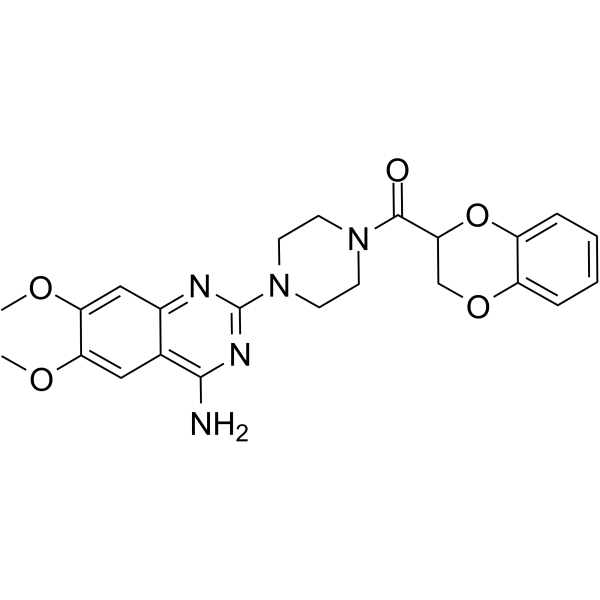
Doxazosin-d8 is a deuterium labeled Doxazosin (UK 33274). Doxazosin is a quinazoline-derivative that selectively antagonizes postsynaptic α1 adrenergic receptors .
|
-
| Cat. No. |
Product Name |
|
Classification |
-
- HY-14375
-
|
|
|
Alkynes
|
|
CB 300919 is a quinazoline-based antitumour agent with high activity in the CH1 human ovarian tumour xenograft. CB 300919 has a continuous exposure (96 h) growth inhibition IC50 value of 2 nM in human CH1 ovarian tumor xenograft . CB 300919 is a click chemistry reagent, it contains an Alkyne group and can undergo copper-catalyzed azide-alkyne cycloaddition (CuAAc) with molecules containing Azide groups.
|
Your information is safe with us. * Required Fields.
Inquiry Information
- Product Name:
- Cat. No.:
- Quantity:
- MCE Japan Authorized Agent:

