1. Search Result
Search Result
Results for "

Spliceosome

" in MedChemExpress (MCE) Product Catalog:

15

Inhibitors & Agonists

2

Natural
Products

5

Recombinant Proteins

3

Antibodies

Cat. No. Product Name Target Research Areas Chemical Structure
  • HY-16399
    Pladienolide B
    5 Publications Verification

    Apoptosis SF3B1 Cancer
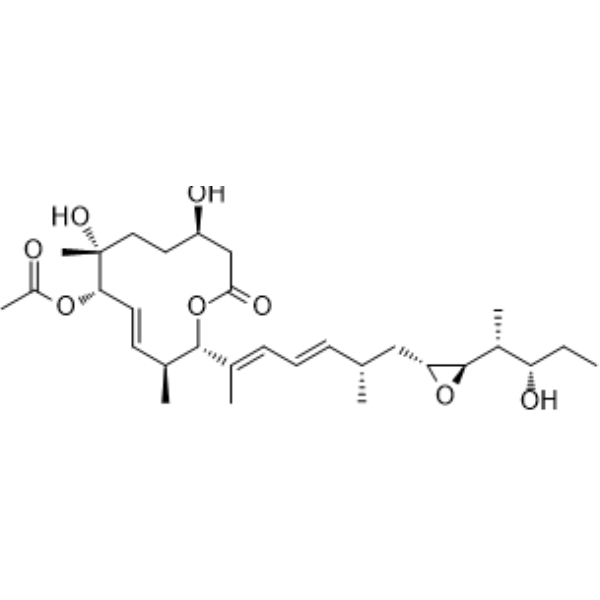
    Pladienolide B is a potent cancer cell growth inhibitor that targets the SF3B1 subunit of the spliceosome. Pladienolide B exerts antitumor activities mediated through the inhibition of pre-mRNA splicing. Pladienolide B induces apoptosis .
    Pladienolide B
  • HY-129589
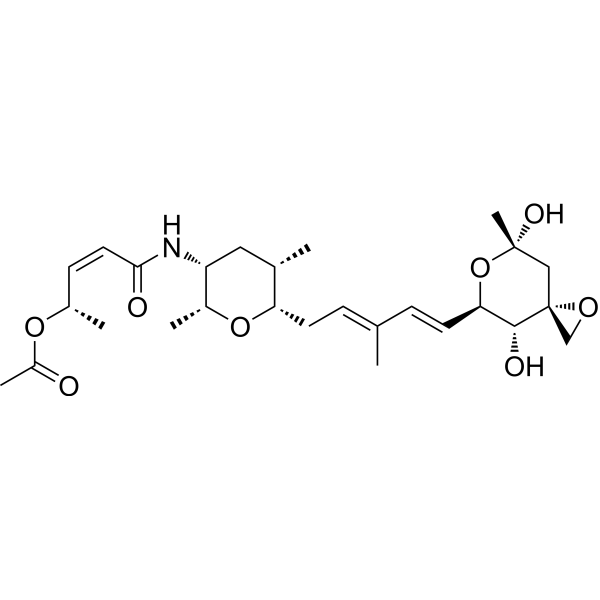
    Thailanstatin A
    2 Publications Verification

    ADC Payload Cancer
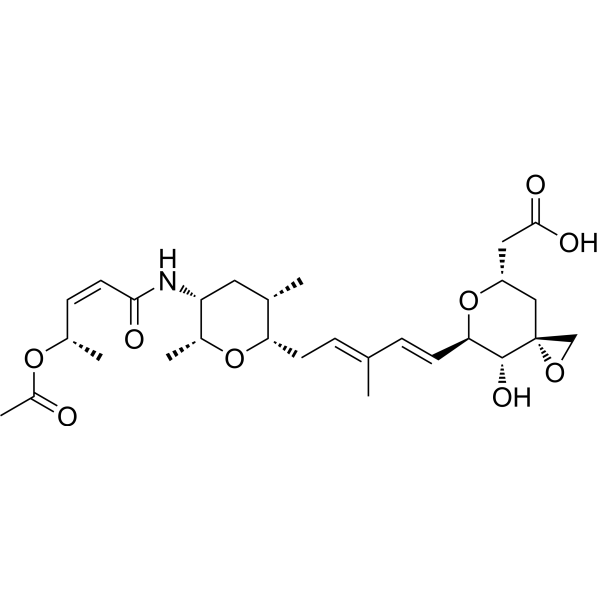
    Thailanstatin A is an ultra-potent inhibitor of eukaryotic RNA splicing (IC50=650 nM). Thailanstatin A exerts effects via non-covalent binding to the SF3b subunit of the U2 snRNA subcomplex of the spliceosome and shows low-nM to sub-nM IC50s against multiple cancer cell lines. Thailanstatin A, a payload for ADCs, is conjugated to the lysines on trastuzumab yielding “linker-less” ADC .
    Thailanstatin A
  • HY-16466

    SF3B1 Cancer
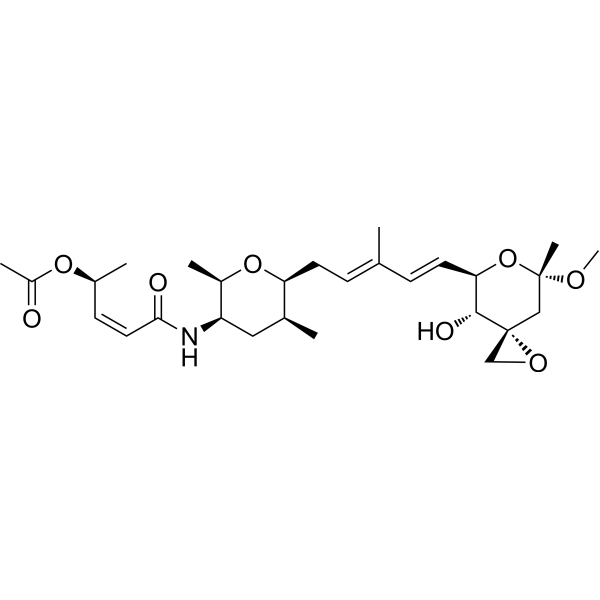
    Spliceostatin A, the FR901464 (HY-16212) methylated derivative, is a potent anti-tumor agent. Spliceostatin A inhibits splicing and promotes pre-mRNA accumulation by binding SF3B1. SF3B1 is a subcomplex of U2 small nuclear ribonucleoprotein in the spliceosome. Spliceostatin A induces Apoptosis in chronic lymphocytic leukemia (CLL) cells .
    Spliceostatin A
  • HY-100236
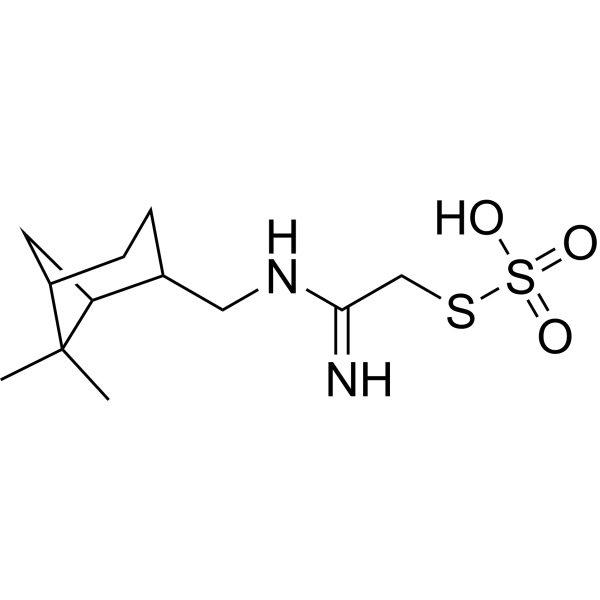
    Madrasin
    Maximum Cited Publications
    7 Publications Verification

    DDD00107587

    DNA/RNA Synthesis Cancer
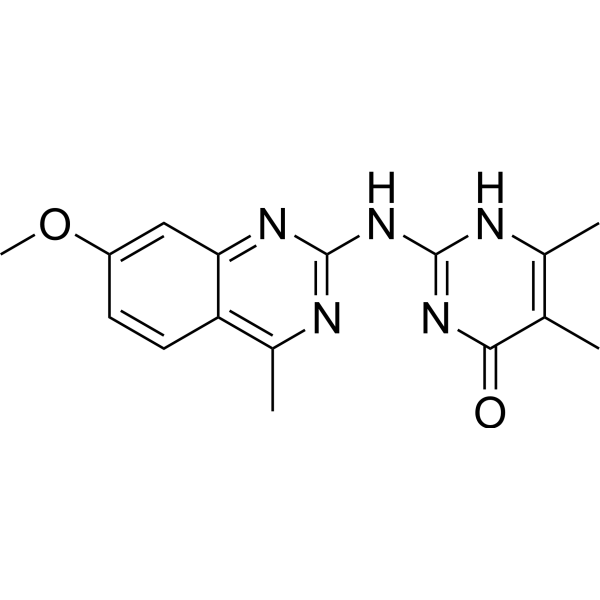
    Madrasin (DDD00107587) is a splicing inhibitor that prevents formation of both splicing intermediates and products in vitro and interferes with one or more early steps in the pathway of spliceosome assembly. Madrasin also can inhibit pre-mRNA splicing in vitro and modify splicing of endogenous pre-mRNA in cells .
    Madrasin
  • HY-16212

    Biochemical Assay Reagents Cancer
    FR901464 is a potent spliceosome inhibitor with prominent anti-tumor and anti-cancer effects .
    FR901464
  • HY-168534

    SF3B1 Apoptosis Cancer
    WX-02-23 is a small-molecule probe that stereoselectively and site-specifically binds to C258 of FOXA1 and C1111 of SF3B1. WX-02-23 remodels FOXA1's chromatin binding and pioneer activity in a DNA-dependent manner, disrupts spliceosome assembly, and enhances the thermal stability of SF3B1. WX-02-23 inhibits tumor cell proliferation and induces apoptosis. WX-02-23 can be used for research on cancers such as prostate cancer .
    WX-02-23
  • HY-19828

    GEX1A

    DNA/RNA Synthesis Cancer
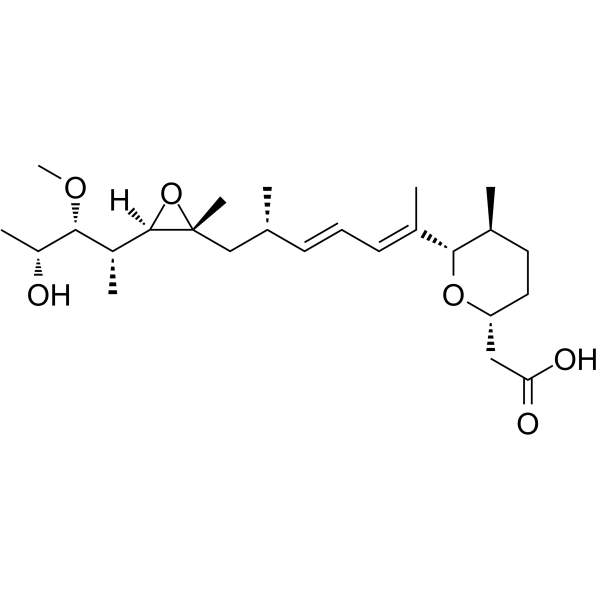
    Herboxidiene (GEX1A) is a potent phytotoxic polyketide from Streptomyces sp. A7847 with a diverse range of activities, including herbicidal, anti-cholesterol, anti-tumor effects. Herboxidiene inhibits the pre-mRNA splicing process by binding to spliceosome-associated protein (SAP) 155, a subunit of SF3b, in the splicesome .
    Herboxidiene
  • HY-153736

    DNA/RNA Synthesis Cancer
    NSC 194308, a U2AF2-RNA complexes enhancer, increases association of the U2AF1-U2AF2-SF1-splice site RNA complex by binding a site between the U2AF2 RNA recognition motifs (RRM1 and RRM2). NSC 194308 inhibits pre-mRNA splicing by stalling spliceosome assembly at the point where U2AF helps recruit U2 snRNP to the branchpoint. NSC 194308 enhances the binding of pre-mRNA to U2AF2, selectively triggering cell death in leukemia cell lines containing spliceosome mutations .
    NSC 194308
  • HY-114461B

    Drug Derivative DNA/RNA Synthesis Cancer
    (3S,17S)-FD-895 a FD-895 (HY-114461) analogue, is a spliceosome modulator. (3S,17S)-FD-895 inhibits cancer cell growth and exhibits gene-selective splice modulatory activity. (3S,17S)-FD-895 can be used for the research of colorectal carcinoma .
    (3S,17S)-FD-895
  • HY-133924

    RQN-18690A

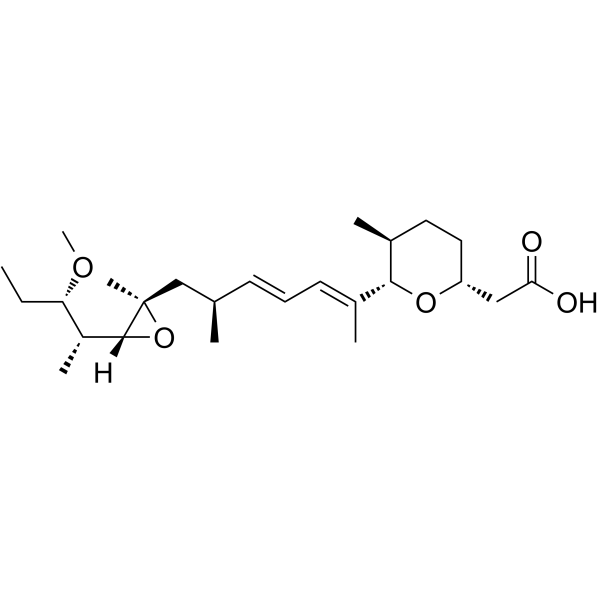
    SF3B1 Cardiovascular Disease Cancer
    18-Deoxyherboxidiene (RQN-18690A) is a potent angiogenesis inhibitor. 18-Deoxyherboxidiene targets SF3b, a spliceosome component that is a subcomplex of the U2 small nuclear ribonucleoprotein (snRNP) in the spliceosome. 18-Deoxyherboxidiene inhibits the migration and tube formation of human umbilical vein endothelial cells (HUVECs) without significant cell toxicity. 18-Deoxyherboxidiene has the potential for cancer research .
    18-Deoxyherboxidiene
  • HY-114461

    DNA/RNA Synthesis Apoptosis Cancer
    FD-895 is a spliceosome modulator derived from a polyketide natural product, targeting the SF3b subunit of the spliceosome. FD-895 possesses core biological activities for regulating RNA splicing (intron retention, alternative splicing) and inducing apoptosis of cancer cells. FD-895 can be used for the research of cancer, such as chronic lymphocytic leukemia (CLL) .
    FD-895
  • HY-144655

    Phosphatase Cancer
    IP2 is an immunomodulatory agent. IP2 increases PTP (Pioneer Translation Product)-derived antigen presentation in cancer cells. IP2 shows non-cytotoxic for cancer cells. IP2 induces tumor growth defects in mouse .
    IP2
  • HY-175599

    Molecular Glues Cardiovascular Disease Neurological Disease
    Z6466608628 is a selective PPIL4 molecular glue degrader with human PPIL4 EC50 values of 0.34 µM. Z6466608628 functionally recruits PPIL4 to CRBN, induces CRL4 CRBN-mediated ubiquitylation and degradation of PPIL4. Z6466608628 can be used for the research of intracranial aneurysms .
    Z6466608628
  • HY-175599A

    Molecular Glues Cardiovascular Disease Neurological Disease
    Z6466608628 hydrochloride is a selective PPIL4 molecular glue degrader with human PPIL4 EC50 values of 0.34 µM. Z6466608628 hydrochloride functionally recruits PPIL4 to CRBN, induces CRL4 CRBN-mediated ubiquitylation and degradation of PPIL4. Z6466608628 hydrochloride can be used for the research of intracranial aneurysms[1].
    Z6466608628 hydrochloride
  • HY-181421

    SF3B1 Cancer
    WX-02-43 is a weak covalent inhibitor of SF3B1, and is the (1S,3R) enantiomer of WX-02-23 (HY-168534). WX-02-43 cannot effectively covalently modify the C258 site in the DNA-binding domain of FOXA1, and its inhibitory activity against SF3B1 is also weaker than that of WX-02-23. WX-02-43 serves as a negative control probe that fails to remodel the chromatin binding pattern and transcriptional activity of FOXA1. WX-02-43 can be used in studies on cancers such as prostate cancer to verify the specific effects of WX-02-23 on FOXA1 and SF3B1 targets .
    WX-02-43

Inquiry Online

Your information is safe with us. * Required Fields.

Salutation


Country or Region *

Applicant Name *


Organization Name *

Department *


Email Address *


Product Name *

Cat. No.


Requested quantity *

Phone Number *


Remarks

Inquiry Online

Inquiry Information

Product Name:
Cat. No.:
Quantity:
MCE Japan Authorized Agent:

