6 Results for "

Tetracenaphthoporphyrin

" in MedChemExpress (MCE) Product Catalog:
Products (6)

6 Results for "Tetracenaphthoporphyrin" in MCE Product Catalog:

3
3 Cited Publications
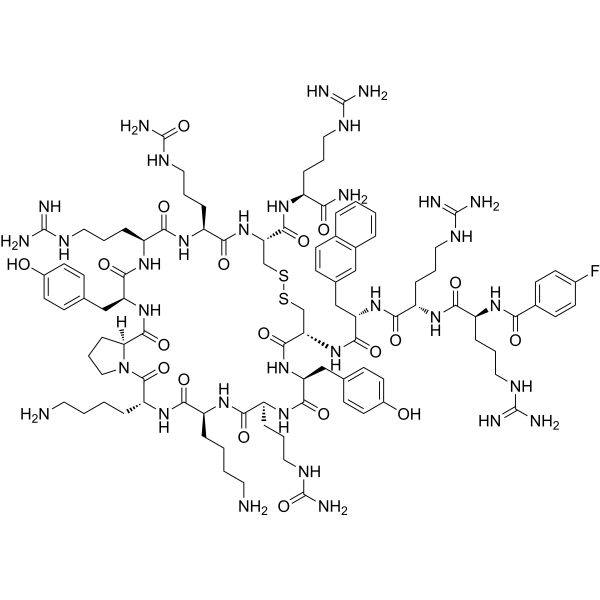
Cat. No.: HY-P0171
CAS No.: 664334-36-5
Synonyms: BKT140 (4-fluorobenzoyl); BL-8040; TF14016
Target:  

CXCR

Research Areas:  

Endocrinology Cancer

Motixafortide (BKT140 4-fluorobenzoyl) is a novel CXCR4 antagonist with an IC50 vakue of ~1 nM.
loading...
    loading...
2
2 Cited Publications
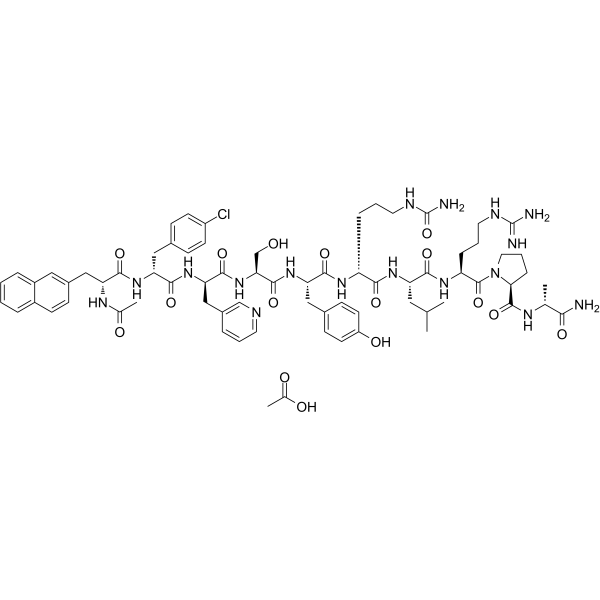
Cat. No.: HY-P0009A
CAS No.: 145672-81-7
Synonyms: SB-75 acetate
Target:  

GnRH Receptor Apoptosis

Research Areas:  

Endocrinology

Cetrorelix (SB-75) acetate is a competitive gonadotropin-releasing hormone receptor (GnRHR) antagonist with a Kd of 0.19 nM. Cetrorelix acetate inhibits the secretion of luteinizing hormone (LH) and follicle-stimulating hormone (FSH), thereby suppressing the secretion of downstream sex steroids. Cetrorelix acetate prevents ovulation, induces reversible reproductive shutdown and azoospermia, reduces ovarian fibrosis, improves superovulation outcomes, and inhibits chemotherapy-induced mitochondria-dependent apoptosis. Cetrorelix acetate is applicable for fertility assistance research .
loading...
    loading...
1
1 Cited Publications
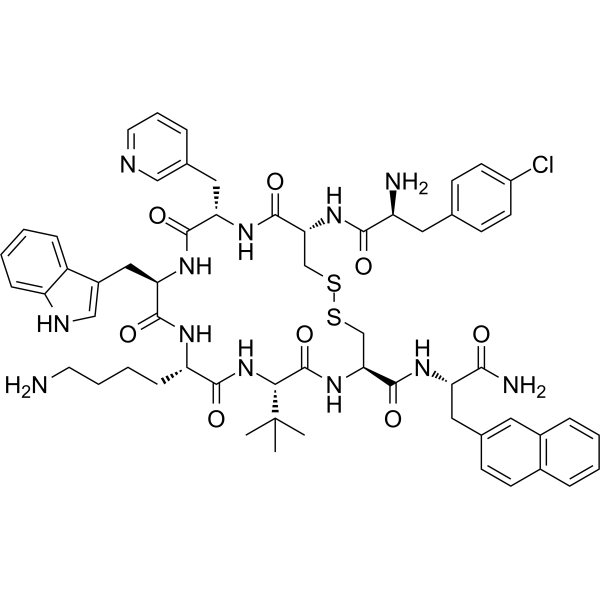
Cat. No.: HY-P4452
CAS No.: 209006-18-8
Research Areas:  

Endocrinology

PRL 2915 is a potent human somatostatin subtype 2 receptor (hsst2) antagonist with a Ki of 12 nM .
loading...
    loading...
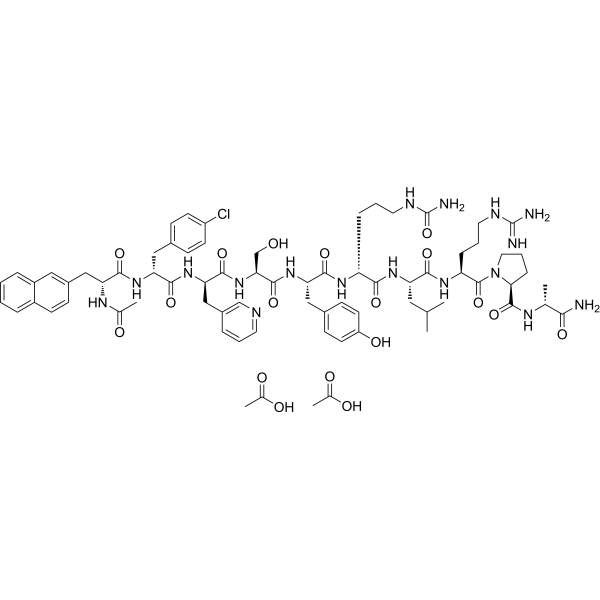
Cat. No.: HY-P0009B
CAS No.: 130143-01-0
Synonyms: SB-75 diacetate
Target:  

GnRH Receptor

Research Areas:  

Neurological Disease Endocrinology

Cetrorelix diacetate (SB-075 diacetate) is a potent gonadotropin-releasing hormone (GnRH) receptor antagonist with an IC50 of 1.21 nM .
loading...
    loading...
Cat. No.: HY-131374
CAS No.: 368874-31-1
Target:  

CXCR

Research Areas:  

Cancer

TN14003 is a CXCR4 inhibitor. TN14003 has antitumor activity .
loading...
    loading...
Cat. No.: HY-180825
Anticancer agent 292 (Compound P4) is a photosensitizer for anti-melanoma. Anticancer agent 292 shows good biocompatibility under dark conditions and, upon illumination, induces apoptosis and partial necrosis in B16-F10 cells by disrupting the lysosomal membrane. Anticancer agent 292 not only directly kills tumor cells through the generation of reactive oxygen species (ROS), but also induces immune-prone cell death (ICD), thereby generating anti-tumor immune effects. Anticancer agent 292 can be used in the research of photodynamic therapy for melanoma .
loading...
    loading...

