4 Results for "

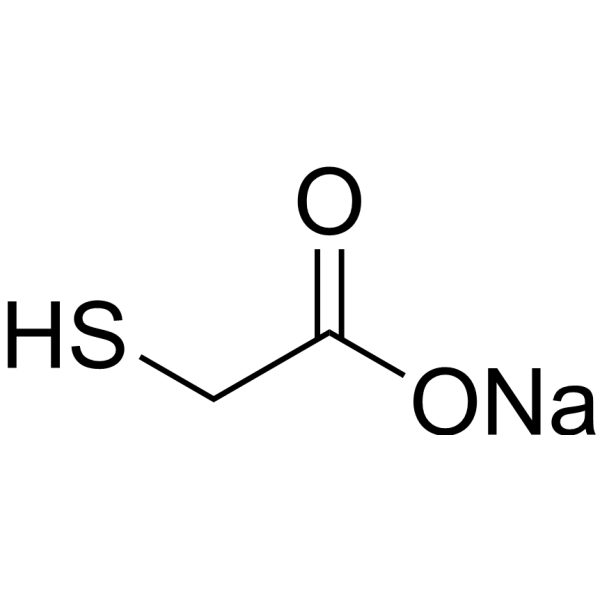
Thioglycolate sodium

" in MedChemExpress (MCE) Product Catalog:
Products (4)

4 Results for "Thioglycolate sodium" in MCE Product Catalog:

1
1 Cited Publications
Cat. No.: HY-W115724
CAS No.: 367-51-1
Research Areas:  

Inflammation/Immunology

Thioglycolate sodium is used in inflammation research to elicit a neutrophil and macrophage response in vivo. Thioglycolate sodium can induce peritonitis in vivo .
loading...
    loading...
Cat. No.: HY-W200537
CAS No.: 7383-61-1
Synonyms: Isopropyl Thioglycolate
Research Areas:  

Others

Propan-2-yl 2-sulfanylacetate (Isopropyl thioglycolate) can be used as a stabilizer for dyes, an additive for flame retardants, and a component in metal cleaning agents, etc .
loading...
    loading...
Cat. No.: HY-10109A
Target:  

PI3K Akt

Research Areas:  

Inflammation/Immunology

AS-605240 (potassium) is an orally active PI3Kγ inhibitor (IC50: 8 nM; Ki: 7.8 nM). AS-605240 (potassium) inhibits MCP-1- and CSF1-induced PKB phosphorylation (IC50 values are 0.181 and 0.550 µM, respectively). AS-605240 (potassium) reduces neutrophil recruitment in RANTES (CCL5)- and thioglycolate-induced peritonitis mouse models (EC50 values are 9.1 and 10 mg/kg, respectively). AS-605240 (potassium) ameliorates αCII-IA-induced arthritis in mice .
loading...
    loading...
Cat. No.: HY-121365
CAS No.: 71522-58-2
Target:  

Bacterial

Research Areas:  

Infection

Forphenicinol is an immunomodulator and a derivative of the bacterial metabolite forphenicine. It increases the phagocytosis of yeast by peritoneal macrophages isolated from thioglycolate-stimulated mice. Forphenicinol (100 μg/animal) prevents cyclophosphamide-induced suppression of delayed-type hypersensitivity (DTH), as well as enhances DTH in response to the hapten oxazolone or sheep red blood cells in mice. It enhances the bactericidal activity of macrophages against P. aeruginosa in mice when administered at a dose of 0.5 mg/kg.2 Forphenicinol (15.6-1,000 μg/animal) increases survival in a mouse model of P. aeruginosa infection. It also inhibits tumor growth in S180 sarcoma and IMC carcinoma mouse xenograft models when administered at doses ranging from 0.05 to 5 mg/kg per day.
loading...
    loading...

