
Search Result
Results for "
Tris
" in MedChemExpress (MCE) Product Catalog:
150
Biochemical Assay Reagents
34
Isotope-Labeled Compounds
| Cat. No. |
Product Name |
Target |
Research Areas |
Chemical Structure |
-
- HY-W011500
-
|
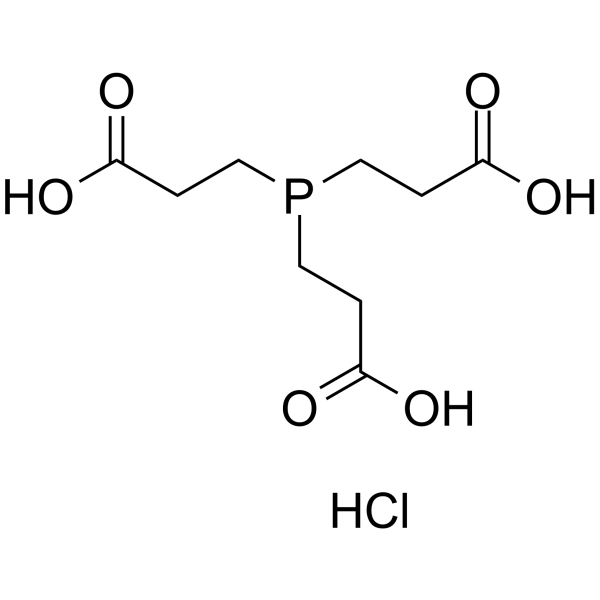
Tris(2-carboxyethyl)phosphine hydrochloride
|
Drug Derivative
|
Others
|
|
TCEP hydrochloride (Tris(2-carboxyethyl)phosphine hydrochloride) is a non-thiol reducing agent that is more stable and produces a faster S-S reductive reaction than other chemical reductants. TCEP hydrochloride is a trialkylphosphine, selectively reduces protein disuldes without altering the properties or interacting with thiol-directed agents in the reaction mixture. TCEP hydrochloride is also a commonly used reducing agent in the DNA/AuNP chemistry .
|
-
-
- HY-W021042
-
|
THPTA
|
Biochemical Assay Reagents
|
Others
|
|
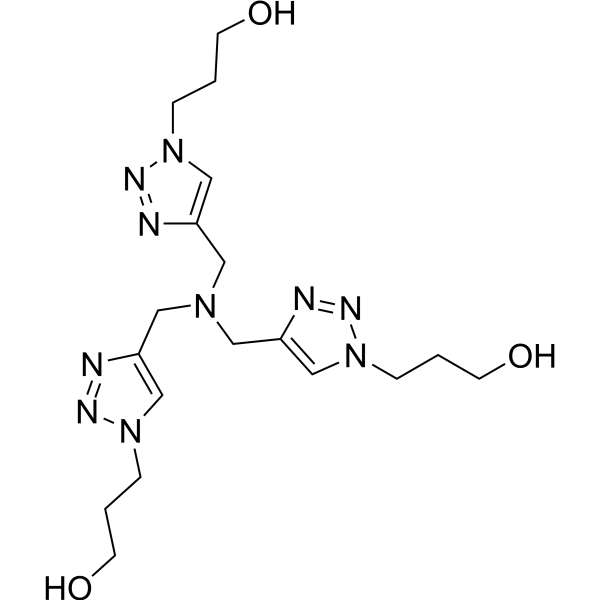
Tris(3-hydroxypropyltriazolylmethyl)amine (THPTA) is an accelerating ligand in the copper-catalyzed azide-alkyne cycloaddition reaction (CuAAC) and protects cells from oxidants generated by copper-catalyzed reduction of oxygen by ascorbate. In addition, Tris(3-hydroxypropyltriazolylmethyl)amine can also protect the histidine moiety of biomolecules in a manner proportional to the ligand concentration .
|
-
-
- HY-116677
-
|
TBTA
|
MOFs
|
Others
|
|
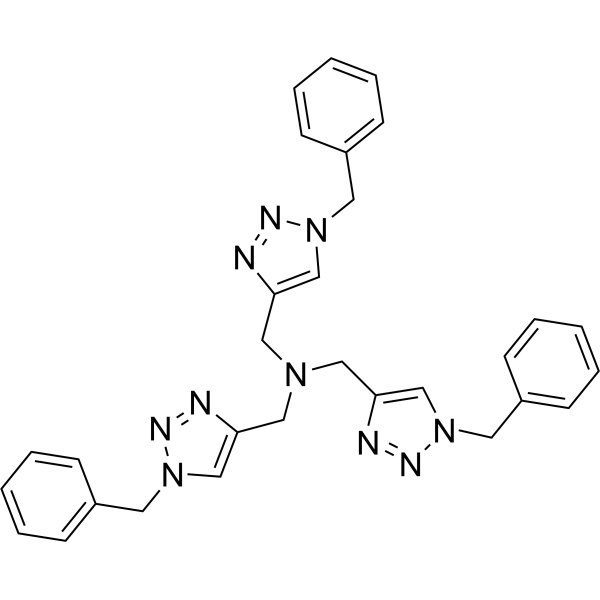
Tris(benzyltriazolylmethyl)amine (TBTA) is a ligand that acts as a biochemical tool for the tagging of proteins and enzymes .
|
-
-
- HY-107859
-
-
-
- HY-D0227
-
THAM
1 Publications Verification
Tris; Tris(hydroxymethyl)aminomethane
|
Biochemical Assay Reagents
|
Metabolic Disease
|
|
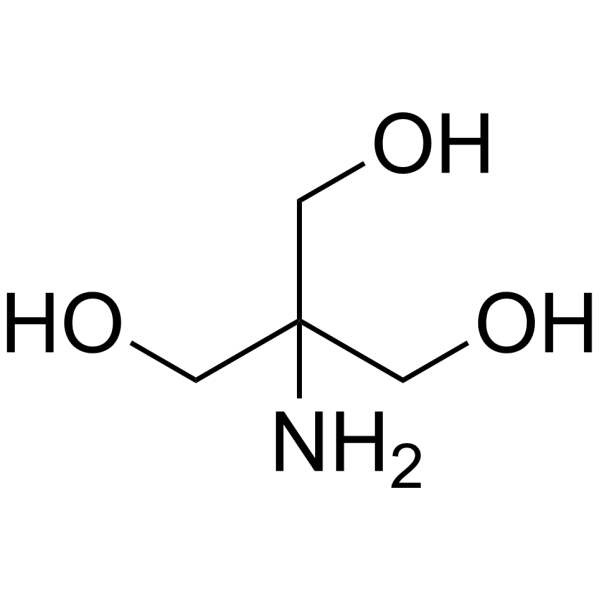
THAM (Tris) is a low-toxicity amino alcohol buffer, a specific CO2-consuming proton acceptor that buffers carbon dioxide and acid both in vitro and in vivo. THAM binds protons to form bicarbonate, reduces PaCO2, and induces intracellular alkalization, thereby ameliorating hypercapnia-induced elevation of pulmonary blood vessels and pulmonary arterial pressure. THAM may cause PaCO2 rebound, hypoglycemia, and respiratory depression. THAM removes amniotic epithelium and preserves the basement membrane, but depletes extracellular matrix and reduces the adhesion rate of limbal epithelial cells. THAM can act as a CO2 carrier to enhance the productivity and carbon utilization rate of Scenedesmus obliquus. THAM is a key component of buffer solutions used in various biological, cell culture, biochemical, and molecular biology applications .
|
-
-
- HY-W018864
-
|
|
Biochemical Assay Reagents
|
Others
|
|
Tris(dibenzylideneacetonyl)bis-palladium is a catalyst that catalyzes the coupling reaction of N-methyl-2-pyrrolidinone (NMP) .
|
-
-
- HY-D0227A
-
|
Tris HCl; Tris(hydroxymethyl)aminomethane hydrochloride
|
Biochemical Assay Reagents
|
Metabolic Disease
Cancer
|
|
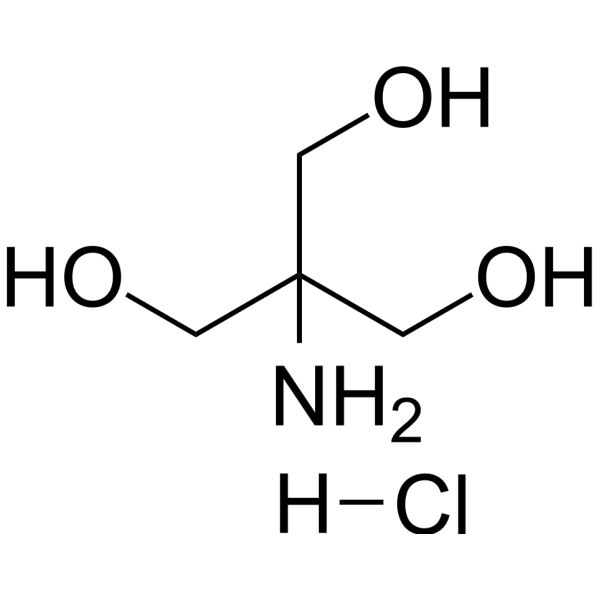
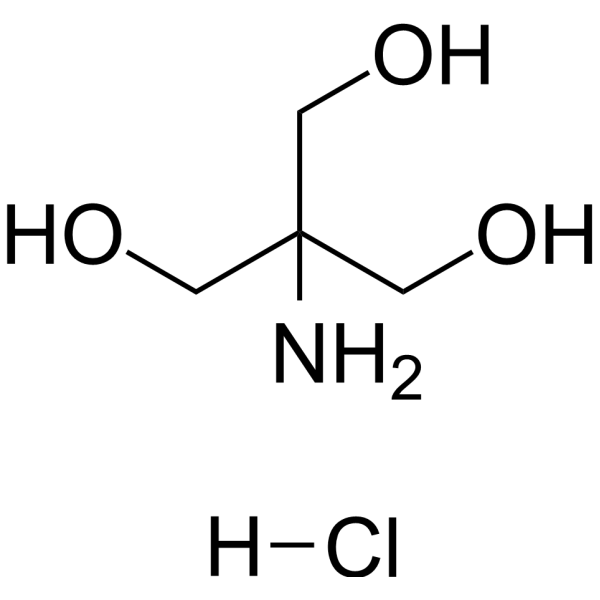
THAM hydrochloride (Tris HCl) is a biologically inert amino alcohol of low toxicity, which buffers carbon dioxide and acids in vitro and in vivo. THAM hydrochloride is an effective amine compound for pH control in the physiological range .
|
-
-
- HY-D0227F
-
|
Tris HCl (≥99%, reagent grade); Tris hydrochloride (≥99%, reagent grade)
|
Biochemical Assay Reagents
|
Others
|
|
THAM hydrochloride (≥99%, reagent grade), also known as Tris-HCl, is a buffer commonly used in various biochemical and molecular biology applications to maintain a stable pH environment. Tris-HCl has unique chemical properties that allow it to resist changes in pH when acidic or basic substances are added, which makes it useful for stabilizing biological samples or reagents. It is commonly used in electrophoresis and protein purification procedures.
|
-
-
- HY-W074143
-
|
|
Fluorescent Dye
|
Others
|
|
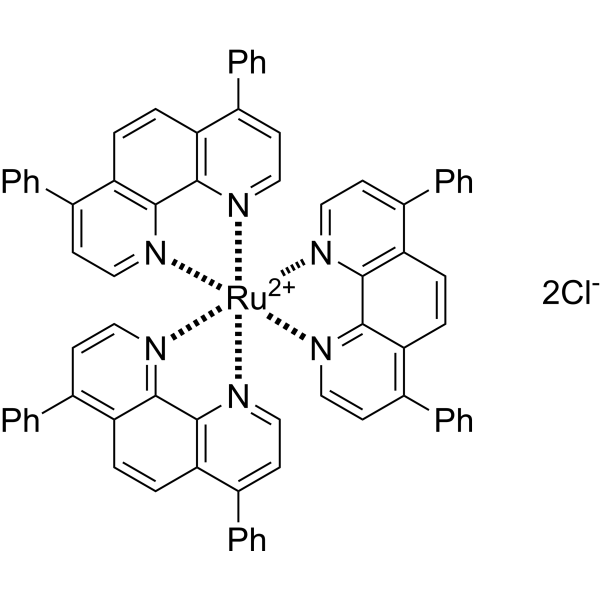
Tris(4,7-diphenyl-1,10-phenanthroline)ruthenium(II) dichloride ([Ru(dpp)3] 2+) is an electrochemiluminescent (ECL) probe and oxygen-sensitive sensor. Tris(4,7-diphenyl-1,10-phenanthroline)ruthenium(II) dichloride can be used to modify electrode surfaces for the detection of sulfates (S2O8 2-) and oxalates, based on electrochemical reactions that generate excited-state species, releasing photons through irreversible redox reactions. Tris(4,7-diphenyl-1,10-phenanthroline)ruthenium(II) dichloride utilizes the oxygen quenching of fluorescence mechanism, where fluorescence intensity reflects the metabolic rate of living microorganisms or oxygen levels within cells/tumors, allowing for real-time detection. Tris(4,7-diphenyl-1,10-phenanthroline)ruthenium(II) dichloride's main applications include microbial detection, antibacterial activity studies, and tumor microenvironment research .
|
-
-
- HY-D1288A
-
-
-
- HY-136177
-
|
|
Phospholipase
|
Inflammation/Immunology
|
|
Tris(2,4-di-tert-butylphenyl)phosphate is an active compound from the leaves of Vitex negundo L. shows anti-inflammatory activity with evidence of inhibition for secretory Phospholipase A2 (sPLA2) through molecular docking .
|
-
-
- HY-21577
-
|
|
ADC Linker
PROTAC Linkers
|
Cancer
|
|
Tris[[2-(tert-butoxycarbonyl)ethoxy]methyl]methylamine is a cleavable PEG ADC linker used in the synthesis of antibody-drug conjugates (ADCs). Amino-Tri-(t-butoxycarbonylethoxymethyl)-methane is also a PEG/Alkyl/ether-based PROTAC linker that can be used in the synthesis of PROTACs .
|
-
-
- HY-108712
-
|
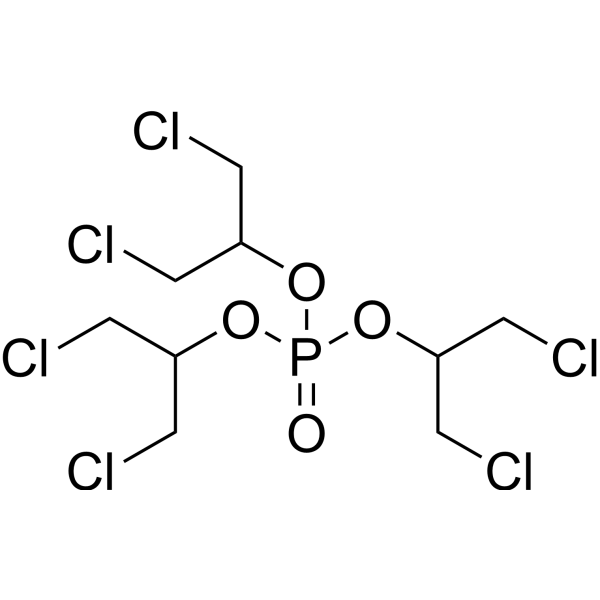
Tris(1,3-dichloroisopropyl)phosphate
|
Biochemical Assay Reagents
|
Cancer
|
|
TDCPP is a chlorinated analog of tris(2,3-dibromopropyl)phosphate (Tris) which is one of the most detected organophosphorus flame retardants (OPFRs) in the environment.
|
-
-
- HY-W007596
-
|
Ir(ppy)3; Tris[2-(pyridin-2-yl)phenyl]iridium
|
Biochemical Assay Reagents
|
Others
|
|
Tris(2-phenylpyridinato-C2,N)iridium(III) (Ir(ppy)3) is an iridium(III) containing organometallic complex, which is used as a phosphorescent light-emitting material. Tris(2-phenylpyridinato-C2,N)iridium(III) exhibits high luminous efficiency and good thermal stability, that can be used in organic optoelectronics, especially in improving the luminescence efficiency and stability of organic light-emitting diodes (OLEDs) .
|
-
-
- HY-120388
-
|
Tris-BHT Mesitylene
|
Biochemical Assay Reagents
|
Others
|
|
Ionox 330 (Tris-BHT Mesitylene) is a phenolic antioxidant in a variety of chemical and biological products. Ionox 330 can be used primarily as an antioxidant for polyalkenes .
|
-
-
- HY-D2355
-
|
|
Biochemical Assay Reagents
|
Others
|
|
Tris-NTA Biotin is a biotin-labeled version of tris-NTA. Tris-NTA Biotin, as a bridge connecting His-tagged proteins with streptavidin, can reversibly label proteins and cell surfaces. Tris-NTA Biotin can be used in experiments such as protein immobilization, kinetic determination, live cell labeling, and Western blot detection .
|
-
-
- HY-W008525
-
|
|
Biochemical Assay Reagents
|
Others
|
|
Tris (perfluorophenyl) borane is a biochemical reagent that can be used as a biomaterial or organic compound for life science-related research .
|
-
-
- HY-W460471
-
|
|
Biochemical Assay Reagents
|
Others
|
|
Tris Buffered Saline is a common buffer reagent in molecular biology, consisting of Tris and NaCl. Tris Buffered Saline can adjust pH and ionic strength and is widely used in DNA/RNA extraction, PCR and protein electrophoresis. Tris Buffered Saline can purify and protect nucleic acid materials and improve reaction efficiency and concentration. In protein electrophoresis, Tris Buffered Saline stabilizes gels and maintains pH. Overall, Tris Buffered Saline offers versatility, good solubility, and low toxicity in molecular biology applications.
|
-
-
- HY-W393372
-
-
-
- HY-W013772
-
|
Tris(p-anisyl)phosphine
|
Biochemical Assay Reagents
|
Others
|
|
Tris(4-methoxyphenyl)phosphine is a biochemical reagent that can be used as a biological material or organic compound for life science related research.
|
-
-
- HY-D0227ES
-
|
Tris-d11 (for molecular biology); Tris(hydroxymethyl)aminomethane-d11 (for molecular biology)
|
Isotope-Labeled Compounds
|
Others
|
|
Trometamol(Tris),for molecular biology-d11 is the deuterium labeled Trometamol(Tris),for molecular biology .
|
-
-
- HY-W008954
-
|
|
Environmental Pollutants
Biochemical Assay Reagents
|
Others
|
|
Tris(2-ethylhexyl) phosphate is an organophosphorus flame retardant analog with considerable ecological toxicity. Tris(2-ethylhexyl) phosphate can be used as neutral carriers to make organic ammonium ion-selective membrane electrodes. Tris(2-ethylhexyl) phosphate is widely applied in furniture, textiles, building materials, electronics, and other chemicals .
|
-
-
- HY-W023144
-
-
-
- HY-W020958
-
|
Tris(acetylacetonato)ruthenium (III)
|
Caspase
Apoptosis
|
Cancer
|
|
Ru (acac) 3 (Tris (acetylacetonato) ruthenium (III)) is a caspase-3 activator and Apoptosis inducer. Ru (acac) 3 exerts growth inhibitory effects on various cell lines in vitro by inhibiting DNA/RNA synthesis and inducing mild reversible S-phase cell cycle arrest. Ru (acac) 3 is commonly used in research related to ovarian cancer, osteosarcoma, cervical cancer, melanoma, and other fields .
|
-
-
- HY-D0306
-
|
Leucopararosaniline
|
DNA/RNA Synthesis
HCV
|
Infection
|
|
Tris(4-aminophenyl)methane is a triphenylmethane dye. Tris(4-aminophenyl)methane is a weak HCV helicase inhibitor.
|
-
-
- HY-W004649
-
|
|
Biochemical Assay Reagents
|
Others
|
|
Tris-BOC-cyclen is a bifunctional chelator. Bifunctional chelating agentscan be used to stably link the radiometal to the carrier moiety of the radiopharmaceutical .
|
-
-
- HY-W587835
-
-
-
- HY-N11086
-
|
|
Others
|
Metabolic Disease
|
|
Tris(dihydrocaffeoyl)spermidine is an active compound. Tris(dihydrocaffeoyl)spermidine can be isolated from potato (Solanum tuberosum) tubers. Tris(dihydrocaffeoyl)spermidine can be used for the research of metabolism .
|
-
-
- HY-W023144S
-
|
Tris(1-chloropropan-2-yl) phosphate-d18
|
Isotope-Labeled Compounds
|
Others
|
|
Tris(1-chloro-2-propyl) phosphate-d18 (Tris(1-chloropropan-2-yl) phosphate-d18) is a deuterium labeled compound.
|
-
-
- HY-132710S
-
-
-
- HY-108712R
-
|
Tris(1,3-dichloroisopropyl)phosphate (Standard)
|
Biochemical Assay Reagents
Reference Standards
|
Cancer
|
|
TDCPP (Standard) is the analytical standard of TDCPP. This product is intended for research and analytical applications. TDCPP is a chlorinated analog of tris(2,3-dibromopropyl)phosphate (Tris) which is one of the most detected organophosphorus flame retardants (OPFRs) in the environment.
|
-
-
- HY-107859S
-
|
TCEP-d12
|
Isotope-Labeled Compounds
Reactive Oxygen Species (ROS)
Apoptosis
DNA/RNA Synthesis
Calcium Channel
FXR
Toll-like Receptor (TLR)
NF-κB
SOD
Interleukin Related
TNF Receptor
|
Others
|
|
Tris(2-chloroethyl)phosphate-d12 is the deuterium labeled Tris(β-chloroethyl) phosphate. Tris(2-chloroethyl) phosphate is a widely used organic phosphorus flame retardant, mainly used as a plasticizer. Tris(2-chloroethyl) phosphate has orally active hepatotoxicity, inducing an increase in reactive oxygen species (ROS) and calcium ions (Ca²⁺) influx, a decrease in mitochondrial membrane potential (△Ψm), and causing DNA damage and cell apoptosis. Tris(2-chloroethyl) phosphate directly binds to FXR, inducing obesity and the formation of fatty liver in mice. Chloroethyl) phosphate activates the TLR4/NF-κB pathway, triggering liver inflammation.
|
-
-
- HY-W127623
-
|
|
Biochemical Assay Reagents
|
Others
|
|
Tris Dodecyl Sulfate is a biochemical reagent that can be used as a biological material or organic compound for life science related research.
|
-
-
- HY-W008954S
-
-
-
- HY-W715244
-
-
-
- HY-W074006
-
|
|
Biochemical Assay Reagents
|
Others
|
|
Tris(2-cyanoethyl)phosphine is a protein crosslinker. Tris(2-cyanoethyl)phosphine can be used to synthesis copper(I) complexes which shows antitumour activity .
|
-
-
- HY-W035015
-
|
|
MOFs
|
Others
|
|
Tris(2-benzimidazolylmethyl)amine is a metal-organic framework (MOF).
|
-
-
- HY-W140883
-
-
-
- HY-W008707
-
|
|
Biochemical Assay Reagents
|
Others
|
|
Tris(4-fluorophenyl)phosphine is a biochemical reagent that can be used as a biological material or organic compound for life science related research.
|
-
-
- HY-136177R
-
|
|
Reference Standards
Phospholipase
|
Inflammation/Immunology
|
|
Tris(2,4-di-tert-butylphenyl)phosphate (Standard) is the analytical standard of Tris(2,4-di-tert-butylphenyl)phosphate. This product is intended for research and analytical applications. Tris(2,4-di-tert-butylphenyl)phosphate is an active compound from the leaves of Vitex negundo L. shows anti-inflammatory activity with evidence of inhibition for secretory Phospholipase A2 (sPLA2) through molecular docking .
|
-
-
- HY-W020986R
-
|
|
Reference Standards
|
|
|
Tris(2,4-di-tert-butylphenyl) phosphite (Standard) is the analytical standard of Tris(2,4-di-tert-butylphenyl) phosphite. This product is intended for research and analytical applications.
|
-
-
- HY-W035145
-
|
|
Drug Intermediate
|
Others
|
|
Tris(2,2′-bipyridine)ruthenium(II)hexafluorophosphate can be used to prepare Ru(II)-containing photodynamic therapy (PDT) photosensitizers .
|
-
-
- HY-W008896
-
|
|
Biochemical Assay Reagents
|
Others
|
|
Tris(perfluorophenyl)phosphine is a biochemical reagent that can be used as a biological material or organic compound for life science related research.
|
-
-
- HY-W140934
-
|
|
Fluorescent Dye
|
Others
|
|
Tris 4-aminophenyl methanol is a triamino-triphenylmethane chloride alkaline dye used to prepare Schiff reagent .
|
-
-
- HY-D0227R
-
|
Tris (Standard); Tris(hydroxymethyl)aminomethane (Standard)
|
Biochemical Assay Reagents
Reference Standards
|
Metabolic Disease
Cancer
|
|
THAM (Standard) is the analytical standard of THAM. This product is intended for research and analytical applications. THAM (Tris) is a biologically inert amino alcohol of low toxicity, which buffers carbon dioxide and acids in vitro and in vivo. THAM is an effective amine compound for pH control in the physiological range .
|
-
-
- HY-W075183
-
|
Tris-biphenyl triazine
|
MOFs
|
Others
|
|
2,4,6-Tri([1,1'-biphenyl]-4-yl)-1,3,5-triazine (Tris-biphenyl triazine) is a metal-organic framework (MOF).
|
-
-
- HY-W034041
-
|
Tris(2-(4-fluorophenyl)pyridine)iridium; Tris[5-fluoro-2-(2-pyridinyl-kN)phenyl-kC]iridium(III)
|
Endogenous Metabolite
|
|
|
Ir(pF-ppy)3 (Tris(2-(4-fluorophenyl)pyridine)iridium) is a compound that catalyzes photoreactions and has excellent photocatalytic activity. Ir(pF-ppy)3 can be used as a catalyst in organic reactions, especially in photocatalytic synthesis. Ir(pF-ppy)3 shows its unique advantages in promoting electron transfer and improving reaction selectivity. Ir(pF-ppy)3 is also used to improve the efficiency of displays and solar cells.
|
-
-
- HY-120388R
-
|
Tris-BHT Mesitylene (Standard)
|
Biochemical Assay Reagents
Reference Standards
|
Others
|
|
Ionox 330 (Standard) is the analytical standard of Ionox 330 (HY-120388). This product is intended for research and analytical applications. Ionox 330 (Tris-BHT Mesitylene) is a phenolic antioxidant in a variety of chemical and biological products. Ionox 330 can be used primarily as an antioxidant for polyalkenes .
|
-
-
- HY-W653963
-
-
-
- HY-W795955
-
-
- HY-W190935
-
-
- HY-W327895S
-
-
- HY-W705969
-
|
|
Biochemical Assay Reagents
|
Others
|
|
tris-NTA TFA is a His-tagged protein ligand. tris-NTA TFA can be used alone or in combination with a fluorophore for purification and detection of His-tagged proteins .
|
-
- HY-W558568
-
-
- HY-W725745
-
|
1,3,5-Tris(6-isocyanatohexyl)-1,3,5-triazinane-2,4,6-trione
|
Biochemical Assay Reagents
|
Others
|
|
Tris(6-isocyanatohexyl)isocyanurate is a cross-linking agent that can be used for the research of novel drug-carrying matrix systems .
|
-
- HY-D0227AR
-
|
Tris HCl (Standard); Tris(hydroxymethyl)aminomethane hydrochloride (Standard)
|
Biochemical Assay Reagents
Reference Standards
|
Metabolic Disease
Cancer
|
|
THAM (hydrochloride) (Standard) is the analytical standard of THAM (hydrochloride). This product is intended for research and analytical applications. THAM hydrochloride (Tris HCl) is a biologically inert amino alcohol of low toxicity, which buffers carbon dioxide and acids in vitro and in vivo. THAM hydrochloride is an effective amine compound for pH control in the physiological range .
|
-
- HY-W700621
-
|
Tris(2-carboxyethyl)phosphine hydrochloride-d12
|
Isotope-Labeled Compounds
Others
|
Others
|
|
TCEP-d12 (hydrochloride) (Tris(2-?carboxyethyl)?phosphine hydrochloride-d12) is deuterium labeled TCEP (hydrochloride). TCEP hydrochloride (Tris(2-carboxyethyl)phosphine hydrochloride) is a non-thiol reducing agent that is more stable and produces a faster S-S reductive reaction than other chemical reductants. TCEP hydrochloride is a trialkylphosphine, selectively reduces protein disuldes without altering the properties or interacting with thiol-directed agents in the reaction mixture. TCEP hydrochloride is also a commonly used reducing agent in the DNA/AuNP chemistry .
|
-
- HY-W010677R
-
|
Tris-(3,5-di-tert-butyl-4-hydroxybenzyl)-isocyanurate (Standard)
|
Reference Standards
|
|
|
1,3,5-Tris(3,5-di-tert-butyl-4-hydroxybenzyl)-1,3,5-triazinane-2,4,6-trione (Standard) is the analytical standard of 1,3,5-Tris(3,5-di-tert-butyl-4-hydroxybenzyl)-1,3,5-triazinane-2,4,6-trione. This product is intended for research and analytical applications.
|
-
- HY-W075183S
-
|
Tris-biphenyl triazine-d10
|
Isotope-Labeled Compounds
|
Others
|
|
2,4,6-Tri([1,1'-biphenyl]-4-yl)-1,3,5-triazine-d10 (Tris-biphenyl triazine-d10) is deuterium labeled 2,4,6-Tri([1,1'-biphenyl]-4-yl)-1,3,5-triazine .
|
-
- HY-185469
-
-
- HY-W034703
-
|
Tris(pyridin-2-ylmethyl)amine
|
MOFs
|
Others
|
|
Tris(2-pyridylmethyl)amine (Tris(pyridin-2-ylmethyl)amine) is a metal-organic framework (MOF).
|
-
- HY-W739862
-
-
- HY-W112073
-
|
|
MOFs
|
Others
|
|
Tris(3'-carboxybiphenyl)amine is a metal-organic framework (MOF).
|
-
- HY-W998825
-
|
|
MOFs
|
Others
|
|
Tris(4-fluorophenyl)amine is a metal-organic framework (MOF).
|
-
- HY-W017411
-
|
|
Environmental Pollutants
Bacterial
|
Infection
Cancer
|
|
Tris (hydroxymethyl) nitromethane is a fungicide and slime control agent. Tris (hydroxymethyl) nitromethane exhibits cytotoxicity against EBV-transformed human Burkitt's lymphoma cells. Tris (hydroxymethyl) nitromethane also serves as an important raw material and intermediate in organic synthesis .
|
-
- HY-W549233S
-
-
- HY-W075566
-
|
Tris[4-(1-imidazolyl)phenyl]amine
|
MOFs
|
Others
|
|
Tris(4-(1H-imidazol-1-yl)phenyl)amine(Tris[4-(1-imidazolyl)phenyl]amine) is a metal-organic framework (MOF).
|
-
- HY-W165722
-
-
- HY-W249110
-
|
|
MOFs
|
Others
|
|
Tris(perfluorophenyl)phosphine oxide is a metal-organic framework (MOF).
|
-
- HY-185468
-
-
- HY-185467
-
-
- HY-W075570
-
|
|
MOFs
|
Others
|
|
Tris(4-(pyridin-4-yl)phenyl)amine is a metal-organic framework (MOF).
|
-
- HY-W112070
-
|
|
MOFs
|
Others
|
|
Tris(4-(pyridin-4-ylethynyl)phenyl)amine is a metal-organic framework (MOF).
|
-
- HY-W1049793
-
|
|
MOFs
|
Others
|
|
tris(4-(Pyridin-3-yl)phenyl)amine is a metal-organic framework (MOF).
|
-
- HY-W112069
-
|
|
MOFs
|
Others
|
|
Tris(4-(pyrimidin-5-yl)phenyl)amine is a metal-organic framework (MOF).
|
-
- HY-W113023
-
|
Tris(4-(4-pyridyl)duryl)borane
|
MOFs
|
Others
|
|
Tris(2,3,5,6-tetramethyl-4-(pyridin-4-yl)phenyl)borane(Tris(4-(4-pyridyl)duryl)borane) is a metal-organic framework (MOF).
|
-
- HY-W075372
-
|
Tris(4-carboxylphenyl)phosphineoxide
|
MOFs
|
Others
|
|
4,4',4''-Phosphoryltribenzoic acid (Tris(4-carboxylphenyl)phosphineoxide) is a metal-organic framework (MOF).
|
-
- HY-W112071
-
|
|
MOFs
|
Others
|
|
Tris(4-(3-methylthiophene-2-yl)phenyl)amine is a metal-organic framework (MOF).
|
-
- HY-W456418
-
|
|
MOFs
|
Others
|
|
Tris[4-(2-pyridin-4-ylvinyl)phenyl]amine is a metal-organic framework (MOF).
|
-
- HY-W035062
-
|
|
MOFs
|
Others
|
|
Tris(pyrazol-1-yl)methane is a metal-organic framework (MOF).
|
-
- HY-W543654
-
|
|
MOFs
|
Others
|
|
Tris(pyridin-4-ylmethyl)amine is a metal-organic framework (MOF).
|
-
- HY-W998839
-
|
|
MOFs
|
Others
|
|
tris(N-(3-picolyl))phosphoramide is a metal-organic framework (MOF).
|
-
- HY-W112186
-
|
|
MOFs
|
Others
|
|
Tris(4-(1H-pyrazol-4-yl)phenyl)amine is a metal-organic framework (MOF).
|
-
- HY-W588966
-
|
|
MOFs
|
Others
|
|
Tris(perfluorophenyl) 2,2',2''-nitrilotriacetate is a metal-organic framework (MOF).
|
-
- HY-W075614
-
|
|
MOFs
|
Others
|
|
Tris(4,4''-dicarboxylicacid-2,2''-bipyridyl)rutheniuM(II) dichloride is a metal-organic framework (MOF).
|
-
- HY-W112074
-
|
|
MOFs
|
Others
|
|
Tris(2',3',5',6'-tetramethylbiphenyl-4-carboxylic acid)borane is a metal-organic framework (MOF).
|
-
- HY-W456419
-
|
|
MOFs
|
Others
|
|
Tris(4-((E)-2-(pyridin-2-yl)vinyl)phenyl)amine is a metal-organic framework (MOF).
|
-
- HY-W075569
-
|
|
MOFs
|
Others
|
|
Tris(4-(4H-1,2,4-triazol-4-yl)phenyl)amine is a metal-organic framework (MOF).
|
-
- HY-W112072
-
|
|
MOFs
|
Others
|
|
Tris(4-(1H-1,2,4-triazol-1-yl)phenyl)amine is a metal-organic framework (MOF).
|
-
- HY-W112075
-
|
|
MOFs
|
Others
|
|
Tris(2,3,5,6-tetramethyl-4-(pyridin-3-yl)phenyl)borane is a metal-organic framework (MOF).
|
-
- HY-W112648
-
|
Tris[4-(1H-pyrazol-4-yl)phenyl]-1,3,5-triazine
|
MOFs
|
Others
|
|
2,4,6-Tris(4-(1H-pyrazol-4-yl)phenyl)-1,3,5-triazine(Tris[4-(1H-pyrazol-4-yl)phenyl]-1,3,5-triazine) is a metal-organic framework (MOF).
|
-
- HY-W017722
-
|
Tris(4-pyridyl)-s-triazine
|
MOFs
|
Others
|
|
2,4,6-tri(Pyridin-4-yl)-1,3,5-triazine (Tris(4-pyridyl)-s-triazine) is a metal-organic framework (MOF).
|
-
- HY-W243983
-
|
Tris(4-acetylphenyl)amine
|
MOFs
|
Others
|
|
1,1',1''-(Nitrilotris(benzene-4,1-diyl))triethanone (Tris(4-acetylphenyl)amine) is a metal-organic framework (MOF).
|
-
- HY-W110398
-
|
4-Thiophen-2-yl-N,N-bis(4-thiophen-2-ylphenyl)aniline
|
MOFs
|
Others
|
|
Tris[4-(2-thienyl)phenyl]amine is a metal-organic framework (MOF).
|
-
- HY-182698
-
|
|
Biochemical Assay Reagents
|
Others
|
|
Tris Antigen Retrieval Solution, 10×, pH 9.0, is composed of Tris, trace amounts of Tween20, etc. It can effectively remove cross-links between proteins caused by aldehyde fixation reagents, fully expose antigenic epitopes in paraffin sections and other samples, and can be used for antigen retrieval after paraffin sections, frozen sections and other samples are fixed with paraformaldehyde, formaldehyde or other aldehyde reagents.
|
-
- HY-W856032
-
|
|
MOFs
|
Others
|
|
Tris((1-(tert-butyl)-1H-1,2,3-triazol-4-yl)methyl)amine is a metal-organic framework (MOF).
|
-
- HY-W075184
-
|
Tris(1H-imidazol-1-yl)-1,3,5-triazine
|
MOFs
|
Others
|
|
2,4,6-Tri(1H-imidazol-1-yl)-1,3,5-triazine (Tris(1H-imidazol-1-yl)-1,3,5-triazine) is a metal-organic framework (MOF).
|
-
- HY-W103260
-
|
Tri(1H-benzo[d][1,2,3]triazol-1-yl)Methane
|
MOFs
|
Others
|
|
Tris(1H-benzo[d][1,2,3]triazol-1-yl)methane (Tri(1H-benzo[d][1,2,3]triazol-1-yl)Methane) is a metal-organic framework (MOF).
|
-
- HY-W456326
-
|
Tris-2,4,6-(2-pyrimidyl)-1,3,5-triazine
|
MOFs
|
Others
|
|
2,4,6-Tri(pyrimidin-2-yl)-1,3,5-triazine (Tris-2,4,6-(2-pyrimidyl)-1,3,5-triazine) is a metal-organic framework (MOF).
|
-
- HY-W075185
-
|
Tris(pyrazolyl-1-yl)-1,3,5-triazine
|
MOFs
|
Others
|
|
2,4,6-Tri(1H-pyrazol-1-yl)-1,3,5-triazine (Tris(pyrazolyl-1-yl)-1,3,5-triazine) is a metal-organic framework (MOF).
|
-
- HY-W035599
-
|
Tris(2-(3-tert-butylphenyl)-4-tert-butylpyridine)iridium
|
Biochemical Assay Reagents
Endogenous Metabolite
|
|
|
Ir[pF(t-Bu)-ppy]3 (Tris(2-(3-tert-butylphenyl)-4-tert-butylpyridine)iridium) is an effective photocatalyst with excellent catalytic activity. Ir[pF(t-Bu)-ppy]3 can promote organic reactions, especially showing significant potential in the synthesis of new organic compounds. Ir[pF(t-Bu)-ppy]3 can be used to develop green chemical processes and reduce the impact of traditional catalysts on the environment. Ir[pF(t-Bu)-ppy]3 also has broad prospects in photoelectrochemical applications.
|
-
- HY-W075625
-
|
Tris[μ-[1,4-benzenedicarboxylato(2-)-κO1:κO'1]]-μ3-oxotriiron
|
MOFs
|
Others
|
|
MIL-88B(Fe)(Tris[μ-[1,4-benzenedicarboxylato(2-)-κO1:κO'1]]-μ3-oxotriiron) is a metal-organic framework (MOF).
|
-
- HY-W112400
-
|
Tris-(4-carboxyl-2,3,5,6-tetramethyl)phenylborane
|
MOFs
|
Others
|
|
4,4',4"-Boranetriyltris(2,3,5,6-tetramethylbenzoic acid)(Tris-(4-carboxyl-2,3,5,6-tetramethyl)phenylborane) is a metal-organic framework (MOF).
|
-
- HY-D0227B
-
|
Tris acetate; Tris(hydroxymethyl)aminomethane acetate
|
Biochemical Assay Reagents
|
Metabolic Disease
|
|
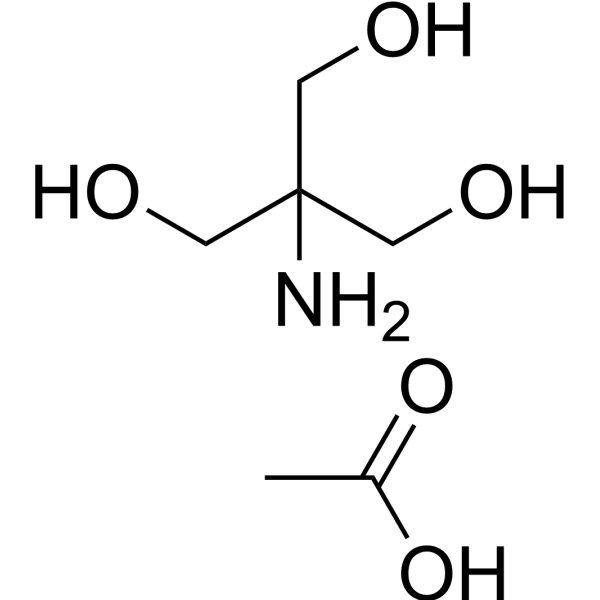
THAM acetate is a low-toxicity amino alcohol buffer, a CO2-consuming proton acceptor that buffers carbon dioxide and acid both in vitro and in vivo. THAM acetate binds protons to form bicarbonate, reduces PaCO2, and induces intracellular alkalization, thereby ameliorating hypercapnia-induced elevation of pulmonary blood vessels and pulmonary arterial pressure. THAM acetate may cause PaCO2 rebound, hypoglycemia, and respiratory depression. THAM acetate removes amniotic epithelium and preserves the basement membrane, but depletes extracellular matrix and reduces the adhesion rate of limbal epithelial cells. THAM acetate can act as a CO2 carrier to enhance the productivity and carbon utilization rate of Scenedesmus obliquus. THAM acetate is a key component of buffer solutions used in various biological, cell culture, biochemical, and molecular biology applications .
|
-
- HY-W249551
-
|
Tris[μ-[1,4-benzenedicarboxylato(2-)-κO1:κO′1]](1,2-ethanediamine-κN1)fluoro-μ3-oxotrichromium
|
MOFs
|
Others
|
|
ED-MIL-101(Cr)(Tris[μ-[1,4-benzenedicarboxylato(2-)-κO1:κO′1]](1,2-ethanediamine-κN1)fluoro-μ3-oxotrichromium) is a metal-organic framework (MOF).
|
-
- HY-131515R
-
-
- HY-131515
-
-
- HY-D0227J
-
|
Tris HCl (≥99%, for cell culture); Tris hydrochloride (≥99%, for cell culture)
|
Biochemical Assay Reagents
|
Metabolic Disease
|
|
THAM hydrochloride (≥99%, for cell culture) is a low-toxicity amino alcohol buffer, a specific CO2-consuming proton acceptor that buffers carbon dioxide and acid both in vitro and in vivo. THAM hydrochloride (≥99%, for cell culture) binds protons to form bicarbonate, reduces PaCO2, and induces intracellular alkalization, thereby ameliorating hypercapnia-induced elevation of pulmonary blood vessels and pulmonary arterial pressure. THAM hydrochloride (≥99%, for cell culture) may cause PaCO2 rebound, hypoglycemia, and respiratory depression. THAM hydrochloride (≥99%, for cell culture) removes amniotic epithelium and preserves the basement membrane, but depletes extracellular matrix and reduces the adhesion rate of limbal epithelial cells. THAM hydrochloride (≥99%, for cell culture) can act as a CO2 carrier to enhance the productivity and carbon utilization rate of Scenedesmus obliquus. THAM hydrochloride (≥99%, for cell culture) is a key component of buffer solutions used in various biological, cell culture, biochemical, and molecular biology applications .
|
-
- HY-108299
-
|
Perfluorotripropylamine; FTPA; Tris(perfluoropropyl)amine
|
Biochemical Assay Reagents
|
Others
|
|
Perfluamine (Perfluorotripropylamine), a hydrophobic carrier fluid, is used in the surface modification of droplet polymeric microfluidic devices. Perfluamine has a role as a blood substitute .
|
-
- HY-185424
-
|
|
Integrin
|
Others
|
|
Tri-SM6.1 is a tridentate small-molecule ligand targeting integrin αvβ6. Tri-SM6.1 binds to integrin αvβ6 on epithelial cells to deliver conjugated α-ENaC RNAi agents .
|
-
- HY-158738
-
|
Tris(2-carboxyethyl)phosphine-biotin
|
Fluorescent Dye
|
Others
|
|
TCEP-biotin is biotinylated TCEP (HY-W011500). TCEP-biotin is also a probe for histone lysine crotonylation .
|
-
- HY-108299R
-
|
Perfluorotripropylamine (Standard); FTPA (Standard); Tris(perfluoropropyl)amine (Standard)
|
Biochemical Assay Reagents
Reference Standards
|
Others
|
|
Perfluamine (Standard) is the analytical standard of Perfluamine (HY-108299). This product is intended for research and analytical applications. Perfluamine (Perfluorotripropylamine), a hydrophobic carrier fluid, is used in the surface modification of droplet polymeric microfluidic devices. Perfluamine has a role as a blood substitute .
|
-
- HY-W012351S
-
-
- HY-165497
-
|
4-Biphenylacetic acid Tris
|
Others
|
Neurological Disease
|
|
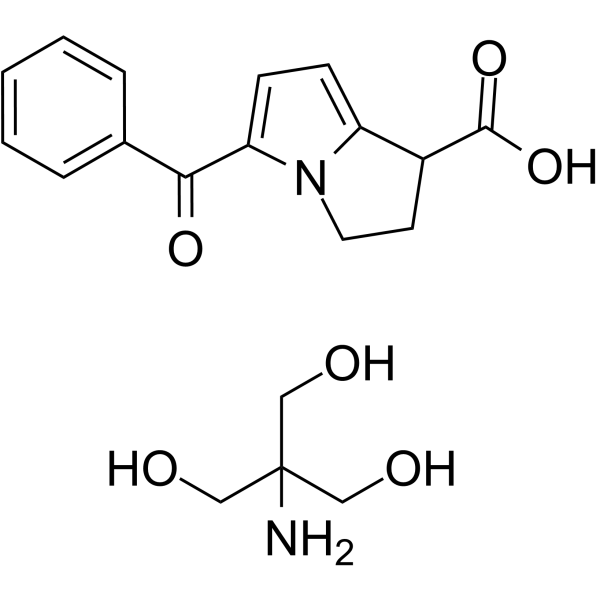
Felbinac tris (4-Biphenylacetic acid tris) is a potent analgesic agent. Felbinac tris metabolized into 4'-hydroxyfelbinac and is excreted via urine and feces. Felbinac tris has the potential for the research of post-operative pain .
|
-
- HY-15440B
-
|
BMS-663068 Tris
|
HIV
|
Infection
|
|
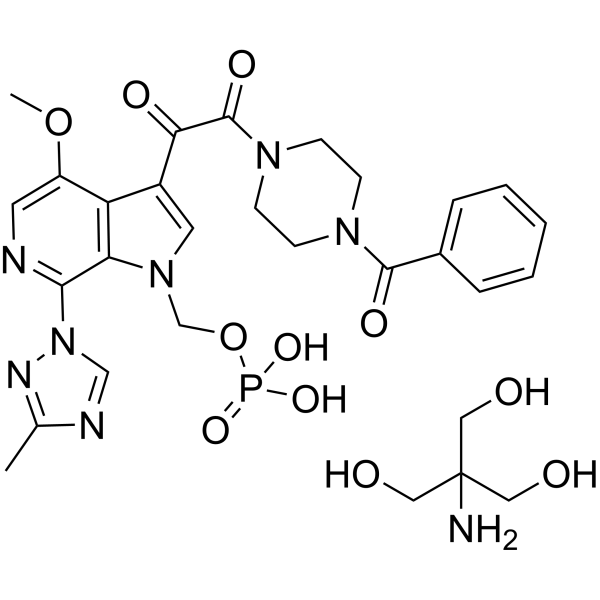
Fostemsavir Tris (BMS-663068 (Tris)) is the phosphonooxymethyl proagent of BMS-626529. Fostemsavir Tris (BMS-663068 (Tris)) is a novel attachment inhibitor that targets HIV-1 gp120 and prevents its binding to CD4 + T cells.
|
-
- HY-15440BR
-
|
BMS-663068 Tris (Standard)
|
HIV
Reference Standards
|
Infection
|
|
Fostemsavir Tris (Standard) is the analytical standard of Fostemsavir Tris. This product is intended for research and analytical applications. Fostemsavir Tris (BMS-663068 (Tris)) is the phosphonooxymethyl proagent of BMS-626529. Fostemsavir Tris (BMS-663068 (Tris)) is a novel attachment inhibitor that targets HIV-1 gp120 and prevents its binding to CD4+ T cells.
|
-
- HY-W010800A
-
|
Cholesterol hydrogen succinate Tris salt; CHS-Tris
|
Biochemical Assay Reagents
Topoisomerase
DNA/RNA Synthesis
Apoptosis
Necroptosis
|
Inflammation/Immunology
Cancer
|
|
Cholesterol hemisuccinate (Cholesterol hydrogen succinate) Tris salt is a compound with hepatoprotective and anticancer activity. Cholesterol hemisuccinate Tris salt inhibits Acetaminophen (AAP) (HY-66005) hepatotoxicity, and prevents AAP-induced hepatic apoptosis and necrosis. Cholesterol hemisuccinate Tris salt inhibits DNA polymerase and DNA topoisomerase to inhibit DNA replication and repair and cell division. Cholesterol hemisuccinate Tris salt inhibits tumor growth. Cholesterol hemisuccinate Tris salt can be used for buffer preparation .
|
-
- HY-44312
-
|
|
Biochemical Assay Reagents
|
Others
|
|
Cbz-TRIS tri-acid is a small molecule compound containing several functional groups, including a carbamate group, a tris group, and three carboxylic acid groups.
|
-
- HY-D0856S
-
-
- HY-W093231
-
|
1,3,5-Tris (terephthalate) -benzene
|
MOFs
|
Others
|
|
1,3,5-Tris(terphenyl)-benzene(1,3,5-tris (terephthalate) -benzene) is a metal-organic framework (MOF).
|
-
- HY-145750
-
-
- HY-D0856R
-
|
|
Biochemical Assay Reagents
Reference Standards
|
Others
|
|
Bis-Tris (Standard) is the analytical standard of Bis-Tris. This product is intended for research and analytical applications. Bis-Tris is an amine buffer suitable for protein and nucleic acid systems with a pH buffer range of 5.8-7.2. Bis-Tris can also be mixed with HEPES and cacodylic acid buffer to create a pH 8 environment and monitor fluorescence emission intensity at 305 nm. Gels formulated with Bis-Tris also avoid protein degradation in samples prepared at higher pH (pH 8.5) .
|
-
- HY-126399
-
|
BTP
|
Biochemical Assay Reagents
|
Others
|
|
Bis-tris propane (BTP) is a water-soluble buffer substance. Bis-tris propane can be used as a suitable buffer for polymerase chain reaction (PCR). Bis-tris propane can enhance the stability or activity of restriction enzymes .
|
-
- HY-D0856
-
|
|
Biochemical Assay Reagents
|
Others
|
|
Bis-Tris is an amine buffer suitable for protein and nucleic acid systems with a pH buffer range of 5.8-7.2. Bis-Tris can also be mixed with HEPES and cacodylic acid buffer to create a pH 8 environment and monitor fluorescence emission intensity at 305 nm. Gels formulated with Bis-Tris also avoid protein degradation in samples prepared at higher pH (pH 8.5) .
|
-
- HY-W105681
-
|
|
Biochemical Assay Reagents
|
Others
|
|
Bis-Tris hydrochloride is an amine buffer suitable for protein and nucleic acid systems with a pH buffer range of 5.8-7.2. Bis-Tris hydrochloride can also be mixed with HEPES and cacodylic acid buffer to create a pH 8 environment and monitor fluorescence emission intensity at 305 nm. Gels formulated with Bis-Tris also avoid protein degradation in samples prepared at higher pH (pH 8.5) .
|
-
- HY-D0856S1
-
|
|
Isotope-Labeled Compounds
Biochemical Assay Reagents
|
Others
|
|
Bis-Tris-d14 is the deuterium labeled Bis-Tris (HY-D0856). Bis-Tris is an amine buffer suitable for protein and nucleic acid systems with a pH buffer range of 5.8-7.2. Bis-Tris can also be mixed with HEPES and cacodylic acid buffer to create a pH 8 environment and monitor fluorescence emission intensity at 305 nm. Gels formulated with Bis-Tris also avoid protein degradation in samples prepared at higher pH (pH 8.5) .
|
-
- HY-W074653
-
|
2,4,6-Tris[1-(3-carboxyphenoxy)methyl]mesitylene
|
MOFs
|
Others
|
|
3,3',3''-(((2,4,6-Trimethylbenzene-1,3,5-triyl)tris(methylene))tris(oxy))tribenzoic acid (2,4,6-Tris[1-(3-carboxyphenoxy)methyl]mesitylene) is a metal-organic framework (MOF).
|
-
- HY-141253
-
|
|
Biochemical Assay Reagents
|
Others
|
|
N-Boc-Tris is a protective reagent. N-Boc-Tris can utilize the Boc protecting group to protect amino groups in fields such as organic synthesis and pharmaceutical research and development, thereby avoiding unnecessary side reactions.
|
-
- HY-W124434
-
|
|
MOFs
|
Others
|
|
((2,4,6-Trimethylbenzene-1,3,5-triyl)tris(methylene))tris(phosphonic acid) is a metal-organic framework (MOF).
|
-
- HY-N19226
-
|
|
Endogenous Metabolite
|
Infection
|
|
1,1,3-Tris (3-indolyl) butane is an indole alkaloid. It is isolated from North Sea bacteria closely related to Vibrio parahaemolyticus. 1,1,3-Tris (3-indolyl) butane shows no activity against a variety of bacteria and fungi .
|
-
- HY-128752
-
-
- HY-W1119953
-
-
- HY-W543269
-
|
|
MOFs
|
Others
|
|
1,3,5-Tris(2-pyridyl)benzene is a metal-organic framework (MOF).
|
-
- HY-W112649
-
|
|
MOFs
|
Others
|
|
2,4,6-Tris(2-pyridyl)pyrimidine is a metal-organic framework (MOF).
|
-
- HY-W112646
-
|
|
MOFs
|
Others
|
|
2,4,6-Tris(4-carboxyphenyl)anisole is a metal-organic framework (MOF).
|
-
- HY-165984
-
-
- HY-W825985
-
-
- HY-W112792
-
|
4,4',4''-(1,3,5-Benzenetriyl) Tris-1h-pyrazole
|
MOFs
|
Others
|
|
1,3,5-Tris(pyrazol-4-yl)benzene (4,4',4''-(1,3,5-Benzenetriyl) tris-1h-pyrazole) is a metal-organic framework (MOF).
|
-
- HY-W539893
-
|
NODAG
|
Biochemical Assay Reagents
|
Cancer
|
|
NODAGA-tris(t-Bu ester) (NODAG) is a NODAGA derivative. NODAGA-tris(t-Bu ester) can be used to label peptides, antibodies, etc., and subsequently radiolabeled for PET imaging .
|
-
- HY-W1119955
-
-
- HY-W074651
-
|
|
MOFs
|
Others
|
|
5,5',5''-(((2,4,6-Trimethylbenzene-1,3,5-triyl)tris(methylene))tris(oxy))triisophthalic acid is a metal-organic framework (MOF).
|
-
- HY-W075645
-
|
N,N',N”-Tris(3-pyridinyl)phosphoric triamide
|
MOFs
|
Others
|
|
N,N',N''-Tris(3-pyridinyl)phosphoric triamide (N,N',N”-Tris(3-pyridinyl)phosphoric triamide) is a metal-organic framework (MOF).
|
-
- HY-W075644
-
|
N,N',N”-Tris(3-aminoquinolino)phosphoric triamide
|
MOFs
|
Others
|
|
N,N’,N”-Tris(3-aminoquinolino)phosphoric triamide (N,N',N”-Tris(3-aminoquinolino)phosphoric triamide) is a metal-organic framework (MOF).
|
-
- HY-W124431
-
|
|
MOFs
|
Others
|
|
((1,3,5-Triazine-2,4,6-triyl)tris(benzene-4,1-diyl))tris(phosphonic acid) is a metal-organic framework (MOF).
|
-
- HY-W856009
-
|
|
MOFs
|
Others
|
|
1,3,5-Tris((4-bromophenyl)ethynyl)benzene is a metal-organic framework (MOF).
|
-
- HY-W249363
-
|
3,4,5-Tris(4-bromophenyl)-1,2,4-triazole
|
MOFs
|
Others
|
|
3,4,5-Tris(4-bromophenyl)-4H-1,2,4-triazole (3,4,5-Tris(4-bromophenyl)-1,2,4-triazole) is a metal-organic framework (MOF).
|
-
- HY-153551
-
|
|
Biochemical Assay Reagents
|
Cancer
|
|
HBED-CC-tris(tert-butyl ester) is a derivative of HBED-CC and a bifunctional chelator. HBED-CC-tris(tert-butyl ester) can be used in the research of radiolabeling and compounds for tumor-assisted diagnosis .
|
-
- HY-D1288
-
-
- HY-W807367
-
-
- HY-W075072
-
|
1,3,5-Tris(imidazol-1-ylmethyl)-2,4,6-trimethylbenzene
|
MOFs
|
Others
|
|
1,1',1''-((2,4,6-Trimethylbenzene-1,3,5-triyl)tris(methylene))tris(1H-imidazole) (1,3,5-Tris(imidazol-1-ylmethyl)-2,4,6-trimethylbenzene) is a metal-organic framework (MOF).
|
-
- HY-W451440
-
-
- HY-W074650
-
|
4,4',4''-[(2,4,6-Trimethylbenzene-1,3,5-triyl)Tris(methyleneoxy)]tribenzoic acid
|
MOFs
|
Others
|
|
4,4',4''-(((2,4,6-Trimethylbenzene-1,3,5-triyl)tris(methylene))tris(oxy))tribenzoic acid (4,4',4''-[(2,4,6-Trimethylbenzene-1,3,5-triyl)tris(methyleneoxy)]tribenzoic acid) is a metal-organic framework (MOF).
|
-
- HY-W543657
-
|
|
MOFs
|
Others
|
|
1,1',1''-((2,4,6-Triethylbenzene-1,3,5-triyl)tris(methylene))tris(1H-imidazole) is a metal-organic framework (MOF).
|
-
- HY-W112851
-
|
|
MOFs
|
Others
|
|
1,1',1"-((2,4,6-Trimethylbenzene-1,3,5-triyl)tris(methylene))tris(1H-pyrazole) is a metal-organic framework (MOF).
|
-
- HY-131326
-
|
|
Biochemical Assay Reagents
|
Cancer
|
|
DOTA-tris(tBu)ester NHS ester is a bifunctional precursor to a DOTA-based chelating agent. DOTA-tris(tBu)ester NHS ester can be used to label primary amines (R-NH2) of proteins, amine-modified oligonucleotides, and other amine-containing molecules, and upon deprotection forms stable complexes with metal ions for applications in molecular imaging .
|
-
- HY-W112789
-
|
|
MOFs
|
Others
|
|
1,3,5-Tris-[3,5-(dicarboxy)phenoxymethyl]benzene is a metal-organic framework (MOF).
|
-
- HY-W543276
-
|
|
MOFs
|
Others
|
|
(4-(1,2,2-Tris(4-phosphonophenyl)vinyl)phenyl)phosphonicacid is a metal-organic framework (MOF).
|
-
- HY-W543302
-
|
|
MOFs
|
Others
|
|
1,3,5-Tris(3-carboxyl-4-hydroxyphenyl)benzene is a metal-organic framework (MOF).
|
-
- HY-153551A
-
|
|
Biochemical Assay Reagents
|
Others
|
|
HBED-CC-tris(tert-butyl ester) TFA is a derivative of HBED-CC and a bifunctional chelator. HBED-CC-tris(tert-butyl ester) TFA can be used in the research of radiolabeling and compounds for tumor-assisted diagnosis .
|
-
- HY-179669H
-
|
|
Biochemical Assay Reagents
|
Others
|
|
1M Tris-HCl Buffer, pH 8.8 is a buffer solution commonly used in various biochemical and molecular biological applications to maintain a stable pH environment. The pH value of Tris-HCl changes with temperature; generally, the pH decreases by 0.03 units for every degree Celsius increase in temperature. The pH values indicated on the product are the pH values of the Tris-HCl buffer solution at 25°C.
|
-
- HY-179669D
-
|
|
Biochemical Assay Reagents
|
Others
|
|
1M Tris-HCl Buffer, pH 7.8 is a buffer solution commonly used in various biochemical and molecular biological applications to maintain a stable pH environment. The pH value of Tris-HCl changes with temperature; generally, the pH decreases by 0.03 units for every degree Celsius increase in temperature. The pH values indicated on the product are the pH values of the Tris-HCl buffer solution at 25°C.
|
-
- HY-179669C
-
|
|
Biochemical Assay Reagents
|
Others
|
|
1M Tris-HCl Buffer, pH 7.6 is a buffer solution commonly used in various biochemical and molecular biological applications to maintain a stable pH environment. The pH value of Tris-HCl changes with temperature; generally, the pH decreases by 0.03 units for every degree Celsius increase in temperature. The pH values indicated on the product are the pH values of the Tris-HCl buffer solution at 25°C.
|
-
- HY-179669B
-
|
|
Biochemical Assay Reagents
|
Others
|
|
1M Tris-HCl Buffer, pH 7.2 is a buffer solution commonly used in various biochemical and molecular biological applications to maintain a stable pH environment. The pH value of Tris-HCl changes with temperature; generally, the pH decreases by 0.03 units for every degree Celsius increase in temperature. The pH values indicated on the product are the pH values of the Tris-HCl buffer solution at 25°C.
|
-
- HY-179669A
-
|
|
Biochemical Assay Reagents
|
Others
|
|
1M Tris-HCl Buffer, pH 7.0 is a buffer solution commonly used in various biochemical and molecular biological applications to maintain a stable pH environment. The pH value of Tris-HCl changes with temperature; generally, the pH decreases by 0.03 units for every degree Celsius increase in temperature. The pH values indicated on the product are the pH values of the Tris-HCl buffer solution at 25°C.
|
-
- HY-179669E
-
|
|
Biochemical Assay Reagents
|
Others
|
|
1M Tris-HCl Buffer, pH 8.0 is a buffer solution commonly used in various biochemical and molecular biological applications to maintain a stable pH environment. The pH value of Tris-HCl changes with temperature; generally, the pH decreases by 0.03 units for every degree Celsius increase in temperature. The pH values indicated on the product are the pH values of the Tris-HCl buffer solution at 25°C.
|
-
- HY-179669
-
|
|
Biochemical Assay Reagents
|
Others
|
|
1M Tris-HCl Buffer, pH 6.8 is a buffer solution commonly used in various biochemical and molecular biological applications to maintain a stable pH environment. The pH value of Tris-HCl changes with temperature; generally, the pH decreases by 0.03 units for every degree Celsius increase in temperature. The pH values indicated on the product are the pH values of the Tris-HCl buffer solution at 25°C.
|
-
- HY-W127827
-
|
|
Biochemical Assay Reagents
|
Others
|
|
5,10,15-tris(4-tert-butylphenyl) corrole is a biochemical reagent that can be used as a biological material or organic compound for life science related research.
|
-
- HY-W112797
-
|
|
MOFs
|
Others
|
|
1,3,5-Tris(4-(3,5-dicarboxyphenylethynyl)phenyl)benzene is a metal-organic framework (MOF).
|
-
- HY-119222A
-
|
|
GPR109A
|
Metabolic Disease
|
|
GSK256073 tris is a potent, selective and orally active GPR109A agonist and a long-lasting and non-flushing HCA2 full agonist with a pEC50 of 7.5 (human HCA2). GSK256073 tris acutely improves glucose homeostasis via inhibition of lipolysis and has the potential for the study of type 2 diabetes mellitus (T2DM)and dyslipidemia . GPR109A: G-protein coupled receptor 109A; HCA2: hydroxy-carboxylic acid receptor 2
|
-
- HY-W755222
-
|
(S)-NODAG
|
Biochemical Assay Reagents
|
Cancer
|
|
(S)-NODAGA-tris(t-Bu ester) ((S)-NODAG) is a NODAGA derivative. (S)-NODAGA-tris(t-Bu ester) can be used to label peptides, antibodies, etc., and subsequently radiolabeled for PET imaging .
|
-
- HY-W591317
-
|
(R)-NODAG
|
Radionuclide-Drug Conjugates (RDCs)
|
Cancer
|
|
(R)-NODAGA-tris(t-Bu ester) ((R)-NODAG) is a NODAGA derivative. (R)-NODAGA-tris(t-Bu ester) can be used to label peptides, antibodies, etc., and subsequently radiolabeled for PET imaging .
|
-
- HY-W543672
-
|
|
MOFs
|
Others
|
|
1,1',1''-((2,4,6-Trimethylbenzene-1,3,5-triyl)tris(methylene))tris(1H-benzo[d]imidazole) is a metal-organic framework (MOF).
|
-
- HY-W543679
-
|
|
MOFs
|
Others
|
|
1,1',1''-((2,4,6-Triethylbenzene-1,3,5-triyl)tris(methylene))tris(1H-benzo[d]imidazole) is a metal-organic framework (MOF).
|
-
- HY-W124428
-
|
|
MOFs
|
Others
|
|
4-(1,2,2-Tris(4-(phosphonooxy)phenyl)vinyl)phenyl dihydrogen phosphate is a metal-organic framework (MOF).
|
-
- HY-W127824
-
|
(5Z,9Z,14Z)-5,10,15-Tris(4-nitrophenyl)-22,24-dihydro-21H-corri
|
Biochemical Assay Reagents
|
Others
|
|
5,10,15-tris(4-nitrophenyl)corrole is a corrole derivative used as a trianionic ligand for transition metals.
|
-
- HY-W460274
-
|
|
Biochemical Assay Reagents
|
Others
|
|
4-Aminobutyl-DOTA-tris(t-butyl ester)is a bifunctional chelator (Bifunctional Chelator; BFC) and a macrocyclic DOTA derivative used for tumor pre-targeting. 4-Aminobutyl-DOTA-tris(t-butyl ester) can be used for conjugation of peptides and radionuclides.
|
-
- HY-W587019
-
|
|
MOFs
|
Others
|
|
1,3,5-Tris(2,6-dimethylpyridin-4-yl)benzene is a metal-organic framework (MOF).
|
-
- HY-W856010
-
|
|
MOFs
|
Others
|
|
1,3,5-Tris(2-(pyridin-4-yl)vinyl)benzene is a metal-organic framework (MOF).
|
-
- HY-W023962
-
|
|
MOFs
|
Others
|
|
2,4,6-Tris(2-bromophenyl)-1,3,5-triazine is a metal-organic framework (MOF).
|
-
- HY-W674133
-
|
|
MOFs
|
Others
|
|
2,4,6-Tris(3-Pyridyl)-1,3,5-triazine is a metal-organic framework (MOF).
|
-
- HY-W112647
-
|
|
MOFs
|
Others
|
|
2,4,6-Tris(4-carboxyphenoxy)-1,3,5-triazine is a metal-organic framework (MOF).
|
-
- HY-179669I
-
|
|
Biochemical Assay Reagents
|
Others
|
|
1M Tris-HCl Buffer, pH 8.8 is a buffer solution commonly used in various biochemical and molecular biological applications to maintain a stable pH environment. The pH value of Tris-HCl changes with temperature; generally, the pH decreases by 0.03 units for every degree Celsius increase in temperature. The pH values indicated on the product are the pH values of the Tris-HCl buffer solution at 25°C.
|
-
- HY-179669J
-
|
|
Biochemical Assay Reagents
|
Others
|
|
1M Tris-HCl Buffer, pH 6.8 is a buffer solution commonly used in various biochemical and molecular biological applications to maintain a stable pH environment. The pH value of Tris-HCl changes with temperature; generally, the pH decreases by 0.03 units for every degree Celsius increase in temperature. The pH values ??indicated on the product are the pH values ??of the Tris-HCl buffer solution at 25°C.
|
-
- HY-W456603
-
|
|
MOFs
|
Others
|
|
1,1',1''-((2,4,6-Trimethylbenzene-1,3,5-triyl)tris(methylene))tris(4-carboxypyridin-1-ium) bromide is a metal-organic framework (MOF).
|
-
- HY-W768070
-
-
- HY-179669K
-
|
|
Biochemical Assay Reagents
|
Others
|
|
0.5M Tris-HCl Buffer, pH 8.0 is a buffer solution commonly used in various biochemical and molecular biological applications to maintain a stable pH environment. The pH value of Tris-HCl changes with temperature; generally, the pH decreases by 0.03 units for every degree Celsius increase in temperature. The pH values indicated on the product are the pH values of the Tris-HCl buffer solution at 25°C.
|
-
- HY-W887123
-
|
|
Others
|
Cancer
|
|
N-nitroso-tris-chloroethylurea (NTCU) can be used for chemically inducing a lung squamous cell carcinoma model. Lung squamous cell carcinoma can be induced in five mouse strains (SWR/J, NIH Swiss, A/J, BALB/cJ, and FVB/J) by applying N-nitroso-tris-chloroethylurea to the skin, but not in the other three strains (AKR/J, 129/svJ, and C57BL/6J) .
|
-
- HY-W999782
-
|
|
Radionuclide-Drug Conjugates (RDCs)
|
Cancer
|
|
Propargyl-DOTA-tris(tBu)ester is a radionuclide conjugate (RDC), which is capable of binding to a radionuclide. RDC has the ability to specifically target biomolecules and can be used in medical imaging .
|
-
- HY-W701877
-
-
- HY-W543678
-
|
|
MOFs
|
Others
|
|
1,1',1''-((2,4,6-Triethylbenzene-1,3,5-triyl)tris(methylene))tris(3,5-dimethyl-1H-pyrazole) is a metal-organic framework (MOF).
|
-
- HY-W112850
-
|
|
MOFs
|
Others
|
|
1,1',1"-((2,4,6-Trimethylbenzene-1,3,5-triyl)tris(methylene))tris(3,5-dimethyl-1H-pyrazole) is a metal-organic framework (MOF).
|
-
- HY-W790474
-
-
- HY-W075362
-
|
4-[Tris(4-carboxyphenyl)methyl]benzoic Acid
|
MOFs
|
Others
|
|
4,4',4'',4'''-Methanetetrayltetrabenzoic acid (4-[Tris(4-carboxyphenyl)methyl]benzoic Acid) is a metal-organic framework (MOF).
|
-
- HY-W250929
-
|
|
Biochemical Assay Reagents
|
Others
|
|
Maleimido-mono-amide-DOTA-tris(t-Bu ester)is a bifunctional chelator (Bifunctional Chelator; BFC) and a macrocyclic DOTA derivative used for tumor pre-targeting. Maleimido-mono-amide-DOTA-tris(t-Bu ester) can be used for conjugation of peptides and radionuclides.
|
-
- HY-W112801
-
|
|
MOFs
|
Others
|
|
1,3,5-Tris((1H-pyrazol-1-yl)methyl)benzene is a metal-organic framework (MOF).
|
-
- HY-W075113
-
|
|
MOFs
|
Others
|
|
1,3,5-Tris((1H-imidazol-1-yl)methyl)benzene is a metal-organic framework (MOF).
|
-
- HY-W112806
-
|
2,4,6-Tris(3,5-dimethylpyrazol-1-yl)-1,3,5-triazine
|
MOFs
|
Others
|
|
2,4,6-Tris(3,5-dimethyl-1H-pyrazol-1-yl)-1,3,5-triazine (2,4,6-Tris(3,5-dimethylpyrazol-1-yl)-1,3,5-triazine) is a metal-organic framework (MOF).
|
-
- HY-141249
-
|
|
PROTAC Linkers
|
Cancer
|
|
Azido-PEG4-Amido-Tris is a PEG-based PROTAC linker that can be used in the synthesis of PROTACs . Azido-PEG4-Amido-Tris is a click chemistry reagent, it contains an Azide group and can undergo copper-catalyzed azide-alkyne cycloaddition reaction (CuAAc) with molecules containing Alkyne groups. It can also undergo strain-promoted alkyne-azide cycloaddition (SPAAC) reactions with molecules containing DBCO or BCN groups.
|
-
- HY-W088324
-
|
2,4,6-Tris[4-(1H-imidazole-1-yl)phenyl]-1,3,5-triazine
|
MOFs
|
Others
|
|
2,4,6-Tris[4-(1H-imidazol-1-yl)-phenyl]-1,3,5-triazine (2,4,6-Tris[4-(1H-imidazole-1-yl)phenyl]-1,3,5-triazine) is a metal-organic framework (MOF).
|
-
- HY-W249345
-
|
|
MOFs
|
Others
|
|
1,3,5-Tris(1H-benzo[d]imidazol-2-yl)benzene is a metal-organic framework (MOF).
|
-
- HY-W543659
-
|
|
MOFs
|
Others
|
|
2,4,6-Tris(4-(1H-imidazol-1-yl)phenyl)pyridine is a metal-organic framework (MOF).
|
-
- HY-W112956
-
|
|
MOFs
|
Others
|
|
1,3,5-Tris(1H-benzo[d]imidazol-1-yl)benzene is a metal-organic framework (MOF).
|
-
- HY-W578015
-
|
|
MOFs
|
Others
|
|
2,4,6-Tris[3-(3-pyridinyl)phenyl]-1,3,5-triazine is a metal-organic framework (MOF).
|
-
- HY-W543673
-
|
|
MOFs
|
Others
|
|
1,1',1''-((2,4,6-Trimethylbenzene-1,3,5-triyl)tris(methylene))tris(5,6-dimethyl-1H-benzo[d]imidazole) is a metal-organic framework (MOF).
|
-
- HY-W586967
-
|
|
MOFs
|
Others
|
|
4,4′,4′′-[Nitrilotris(methylene)]tris[benzoic acid] is a metal-organic framework (MOF).
|
-
- HY-W112798
-
|
|
MOFs
|
Others
|
|
1,3,5-Tris(2-methyl-1H-imidazol-1-yl)benzene is a metal-organic framework (MOF).
|
-
- HY-W416196
-
-
- HY-186088
-
|
|
Drug Intermediate
|
Others
|
|
DOTA-tris (t-Bu) ester-PEG3-C2-amine (Compound 9) is a conjugate of DOTA-based chelator and linker, bearing tris (t-Bu) ester and PEG3-C2-amine functional groups. DOTA-tris (t-Bu) ester-PEG3-C2-amine can be conjugated to payloads via bioorthogonal click chemistry for targeted delivery .
|
-
- HY-P1388F
-
|
FITC-Ahx-Amyloid β-peptide (1-42) (rat/mouse) Tris
|
Amyloid-β
|
Neurological Disease
|
|
FITC-Ahx-β-Amyloid (1-42), (rat/mouse) (tris) is a fluorescently labeled (FITC) form of β-Amyloid (1-42), (rat/mouse) (HY-P1388), which can be used in Alzheimer's disease-related research, such as aggregation, fiber formation, cellular uptake or imaging experiments. This product is provided in the form of Tris salt.
|
-
- HY-158065
-
-
- HY-W075643
-
|
|
MOFs
|
Others
|
|
N,N',N"-Tris(3-pyridinyl) phosphorothioic triamide is a metal-organic framework (MOF).
|
-
- HY-W749603
-
|
|
Biochemical Assay Reagents
Radionuclide-Drug Conjugates (RDCs)
|
Cancer
|
|
Fmoc-L-Lys-mono-amide-DOTA-tris(t-Bu ester) is a bifunctional chelator (Bifunctional Chelator; BFC) and a macrocyclic DOTA derivative used for tumor pre-targeting. Fmoc-L-Lys-mono-amide-DOTA-tris(t-Bu ester) can be used for conjugation of peptides and radionuclides.
|
-
- HY-W643127
-
|
N-Tris(hydroxymethyl)methyl-4-aminobutanesulfonic acid
|
Biochemical Assay Reagents
|
Others
|
|
TABS (N-Tris(hydroxymethyl)methyl-4-aminobutanesulfonic acid) is a zwitterionic chemical buffering agent, is broadly applied in cell culture .
|
-
- HY-W075116
-
|
|
MOFs
|
Others
|
|
1,3,5-Tris(pyridin-4-ylethynyl)benzene is a metal-organic framework (MOF).
|
-
- HY-W112790
-
|
|
MOFs
|
Others
|
|
1,3,5-Tris(pyridin-4-ylmethoxy)benzene is a metal-organic framework (MOF).
|
-
- HY-W112791
-
|
|
MOFs
|
Others
|
|
1,3,5-Tris(pyridin-3-ylethynyl)benzene is a metal-organic framework (MOF).
|
-
- HY-145973B
-
|
|
Nucleoside Antimetabolite/Analog
SARS-CoV
|
Infection
|
|
3'OMe-m7GpppAmpG (Tris) is a trinucleotide Cap1 analog with the structure m7 (3'OMeG)(5') ppp (5')(2'OMeA) pG, and also functions as a cis-acting ligase ribozyme inhibitor. 3'OMe-m7GpppAmpG (Tris) effectively reduces free 5'-triphosphate groups on RNA transcripts, thereby enabling efficient co-transcriptional capping of in vitro transcribed mRNA. 3'OMe-m7GpppAmpG (Tris) is not only widely used in the preparation of modified mRNA including trivalent influenza vaccine candidates, but also applicable to studies related to SARS-CoV-2 infection and other relevant research .
|
-
- HY-W456465
-
|
|
MOFs
|
Others
|
|
2,4,6-Tris(3-(pyrimidin-5-yl)phenyl)-1,3,5-triazine is a metal-organic framework (MOF).
|
-
- HY-W704813
-
-
- HY-W112215
-
|
6,6′,6″-(Benzene-1,3,5-triyl)Tris(2-naphthoic acid)
|
MOFs
|
Others
|
|
6,6',6''-(Benzene-1,3,5-triyl)tris(2-naphthoic acid) (6,6′,6″-(Benzene-1,3,5-triyl)tris(2-naphthoic acid)) is a metal-organic framework (MOF).
|
-
- HY-W124435
-
|
|
MOFs
|
Others
|
|
(Benzene-1,3,5-triyltris(methylene))tris(phosphonic acid) is a metal-organic framework (MOF).
|
-
- HY-W657052
-
|
|
MOFs
|
Others
|
|
4,4',4''-(1,3,5-Cyclohexanetriyl)Tris-pyridine is a metal-organic framework (MOF).
|
-
- HY-W112543
-
|
|
Others
|
Others
|
|
3,3',3''-(1,3,5-Benzoltriyl)tris(benzoesaeure) is a metal-organic framework (MOF).
|
-
- HY-100138R
-
|
|
Radionuclide-Drug Conjugates (RDCs)
ADC Linker
Reference Standards
|
Cancer
|
|
2-Aminoethyl-mono-amide-DOTA-tris(tBu ester) (Standard) is the analytical standard of 2-Aminoethyl-mono-amide-DOTA-tris(tBu ester) (HY-100138). This product is intended for research and analytical applications. 2-Aminoethyl-mono-amide-DOTA-tris(tBu ester) is a metal chelator precursor containing a DOTA macrocyclic structure. DOTA can form highly stable complexes with metal ions (such as 68Ga, 177Lu) through four nitrogen atoms and four carboxylic acid groups to mediate targeted delivery of radionuclides. The tert-butyl ester group (tBu ester) of 2-Aminoethyl-mono-amide-DOTA-tris(tBu ester) also protects the carboxylic acid group during synthesis, and forms a free carboxyl group after deprotection reaction for coupling with targeting molecules (such as antibodies, peptides). 2-Aminoethyl-mono-amide-DOTA-tris(tBu ester) may be combined with tumor pre-targeting systems through bioorthogonal reactions (such as reverse electron demand Diels-Alder reaction) to study radioactive imaging or therapy of tumor tissues, and is mainly used in tumor pre-targeting research in the field of nuclear medicine .
|
-
- HY-W112800
-
|
|
MOFs
|
Others
|
|
1,3,5-Tris((3,5-dimethyl-1H-pyrazol-1-yl)methyl)benzene is a metal-organic framework (MOF).
|
-
- HY-W543677
-
|
|
MOFs
|
Others
|
|
1,3,5-Tris[(1H-pyrazol-1-yl)methyl]-2,4,6-triethylbenzene is a metal-organic framework (MOF).
|
-
- HY-W856008
-
|
|
MOFs
|
Others
|
|
1,3,5-Tris((1H-1,2,4-triazol-1-yl)methyl)benzene is a metal-organic framework (MOF).
|
-
- HY-W112799
-
|
|
MOFs
|
Others
|
|
1,3,5-Tris((pyridin-4-ylthio)methyl)benzene is a metal-organic framework (MOF).
|
-
- HY-W249342
-
|
N,N',N”-Tris(2-pyridinyl) phosphorothioic triamide
|
MOFs
|
Others
|
|
N,N′,N′′-Tri-2-pyridinylphosphoric triamide (N,N',N”-Tris(2-pyridinyl) phosphorothioic triamide) is a metal-organic framework (MOF).
|
-
- HY-W249106
-
|
1,3,5-Triazine-2,4,6(1H,3H,5H)-trione,1,3,5-Tris(3,4-dichlorophenyl)
|
MOFs
|
Others
|
|
1,3,5-Tris(3,4-dichlorophenyl)-1,3,5-triazinane-2,4,6-trione (1,3,5-Triazine-2,4,6(1H,3H,5H)-trione,1,3,5-tris(3,4-dichlorophenyl)) is a metal-organic framework (MOF).
|
-
- HY-W585865
-
|
UDP-3-O-(3-hydroxytetradecanoyl)-N-acetylglucosamine Tris
|
Endogenous Metabolite
|
Infection
|
|
UDP-3-O-acyl-GlcNAc (UDP-3-O-(3-hydroxytetradecanoyl)-N-acetylglucosamine) Tris is an E. coli metabolite that is involved in 3-deoxy-D-manno-octulosonate (KDO) biosynthesis pathway .
|
-
- HY-W543641
-
|
|
MOFs
|
Others
|
|
1,3,5-Tris[3-(pyridin-4-yl)-1H-pyrazol-1-yl]benzene is a metal-organic framework (MOF).
|
-
- HY-W075114
-
|
|
MOFs
|
Others
|
|
1,3,5-Tris(4-(4H-1,2,4-triazol-4-yl)phenoxy)benzene is a metal-organic framework (MOF).
|
-
- HY-W543687
-
|
|
MOFs
|
Others
|
|
2,4,6-Tris(4-(1H-tetrazol-5-yl)phenyl)-1,3,5-triazine is a metal-organic framework (MOF).
|
-
- HY-W112650
-
|
2,4,6-Tris(4-methylphenyl)-1,3,5-triazine
|
MOFs
|
Others
|
|
2,4,6-Tri-p-tolyl-1,3,5-triazine (2,4,6-Tris(4-methylphenyl)-1,3,5-triazine) is a metal-organic framework (MOF).
|
-
- HY-W543660
-
|
|
MOFs
|
Others
|
|
2,4,6-Tris(4-((1H-imidazol-1-yl)methyl)phenyl)-1,3,5-triazine is a metal-organic framework (MOF).
|
-
- HY-W543674
-
|
|
MOFs
|
Others
|
|
1,3,5-Tris((5,6-dimethyl-1H-benzo[d]imidazol-1-yl)methyl)benzene is a metal-organic framework (MOF).
|
-
- HY-W075109
-
|
3,3',3''-(1,3,5-Benzenetriyl)Tris-Pyridine
|
MOFs
|
Others
|
|
1,3,5-Tri(pyridin-3-yl)benzene (3,3',3''-(1,3,5-Benzenetriyl)tris-Pyridine) is a metal-organic framework (MOF).
|
-
- HY-W075110
-
|
4,4',4''-(1,3,5-Benzenetriyl)Tris-pyridine
|
MOFs
|
Others
|
|
1,3,5-Tri(pyridin-4-yl)benzene (4,4',4''-(1,3,5-Benzenetriyl)tris-pyridine) is a metal-organic framework (MOF).
|
-
- HY-W088287
-
|
6'-(Pyridin-4-yl)-4,2':4',4''-terpyridine
|
MOFs
|
Others
|
|
2,4,6-Tris-(4-pyridyl)pyridine (6'-(Pyridin-4-yl)-4,2':4',4''-terpyridine) is a metal-organic framework (MOF).
|
-
- HY-100138
-
|
|
Radionuclide-Drug Conjugates (RDCs)
ADC Linker
|
Cancer
|
|
2-Aminoethyl-mono-amide-DOTA-tris(tBu ester) is a metal chelator precursor containing a DOTA macrocyclic structure. DOTA can form highly stable complexes with metal ions (such as 68Ga, 177Lu) through four nitrogen atoms and four carboxylic acid groups to mediate targeted delivery of radionuclides. The tert-butyl ester group (tBu ester) of 2-Aminoethyl-mono-amide-DOTA-tris(tBu ester) also protects the carboxylic acid group during synthesis, and forms a free carboxyl group after deprotection reaction for coupling with targeting molecules (such as antibodies, peptides). 2-Aminoethyl-mono-amide-DOTA-tris(tBu ester) may be combined with tumor pre-targeting systems through bioorthogonal reactions (such as reverse electron demand Diels-Alder reaction) to study radioactive imaging or therapy of tumor tissues, and is mainly used in tumor pre-targeting research in the field of nuclear medicine .
|
-
- HY-W034627
-
|
meso-Tris(pentafluorophenyl)corrole
|
Biochemical Assay Reagents
|
Others
|
|
5,10,15-Tri(pentafluorophenyl)corrole is a biochemical reagent that can be used as a biological material or organic compound for life science related research.
|
-
- HY-D0878
-
|
|
Biochemical Assay Reagents
|
Others
|
|
TAPSO is a common biological buffer, a pH stabilization reagent, with effective pH ranging from 7-8, and pKa values ranging from 7.5–9.0. TAPSO contains Tris groups and exhibits quite reactive activity with zwitterionic glycine peptides .
|
-
- HY-W586888
-
|
|
MOFs
|
Others
|
|
5,5′,5′′-(1,3,5-Benzenetriyl)tris[1-naphthalenecarboxylic acid] is a metal-organic framework (MOF).
|
-
- HY-RS11060
-
|
|
Small Interfering RNA (siRNA)
|
Others
|
|
PRDM10 Human Pre-designed siRNA Set A contains three designed siRNAs for PRDM10 gene (Human), as well as a negative control, a positive control, and a FAM-labeled negative control.
|
-
PRDM10 Human Pre-designed siRNA Set A
- HY-W112250
-
|
|
MOFs
|
Others
|
|
5,5',5''-((Benzene-1,3,5-tricarbonyl)tris(azanediyl))triisophthalic acid is a metal-organic framework (MOF).
|
-
- HY-W112394
-
|
|
MOFs
|
Others
|
|
4,4',4''-((Benzene-1,3,5-tricarbonyl)tris(azanediyl))tribenzoic acid is a metal-organic framework (MOF).
|
-
- HY-W112949
-
|
|
MOFs
|
Others
|
|
3,3',3''-((Benzene-1,3,5-tricarbonyl)tris(azanediyl))tribenzoicacid is a metal-organic framework (MOF).
|
-
- HY-145798
-
|
|
Liposome
|
Others
|
|
N1,N3,N5-Tris(4-dodecylhexadecyl)benzene-1,3,5-tricarboxamide is an analogue of TT3 (HY-148049). TT3 is an ionizable lipid-like materials for mRNA delivery .
|
-
- HY-W004617
-
|
4,4',4''-(1,3,5-Triazine-2,4,6-triyl)tribenzoic acid
|
MOFs
|
Others
|
|
2,4,6-Tris(4-carboxyphenyl)-1,3,5-triazine (4,4',4''-(1,3,5-Triazine-2,4,6-triyl) tribenzoic acid) is a metal-organic framework. 2,4,6-Tris(4-carboxyphenyl)-1,3,5-triazine is a C3-symmetric organic ligand with temperature-sensitive ratioluminescent properties. Complexes derived from 2,4,6-Tris(4-carboxyphenyl)-1,3,5-triazine exhibit strong emissivity and can be used for highly sensitive ratiometric fluorescent temperature sensing .
|
-
- HY-W112643
-
|
|
MOFs
|
Others
|
|
2,4,6-Tris-(pyridin-4-yloxy)-[1,3,5]triazine is a metal-organic framework (MOF).
|
-
- HY-W112946
-
|
1,3,5-Tris(2-carboxyphenyl)benzene
|
MOFs
|
Others
|
|
5'-(2-Carboxyphenyl)-[1,1':3',1''-terphenyl]-2,2''-dicarboxylicacid (1,3,5-Tris(2-carboxyphenyl)benzene) is a metal-organic framework (MOF).
|
-
- HY-W998820
-
|
|
MOFs
|
Others
|
|
4,4',4''-(But-3-ene-1,1,1-triyl)tris(bromobenzene) is a metal-organic framework (MOF).
|
-
- HY-W112795
-
|
|
MOFs
|
Others
|
|
1,1′,1′′-[1,3,5-Benzenetriyltris(methylene)]tris-1H-Benzimidazole is a metal-organic framework (MOF).
|
-
- HY-W456371
-
|
|
MOFs
|
Others
|
|
4,4',4''-(Benzene-1,3,5-triyl)tris(1-naphthoic acid) is a metal-organic framework (MOF).
|
-
- HY-W243933
-
|
1-Chloro-4-[1,2,2-Tris(4-chlorophenyl)ethenyl]benzene
|
MOFs
|
Others
|
|
1,1,2,2-Tetrakis(4-chlorophenyl)ethene (1-Chloro-4-[1,2,2-tris(4-chlorophenyl)ethenyl]benzene) is a metal-organic framework (MOF).
|
-
- HY-W586924
-
|
|
MOFs
|
Others
|
|
5,5′,5′′-[(2,4,6-Trimethyl-1,3,5-benzenetriyl)tri-2,1-ethynediyl]tris[1,3-benzenedicarboxylic acid] is a metal-organic framework (MOF).
|
-
- HY-164656
-
|
|
Drug-Linker Conjugates for ADC
|
Cancer
|
|
DOTA-tris(acid)-amido-PEG24-amido-PEG24-DSPE is a radionuclide conjugate (RDC), which is capable of binding to a radionuclide. RDC has the ability to specifically target biomolecules and can be used in medical imaging or therapy .
|
-
- HY-W456526
-
|
|
MOFs
|
Others
|
|
5,5',5''-(Benzene-1,3,5-triyl)tris(thiophene-2-carboxylic acid) is a metal-organic framework (MOF).
|
-
- HY-W856221
-
|
|
MOFs
|
Others
|
|
5,5',5''-(Benzene-1,3,5-triyl)tris(furan-2-carboxylic acid) is a metal-organic framework (MOF).
|
-
- HY-148971A
-
|
Phosphatidylinositol Tris-3,4,5-phosphate, 1,2-dipalmitoyl sodium
|
Drug Derivative
|
Others
|
|
PtdIns-(345)-P3 (12-dipalmitoyl) sodium (Phosphatidylinositol tris-3,4,5-phosphate, 1,2-dipalmitoyl sodium) is a phosphatidylinositol 3,4,5-trisphosphate (PIP3) analog. PtdIns-(345)-P3 (12-dipalmitoyl) sodium can be incorporated in liposomes establish a backdrop of membrane phospholipids that closely mirrors in vivo conditions .
|
-
- HY-W075247
-
|
|
MOFs
|
Others
|
|
3,3',3''-((1,3,5-Triazine-2,4,6-triyl)tris(azanediyl))tribenzoic acid is a metal-organic framework (MOF).
|
-
- HY-W1049890
-
|
|
MOFs
|
Others
|
|
4,4',4'',4''',4'''',4'''''-((Nitrilotris(benzene-4,1-diyl))tris(azanetriyl))hexabenzoic acid is a metal-organic framework (MOF).
|
-
- HY-W456579
-
|
|
MOFs
|
Others
|
|
5,5',5''-((1,3,5-Triazine-2,4,6-triyl)tris(oxy))triisophthalic acid is a metal-organic framework (MOF).
|
-
- HY-W075445
-
|
|
MOFs
|
Others
|
|
5,5',5''-((1,3,5-Triazine-2,4,6-triyl)tris(azanediyl))triisophthalic acid is a metal-organic framework (MOF).
|
-
- HY-W074652
-
|
|
MOFs
|
Others
|
|
4,4',4''-((1,3,5-Triazine-2,4,6-triyl)tris(azanediyl))tribenzoic acid is a metal-organic framework (MOF).
|
-
- HY-W456598
-
|
5,5',5''-((NitriloTris(methylene))Tris(1H-1,2,3-triazole-4,1-diyl))triisophthalic acid
|
MOFs
|
Others
|
|
5,5',5''-(4,4',4''-(Nitrilotris(methylene))tris(1H-1,2,3-triazole-4,1-diyl))triisophthalic acid (5,5',5''-((Nitrilotris(methylene))tris(1H-1,2,3-triazole-4,1-diyl))triisophthalic acid) is a metal-organic framework (MOF).
|
-
- HY-175412
-
|
Dodecylmercapto-S-(poly(Tris(hydroxymethyl)acrylamidomethane); H12-TAC
|
Biochemical Assay Reagents
|
Others
|
|
DDTAC (H12-TAC) is a detergent that can extract and solubilize membrane proteins. DDTAC has a thio dodecanoyl chain linked to a polar group made of Tris polyalcoholic moieties and can be utilized in extracting yeast ATP synthase from mitochondrial membranes .
|
-
- HY-W040088
-
|
H-Ala-Leu-OH
|
Aminopeptidase
|
Metabolic Disease
|
|
L-Alanyl-L-leucine is a competitive inhibitor of small intestinal glycyl-L-leucine hydrolase with Ki values of 0.53 mM (phosphate buffer) or 0.22 mM (Tris buffer). L-Alanyl-L-leucine can be used for research on Hartnup disease and cystinuria .
|
-
- HY-W404543
-
|
|
Biochemical Assay Reagents
|
Others
|
|
β-D-Ribofuranoside,methyl,tris(4-chlorobenzoate) is a class of biochemical reagents used in glycobiology research. Glycobiology studies the structure, synthesis, biology, and evolution of sugars. It involves carbohydrate chemistry, enzymology of glycan formation and degradation, protein-glycan recognition, and the role of glycans in biological systems. This field is closely related to basic research, biomedicine, and biotechnology .
|
-
- HY-W456331
-
|
|
MOFs
|
Others
|
|
5,5',5''-((Nitrilotris(benzene-4,1-diyl))tris(ethyne-2,1-diyl))triisophthalic acid is a metal-organic framework (MOF).
|
-
- HY-W543703
-
|
|
MOFs
|
Others
|
|
4,4',4''-((Nitrilotris(benzene-4,1-diyl))tris(ethyne-2,1-diyl))tribenzoicacid is a metal-organic framework (MOF).
|
-
- HY-W112216
-
|
|
MOFs
|
Others
|
|
6,6',6''-(2,4,6-Trimethylbenzene-1,3,5-triyl)tris(2-naphthoic acid) is a metal-organic framework (MOF).
|
-
- HY-W103571
-
|
|
Biochemical Assay Reagents
|
Others
|
|
2,3,5-Tris-O-(phenylmethyl)-α-D-ribofuranose is a class of biochemical reagents used in glycobiology research. Glycobiology studies the structure, synthesis, biology, and evolution of sugars. It involves carbohydrate chemistry, enzymology of glycan formation and degradation, protein-glycan recognition, and the role of glycans in biological systems. This field is closely related to basic research, biomedicine, and biotechnology .
|
-
- HY-W564067
-
|
|
Biochemical Assay Reagents
|
Others
|
|
2,3,5-Tris-O-(phenylmethyl)-β-D-ribofuranose is a class of biochemical reagents used in glycobiology research. Glycobiology studies the structure, synthesis, biology, and evolution of sugars. It involves carbohydrate chemistry, enzymology of glycan formation and degradation, protein-glycan recognition, and the role of glycans in biological systems. This field is closely related to basic research, biomedicine, and biotechnology .
|
-
- HY-W124433
-
|
1,3,5-Tris(4-phosphonophenyl)benzene
|
MOFs
|
Others
|
|
P,P′-[5′-(4-Phosphonophenyl)[1,1′:3′,1′′-terphenyl]-4,4′′-diyl]bis[phosphonic acid](1,3,5-Tris(4-phosphonophenyl)benzene) is a metal-organic framework (MOF).
|
-
- HY-W543688
-
|
|
MOFs
|
Others
|
|
N2,N4,N6-Tris(4-(2H-tetrazol-5-yl)phenyl)-1,3,5-triazine-2,4,6-triamine is a metal-organic framework (MOF).
|
-
- HY-W1049926
-
|
|
MOFs
|
Others
|
|
1,1',1''-(Benzene-1,3,5-triyltris(methylene))tris(4-carboxypyridin-1-ium) (bromide) is a metal-organic framework (MOF).
|
-
- HY-W354603
-
|
|
Biochemical Assay Reagents
|
Others
|
|
D-Ribofuranose,2,3,5-tris-O-(phenylmethyl)-,1-acetate is a class of biochemical reagents used in glycobiology research. Glycobiology studies the structure, synthesis, biology, and evolution of sugars. It involves carbohydrate chemistry, enzymology of glycan formation and degradation, protein-glycan recognition, and the role of glycans in biological systems. This field is closely related to basic research, biomedicine, and biotechnology .
|
-
- HY-W243925
-
|
|
MOFs
|
Others
|
|
1,1',1''-(1,3,5-Triazine-2,4,6-triyl)tris(piperidine-4-carboxylic acid) is a metal-organic framework (MOF).
|
-
- HY-W586923
-
|
|
MOFs
|
Others
|
|
4,4′,4′′-(1,3,5-Triazine-2,4,6-triyl)tris[1,2-benzenedicarboxylic acid] is a metal-organic framework (MOF).
|
-
- HY-13039
-
|
|
Biochemical Assay Reagents
|
Others
|
|
(2S,3R,4R)-2,3,5-Tris(benzyloxy)-4-hydroxypentanal is a biochemical reagent that can be used as a biological material or organic compound for life science related research.
|
-
- HY-W792146
-
|
|
Biochemical Assay Reagents
|
Others
|
|
Phenylmethyl 2,3,6-tris-O-(phenylmethyl)-α-D-galactopyranoside is a class of biochemical reagents used in glycobiology research. Glycobiology studies the structure, synthesis, biology, and evolution of sugars. It involves carbohydrate chemistry, enzymology of glycan formation and degradation, protein-glycan recognition, and the role of glycans in biological systems. This field is closely related to basic research, biomedicine, and biotechnology .
|
-
- HY-W357119
-
|
|
Biochemical Assay Reagents
|
Others
|
|
Phenylmethyl 2,3,4-tris-O-(phenylmethyl)-α-D-mannopyranoside is a class of biochemical reagents used in glycobiology research. Glycobiology studies the structure, synthesis, biology, and evolution of sugars. It involves carbohydrate chemistry, enzymology of glycan formation and degradation, protein-glycan recognition, and the role of glycans in biological systems. This field is closely related to basic research, biomedicine, and biotechnology .
|
-
- HY-W416106
-
|
|
Biochemical Assay Reagents
|
Others
|
|
Phenylmethyl 2,3,6-tris-O-(phenylmethyl)-β-D-glucopyranoside is a class of biochemical reagents used in glycobiology research. Glycobiology studies the structure, synthesis, biology, and evolution of sugars. It involves carbohydrate chemistry, enzymology of glycan formation and degradation, protein-glycan recognition, and the role of glycans in biological systems. This field is closely related to basic research, biomedicine, and biotechnology .
|
-
- HY-W416107
-
|
|
Biochemical Assay Reagents
|
Others
|
|
Phenylmethyl 3,4,6-tris-O-(phenylmethyl)-β-D-galactopyranoside is a class of biochemical reagents used in glycobiology research. Glycobiology studies the structure, synthesis, biology, and evolution of sugars. It involves carbohydrate chemistry, enzymology of glycan formation and degradation, protein-glycan recognition, and the role of glycans in biological systems. This field is closely related to basic research, biomedicine, and biotechnology .
|
-
- HY-W040088R
-
|
H-Ala-Leu-OH (Standard)
|
Reference Standards
Aminopeptidase
|
Metabolic Disease
|
|
L-Alanyl-L-leucine is an endogenous metabolite. This product is used for research and analytical applications. L-Alanyl-L-leucine is a competitive inhibitor of small intestinal glycyl-L-leucine hydrolase with Ki values of 0.53 mM (phosphate buffer) or 0.22 mM (Tris buffer). L-Alanyl-L-leucine can be used for research on Hartnup disease and cystinuria .
|
-
- HY-W456573
-
|
|
MOFs
|
Others
|
|
2,2',2'',2''',2'''',2'''''-((1,3,5-Triazine-2,4,6-triyl)tris(azanetriyl))hexaacetic acid is a metal-organic framework (MOF).
|
-
- HY-W112120
-
|
|
MOFs
|
Others
|
|
N1,N3,N5-Tris(pyridin-4-ylmethyl)benzene-1,3,5-tricarboxamide is a metal-organic framework (MOF).
|
-
- HY-W706358
-
|
|
Biochemical Assay Reagents
|
Others
|
|
D-Glucopyranose,2,3,4-tris-O-(phenylmethyl),1,6-diacetate is a class of biochemical reagents used in glycobiology research. Glycobiology studies the structure, synthesis, biology, and evolution of sugars. It involves carbohydrate chemistry, enzymology of glycan formation and degradation, protein-glycan recognition, and the role of glycans in biological systems. This field is closely related to basic research, biomedicine, and biotechnology .
|
-
- HY-W249819
-
|
|
MOFs
|
Others
|
|
2,2',2''-(Benzene-1,3,5-triyl)tris(1H-benzo[d]imidazole-6-carboxylic acid) is a metal-organic framework (MOF).
|
-
- HY-W698542
-
|
|
Biochemical Assay Reagents
|
Others
|
|
β-D-Galactopyranoside, phenylmethyl 3,4,6-tris-O-(phenylmethyl)-, acetate is a class of biochemical reagents used in glycobiology research. Glycobiology studies the structure, synthesis, biology, and evolution of sugars. It involves carbohydrate chemistry, enzymology of glycan formation and degradation, protein-glycan recognition, and the role of glycans in biological systems. This field is closely related to basic research, biomedicine, and biotechnology .
|
-
- HY-167230
-
|
|
Biochemical Assay Reagents
|
Others
|
|
Methyl 6-deoxy-2,3,4-tris-O-(phenylmethyl)-L-galactopyranoside is a class of biochemical reagents used in glycobiology research. Glycobiology studies the structure, synthesis, biology, and evolution of sugars. It involves carbohydrate chemistry, enzymology of glycan formation and degradation, protein-glycan recognition, and the role of glycans in biological systems. This field is closely related to basic research, biomedicine, and biotechnology .
|
-
- HY-W336145
-
|
|
Biochemical Assay Reagents
|
Others
|
|
3,4,6-Tris-O-(phenylmethyl)-2-deoxy-D-arabino-hexopyranose is a class of biochemical reagents used in glycobiology research. Glycobiology studies the structure, synthesis, biology, and evolution of sugars. It involves carbohydrate chemistry, enzymology of glycan formation and degradation, protein-glycan recognition, and the role of glycans in biological systems. This field is closely related to basic research, biomedicine, and biotechnology .
|
-
- HY-W249818
-
|
5,5',5''-[1,3,5-BenzenetriylTris(1H-1,2,3-triazole-4,1-diyl)]Tris-1,3-benzenedicarboxylic acid
|
MOFs
|
Others
|
|
5,5',5''-(4,4',4''-(Benzene-1,3,5-triyl)tris(1H-1,2,3-triazole-4,1-diyl))triisophthalic acid (5,5',5''-[1,3,5-Benzenetriyltris(1H-1,2,3-triazole-4,1-diyl)]tris-1,3-benzenedicarboxylic acid) is a metal-organic framework (MOF).
|
-
- HY-W074647
-
|
|
MOFs
|
Others
|
|
4',4''',4'''''-(1,3,5-Triazine-2,4,6-triyl)tris(([1,1'-biphenyl]-4-carboxylic acid)) is a metal-organic framework (MOF).
|
-
- HY-W075532
-
|
|
MOFs
|
Others
|
|
N1-Benzyl-N1,N3,N3-tris(pyridin-2-ylmethyl)propane-1,3-diamine is a metal-organic framework (MOF).
|
-
- HY-W1049885
-
|
|
MOFs
|
Others
|
|
4',4''',4'''''-(1,3,5-Triazine-2,4,6-triyl)tris(([1,1'-biphenyl]-3,5-dicarboxylic acid)) is a metal-organic framework (MOF).
|
-
- HY-W249107
-
|
1,3,5-Tris(4'-fluorobiphenyl-4-yl)benzene
|
MOFs
|
Others
|
|
4,4''''-Difluoro-5''-(4'-fluoro-[1,1'-biphenyl]-4-yl)-1,1':4',1'':3'',1''':4''',1''''-quinquephenyl(1,3,5-Tris(4'-fluorobiphenyl-4-yl)benzene) is a metal-organic framework (MOF).
|
-
- HY-W456414
-
|
|
MOFs
|
Others
|
|
4,4',4''-(5,5',5''-(2,4,6-Trimethoxybenzene-1,3,5-triyl)tris(furan-5,2-diyl))tripyridine is a metal-organic framework (MOF).
|
-
- HY-W075340
-
|
4,4',4''-[1,3,5-benzenetriylTris(oxy)]Tris-benzoic acid
|
MOFs
|
Others
|
|
4,4',4''-(Benzene-1,3,5-triyltris(oxy))tribenzoic acid(4,4',4''-[1,3,5-benzenetriyltris(oxy)]tris-benzoic acid) is a metal-organic framework (MOF).
|
-
- HY-W416178
-
|
|
Biochemical Assay Reagents
|
Others
|
|
Ethyl 6-deoxy-2,3,4-tris-O-(phenylmethyl)-1-thio-L-galactopyranoside is a class of biochemical reagents used in glycobiology research. Glycobiology studies the structure, synthesis, biology, and evolution of sugars. It involves carbohydrate chemistry, enzymology of glycan formation and degradation, protein-glycan recognition, and the role of glycans in biological systems. This field is closely related to basic research, biomedicine, and biotechnology .
|
-
- HY-W249120
-
|
α-D-Ribofuranosyl chloride, Tris4-chlorobenzoate
|
MOFs
|
Others
|
|
(2R,3R,4R,5R)-2-Chloro-5-(((4-chlorobenzoyl)oxy)methyl)tetrahydrofuran-3,4-diyl bis(4-chlorobenzoate) (α-D-Ribofuranosyl chloride, tris(4-chlorobenzoate)) is a metal-organic framework (MOF).
|
-
- HY-W112076
-
|
|
MOFs
|
Others
|
|
2,2,7,7,12,12-Hexamethyltriphenyleno[2,3-d:6,7-d':10,11-d'']tris([1,3]dioxole) is a metal-organic framework (MOF).
|
-
- HY-W456322
-
|
1,3,5-Tris (4'-tripyridinylphenyl) benzene
|
MOFs
|
Others
|
|
4',4''''-(5'-(4-([2,2':6',2''-Terpyridin]-4'-yl)phenyl)-[1,1':3',1''-terphenyl]-4,4''-diyl)di-2,2':6',2''-terpyridine (1,3,5-Tris (4'-tripyridinylphenyl) benzene) is a metal-organic framework (MOF).
|
-
- HY-W075070
-
|
1,3,5-Tris(4-(Imidazol-1-yl)phenyl)benzene
|
MOFs
|
Others
|
|
1,1'-(5'-(4-(1H-Imidazol-1-yl)phenyl)-[1,1':3',1''-terphenyl]-4,4''-diyl)bis(1H-imidazole)(1,3,5-tris(4-(Imidazol-1-yl)phenyl)benzene) is a metal-organic framework (MOF).
|
-
- HY-22217
-
|
1,3,5-Tris(4'-carboxy[1,1'-biphenyl]-4-yl)benzene
|
MOFs
|
Others
|
|
5''-(4'-Carboxy[1,1'-biphenyl]-4-yl)[1,1':4',1'':3'',1''':4''',1''''-quinquephenyl]-4,4''''-dicarboxylic acid(1,3,5-Tris(4'-carboxy[1,1'-biphenyl]-4-yl)benzene) is a metal-organic framework (MOF).
|
-
- HY-W075349
-
|
4'-[1,2,2-Tris(3',5'-dicarboxy[1,1'-biphenyl]-4-yl)ethenyl]-[1,1'-biphenyl]-3,5-dicarboxylic acid
|
MOFs
|
Others
|
|
4',4''',4''''',4'''''''-(Ethene-1,1,2,2-tetrayl)tetrakis(([1,1'-biphenyl]-3,5-dicarboxylic acid)) (4'-[1,2,2-Tris(3',5'-dicarboxy[1,1'-biphenyl]-4-yl)ethenyl]-[1,1'-biphenyl]-3,5-dicarboxylic acid) is a metal-organic framework (MOF).
|
-
- HY-164825
-
|
|
Endogenous Metabolite
|
Others
|
|
Pyridoxine tri(2-hexyldecanoate) is a derivative of Vitamin B6 (HY-150525). Pyridoxine tri(2-hexyldecanoate) is a cosmetic ingredient .
|
-
- HY-125006
-
TRi-1
5 Publications Verification
|
JNK
p38 MAPK
|
Cancer
|
|
TRi-1 is a potent, specific and irreversible inhibitor of cytosolic thioredoxin reductase 1 (TXNRD1), with an IC50 of 12 nM. TRi-1 has little mitochondrial toxicity for anticancer therapy .
|
-
- HY-W106672
-
|
Tri(1H-imidazol-1-yl) borohydride Potassium
|
MOFs
|
Others
|
|
Potassium tri(1H-imidazol-1-yl)hydroborate (Tri(1H-imidazol-1-yl) borohydride Potassium) is a metal-organic framework (MOF).
|
-
- HY-179891
-
-
- HY-183116
-
|
|
Molecular Glues
Anaplastic lymphoma kinase (ALK)
|
Cancer
|
|
TRI-611 is a brain-penetrant, orally active molecular glue degrader targeting ALK. TRI-611 engages ALK via a distal degron, forms a ternary complex with CRBN, triggers ALK polyubiquitination and degradation, including TKI-resistant ALK fusion proteins. TRI-611 inhibits ALK downstream signaling pathways, induces anti-proliferative effects in ALK-positive cancer cells. TRI-611 induces regression of ALK-positive non-small cell lung cancer tumors in preclinical xenograft models. TRI-611 can be used for the research of ALK-positive non-small cell lung cancer, including TKI-refractory tumors and central nervous system metastases .
|
-
- HY-115705S
-
|
Glycerol tri-10(Z)-heptadecenoate-d5; TG(17:1/17:1/17:1)-d5; Tri-10(Z)-heptadecenoin-d5
|
Isotope-Labeled Compounds
|
Others
|
|
1,2,3-Tri-10(Z)-Heptadecenoyl Glycerol-d5 is the deuterium labeled 1,2,3-Tri-10(Z)-Heptadecenoyl Glycerol .
|
-
- HY-N16200
-
-
- HY-N16180
-
-
- HY-N16204
-
-
- HY-N16203
-
-
- HY-145013
-
|
|
LYTACs
|
Others
|
|
tri-GalNAc-COOH acetylation is the acetylated and modified form of tri-GalNAc-COOH. tri-GalNAc-COOH acetylation can be used for the synthesis of LYTAC.
|
-
- HY-W010750R
-
|
TOTM (Standard)
|
Reference Standards
|
|
|
Tris(2-ethylhexyl) benzene-1,2,4-tricarboxylate (Standard) is the analytical standard of Tris(2-ethylhexyl) benzene-1,2,4-tricarboxylate. This product is intended for research and analytical applications.
|
-
- HY-175120
-
|
1,2,3-Tri-10(Z)-pentadecenoyl glycerol
|
Biochemical Assay Reagents
|
Others
|
|
Tri-10(Z)-pentadecenoin (1,2,3-Tri-10(Z)-pentadecenoyl glycerol) is a triacylglycerol that contains 10(Z)-pentadecenoic acid at the sn-1, sn-2, and sn-3 positions.
|
-
- HY-147102
-
|
|
LYTACs
|
Metabolic Disease
|
|
tri-GalNAc biotin is a biotinylated ASGPR (Asialoglycoprotein receptor) ligand. tri-GalNAc biotin promotes cellular uptake of neutravidin (NA) via ASGPR. tri-GalNAc biotin delivers neutravidin to lysosomes for degradation. tri-GalNAc biotin can be used for research of LYsosome TArgeting Chimera (LYTAC) .
|
-
- HY-W009296S1
-
-
- HY-N16206
-
-
- HY-179892
-
-
- HY-N16179
-
-
- HY-N16202
-
|
|
Others
|
Others
|
|
Tri-11(Z),14(Z)-eicosadienoin is an acylglycerol.
|
-
- HY-W440682
-
|
|
Liposome
|
Others
|
|
C13-113-tri tail is a cationic lipid-like compound containing a polar amino alcohol head group, three hydrophobic carbon-13 tails, and a tertiary amine linker. C13-113-tri tail can be formulated into a lipid nanoparticle (LNP).
|
-
- HY-W456325
-
|
1,3,5-Tri(5-pyrimidinyl)benzene
|
MOFs
|
Others
|
|
1,3,5-Tri(pyrimidin-5-yl)benzene (1,3,5-Tri(5-pyrimidinyl)benzene) is a metal-organic framework (MOF).
|
-
- HY-W009296S
-
-
- HY-W654319
-
-
- HY-W705545
-
-
- HY-178899
-
|
|
NOD-like Receptor (NLR)
Caspase
Apoptosis
|
Metabolic Disease
|
|
C14-Tri-LAN-Gly is a highly selective and potent NOD1 agonist. C14-Tri-LAN-Gly activates NOD1. C14-Tri-LAN-Gly inhibits the expression of cleaved-caspase3. C14-Tri-LAN-Gly upregulates A20 expression. C14-Tri-LAN-Gly protects mice from lethal hepatitis by inhibiting hepatocyte Apoptosis. C14-Tri-LAN-Gly inhibits osteoblastogenesis and promots osteoclastogenesis .
|
-
- HY-165008
-
-
- HY-N16205
-
|
|
Others
|
Others
|
|
Tri-8(Z),11(Z),14(Z)-eicosatrienoin is an acylglycerol.
|
-
- HY-N16201
-
|
|
Others
|
Others
|
|
Tri-11(Z),14(Z),17(Z)-eicosatrienoin is an acylglycerol.
|
-
- HY-W011086R
-
|
Tri-O-cresyl phosphate (Standard); TOTP (Standard)
|
Biochemical Assay Reagents
Reference Standards
Apoptosis
|
Neurological Disease
Metabolic Disease
|
|
Tri-O-tolyl phosphate (Tri-O-cresyl phosphate; TOTP) (Standard) is an analytical standard of Tri-O-tolyl phosphate (HY-W011086). This product is intended for research and analytical applications. Tri-O-tolyl phosphate is an aryl phosphate compounds commonly utilized as flame retardants and lubricant additives across various industrie. Tri-O-tolyl phosphate has neurotoxicity and reproductive toxicity, decreasing cell viability, inhibiting cell proliferation, triggering cell cycle arrest, induceing apoptosis, causing mitochondrial dysfunction, disrupts calcium homeostasis .
|
-
- HY-169473
-
|
Tribrassidin; TG(22:1/22:1/22:1)
|
Drug Derivative
|
Metabolic Disease
|
|
1,2,3-Tri-13(E)-docosenoyl glycerol (Tribrassidin; TG(22:1/22:1/22:1)) is an orally consumable triglyceride. 1,2,3-Tri-13(E)-docosenoyl glycerol was added to the diet of rats by mixing it with corn oil and undergoing ester exchange to improve its digestion and absorption .
|
-
- HY-145368B
-
|
|
LYTACs
|
Metabolic Disease
|
|
Tri-GalNAc(OAc)3-Perfluorophenyl is a pentafluorophenyl modified Tri-GalNAc(OAc)3 (HY-148118), a tri-GalNAc ligand that can be used for the synthesis of GalNAc-LYTAC. GalNAc-LYTAC engages the asialoglycoprotein receptor for targeted protein degradation.Tri-GalNAc(OAc)3-Perfluorophenyl can be used for the study of liver metabolism .
|
-
- HY-W039909S
-
-
- HY-D0221
-
|
NSC 112125; 2,4,6-Tipyidyl-s-tiazie
|
MOFs
Fluorescent Dye
|
Others
|
|
2,4,6-Tri-2-pyridinyl-1,3,5-triazine (NSC 112125) is a colorimetric reagent for detecting iron. 2,4,6-Tri-2-pyridinyl-1,3,5-triazine forms a complex with Fe (II) and can be quantified as a measure of iron concentration by colorimetric detection at 594 nm .
|
-
- HY-W742900
-
-
- HY-W074655
-
|
2-[4-[3,5-Bis[1-(carboxymethyl)triazol-4-yl]phenyl]triazol-1-yl]acetic acid
|
MOFs
|
Others
|
|
4,4′,4′′-(1,3,5-Benzenetriyl)tris[1H-1,2,3-triazole-1-acetic acid] (2-[4-[3,5-Bis[1-(carboxymethyl)triazol-4-yl]phenyl]triazol-1-yl]acetic acid) is a metal-organic framework (MOF).
|
-
- HY-W543251
-
|
|
MOFs
|
Others
|
|
5-Phenyl-10,15,20-tri(4-carboxyphenyl)porphine is a metal-organic framework (MOF).
|
-
- HY-148118
-
|
|
LYTACs
|
Cancer
|
|
Tri-GalNAc(OAc)3 is a trivalent N-acetylgalactosamine (tri-GalNAc) derivative, which can be used as a linker to synthesize LYTACs .
|
-
- HY-70026
-
|
|
Drug Intermediate
|
Others
|
|
Tri(2-methylphenyl)phosphine is an organic phosphorus ligand that can be used as a drug intermediate to form complexes with metal salts .
|
-
- HY-W112642
-
|
2,4,6-Tri(2-thienyl)-1,3,5-triazine
|
MOFs
|
Others
|
|
2,4,6-Tri-thiophen-2-yl-[1,3,5]triazine (2,4,6-Tri(2-thienyl)-1,3,5-triazine) is a metal-organic framework (MOF).
|
-
- HY-151995S
-
|
|
Isotope-Labeled Compounds
|
Others
|
|
1,1',1''-(1,2,3-Propanetriyl-1,1,2,3,3-d5) tri-(11Z)-11-heptadecenoate is deuterium labeled 1,1',1''-(1,2,3-Propanetriyl-1,1,2,3,3) tri-(11Z)-11-heptadecenoate .
|
-
- HY-W112808
-
|
|
MOFs
|
Others
|
|
1,3,5-Tri(1,10-phenanthrolin-5-yl)benzene is a metal-organic framework (MOF).
|
-
- HY-W039909S1
-
-
- HY-W249354
-
|
|
MOFs
|
Others
|
|
1,3,5-Tri(1H-pyrazol-3-yl)benzene is a metal-organic framework (MOF).
|
-
- HY-N6006R
-
|
1,3,6-Tri-O-galloyl-β-D-glucose (Standard)
|
Reference Standards
Others
|
Others
|
|
1,3,6-Tri-O-galloyl-beta-D-glucose (Standard) is the analytical standard of 1,3,6-Tri-O-galloyl-beta-D-glucose. This product is intended for research and analytical applications. 1,3,6-Tri-O-galloyl-beta-D-glucose (1,3,6-Tri-O-galloyl-β-D-glucose) is a phenolic compound in Black Walnut Kernels .
|
-
- HY-W061616
-
|
3,4,6-Tri-O-benzyl-D-glucal, 97%
|
Biochemical Assay Reagents
|
Others
|
|
Tri-O-benzyl-D-glucal, 97% (3,4,6-Tri-O-benzyl-D-glucal, 97%) can be used in glycobiology research.
|
-
- HY-W011086
-
|
Tri-O-cresyl phosphate; TOTP
|
Biochemical Assay Reagents
|
Others
|
|
Tri-O-tolyl phosphate (Tri-O-cresyl phosphate; TOTP) is a biochemical reagent that can be used as a biological material or organic compound for life science related research .
|
-
- HY-W543268
-
|
|
MOFs
|
Others
|
|
1,?3,?5-?Tri(4-?(2H-?tetrazol-?5-?yl)?phenoxy)?benzene is a metal-organic framework (MOF).
|
-
- HY-W013050R
-
|
|
Reference Standards
|
|
|
2,4,6-Tri-tert-butylphenol (Standard) is the analytical standard of 2,4,6-Tri-tert-butylphenol. This product is intended for research and analytical applications.
|
-
- HY-133605
-
|
|
Bacterial
|
Others
|
|
Tetrachloroveratrole is one of the biodegradation products of bacterial O-methylation of Tri- and Tetra chloroguaiacols. The Tri- and Tetra chloroguaiacols are formed during bleaching of wood pulp in the paper manufacturing industry .
|
-
- HY-171987
-
|
|
Drug Derivative
|
Others
|
|
trans-4-Hydroxyprolinol-C10-tri-GalNAc (Formula XXIV) is a Tri-GaINAc derivative that can be used for nucleic acid drug coupling .
|
-
- HY-179320
-
|
|
Biochemical Assay Reagents
|
Others
|
|
mPEG-Amide-tri(DPCA) is a PEG-DPCA conjugate that can self-assemble into a supramolecular polymer hydrogel with nanofiber structures. mPEG-Amide-tri(DPCA) supramolecular polymer hydrogel exhibits shear-thinning behavior for injectable delivery, high drug loading, and degrades in vivo to release only DPCA and PEG. mPEG-Amide-tri(DPCA) supramolecular polymer hydrogel induces in vivo earhole regeneration in adult non-healing mice. mPEG-Amide-tri(DPCA) can be used for tissue regeneration research .
|
-
- HY-160776
-
|
|
ADC Linker
|
Cancer
|
|
Diazido-methyltetrazine tri-arm is an ADC linker that can be used to synthesize antibody-drug conjugates (ADCs). Diazido-methyltetrazine tri-arm can be applied to the research of refractory breast cancer .
|
-
- HY-W016613
-
|
|
Biochemical Assay Reagents
|
Others
|
|
Tri(ethylene glycol) monoethyl ether is a physical solvent with a strong affinity for CO2. Tri(ethylene glycol) monoethyl ether can be used for the removal of acid gases from mixtures of gases .
|
-
- HY-34628S
-
-
- HY-W004612
-
|
4-[3,5-Bis(4-carboxyphenyl)phenyl]benzoic acid
|
MOFs
|
Others
|
|
1,3,5-Tri(4-carboxyphenyl)benzene (4-[3,5-Bis(4-carboxyphenyl)phenyl]benzoic acid) is a metal-organic framework (MOF).
|
-
- HY-150849S
-
|
|
Isotope-Labeled Compounds
|
Others
|
|
(RS)-S-Adenosyl-L-methionine-d3 (S-methyl-d3) Tri(p-toluenesulfonate) Salt is the deuterium labeled (RS)-S-Adenosyl-L-methionine Tri(p-toluenesulfonate) Salt .
|
-
- HY-N9110
-
|
|
Others
|
Others
|
|
7,3′,4′-Tri-O-methyleriodictyol is a flavonoid with an antimutagenic activity. 7,3′,4′-Tri-O-methyleriodictyol inhibits the furylfuramide-induced SOS response and has potency as bioantimutagens .
|
-
- HY-133604
-
|
|
Drug Intermediate
|
Others
|
|
3,4,5-Trichloroveratrole is one of the biodegradation products of bacterial O-methylation of Tri- and Tetra chloroguaiacols. The Tri- and Tetra chloroguaiacols are formed during bleaching of wood pulp in the paper manufacturing industry .
|
-
- HY-W019994
-
-
- HY-N7371
-
|
|
Others
|
Others
|
|
Corollin is a 2,3,6-tris-(3-nitropropanoyl)-α-D-glucopyranoside, which is isolated from the aerial parts of Coronilla varia. Hydrolysis of Corollin releases 3-nitropropionic acid .
|
-
- HY-34628S2
-
-
- HY-34628S1
-
-
- HY-W585872
-
|
BBOEP
|
Biochemical Assay Reagents
|
Others
|
|
Bis(2-butoxyethyl) phosphate (BBOEP) is a metabolite of the flame retardant tris(2-butoxyethyl) phosphate (TBOEP). Bis(2-butoxyethyl) phosphate (BBOEP) can be used in biomonitoring studies and risk assessments .
|
-
- HY-151131S
-
|
|
Isotope-Labeled Compounds
|
Others
|
|
Tri-iso-propyl-d21-phosphine carbon disulfide complex-d21 is the deuterium labeled Tri-iso-propyl-d21-phosphine carbon disulfide complex .
|
-
- HY-169035
-
-
- HY-170632
-
|
1,2,3-Tri-6(Z)-octadecenoyl glycerol
|
Biochemical Assay Reagents
|
Metabolic Disease
|
|
Tripetroselinin (1,2,3-Tri-6(Z)-octadecenoyl glycerol) is a triacylglycerol that contains Petroselinic acid (HY-113362) at the sn-1, sn-2, and sn-3 positions.
|
-
- HY-148476
-
|
|
LYTACs
|
Metabolic Disease
|
|
Tri-GalNAc-DBCO is a synthetic ligand composed of three GalNAc units connected to DBCO. Tri-GalNAc-DBCO can act as a ligand for the sialic acid-degrading protein receptor (ASGPR), and can be coupled with targeting proteins or small molecules to form GalNAc-LYTACs. Tri-GalNAc-DBCO specifically binds to ASGPR and, through receptor-mediated endocytosis, guides the coupled molecules to lysosomes for degradation .
|
-
- HY-W357105R
-
|
1,2-O-Isopropylidene-3,5,6-tri-o-benzyl-α-D-glucofuranose (Standard)
|
Biochemical Assay Reagents
Reference Standards
|
Others
|
|
3,5,6-tri-O-Benzyl-1,2-O-isopropylidene-D-glucofuranose (Standard) is the analytical standard of 3,5,6-tri-O-Benzyl-1,2-O-isopropylidene-D-glucofuranose. This product is intended for research and analytical applications. 3,5,6-tri-O-Benzyl-1,2-O-isopropylidene-D-glucofuranose (1,2-O-Isopropylidene-3,5,6-tri-o-benzyl-α-D-glucofuranose) is a synthetic sugar compound.
|
-
- HY-W112657
-
|
|
MOFs
|
Others
|
|
2,4,6-Tri(4H-1,2,4-triazol-4-yl)-1,3,5-triazine is a metal-organic framework (MOF).
|
-
- HY-117519A
-
|
|
ADC Linker
PROTAC Linkers
|
Cancer
|
|
Amino-Tri-(carboxyethoxymethyl)-methane hydrochloride is a cleavable PEG ADC linker used in the synthesis of antibody-drug conjugates (ADCs). Amino-Tri-(carboxyethoxymethyl)-methan hydrochloride is also a PEG-based PROTAC linker that can be used in the synthesis of PROTACs .
|
-
- HY-117519
-
|
|
ADC Linker
PROTAC Linkers
|
Cancer
|
|
Amino-Tri-(carboxyethoxymethyl)-methane is a cleavable PEG ADC linker used in the synthesis of antibody-drug conjugates (ADCs) . Amino-Tri-(carboxyethoxymethyl)-methan is also a PEG-based PROTAC linker that can be used in the synthesis of PROTACs .
|
-
- HY-N7012
-
|
5-Hydroxy-3',4',7-trimethoxyflavone
|
Lipoxygenase
TNF Receptor
Interleukin Related
COX
Fungal
Parasite
Apoptosis
|
Infection
Inflammation/Immunology
Cancer
|
|
7,3',4'-Tri-O-methylluteolin (5-Hydroxy-3',4',7-trimethoxyflavone) is a flavonoid with multiple biological activities. 7,3',4'-Tri-O-methylluteolin inhibits soybean lipoxygenase (LOX), with an IC50 value of 23.97 µg/mL. 7,3',4'-Tri-O-methylluteolin possesses anti-inflammatory effects in Lipopolysaccharides (HY-D1056) (LPS)-induced RAW 264.7 macrophages. 7,3',4'-Tri-O-methylluteolin inhibits the binding of MDM2 with p53 and induces apoptosis in MCF-7 breast cancer cells. 7,3',4'-Tri-O-methylluteolin also has antioxidant, antifungal and antitrypanosomal activities sup>[4]sup>[5].
|
-
- HY-130426
-
|
Mal-PEG3-acid
|
ADC Linker
PROTAC Linkers
|
Cancer
|
|
Maleimido-tri(ethylene glycol)-propionic acid is a cleavable ADC linker used in the synthesis of antibody-drug conjugates (ADCs). Maleimido-tri(ethylene glycol)-propionic acid is used for the preparation of neolymphostin-based ADC precursors for site-specific cysteine mutant trastuzumab-A114C conjugation . Maleimido-tri(ethylene glycol)-propionic acid also can be used as a PEG-based PROTAC linker that can be used in the synthesis of PROTACs.
|
-
- HY-W747970
-
-
- HY-170636
-
-
- HY-180333
-
-
- HY-W543267
-
|
|
MOFs
Drug Intermediate
|
Others
|
|
1,3,5-Tri (1H-1,2,3-triazol-5-yl) benzene is a tritopic triazole-bridged ligand (H3BTTri) that forms a sodalite-type metal-organic framework with coordinatively unsaturated cobalt (II) centers. This framework exhibits selective O2-binding capacity over N2. 1,3,5-Tri (1H-1,2,3-triazol-5-yl) benzene can be used for the synthesis of metal-organic framework (MOF)-related materials .
|
-
- HY-115705
-
|
Glycerol tri-10(Z)-heptadecenoate; TG(17:1/17:1/17:1); Tri-10(Z)-heptadecenoin
|
Biochemical Assay Reagents
|
Others
|
|
1,2,3-Tri-10(Z)-heptadecenoyl glycerol (TG(17:1/17:1/17:1)) is a biochemical assay reagent, which can be used as an internal standard for the quantification of biological triglyceride .
|
-
- HY-N1773
-
|
|
Others
|
Cancer
|
|
5,7,3' -tri-O-Methyl (-)-epicatechin (Compound 13) is a phospholipase Cγ1 (PLCγ1) inhibitor. 5,7,3' -tri-o-methyl (-)-epicatechin has a methylene dioxy benzene ring and can express inhibitory activity against PLCγ1. 5,7,3' -tri-O-Methyl (-)-epicatechin can be used in the study of chemotherapy and chemopexic agents for cancer .
|
-
- HY-N1652
-
|
3,3′,4-Tri-O-methylellagic acid
|
Others
|
Others
|
|
2,3,8-Tri-O-methylellagic acid is a terpenoids that can be isolated from the stem bark of Neoboutonia macrocalyx. 2,3,8-Tri-O-methylellagic acid is found to be 50 times more active than the parent ellagic acid .
|
-
- HY-W317470
-
|
|
Biochemical Assay Reagents
|
Infection
Cancer
|
|
2,3,5-Tri-O-benzoyl-β-D-ribofuranosyl cyanide is a nucleoside analogue with the activity of inhibiting viral replication and inhibiting tumor growth. 2,3,5-Tri-O-benzoyl-β-D-ribofuranosyl cyanide is mainly used in nucleoside synthesis to interfere with biological processes in cells. 2,3,5-Tri-O-benzoyl-β-D-ribofuranosyl cyanide shows potential application value in antiviral and antitumor research.
|
-
- HY-148118A
-
|
|
LYTACs
|
Cancer
|
|
Tri-GalNAc(OAc)3 TFA is a trivalent N-acetylgalactosamine (GalNAc) derivative that can be used to synthesize GalNAc-LYTAC. Tri-GalNAc is a specific ligand targeting the asialoglycoprotein receptor (ASGPR), mediating the endocytosis and transport of cell surface proteins (such as EGFR, HER2) to lysosomes for degradation by lysosomal targeting chimeras (LYTACs). Tri-GalNAc significantly reduces the level of target proteins and inhibits downstream signaling pathways (such as EGFR-mediated Akt and MAPK signals). Tri-GalNAc(OAc)3 TFA can be used for hepatocyte targeting studies, and can degrade carcinogenic membrane proteins and inhibit tumor cell proliferation in liver cancer cell models .
|
-
- HY-W034551
-
|
|
Radionuclide-Drug Conjugates (RDCs)
|
Others
Cancer
|
|
DOTA-tri(t-butyl ester) belongs to the DOTA class of chelating agents. DOTA-tri(t-butyl ester) is a key raw material for synthesizing nanospherical magnetic resonance imaging (MRI) contrast agents, which are used in MR angiography and tumor angiogenesis imaging .
|
-
- HY-W357105
-
|
1,2-O-Isopropylidene-3,5,6-tri-o-benzyl-α-D-glucofuranose
|
Biochemical Assay Reagents
|
Others
|
|
3,5,6-tri-O-Benzyl-1,2-O-isopropylidene-D-glucofuranose (1,2-O-Isopropylidene-3,5,6-tri-o-benzyl-α-D-glucofuranose) is a synthetic sugar compound.
|
-
- HY-137721
-
|
|
Endonuclease
|
Infection
|
|
Cyclic tri-AMP is a component of the cyclic oligonucleotide-based anti-phage signaling system (CBASS), and acts as the second messenger in the immune response against viral infection. Cyclic tri-AMP binds to and activates DNA endonuclease NucC, results in cell death and exhibits antiviral activity .
|
-
- HY-W032998
-
|
1,1',1''-Benzene-1,3,5-triyltri(1H-imidazole)
|
MOFs
|
Others
|
|
1,3,5-tri(1H-Imidazol-1-yl)benzene (1,1',1''-Benzene-1,3,5-triyltri(1H-imidazole)) is a metal-organic framework (MOF).
|
-
- HY-171342
-
|
|
LYTACs
|
Inflammation/Immunology
|
|
Mal-C2-amide-C10-tri-GalNAc (Compound 1226) is an asialoglycoprotein receptor (ASGPR) binding ligand fragment and a component of lysosome-targeted bifunctional molecules. Mal-C2-amide-C10-tri-GalNAc promotes the sequestration and degradation of extracellular target molecules in lysosomes. Mal-C2-amide-C10-tri-GalNAc is used in the research of autoimmune diseases .
|
-
- HY-153137
-
|
304O13
|
Liposome
|
Cancer
|
|
Tri-N-tridecyl 3-(ethyl(methyl)amino)propanoate is a biodegradable lipid prepared by the conjugate addition of alkylamines to acrylates. Tri-N-tridecyl 3-(ethyl(methyl)amino)propanoate can be used in various drug delivery systems to deliver polynucleotides, siRNA for example .
|
-
- HY-W075562
-
|
|
MOFs
|
Others
|
|
Tri(pyridin-4-yl)amine is a metal-organic framework (MOF).
|
-
- HY-W075561
-
|
|
MOFs
|
Others
|
|
Tri(pyridin-3-yl)amine is a metal-organic framework (MOF).
|
-
- HY-114292A
-
|
|
Others
|
Others
|
|
(E)-tri-Pcoumaroylspermidine is a spermidine compound, that can be found in the florets of Carthamus tinctorius L .
|
-
- HY-P1362F
-
|
Cy5-Amyloid β Peptide (42-1)(human) Tris
|
Amyloid-β
|
Neurological Disease
|
|
Cy5-β-Amyloid (42-1), human is a Cy5 fluorescently-labelled β-Amyloid (42-1, human) peptide (λex= 633 nm and λem= 670 nm) .
|
-
- HY-131606B
-
|
|
Drug Metabolite
DNA/RNA Synthesis
|
Infection
|
|
Cidofovir diphosphate tri triethylamine is an active intracellular metabolite of Cidofovir. Cidofovir diphosphate tri triethylamine is a selective inhibitor of viral DNA polymerases with Ki values of 6.6, 0.86 and 1.4 μM for HCMV, HSV-1 and HSV-2 DNA polymerase, respectively .
|
-
- HY-138649
-
|
|
Influenza Virus
|
Neurological Disease
|
|
PB2 is a tris(2-carboxyethyl)phosphine (TCEP) analogue increasing retinal ganglion (RGCs) cells survival after axotomy in vitro at nanomolar and picomolar concentrations. PB2 is substantially more permeable than TCEP. PB2, as a reducing agent, is highly neuroprotective for RGCs .
|
-
- HY-W440681
-
|
|
Liposome
|
Others
|
|
C13-112-tri-tail is a cationic lipid-like compound containing a polar amino alcohol head group, three hydrophobic carbon-13 tails, and a PEG2 linker. C13-112-tri-tail can be formulated into a lipid nanoparticle (LNP).
|
-
- HY-W007928S1
-
|
|
Isotope-Labeled Compounds
|
Others
|
|
1-O-Acetyl 2,3,5-tri-O-benzoyl-beta-D-ribofuranoside- 13C-1 is the 13C labeled 1-O-Acetyl-2,3,5-Tri-O-benzoyl-beta-D-Ribofuranose .
|
-
- HY-W007928R
-
|
|
Reference Standards
|
|
|
1-O-Acetyl-2,3,5-Tri-O-benzoyl-beta-D-Ribofuranose (Standard) is the analytical standard of 1-O-Acetyl-2,3,5-Tri-O-benzoyl-beta-D-Ribofuranose. This product is intended for research and analytical applications.
|
-
- HY-161436
-
|
|
Small Interfering RNA (siRNA)
|
Others
|
|
TPA-dT is a thymidine analog with a tris[(2-pyridyl)methyl]amine (TPA) group. TPA-dT can be used to modify siRNAs. The TPA-modified siRNAs remain functionally inactive and is incapable of silencing gene expression until the TPA moiety is removed upon exposure to Cu(I) .
|
-
- HY-W039885
-
-
- HY-W778086
-
-
- HY-P1363F3
-
|
5-FAM-Amyloid β-peptide (1-42) (human) Tris
|
Amyloid-β
|
Neurological Disease
|
|
5-FAM-β-Amyloid (1-42), human (5-FAM-Amyloid β-peptide (1-42) (human) TFA is a5-FAM labeled β-Amyloid (1-42), human TFA (HY-P1363).
|
-
- HY-164598
-
-
- HY-W018604
-
|
|
Nucleoside Antimetabolite/Analog
|
Cancer
|
|
2,3,5-Tri-O-benzyl-D-ribono-1,4-lactone is a purine nucleoside analog. 2,3,5-Tri-O-benzyl-D-ribono-1,4-lactone can be synthesized from D-ribose by reacting with methanol under Fischer glycosylation conditions. Purine nucleoside analogs have broad antitumor activity targeting indolent lymphoid malignancies. 2,3,5-Tri-O-benzyl-D-ribono-1,4-lactone exerts anticancer activities through inhibition of DNA synthesis, induction of apoptosis, etc. 2,3,5-Tri-O-benzyl-D-ribono-1,4-lactone can be studied in anticancer research for lymphoid malignancies .
|
-
- HY-W025758
-
|
1,3,5-Tri[(3-pyridyl)-phen-3-yl]benzene
|
MOFs
|
Others
|
|
3,3'-(5'-(3-(Pyridin-3-yl)phenyl)-[1,1':3',1''-terphenyl]-3,3''-diyl)dipyridine (1,3,5-Tri[(3-pyridyl)-phen-3-yl]benzene) is a metal-organic framework (MOF).
|
-
- HY-113924
-
|
|
PROTAC Linkers
|
Cancer
|
|
Tri(t-butoxycarbonylethoxymethyl) ethanol is an alkyl/ether-based PROTAC linker that can be used in the synthesis of PROTACs .
|
-
- HY-N13623
-
|
|
Others
|
Others
|
|
3,7,8-Tri-O-methylellagic acid 2-O-rutinoside is a natural product .
|
-
- HY-167241
-
-
- HY-W127822
-
|
(1Z,4Z,10Z,15Z)-5,10,15-Triphenyl-22,24-dihydro-21H-corri
|
Biochemical Assay Reagents
|
Others
|
|
5,10,15-tris(phenyl)corrole is a corrole derivative used as a trianionic ligand for transition metals.
|
-
- HY-139482
-
|
|
LYTACs
|
Cancer
|
|
tri-GalNAc-COOH is an asialoglycoprotein receptor (ASGPR) ligand that can be used for LYsosome TArgeting Chimera (LYTAC) research .
|
-
- HY-W091249
-
|
|
Biochemical Assay Reagents
|
Others
|
|
Tri(ethylene Glycolyl) divinyl ether is a difunctional monomer that can be used as a photoinitiator for the cationic polymerization of vinyl ester monomers .
|
-
- HY-W011383
-
|
|
Biochemical Assay Reagents
|
Others
|
|
Tri-p-tolylphosphine is a biochemical reagent that can be used as a biological material or organic compound for life science related research.
|
-
- HY-Z3333R
-
|
|
Reference Standards
|
|
|
(2R,3R,4S,5R,6R)-2-Bromo-6-((pivaloyloxy)methyl)tetrahydro-2H-pyran-3,4,5-triyl tris(2,2-dimethylpropanoate) (Empagliflozin Impurity) (Standard) is the analytical standard of (2R,3R,4S,5R,6R)-2-Bromo-6-((pivaloyloxy)methyl)tetrahydro-2H-pyran-3,4,5-triyl tris(2,2-dimethylpropanoate) (Empagliflozin Impurity). This product is intended for research and analytical applications.
|
-
- HY-168366
-
|
|
Opioid Receptor
|
Neurological Disease
|
|
R-6890 is a Brorphine-related opioid receptor antagonist that exhibits differential binding activities toward rat opioid receptors (IC50=4.6 nM (0.05 M Tris; pH 7.4) and 170 nM (0.05 M Tris+0.1 M NaCl)). R-6890 displaces bound labeled opioids from receptors, and its binding affinity is affected by environmental factors, decreasing in the presence of NaCl. R-6890 crosses the blood-brain barrier (BBB) and exerts analgesic effects in the warm water-induced tail-flick reflex model of male Wistar rats .
|
-
- HY-N17215
-
|
3,4,6-Trigalloylglucose
|
Amylases
Glycosidase
|
Metabolic Disease
Inflammation/Immunology
|
|
3,4,6-Tri-O-galloyl-D-glucose (3,4,6-Trigalloylglucose) is an α-amylase (porcine α-amylase IC50 = 334.6 μM; Ki = 307.5 μM) and α-glucosidase (yeast α-glucosidase IC50 = 46.5 μM; Ki = 39.9 μM) mixed type inhibitor. 3,4,6-Tri-O-galloyl-D-glucose exhibits free radical scavenging ability, ferric-reducing power, and antioxidant activity. 3,4,6-Tri-O-galloyl-D-glucose can be used for the research of diabetes .
|
-
- HY-W013156
-
|
2′,3′,5′-Tri-O-acetylinosine
|
Biochemical Assay Reagents
|
Cancer
|
|
2′,3′,5′-Triacetylinosine (2′,3′,5′-Tri-O-acetylinosine) has been shown to inhibit the growth of cancer cells, and is also an efficient method for bond cleavage and radiation protection. 2',3',5'-Tri-O-acetylinosine has been shown to bind to pyridinium ions, and it has been used in the synthesis of tetrapeptides with hydroxyl groups or alkylation.
|
-
- HY-W037200
-
|
2,3,5-Tri-O-benzyl-D-ribofuranose
|
Fungal
|
Infection
|
|
2,3,5-Tri-O-benzyl-D-ribose (Compound 1) is an effective inhibitor of Botrytis cinerea chitin synthase (CHS) with an IC50 value of 1.8 μM. 2,3,5-Tri-O-benzyl-D-ribose exhibits antifungal activity and is able to inhibit the B. cinerea BD90 strain, with a MIC value of 190 μM .
|
-
- HY-W039888
-
-
- HY-34451
-
|
|
Biochemical Assay Reagents
|
Others
|
|
Tri-tert-butylphosphine tetrafluoroborate is a biochemical reagent that can be used as a biological material or organic compound for life science related research.
|
-
- HY-W349628
-
|
|
Drug Metabolite
|
Others
|
|
Dibutyl 3-hydroxybutyl phosphate is a predominant metabolite of tris( n-butyl) phosphate (TNBP). TNBP is a commonly used alkyl organophosphate ester .
|
-
- HY-171039
-
|
Tri-BBPA; 2,2',6-Tribromobisphenol A
|
Endogenous Metabolite
|
Metabolic Disease
|
|
Tribromobisphenol A (Tri-BBPA; 2,2',6-Tribromobisphenol A) is a phenolic compound isolated from human breast milk .
|
-
- HY-W112802
-
|
|
MOFs
|
Others
|
|
1,3,5-Tri-p-(tetrazol-5-yl)phenylbenzene is a metal-organic framework (MOF).
|
-
- HY-W456329
-
|
4-[3,5-Bis(2,6-dipyridin-2-ylpyridin-4-yl)phenyl]-2,6-dipyridin-2-ylpyridine
|
MOFs
|
Others
|
|
1,3,5-Tri([2,2':6',2''-terpyridin]-4'-yl)benzene (4-[3,5-Bis(2,6-dipyridin-2-ylpyridin-4-yl)phenyl]-2,6-dipyridin-2-ylpyridine) is a metal-organic framework (MOF).
|
-
- HY-149039
-
|
|
Biochemical Assay Reagents
|
Others
|
|
Amine-PEG4-amido-tri-(carboxyethoxymethyl)-methane is a organic compounds, acts as a linker used to synthesize multifunctional molecules.
|
-
- HY-141008
-
|
|
PROTAC Linkers
|
Cancer
|
|
Tri(Mal-PEG2-amide)-amine is a PEG-based PROTAC linker that can be used in the synthesis of PROTACs .
|
-
- HY-W399188
-
-
- HY-N11285
-
|
|
Others
|
Cardiovascular Disease
|
|
1,2,6-Tri-O-galloyl-β-D-glucose is a polygalloylglucose found in the roots and rhizomes of Sanguisorba officinalis .
|
-
- HY-140251
-
|
|
PROTAC Linkers
|
Cancer
|
|
Tri(Amino-PEG5-amide)-amine is a PEG-based PROTAC linker that can be used in the synthesis of PROTACs .
|
-
- HY-140249
-
|
|
PROTAC Linkers
|
Cancer
|
|
Tri(Amino-PEG3-amide)-amine is a PEG-based PROTAC linker that can be used in the synthesis of PROTACs .
|
-
- HY-140250
-
|
|
PROTAC Linkers
|
Cancer
|
|
Tri(Amino-PEG4-amide)-amine is a PEG-based PROTAC linker that can be used in the synthesis of PROTACs .
|
-
- HY-N17184
-
-
- HY-140541
-
|
|
PROTAC Linkers
|
Cancer
|
|
Tri-(PEG1-C2-acid) is a PEG-based PROTAC linker that can be used in the synthesis of PROTACs .
|
-
- HY-140262
-
|
|
PROTAC Linkers
|
Cancer
|
|
Amino-Tri-(m-PEG4-ethoxymethyl)-methane is a PEG-based PROTAC linker that can be used in the synthesis of PROTACs .
|
-
- HY-140250A
-
|
|
PROTAC Linkers
|
Cancer
|
|
Tri(Amino-PEG4-amide)-amine TFA is a PEG-based PROTAC linker that can be used in the synthesis of PROTACs .
|
-
- HY-140249A
-
|
|
PROTAC Linkers
|
Cancer
|
|
Tri(Amino-PEG3-amide)-amine TFA is a PEG-based PROTAC linker that can be used in the synthesis of PROTACs .
|
-
- HY-135591
-
-
- HY-N13795
-
|
|
Polo-like Kinase (PLK)
Microtubule/Tubulin
|
Cancer
|
|
3,4,3'-Tri-O-methylflavellagic acid is a flavonoid inhibitor that targets αβ-tubulin (colchicine binding site) and polo-like kinase-1 (PLK-1), and can be isolated from the roots of Anogeissus leiocarpus. 3,4,3'-Tri-O-methylflavellagic acid interferes with microtubule assembly dynamics and kinase activity, exhibiting anti-cancer cell proliferation and potent anti-nociceptive effects .
|
-
- HY-W127790
-
|
|
Biochemical Assay Reagents
|
Others
|
|
Bathophenanthrolinedisulfonic acid disodium salt (BPS) is a colorimetric reagent for iron detection, with a wavelength of 535 nm for iron complex. It can be used for iron determination in aqueous solution systems without the need for extraction solvents. BPS can serve as a precursor to prepare Europium(III) tris(dibenzoylmethanate) bis(bathophenanthrolinedisulfonate) complex and ruthenium(II) tris(bathophenanthrolinedisulfonate), or participate in the catalytic oxidation of 2-hexanol by forming water-soluble complexes with palladium .
|
-
- HY-B0138
-
|
Ketorolac Tromethamine; Ketorolac Tris salt; RS37619 tromethamine salt
|
COX
|
Inflammation/Immunology
Cancer
|
|
Ketorolac tromethamine salt (RS37619 tromethamine salt) is a non-steroidal anti-inflammatory agent, acting as a nonselective COX inhibitor, with IC50s of 20 nM for COX-1 and 120 nM for COX-2.
|
-
- HY-173261
-
|
|
Biochemical Assay Reagents
|
Others
|
|
Tri-GalNAc(OAc)3-Cbz is a biochemical reagent that can be used as a biological material or organic compound for life science related research.
|
-
- HY-W378863
-
|
|
Biochemical Assay Reagents
|
|
|
Methyl 2,3,5-tri-O-benzyl-β-D-ribofuranoside is a glycosylation reagent that can be used in the synthesis of oligosaccharides and polysaccharides .
|
-
- HY-W048546
-
|
Methyl-(2,3,4-tri-O-acetyl-a-D-glucopyranosyl)uronate
|
Biochemical Assay Reagents
|
|
|
2,3,4-Tri-O-acetyl-α-D-glucuronic acid methyl ester is a Biochemical Assay Reagent, and can be used for chemical synthesis .
|
-
- HY-153419
-
|
|
Biochemical Assay Reagents
|
Others
|
|
BTTES is a tris(triazolylmethyl)amine-based ligand for Cu(I) without apparent toxicity. BTTES IMPROVES the cycloaddition reaction rapidly in living systems .
|
-
- HY-N2655
-
|
|
Others
|
Others
|
|
5,7,4'-Tri-O-methylcatechin is a Flavonoids product that can be isolated from the wood of Acacia catechu (L.F.) Willd. .
|
-
- HY-N13441
-
|
|
Others
|
Others
|
|
N1,N5,N10-(E)-tri-p-Coumaroylspermidine is a natural product .
|
-
- HY-W010772
-
|
|
Biochemical Assay Reagents
|
Others
|
|
Bis(tri-tert-butylphosphine)palladium(0) is a biochemical reagent that can be used as a biological material or organic compound for life science related research.
|
-
- HY-138648
-
|
|
ERK
|
Neurological Disease
|
|
PB1 is a potent intracellular disulfide reducing agent with several advantages including good cell permeability, the ability to form a high intracellular concentration gradient, and stability. PB1 is a borane-protected TCEP (tris(2-carboxyethyl)phosphine) analogue. PB1 increases retinal ganglion cells survival after axotomy in vitro at nanomolar and picomolar concentrations. PB1 can be used for the research of neuroprotective .
|
-
- HY-N6006
-
|
1,3,6-Tri-O-galloyl-β-D-glucose
|
Others
|
Others
|
|
1,3,6-Tri-O-galloyl-beta-D-glucose is a non-covalent inhibitor of tyrosinase (TYR), which can block the rate-limiting step of melanin synthesis and inhibit melanin deposition. 1,3,6-Tri-O-galloyl-beta-D-glucose has antioxidant and anti-inflammatory activities and can be used as a natural active ingredient to develop anti-freckle and whitening skin care products .
|
-
- HY-W614527S
-
|
Tri-n-butylallylphosphonium Bromide-d5
|
Isotope-Labeled Compounds
|
Others
|
|
Allyltributylphosphonium bromide-d5 (Tri-n-butylallylphosphonium Bromide-d5) is the deuterium labeled Allyltributylphosphonium bromide (HY-W614527).
|
-
- HY-W112656
-
|
|
MOFs
|
Others
|
|
2,4,6-Tri(piperazin-1-yl)-1,3,5-triazine is a metal-organic framework (MOF).
|
-
- HY-W800689
-
|
|
Biochemical Assay Reagents
|
Others
|
|
Tri(propargyl-NHCO-ethyloxyethyl)amine is a crosslinker that can react with azide compounds or biomolecules via copper catalyzed Click Chemistry to form a stable triazole linkage.
|
-
- HY-W302789
-
-
- HY-W011500S
-
|
|
Isotope-Labeled Compounds
|
Others
|
|
TCEP-d16 (hydrochloride) is the deuterium labeled TCEP hydrochloride . TCEP hydrochloride (Tris(2-carboxyethyl)phosphine hydrochloride) is a non-thiol reducing agent that is more stable and produces a faster S-S reductive reaction than other chemical reductants. TCEP hydrochloride is a trialkylphosphine, selectively reduces protein disuldes without altering the properties or interacting with thiol-directed agents in the reaction mixture. TCEP hydrochloride is also a commonly used reducing agent in the DNA/AuNP chemistry .
|
-
- HY-W102383
-
|
|
Biochemical Assay Reagents
|
Others
|
|
1-O-Acetyl-2,3,5-tri-O-benzoyl-D-ribofuranose is a biochemical reagent that can be used as a biological material or organic compound for life science related research. 1-O-acetyl-2,3,5-tri-O-benzoyl-D-ribofuranose reacts with trimethylsilylacetylene in the presence of EtAlCl2 to afford 1-deoxy-1-trimethylsilylalkynyl-D-ribofuranose .
|
-
- HY-W008672
-
|
4,4',4''-Tri-tert-butyl-2,2':6',2''-terpyridine
|
MOFs
|
Others
|
|
t-Bu-terpy (4,4',4''-Tri-tert-butyl-2,2':6',2''-terpyridine) is a metal-organic framework (MOF).
|
-
- HY-165026
-
|
γ-Linolenic acid triglyceride; γ-Linolenin
|
Endogenous Metabolite
|
Others
|
|
1,2,3-tri-γ-Linolenoyl glycerol is a triacylglycerol with γ-linolenic acid attached to the three esterification sites (1, 2 and 3) of glycerol .
|
-
- HY-W352408
-
-
- HY-123628
-
-
- HY-N15903
-
|
|
Biochemical Assay Reagents
|
Others
|
|
DSPE-PEG2k-tri Mannose ammonium is a trimannose-DSPE-conjugated PEG derivative that can be used to synthesize lipid nanoparticles for drug delivery.
|
-
- HY-W615104
-
|
|
Biochemical Assay Reagents
|
Others
|
|
BTTP is a tris(triazolylmethyl)amine-based ligand. BTTP can accelerate the copper(I)-catalyzed azide-alkyne cycloaddition (CuAAC), the prototypical reaction in click chemistry .
|
-
- HY-W040252
-
|
|
Biochemical Assay Reagents
|
Others
|
|
2,3,5-Tri-O-benzyl-β-L-arabinofuranose is a biochemical reagent that can be used as a biological material or organic compound for life science related research.
|
-
- HY-34628
-
|
|
Biochemical Assay Reagents
|
Others
|
|
3,4,6-Tri-O-acetyl-D-glucal is a biochemical reagent that can be used as a biological material or organic compound for life science related research.
|
-
- HY-W145697
-
|
Hexakis (2,3,6-tri-O-methyl)-alpha-cyclodextrin
|
Biochemical Assay Reagents
|
Others
|
|
Hexakis (2,3,6-tri-O-methyl)-α-cyclodextrin is a biochemical reagent that can be used as a biological material or organic compound for life science related research.
|
-
- HY-W039928
-
-
- HY-W007928S
-
-
- HY-123638
-
-
- HY-W794121
-
-
- HY-150966
-
|
|
Mitochondrial Metabolism
|
Cancer
|
|
Antiproliferative agent-10 (compound 8) is an anti-tumour ruthenium(II)-tris-pyrazolylmethane complex that inhibits the growth of cancer cells by inhibiting mitochondrial calcium uptake .
|
-
- HY-150969
-
|
|
Mitochondrial Metabolism
|
Cancer
|
|
Antiproliferative agent-10 (compound 1) is an anti-tumour ruthenium(II)-tris-pyrazolylmethane complex that inhibits the growth of cancer cells by inhibiting mitochondrial calcium uptake .
|
-
- HY-W456327
-
|
N,N-Dipyridin-2-ylpyridin-2-amine
|
MOFs
|
Others
|
|
Tri(pyridin-2-yl)amine (N,N-Dipyridin-2-ylpyridin-2-amine) is a metal-organic framework (MOF).
|
-
- HY-161181
-
|
|
Biochemical Assay Reagents
|
Others
|
|
BTTES-acid is an analog of BTTES. BTTES is a tris(triazolylmethyl)amine-based ligand for Cu(I) without apparent toxicity. BTTES improves the cycloaddition reaction rapidly in living systems .
|
-
- HY-W039910
-
-
- HY-140874
-
|
|
PROTAC Linkers
|
Cancer
|
|
Azido-PEG4-Amido-tri-(t-butoxycarbonylethoxymethyl)-methane is a PEG-based PROTAC linker that can be used in the synthesis of PROTACs . Azido-PEG4-Amido-tri-(t-butoxycarbonylethoxymethyl)-methane is a click chemistry reagent, it contains an Azide group and can undergo copper-catalyzed azide-alkyne cycloaddition reaction (CuAAc) with molecules containing Alkyne groups. It can also undergo strain-promoted alkyne-azide cycloaddition (SPAAC) reactions with molecules containing DBCO or BCN groups.
|
-
- HY-140523
-
|
|
PROTAC Linkers
|
Cancer
|
|
Azido-PEG4-amido-tri-(carboxyethoxymethyl)-methane is a PEG-based PROTAC linker that can be used in the synthesis of PROTACs . Azido-PEG4-amido-tri-(carboxyethoxymethyl)-methane is a click chemistry reagent, it contains an Azide group and can undergo copper-catalyzed azide-alkyne cycloaddition reaction (CuAAc) with molecules containing Alkyne groups. It can also undergo strain-promoted alkyne-azide cycloaddition (SPAAC) reactions with molecules containing DBCO or BCN groups.
|
-
- HY-157950
-
|
|
Liposome
|
Cancer
|
|
DSPE-PEG2K-triGalNAc ammonium is a polar lipid composed of DSPE and tri-N-acetylgalactosamine that can be used to construct liposomes target to asialoglycoprotein receptor (ASGPR).
|
-
- HY-W145501
-
|
Trimethyl-beta-cyclodextrin
|
Biochemical Assay Reagents
|
Others
|
|
Heptakis(2,3,6-tri-O-methyl)-β-cyclodextrin is a biochemical reagent that can be used as a biological material or organic compound for life science related research.
|
-
- HY-W145668
-
|
|
Biochemical Assay Reagents
|
Others
|
|
Heptakis(2,3,6-tri-O-ethyl)-β-cyclodextrin is a biochemical reagent that can be used as a biological material or organic compound for life science related research.
|
-
- HY-W145593
-
|
Methyl 2,3,4-Tri-O-benzoyl-alpha-D-glucopyranoside
|
Biochemical Assay Reagents
|
Others
|
|
Methyl 2,3,4-Tri-O-benzoyl-α-D-glucopyranoside is a biochemical reagent that can be used as a biological material or organic compound for life science related research.
|
-
- HY-W145783
-
|
β-Cyclodextrin perbenzoate
|
Biochemical Assay Reagents
|
Others
|
|
Heptakis(2,3,6-tri-O-benzoyl)-β-cyclodextrin is a biochemical reagent that can be used as a biological material or organic compound for life science related research.
|
-
- HY-W800716
-
|
|
Biochemical Assay Reagents
|
Others
|
|
Tri(Azide-PEG10-NHCO-ethyloxyethyl)amine is a branched PEG linker with three terminal azide groups. The azide groups enable PEGylation via Click Chemistry.
|
-
- HY-W145595
-
|
Methyl 2,3,6-Tri-O-benzoyl-alpha-D-galactopyranoside
|
Biochemical Assay Reagents
|
Others
|
|
Methyl 2,3,6-Tri-O-benzoyl-α-D-galactopyranoside is a biochemical reagent that can be used as a biological material or organic compound for life science related research.
|
-
- HY-177942
-
|
|
ADC Linker
|
Neurological Disease
|
|
Azide-C5-amide-tri-SA-bis(amide-PBA) (compound 15) is a linker targeting eye tissue specific protein, can be used for oligonucleotide coupling .
|
-
- HY-147354
-
|
|
LYTACs
|
Cardiovascular Disease
|
TriGalNAc CBz is a GalNAc derivative and tri-GalNAc is an asialoglycoprotein receptor (ASGPR) ligand. TriGalNAc CBz can be used for mRNA drug delivery as well as lysosomal targeted chimerism (LYTAC) studies .
|
-
- HY-132977
-
|
|
Biochemical Assay Reagents
|
Others
|
|
BTTAA-OH is a kind of tris(triazolylmethyl)amine compound. BTTAA-OH has the potential for the research of labeling and/or imaging in living system (extracted from patent WO2012021390A1) .
|
-
- HY-N7432
-
|
|
Antibiotic
Bacterial
Fungal
|
Infection
|
|
DIMBOA, an antibiotic, has antibacterial properties and inhibits bacteria such as Staphylococcus aureus and the mycotoxin-producing fungus Fusarium graminearum (which causes scab). DIMBOA exhibits strong free radical scavenging activity and weak iron(III) ion reducing activity, and has antioxidant activity. DIMBOA inhibits the biosynthesis and accumulation of toxic trichothecenes by affecting the expression of Tri6 and Tri5. DIMBOA reduces plant susceptibility to scab. DIMBOA also exhibits cytotoxicity to plant cells, causing plasmolysis, cell collapse, and cell rupture .
|
-
- HY-W145641
-
|
|
Biochemical Assay Reagents
|
Others
|
|
3,4,6-Tri-O-benzyl-2-deoxy-D-galactopyranose is a biochemical reagent that can be used as a biological material or organic compound for life science related research.
|
-
- HY-W145617
-
|
|
Biochemical Assay Reagents
|
Others
|
|
3,4,6-Tri-O-acetyl-2-deoxy-D-glucopyranose is a biochemical reagent that can be used as a biological material or organic compound for life science related research.
|
-
- HY-W145542
-
|
|
Biochemical Assay Reagents
|
Others
|
|
3,4,6-Tri-O-benzyl-2-deoxy-D-glucopyranose is a biochemical reagent that can be used as a biological material or organic compound for life science related research.
|
-
- HY-W739549
-
|
A-MUAA
|
Biochemical Assay Reagents
|
Others
|
|
4-Methylumbelliferyl 3,4,6-tri-O-acetyl-2-deoxy-2-trifluoroacetamido-α-D-glucopyranoside (A-MUAA) is a biochemical reagent.
|
-
- HY-W145564
-
|
|
Biochemical Assay Reagents
|
Others
|
|
Phenyl 2,3,4-tri-O-benzyl-1-thio-β-L-fucopyranoside is a biochemical reagent that can be used as a biological material or organic compound for life science related research.
|
-
- HY-W145526
-
|
|
Biochemical Assay Reagents
|
Others
|
|
Methyl 2,3,4-tri-O-benzyl-1-thio-β-L-fucopyranoside is a biochemical reagent that can be used as a biological material or organic compound for life science related research.
|
-
- HY-W456440
-
|
|
MOFs
|
Others
|
|
4',4'''',4'''''''-(2,4,6-Trimethylbenzene-1,3,5-triyl)tri-2,2':6',2''-terpyridine is a metal-organic framework (MOF).
|
-
- HY-N0139
-
-
- HY-W145629
-
|
|
Biochemical Assay Reagents
|
Others
|
|
Methyl 2,3,4-Tri-O-acetyl-1-thio-β-L-fucopyranoside is a biochemical reagent that can be used as a biological material or organic compound for life science related research.
|
-
- HY-44149
-
|
|
ADC Linker
|
Cancer
|
|
m-C-tri(CH2-PEG1-NHS ester) is a non-cleavable 1 unit PEG ADC linker used in the synthesis of antibody-drug conjugates (ADCs) .
|
-
- HY-W998838
-
|
|
MOFs
|
Others
|
|
Copper, triaqua[μ-[5'-(4-carboxyphenyl)[1,1':3',1''-terphenyl]-4,4''-dicarboxylato(3-)-κO4:κO4']][μ3-[5'-(4-carboxyphenyl)[1,1':3',1''-terphenyl]-4,4''-dicarboxylato(3-)-κO4:κO4':κO4'']]tri- is a metal-organic framework (MOF).
|
-
- HY-N18145
-
|
|
Lipase
|
Metabolic Disease
|
|
(3Z,5E,11E)-3,5,11-Tri-decatriene-7,9-diyne-1,2-diacetate is a human pancreatic lipase inhibitor, with an IC50 of 77.97 μM against human pancreatic lipase. (3Z,5E,11E)-3,5,11-Tri-decatriene-7,9-diyne-1,2-diacetate is applicable to the research of obesity .
|
-
- HY-N9210
-
|
|
Others
|
Cancer
|
|
1,2,3-Tri-O-methyl-7,8-methyleneflavellagic acid, a ellagic acid derivative of Agrostistachys hookeri, exhibits activity against cultured P-388 lymphocytic leukemia cells .
|
-
- HY-W096600
-
|
1,3,4-Tri-O-acetyl-2-deoxy-2-fluoro-L-fucopyranos
|
Glycosyltransferase
|
Cancer
|
|
2F-Peracetyl-Fucose (1,3,4-Tri-O-acetyl-2-deoxy-2-fluoro-L-fucopyranos) acts as a potent fucosyltransferase (FUT) inhibitor .
|
-
- HY-W039926
-
-
- HY-W075529
-
|
|
MOFs
|
Others
|
|
N1,N3,N5-Tri(pyridin-4-yl)benzene-1,3,5-tricarboxamide is a metal-organic framework (MOF).
|
-
- HY-W145614
-
|
|
Biochemical Assay Reagents
|
Others
|
|
1,6-Di-O-acetyl-2,3,4-tri-O-benzyl-α-D-mannopyranose is a biochemical reagent that can be used as a biological material or organic compound for life science related research.
|
-
- HY-154127
-
|
|
Nucleoside Antimetabolite/Analog
|
Cancer
|
|
2’,3’,5’-Tri-O-benzoyl-5-difluoromethyluridine is a thymidine analog. Analogs of this series have insertional activity towards replicated DNA. They can be used to label cells and track DNA synthesis .
|
-
- HY-154273
-
|
|
Nucleoside Antimetabolite/Analog
|
Cancer
|
|
2’,3’,5’-Tri-O-acetyl-5-cyanouridine is a thymidine analog. Analogs of this series have insertional activity towards replicated DNA. They can be used to label cells and track DNA synthesis .
|
-
- HY-W112121
-
|
|
MOFs
|
Others
|
|
N1,N3,N5-Tri(pyridin-3-yl)benzene-1,3,5-tricarboxamide is a metal-organic framework (MOF).
|
-
- HY-152974
-
-
- HY-154640
-
|
|
Nucleoside Antimetabolite/Analog
|
Cancer
|
|
2’,3’,5’-Tri-O-acetyl-5-(trifluoromethyl)uridine is a thymidine analog. Analogs of this series have insertional activity towards replicated DNA. They can be used to label cells and track DNA synthesis .
|
-
- HY-154461
-
|
|
Nucleoside Antimetabolite/Analog
|
Cancer
|
|
5-Azidomethyl-2’,3’,5’-tri-O-benzoyl uridine is a thymidine analog. Analogs of this series have insertional activity towards replicated DNA. They can be used to label cells and track DNA synthesis . 5-Azidomethyl-2’,3’,5’-tri-O-benzoyl uridine is a click chemistry reagent, it contains an Azide group and can undergo copper-catalyzed azide-alkyne cycloaddition reaction (CuAAc) with molecules containing Alkyne groups. It can also undergo strain-promoted alkyne-azide cycloaddition (SPAAC) reactions with molecules containing DBCO or BCN groups.
|
-
- HY-W145545
-
|
4-Methoxyphenyl 3,4,6-Tri-O-acetyl-2-deoxy-2-phthalimido-beta-D-glucopyranoside
|
Biochemical Assay Reagents
|
|
|
4-Methoxyphenyl 3,4, 6-tri-o-acetyl-2-deoxy-2-phthalimido-β-d-Glucopyranoside (4-methoxyphenyl) 3,4, 6-tri-o-acetyl-2-deoxy-2-phthalimido-beta-d-Glucopyranoside is a class of biochemical reagents used in glycobiology research. Glycobiology studies the structure, synthesis, biology, and evolution of sugars. It deals with carbohydrate chemistry, glycan formation and degradation enzymology, protein-glycan recognition, and the role of glycans in biological systems. The field is closely related to basic research, biomedicine and biotechnology .
|
-
- HY-N7432R
-
|
|
Antibiotic
Bacterial
Fungal
Reference Standards
|
Infection
|
|
DIMBOA (Standard) is the analytical standard of DIMBOA. This product is intended for research and analytical applications. DIMBOA, an antibiotic, has antibacterial properties and inhibits bacteria such as Staphylococcus aureus and the mycotoxin-producing fungus Fusarium graminearum (which causes scab). DIMBOA exhibits strong free radical scavenging activity and weak iron(III) ion reducing activity, and has antioxidant activity. DIMBOA inhibits the biosynthesis and accumulation of toxic trichothecenes by affecting the expression of Tri6 and Tri5. DIMBOA reduces plant susceptibility to scab. DIMBOA also exhibits cytotoxicity to plant cells, causing plasmolysis, cell collapse, and cell rupture[1][2][3][4][5].
|
-
- HY-B0138R
-
|
Ketorolac Tromethamine (Standard); Ketorolac Tris salt (Standard); RS37619 tromethamine salt (Standard)
|
Reference Standards
COX
|
Inflammation/Immunology
Cancer
|
|
Ketorolac (tromethamine salt) (Standard) is the analytical standard of Ketorolac (tromethamine salt). This product is intended for research and analytical applications. Ketorolac tromethamine salt (RS37619 tromethamine salt) is a non-steroidal anti-inflammatory agent, acting as a nonselective COX inhibitor, with IC50s of 20 nM for COX-1 and 120 nM for COX-2.
|
-
- HY-154397
-
|
|
Nucleoside Antimetabolite/Analog
|
Cancer
|
|
2',3',5'-Tri-O-benzoyl-5-azacytidine is a cytidine analog. Cytidine analogs have a mechanism of inhibiting DNA methyltransferases (such as Zebularine, HY-13420), and have potential anti-metabolic and anti-tumor activities .
|
-
- HY-W048545
-
|
β-D-Glucopyranuronic acid, methyl ester, 2,3,4-triacetate
|
Drug Intermediate
|
Infection
|
|
2,3,4-Tri-O-acetyl-β-D-glucuronide methyl ester (β-D-Glucopyranuronic acid, methyl ester, 2,3,4-triacetate) is a synthetic intermediate in the synthesis of prodrug forms of the antitumor antibiotic Daunomycin (HY-13062A).
|
-
- HY-W800688
-
|
|
Biochemical Assay Reagents
|
Others
|
|
Acid-PEG5-Amide-Tri(3-methoxypropanamide-PEG4-Azide) Methane is a branched PEG linker with a terminal carboxylic acid group and three terminal azides. The azide groups enables PEGylation via Click Chemistry.
|
-
- HY-154560
-
|
|
Nucleoside Antimetabolite/Analog
|
Cancer
|
|
2’,3’,5’-Tri-O-acetyl-N3-methyluridine is a uridine analog. Uridine has potential antiepileptic effects, and its analogs can be used to study anticonvulsant and anxiolytic activities, as well as to develop new antihypertensive agents .
|
-
- HY-154126
-
|
|
Nucleoside Antimetabolite/Analog
|
Cancer
|
|
2’,3’,5’-Tri-O-benzoyl-5-hydroxy methyluridine (see GL100342) is a thymidine analog. Analogs of this series have insertional activity towards replicated DNA. They can be used to label cells and track DNA synthesis .
|
-
- HY-W800715
-
|
|
Biochemical Assay Reagents
|
Others
|
|
(Acid-PEG10)-Tri-(Azide-PEG10-ethoxymethyl)-methane can undergo Click Chemistry with Propargyl, BCN or DBCO reagents. Carboxylic acid (CO2H) group is reactive with primary amino groups in the presence of EDCor HATU.
|
-
- HY-154563
-
|
|
Nucleoside Antimetabolite/Analog
|
Cancer
|
|
2’,3’,5’-Tri-O-acetyl-5,N3-dimethyluridine is a thymidine analog. Analogs of this series have insertional activity towards replicated DNA. They can be used to label cells and track DNA synthesis .
|
-
- HY-W856349
-
|
|
MOFs
|
Others
|
|
N2,N4,N6-Tri(pyridin-4-yl)-1,3,5-triazine-2,4,6-triamine is a metal-organic framework (MOF).
|
-
- HY-W013728
-
|
|
Nucleoside Antimetabolite/Analog
|
Cancer
|
|
1,3,5-Tri-O-benzoyl-a-D-ribofuranose is a purine nucleoside analog. Purine nucleoside analogs have broad antitumor activity targeting indolent lymphoid malignancies. Anticancer mechanisms in this process rely on inhibition of DNA synthesis, induction of apoptosis, etc .
|
-
- HY-154462
-
|
|
Nucleoside Antimetabolite/Analog
|
Cancer
|
|
5-Azidomethyl-2’-beta-methyl-2’,3’,5’-tri-O-benzoyluridine is a thymidine analog. Analogs of this series have insertional activity towards replicated DNA. They can be used to label cells and track DNA synthesis . 5-Azidomethyl-2’-beta-methyl-2’,3’,5’-tri-O-benzoyluridine is a click chemistry reagent, it contains an Azide group and can undergo copper-catalyzed azide-alkyne cycloaddition reaction (CuAAc) with molecules containing Alkyne groups. It can also undergo strain-promoted alkyne-azide cycloaddition (SPAAC) reactions with molecules containing DBCO or BCN groups.
|
-
- HY-41982
-
|
D-Glucurono-6,3-lactone; D-Glucurono-γ-lactone; D-Glucuronolactone; Dicurone; Glucoxy; Glucurolactone; Glucurone
|
Environmental Pollutants
Endogenous Metabolite
Drug Derivative
|
Cardiovascular Disease
Metabolic Disease
|
|
D-Glucuronic acid lactone (D-Glucurono-6,3-lactone; D-Glucurono-γ-lactone; D-Glucuronolactone; Dicurone; Glucoxy; Glucurolactone; Glucurone) is an endogenous metabolite and a glucuronic acid derivative. D-Glucuronic acid lactone serves as a starting reagent for the synthesis of 2,3,4-tris (tert-butyldimethylsilyl) glucuronic acid trichloroethyl ester, which is used to prepare 1-O-acyl glucuronic acids for the anti-inflammatory agent mL-3000 (HY-B1452), synthesize optically active glucuronic acids, and produce long-chain alkyl glucuronides. D-Glucuronic acid lactone shows potential for use in studies of reversible cerebral vasoconstriction syndrome (RCVS) .
|
-
- HY-W047393
-
|
|
Nucleoside Antimetabolite/Analog
|
Cancer
|
|
Methyl 2,3,5-tri-O-benzyl-D-ribofuranoside is a purine nucleoside analog. Purine nucleoside analogs have broad antitumor activity targeting indolent lymphoid malignancies. Anticancer mechanisms in this process rely on inhibition of DNA synthesis, induction of apoptosis, etc .
|
-
- HY-154252
-
|
|
Nucleoside Antimetabolite/Analog
|
Cancer
|
|
2’,3’,5’-Tri-O-benzoyl-5-hydroxymethyl-2’-β-C-methyluridine is a thymidine analog. Analogs of this series have insertional activity towards replicated DNA. They can be used to label cells and track DNA synthesis .
|
-
- HY-49199
-
|
|
Nucleoside Antimetabolite/Analog
|
Cancer
|
|
2',3',5'-Tri-O-(t-butyldimethylsilyl)-4'-C-hydroxymethyl uridine is a uridine analog. Uridine has potential antiepileptic effects, and its analogs can be used to study anticonvulsant and anxiolytic activities, as well as to develop new antihypertensive agents .
|
-
- HY-154170
-
|
|
Nucleoside Antimetabolite/Analog
|
Cancer
|
|
2',3',5'-Tri-O-acetyl-2-thiouridine is a purine nucleoside analog. Purine nucleoside analogs have broad antitumor activity targeting indolent lymphoid malignancies. Anticancer mechanisms in this process rely on inhibition of DNA synthesis, induction of apoptosis, etc .
|
-
- HY-154595
-
|
|
Nucleoside Antimetabolite/Analog
|
Cancer
|
|
2’,3’,5’-Tri-O-benzoyl-4-thiouridine is a purine nucleoside analog. Purine nucleoside analogs have broad antitumor activity targeting indolent lymphoid malignancies. Anticancer mechanisms in this process rely on inhibition of DNA synthesis, induction of apoptosis, etc .
|
-
- HY-154144
-
|
|
Nucleoside Antimetabolite/Analog
|
Cancer
|
|
2’,3’,5’-Tri-O-benzoyl-2’-β-C-methyl-5-methyl uridine is a thymidine analog. Analogs of this series have insertional activity towards replicated DNA. They can be used to label cells and track DNA synthesis .
|
-
- HY-154646
-
|
|
Nucleoside Antimetabolite/Analog
|
Cancer
|
|
2’,3’,5’-Tri-O-benzoyl-4’-thiouridine is a purine nucleoside analog. Purine nucleoside analogs have broad antitumor activity targeting indolent lymphoid malignancies. Anticancer mechanisms in this process rely on inhibition of DNA synthesis, induction of apoptosis, etc .
|
-
- HY-N0139R
-
-
- HY-W010917
-
|
|
Nucleoside Antimetabolite/Analog
|
Cancer
|
|
2′,3′,5′-Tri-O-acetyl-6-chloroguanosine diacetate is a purine nucleoside analog. Purine nucleoside analogs have broad antitumor activity targeting indolent lymphoid malignancies. Anticancer mechanisms in this process rely on inhibition of DNA synthesis, induction of apoptosis, etc .
|
-
- HY-154288
-
|
|
Nucleoside Antimetabolite/Analog
|
Cancer
|
|
2’,3’,5’-Tri-O-benzoyl-5-iodouridine is a purine nucleoside analog. Purine nucleoside analogs have broad antitumor activity targeting indolent lymphoid malignancies. Anticancer mechanisms in this process rely on inhibition of DNA synthesis, induction of apoptosis, etc .
|
-
- HY-W054074
-
|
|
Nucleoside Antimetabolite/Analog
|
Cancer
|
|
5-Bromo-2',3',5'-tri-O-acetyluridine diacetate is a purine nucleoside analog. Purine nucleoside analogs have broad antitumor activity targeting indolent lymphoid malignancies. Anticancer mechanisms in this process rely on inhibition of DNA synthesis, induction of apoptosis, etc .
|
-
- HY-W551974
-
|
|
Nucleoside Antimetabolite/Analog
|
Cancer
|
|
2’,3’,5’-Tri-O-benzoyl-5-methoxyuridine is a purine nucleoside analog. Purine nucleoside analogs have broad antitumor activity targeting indolent lymphoid malignancies. Anticancer mechanisms in this process rely on inhibition of DNA synthesis, induction of apoptosis, etc .
|
-
- HY-154415
-
|
|
Nucleoside Antimetabolite/Analog
|
Cancer
|
|
2’,3’,5’-Tri-O-benzoyl-2-thiouridine is a purine nucleoside analog. Purine nucleoside analogs have broad antitumor activity targeting indolent lymphoid malignancies. Anticancer mechanisms in this process rely on inhibition of DNA synthesis, induction of apoptosis, etc .
|
-
- HY-154085
-
|
|
Nucleoside Antimetabolite/Analog
|
Cancer
|
|
(2’,3’,5’-Tri-O-acetyl)uridine 5-carboxylic acid is a purine nucleoside analog. Purine nucleoside analogs have broad antitumor activity targeting indolent lymphoid malignancies. Anticancer mechanisms in this process rely on inhibition of DNA synthesis, induction of apoptosis, etc .
|
-
- HY-154190
-
|
|
Nucleoside Antimetabolite/Analog
|
Cancer
|
|
2',3',5'-Tri-O-benzoyl-6-azauridine is a purine nucleoside analog. Purine nucleoside analogs have broad antitumor activity targeting indolent lymphoid malignancies. Anticancer mechanisms in this process rely on inhibition of DNA synthesis, induction of apoptosis, etc .
|
-
- HY-W012159
-
|
H-MET-SER-OH
|
Angiotensin-converting Enzyme (ACE)
|
Cardiovascular Disease
|
|
Methionylserine (H-MET-SER-OH) is a methionine- and serine-containing dipeptide. Methionylserine binds to and translocation via intestinal di/tri-peptide transporter 1 (hPEPT1) with a Km value of 0.2 mM. Methionylserine inhibits ACE enzyme activity. Methionylserine can be used in the research of hypension .
|
-
- HY-P4209A
-
|
|
Virus Protease
|
Others
|
|
Boc-GRR-AMC (TFA) is a tri-peptide Substrate. Boc-GRR-AMC can be used for a fluorogenic West Nile virus (WNV) substrate, profiling the substrate specificity for the NS2B-NS3 proteases or determining the pH optimum of LdMC activity .
|
-
- HY-154404
-
|
|
Nucleoside Antimetabolite/Analog
|
Cancer
|
|
2’,3’,5’-Tri-O-benzyl-4’-thio-arabinouridine is a purine nucleoside analog. Purine nucleoside analogs have broad antitumor activity targeting indolent lymphoid malignancies. Anticancer mechanisms in this process rely on inhibition of DNA synthesis, induction of apoptosis, etc .
|
-
- HY-P11044
-
|
|
GCGR
Neuropeptide Y Receptor
|
Metabolic Disease
|
|
GEP12 is a GLP-1R/Y1-R/Y2-R tri-receptor agonist peptide with an EC50 of 17.3 nM and an IC50 of 19.2 nM for receptor binding. GEP12 may promote glycemic control and weight loss .
|
-
- HY-137798
-
|
|
Fluorescent Dye
|
Others
|
|
Chromozym PL is a chromogenic substrate for plasmin, and the enzymatic reaction can be carried out in 0.1mL Tris-HCl buffer (50 mM, pH 7.8). 100 μM Chromozym PL was dissolved and prepared. After adding the hydrolase, the generation of p-nitroaniline (pNA) at 405 nm was continuously observed, and the hydrolysis products were calculated .
|
-
- HY-152998
-
|
|
Nucleoside Antimetabolite/Analog
|
Cancer
|
|
2’,3’,5’-Tri-O-acetyl-5-methoxycarbonylmethyl-2-thiouridine is a purine nucleoside analog. Purine nucleoside analogs have broad antitumor activity targeting indolent lymphoid malignancies. Anticancer mechanisms in this process rely on inhibition of DNA synthesis, induction of apoptosis, etc .
|
-
- HY-123044
-
-
- HY-179668A
-
|
|
Biochemical Assay Reagents
|
Others
|
|
10x TE buffer, pH 8.0 is weakly alkaline and protects the bases of DNA. DNA is relatively stable in TE and is not easily damaged in terms of integrity or prone to ring opening and breakage. 1x TE buffer, pH 8.0 composition concentration: 100 mM Tris-HCl, 10 mM EDTA, pH 8.0.
|
-
- HY-179668
-
|
|
Biochemical Assay Reagents
|
Others
|
|
1x TE buffer, pH 8.0 is weakly alkaline and protects the bases of DNA. DNA is relatively stable in TE and is not easily damaged in terms of integrity or prone to ring opening and breakage. 1x TE buffer, pH 8.0 composition concentration: 10 mM Tris-HCl, 1 mM EDTA, pH 8.0.
|
-
- HY-154057
-
|
|
Nucleoside Antimetabolite/Analog
|
Cancer
|
|
5-(2,3,5-Tri-O-benzyl-beta-D-ribofuranosyl)-2(1H)-pyridinone is a purine nucleoside analog. Purine nucleoside analogs have broad antitumor activity targeting indolent lymphoid malignancies. Anticancer mechanisms in this process rely on inhibition of DNA synthesis, induction of apoptosis, etc .
|
-
- HY-154145
-
|
|
Nucleoside Antimetabolite/Analog
|
Cancer
|
|
2’,3’,5’-Tri-O-benzoyl-2’-β-C-methyl-5-methoxy uridine is a purine nucleoside analog. Purine nucleoside analogs have broad antitumor activity targeting indolent lymphoid malignancies. Anticancer mechanisms in this process rely on inhibition of DNA synthesis, induction of apoptosis, etc .
|
-
- HY-154654
-
|
|
Nucleoside Antimetabolite/Analog
|
Cancer
|
|
9-(2-β-C-Methyl-2,3,5-tri-O-benzoyl-β-D-ribofuranosyl)purine is a purine nucleoside analog. Purine nucleoside analogs have broad antitumor activity targeting indolent lymphoid malignancies. Anticancer mechanisms in this process rely on inhibition of DNA synthesis, induction of apoptosis, etc .
|
-
- HY-154571
-
|
|
Nucleoside Antimetabolite/Analog
|
Cancer
|
|
2’,3’,5’-Tri-O-acetyl-6-S-methyl-6-thio-guanosine is a purine nucleoside analog. Purine nucleoside analogs have broad antitumor activity targeting indolent lymphoid malignancies. Anticancer mechanisms in this process rely on inhibition of DNA synthesis, induction of apoptosis, etc .
|
-
- HY-154117
-
|
|
Nucleoside Antimetabolite/Analog
|
Cancer
|
|
2',3',5'-Tri-O-benzoyl-2'-beta-C-methyl-6-azauridine is a purine nucleoside analog. Purine nucleoside analogs have broad antitumor activity targeting indolent lymphoid malignancies. Anticancer mechanisms in this process rely on inhibition of DNA synthesis, induction of apoptosis, etc .
|
-
- HY-167228
-
|
|
Biochemical Assay Reagents
|
Others
|
|
2,3,4-Tri-O-benzyl-L-rhamnopyranose is a class of biochemical reagents used in glycobiology research. Glycobiology studies the structure, synthesis, biology, and evolution of sugars. It involves carbohydrate chemistry, enzymology of glycan formation and degradation, protein-glycan recognition, and the role of glycans in biological systems. This field is closely related to basic research, biomedicine, and biotechnology .
|
-
- HY-154061
-
|
|
Nucleoside Antimetabolite/Analog
|
Cancer
|
|
2’,3’,5’-Tri-O-benzoyl-2’-β-C-methyl-5-fluorouridine is a purine nucleoside analog. Purine nucleoside analogs have broad antitumor activity targeting indolent lymphoid malignancies. Anticancer mechanisms in this process rely on inhibition of DNA synthesis, induction of apoptosis, etc .
|
-
- HY-171910
-
|
|
Asialoglycoprotein Receptor (ASGPR)
LYTACs
|
Others
|
|
tri(GalNAc-PEG2)-PEG4-cyclo(Ac-DCAW-{Arg(3F-Ph)-PEG2}-LGELVWCT) (Cys2-Cys12) is an asialoglycoprotein receptor (ASGPR) ligand that can be used for LYsosome TArgeting Chimera (LYTAC) research .
|
-
- HY-101755
-
-
- HY-154056
-
|
|
Nucleoside Antimetabolite/Analog
|
Cancer
|
|
2’,3’,5’-Tri-O-benzoyl-2’-β-C-methyl-3-deazauridine is a purine nucleoside analog. Purine nucleoside analogs have broad antitumor activity targeting indolent lymphoid malignancies. Anticancer mechanisms in this process rely on inhibition of DNA synthesis, induction of apoptosis, etc .
|
-
- HY-W416118
-
|
|
Biochemical Assay Reagents
|
Others
|
|
Benzyl 2,3,4-tri-O-benzyl-L-rhamnopyranose is a class of biochemical reagents used in glycobiology research. Glycobiology studies the structure, synthesis, biology, and evolution of sugars. It involves carbohydrate chemistry, enzymology of glycan formation and degradation, protein-glycan recognition, and the role of glycans in biological systems. This field is closely related to basic research, biomedicine, and biotechnology .
|
-
- HY-W800846
-
|
|
Biochemical Assay Reagents
|
Others
|
|
Fmoc-Amido-Tri-(carboxyethoxymethyl)-methane is a multifunctional reagent containing three carboxylic acids and a primary amine that is Fmoc-protected. The carboxylic acids can react with primary amine groups to form stable amide bonds. The Fmoc protecting group can be removed using piperidine, freeing up the amine for a variety of uses such as coupling with carboxylic acids to form amide bonds.
|
-
- HY-154532
-
|
|
Nucleoside Antimetabolite/Analog
|
Cancer
|
|
9-(5(R)-C-Methyl-2,3,5-tri-O-benzoyl-D-ribofuranosyl)-6-chloropurine is a purine nucleoside analog. Purine nucleoside analogs have broad antitumor activity targeting indolent lymphoid malignancies. Anticancer mechanisms in this process rely on inhibition of DNA synthesis, induction of apoptosis, etc .
|
-
- HY-174283
-
|
|
Biochemical Assay Reagents
|
Others
|
|
Tri-valent linker-3 is a linker targeting Polymyxin B (PMB) and can be used to synthesize PMB-based drug delivery systems. Polymyxin B carries molecular payloads (e.g., nucleic acid agents) through the linker and binds megalin (a cell surface factor on the surface of target cells) with high affinity, thereby delivering the payload to tissues or cells .
|
-
- HY-154416
-
|
|
Nucleoside Antimetabolite/Analog
|
Cancer
|
|
5-(2,3,5-Tri-O-benzyl-beta-D-ribofuranosyl)-3-methyl-2-benzyloxypyridine is a purine nucleoside analog. Purine nucleoside analogs have broad antitumor activity targeting indolent lymphoid malignancies. Anticancer mechanisms in this process rely on inhibition of DNA synthesis, induction of apoptosis, etc .
|
-
- HY-W190958
-
|
|
Biochemical Assay Reagents
|
Others
|
|
Boc-NH-Tri-(carbonylethoxymethyl)-methane is a branched PEG linker with a Boc-protected amino and three terminal carboxilic acid groups. The Boc group can be deprotected under mild acidic conditions to form the free amine. The terminal carboxylic acid groups can react with primary amine groups in the presence of activators (e.g. EDC, or HATU) to form a stable amide bond.
|
-
- HY-W010757
-
|
|
Nucleoside Antimetabolite/Analog
|
Cancer
|
|
6-Chloro-2-iodo-9-(2’,3’,5’-tri-O-acetyl-β-D-ribofuranosyl)purine is a purine nucleoside analog. Purine nucleoside analogs have broad antitumor activity targeting indolent lymphoid malignancies. Anticancer mechanisms in this process rely on inhibition of DNA synthesis, induction of apoptosis, etc .
|
-
- HY-154501
-
|
|
Nucleoside Antimetabolite/Analog
|
Cancer
|
|
5-O-Benzoyl-1,2,3-tri-O-acetyl-4-C-methyl-D-ribofuranose is a purine nucleoside analog. Purine nucleoside analogs have broad antitumor activity targeting indolent lymphoid malignancies. Anticancer mechanisms in this process rely on inhibition of DNA synthesis, induction of apoptosis, etc .
|
-
- HY-154515
-
|
|
Nucleoside Antimetabolite/Analog
|
Cancer
|
|
2-Chloro-9-[(2,3,5-tri-O-acetyl-β-D-ribofuranosyl)]-9H-purine is a purine nucleoside analog. Purine nucleoside analogs have broad antitumor activity targeting indolent lymphoid malignancies. Anticancer mechanisms in this process rely on inhibition of DNA synthesis, induction of apoptosis, etc .
|
-
- HY-W399770
-
|
|
Biochemical Assay Reagents
|
Others
|
|
Benzyl 2,3,4-Tri-O-benzyl-D-glucuronate is a class of biochemical reagents used in glycobiology research. Glycobiology studies the structure, synthesis, biology, and evolution of sugars. It involves carbohydrate chemistry, enzymology of glycan formation and degradation, protein-glycan recognition, and the role of glycans in biological systems. This field is closely related to basic research, biomedicine, and biotechnology .
|
-
- HY-154116
-
|
|
Nucleoside Antimetabolite/Analog
|
Cancer
|
|
6-Chloro-2-hydroxy-9-(2',3',5'-tri-O-acetyl-β-D-ribofuranosyl)purine is a purine nucleoside analog. Purine nucleoside analogs have broad antitumor activity targeting indolent lymphoid malignancies. Anticancer mechanisms in this process rely on inhibition of DNA synthesis, induction of apoptosis, etc .
|
-
- HY-W090103
-
|
|
Biochemical Assay Reagents
|
Others
|
|
3,4,6-Tri-O-benzyl-D-galactal is a class of biochemical reagents used in glycobiology research. Glycobiology studies the structure, synthesis, biology, and evolution of sugars. It involves carbohydrate chemistry, enzymology of glycan formation and degradation, protein-glycan recognition, and the role of glycans in biological systems. This field is closely related to basic research, biomedicine, and biotechnology .
|
-
- HY-W739681
-
|
|
Biochemical Assay Reagents
|
Others
|
|
Bromo 2,3,4-Tri-O-benzoyl-L-fucopyranose is a class of biochemical reagents used in glycobiology research. Glycobiology studies the structure, synthesis, biology, and evolution of sugars. It involves carbohydrate chemistry, enzymology of glycan formation and degradation, protein-glycan recognition, and the role of glycans in biological systems. This field is closely related to basic research, biomedicine, and biotechnology .
|
-
- HY-W699956
-
|
|
Biochemical Assay Reagents
|
|
|
Methyl 2,3, 4-tri-o-Benzyl-D-Galactopyranoside is a class of biochemical reagents used in the study of glycobiology. Glycobiology studies the structure, synthesis, biology, and evolution of sugars. It deals with carbohydrate chemistry, glycan formation and degradation enzymology, protein-glycan recognition, and the role of glycans in biological systems. The field is closely related to basic research, biomedicine and biotechnology .
|
-
- HY-W777009
-
|
|
Biochemical Assay Reagents
|
Others
|
|
1,2,3-Tri-O-benzoyl-α-L-fucopyranose,Trichloroacetimidate is a class of biochemical reagents used in glycobiology research. Glycobiology studies the structure, synthesis, biology, and evolution of sugars. It involves carbohydrate chemistry, enzymology of glycan formation and degradation, protein-glycan recognition, and the role of glycans in biological systems. This field is closely related to basic research, biomedicine, and biotechnology .
|
-
- HY-W556327
-
|
|
Nucleoside Antimetabolite/Analog
|
Cancer
|
|
5-Nitro-1-(2,3,5-tri-O-benzoyl-β-D-ribofuranosyl)-2(1H)-pyridinone is a purine nucleoside analog. Purine nucleoside analogs have broad antitumor activity targeting indolent lymphoid malignancies. Anticancer mechanisms in this process rely on inhibition of DNA synthesis, induction of apoptosis, etc .
|
-
- HY-W547585
-
|
|
Nucleoside Antimetabolite/Analog
|
Cancer
|
|
4-Hydroxy-1-(2,3,5-tri-O-benzoyl-β-D-ribofuranosyl)-2(1H)-pyridinone is a purine nucleoside analog. Purine nucleoside analogs have broad antitumor activity targeting indolent lymphoid malignancies. Anticancer mechanisms in this process rely on inhibition of DNA synthesis, induction of apoptosis, etc .
|
-
- HY-14905
-
|
Tri-O-acetyl uridine
|
Drug Derivative
|
Neurological Disease
|
|
Uridine triacetate (Tri-O-acetyl uridine) is an orally active proagent of Uridine (HY-B1449). Uridine triacetate is quickly absorbed in the gut, and is rapidly deacetylated in the circulation to yield free uridine. Uridine triacetate is used for the research of 5-fluorouracil (5-FU) and capecitabine toxicity, or early-onset cardiac or central nervous system (CNS) .
|
-
- HY-154655
-
|
|
Nucleoside Antimetabolite/Analog
|
Cancer
|
|
6-Methyl-9-(2-β-C-methyl-2,3,5-tri-O-benzoyl-β-D-ribofuranosyl)purine is a purine nucleoside analog. Purine nucleoside analogs have broad antitumor activity targeting indolent lymphoid malignancies. Anticancer mechanisms in this process rely on inhibition of DNA synthesis, induction of apoptosis, etc .
|
-
- HY-154286
-
|
|
Nucleoside Antimetabolite/Analog
|
Cancer
|
|
1-O-Acetyl-2,3,5-tri-O-benzoyl-5(R)-C-methyl-D-ribo furanose is a purine nucleoside analog. Purine nucleoside analogs have broad antitumor activity targeting indolent lymphoid malignancies. Anticancer mechanisms in this process rely on inhibition of DNA synthesis, induction of apoptosis, etc .
|
-
- HY-W800706
-
|
|
Biochemical Assay Reagents
|
Others
|
|
Azidobutanamide-tri-(carboxyethoxymethyl)-methane is a aqueous soluble PEG linker with an azide group with three terminal carboxylic acids. The azide group can react with alkyne, BCN, DBCO via Click Chemistry to yield a stable triazole linkage. The terminal carboxylic acids can react with primary amine groups in the presence of activators (e.g. EDC, or HATU) to form a stable amide bond.
|
-
- HY-W403047
-
|
|
Biochemical Assay Reagents
|
Others
|
|
Methyl 2,3,4-Tri-O-benzyl-α-D-glucuronic Acid, Benzyl Ester is a class of biochemical reagents used in glycobiology research. Glycobiology studies the structure, synthesis, biology, and evolution of sugars. It involves carbohydrate chemistry, enzymology of glycan formation and degradation, protein-glycan recognition, and the role of glycans in biological systems. This field is closely related to basic research, biomedicine, and biotechnology .
|
-
- HY-W039934
-
|
|
Biochemical Assay Reagents
|
Others
|
|
2,3,5-Tri-O-benzoyl-α-D-arabinofuranosyl bromide is a class of biochemical reagents used in glycobiology research. Glycobiology studies the structure, synthesis, biology, and evolution of sugars. It involves carbohydrate chemistry, enzymology of glycan formation and degradation, protein-glycan recognition, and the role of glycans in biological systems. This field is closely related to basic research, biomedicine, and biotechnology .
|
-
- HY-177541
-
|
|
Drug-Linker Conjugates for ADC
Microtubule/Tubulin
|
Cancer
|
|
Ledadotin is a drug-linker conjugate for ADC. Ledadotin consists of a Microtubule inhibitor (Auristatin F-hydroxypropylamide) (HY-P5191) and a linker (BCN-PEG2-Gly-NH-tri(βAla-GGGG-Ser(mPEG8)-βAla-γGlu-Ala)) (HY-177562). Ledadotin can be used for synthesis of ADC Emiltatug ledadotin (HY-177542) .
|
-
- HY-W009016
-
|
Adenosine, 2',3',5'-triacetate
|
Nucleoside Antimetabolite/Analog
|
Cancer
|
|
2’,3’,5’-Tri-O-acetyl adenosine is an adenosine analog. Adenosine analogs mostly act as smooth muscle vasodilators and have also been shown to inhibit cancer progression. Its popular products are adenosine phosphate, Acadesine (HY-13417), Clofarabine (HY-A0005), Fludarabine phosphate (HY-B0028) and Vidarabine (HY-B0277) .
|
-
- HY-109513
-
Ioxilan
1 Publications Verification
|
Biochemical Assay Reagents
|
Others
|
|
Ioxilan is a low-osmolar, nonionic and tri-iodinated diagnostic contrast agent. Ioxilan is also an X-ray contrast agent for excretory urography and contrast enhanced computed tomographic (CECT) imaging of the head and body. Intravascular injection results in opacification of vessels in the path of flow of the contrast medium, permitting radiographic visualization of the internal structures of the human body until significant hemodilution occurs .
|
-
- HY-W698765
-
|
|
Biochemical Assay Reagents
|
Others
|
|
Methyl p-nitrophenyl 2,3,4-tri-O-acetyl-β-D-glucouronate is a class of biochemical reagents used in glycobiology research. Glycobiology studies the structure, synthesis, biology, and evolution of sugars. It involves carbohydrate chemistry, enzymology of glycan formation and degradation, protein-glycan recognition, and the role of glycans in biological systems. This field is closely related to basic research, biomedicine, and biotechnology .
|
-
- HY-154112
-
|
|
Nucleoside Antimetabolite/Analog
|
Cancer
|
|
2-Bromo-6-chloro-9-(2,3,5-tri-O-acetyl-β-D-ribofuranosyl)-9H-purine is a purine nucleoside analog. Purine nucleoside analogs have broad antitumor activity targeting indolent lymphoid malignancies. Anticancer mechanisms in this process rely on inhibition of DNA synthesis, induction of apoptosis, etc .
|
-
- HY-154652
-
|
|
Nucleoside Antimetabolite/Analog
|
Cancer
|
|
1-(2,3,5-Tri-O-benzoyl-2-C-methyl-β-D-ribofuranosyl)-2,4(1H,3H)-pyrimidinedione is a uridine analog. Uridine has potential antiepileptic effects, and its analogs can be used to study anticonvulsant and anxiolytic activities, as well as to develop new antihypertensive agents .
|
-
- HY-Y1110H
-
|
Magnogene, suitable for insect cell culture
|
Environmental Pollutants
Biochemical Assay Reagents
|
Others
|
|
Magnesium chloride anhydrous, suitable for insect cell culture is an inorganic salt and cell culture medium component that can be used to prepare Tris buffer. Magnesium chloride anhydrous, suitable for insect cell culture is a component of Hunter's Thrips medium, which supports the in vitro culture of western flower thrip embryonic cells, and promotes the adhesion of tissue fragments/cells as well as the growth of fibroblast-like and epithelial-like cells .
|
-
- HY-W794390
-
|
|
Biochemical Assay Reagents
|
Others
|
|
2,3,4-Tri-O-benzoyl-α-D-glucuronic acid methyl ester,trichloroacetimidate is a class of biochemical reagents used in glycobiology research. Glycobiology studies the structure, synthesis, biology, and evolution of sugars. It involves carbohydrate chemistry, enzymology of glycan formation and degradation, protein-glycan recognition, and the role of glycans in biological systems. This field is closely related to basic research, biomedicine, and biotechnology .
|
-
- HY-W544504
-
|
|
Nucleoside Antimetabolite/Analog
|
Cancer
|
|
2,6-Dichloro-9-(2-c-methyl-2,3,5-tri-O-benzoyl-beta-D-ribofuranosyl)purine dibenzoate is a purine nucleoside analog. Purine nucleoside analogs have broad antitumor activity targeting indolent lymphoid malignancies. Anticancer mechanisms in this process rely on inhibition of DNA synthesis, induction of apoptosis, etc .
|
-
- HY-W776829
-
|
|
Biochemical Assay Reagents
|
Others
|
|
2,3-O-Carbonyl-1,4,6-tri-O-acetyl-α-D-mannopyranose is a class of biochemical reagents used in glycobiology research. Glycobiology studies the structure, synthesis, biology, and evolution of sugars. It involves carbohydrate chemistry, enzymology of glycan formation and degradation, protein-glycan recognition, and the role of glycans in biological systems. This field is closely related to basic research, biomedicine, and biotechnology .
|
-
- HY-150968
-
|
|
Apoptosis
|
Cancer
|
|
Antiproliferative agent-11 (compound 7) is an antiproliferative and selective Ruthenium(II)-Tris-pyrazolylmethane complex. Antiproliferative agent-11 shows antiproliferative activity towards MCF-7, HeLa, 518A2, HCT116 and RD with IC50s of 6, 10, 6.8, 6.7 and 6 μM, respectively. Antiproliferative agent-11 can be used for the research of cancer .
|
-
- HY-W699199
-
|
|
Biochemical Assay Reagents
|
Others
|
|
Benzyl 2,3,4-Tri-O-acetyl-4-nitromethyl-β-D-arabinopyranoside is a class of biochemical reagents used in glycobiology research. Glycobiology studies the structure, synthesis, biology, and evolution of sugars. It involves carbohydrate chemistry, enzymology of glycan formation and degradation, protein-glycan recognition, and the role of glycans in biological systems. This field is closely related to basic research, biomedicine, and biotechnology .
|
-
- HY-154653
-
|
|
Nucleoside Antimetabolite/Analog
|
Cancer
|
|
9-(2,3,5-Tri-O-benzoyl-2-C-methyl-β-D-ribofuranosyl)-9H-purin-2-amine is a purine nucleoside analog. Purine nucleoside analogs have broad antitumor activity targeting indolent lymphoid malignancies. Anticancer mechanisms in this process rely on inhibition of DNA synthesis, induction of apoptosis, etc .
|
-
- HY-W544503
-
|
|
Nucleoside Antimetabolite/Analog
|
Cancer
|
|
6-Chloro-9-(2,3,5-tri-O-benzoyl-2-C-methyl-beta-D-ribofuranosyl)-9H-purine dibenzoate is a purine nucleoside analog. Purine nucleoside analogs have broad antitumor activity targeting indolent lymphoid malignancies. Anticancer mechanisms in this process rely on inhibition of DNA synthesis, induction of apoptosis, etc .
|
-
- HY-W357133
-
|
|
Biochemical Assay Reagents
|
Others
|
|
3,4,6-Tri-O-acetyl-β-D-mannopyranose 1,2-(methyl orthoacetate) is a class of biochemical reagents used in glycobiology research. Glycobiology studies the structure, synthesis, biology, and evolution of sugars. It involves carbohydrate chemistry, enzymology of glycan formation and degradation, protein-glycan recognition, and the role of glycans in biological systems. This field is closely related to basic research, biomedicine, and biotechnology .
|
-
- HY-W145610
-
|
|
Biochemical Assay Reagents
|
Others
|
|
Methyl (phenyl 2,3,4-Tri-O-acetyl-1-thio-β-D-glucopyranosid)uronate is a class of biochemical reagents used in glycobiology research. Glycobiology studies the structure, synthesis, biology, and evolution of sugars. It involves carbohydrate chemistry, enzymology of glycan formation and degradation, protein-glycan recognition, and the role of glycans in biological systems. This field is closely related to basic research, biomedicine, and biotechnology .
|
-
- HY-W039945
-
|
|
Biochemical Assay Reagents
|
Others
|
|
3,4,6-Tri-O-acetyl-2-deoxy-2-phthalimido-α-D-glucopyranosyl azide is a class of biochemical reagents used in glycobiology research. Glycobiology studies the structure, synthesis, biology and evolution of sugars. It involves carbohydrate chemistry, enzymology of glycan formation and degradation, protein-Glycan recognition and the role of glycans in biological systems. This field is closely related to basic research, biomedicine and biotechnology.
|
-
- HY-W739497
-
|
|
Biochemical Assay Reagents
|
Others
|
|
1,2,3-Tri-O-benzoyl-4,6-dideoxy-4-iodo-α-L-glucopyranose is a class of biochemical reagents used in glycobiology research. Glycobiology studies the structure, synthesis, biology, and evolution of sugars. It involves carbohydrate chemistry, enzymology of glycan formation and degradation, protein-glycan recognition, and the role of glycans in biological systems. This field is closely related to basic research, biomedicine, and biotechnology .
|
-
- HY-W393741
-
|
|
Biochemical Assay Reagents
|
Others
|
|
Phenyl 2-O-acetyl-3,4,6-tri-O-benzyl-1-thio-bD-galactopyranoside is a class of biochemical reagents used in glycobiology research. Glycobiology studies the structure, synthesis, biology and evolution of sugars. It involves carbohydrate chemistry, enzymology of glycan formation and degradation, protein-Glycan recognition and the role of glycans in biological systems. This field is closely related to basic research, biomedicine and biotechnology.
|
-
- HY-W357136
-
|
|
Biochemical Assay Reagents
|
Others
|
|
2-Acetamido-2-deoxy-3,4,6-tri-O-acetyl-β-D-glucopyranosylamine is a class of biochemical reagents used in glycobiology research. Glycobiology studies the structure, synthesis, biology, and evolution of sugars. It involves carbohydrate chemistry, enzymology of glycan formation and degradation, protein-glycan recognition, and the role of glycans in biological systems. This field is closely related to basic research, biomedicine, and biotechnology .
|
-
- HY-W145588
-
|
|
Biochemical Assay Reagents
|
Others
|
|
4-Methoxyphenyl 2,4,6-Tri-O-acetyl-3-O-benzyl-β-D-glucopyranosideis a class of biochemical reagents used in glycobiology research. Glycobiology studies the structure, synthesis, biology, and evolution of sugars. It involves carbohydrate chemistry, enzymology of glycan formation and degradation, protein-glycan recognition, and the role of glycans in biological systems. This field is closely related to basic research, biomedicine, and biotechnology .
|
-
- HY-W357162
-
|
|
Biochemical Assay Reagents
|
Others
|
|
Methyl3,4,6-tri-O-acetyl-2-deoxy-2-phthalimido-b-D-glucopyranoside is a class of biochemical reagents used in glycobiology research. Glycobiology studies the structure, synthesis, biology, and evolution of sugars. It involves carbohydrate chemistry, enzymology of glycan formation and degradation, protein-glycan recognition, and the role of glycans in biological systems. This field is closely related to basic research, biomedicine, and biotechnology .
|
-
- HY-W302791
-
|
|
Biochemical Assay Reagents
|
Others
|
|
Ethyl 3,4,6-tri-O-acetyl-2-acetamido-2-deoxy-α-D-thioglucopyranosideis a class of biochemical reagents used in glycobiology research. Glycobiology studies the structure, synthesis, biology, and evolution of sugars. It involves carbohydrate chemistry, enzymology of glycan formation and degradation, protein-glycan recognition, and the role of glycans in biological systems. This field is closely related to basic research, biomedicine, and biotechnology .
|
-
- HY-W552130
-
|
|
Biochemical Assay Reagents
|
Others
|
|
Benzyl 2-acetamido-3,4,6-tri-O-benzyl-2-deoxy-α-D-glucopyranoside is a class of biochemical reagents used in glycobiology research. Glycobiology studies the structure, synthesis, biology, and evolution of sugars. It involves carbohydrate chemistry, enzymology of glycan formation and degradation, protein-glycan recognition, and the role of glycans in biological systems. This field is closely related to basic research, biomedicine, and biotechnology .
|
-
- HY-W110791
-
|
|
Biochemical Assay Reagents
|
Others
|
|
Sodium diphenylamine-4-sulfonate is a chemical indicator commonly used in redox titrations. Its reduced state is colorless and its oxidized state is reddish-purple. Sodium diphenylamine-4-sulfonate is also a quencher and reducing agent. Sodium diphenylamine-4-sulfonate inhibits the electrochemiluminescence of the ruthenium tris(bipyridine) system through energy transfer. Sodium diphenylamine-4-sulfonate participates in the synthesis of nanocrystals .
|
-
- HY-W039890
-
|
|
Biochemical Assay Reagents
|
Others
|
|
1-(2,2,2-Trifluoro-N-phenylacetimidate)-2,3,4-tri-?O-acetyl-D-glucuronic acid methyl ester is a class of biochemical reagents used in glycobiology research. Glycobiology studies the structure, synthesis, biology, and evolution of sugars. It involves carbohydrate chemistry, enzymology of glycan formation and degradation, protein-glycan recognition, and the role of glycans in biological systems. This field is closely related to basic research, biomedicine, and biotechnology .
|
-
- HY-16478
-
|
TAS-102; FTD/TPI
|
Nucleoside Antimetabolite/Analog
Thymidylate Synthase
|
Cancer
|
|
Trifluridine/tipiracil hydrochloride mixture (TAS-102) is a potent and orally active nucleoside antitumor agent. The composition of Trifluridine/tipiracil hydrochloride mixture (TAS-102) is a 1:0.5 mixture (on a molar basis) of alpha,alpha,alpha-tri-fluorothymidine (FTD) and thymidine phosphorylase inhibitor (TPI). Trifluridine/tipiracil hydrochloride mixture (TAS-102) shows the antitumor activity mainly via the inhibition of thymidylate synthase (TS) and incorporation into DNA .
|
-
- HY-W739747
-
|
|
Biochemical Assay Reagents
|
Others
|
|
Nitrophenyl 2-O-(2,3,4,6-Tri-O-acetyl-α-D-mannopyranosyl)-α-D-mannopyranoside is a class of biochemical reagents used in glycobiology research. Glycobiology studies the structure, synthesis, biology, and evolution of sugars. It involves carbohydrate chemistry, enzymology of glycan formation and degradation, protein-glycan recognition, and the role of glycans in biological systems. This field is closely related to basic research, biomedicine, and biotechnology .
|
-
- HY-W410995
-
|
|
Biochemical Assay Reagents
|
Others
|
|
Benzyl 2-deoxy-2-phthalimido-3,4,6-tri-O-acetyl-β-D-glucopyranosideis a class of biochemical reagents used in glycobiology research. Glycobiology studies the structure, synthesis, biology, and evolution of sugars. It involves carbohydrate chemistry, enzymology of glycan formation and degradation, protein-glycan recognition, and the role of glycans in biological systems. This field is closely related to basic research, biomedicine, and biotechnology .
|
-
- HY-W145572
-
|
|
Biochemical Assay Reagents
|
Others
|
|
Phenyl 2,4,6-tri-O-acetyl-3-O-allyl-1-thio-β-D-glucopyranoside is a class of biochemical reagents used in glycobiology research. Glycobiology studies the structure, synthesis, biology, and evolution of sugars. It involves carbohydrate chemistry, enzymology of glycan formation and degradation, protein-glycan recognition, and the role of glycans in biological systems. This field is closely related to basic research, biomedicine, and biotechnology .
|
-
- HY-W011095
-
|
|
Biochemical Assay Reagents
|
Others
|
|
Chloro 2-acetamido-2-deoxy-3,4,6-tri-O-acetyl-α-D-glucopyranose is a class of biochemical reagents used in glycobiology research. Glycobiology studies the structure, synthesis, biology, and evolution of sugars. It involves carbohydrate chemistry, enzymology of glycan formation and degradation, protein-glycan recognition, and the role of glycans in biological systems. This field is closely related to basic research, biomedicine, and biotechnology .
|
-
- HY-W700423
-
|
|
Biochemical Assay Reagents
|
Others
|
|
Allyl 2-Acetamido-3,4,6-tri-O-acetyl-2-deoxy-β-D-glucopyranoside is a class of biochemical reagents used in glycobiology research. Glycobiology studies the structure, synthesis, biology, and evolution of sugars. It involves carbohydrate chemistry, enzymology of glycan formation and degradation, protein-glycan recognition, and the role of glycans in biological systems. This field is closely related to basic research, biomedicine, and biotechnology .
|
-
- HY-E70689
-
|
|
CDK
|
Cancer
|
|
CDK7/CycH/MAT1 Recombinant Human Active Protein Kinase acts as a cyclin-dependent kinase activating kinase. CDK7 exists in several forms including a core tri-partite CDK7/CycH/MAT1 complex known as CAK (cyclin-dependent kinase activating kinase), as a component in the general transcription factor TFIIH and as a component of larger complexes containing pol II and other transcription factors .
|
-
- HY-145253
-
|
|
PROTAC Linkers
Toll-like Receptor (TLR)
|
Inflammation/Immunology
|
|
Tri(TLR4-IN-C34-C2-amide-PEG1)-amide-C3-COOH is a linker that incorporates TLR4 inhibitor TLR4-IN-C34. TLR4-IN-C34 inhibits TLR4 in enterocytes and macrophages, and reduces systemic inflammation in mouse models of endotoxemia and necrotizing enterocolitis .
|
-
- HY-179313
-
|
|
Biochemical Assay Reagents
|
Others
|
|
PEG-DPCA conjugate 1 is a PEG-DPCA conjugate that can co-assemble with mPEG-Amide-tri(DPCA) (HY-179320) into a supramolecular polymer hydrogel with nanofiber structures. The supramolecular polymer hydrogel exhibits shear-thinning behavior for injectable delivery, high drug loading, and degrades in vivo to release only DPCA and PEG, induces in vivo earhole regeneration in adult non-healing mice. PEG-DPCA conjugate 1 can be used for tissue regeneration research .
|
-
- HY-W145624
-
|
|
Biochemical Assay Reagents
|
Others
|
|
Methyl 3,4,6-tri-O-acetyl-2-deoxy-2-phthalimido-1-thio-β-D-glucopyranoside is a class of biochemical reagents used in glycobiology research. Glycobiology studies the structure, synthesis, biology, and evolution of sugars. It involves carbohydrate chemistry, enzymology of glycan formation and degradation, protein-glycan recognition, and the role of glycans in biological systems. This field is closely related to basic research, biomedicine, and biotechnology .
|
-
- HY-109513R
-
|
|
Biochemical Assay Reagents
Reference Standards
|
Others
|
|
Ioxilan (Standard) is the analytical standard of Ioxilan. This product is intended for research and analytical applications. Ioxilan is a low-osmolar, nonionic and tri-iodinated diagnostic contrast agent. Ioxilan is also an X-ray contrast agent for excretory urography and contrast enhanced computed tomographic (CECT) imaging of the head and body. Intravascular injection results in opacification of vessels in the path of flow of the contrast medium, permitting radiographic visualization of the internal structures of the human body until significant hemodilution occurs .
|
-
- HY-145254
-
|
|
Toll-like Receptor (TLR)
|
Inflammation/Immunology
|
|
Tri(TLR4-IN-C34-PEG2-amide-PEG1)-amide-C3-COOH is a linker that incorporates TLR4 inhibitor TLR4-IN-C34. TLR4-IN-C34 inhibits TLR4 in enterocytes and macrophages, and reduces systemic inflammation in mouse models of endotoxemia and necrotizing enterocolitis .
|
-
- HY-145255
-
|
|
PROTAC Linkers
Toll-like Receptor (TLR)
|
Inflammation/Immunology
|
|
Tri(TLR4-IN-C34-C2-amide-C3-amide-PEG1)-amide-C3-COOH is a linker that incorporates TLR4 inhibitor TLR4-IN-C34. TLR4-IN-C34 inhibits TLR4 in enterocytes and macrophages, and reduces systemic inflammation in mouse models of endotoxemia and necrotizing enterocolitis .
|
-
- HY-W393498
-
|
Gal[246Ac,3All]-β-SPh
|
Biochemical Assay Reagents
|
|
|
Phenyl 2,4, 6-tri-o-acetyl-3-o-allyl-β-d-Thiogalactopyranoside (Gal[246Ac,3All]-β-SPh) is a class of biochemical reagents used for glycobiology research. Glycobiology studies the structure, synthesis, biology, and evolution of sugars. It deals with carbohydrate chemistry, glycan formation and degradation enzymology, protein-glycan recognition, and the role of glycans in biological systems. The field is closely related to basic research, biomedicine and biotechnology .
|
-
- HY-E70133
-
|
Endo F2
|
Others
|
Metabolic Disease
|
|
Endo-β-N-acetylglucosaminidase F2 (Endo F2), a highly specific endoglycosidase, cleaves within the chitobiose core of asparagine-linked complex biantennary and high mannose oligosaccharides from glycoproteins and glycopeptides. Endo F2 cleaves biantennary glycans at a rate approximately 20 times greater than high mannose glycans. The activity of Endo F2 is identical on biantennary structures with and without core fucosylation. Endo F2 is not active on hybrid or tri- and tetra-antennary oligosaccharides .
|
-
- HY-101755R
-
|
Lu AA24530 hydrobromide (Standard)
|
Reference Standards
5-HT Receptor
Adrenergic Receptor
|
Neurological Disease
Endocrinology
|
|
Tedatioxetine hydrobromide (Standard) (Lu AA24530 hydrobromide (Standard)) is the analytical standard of Tedatioxetine hydrobromide (HY-101755). This product is intended for research and analytical applications. Tedatioxetine (Lu AA24530) hydrobromide acts as a serotonin and norepinephrine (NE)-preferring triple reuptake inhibitor (TRI) and 5-HT2A, 5-HT2C, 5-HT3 and α1A-adrenergic receptor antagonist .
,
|
-
- HY-122182
-
|
|
Histone Methyltransferase
Apoptosis
|
Cancer
|
|
OTS193320, a imidazo[1,2-a]pyridine compound, is a SUV39H2 methyltransferase activity inhibitor. OTS193320 decreases global histone H3 lysine 9 tri-methylation levels in breast cancer cells and triggers apoptotic cell death. Combination of OTS193320 with Doxorubicin (HY-15142A) results in reduction of γ-H2AX levels as well as cancer cell viability compared to a single agent OTS193320 or DOX .
|
-
- HY-W800718
-
|
|
Biochemical Assay Reagents
|
Others
|
|
Methyltetrazine-amido-Tri-(acid-PEG1-ethoxymethyl)-methane is a click chemistry PEG reagent which contains three carboxylic acid groups and a methyltetrazine group. This reagent can react with TCO-containing compounds to form a stable covalent bond without the catalysis of Cu or elevated temperatures. The inverse-electron demand Diels-Alder cycloaddition reaction of TCO with tetrazines is the fastest bioorthogonal reaction with exceptional selectivity. The terminal carboxylic acid can react with primary amine groups in the presence of activators (e.g. EDC, or HATU) to form a stable amide bond.
|
-
- HY-123244
-
|
|
Bcl-2 Family
Apoptosis
|
Cancer
|
|
YC137 is a potent Bcl-2 antagonist with Kis of 1.3 μM and >100 μM for Bcl-2 and Bcl-xL when assayed in Bis-Tris buffer, respectively. YC137 inhibits the binding of the Bid BH3 peptide to Bcl-2, thus disrupting an interaction essential for the antiapoptotic activity of Bcl-2. YC137 selectively induces apoptosis of Bcl-2-dependent cells. YC137 has the potential for breast cancer research .
|
-
- HY-I0156R
-
-
- HY-W069715
-
|
|
Nucleoside Antimetabolite/Analog
|
Cancer
|
|
2-Amino-6-chloro-9-[(2,3,5-tri-O-benzoyl-2-C-Methyl-beta-D-ribofuranosyl)]-9H-purine dibenzoate is an adenosine analog. Adenosine analogs mostly act as smooth muscle vasodilators and have also been shown to inhibit cancer progression. Its popular products are adenosine phosphate, Acadesine (HY-13417), Clofarabine (HY-A0005), Fludarabine phosphate (HY-B0028) and Vidarabine (HY-B0277) .
|
-
- HY-B1537
-
|
2',3',5'-Tri-O-acetyl-6-azauridine
|
Virus Protease
Influenza Virus
|
Infection
Inflammation/Immunology
|
|
Azaribine (2',3',5'-Tri-O-acetyl-6-azauridine) is a potent orotidine monophosphate decarboxylase (OMPD) inhibitor. Azaribine is an antiviral inhibitor of several RNA viruses and inhibits viral genome replication and gene transcription. Azaribine shows broad-spectrum antiviral activity (EC50=3.80 nM-1.73 μM against influenza A and B viruses; EC50=1.62 μM against ZIKV Paraiba). Azaribine, a triacetate salt of Azauridine, has the potential for psoriasis research .
|
-
- HY-153346
-
|
RMC-6291
|
Ras
ERK
Apoptosis
|
Cancer
|
|
Elironrasib is an orally active and covalent inhibitor of KRAS G12C(ON). Elironrasib forms a tri-complex within tumor cells between KRAS G12C(ON) and cyclophilin A (CypA). Thus, Elironrasib prevents KRAS G12C(ON) from signaling via steric blockade of RAS effector binding. Elironrasib inhibits ERK signaling and induced apoptosis in KRASG12C-mutant H358 cells. Elironrasib also inhibits the proliferation of KRAS G12C mutant cells with a median IC50 of 0.11 nM .
|
-
- HY-182800
-
|
|
Molecular Glues
Casein Kinase
|
Cancer
|
|
IBA-11 is a selective CRBN-dependented CK1α molecular glue degrader. IBA-11 binds to the canonical tri-tryptophan pocket of CRBN, forming a ternary complex with CK1α to mediate its degradation. IBA-11 induces CRBN-dependent ubiquitin-proteasome system-mediated degradation of CK1α. IBA-11 exhibits cytotoxicity against cancer cells. IBA-11 demonstrates in vitro metabolic stability in rat liver microsomes and minimal hERG inhibition. IBA-11 can be used for the research of cancer, such as acute myeloid leukemia .
|
-
- HY-W244412
-
|
|
Biochemical Assay Reagents
|
Cancer
|
|
2,5-Dioxopyrrolidin-1-yl 6-hydrazinylnicotinate hydrochloride is an intermediate of a radionuclide molecular probe targeting the CD4 receptor. 2,5-Dioxopyrrolidin-1-yl 6-hydrazinylnicotinate hydrochloride serves as an imaging agent for heart transplant rejection. This CD4 probe is prepared by mixing leukocyte differentiation antigen 4 monoclonal antibody with a solution of 6-hydrazinylnicotinoyl succinimide ester hydrochloride, followed by extraction and reaction to obtain 6-hydrazinylnicotinate-leukocyte differentiation antigen 4 monoclonal antibody; this antibody is then mixed with N-tris (hydroxymethyl) glycine, stannous chloride and technetium for an oscillatory reaction. This CD4 probe exhibits high affinity for CD4 + T lymphocytes, along with the characteristics of high sensitivity and high specificity, enabling early diagnosis of acute rejection .
|
-
- HY-160924
-
|
|
PROTACs
BMI1
E1/E2/E3 Enzyme
Histone Methyltransferase
|
Cancer
|
|
MS147 is a VHL-based PROTAC degrader of BMI1 and RING1B (polycomb repressive complex 1 core components). MS147 directly binds EED and VHL E3 ligase, recruiting the ligase to the EED-BMI1/RING1B complex to induce time-dependent, ubiquitination-mediated degradation of BMI1 and RING1B. MS147 reduces histone H2A Lys119 mono-ubiquitination without altering histone H3 Lys27 tri-methylation and inhibits cancer cells proliferation. MS147 can be used for the research of cancer, such as chronic myelogenous leukemia and b-cell lymphoma . (Pink: BMI1/RING1B ligand (HY-183634); Blue: VHL ligand (HY-125845); Black: linker)
|
-
| Cat. No. |
Product Name |
Type |
-
- HY-W074143
-
|
|
Fluorescent Dye
|
|
Tris(4,7-diphenyl-1,10-phenanthroline)ruthenium(II) dichloride ([Ru(dpp)3] 2+) is an electrochemiluminescent (ECL) probe and oxygen-sensitive sensor. Tris(4,7-diphenyl-1,10-phenanthroline)ruthenium(II) dichloride can be used to modify electrode surfaces for the detection of sulfates (S2O8 2-) and oxalates, based on electrochemical reactions that generate excited-state species, releasing photons through irreversible redox reactions. Tris(4,7-diphenyl-1,10-phenanthroline)ruthenium(II) dichloride utilizes the oxygen quenching of fluorescence mechanism, where fluorescence intensity reflects the metabolic rate of living microorganisms or oxygen levels within cells/tumors, allowing for real-time detection. Tris(4,7-diphenyl-1,10-phenanthroline)ruthenium(II) dichloride's main applications include microbial detection, antibacterial activity studies, and tumor microenvironment research .
|
-
- HY-P1363F3
-
|
5-FAM-Amyloid β-peptide (1-42) (human) Tris
|
Fluorescent Dye
|
|
5-FAM-β-Amyloid (1-42), human (5-FAM-Amyloid β-peptide (1-42) (human) TFA is a5-FAM labeled β-Amyloid (1-42), human TFA (HY-P1363).
|
-
- HY-D0221
-
|
NSC 112125; 2,4,6-Tipyidyl-s-tiazie
|
Fluorescent Dye
|
|
2,4,6-Tri-2-pyridinyl-1,3,5-triazine (NSC 112125) is a colorimetric reagent for detecting iron. 2,4,6-Tri-2-pyridinyl-1,3,5-triazine forms a complex with Fe (II) and can be quantified as a measure of iron concentration by colorimetric detection at 594 nm .
|
-
- HY-D2355
-
|
|
Fluorescent Dye
|
|
Tris-NTA Biotin is a biotin-labeled version of tris-NTA. Tris-NTA Biotin, as a bridge connecting His-tagged proteins with streptavidin, can reversibly label proteins and cell surfaces. Tris-NTA Biotin can be used in experiments such as protein immobilization, kinetic determination, live cell labeling, and Western blot detection .
|
-
- HY-P1362F
-
|
Cy5-Amyloid β Peptide (42-1)(human) Tris
|
Fluorescent Dye
|
|
Cy5-β-Amyloid (42-1), human is a Cy5 fluorescently-labelled β-Amyloid (42-1, human) peptide (λex= 633 nm and λem= 670 nm) .
|
-
- HY-D0306
-
|
Leucopararosaniline
|
Fluorescent Dye
|
|
Tris(4-aminophenyl)methane is a triphenylmethane dye. Tris(4-aminophenyl)methane is a weak HCV helicase inhibitor.
|
-
- HY-158738
-
|
Tris(2-carboxyethyl)phosphine-biotin
|
Fluorescent Dye
|
|
TCEP-biotin is biotinylated TCEP (HY-W011500). TCEP-biotin is also a probe for histone lysine crotonylation .
|
| Cat. No. |
Product Name |
Type |
-
- HY-W021042
-
|
THPTA
|
Biochemical Assay Reagents
|
|
Tris(3-hydroxypropyltriazolylmethyl)amine (THPTA) is an accelerating ligand in the copper-catalyzed azide-alkyne cycloaddition reaction (CuAAC) and protects cells from oxidants generated by copper-catalyzed reduction of oxygen by ascorbate. In addition, Tris(3-hydroxypropyltriazolylmethyl)amine can also protect the histidine moiety of biomolecules in a manner proportional to the ligand concentration .
|
-
- HY-D0856
-
|
|
Biochemical Assay Reagents
|
|
Bis-Tris is an amine buffer suitable for protein and nucleic acid systems with a pH buffer range of 5.8-7.2. Bis-Tris can also be mixed with HEPES and cacodylic acid buffer to create a pH 8 environment and monitor fluorescence emission intensity at 305 nm. Gels formulated with Bis-Tris also avoid protein degradation in samples prepared at higher pH (pH 8.5) .
|
-
- HY-W018864
-
|
|
Biochemical Assay Reagents
|
|
Tris(dibenzylideneacetonyl)bis-palladium is a catalyst that catalyzes the coupling reaction of N-methyl-2-pyrrolidinone (NMP) .
|
-
- HY-126399
-
|
BTP
|
Biochemical Assay Reagents
|
|
Bis-tris propane (BTP) is a water-soluble buffer substance. Bis-tris propane can be used as a suitable buffer for polymerase chain reaction (PCR). Bis-tris propane can enhance the stability or activity of restriction enzymes .
|
-
- HY-D0227F
-
|
Tris HCl (≥99%, reagent grade); Tris hydrochloride (≥99%, reagent grade)
|
Biochemical Assay Reagents
|
|
THAM hydrochloride (≥99%, reagent grade), also known as Tris-HCl, is a buffer commonly used in various biochemical and molecular biology applications to maintain a stable pH environment. Tris-HCl has unique chemical properties that allow it to resist changes in pH when acidic or basic substances are added, which makes it useful for stabilizing biological samples or reagents. It is commonly used in electrophoresis and protein purification procedures.
|
-
- HY-W010772
-
|
|
Biochemical Assay Reagents
|
|
Bis(tri-tert-butylphosphine)palladium(0) is a biochemical reagent that can be used as a biological material or organic compound for life science related research.
|
-
- HY-W105681
-
|
|
Biochemical Assay Reagents
|
|
Bis-Tris hydrochloride is an amine buffer suitable for protein and nucleic acid systems with a pH buffer range of 5.8-7.2. Bis-Tris hydrochloride can also be mixed with HEPES and cacodylic acid buffer to create a pH 8 environment and monitor fluorescence emission intensity at 305 nm. Gels formulated with Bis-Tris also avoid protein degradation in samples prepared at higher pH (pH 8.5) .
|
-
- HY-W008525
-
|
|
Biochemical Assay Reagents
|
|
Tris (perfluorophenyl) borane is a biochemical reagent that can be used as a biomaterial or organic compound for life science-related research .
|
-
- HY-W460471
-
|
|
Biochemical Assay Reagents
|
|
Tris Buffered Saline is a common buffer reagent in molecular biology, consisting of Tris and NaCl. Tris Buffered Saline can adjust pH and ionic strength and is widely used in DNA/RNA extraction, PCR and protein electrophoresis. Tris Buffered Saline can purify and protect nucleic acid materials and improve reaction efficiency and concentration. In protein electrophoresis, Tris Buffered Saline stabilizes gels and maintains pH. Overall, Tris Buffered Saline offers versatility, good solubility, and low toxicity in molecular biology applications.
|
-
- HY-W393372
-
|
Tris maleate; Tris(hydroxymethyl)aminomethane maleate
|
Biochemical Assay Reagents
|
|
THAM (Tris) maleate is a biologically inert amino alcohol of low toxicity, which buffers carbon dioxide and acids in vitro and in vivo. THAM maleate is an effective amine compound for pH control in the physiological range .
|
-
- HY-W749603
-
|
|
Biochemical Assay Reagents
|
|
Fmoc-L-Lys-mono-amide-DOTA-tris(t-Bu ester) is a bifunctional chelator (Bifunctional Chelator; BFC) and a macrocyclic DOTA derivative used for tumor pre-targeting. Fmoc-L-Lys-mono-amide-DOTA-tris(t-Bu ester) can be used for conjugation of peptides and radionuclides.
|
-
- HY-D0227J
-
|
Tris HCl (≥99%, for cell culture); Tris hydrochloride (≥99%, for cell culture)
|
Biochemical Assay Reagents
|
|
THAM hydrochloride (≥99%, for cell culture) is a low-toxicity amino alcohol buffer, a specific CO2-consuming proton acceptor that buffers carbon dioxide and acid both in vitro and in vivo. THAM hydrochloride (≥99%, for cell culture) binds protons to form bicarbonate, reduces PaCO2, and induces intracellular alkalization, thereby ameliorating hypercapnia-induced elevation of pulmonary blood vessels and pulmonary arterial pressure. THAM hydrochloride (≥99%, for cell culture) may cause PaCO2 rebound, hypoglycemia, and respiratory depression. THAM hydrochloride (≥99%, for cell culture) removes amniotic epithelium and preserves the basement membrane, but depletes extracellular matrix and reduces the adhesion rate of limbal epithelial cells. THAM hydrochloride (≥99%, for cell culture) can act as a CO2 carrier to enhance the productivity and carbon utilization rate of Scenedesmus obliquus. THAM hydrochloride (≥99%, for cell culture) is a key component of buffer solutions used in various biological, cell culture, biochemical, and molecular biology applications .
|
-
- HY-W013772
-
|
Tris(p-anisyl)phosphine
|
Biochemical Assay Reagents
|
|
Tris(4-methoxyphenyl)phosphine is a biochemical reagent that can be used as a biological material or organic compound for life science related research.
|
-
- HY-W539893
-
|
NODAG
|
Biochemical Assay Reagents
|
|
NODAGA-tris(t-Bu ester) (NODAG) is a NODAGA derivative. NODAGA-tris(t-Bu ester) can be used to label peptides, antibodies, etc., and subsequently radiolabeled for PET imaging .
|
-
- HY-179669C
-
|
|
Biochemical Assay Reagents
|
|
1M Tris-HCl Buffer, pH 7.6 is a buffer solution commonly used in various biochemical and molecular biological applications to maintain a stable pH environment. The pH value of Tris-HCl changes with temperature; generally, the pH decreases by 0.03 units for every degree Celsius increase in temperature. The pH values indicated on the product are the pH values of the Tris-HCl buffer solution at 25°C.
|
-
- HY-179669
-
|
|
Biochemical Assay Reagents
|
|
1M Tris-HCl Buffer, pH 6.8 is a buffer solution commonly used in various biochemical and molecular biological applications to maintain a stable pH environment. The pH value of Tris-HCl changes with temperature; generally, the pH decreases by 0.03 units for every degree Celsius increase in temperature. The pH values indicated on the product are the pH values of the Tris-HCl buffer solution at 25°C.
|
-
- HY-179669I
-
|
|
Biochemical Assay Reagents
|
|
1M Tris-HCl Buffer, pH 8.8 is a buffer solution commonly used in various biochemical and molecular biological applications to maintain a stable pH environment. The pH value of Tris-HCl changes with temperature; generally, the pH decreases by 0.03 units for every degree Celsius increase in temperature. The pH values indicated on the product are the pH values of the Tris-HCl buffer solution at 25°C.
|
-
- HY-34451
-
|
|
Biochemical Assay Reagents
|
|
Tri-tert-butylphosphine tetrafluoroborate is a biochemical reagent that can be used as a biological material or organic compound for life science related research.
|
-
- HY-W127790
-
|
|
Biochemical Assay Reagents
|
|
Bathophenanthrolinedisulfonic acid disodium salt (BPS) is a colorimetric reagent for iron detection, with a wavelength of 535 nm for iron complex. It can be used for iron determination in aqueous solution systems without the need for extraction solvents. BPS can serve as a precursor to prepare Europium(III) tris(dibenzoylmethanate) bis(bathophenanthrolinedisulfonate) complex and ruthenium(II) tris(bathophenanthrolinedisulfonate), or participate in the catalytic oxidation of 2-hexanol by forming water-soluble complexes with palladium .
|
-
- HY-W020958
-
|
Tris(acetylacetonato)ruthenium (III)
|
Biochemical Assay Reagents
|
|
Ru (acac) 3 (Tris (acetylacetonato) ruthenium (III)) is a caspase-3 activator and Apoptosis inducer. Ru (acac) 3 exerts growth inhibitory effects on various cell lines in vitro by inhibiting DNA/RNA synthesis and inducing mild reversible S-phase cell cycle arrest. Ru (acac) 3 is commonly used in research related to ovarian cancer, osteosarcoma, cervical cancer, melanoma, and other fields .
|
-
- HY-70026
-
|
|
Biochemical Assay Reagents
|
|
Tri(2-methylphenyl)phosphine is an organic phosphorus ligand that can be used as a drug intermediate to form complexes with metal salts .
|
-
- HY-W011086
-
|
Tri-O-cresyl phosphate; TOTP
|
Biochemical Assay Reagents
|
|
Tri-O-tolyl phosphate (Tri-O-cresyl phosphate; TOTP) is a biochemical reagent that can be used as a biological material or organic compound for life science related research .
|
-
- HY-W004649
-
|
|
Biochemical Assay Reagents
|
|
Tris-BOC-cyclen is a bifunctional chelator. Bifunctional chelating agentscan be used to stably link the radiometal to the carrier moiety of the radiopharmaceutical .
|
-
- HY-W451440
-
|
|
Biochemical Assay Reagents
|
|
Butyne-DOTA-tris(t-butyl ester)is a bifunctional chelator (Bifunctional Chelator; BFC) and a macrocyclic DOTA derivative used for tumor pre-targeting. Butyne-DOTA-tris(t-butyl ester) can be used for conjugation of peptides and radionuclides.
|
-
- HY-179669A
-
|
|
Biochemical Assay Reagents
|
|
1M Tris-HCl Buffer, pH 7.0 is a buffer solution commonly used in various biochemical and molecular biological applications to maintain a stable pH environment. The pH value of Tris-HCl changes with temperature; generally, the pH decreases by 0.03 units for every degree Celsius increase in temperature. The pH values indicated on the product are the pH values of the Tris-HCl buffer solution at 25°C.
|
-
- HY-179669E
-
|
|
Biochemical Assay Reagents
|
|
1M Tris-HCl Buffer, pH 8.0 is a buffer solution commonly used in various biochemical and molecular biological applications to maintain a stable pH environment. The pH value of Tris-HCl changes with temperature; generally, the pH decreases by 0.03 units for every degree Celsius increase in temperature. The pH values indicated on the product are the pH values of the Tris-HCl buffer solution at 25°C.
|
-
- HY-D0878
-
|
|
Biochemical Assay Reagents
|
|
TAPSO is a common biological buffer, a pH stabilization reagent, with effective pH ranging from 7-8, and pKa values ranging from 7.5–9.0. TAPSO contains Tris groups and exhibits quite reactive activity with zwitterionic glycine peptides .
|
-
- HY-153137
-
|
304O13
|
Biochemical Assay Reagents
|
|
Tri-N-tridecyl 3-(ethyl(methyl)amino)propanoate is a biodegradable lipid prepared by the conjugate addition of alkylamines to acrylates. Tri-N-tridecyl 3-(ethyl(methyl)amino)propanoate can be used in various drug delivery systems to deliver polynucleotides, siRNA for example .
|
-
- HY-34628
-
|
|
Biochemical Assay Reagents
|
|
3,4,6-Tri-O-acetyl-D-glucal is a biochemical reagent that can be used as a biological material or organic compound for life science related research.
|
-
- HY-145750
-
-
- HY-W127623
-
|
|
Biochemical Assay Reagents
|
|
Tris Dodecyl Sulfate is a biochemical reagent that can be used as a biological material or organic compound for life science related research.
|
-
- HY-179669H
-
|
|
Biochemical Assay Reagents
|
|
1M Tris-HCl Buffer, pH 8.8 is a buffer solution commonly used in various biochemical and molecular biological applications to maintain a stable pH environment. The pH value of Tris-HCl changes with temperature; generally, the pH decreases by 0.03 units for every degree Celsius increase in temperature. The pH values indicated on the product are the pH values of the Tris-HCl buffer solution at 25°C.
|
-
- HY-179669J
-
|
|
Biochemical Assay Reagents
|
|
1M Tris-HCl Buffer, pH 6.8 is a buffer solution commonly used in various biochemical and molecular biological applications to maintain a stable pH environment. The pH value of Tris-HCl changes with temperature; generally, the pH decreases by 0.03 units for every degree Celsius increase in temperature. The pH values ??indicated on the product are the pH values ??of the Tris-HCl buffer solution at 25°C.
|
-
- HY-W061616
-
|
3,4,6-Tri-O-benzyl-D-glucal, 97%
|
Biochemical Assay Reagents
|
|
Tri-O-benzyl-D-glucal, 97% (3,4,6-Tri-O-benzyl-D-glucal, 97%) can be used in glycobiology research.
|
-
- HY-W039885
-
-
- HY-W145697
-
|
Hexakis (2,3,6-tri-O-methyl)-alpha-cyclodextrin
|
Biochemical Assay Reagents
|
|
Hexakis (2,3,6-tri-O-methyl)-α-cyclodextrin is a biochemical reagent that can be used as a biological material or organic compound for life science related research.
|
-
- HY-W140883
-
-
- HY-W008707
-
|
|
Biochemical Assay Reagents
|
|
Tris(4-fluorophenyl)phosphine is a biochemical reagent that can be used as a biological material or organic compound for life science related research.
|
-
- HY-W008896
-
|
|
Biochemical Assay Reagents
|
|
Tris(perfluorophenyl)phosphine is a biochemical reagent that can be used as a biological material or organic compound for life science related research.
|
-
- HY-W140934
-
|
|
Biochemical Assay Reagents
|
|
Tris 4-aminophenyl methanol is a triamino-triphenylmethane chloride alkaline dye used to prepare Schiff reagent .
|
-
- HY-145798
-
|
|
Biochemical Assay Reagents
|
|
N1,N3,N5-Tris(4-dodecylhexadecyl)benzene-1,3,5-tricarboxamide is an analogue of TT3 (HY-148049). TT3 is an ionizable lipid-like materials for mRNA delivery .
|
-
- HY-108299
-
|
Perfluorotripropylamine; FTPA; Tris(perfluoropropyl)amine
|
Biochemical Assay Reagents
|
|
Perfluamine (Perfluorotripropylamine), a hydrophobic carrier fluid, is used in the surface modification of droplet polymeric microfluidic devices. Perfluamine has a role as a blood substitute .
|
-
- HY-W011383
-
|
|
Biochemical Assay Reagents
|
|
Tri-p-tolylphosphine is a biochemical reagent that can be used as a biological material or organic compound for life science related research.
|
-
- HY-W039928
-
|
|
Biochemical Assay Reagents
|
|
2-Acetamido-3,4,6-tri-O-acetyl-2-deoxy-α-D-galactopyranosyl chloride can be used in glycobiology research.
|
-
- HY-D0856R
-
|
|
Biochemical Assay Reagents
|
|
Bis-Tris (Standard) is the analytical standard of Bis-Tris. This product is intended for research and analytical applications. Bis-Tris is an amine buffer suitable for protein and nucleic acid systems with a pH buffer range of 5.8-7.2. Bis-Tris can also be mixed with HEPES and cacodylic acid buffer to create a pH 8 environment and monitor fluorescence emission intensity at 305 nm. Gels formulated with Bis-Tris also avoid protein degradation in samples prepared at higher pH (pH 8.5) .
|
-
- HY-W795955
-
-
- HY-W558568
-
-
- HY-W725745
-
|
1,3,5-Tris(6-isocyanatohexyl)-1,3,5-triazinane-2,4,6-trione
|
Biochemical Assay Reagents
|
|
Tris(6-isocyanatohexyl)isocyanurate is a cross-linking agent that can be used for the research of novel drug-carrying matrix systems .
|
-
- HY-W127827
-
|
|
Biochemical Assay Reagents
|
|
5,10,15-tris(4-tert-butylphenyl) corrole is a biochemical reagent that can be used as a biological material or organic compound for life science related research.
|
-
- HY-W127824
-
|
(5Z,9Z,14Z)-5,10,15-Tris(4-nitrophenyl)-22,24-dihydro-21H-corri
|
Biochemical Assay Reagents
|
|
5,10,15-tris(4-nitrophenyl)corrole is a corrole derivative used as a trianionic ligand for transition metals.
|
- HY-W460274
-
|
|
Biochemical Assay Reagents
|
|
4-Aminobutyl-DOTA-tris(t-butyl ester)is a bifunctional chelator (Bifunctional Chelator; BFC) and a macrocyclic DOTA derivative used for tumor pre-targeting. 4-Aminobutyl-DOTA-tris(t-butyl ester) can be used for conjugation of peptides and radionuclides.
|
- HY-W250929
-
|
|
Biochemical Assay Reagents
|
|
Maleimido-mono-amide-DOTA-tris(t-Bu ester)is a bifunctional chelator (Bifunctional Chelator; BFC) and a macrocyclic DOTA derivative used for tumor pre-targeting. Maleimido-mono-amide-DOTA-tris(t-Bu ester) can be used for conjugation of peptides and radionuclides.
|
- HY-158065
-
|
|
Biochemical Assay Reagents
|
|
Azido-mono-amide-DOTA-tris(t-Bu ester) is a biochemical assay reagent, and is a click chemistry reagent .
|
- HY-W643127
-
|
N-Tris(hydroxymethyl)methyl-4-aminobutanesulfonic acid
|
Biochemical Assay Reagents
|
|
TABS (N-Tris(hydroxymethyl)methyl-4-aminobutanesulfonic acid) is a zwitterionic chemical buffering agent, is broadly applied in cell culture .
|
- HY-W034627
-
|
meso-Tris(pentafluorophenyl)corrole
|
Biochemical Assay Reagents
|
|
5,10,15-Tri(pentafluorophenyl)corrole is a biochemical reagent that can be used as a biological material or organic compound for life science related research.
|
- HY-W404543
-
|
|
Biochemical Assay Reagents
|
|
β-D-Ribofuranoside,methyl,tris(4-chlorobenzoate) is a class of biochemical reagents used in glycobiology research. Glycobiology studies the structure, synthesis, biology, and evolution of sugars. It involves carbohydrate chemistry, enzymology of glycan formation and degradation, protein-glycan recognition, and the role of glycans in biological systems. This field is closely related to basic research, biomedicine, and biotechnology .
|
- HY-W354603
-
|
|
Biochemical Assay Reagents
|
|
D-Ribofuranose,2,3,5-tris-O-(phenylmethyl)-,1-acetate is a class of biochemical reagents used in glycobiology research. Glycobiology studies the structure, synthesis, biology, and evolution of sugars. It involves carbohydrate chemistry, enzymology of glycan formation and degradation, protein-glycan recognition, and the role of glycans in biological systems. This field is closely related to basic research, biomedicine, and biotechnology .
|
- HY-13039
-
|
|
Biochemical Assay Reagents
|
|
(2S,3R,4R)-2,3,5-Tris(benzyloxy)-4-hydroxypentanal is a biochemical reagent that can be used as a biological material or organic compound for life science related research.
|
- HY-W357119
-
|
|
Biochemical Assay Reagents
|
|
Phenylmethyl 2,3,4-tris-O-(phenylmethyl)-α-D-mannopyranoside is a class of biochemical reagents used in glycobiology research. Glycobiology studies the structure, synthesis, biology, and evolution of sugars. It involves carbohydrate chemistry, enzymology of glycan formation and degradation, protein-glycan recognition, and the role of glycans in biological systems. This field is closely related to basic research, biomedicine, and biotechnology .
|
- HY-W416106
-
|
|
Biochemical Assay Reagents
|
|
Phenylmethyl 2,3,6-tris-O-(phenylmethyl)-β-D-glucopyranoside is a class of biochemical reagents used in glycobiology research. Glycobiology studies the structure, synthesis, biology, and evolution of sugars. It involves carbohydrate chemistry, enzymology of glycan formation and degradation, protein-glycan recognition, and the role of glycans in biological systems. This field is closely related to basic research, biomedicine, and biotechnology .
|
- HY-167230
-
|
|
Biochemical Assay Reagents
|
|
Methyl 6-deoxy-2,3,4-tris-O-(phenylmethyl)-L-galactopyranoside is a class of biochemical reagents used in glycobiology research. Glycobiology studies the structure, synthesis, biology, and evolution of sugars. It involves carbohydrate chemistry, enzymology of glycan formation and degradation, protein-glycan recognition, and the role of glycans in biological systems. This field is closely related to basic research, biomedicine, and biotechnology .
|
- HY-W336145
-
|
|
Biochemical Assay Reagents
|
|
3,4,6-Tris-O-(phenylmethyl)-2-deoxy-D-arabino-hexopyranose is a class of biochemical reagents used in glycobiology research. Glycobiology studies the structure, synthesis, biology, and evolution of sugars. It involves carbohydrate chemistry, enzymology of glycan formation and degradation, protein-glycan recognition, and the role of glycans in biological systems. This field is closely related to basic research, biomedicine, and biotechnology .
|
- HY-W416178
-
|
|
Biochemical Assay Reagents
|
|
Ethyl 6-deoxy-2,3,4-tris-O-(phenylmethyl)-1-thio-L-galactopyranoside is a class of biochemical reagents used in glycobiology research. Glycobiology studies the structure, synthesis, biology, and evolution of sugars. It involves carbohydrate chemistry, enzymology of glycan formation and degradation, protein-glycan recognition, and the role of glycans in biological systems. This field is closely related to basic research, biomedicine, and biotechnology .
|
- HY-W440682
-
|
|
Biochemical Assay Reagents
|
|
C13-113-tri tail is a cationic lipid-like compound containing a polar amino alcohol head group, three hydrophobic carbon-13 tails, and a tertiary amine linker. C13-113-tri tail can be formulated into a lipid nanoparticle (LNP).
|
- HY-W016613
-
|
|
Biochemical Assay Reagents
|
|
Tri(ethylene glycol) monoethyl ether is a physical solvent with a strong affinity for CO2. Tri(ethylene glycol) monoethyl ether can be used for the removal of acid gases from mixtures of gases .
|
- HY-W317470
-
|
|
Biochemical Assay Reagents
|
|
2,3,5-Tri-O-benzoyl-β-D-ribofuranosyl cyanide is a nucleoside analogue with the activity of inhibiting viral replication and inhibiting tumor growth. 2,3,5-Tri-O-benzoyl-β-D-ribofuranosyl cyanide is mainly used in nucleoside synthesis to interfere with biological processes in cells. 2,3,5-Tri-O-benzoyl-β-D-ribofuranosyl cyanide shows potential application value in antiviral and antitumor research.
|
- HY-W357105
-
|
1,2-O-Isopropylidene-3,5,6-tri-o-benzyl-α-D-glucofuranose
|
Biochemical Assay Reagents
|
|
3,5,6-tri-O-Benzyl-1,2-O-isopropylidene-D-glucofuranose (1,2-O-Isopropylidene-3,5,6-tri-o-benzyl-α-D-glucofuranose) is a synthetic sugar compound.
|
- HY-W440681
-
|
|
Biochemical Assay Reagents
|
|
C13-112-tri-tail is a cationic lipid-like compound containing a polar amino alcohol head group, three hydrophobic carbon-13 tails, and a PEG2 linker. C13-112-tri-tail can be formulated into a lipid nanoparticle (LNP).
|
- HY-167241
-
- HY-W127822
-
|
(1Z,4Z,10Z,15Z)-5,10,15-Triphenyl-22,24-dihydro-21H-corri
|
Biochemical Assay Reagents
|
|
5,10,15-tris(phenyl)corrole is a corrole derivative used as a trianionic ligand for transition metals.
|
- HY-W091249
-
|
|
Biochemical Assay Reagents
|
|
Tri(ethylene Glycolyl) divinyl ether is a difunctional monomer that can be used as a photoinitiator for the cationic polymerization of vinyl ester monomers .
|
- HY-W037200
-
|
2,3,5-Tri-O-benzyl-D-ribofuranose
|
Biochemical Assay Reagents
|
|
2,3,5-Tri-O-benzyl-D-ribose (Compound 1) is an effective inhibitor of Botrytis cinerea chitin synthase (CHS) with an IC50 value of 1.8 μM. 2,3,5-Tri-O-benzyl-D-ribose exhibits antifungal activity and is able to inhibit the B. cinerea BD90 strain, with a MIC value of 190 μM .
|
- HY-W399188
-
- HY-W048546
-
|
Methyl-(2,3,4-tri-O-acetyl-a-D-glucopyranosyl)uronate
|
Biochemical Assay Reagents
|
|
2,3,4-Tri-O-acetyl-α-D-glucuronic acid methyl ester is a Biochemical Assay Reagent, and can be used for chemical synthesis .
|
- HY-W102383
-
|
|
Biochemical Assay Reagents
|
|
1-O-Acetyl-2,3,5-tri-O-benzoyl-D-ribofuranose is a biochemical reagent that can be used as a biological material or organic compound for life science related research. 1-O-acetyl-2,3,5-tri-O-benzoyl-D-ribofuranose reacts with trimethylsilylacetylene in the presence of EtAlCl2 to afford 1-deoxy-1-trimethylsilylalkynyl-D-ribofuranose .
|
- HY-W739862
-
- HY-W165722
-
- HY-179669D
-
|
|
Biochemical Assay Reagents
|
|
1M Tris-HCl Buffer, pH 7.8 is a buffer solution commonly used in various biochemical and molecular biological applications to maintain a stable pH environment. The pH value of Tris-HCl changes with temperature; generally, the pH decreases by 0.03 units for every degree Celsius increase in temperature. The pH values indicated on the product are the pH values of the Tris-HCl buffer solution at 25°C.
|
- HY-179669B
-
|
|
Biochemical Assay Reagents
|
|
1M Tris-HCl Buffer, pH 7.2 is a buffer solution commonly used in various biochemical and molecular biological applications to maintain a stable pH environment. The pH value of Tris-HCl changes with temperature; generally, the pH decreases by 0.03 units for every degree Celsius increase in temperature. The pH values indicated on the product are the pH values of the Tris-HCl buffer solution at 25°C.
|
- HY-179669K
-
|
|
Biochemical Assay Reagents
|
|
0.5M Tris-HCl Buffer, pH 8.0 is a buffer solution commonly used in various biochemical and molecular biological applications to maintain a stable pH environment. The pH value of Tris-HCl changes with temperature; generally, the pH decreases by 0.03 units for every degree Celsius increase in temperature. The pH values indicated on the product are the pH values of the Tris-HCl buffer solution at 25°C.
|
- HY-W790474
-
- HY-W416196
-
- HY-W704813
-
- HY-182698
-
|
|
Biochemical Assay Reagents
|
|
Tris Antigen Retrieval Solution, 10×, pH 9.0, is composed of Tris, trace amounts of Tween20, etc. It can effectively remove cross-links between proteins caused by aldehyde fixation reagents, fully expose antigenic epitopes in paraffin sections and other samples, and can be used for antigen retrieval after paraffin sections, frozen sections and other samples are fixed with paraformaldehyde, formaldehyde or other aldehyde reagents.
|
- HY-W103571
-
|
|
Biochemical Assay Reagents
|
|
2,3,5-Tris-O-(phenylmethyl)-α-D-ribofuranose is a class of biochemical reagents used in glycobiology research. Glycobiology studies the structure, synthesis, biology, and evolution of sugars. It involves carbohydrate chemistry, enzymology of glycan formation and degradation, protein-glycan recognition, and the role of glycans in biological systems. This field is closely related to basic research, biomedicine, and biotechnology .
|
- HY-W564067
-
|
|
Biochemical Assay Reagents
|
|
2,3,5-Tris-O-(phenylmethyl)-β-D-ribofuranose is a class of biochemical reagents used in glycobiology research. Glycobiology studies the structure, synthesis, biology, and evolution of sugars. It involves carbohydrate chemistry, enzymology of glycan formation and degradation, protein-glycan recognition, and the role of glycans in biological systems. This field is closely related to basic research, biomedicine, and biotechnology .
|
- HY-W792146
-
|
|
Biochemical Assay Reagents
|
|
Phenylmethyl 2,3,6-tris-O-(phenylmethyl)-α-D-galactopyranoside is a class of biochemical reagents used in glycobiology research. Glycobiology studies the structure, synthesis, biology, and evolution of sugars. It involves carbohydrate chemistry, enzymology of glycan formation and degradation, protein-glycan recognition, and the role of glycans in biological systems. This field is closely related to basic research, biomedicine, and biotechnology .
|
- HY-W416107
-
|
|
Biochemical Assay Reagents
|
|
Phenylmethyl 3,4,6-tris-O-(phenylmethyl)-β-D-galactopyranoside is a class of biochemical reagents used in glycobiology research. Glycobiology studies the structure, synthesis, biology, and evolution of sugars. It involves carbohydrate chemistry, enzymology of glycan formation and degradation, protein-glycan recognition, and the role of glycans in biological systems. This field is closely related to basic research, biomedicine, and biotechnology .
|
- HY-W706358
-
|
|
Biochemical Assay Reagents
|
|
D-Glucopyranose,2,3,4-tris-O-(phenylmethyl),1,6-diacetate is a class of biochemical reagents used in glycobiology research. Glycobiology studies the structure, synthesis, biology, and evolution of sugars. It involves carbohydrate chemistry, enzymology of glycan formation and degradation, protein-glycan recognition, and the role of glycans in biological systems. This field is closely related to basic research, biomedicine, and biotechnology .
|
- HY-W698542
-
|
|
Biochemical Assay Reagents
|
|
β-D-Galactopyranoside, phenylmethyl 3,4,6-tris-O-(phenylmethyl)-, acetate is a class of biochemical reagents used in glycobiology research. Glycobiology studies the structure, synthesis, biology, and evolution of sugars. It involves carbohydrate chemistry, enzymology of glycan formation and degradation, protein-glycan recognition, and the role of glycans in biological systems. This field is closely related to basic research, biomedicine, and biotechnology .
|
- HY-W011086R
-
|
Tri-O-cresyl phosphate (Standard); TOTP (Standard)
|
Biochemical Assay Reagents
|
|
Tri-O-tolyl phosphate (Tri-O-cresyl phosphate; TOTP) (Standard) is an analytical standard of Tri-O-tolyl phosphate (HY-W011086). This product is intended for research and analytical applications. Tri-O-tolyl phosphate is an aryl phosphate compounds commonly utilized as flame retardants and lubricant additives across various industrie. Tri-O-tolyl phosphate has neurotoxicity and reproductive toxicity, decreasing cell viability, inhibiting cell proliferation, triggering cell cycle arrest, induceing apoptosis, causing mitochondrial dysfunction, disrupts calcium homeostasis .
|
- HY-W357105R
-
|
1,2-O-Isopropylidene-3,5,6-tri-o-benzyl-α-D-glucofuranose (Standard)
|
Biochemical Assay Reagents
|
|
3,5,6-tri-O-Benzyl-1,2-O-isopropylidene-D-glucofuranose (Standard) is the analytical standard of 3,5,6-tri-O-Benzyl-1,2-O-isopropylidene-D-glucofuranose. This product is intended for research and analytical applications. 3,5,6-tri-O-Benzyl-1,2-O-isopropylidene-D-glucofuranose (1,2-O-Isopropylidene-3,5,6-tri-o-benzyl-α-D-glucofuranose) is a synthetic sugar compound.
|
- HY-W007928R
-
|
|
Biochemical Assay Reagents
|
|
1-O-Acetyl-2,3,5-Tri-O-benzoyl-beta-D-Ribofuranose (Standard) is the analytical standard of 1-O-Acetyl-2,3,5-Tri-O-benzoyl-beta-D-Ribofuranose. This product is intended for research and analytical applications.
|
- HY-W778086
-
- HY-W039888
-
- HY-W378863
-
|
|
Biochemical Assay Reagents
|
|
Methyl 2,3,5-tri-O-benzyl-β-D-ribofuranoside is a glycosylation reagent that can be used in the synthesis of oligosaccharides and polysaccharides .
|
- HY-W302789
-
- HY-W040252
-
|
|
Biochemical Assay Reagents
|
|
2,3,5-Tri-O-benzyl-β-L-arabinofuranose is a biochemical reagent that can be used as a biological material or organic compound for life science related research.
|
- HY-108299R
-
|
Perfluorotripropylamine (Standard); FTPA (Standard); Tris(perfluoropropyl)amine (Standard)
|
Biochemical Assay Reagents
|
|
Perfluamine (Standard) is the analytical standard of Perfluamine (HY-108299). This product is intended for research and analytical applications. Perfluamine (Perfluorotripropylamine), a hydrophobic carrier fluid, is used in the surface modification of droplet polymeric microfluidic devices. Perfluamine has a role as a blood substitute .
|
- HY-W794121
-
- HY-W039910
-
- HY-W145501
-
|
Trimethyl-beta-cyclodextrin
|
Biochemical Assay Reagents
|
|
Heptakis(2,3,6-tri-O-methyl)-β-cyclodextrin is a biochemical reagent that can be used as a biological material or organic compound for life science related research.
|
- HY-W145668
-
|
|
Biochemical Assay Reagents
|
|
Heptakis(2,3,6-tri-O-ethyl)-β-cyclodextrin is a biochemical reagent that can be used as a biological material or organic compound for life science related research.
|
- HY-W145593
-
|
Methyl 2,3,4-Tri-O-benzoyl-alpha-D-glucopyranoside
|
Biochemical Assay Reagents
|
|
Methyl 2,3,4-Tri-O-benzoyl-α-D-glucopyranoside is a biochemical reagent that can be used as a biological material or organic compound for life science related research.
|
- HY-W145783
-
|
β-Cyclodextrin perbenzoate
|
Biochemical Assay Reagents
|
|
Heptakis(2,3,6-tri-O-benzoyl)-β-cyclodextrin is a biochemical reagent that can be used as a biological material or organic compound for life science related research.
|
- HY-W145595
-
|
Methyl 2,3,6-Tri-O-benzoyl-alpha-D-galactopyranoside
|
Biochemical Assay Reagents
|
|
Methyl 2,3,6-Tri-O-benzoyl-α-D-galactopyranoside is a biochemical reagent that can be used as a biological material or organic compound for life science related research.
|
- HY-W145641
-
|
|
Biochemical Assay Reagents
|
|
3,4,6-Tri-O-benzyl-2-deoxy-D-galactopyranose is a biochemical reagent that can be used as a biological material or organic compound for life science related research.
|
- HY-W145617
-
|
|
Biochemical Assay Reagents
|
|
3,4,6-Tri-O-acetyl-2-deoxy-D-glucopyranose is a biochemical reagent that can be used as a biological material or organic compound for life science related research.
|
- HY-W145542
-
|
|
Biochemical Assay Reagents
|
|
3,4,6-Tri-O-benzyl-2-deoxy-D-glucopyranose is a biochemical reagent that can be used as a biological material or organic compound for life science related research.
|
- HY-W739549
-
|
A-MUAA
|
Biochemical Assay Reagents
|
|
4-Methylumbelliferyl 3,4,6-tri-O-acetyl-2-deoxy-2-trifluoroacetamido-α-D-glucopyranoside (A-MUAA) is a biochemical reagent.
|
- HY-W145564
-
|
|
Biochemical Assay Reagents
|
|
Phenyl 2,3,4-tri-O-benzyl-1-thio-β-L-fucopyranoside is a biochemical reagent that can be used as a biological material or organic compound for life science related research.
|
- HY-W145526
-
|
|
Biochemical Assay Reagents
|
|
Methyl 2,3,4-tri-O-benzyl-1-thio-β-L-fucopyranoside is a biochemical reagent that can be used as a biological material or organic compound for life science related research.
|
- HY-W145629
-
|
|
Biochemical Assay Reagents
|
|
Methyl 2,3,4-Tri-O-acetyl-1-thio-β-L-fucopyranoside is a biochemical reagent that can be used as a biological material or organic compound for life science related research.
|
- HY-W039926
-
|
|
Biochemical Assay Reagents
|
|
Ethyl 2-acetamido-3,4,6-tri-O-acetyl-2-deoxy-1-thio-β-D-galactopyranoside can be used in glycobiology research.
|
- HY-W145614
-
|
|
Biochemical Assay Reagents
|
|
1,6-Di-O-acetyl-2,3,4-tri-O-benzyl-α-D-mannopyranose is a biochemical reagent that can be used as a biological material or organic compound for life science related research.
|
- HY-W145545
-
|
4-Methoxyphenyl 3,4,6-Tri-O-acetyl-2-deoxy-2-phthalimido-beta-D-glucopyranoside
|
Biochemical Assay Reagents
|
|
4-Methoxyphenyl 3,4, 6-tri-o-acetyl-2-deoxy-2-phthalimido-β-d-Glucopyranoside (4-methoxyphenyl) 3,4, 6-tri-o-acetyl-2-deoxy-2-phthalimido-beta-d-Glucopyranoside is a class of biochemical reagents used in glycobiology research. Glycobiology studies the structure, synthesis, biology, and evolution of sugars. It deals with carbohydrate chemistry, glycan formation and degradation enzymology, protein-glycan recognition, and the role of glycans in biological systems. The field is closely related to basic research, biomedicine and biotechnology .
|
- HY-179668A
-
|
|
Biochemical Assay Reagents
|
|
10x TE buffer, pH 8.0 is weakly alkaline and protects the bases of DNA. DNA is relatively stable in TE and is not easily damaged in terms of integrity or prone to ring opening and breakage. 1x TE buffer, pH 8.0 composition concentration: 100 mM Tris-HCl, 10 mM EDTA, pH 8.0.
|
- HY-179668
-
|
|
Biochemical Assay Reagents
|
|
1x TE buffer, pH 8.0 is weakly alkaline and protects the bases of DNA. DNA is relatively stable in TE and is not easily damaged in terms of integrity or prone to ring opening and breakage. 1x TE buffer, pH 8.0 composition concentration: 10 mM Tris-HCl, 1 mM EDTA, pH 8.0.
|
- HY-167228
-
|
|
Biochemical Assay Reagents
|
|
2,3,4-Tri-O-benzyl-L-rhamnopyranose is a class of biochemical reagents used in glycobiology research. Glycobiology studies the structure, synthesis, biology, and evolution of sugars. It involves carbohydrate chemistry, enzymology of glycan formation and degradation, protein-glycan recognition, and the role of glycans in biological systems. This field is closely related to basic research, biomedicine, and biotechnology .
|
- HY-W416118
-
|
|
Biochemical Assay Reagents
|
|
Benzyl 2,3,4-tri-O-benzyl-L-rhamnopyranose is a class of biochemical reagents used in glycobiology research. Glycobiology studies the structure, synthesis, biology, and evolution of sugars. It involves carbohydrate chemistry, enzymology of glycan formation and degradation, protein-glycan recognition, and the role of glycans in biological systems. This field is closely related to basic research, biomedicine, and biotechnology .
|
- HY-W399770
-
|
|
Biochemical Assay Reagents
|
|
Benzyl 2,3,4-Tri-O-benzyl-D-glucuronate is a class of biochemical reagents used in glycobiology research. Glycobiology studies the structure, synthesis, biology, and evolution of sugars. It involves carbohydrate chemistry, enzymology of glycan formation and degradation, protein-glycan recognition, and the role of glycans in biological systems. This field is closely related to basic research, biomedicine, and biotechnology .
|
- HY-W090103
-
|
|
Biochemical Assay Reagents
|
|
3,4,6-Tri-O-benzyl-D-galactal is a class of biochemical reagents used in glycobiology research. Glycobiology studies the structure, synthesis, biology, and evolution of sugars. It involves carbohydrate chemistry, enzymology of glycan formation and degradation, protein-glycan recognition, and the role of glycans in biological systems. This field is closely related to basic research, biomedicine, and biotechnology .
|
- HY-W739681
-
|
|
Biochemical Assay Reagents
|
|
Bromo 2,3,4-Tri-O-benzoyl-L-fucopyranose is a class of biochemical reagents used in glycobiology research. Glycobiology studies the structure, synthesis, biology, and evolution of sugars. It involves carbohydrate chemistry, enzymology of glycan formation and degradation, protein-glycan recognition, and the role of glycans in biological systems. This field is closely related to basic research, biomedicine, and biotechnology .
|
- HY-W699956
-
|
|
Biochemical Assay Reagents
|
|
Methyl 2,3, 4-tri-o-Benzyl-D-Galactopyranoside is a class of biochemical reagents used in the study of glycobiology. Glycobiology studies the structure, synthesis, biology, and evolution of sugars. It deals with carbohydrate chemistry, glycan formation and degradation enzymology, protein-glycan recognition, and the role of glycans in biological systems. The field is closely related to basic research, biomedicine and biotechnology .
|
- HY-W777009
-
|
|
Biochemical Assay Reagents
|
|
1,2,3-Tri-O-benzoyl-α-L-fucopyranose,Trichloroacetimidate is a class of biochemical reagents used in glycobiology research. Glycobiology studies the structure, synthesis, biology, and evolution of sugars. It involves carbohydrate chemistry, enzymology of glycan formation and degradation, protein-glycan recognition, and the role of glycans in biological systems. This field is closely related to basic research, biomedicine, and biotechnology .
|
- HY-W403047
-
|
|
Biochemical Assay Reagents
|
|
Methyl 2,3,4-Tri-O-benzyl-α-D-glucuronic Acid, Benzyl Ester is a class of biochemical reagents used in glycobiology research. Glycobiology studies the structure, synthesis, biology, and evolution of sugars. It involves carbohydrate chemistry, enzymology of glycan formation and degradation, protein-glycan recognition, and the role of glycans in biological systems. This field is closely related to basic research, biomedicine, and biotechnology .
|
- HY-W039934
-
|
|
Biochemical Assay Reagents
|
|
2,3,5-Tri-O-benzoyl-α-D-arabinofuranosyl bromide is a class of biochemical reagents used in glycobiology research. Glycobiology studies the structure, synthesis, biology, and evolution of sugars. It involves carbohydrate chemistry, enzymology of glycan formation and degradation, protein-glycan recognition, and the role of glycans in biological systems. This field is closely related to basic research, biomedicine, and biotechnology .
|
- HY-W698765
-
|
|
Biochemical Assay Reagents
|
|
Methyl p-nitrophenyl 2,3,4-tri-O-acetyl-β-D-glucouronate is a class of biochemical reagents used in glycobiology research. Glycobiology studies the structure, synthesis, biology, and evolution of sugars. It involves carbohydrate chemistry, enzymology of glycan formation and degradation, protein-glycan recognition, and the role of glycans in biological systems. This field is closely related to basic research, biomedicine, and biotechnology .
|
- HY-Y1110H
-
|
Magnogene, suitable for insect cell culture
|
Biochemical Assay Reagents
|
|
Magnesium chloride anhydrous, suitable for insect cell culture is an inorganic salt and cell culture medium component that can be used to prepare Tris buffer. Magnesium chloride anhydrous, suitable for insect cell culture is a component of Hunter's Thrips medium, which supports the in vitro culture of western flower thrip embryonic cells, and promotes the adhesion of tissue fragments/cells as well as the growth of fibroblast-like and epithelial-like cells .
|
- HY-W794390
-
|
|
Biochemical Assay Reagents
|
|
2,3,4-Tri-O-benzoyl-α-D-glucuronic acid methyl ester,trichloroacetimidate is a class of biochemical reagents used in glycobiology research. Glycobiology studies the structure, synthesis, biology, and evolution of sugars. It involves carbohydrate chemistry, enzymology of glycan formation and degradation, protein-glycan recognition, and the role of glycans in biological systems. This field is closely related to basic research, biomedicine, and biotechnology .
|
- HY-W776829
-
|
|
Biochemical Assay Reagents
|
|
2,3-O-Carbonyl-1,4,6-tri-O-acetyl-α-D-mannopyranose is a class of biochemical reagents used in glycobiology research. Glycobiology studies the structure, synthesis, biology, and evolution of sugars. It involves carbohydrate chemistry, enzymology of glycan formation and degradation, protein-glycan recognition, and the role of glycans in biological systems. This field is closely related to basic research, biomedicine, and biotechnology .
|
- HY-W699199
-
|
|
Biochemical Assay Reagents
|
|
Benzyl 2,3,4-Tri-O-acetyl-4-nitromethyl-β-D-arabinopyranoside is a class of biochemical reagents used in glycobiology research. Glycobiology studies the structure, synthesis, biology, and evolution of sugars. It involves carbohydrate chemistry, enzymology of glycan formation and degradation, protein-glycan recognition, and the role of glycans in biological systems. This field is closely related to basic research, biomedicine, and biotechnology .
|
- HY-W357133
-
|
|
Biochemical Assay Reagents
|
|
3,4,6-Tri-O-acetyl-β-D-mannopyranose 1,2-(methyl orthoacetate) is a class of biochemical reagents used in glycobiology research. Glycobiology studies the structure, synthesis, biology, and evolution of sugars. It involves carbohydrate chemistry, enzymology of glycan formation and degradation, protein-glycan recognition, and the role of glycans in biological systems. This field is closely related to basic research, biomedicine, and biotechnology .
|
- HY-W145610
-
|
|
Biochemical Assay Reagents
|
|
Methyl (phenyl 2,3,4-Tri-O-acetyl-1-thio-β-D-glucopyranosid)uronate is a class of biochemical reagents used in glycobiology research. Glycobiology studies the structure, synthesis, biology, and evolution of sugars. It involves carbohydrate chemistry, enzymology of glycan formation and degradation, protein-glycan recognition, and the role of glycans in biological systems. This field is closely related to basic research, biomedicine, and biotechnology .
|
- HY-W039945
-
|
|
Biochemical Assay Reagents
|
|
3,4,6-Tri-O-acetyl-2-deoxy-2-phthalimido-α-D-glucopyranosyl azide is a class of biochemical reagents used in glycobiology research. Glycobiology studies the structure, synthesis, biology and evolution of sugars. It involves carbohydrate chemistry, enzymology of glycan formation and degradation, protein-Glycan recognition and the role of glycans in biological systems. This field is closely related to basic research, biomedicine and biotechnology.
|
- HY-W739497
-
|
|
Biochemical Assay Reagents
|
|
1,2,3-Tri-O-benzoyl-4,6-dideoxy-4-iodo-α-L-glucopyranose is a class of biochemical reagents used in glycobiology research. Glycobiology studies the structure, synthesis, biology, and evolution of sugars. It involves carbohydrate chemistry, enzymology of glycan formation and degradation, protein-glycan recognition, and the role of glycans in biological systems. This field is closely related to basic research, biomedicine, and biotechnology .
|
- HY-W393741
-
|
|
Biochemical Assay Reagents
|
|
Phenyl 2-O-acetyl-3,4,6-tri-O-benzyl-1-thio-bD-galactopyranoside is a class of biochemical reagents used in glycobiology research. Glycobiology studies the structure, synthesis, biology and evolution of sugars. It involves carbohydrate chemistry, enzymology of glycan formation and degradation, protein-Glycan recognition and the role of glycans in biological systems. This field is closely related to basic research, biomedicine and biotechnology.
|
- HY-W357136
-
|
|
Biochemical Assay Reagents
|
|
2-Acetamido-2-deoxy-3,4,6-tri-O-acetyl-β-D-glucopyranosylamine is a class of biochemical reagents used in glycobiology research. Glycobiology studies the structure, synthesis, biology, and evolution of sugars. It involves carbohydrate chemistry, enzymology of glycan formation and degradation, protein-glycan recognition, and the role of glycans in biological systems. This field is closely related to basic research, biomedicine, and biotechnology .
|
- HY-W145588
-
|
|
Biochemical Assay Reagents
|
|
4-Methoxyphenyl 2,4,6-Tri-O-acetyl-3-O-benzyl-β-D-glucopyranosideis a class of biochemical reagents used in glycobiology research. Glycobiology studies the structure, synthesis, biology, and evolution of sugars. It involves carbohydrate chemistry, enzymology of glycan formation and degradation, protein-glycan recognition, and the role of glycans in biological systems. This field is closely related to basic research, biomedicine, and biotechnology .
|
- HY-W357162
-
|
|
Biochemical Assay Reagents
|
|
Methyl3,4,6-tri-O-acetyl-2-deoxy-2-phthalimido-b-D-glucopyranoside is a class of biochemical reagents used in glycobiology research. Glycobiology studies the structure, synthesis, biology, and evolution of sugars. It involves carbohydrate chemistry, enzymology of glycan formation and degradation, protein-glycan recognition, and the role of glycans in biological systems. This field is closely related to basic research, biomedicine, and biotechnology .
|
- HY-W302791
-
|
|
Biochemical Assay Reagents
|
|
Ethyl 3,4,6-tri-O-acetyl-2-acetamido-2-deoxy-α-D-thioglucopyranosideis a class of biochemical reagents used in glycobiology research. Glycobiology studies the structure, synthesis, biology, and evolution of sugars. It involves carbohydrate chemistry, enzymology of glycan formation and degradation, protein-glycan recognition, and the role of glycans in biological systems. This field is closely related to basic research, biomedicine, and biotechnology .
|
- HY-W552130
-
|
|
Biochemical Assay Reagents
|
|
Benzyl 2-acetamido-3,4,6-tri-O-benzyl-2-deoxy-α-D-glucopyranoside is a class of biochemical reagents used in glycobiology research. Glycobiology studies the structure, synthesis, biology, and evolution of sugars. It involves carbohydrate chemistry, enzymology of glycan formation and degradation, protein-glycan recognition, and the role of glycans in biological systems. This field is closely related to basic research, biomedicine, and biotechnology .
|
- HY-W039890
-
|
|
Biochemical Assay Reagents
|
|
1-(2,2,2-Trifluoro-N-phenylacetimidate)-2,3,4-tri-?O-acetyl-D-glucuronic acid methyl ester is a class of biochemical reagents used in glycobiology research. Glycobiology studies the structure, synthesis, biology, and evolution of sugars. It involves carbohydrate chemistry, enzymology of glycan formation and degradation, protein-glycan recognition, and the role of glycans in biological systems. This field is closely related to basic research, biomedicine, and biotechnology .
|
- HY-W739747
-
|
|
Biochemical Assay Reagents
|
|
Nitrophenyl 2-O-(2,3,4,6-Tri-O-acetyl-α-D-mannopyranosyl)-α-D-mannopyranoside is a class of biochemical reagents used in glycobiology research. Glycobiology studies the structure, synthesis, biology, and evolution of sugars. It involves carbohydrate chemistry, enzymology of glycan formation and degradation, protein-glycan recognition, and the role of glycans in biological systems. This field is closely related to basic research, biomedicine, and biotechnology .
|
- HY-W410995
-
|
|
Biochemical Assay Reagents
|
|
Benzyl 2-deoxy-2-phthalimido-3,4,6-tri-O-acetyl-β-D-glucopyranosideis a class of biochemical reagents used in glycobiology research. Glycobiology studies the structure, synthesis, biology, and evolution of sugars. It involves carbohydrate chemistry, enzymology of glycan formation and degradation, protein-glycan recognition, and the role of glycans in biological systems. This field is closely related to basic research, biomedicine, and biotechnology .
|
- HY-W145572
-
|
|
Biochemical Assay Reagents
|
|
Phenyl 2,4,6-tri-O-acetyl-3-O-allyl-1-thio-β-D-glucopyranoside is a class of biochemical reagents used in glycobiology research. Glycobiology studies the structure, synthesis, biology, and evolution of sugars. It involves carbohydrate chemistry, enzymology of glycan formation and degradation, protein-glycan recognition, and the role of glycans in biological systems. This field is closely related to basic research, biomedicine, and biotechnology .
|
- HY-W011095
-
|
|
Biochemical Assay Reagents
|
|
Chloro 2-acetamido-2-deoxy-3,4,6-tri-O-acetyl-α-D-glucopyranose is a class of biochemical reagents used in glycobiology research. Glycobiology studies the structure, synthesis, biology, and evolution of sugars. It involves carbohydrate chemistry, enzymology of glycan formation and degradation, protein-glycan recognition, and the role of glycans in biological systems. This field is closely related to basic research, biomedicine, and biotechnology .
|
- HY-W700423
-
|
|
Biochemical Assay Reagents
|
|
Allyl 2-Acetamido-3,4,6-tri-O-acetyl-2-deoxy-β-D-glucopyranoside is a class of biochemical reagents used in glycobiology research. Glycobiology studies the structure, synthesis, biology, and evolution of sugars. It involves carbohydrate chemistry, enzymology of glycan formation and degradation, protein-glycan recognition, and the role of glycans in biological systems. This field is closely related to basic research, biomedicine, and biotechnology .
|
- HY-W145624
-
|
|
Biochemical Assay Reagents
|
|
Methyl 3,4,6-tri-O-acetyl-2-deoxy-2-phthalimido-1-thio-β-D-glucopyranoside is a class of biochemical reagents used in glycobiology research. Glycobiology studies the structure, synthesis, biology, and evolution of sugars. It involves carbohydrate chemistry, enzymology of glycan formation and degradation, protein-glycan recognition, and the role of glycans in biological systems. This field is closely related to basic research, biomedicine, and biotechnology .
|
- HY-W393498
-
|
Gal[246Ac,3All]-β-SPh
|
Biochemical Assay Reagents
|
|
Phenyl 2,4, 6-tri-o-acetyl-3-o-allyl-β-d-Thiogalactopyranoside (Gal[246Ac,3All]-β-SPh) is a class of biochemical reagents used for glycobiology research. Glycobiology studies the structure, synthesis, biology, and evolution of sugars. It deals with carbohydrate chemistry, glycan formation and degradation enzymology, protein-glycan recognition, and the role of glycans in biological systems. The field is closely related to basic research, biomedicine and biotechnology .
|
| Cat. No. |
Product Name |
Target |
Research Area |
-
- HY-P1363F3
-
|
5-FAM-Amyloid β-peptide (1-42) (human) Tris
|
Amyloid-β
|
Neurological Disease
|
|
5-FAM-β-Amyloid (1-42), human (5-FAM-Amyloid β-peptide (1-42) (human) TFA is a5-FAM labeled β-Amyloid (1-42), human TFA (HY-P1363).
|
-
- HY-P1362F
-
|
Cy5-Amyloid β Peptide (42-1)(human) Tris
|
Amyloid-β
|
Neurological Disease
|
|
Cy5-β-Amyloid (42-1), human is a Cy5 fluorescently-labelled β-Amyloid (42-1, human) peptide (λex= 633 nm and λem= 670 nm) .
|
-
- HY-P4209
-
|
|
Peptides
|
Others
|
|
Boc-GRR-AMC is a tri-peptide Substrate. Boc-GRR-AMC can be used for a fluorogenic West Nile virus (WNV) substrate, profiling the substrate specificity for the NS2B-NS3 proteases or determining the pH optimum of LdMC activity .
|
-
- HY-P1388F
-
|
FITC-Ahx-Amyloid β-peptide (1-42) (rat/mouse) Tris
|
Amyloid-β
|
Neurological Disease
|
|
FITC-Ahx-β-Amyloid (1-42), (rat/mouse) (tris) is a fluorescently labeled (FITC) form of β-Amyloid (1-42), (rat/mouse) (HY-P1388), which can be used in Alzheimer's disease-related research, such as aggregation, fiber formation, cellular uptake or imaging experiments. This product is provided in the form of Tris salt.
|
-
- HY-P2435
-
|
|
Peptides
|
Others
|
|
Bz-Nle-Lys-Arg-Arg-AMC can be used for protease activity assay. In 0.1mL Tris-HCl buffer (50 mM, pH 7.8), Bz-Nle-Lys-Arg-Arg-AMC was hydrolyzed, and the release rate of AMC was observed .
|
-
- HY-137798
-
|
|
Fluorescent Dye
|
Others
|
|
Chromozym PL is a chromogenic substrate for plasmin, and the enzymatic reaction can be carried out in 0.1mL Tris-HCl buffer (50 mM, pH 7.8). 100 μM Chromozym PL was dissolved and prepared. After adding the hydrolase, the generation of p-nitroaniline (pNA) at 405 nm was continuously observed, and the hydrolysis products were calculated .
|
-
- HY-P4299
-
-
- HY-P4698
-
|
NSC 35938
|
Peptides
|
Metabolic Disease
|
|
Tri-valine (NSC 35938) is a polypeptide that can be separated from Creatine kinase (HY-P2799), β-enolase, Triosephosphate isomerase (HY-P2931) and glyceraldehyde 3-phosphate dehydrogenase .
|
-
- HY-W012159
-
|
H-MET-SER-OH
|
Angiotensin-converting Enzyme (ACE)
|
Cardiovascular Disease
|
|
Methionylserine (H-MET-SER-OH) is a methionine- and serine-containing dipeptide. Methionylserine binds to and translocation via intestinal di/tri-peptide transporter 1 (hPEPT1) with a Km value of 0.2 mM. Methionylserine inhibits ACE enzyme activity. Methionylserine can be used in the research of hypension .
|
-
- HY-P4209A
-
|
|
Virus Protease
|
Others
|
|
Boc-GRR-AMC (TFA) is a tri-peptide Substrate. Boc-GRR-AMC can be used for a fluorogenic West Nile virus (WNV) substrate, profiling the substrate specificity for the NS2B-NS3 proteases or determining the pH optimum of LdMC activity .
|
-
- HY-P11044
-
|
|
GCGR
Neuropeptide Y Receptor
|
Metabolic Disease
|
|
GEP12 is a GLP-1R/Y1-R/Y2-R tri-receptor agonist peptide with an EC50 of 17.3 nM and an IC50 of 19.2 nM for receptor binding. GEP12 may promote glycemic control and weight loss .
|
-
- HY-K1021
-
|
|
|
MCE Tris-Glycine Powder (1 L of 1×) consists of Tris and Glycine, and is widely used as an electrophoresis buffer for Native-PAGE. The 10 pouches are defined as the base specification. All larger sizes correspond to incremental volumes of this base.
|
-
- HY-K1034
-
|
|
|
MCE Tris-HEPES-SDS Powder (500 mL of 1×) consists of Tris, HEPES, EDTA and SDS, and is widely used in protein electrophoresis. The 20 pouches are defined as the base specification. All larger sizes correspond to incremental volumes of this base.
|
-
- HY-K1018
-
|
|
|
MCE Tris-MES-SDS Powder (1 L of 1×) consists of Tris, MES, EDTA and SDS, and is mainly used for separation of small- to medium-sized proteins. The 10 pouches are defined as the base specification. All larger sizes correspond to incremental volumes of this base.
|
-
- HY-K1019
-
|
|
|
MCE Tris-MOPS-SDS Powder (1 L of 1×) consists of Tris, MOPS, EDTA and SDS, and is mainly used for separation of medium- to large-sized proteins. The 10 pouches are defined as the base specification. All larger sizes correspond to incremental volumes of this base.
|
-
- HY-K1020
-
|
|
|
MCE Tris-Glycine-SDS Powder (1 L of 1×) consists of Tris, Glycine and SDS, and is widely used as an electrophoresis buffer for SDS-PAGE and Western Blot. The 10 pouches are defined as the base specification. All larger sizes correspond to incremental volumes of this base.
|
-
- HY-K1016
-
|
|
|
MCE TBE Powder (1 L of 1×) consists of Tris, Boric Acid and EDTA, and is widely used in agarose gel electrophoresis of nucleic acid. The 10 pouches are defined as the base specification. All larger sizes correspond to incremental volumes of this base.
|
-
- HY-K1015
-
|
|
|
MCE TAE Powder (1 L of 1×) consists of Tris-acetate and EDTA-2Na, and is widely used in agarose gel electrophoresis of nucleic acid. The 20 pouches are defined as the base specification. All larger sizes correspond to incremental volumes of this base.
|
-
- HY-K1028
-
|
|
|
MCE Transfer Buffer (Semi Dry) Powder (1 L of 1×) consists of Tris, Glycine and SDS, and is suitable for Western Blot semi-dry electrophoresis. The 20 pouches are defined as the base specification. All larger sizes correspond to incremental volumes of this base.
|
-
- HY-K1026
-
|
|
|
MCE TBS Powder (1 L of 1×) consists of NaCl, KCl and Tris, and is widely used as washing buffer in immunocytochemistry, FISH or ELISA, and can also be used for antibody dilution and preparation of blocking solution. The 20 pouches are defined as the base specification. All larger sizes correspond to incremental volumes of this base.
|
-
- HY-K1025
-
|
|
|
MCE TBS-T Powder (1 L of 1×) consists of NaCl, KCl, Tris and Tween 20, and is widely used as washing buffer in immunocytochemistry, FISH or ELISA, and can also be used for antibody dilution and preparation of blocking solution. The 20 pouches are defined as the base specification. All larger sizes correspond to incremental volumes of this base.
|
| Cat. No. |
Product Name |
Category |
Target |
Chemical Structure |
-
- HY-N0139
-
-
-
- HY-N6006
-
-
-
- HY-136177
-
-
-
- HY-41982
-
-
-
- HY-N7432
-
-
-
- HY-W040088
-
-
-
- HY-W585865
-
-
-
- HY-N7012
-
|
5-Hydroxy-3',4',7-trimethoxyflavone
|
Monophenols
Flavonoids
Classification of Application Fields
Flavones
Labiatae
Phenols
Plants
Swartzia polyphylla DC.
Inflammation/Immunology
Disease Research Fields
Source Classification
|
Lipoxygenase
TNF Receptor
Interleukin Related
COX
Fungal
Parasite
Apoptosis
|
|
7,3',4'-Tri-O-methylluteolin (5-Hydroxy-3',4',7-trimethoxyflavone) is a flavonoid with multiple biological activities. 7,3',4'-Tri-O-methylluteolin inhibits soybean lipoxygenase (LOX), with an IC50 value of 23.97 µg/mL. 7,3',4'-Tri-O-methylluteolin possesses anti-inflammatory effects in Lipopolysaccharides (HY-D1056) (LPS)-induced RAW 264.7 macrophages. 7,3',4'-Tri-O-methylluteolin inhibits the binding of MDM2 with p53 and induces apoptosis in MCF-7 breast cancer cells. 7,3',4'-Tri-O-methylluteolin also has antioxidant, antifungal and antitrypanosomal activities sup>[4]sup>[5].
|
-
-
- HY-N1773
-
-
-
- HY-W040088R
-
-
-
- HY-N1652
-
-
-
- HY-114292A
-
-
-
- HY-N11285
-
-
-
- HY-N11086
-
-
-
- HY-N0139R
-
-
-
- HY-136177R
-
-
-
- HY-128752
-
-
-
- HY-N15903
-
|
|
Lipid
|
Biochemical Assay Reagents
|
|
DSPE-PEG2k-tri Mannose ammonium is a trimannose-DSPE-conjugated PEG derivative that can be used to synthesize lipid nanoparticles for drug delivery.
|
-
-
- HY-123638
-
-
-
- HY-N6006R
-
|
1,3,6-Tri-O-galloyl-β-D-glucose (Standard)
|
other families
Phenols
Polyphenols
Plants
Source Classification
|
Reference Standards
Others
|
|
1,3,6-Tri-O-galloyl-beta-D-glucose (Standard) is the analytical standard of 1,3,6-Tri-O-galloyl-beta-D-glucose. This product is intended for research and analytical applications. 1,3,6-Tri-O-galloyl-beta-D-glucose (1,3,6-Tri-O-galloyl-β-D-glucose) is a phenolic compound in Black Walnut Kernels .
|
-
-
- HY-N9110
-
-
-
- HY-N2655
-
-
-
- HY-N7432R
-
|
|
Structural Classification
Zea mays L.
Antibiotics
Gramineae
Antibacterial
Disease Research
Plants
Other Antibiotics
Source Classification
|
Antibiotic
Bacterial
Fungal
Reference Standards
|
|
DIMBOA (Standard) is the analytical standard of DIMBOA. This product is intended for research and analytical applications. DIMBOA, an antibiotic, has antibacterial properties and inhibits bacteria such as Staphylococcus aureus and the mycotoxin-producing fungus Fusarium graminearum (which causes scab). DIMBOA exhibits strong free radical scavenging activity and weak iron(III) ion reducing activity, and has antioxidant activity. DIMBOA inhibits the biosynthesis and accumulation of toxic trichothecenes by affecting the expression of Tri6 and Tri5. DIMBOA reduces plant susceptibility to scab. DIMBOA also exhibits cytotoxicity to plant cells, causing plasmolysis, cell collapse, and cell rupture[1][2][3][4][5].
|
-
-
- HY-N19226
-
-
-
- HY-N16203
-
-
-
- HY-N7371
-
-
-
- HY-N13623
-
-
-
- HY-N17215
-
|
3,4,6-Trigalloylglucose
|
Structural Classification
Natural Products
Euphorbia fischeriana Steud.
Euphorbiaceae
Plants
Source Classification
|
Amylases
Glycosidase
|
|
3,4,6-Tri-O-galloyl-D-glucose (3,4,6-Trigalloylglucose) is an α-amylase (porcine α-amylase IC50 = 334.6 μM; Ki = 307.5 μM) and α-glucosidase (yeast α-glucosidase IC50 = 46.5 μM; Ki = 39.9 μM) mixed type inhibitor. 3,4,6-Tri-O-galloyl-D-glucose exhibits free radical scavenging ability, ferric-reducing power, and antioxidant activity. 3,4,6-Tri-O-galloyl-D-glucose can be used for the research of diabetes .
|
-
-
- HY-N17184
-
-
-
- HY-N13795
-
-
-
- HY-N13441
-
-
-
- HY-N18145
-
|
|
Structural Classification
Natural Products
Plants
Compositae
Source Classification
Erythrina sigmoidea Hua
|
Lipase
|
|
(3Z,5E,11E)-3,5,11-Tri-decatriene-7,9-diyne-1,2-diacetate is a human pancreatic lipase inhibitor, with an IC50 of 77.97 μM against human pancreatic lipase. (3Z,5E,11E)-3,5,11-Tri-decatriene-7,9-diyne-1,2-diacetate is applicable to the research of obesity .
|
-
-
- HY-N9210
-
-
| Cat. No. |
Product Name |
Chemical Structure |
-
- HY-W011500S
-
1 Publications Verification
|
|
TCEP-d16 (hydrochloride) is the deuterium labeled TCEP hydrochloride . TCEP hydrochloride (Tris(2-carboxyethyl)phosphine hydrochloride) is a non-thiol reducing agent that is more stable and produces a faster S-S reductive reaction than other chemical reductants. TCEP hydrochloride is a trialkylphosphine, selectively reduces protein disuldes without altering the properties or interacting with thiol-directed agents in the reaction mixture. TCEP hydrochloride is also a commonly used reducing agent in the DNA/AuNP chemistry .
|
-
-
- HY-D0227ES
-
|
|
|
Trometamol(Tris),for molecular biology-d11 is the deuterium labeled Trometamol(Tris),for molecular biology .
|
-
-
- HY-D0856S
-
|
|
|
Bis-Tris-d19 is the deuterium labeled Bis-Tris . Bis-Tris is a commonly used buffer .
|
-
-
- HY-W023144S
-
|
|
|
Tris(1-chloro-2-propyl) phosphate-d18 (Tris(1-chloropropan-2-yl) phosphate-d18) is a deuterium labeled compound.
|
-
-
- HY-132710S
-
1 Publications Verification
|
|
Tris(1,3-dichloro-2-propyl) Phosphate-d15 is the deuterium labeled Tris(1,3-dichloro-2-propyl) Phosphate .
|
-
-
- HY-107859S
-
|
|
|
Tris(2-chloroethyl)phosphate-d12 is the deuterium labeled Tris(β-chloroethyl) phosphate. Tris(2-chloroethyl) phosphate is a widely used organic phosphorus flame retardant, mainly used as a plasticizer. Tris(2-chloroethyl) phosphate has orally active hepatotoxicity, inducing an increase in reactive oxygen species (ROS) and calcium ions (Ca²⁺) influx, a decrease in mitochondrial membrane potential (△Ψm), and causing DNA damage and cell apoptosis. Tris(2-chloroethyl) phosphate directly binds to FXR, inducing obesity and the formation of fatty liver in mice. Chloroethyl) phosphate activates the TLR4/NF-κB pathway, triggering liver inflammation.
|
-
-
- HY-W008954S
-
|
|
|
Tris(2-ethylhexyl) phosphate-d17 ('TRIOCTYL' PHOSPHATE-d17) is a deuterium labeled compound.
|
-
-
- HY-W012351S
-
|
|
|
Tripropyl phosphate-d21 is the deuterium labeled Tripropyl phosphate .
|
-
-
- HY-W009296S
-
|
|
|
Tri-p-tolylamine-d21 is the deuterium labeled Tri-p-tolylamine .
|
-
-
- HY-150849S
-
|
|
|
(RS)-S-Adenosyl-L-methionine-d3 (S-methyl-d3) Tri(p-toluenesulfonate) Salt is the deuterium labeled (RS)-S-Adenosyl-L-methionine Tri(p-toluenesulfonate) Salt .
|
-
-
- HY-W007928S1
-
|
|
|
1-O-Acetyl 2,3,5-tri-O-benzoyl-beta-D-ribofuranoside- 13C-1 is the 13C labeled 1-O-Acetyl-2,3,5-Tri-O-benzoyl-beta-D-Ribofuranose .
|
-
-
- HY-W653963
-
|
|
|
Tris(2-butyloxyethyl)phosphate-d27 is deuterated labeled Tris(2-butyloxyethyl)phosphate .
|
-
-
- HY-W327895S
-
|
|
|
Tris(4-chlorophenyl)methanol- 13C19 is 13C labeled Tris(4-chlorophenyl)methanol .
|
-
-
- HY-D0856S1
-
|
|
|
Bis-Tris-d14 is the deuterium labeled Bis-Tris (HY-D0856). Bis-Tris is an amine buffer suitable for protein and nucleic acid systems with a pH buffer range of 5.8-7.2. Bis-Tris can also be mixed with HEPES and cacodylic acid buffer to create a pH 8 environment and monitor fluorescence emission intensity at 305 nm. Gels formulated with Bis-Tris also avoid protein degradation in samples prepared at higher pH (pH 8.5) .
|
-
-
- HY-W768070
-
|
|
|
Docetaxel-2',7,10-tris(triethylsilyl) ether-d5 is the deuterium labeled Docetaxel-2',7,10-tris(triethylsilyl) ether.
|
-
-
- HY-W700621
-
|
|
|
TCEP-d12 (hydrochloride) (Tris(2-?carboxyethyl)?phosphine hydrochloride-d12) is deuterium labeled TCEP (hydrochloride). TCEP hydrochloride (Tris(2-carboxyethyl)phosphine hydrochloride) is a non-thiol reducing agent that is more stable and produces a faster S-S reductive reaction than other chemical reductants. TCEP hydrochloride is a trialkylphosphine, selectively reduces protein disuldes without altering the properties or interacting with thiol-directed agents in the reaction mixture. TCEP hydrochloride is also a commonly used reducing agent in the DNA/AuNP chemistry .
|
-
-
- HY-W075183S
-
|
|
|
2,4,6-Tri([1,1'-biphenyl]-4-yl)-1,3,5-triazine-d10 (Tris-biphenyl triazine-d10) is deuterium labeled 2,4,6-Tri([1,1'-biphenyl]-4-yl)-1,3,5-triazine .
|
-
-
- HY-115705S
-
|
|
|
1,2,3-Tri-10(Z)-Heptadecenoyl Glycerol-d5 is the deuterium labeled 1,2,3-Tri-10(Z)-Heptadecenoyl Glycerol .
|
-
-
- HY-W009296S1
-
|
|
|
Tri-p-tolylamine- 15N is the deuterium labeled Tri-p-tolylamine .
|
-
-
- HY-W654319
-
|
|
|
Tri-p-tolyl phosphate-d21 is the deuterium labeled Tri-p-tolyl phosphate .
|
-
-
- HY-W705545
-
|
|
|
Tri-n-octyl trimellitate-d51 is the deuterium labeled Tri-n-octyl trimellitate.
|
-
-
- HY-W039909S
-
|
|
|
Tri-O-acetyl-D-galactal- 13C is the 13C labeled Tri-O-Acetyl-D-galactose .
|
-
-
- HY-W742900
-
|
|
|
Mesulfenfos-d6 (Fenthion Sulfoxide-d6) is deuterated labeled Tris(2-butyloxyethyl)phosphate .
|
-
-
- HY-W039909S1
-
|
|
|
Tri-O-acetyl-D-galactal- 13C-1 is the 13C labeled Tri-O-Acetyl-D-galactose .
|
-
-
- HY-34628S
-
|
|
|
3,4,6-Tri-O-acetyl-D-glucal- 13C is the 13C labeled 3,4,6-Tri-O-acetyl-D-glucal .
|
-
-
- HY-34628S2
-
|
|
|
3,4,6-Tri-O-acetyl-D-glucal- 13C-2 is the 13C labeled 3,4,6-Tri-O-acetyl-D-glucal .
|
-
-
- HY-34628S1
-
|
|
|
3,4,6-Tri-O-acetyl-D-glucal- 13C-1 is the 13C labeled 3,4,6-Tri-O-acetyl-D-glucal .
|
-
-
- HY-115705
-
|
|
|
1,2,3-Tri-10(Z)-heptadecenoyl glycerol (TG(17:1/17:1/17:1)) is a biochemical assay reagent, which can be used as an internal standard for the quantification of biological triglyceride .
|
-
-
- HY-W007928S
-
|
|
|
1-O-Acetyl 2,3,5-tri-O-benzoyl-beta-D-ribofuranoside- 13C is the 13C labeled D-Ribulose .
|
-
-
- HY-W549233S
-
|
|
|
Tris(4-chlorophenyl)methane- 13C19 is 13C labeled Tris(4-chlorophenyl)methane .
|
-
-
- HY-151995S
-
|
|
|
1,1',1''-(1,2,3-Propanetriyl-1,1,2,3,3-d5) tri-(11Z)-11-heptadecenoate is deuterium labeled 1,1',1''-(1,2,3-Propanetriyl-1,1,2,3,3) tri-(11Z)-11-heptadecenoate .
|
-
-
- HY-151131S
-
|
|
|
Tri-iso-propyl-d21-phosphine carbon disulfide complex-d21 is the deuterium labeled Tri-iso-propyl-d21-phosphine carbon disulfide complex .
|
-
-
- HY-W747970
-
|
|
|
2’,3’,5’-Tri-O-acetyl guanosine- 13C2, 15N is the 13C- and 15N-labeled 2',3',5'-Tri-O-acetylguanosine (HY-W010967).
|
-
-
- HY-W614527S
-
|
|
|
Allyltributylphosphonium bromide-d5 (Tri-n-butylallylphosphonium Bromide-d5) is the deuterium labeled Allyltributylphosphonium bromide (HY-W614527).
|
-
| Cat. No. |
Product Name |
|
Classification |
-
- HY-148476
-
|
|
|
DBCO
|
|
Tri-GalNAc-DBCO is a synthetic ligand composed of three GalNAc units connected to DBCO. Tri-GalNAc-DBCO can act as a ligand for the sialic acid-degrading protein receptor (ASGPR), and can be coupled with targeting proteins or small molecules to form GalNAc-LYTACs. Tri-GalNAc-DBCO specifically binds to ASGPR and, through receptor-mediated endocytosis, guides the coupled molecules to lysosomes for degradation .
|
-
- HY-W451440
-
|
|
|
Alkynes
|
|
Butyne-DOTA-tris(t-butyl ester)is a bifunctional chelator (Bifunctional Chelator; BFC) and a macrocyclic DOTA derivative used for tumor pre-targeting. Butyne-DOTA-tris(t-butyl ester) can be used for conjugation of peptides and radionuclides.
|
-
- HY-140523
-
|
|
|
PROTAC Synthesis
Azide
|
|
Azido-PEG4-amido-tri-(carboxyethoxymethyl)-methane is a PEG-based PROTAC linker that can be used in the synthesis of PROTACs . Azido-PEG4-amido-tri-(carboxyethoxymethyl)-methane is a click chemistry reagent, it contains an Azide group and can undergo copper-catalyzed azide-alkyne cycloaddition reaction (CuAAc) with molecules containing Alkyne groups. It can also undergo strain-promoted alkyne-azide cycloaddition (SPAAC) reactions with molecules containing DBCO or BCN groups.
|
-
- HY-141249
-
|
|
|
Azide
PROTAC Synthesis
|
|
Azido-PEG4-Amido-Tris is a PEG-based PROTAC linker that can be used in the synthesis of PROTACs . Azido-PEG4-Amido-Tris is a click chemistry reagent, it contains an Azide group and can undergo copper-catalyzed azide-alkyne cycloaddition reaction (CuAAc) with molecules containing Alkyne groups. It can also undergo strain-promoted alkyne-azide cycloaddition (SPAAC) reactions with molecules containing DBCO or BCN groups.
|
-
- HY-158065
-
|
|
|
Azide
|
|
Azido-mono-amide-DOTA-tris(t-Bu ester) is a biochemical assay reagent, and is a click chemistry reagent .
|
-
- HY-140874
-
|
|
|
Azide
PROTAC Synthesis
|
|
Azido-PEG4-Amido-tri-(t-butoxycarbonylethoxymethyl)-methane is a PEG-based PROTAC linker that can be used in the synthesis of PROTACs . Azido-PEG4-Amido-tri-(t-butoxycarbonylethoxymethyl)-methane is a click chemistry reagent, it contains an Azide group and can undergo copper-catalyzed azide-alkyne cycloaddition reaction (CuAAc) with molecules containing Alkyne groups. It can also undergo strain-promoted alkyne-azide cycloaddition (SPAAC) reactions with molecules containing DBCO or BCN groups.
|
-
- HY-154461
-
|
|
|
Azide
|
|
5-Azidomethyl-2’,3’,5’-tri-O-benzoyl uridine is a thymidine analog. Analogs of this series have insertional activity towards replicated DNA. They can be used to label cells and track DNA synthesis . 5-Azidomethyl-2’,3’,5’-tri-O-benzoyl uridine is a click chemistry reagent, it contains an Azide group and can undergo copper-catalyzed azide-alkyne cycloaddition reaction (CuAAc) with molecules containing Alkyne groups. It can also undergo strain-promoted alkyne-azide cycloaddition (SPAAC) reactions with molecules containing DBCO or BCN groups.
|
-
- HY-154462
-
|
|
|
Azide
|
|
5-Azidomethyl-2’-beta-methyl-2’,3’,5’-tri-O-benzoyluridine is a thymidine analog. Analogs of this series have insertional activity towards replicated DNA. They can be used to label cells and track DNA synthesis . 5-Azidomethyl-2’-beta-methyl-2’,3’,5’-tri-O-benzoyluridine is a click chemistry reagent, it contains an Azide group and can undergo copper-catalyzed azide-alkyne cycloaddition reaction (CuAAc) with molecules containing Alkyne groups. It can also undergo strain-promoted alkyne-azide cycloaddition (SPAAC) reactions with molecules containing DBCO or BCN groups.
|
-
- HY-W039945
-
|
|
|
Azide
|
|
3,4,6-Tri-O-acetyl-2-deoxy-2-phthalimido-α-D-glucopyranosyl azide is a class of biochemical reagents used in glycobiology research. Glycobiology studies the structure, synthesis, biology and evolution of sugars. It involves carbohydrate chemistry, enzymology of glycan formation and degradation, protein-Glycan recognition and the role of glycans in biological systems. This field is closely related to basic research, biomedicine and biotechnology.
|
-
- HY-173261
-
|
|
|
Azide
|
|
Tri-GalNAc(OAc)3-Cbz is a biochemical reagent that can be used as a biological material or organic compound for life science related research.
|
-
- HY-W800716
-
|
|
|
Azide
|
|
Tri(Azide-PEG10-NHCO-ethyloxyethyl)amine is a branched PEG linker with three terminal azide groups. The azide groups enable PEGylation via Click Chemistry.
|
| Cat. No. |
Product Name |
|
Classification |
-
- HY-157950
-
|
|
|
Pegylated Lipids
|
|
DSPE-PEG2K-triGalNAc ammonium is a polar lipid composed of DSPE and tri-N-acetylgalactosamine that can be used to construct liposomes target to asialoglycoprotein receptor (ASGPR).
|
-
- HY-153137
-
|
304O13
|
|
Cationic Lipids
|
|
Tri-N-tridecyl 3-(ethyl(methyl)amino)propanoate is a biodegradable lipid prepared by the conjugate addition of alkylamines to acrylates. Tri-N-tridecyl 3-(ethyl(methyl)amino)propanoate can be used in various drug delivery systems to deliver polynucleotides, siRNA for example .
|
-
- HY-W018604
-
|
|
|
Nucleoside Analogs
|
|
2,3,5-Tri-O-benzyl-D-ribono-1,4-lactone is a purine nucleoside analog. 2,3,5-Tri-O-benzyl-D-ribono-1,4-lactone can be synthesized from D-ribose by reacting with methanol under Fischer glycosylation conditions. Purine nucleoside analogs have broad antitumor activity targeting indolent lymphoid malignancies. 2,3,5-Tri-O-benzyl-D-ribono-1,4-lactone exerts anticancer activities through inhibition of DNA synthesis, induction of apoptosis, etc. 2,3,5-Tri-O-benzyl-D-ribono-1,4-lactone can be studied in anticancer research for lymphoid malignancies .
|
-
- HY-W013728
-
|
|
|
Nucleoside Analogs
|
|
1,3,5-Tri-O-benzoyl-a-D-ribofuranose is a purine nucleoside analog. Purine nucleoside analogs have broad antitumor activity targeting indolent lymphoid malignancies. Anticancer mechanisms in this process rely on inhibition of DNA synthesis, induction of apoptosis, etc .
|
-
- HY-154273
-
|
|
|
Nucleoside Analogs
Uridine
|
|
2’,3’,5’-Tri-O-acetyl-5-cyanouridine is a thymidine analog. Analogs of this series have insertional activity towards replicated DNA. They can be used to label cells and track DNA synthesis .
|
-
- HY-154126
-
|
|
|
Nucleoside Analogs
Uridine
|
|
2’,3’,5’-Tri-O-benzoyl-5-hydroxy methyluridine (see GL100342) is a thymidine analog. Analogs of this series have insertional activity towards replicated DNA. They can be used to label cells and track DNA synthesis .
|
-
- HY-154415
-
|
|
|
Nucleoside Analogs
Uridine
|
|
2’,3’,5’-Tri-O-benzoyl-2-thiouridine is a purine nucleoside analog. Purine nucleoside analogs have broad antitumor activity targeting indolent lymphoid malignancies. Anticancer mechanisms in this process rely on inhibition of DNA synthesis, induction of apoptosis, etc .
|
-
- HY-154056
-
|
|
|
Nucleoside Analogs
Uridine
|
|
2’,3’,5’-Tri-O-benzoyl-2’-β-C-methyl-3-deazauridine is a purine nucleoside analog. Purine nucleoside analogs have broad antitumor activity targeting indolent lymphoid malignancies. Anticancer mechanisms in this process rely on inhibition of DNA synthesis, induction of apoptosis, etc .
|
-
- HY-154416
-
|
|
|
Nucleoside Analogs
|
|
5-(2,3,5-Tri-O-benzyl-beta-D-ribofuranosyl)-3-methyl-2-benzyloxypyridine is a purine nucleoside analog. Purine nucleoside analogs have broad antitumor activity targeting indolent lymphoid malignancies. Anticancer mechanisms in this process rely on inhibition of DNA synthesis, induction of apoptosis, etc .
|
-
- HY-154655
-
|
|
|
Nucleoside Analogs
|
|
6-Methyl-9-(2-β-C-methyl-2,3,5-tri-O-benzoyl-β-D-ribofuranosyl)purine is a purine nucleoside analog. Purine nucleoside analogs have broad antitumor activity targeting indolent lymphoid malignancies. Anticancer mechanisms in this process rely on inhibition of DNA synthesis, induction of apoptosis, etc .
|
-
- HY-W009016
-
|
Adenosine, 2',3',5'-triacetate
|
|
Nucleoside Analogs
Adenosine
|
|
2’,3’,5’-Tri-O-acetyl adenosine is an adenosine analog. Adenosine analogs mostly act as smooth muscle vasodilators and have also been shown to inhibit cancer progression. Its popular products are adenosine phosphate, Acadesine (HY-13417), Clofarabine (HY-A0005), Fludarabine phosphate (HY-B0028) and Vidarabine (HY-B0277) .
|
-
- HY-145798
-
|
|
|
Cationic Lipids
|
|
N1,N3,N5-Tris(4-dodecylhexadecyl)benzene-1,3,5-tricarboxamide is an analogue of TT3 (HY-148049). TT3 is an ionizable lipid-like materials for mRNA delivery .
|
-
- HY-W013156
-
|
2′,3′,5′-Tri-O-acetylinosine
|
|
Nucleoside Analogs
Inosine
|
|
2′,3′,5′-Triacetylinosine (2′,3′,5′-Tri-O-acetylinosine) has been shown to inhibit the growth of cancer cells, and is also an efficient method for bond cleavage and radiation protection. 2',3',5'-Tri-O-acetylinosine has been shown to bind to pyridinium ions, and it has been used in the synthesis of tetrapeptides with hydroxyl groups or alkylation.
|
-
- HY-W010917
-
|
|
|
Nucleoside Analogs
Guanosine
|
|
2′,3′,5′-Tri-O-acetyl-6-chloroguanosine diacetate is a purine nucleoside analog. Purine nucleoside analogs have broad antitumor activity targeting indolent lymphoid malignancies. Anticancer mechanisms in this process rely on inhibition of DNA synthesis, induction of apoptosis, etc .
|
-
- HY-RS11060
-
|
|
|
siRNAs
Human Pre-designed siRNA Sets
|
|
PRDM10 Human Pre-designed siRNA Set A contains three designed siRNAs for PRDM10 gene (Human), as well as a negative control, a positive control, and a FAM-labeled negative control.
|
-
- HY-W440682
-
|
|
|
Cationic Lipids
|
|
C13-113-tri tail is a cationic lipid-like compound containing a polar amino alcohol head group, three hydrophobic carbon-13 tails, and a tertiary amine linker. C13-113-tri tail can be formulated into a lipid nanoparticle (LNP).
|
-
- HY-W440681
-
|
|
|
Cationic Lipids
|
|
C13-112-tri-tail is a cationic lipid-like compound containing a polar amino alcohol head group, three hydrophobic carbon-13 tails, and a PEG2 linker. C13-112-tri-tail can be formulated into a lipid nanoparticle (LNP).
|
-
- HY-154127
-
|
|
|
Nucleoside Analogs
Uridine
|
|
2’,3’,5’-Tri-O-benzoyl-5-difluoromethyluridine is a thymidine analog. Analogs of this series have insertional activity towards replicated DNA. They can be used to label cells and track DNA synthesis .
|
-
- HY-152974
-
|
|
|
Nucleoside Analogs
|
|
1-(2,3,5-Tri-O-benzoyl-2-C-β-methyl-β-D-ribofuranosyl)-5-nitropyridine-2(1H)-one is a nitropyridine nucleoside analogue.
|
-
- HY-154640
-
|
|
|
Nucleoside Analogs
Uridine
|
|
2’,3’,5’-Tri-O-acetyl-5-(trifluoromethyl)uridine is a thymidine analog. Analogs of this series have insertional activity towards replicated DNA. They can be used to label cells and track DNA synthesis .
|
-
- HY-154461
-
|
|
|
Nucleoside Analogs
Uridine
|
|
5-Azidomethyl-2’,3’,5’-tri-O-benzoyl uridine is a thymidine analog. Analogs of this series have insertional activity towards replicated DNA. They can be used to label cells and track DNA synthesis . 5-Azidomethyl-2’,3’,5’-tri-O-benzoyl uridine is a click chemistry reagent, it contains an Azide group and can undergo copper-catalyzed azide-alkyne cycloaddition reaction (CuAAc) with molecules containing Alkyne groups. It can also undergo strain-promoted alkyne-azide cycloaddition (SPAAC) reactions with molecules containing DBCO or BCN groups.
|
-
- HY-154397
-
|
|
|
Nucleoside Analogs
Cytidine
|
|
2',3',5'-Tri-O-benzoyl-5-azacytidine is a cytidine analog. Cytidine analogs have a mechanism of inhibiting DNA methyltransferases (such as Zebularine, HY-13420), and have potential anti-metabolic and anti-tumor activities .
|
-
- HY-154560
-
|
|
|
Nucleoside Analogs
Uridine
|
|
2’,3’,5’-Tri-O-acetyl-N3-methyluridine is a uridine analog. Uridine has potential antiepileptic effects, and its analogs can be used to study anticonvulsant and anxiolytic activities, as well as to develop new antihypertensive agents .
|
-
- HY-154563
-
|
|
|
Nucleoside Analogs
Uridine
|
|
2’,3’,5’-Tri-O-acetyl-5,N3-dimethyluridine is a thymidine analog. Analogs of this series have insertional activity towards replicated DNA. They can be used to label cells and track DNA synthesis .
|
-
- HY-154462
-
|
|
|
Nucleoside Analogs
Uridine
|
|
5-Azidomethyl-2’-beta-methyl-2’,3’,5’-tri-O-benzoyluridine is a thymidine analog. Analogs of this series have insertional activity towards replicated DNA. They can be used to label cells and track DNA synthesis . 5-Azidomethyl-2’-beta-methyl-2’,3’,5’-tri-O-benzoyluridine is a click chemistry reagent, it contains an Azide group and can undergo copper-catalyzed azide-alkyne cycloaddition reaction (CuAAc) with molecules containing Alkyne groups. It can also undergo strain-promoted alkyne-azide cycloaddition (SPAAC) reactions with molecules containing DBCO or BCN groups.
|
-
- HY-154252
-
|
|
|
Nucleoside Analogs
Uridine
|
|
2’,3’,5’-Tri-O-benzoyl-5-hydroxymethyl-2’-β-C-methyluridine is a thymidine analog. Analogs of this series have insertional activity towards replicated DNA. They can be used to label cells and track DNA synthesis .
|
-
- HY-49199
-
|
|
|
Nucleoside Analogs
Uridine
|
|
2',3',5'-Tri-O-(t-butyldimethylsilyl)-4'-C-hydroxymethyl uridine is a uridine analog. Uridine has potential antiepileptic effects, and its analogs can be used to study anticonvulsant and anxiolytic activities, as well as to develop new antihypertensive agents .
|
-
- HY-154170
-
|
|
|
Nucleoside Analogs
Uridine
|
|
2',3',5'-Tri-O-acetyl-2-thiouridine is a purine nucleoside analog. Purine nucleoside analogs have broad antitumor activity targeting indolent lymphoid malignancies. Anticancer mechanisms in this process rely on inhibition of DNA synthesis, induction of apoptosis, etc .
|
-
- HY-154595
-
|
|
|
Nucleoside Analogs
Uridine
|
|
2’,3’,5’-Tri-O-benzoyl-4-thiouridine is a purine nucleoside analog. Purine nucleoside analogs have broad antitumor activity targeting indolent lymphoid malignancies. Anticancer mechanisms in this process rely on inhibition of DNA synthesis, induction of apoptosis, etc .
|
-
- HY-154144
-
|
|
|
Nucleoside Analogs
Uridine
|
|
2’,3’,5’-Tri-O-benzoyl-2’-β-C-methyl-5-methyl uridine is a thymidine analog. Analogs of this series have insertional activity towards replicated DNA. They can be used to label cells and track DNA synthesis .
|
-
- HY-154646
-
|
|
|
Nucleoside Analogs
Uridine
|
|
2’,3’,5’-Tri-O-benzoyl-4’-thiouridine is a purine nucleoside analog. Purine nucleoside analogs have broad antitumor activity targeting indolent lymphoid malignancies. Anticancer mechanisms in this process rely on inhibition of DNA synthesis, induction of apoptosis, etc .
|
-
- HY-154288
-
|
|
|
Nucleoside Analogs
Uridine
|
|
2’,3’,5’-Tri-O-benzoyl-5-iodouridine is a purine nucleoside analog. Purine nucleoside analogs have broad antitumor activity targeting indolent lymphoid malignancies. Anticancer mechanisms in this process rely on inhibition of DNA synthesis, induction of apoptosis, etc .
|
-
- HY-W054074
-
|
|
|
Nucleoside Analogs
Uridine
|
|
5-Bromo-2',3',5'-tri-O-acetyluridine diacetate is a purine nucleoside analog. Purine nucleoside analogs have broad antitumor activity targeting indolent lymphoid malignancies. Anticancer mechanisms in this process rely on inhibition of DNA synthesis, induction of apoptosis, etc .
|
-
- HY-W551974
-
|
|
|
Nucleoside Analogs
Uridine
|
|
2’,3’,5’-Tri-O-benzoyl-5-methoxyuridine is a purine nucleoside analog. Purine nucleoside analogs have broad antitumor activity targeting indolent lymphoid malignancies. Anticancer mechanisms in this process rely on inhibition of DNA synthesis, induction of apoptosis, etc .
|
-
- HY-154085
-
|
|
|
Nucleoside Analogs
Uridine
|
|
(2’,3’,5’-Tri-O-acetyl)uridine 5-carboxylic acid is a purine nucleoside analog. Purine nucleoside analogs have broad antitumor activity targeting indolent lymphoid malignancies. Anticancer mechanisms in this process rely on inhibition of DNA synthesis, induction of apoptosis, etc .
|
-
- HY-154190
-
|
|
|
Nucleoside Analogs
Uridine
|
|
2',3',5'-Tri-O-benzoyl-6-azauridine is a purine nucleoside analog. Purine nucleoside analogs have broad antitumor activity targeting indolent lymphoid malignancies. Anticancer mechanisms in this process rely on inhibition of DNA synthesis, induction of apoptosis, etc .
|
-
- HY-154404
-
|
|
|
Nucleoside Analogs
Uridine
|
|
2’,3’,5’-Tri-O-benzyl-4’-thio-arabinouridine is a purine nucleoside analog. Purine nucleoside analogs have broad antitumor activity targeting indolent lymphoid malignancies. Anticancer mechanisms in this process rely on inhibition of DNA synthesis, induction of apoptosis, etc .
|
-
- HY-152998
-
|
|
|
Nucleoside Analogs
Uridine
|
|
2’,3’,5’-Tri-O-acetyl-5-methoxycarbonylmethyl-2-thiouridine is a purine nucleoside analog. Purine nucleoside analogs have broad antitumor activity targeting indolent lymphoid malignancies. Anticancer mechanisms in this process rely on inhibition of DNA synthesis, induction of apoptosis, etc .
|
-
- HY-154057
-
|
|
|
Nucleoside Analogs
|
|
5-(2,3,5-Tri-O-benzyl-beta-D-ribofuranosyl)-2(1H)-pyridinone is a purine nucleoside analog. Purine nucleoside analogs have broad antitumor activity targeting indolent lymphoid malignancies. Anticancer mechanisms in this process rely on inhibition of DNA synthesis, induction of apoptosis, etc .
|
-
- HY-154145
-
|
|
|
Nucleoside Analogs
Uridine
|
|
2’,3’,5’-Tri-O-benzoyl-2’-β-C-methyl-5-methoxy uridine is a purine nucleoside analog. Purine nucleoside analogs have broad antitumor activity targeting indolent lymphoid malignancies. Anticancer mechanisms in this process rely on inhibition of DNA synthesis, induction of apoptosis, etc .
|
-
- HY-154654
-
|
|
|
Nucleoside Analogs
|
|
9-(2-β-C-Methyl-2,3,5-tri-O-benzoyl-β-D-ribofuranosyl)purine is a purine nucleoside analog. Purine nucleoside analogs have broad antitumor activity targeting indolent lymphoid malignancies. Anticancer mechanisms in this process rely on inhibition of DNA synthesis, induction of apoptosis, etc .
|
-
- HY-154571
-
|
|
|
Nucleoside Analogs
Guanosine
|
|
2’,3’,5’-Tri-O-acetyl-6-S-methyl-6-thio-guanosine is a purine nucleoside analog. Purine nucleoside analogs have broad antitumor activity targeting indolent lymphoid malignancies. Anticancer mechanisms in this process rely on inhibition of DNA synthesis, induction of apoptosis, etc .
|
-
- HY-154117
-
|
|
|
Nucleoside Analogs
Uridine
|
|
2',3',5'-Tri-O-benzoyl-2'-beta-C-methyl-6-azauridine is a purine nucleoside analog. Purine nucleoside analogs have broad antitumor activity targeting indolent lymphoid malignancies. Anticancer mechanisms in this process rely on inhibition of DNA synthesis, induction of apoptosis, etc .
|
-
- HY-154061
-
|
|
|
Nucleoside Analogs
Uridine
|
|
2’,3’,5’-Tri-O-benzoyl-2’-β-C-methyl-5-fluorouridine is a purine nucleoside analog. Purine nucleoside analogs have broad antitumor activity targeting indolent lymphoid malignancies. Anticancer mechanisms in this process rely on inhibition of DNA synthesis, induction of apoptosis, etc .
|
-
- HY-154532
-
|
|
|
Nucleoside Analogs
|
|
9-(5(R)-C-Methyl-2,3,5-tri-O-benzoyl-D-ribofuranosyl)-6-chloropurine is a purine nucleoside analog. Purine nucleoside analogs have broad antitumor activity targeting indolent lymphoid malignancies. Anticancer mechanisms in this process rely on inhibition of DNA synthesis, induction of apoptosis, etc .
|
-
- HY-154501
-
|
|
|
Nucleoside Analogs
|
|
5-O-Benzoyl-1,2,3-tri-O-acetyl-4-C-methyl-D-ribofuranose is a purine nucleoside analog. Purine nucleoside analogs have broad antitumor activity targeting indolent lymphoid malignancies. Anticancer mechanisms in this process rely on inhibition of DNA synthesis, induction of apoptosis, etc .
|
-
- HY-154515
-
|
|
|
Nucleoside Analogs
|
|
2-Chloro-9-[(2,3,5-tri-O-acetyl-β-D-ribofuranosyl)]-9H-purine is a purine nucleoside analog. Purine nucleoside analogs have broad antitumor activity targeting indolent lymphoid malignancies. Anticancer mechanisms in this process rely on inhibition of DNA synthesis, induction of apoptosis, etc .
|
-
- HY-154116
-
|
|
|
Nucleoside Analogs
|
|
6-Chloro-2-hydroxy-9-(2',3',5'-tri-O-acetyl-β-D-ribofuranosyl)purine is a purine nucleoside analog. Purine nucleoside analogs have broad antitumor activity targeting indolent lymphoid malignancies. Anticancer mechanisms in this process rely on inhibition of DNA synthesis, induction of apoptosis, etc .
|
-
- HY-W556327
-
|
|
|
Nucleoside Analogs
|
|
5-Nitro-1-(2,3,5-tri-O-benzoyl-β-D-ribofuranosyl)-2(1H)-pyridinone is a purine nucleoside analog. Purine nucleoside analogs have broad antitumor activity targeting indolent lymphoid malignancies. Anticancer mechanisms in this process rely on inhibition of DNA synthesis, induction of apoptosis, etc .
|
-
- HY-W547585
-
|
|
|
Nucleoside Analogs
|
|
4-Hydroxy-1-(2,3,5-tri-O-benzoyl-β-D-ribofuranosyl)-2(1H)-pyridinone is a purine nucleoside analog. Purine nucleoside analogs have broad antitumor activity targeting indolent lymphoid malignancies. Anticancer mechanisms in this process rely on inhibition of DNA synthesis, induction of apoptosis, etc .
|
- HY-154286
-
|
|
|
Nucleoside Analogs
|
|
1-O-Acetyl-2,3,5-tri-O-benzoyl-5(R)-C-methyl-D-ribo furanose is a purine nucleoside analog. Purine nucleoside analogs have broad antitumor activity targeting indolent lymphoid malignancies. Anticancer mechanisms in this process rely on inhibition of DNA synthesis, induction of apoptosis, etc .
|
- HY-154112
-
|
|
|
Nucleoside Analogs
|
|
2-Bromo-6-chloro-9-(2,3,5-tri-O-acetyl-β-D-ribofuranosyl)-9H-purine is a purine nucleoside analog. Purine nucleoside analogs have broad antitumor activity targeting indolent lymphoid malignancies. Anticancer mechanisms in this process rely on inhibition of DNA synthesis, induction of apoptosis, etc .
|
- HY-154652
-
|
|
|
Nucleoside Analogs
|
|
1-(2,3,5-Tri-O-benzoyl-2-C-methyl-β-D-ribofuranosyl)-2,4(1H,3H)-pyrimidinedione is a uridine analog. Uridine has potential antiepileptic effects, and its analogs can be used to study anticonvulsant and anxiolytic activities, as well as to develop new antihypertensive agents .
|
- HY-W544504
-
|
|
|
Nucleoside Analogs
|
|
2,6-Dichloro-9-(2-c-methyl-2,3,5-tri-O-benzoyl-beta-D-ribofuranosyl)purine dibenzoate is a purine nucleoside analog. Purine nucleoside analogs have broad antitumor activity targeting indolent lymphoid malignancies. Anticancer mechanisms in this process rely on inhibition of DNA synthesis, induction of apoptosis, etc .
|
- HY-154653
-
|
|
|
Nucleoside Analogs
|
|
9-(2,3,5-Tri-O-benzoyl-2-C-methyl-β-D-ribofuranosyl)-9H-purin-2-amine is a purine nucleoside analog. Purine nucleoside analogs have broad antitumor activity targeting indolent lymphoid malignancies. Anticancer mechanisms in this process rely on inhibition of DNA synthesis, induction of apoptosis, etc .
|
- HY-W544503
-
|
|
|
Nucleoside Analogs
|
|
6-Chloro-9-(2,3,5-tri-O-benzoyl-2-C-methyl-beta-D-ribofuranosyl)-9H-purine dibenzoate is a purine nucleoside analog. Purine nucleoside analogs have broad antitumor activity targeting indolent lymphoid malignancies. Anticancer mechanisms in this process rely on inhibition of DNA synthesis, induction of apoptosis, etc .
|
- HY-W778086
-
Your information is safe with us. * Required Fields.
Inquiry Information
- Product Name:
- Cat. No.:
- Quantity:
- MCE Japan Authorized Agent:

