13 Results for "

abietane diterpenoid

" in MedChemExpress (MCE) Product Catalog:
Products (13)

13 Results for "abietane diterpenoid" in MCE Product Catalog:

Cat. No.: HY-N1195
CAS No.: 511-05-7
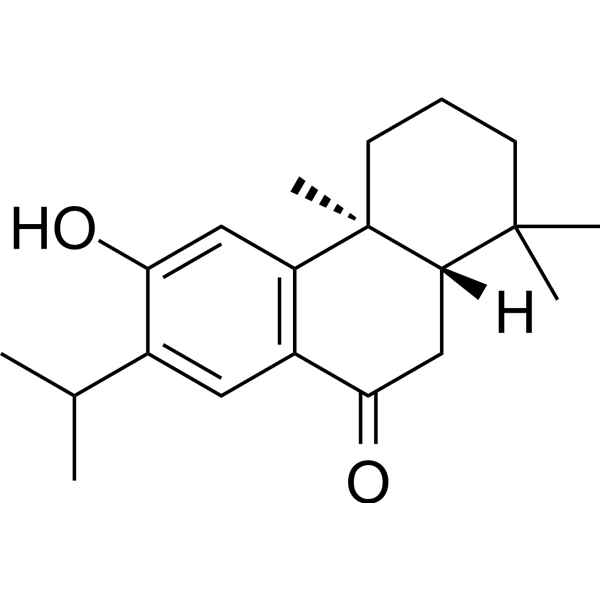
Synonyms: (+)-Sugiol; 10-Deoxoxanthoperol
Sugiol is an abietane diterpenoid, can be isolated from Calocedrus formosana bark. Sugiol has anti-inflammatory activity, could effectively reduce intracellular reactive oxygen species (ROS) production in lipopolysaccharide (LPS)-stimulated macrophages .
loading...
    loading...
Cat. No.: HY-122917
CAS No.: 189308-08-5
Purity:  99.67%
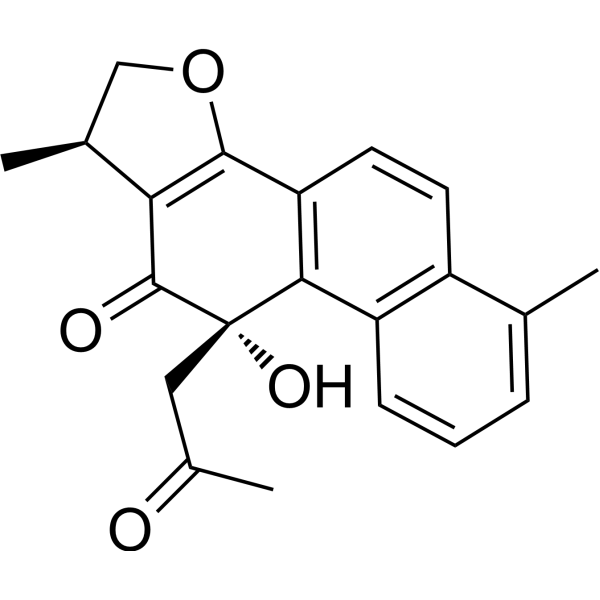
Danshenol A, an abietane-type diterpenoid, is an aldose reductase (AR) inhibitor with an IC50 of 0.1 μM. Danshenol A can protect endothelial cells from oxidative stress by directly scavenging ROS. Danshenol A has anti-inflammatory and antitumor properties. Danshenol A can be used for atherosclerosis research .
loading...
    loading...
Cat. No.: HY-133593
CAS No.: 1945-53-5
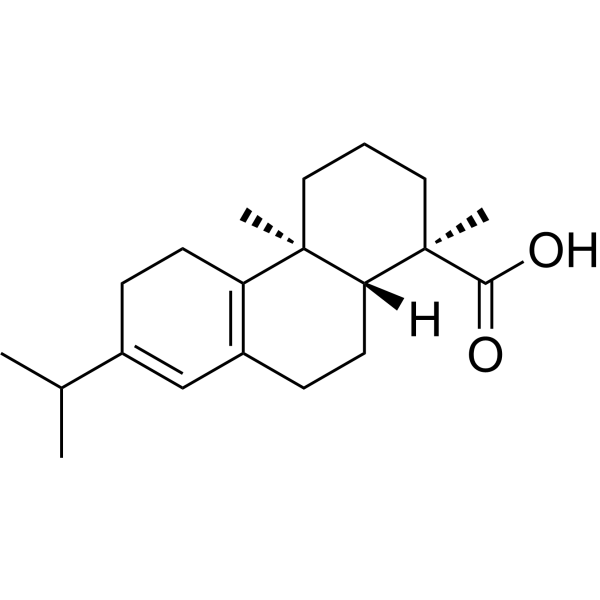
Palustric acid is an abietane-type diterpenoid that is found in Pinus palustris, Pinus caribaea, and rosin .
loading...
    loading...
Cat. No.: HY-N7830
CAS No.: 155205-64-4
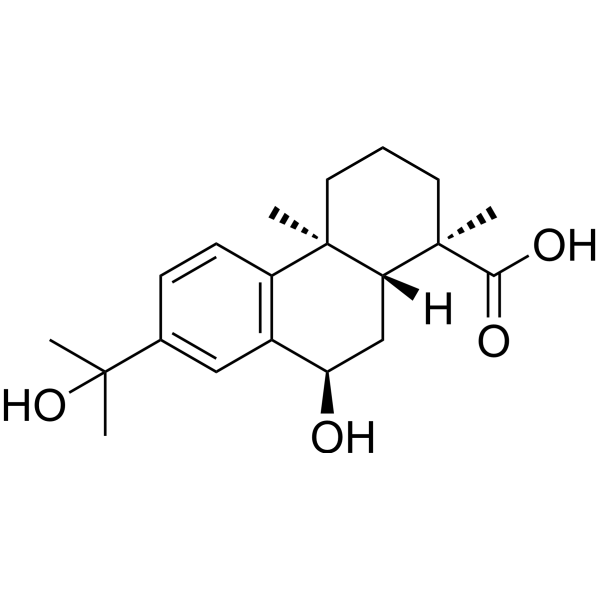
7α,15-Dihydroxydehydroabietic acid is a natural abietane-type diterpenoid with antiangiogenic effects .
loading...
    loading...
Cat. No.: HY-N10777
CAS No.: 105062-36-0
1-Ketoaethiopinone is an abietane-diterpenoid. 1-Ketoaethiopinone has an α, β-unsaturated carbonyl function. 1-Ketoaethiopinone shows cytotoxic activity against human cancer cell lines MOLT-4 (human lymphoblastic leukemia) and MCF-7 (human breast adenocarcinoma) .
loading...
    loading...
Cat. No.: HY-133593R
CAS No.: 1945-53-5
Palustric acid (Standard) is the analytical standard of Palustric acid (HY-133593). This product is intended for research and analytical applications. Palustric acid is an abietane-type diterpenoid that is found in Pinus palustris, Pinus caribaea, and rosin .
loading...
    loading...
Cat. No.: HY-N1770
CAS No.: 142763-37-9
Synonyms: 3,4-Didehydrosapriparaquione
Target:  

Others

Research Areas:  

Others

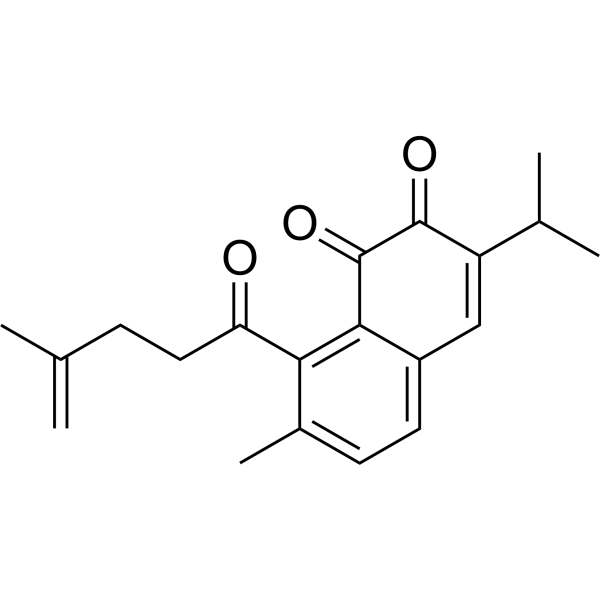
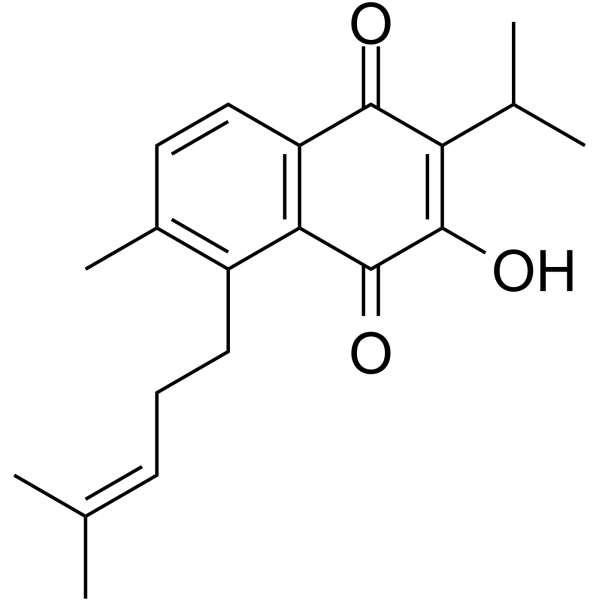
12-Hydroxysapriparaquinone (compound 8) is a rearranged 4,5-seco-abietane diterpenoid isolated from the petroleum ether extract of the root of Salvia rhytidea .
loading...
    loading...
Cat. No.: HY-N11544
CAS No.: 1395048-86-8
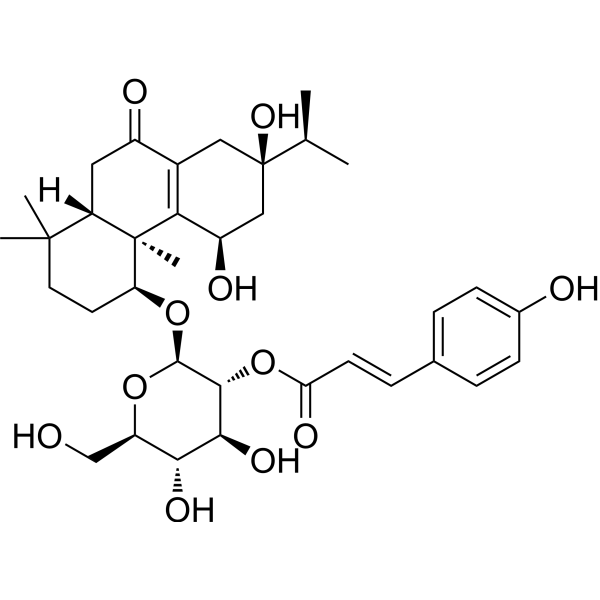
Inflexuside B, an abietane diterpenoid, can be isolated from the aerial parts of Isodon inflexus. Inflexuside B strongly inhibits lipopolysaccharide (LPS)-activated NO Synthase in RAW264.7 macrophages .
loading...
    loading...
Cat. No.: HY-N11548
CAS No.: 1395048-85-7
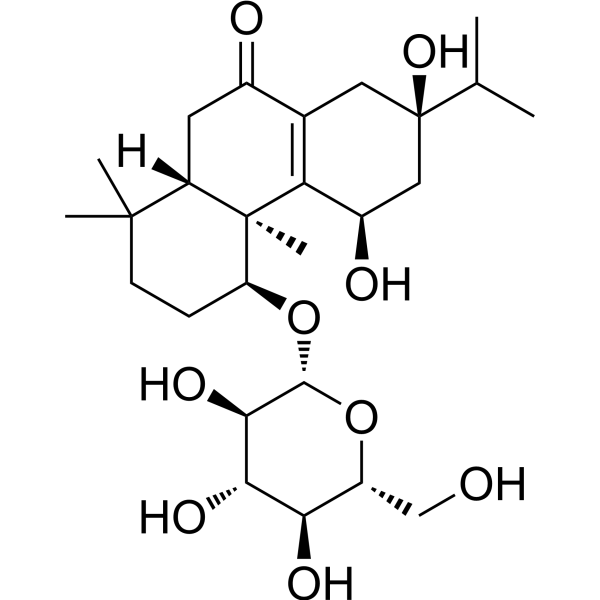
Inflexuside A, an abietane diterpenoid, can be isolated from the aerial parts of Isodon inflexus. Inflexuside B strongly inhibits lipopolysaccharide (LPS)-activated NO production (NO Synthase) in RAW264.7 macrophages .
loading...
    loading...
Cat. No.: HY-N21530
CAS No.: 1295650-67-7
6,11,12,16-Tetrahydroxy-5,8,11,13-abitetetraen-7-one is an abietane diterpenoid with antimicrobial and antiparasitic activities. It exhibits IC50 values of 3.0 and 4.8 μg/mL against Plasmodium falciparum strains D6 and W2, respectively, and inhibits the growth of Leishmania donovani with an IC50 of 12 μg/mL and an IC90 of 22 μg/mL. 6,11,12,16-Tetrahydroxy-5,8,11,13-abitetetraen-7-one can be used in studies related to fungal infections, staphylococcal infections, malaria and leishmaniasis .
loading...
    loading...
Cat. No.: HY-N18223
CAS No.: 105037-82-9
(R)-Hydroxymiltirone is a 20-nor-abietane diterpenoid found in the root of Salvia argentea, and is identified as 1R-hydroxymiltirone .
loading...
    loading...
Cat. No.: HY-N16816
CAS No.: 760948-09-2
Rubescensin J is a known ent-abietane diterpenoid that can be found in the leaves of Isodon rubescens var. rubescens and is inactive in cytotoxicity against cancer cells .
loading...
    loading...
Cat. No.: HY-N13355
CAS No.: 76829-01-1
Przewaquinone B is an abietane-type diterpene quinone (tanshinone) and a diterpenoid compound. Przewaquinone B can be isolated from the rhizomes of Salvia miltiorrhiza Bunge, the roots of Salvia przewarskii, and the roots of Salvia constanea. Przewaquinone B exhibits antitumor activity against cervical cancer and promyelocytic leukemia. Przewaquinone B can be used in research related to cervical cancer and promyelocytic leukemia .
loading...
    loading...
  • 1

