1. Search Result
Search Result
Results for "

acetyl groups

" in MedChemExpress (MCE) Product Catalog:

47

Inhibitors & Agonists

3

Fluorescent Dye

7

Biochemical Assay Reagents

4

Peptides

13

Natural
Products

3

Isotope-Labeled Compounds

10

Click Chemistry

4

Oligonucleotides

Cat. No. Product Name Target Research Areas Chemical Structure
  • HY-113596
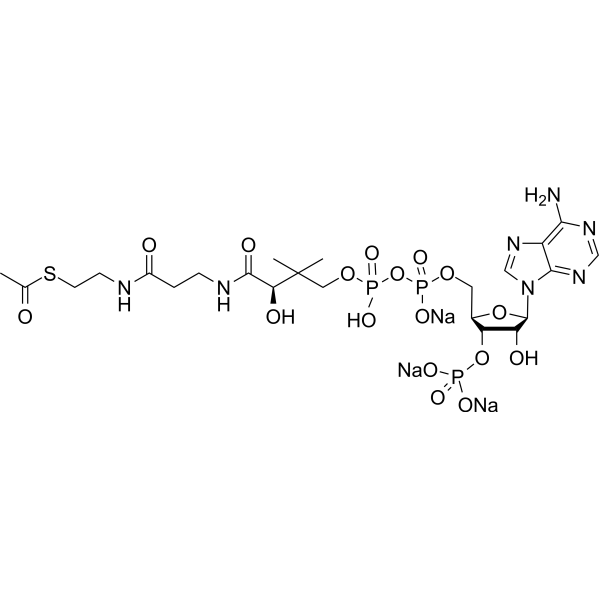
    Acetyl Coenzyme A trisodium
    4 Publications Verification

    acetyl-CoA trisodium

    Oxidative Phosphorylation Endogenous Metabolite Autophagy Metabolic Disease
    Acetyl-coenzyme A (Acetyl-CoA) trisodium is a membrane-impermeant central metabolic intermediate, participates in the TCA cycle and oxidative phosphorylation metabolism. Acetyl-coenzyme A trisodium, regulates various cellular mechanisms by providing (sole donor) acetyl groups to target amino acid residues for post-translational acetylation reactions of proteins. Acetyl Coenzyme A trisodium is also a key precursor of lipid synthesis .
    Acetyl Coenzyme A trisodium
  • HY-B1142
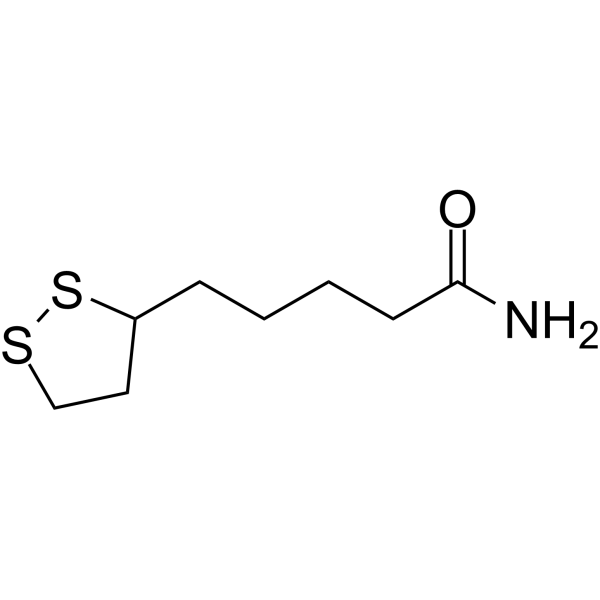
    Lipoamide
    Maximum Cited Publications
    9 Publications Verification

    (±)-α-Lipoamide; DL-Lipoamide; DL-6,8-Thioctamide

    NO Synthase Others
    Lipoamide ((±)-α-Lipoamide) is a monocarboxylic acid derivative of a neutral amide, formed by the condensation of the carboxyl group of lipoic acid and ammonia. Lipoamide protects against oxidative stress-mediated neuronal cell damage and also acts as a coenzyme to transfer acetyl groups and hydrogen during pyruvate deacylation. Lipoamide also stimulates mitochondrial biogenesis in adipocytes through the endothelial NO synthase-cGMP-protein kinase G signaling pathway .
    Lipoamide
  • HY-136386
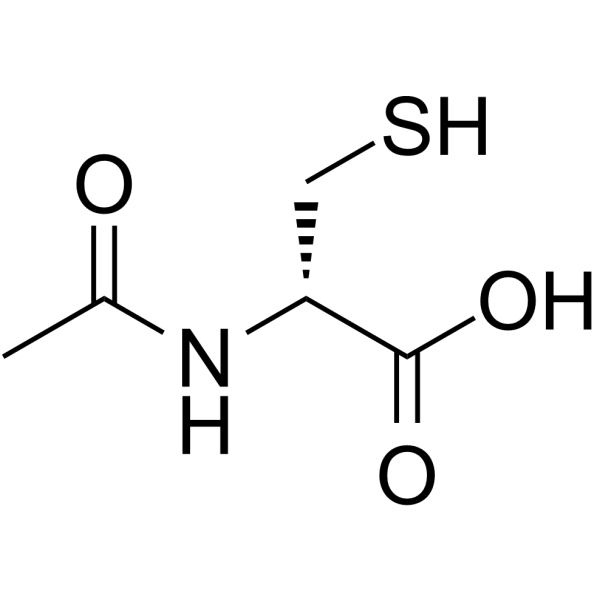
    N-Acetyl-D-cysteine
    3 Publications Verification

    Reactive Oxygen Species (ROS) Others
    N-Acetyl-D-cysteine has antioxidant activities and scavenges ROS through the reaction with its thiol group, but cannot enter the glutathione metabolic pathway .
    N-Acetyl-D-cysteine
  • HY-114365
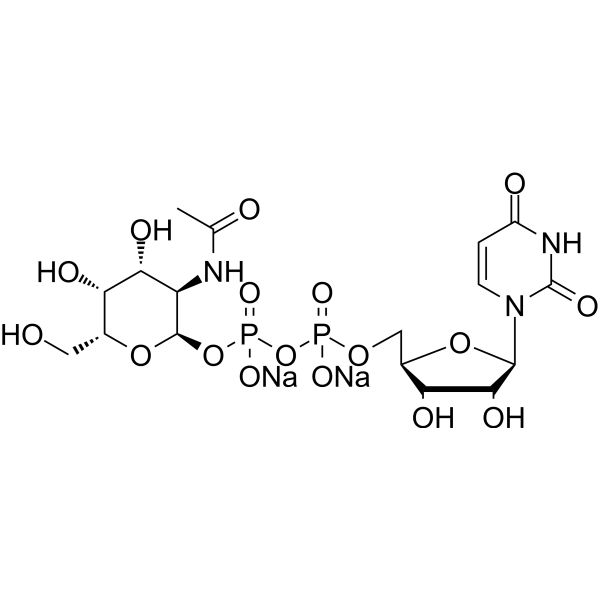
    UDP-GalNAc disodium
    1 Publications Verification

    UDP-N-acetyl-D-galactosamine disodium

    Endogenous Metabolite Metabolic Disease Cancer
    UDP-GalNAc (UDP-N-acetyl-D-galactosamine) disodium is a sugar nucleotide and a substrate for EpsC115. EpsC115 is a mutant with N-terminal residues 1-115 deleted from the exopolymeric substance (EPS). UDP-GalNAc disodium is a donor substrate for many N-acetylgalactosaminyltransferases, which transfer GalNAc from nucleotide sugars to sugar or peptide acceptors. UDP-GalNAc disodium provides a sugar group donor for glycosylation reactions. UDP-GalNAc disodium can be used in cancer research, such as colorectal and breast cancer .
    UDP-GalNAc disodium
  • HY-114293A

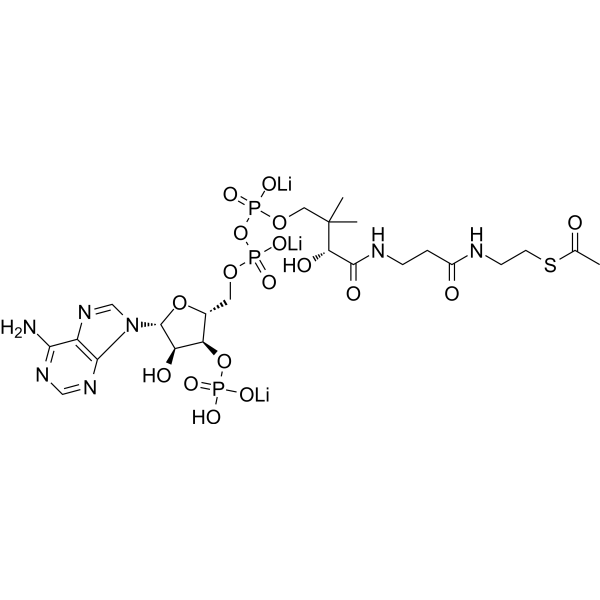
    acetyl-CoA trilithium

    Oxidative Phosphorylation Endogenous Metabolite Autophagy Cardiovascular Disease Metabolic Disease
    Acetyl-coenzyme A (Acetyl-CoA) trilithium is a membrane-impermeant central metabolic intermediate, participates in the TCA cycle and oxidative phosphorylation metabolism. Acetyl-coenzyme A trilithium regulates various cellular mechanisms by providing (sole donor) acetyl groups to target amino acid residues for post-translational acetylation reactions of proteins. Acetyl Coenzyme A trilithium is also a key precursor of lipid synthesis .
    Acetyl coenzyme A trilithium
  • HY-114293

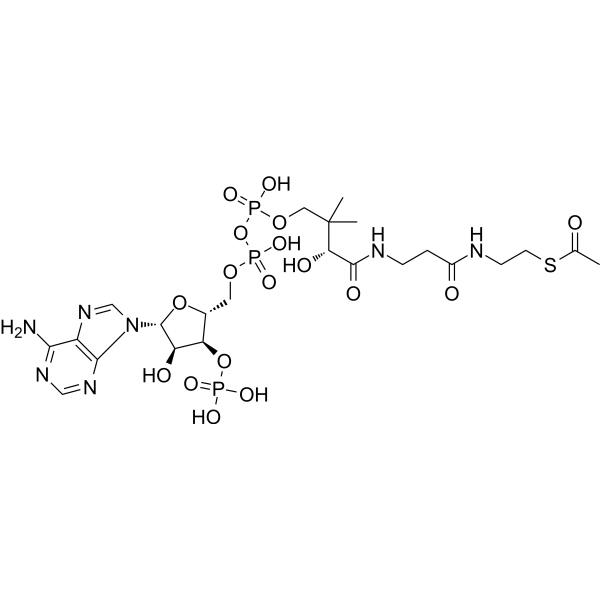
    acetyl-CoA

    Oxidative Phosphorylation Endogenous Metabolite Autophagy Cardiovascular Disease Metabolic Disease
    Acetyl-coenzyme A (Acetyl-CoA) is a membrane-impermeant central metabolic intermediate, participates in the TCA cycle and oxidative phosphorylation metabolism. Acetyl-coenzyme A, regulates various cellular mechanisms by providing (sole donor) acetyl groups to target amino acid residues for post-translational acetylation reactions of proteins. Acetyl Coenzyme A is also a key precursor of lipid synthesis .
    Acetyl coenzyme A
  • HY-134222A

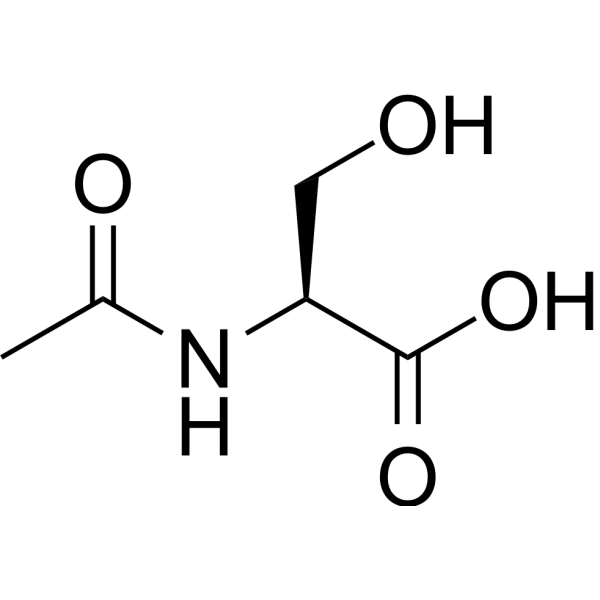
    N-acetyl-L-serine

    Endogenous Metabolite Complement System Others
    N-Acetylserine (N-Acetyl-L-serine) is a complement pathway modulator targeting activated third complement protein (C3b) and an amino-terminal residue (an N-terminal acetylation modification group). N-Acetylserine reacts with the exposed thioester group of C3b via its hydroxyl group, thereby blocking the covalent binding of glycerol to this thioester group. N-Acetylserine widely exists in soluble proteins of mammalian cells (accounting for approximately 80% of such proteins). N-Acetylserine has a blocking property that prevents direct Edman sequencing of proteins; deblocking is achievable through trifluoroacetic acid-catalyzed N→O acetyl migration followed by β-elimination. N-Acetylserine is suitable for sequencing of proteins with N-terminal acetylserine modification .
    N-Acetylserine
  • HY-P10069

    Drug Intermediate ADC Linker Others
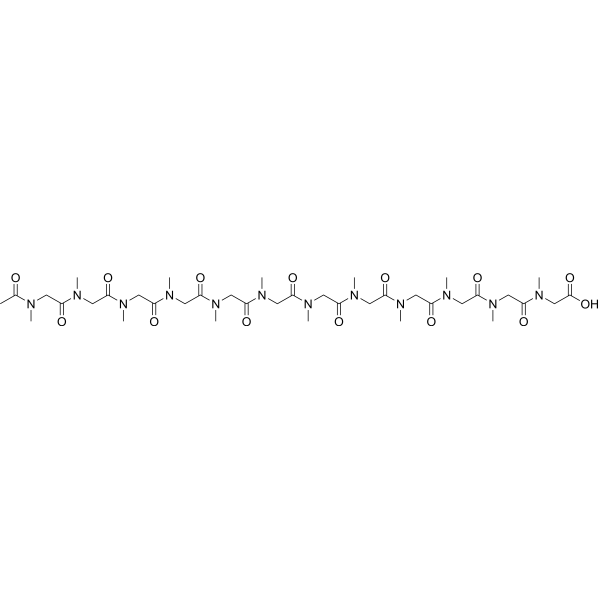
    Ac-pSar12-OH is a water-soluble polymer of the polysarcosine class and can be used as a linker. Ac-pSar12-OH is a linear polypeptide derivative composed of 12 arginine units. Ac-pSar12-OH N-terminus is modified with an acetyl group, while the C-terminus retains a free hydroxyl group, which can help enhance the stability of the polypeptide .
    Ac-pSar12-OH
  • HY-D2869

    Fluorescent Dye Drug Intermediate Others
    Ac-H-FluNox is an acetylated cell-compatible prodrug of H-FluNox (HY-D2339). Ac-H-FluNox undergoes intracellular hydrolysis of its acetyl group by esterases to generate H-FluNox, which then undergoes a deoxygenation reaction with labile heme to form a fluorescent product. Ac-H-FluNox detects fluctuations of labile heme in living cells, acute labile heme release upon nitric oxide stimulation, and accumulation of labile heme following inhibition of heme export proteins .
    Ac-H-FluNox
  • HY-113596A
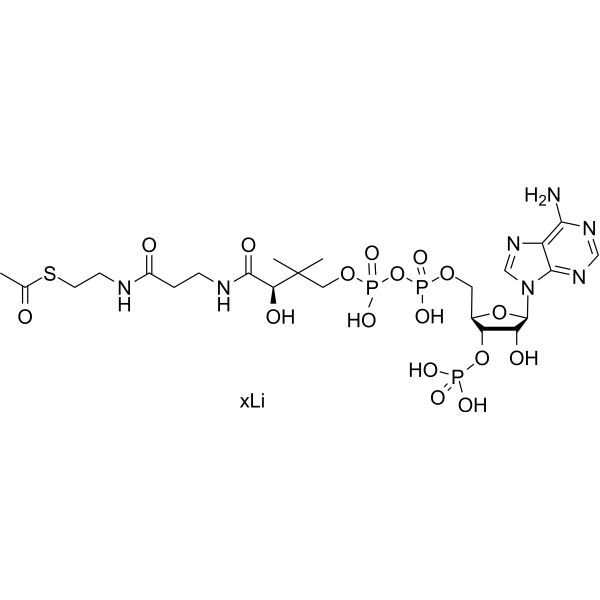
    Acetyl coenzyme A lithium
    4 Publications Verification

    acetyl-CoA lithium

    Oxidative Phosphorylation Endogenous Metabolite Autophagy Cardiovascular Disease Metabolic Disease
    Acetyl-coenzyme A (Acetyl-CoA) lithium is a membrane-impermeant central metabolic intermediate, participates in the TCA cycle and oxidative phosphorylation metabolism. Acetyl-coenzyme A lithium, regulates various cellular mechanisms by providing (sole donor) acetyl groups to target amino acid residues for post-translational acetylation reactions of proteins. Acetyl Coenzyme A lithium is also a key precursor of lipid synthesis .
    Acetyl coenzyme A lithium
  • HY-114293S

    acetyl-CoA-13C2 lithium

    Isotope-Labeled Compounds Endogenous Metabolite Autophagy Oxidative Phosphorylation Metabolic Disease
    Acetyl coenzyme A- 13C2 lithium is the 13C-labeled Acetyl coenzyme A (HY-114293). Acetyl-coenzyme A (Acetyl-CoA) is a membrane-impermeant central metabolic intermediate, participates in the TCA cycle and oxidative phosphorylation metabolism. Acetyl-coenzyme A, regulates various cellular mechanisms by providing (sole donor) acetyl groups to target amino acid residues for post-translational acetylation reactions of proteins. Acetyl Coenzyme A is also a key precursor of lipid synthesis .
    Acetyl coenzyme A-13C2 lithium
  • HY-Y1080

    N-acetyl-D-leucine

    Amino Acid Derivatives Monocarboxylate Transporter Endocrinology
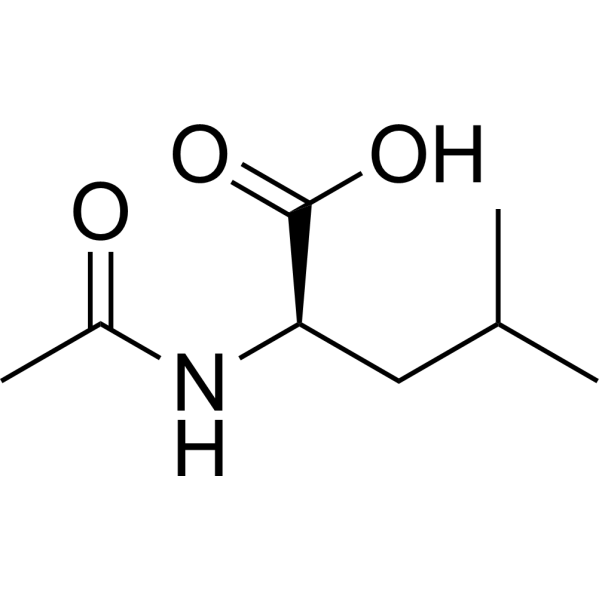
    N-Acetyl-R-leucine is an amino-protecting group N-substituted chiral amino acid. N-Acetyl-R-leucine is a PepT1 and MCT1 inhibitor with IC50 of 0.74 and 11 mM, respectively. N-Acetyl-R-leucine can be used for LysoTracker signaling studies .
    N-Acetyl-R-leucine
  • HY-128852

    Galectin Endogenous Metabolite Others
    N-Acetyl-D-galactosamine (GalNAc) is a terminal essential amino sugar derived from galactose and forms the antigens of blood group A in humans. N-Acetyl-D-galactosamine (GalNAc) interact with Soya bean agglutinin (SBA), hence decreasing the effects of SBA on cellular membrane permeability and tight junction protein expression in piglets . N-Acetyl-D-galactosamine (GalNAc) inhibits the hemagglutinating activity by the lectin .
    N-Acetyl-D-galactosamine, 98%
  • HY-147004

    Acetyl-CoA Carboxylase Metabolic Disease
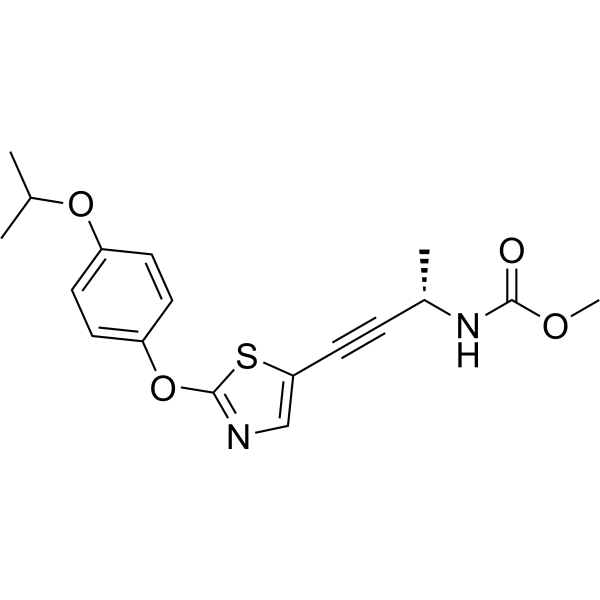
    A-908292 is a potent and selective acetyl-CoA carboxylase 2 (ACC2) inhibitor, with an IC50 of 23 nM for human ACC2. A-908292 can be used for the research of fatty acid metabolism . A-908292 is a click chemistry reagent, it contains an Alkyne group and can undergo copper-catalyzed azide-alkyne cycloaddition (CuAAc) with molecules containing Azide groups.
    A-908292
  • HY-P3749

    Fluorescent Dye Others
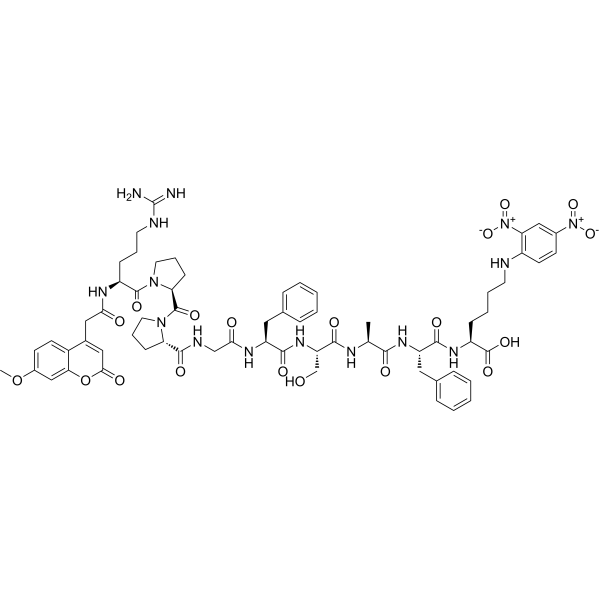
    Mca-(ala7,lys(dnp)9)-bradykinin is a sensitive fluorogenic substrate for ECE-1 (endothelin-converting enzyme-1). The incorporation of a (7-methoxycoumarin-4-yl)acetyl (Mca) fluorescent group and a 2,4-dinitrophenyl (Dnp) quenching group has resulted in a large fluorescence increase upon substrate cleavage .
    Mca-(ala7,lys(dnp)9)-bradykinin
  • HY-114293S5

    acetyl-CoA-d3

    Isotope-Labeled Compounds Oxidative Phosphorylation Endogenous Metabolite Autophagy Cardiovascular Disease Metabolic Disease
    Acetyl coenzyme A-d3 (Acetyl-CoA-d3) is the deuterium labeled Acetyl coenzyme A (HY-114293). Acetyl-coenzyme A (Acetyl-CoA) is a membrane-impermeant central metabolic intermediate, participates in the TCA cycle and oxidative phosphorylation metabolism. Acetyl-coenzyme A, regulates various cellular mechanisms by providing (sole donor) acetyl groups to target amino acid residues for post-translational acetylation reactions of proteins. Acetyl Coenzyme A is also a key precursor of lipid synthesis .
    Acetyl coenzyme A-d3
  • HY-W039943

    Molecular Glues Cancer
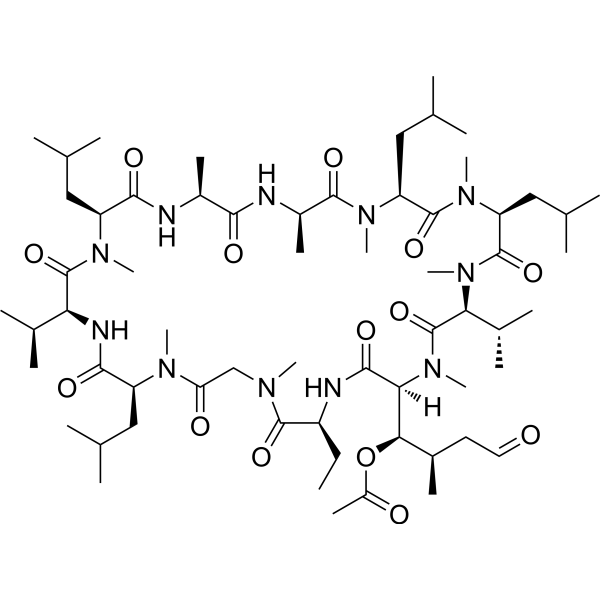
    Acetyl-cyclosporin A aldehyde is an acetylated Cyclosporin A (HY-B0579) derivative with a reducing aldehyde group. Cyclosporin A is a potent calmodulin inhibitor and cyclophilin binder that can target the nuclear translocation of NF-AT and cause mitochondrial damage.
    Acetyl-cyclosporin A aldehyde
  • HY-W012898

    Biacetyl dioxime

    Biochemical Assay Reagents Others
    Dimethylglyoxime (Biacetyl dioxime) belongs to the class of oximes and consists of two acetyl groups attached to a nitrogen atom, which in turn is attached to another nitrogen atom through a diimine bond. Dimethylglyoxime is a specific chelator of Ni that inhibits or slows the aggregation of Aβ peptides in vitro .
    Dimethylglyoxime
  • HY-W102456

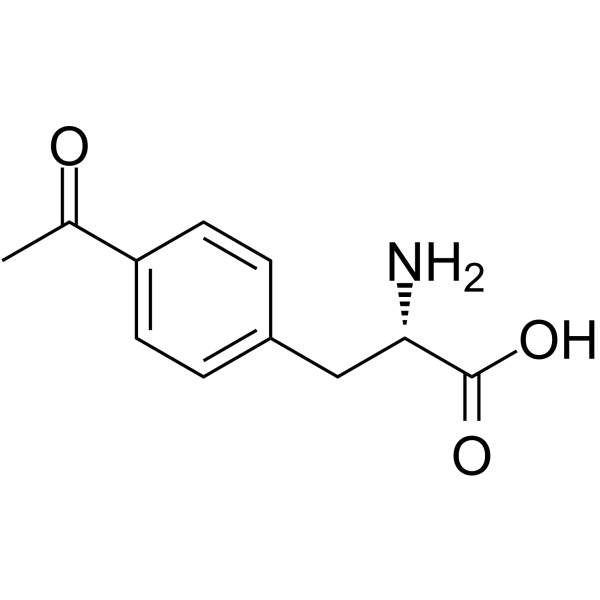
    L-4-acetylphenylalanine

    Biochemical Assay Reagents Amino Acid Derivatives Others
    H-Phe(4-Ac)-OH (L-4-Acetylphenylalanine) is a keto-amino acid that can be converted from α-keto acids containing an acetyl group. H-Phe(4-Ac)-OH can be added to the amber position to form mutant Z-domain proteins. H-Phe(4-Ac)-OH is used as a functional amino acid in peptide modification to achieve chemical bonding between peptides and solid surfaces .
    H-Phe(4-Ac)-OH
  • HY-21983

    Amino Acid Derivatives Others
    O-Acetyl-N-[(1,1-dimethylethoxy)carbonyl]-L-threonine is a compound containing both an amino group and a carboxyl group.
    O-Acetyl-N-[(1,1-dimethylethoxy)carbonyl]-L-threonine
  • HY-W145647

    Biochemical Assay Reagents Others
    2,3,4,6-Tetra-O-acetyl-β-D-galactopyranosyl Azide is a biochemical reagent that can be used as a biological material or organic compound for life science related research. 2,3,4,6-Tetra-O-acetyl-β-D-galactopyranosyl azide is a click chemistry reagent, it contains an Azide group and can undergo copper-catalyzed azide-alkyne cycloaddition reaction (CuAAc) with molecules containing Alkyne groups. It can also undergo strain-promoted alkyne-azide cycloaddition (SPAAC) reactions with molecules containing DBCO or BCN groups.
    2,3,4,6-Tetra-O-acetyl-β-D-galactopyranosyl azide
  • HY-78315

    Fluorescent Dye Infection
    2',3',4'-Trimethoxyacetophenone is an organic compound with a benzene ring and an acetyl group. 2',3',4'-Trimethoxyacetophenone can be used as a raw material for synthesizing dyes, fragrances, and certain pesticides .
    2',3',4'-Trimethoxyacetophenone
  • HY-140859

    PROTAC Linkers Cancer
    S-Acetyl-PEG3-azide is a PEG-based PROTAC linker that can be used in the synthesis of PROTACs . S-Acetyl-PEG3-azide is a click chemistry reagent, it contains an Azide group and can undergo copper-catalyzed azide-alkyne cycloaddition reaction (CuAAc) with molecules containing Alkyne groups. It can also undergo strain-promoted alkyne-azide cycloaddition (SPAAC) reactions with molecules containing DBCO or BCN groups.
    S-Acetyl-PEG3-azide
  • HY-W145616

    Biochemical Assay Reagents Others
    1,3,4,6-Tetra-O-acetyl-2-azido-2-deoxy-α-D-mannopyranose is a biochemical reagent that can be used as a biological material or organic compound for life science related research. 1,3,4,6-Tetra-O-acetyl-2-azido-2-deoxy-α-D-mannopyranose is a click chemistry reagent, it contains an Azide group and can undergo copper-catalyzed azide-alkyne cycloaddition reaction (CuAAc) with molecules containing Alkyne groups. It can also undergo strain-promoted alkyne-azide cycloaddition (SPAAC) reactions with molecules containing DBCO or BCN groups.
    1,3,4,6-Tetra-O-acetyl-2-azido-2-deoxy-α-D-mannopyranose
  • HY-12926

    HIV HDAC DNA/RNA Synthesis Infection
    ST7612AA1 is a histone deacetylase (HDAC) inhibitor that controls chromatin condensation and DNA transcription by removing acetyl groups from histones. ST7612AA1 is also a potent HIV reactivation inducer, and its reactivation activity is exerted without activating or proliferating CD4+T cells, and can be used in the study of HIV reactivation strategies and elimination of viral reservoirs .
    ST7612AA1
  • HY-132692S

    Isotope-Labeled Compounds Endocrinology
    N-Acetyl Norgestimate-d6 is the deuterium labeled N-Acetyl Norgestimate . N-Acetyl Norgestimate-d6 is a click chemistry reagent, it contains an Alkyne group and can undergo copper-catalyzed azide-alkyne cycloaddition (CuAAc) with molecules containing Azide groups.
    N-Acetyl Norgestimate-d6
  • HY-P2943

    Endogenous Metabolite Others
    Phosphate acetyltransferase is a transferase enzyme, is often used in biochemical studies. Phosphate acetyltransferase catalyzes the reversible transfer of the acetyl group from acetyl-P to CoA forming acetyl-CoA and inorganic phosphate, participating to acetate assimilation/dissimilation reactions .
    Phosphate acetyltransferase
  • HY-136386R

    Reference Standards Reactive Oxygen Species (ROS) Others
    N-Acetyl-D-cysteine (Standard) is the analytical standard of N-Acetyl-D-cysteine. This product is intended for research and analytical applications. N-Acetyl-D-cysteine has antioxidant activities and scavenges ROS through the reaction with its thiol group, but cannot enter the glutathione metabolic pathway .
    N-Acetyl-D-cysteine (Standard)
  • HY-E70262

    Oxidative Phosphorylation Endogenous Metabolite Metabolic Disease
    Acetoyl-CoA (triammonium) is a triammonium derivative of Acetoyl-CoA (HY-114293), Acetyl-CoA is a membrane-impermeant central metabolic intermediate, participates in the TCA cycle and oxidative phosphorylation metabolism. Acetyl-coenzyme A, regulates various cellular mechanisms by providing (sole donor) acetyl groups to target amino acid residues for post-translational acetylation reactions of proteins. Acetyl Coenzyme A is also a key precursor of lipid synthesis .
    Acetoyl-CoA triammonium
  • HY-172506

    Biochemical Assay Reagents Others
    3-Azidopropanoyl chloride is a reactive chemical that can be used to synthesize chiral compounds. The acetyl chloride group that is useful for acetylations such as esterification and the Friedel-Crafts reaction. The azide group enables Click Chemistry.
    3-Azidopropanoyl chloride
  • HY-W587881

    Phosphodiesterase (PDE) Neurological Disease
    Acetylvardenafil is a new analog of Vardenafil (HY-B0442). The sulfonyl group in the structure of Acetylvardenafil is replaced by an acetyl group. Acetylvardenafil is a PDE-5 inhibitor that can be used in the study of erectile dysfunction (ED) .
    Acetylvardenafil
  • HY-N6848

    Drug Derivative Infection
    Acetylseneciphylline N-oxide is a pyrrolizine alkaloid that is seneciphylline in which the hydroxy hydrogen is replaced by an acetyl group and the tertiary amino function is oxidised to the corresponding N-oxide .
    Acetylseneciphylline N-oxide
  • HY-W145547

    Biochemical Assay Reagents Others
    2-Azidoethyl 2,3,4,6-Tetra-O-acetyl-β-D-glucopyranoside is a biochemical reagent that can be used as a biological material or organic compound for life science related research. 2-Azidoethyl 2,3,4,6-Tetra-O-acetyl-β-D-glucopyranoside is a click chemistry reagent, it contains an Azide group and can undergo copper-catalyzed azide-alkyne cycloaddition reaction (CuAAc) with molecules containing Alkyne groups. It can also undergo strain-promoted alkyne-azide cycloaddition (SPAAC) reactions with molecules containing DBCO or BCN groups.
    2-Azidoethyl 2,3,4,6-Tetra-O-acetyl-β-D-glucopyranoside
  • HY-154334

    Nucleoside Antimetabolite/Analog Cancer
    2’-O-Acetyl-3’-azido-5’-O-(4-methylbenzoyl)-3’-deoxyuridine is a purine nucleoside analog. Purine nucleoside analogs have broad antitumor activity targeting indolent lymphoid malignancies. Anticancer mechanisms in this process rely on inhibition of DNA synthesis, induction of apoptosis, etc . 2’-O-Acetyl-3’-azido-5’-O-(4-methylbenzoyl)-3’-deoxyuridine is a click chemistry reagent, it contains an Azide group and can undergo copper-catalyzed azide-alkyne cycloaddition reaction (CuAAc) with molecules containing Alkyne groups. It can also undergo strain-promoted alkyne-azide cycloaddition (SPAAC) reactions with molecules containing DBCO or BCN groups.
    2’-O-Acetyl-3’-azido-5’-O-(4-methylbenzoyl)-3’-deoxyuridine
  • HY-154310

    Nucleoside Antimetabolite/Analog Cancer
    1,2-Di-O-acetyl-3-azido-3-deoxy-5-O-(4-methyl) benzoyl-L-ribofuranose is a purine nucleoside analog. Purine nucleoside analogs have broad antitumor activity targeting indolent lymphoid malignancies. Anticancer mechanisms in this process rely on inhibition of DNA synthesis, induction of apoptosis, etc . 1,2-Di-O-acetyl-3-azido-3-deoxy-5-O-(4-methyl) benzoyl-L-ribofuranose is a click chemistry reagent, it contains an Azide group and can undergo copper-catalyzed azide-alkyne cycloaddition reaction (CuAAc) with molecules containing Alkyne groups. It can also undergo strain-promoted alkyne-azide cycloaddition (SPAAC) reactions with molecules containing DBCO or BCN groups.
    1,2-Di-O-acetyl-3-azido-3-deoxy-5-O-(4-methyl) benzoyl-L-ribofuranose
  • HY-154341

    Nucleoside Antimetabolite/Analog Others
    9-[2'-O-Acetyl-3'-azido-3'-deoxy-5'-O-toluoyl-b-L-ribofuranosyl)-6-chloropurine is a purine nucleoside analog. Purine nucleoside analogs have broad antitumor activity targeting indolent lymphoid malignancies. Anticancer mechanisms in this process rely on inhibition of DNA synthesis, induction of apoptosis, etc . 9-[2'-O-Acetyl-3'-azido-3'-deoxy-5'-O-toluoyl-b-L-ribofuranosyl)-6-chloropurine is a click chemistry reagent, it contains an Azide group and can undergo copper-catalyzed azide-alkyne cycloaddition reaction (CuAAc) with molecules containing Alkyne groups. It can also undergo strain-promoted alkyne-azide cycloaddition (SPAAC) reactions with molecules containing DBCO or BCN groups.
    9-[2'-O-Acetyl-3'-azido-3'-deoxy-5'-O-toluoyl-b-L-ribofuranosyl)-6-chloropurine
  • HY-154318

    Nucleoside Antimetabolite/Analog Cancer
    1,2-Di-O-acetyl-3-azido-3-deoxy-5-O-(4-methyl)benzoyl-D-ribofuranose is a purine nucleoside analog. Purine nucleoside analogs have broad antitumor activity targeting indolent lymphoid malignancies. Anticancer mechanisms in this process rely on inhibition of DNA synthesis, induction of apoptosis, etc . 1,2-Di-O-acetyl-3-azido-3-deoxy-5-O-(4-methyl)benzoyl-D-ribofuranose is a click chemistry reagent, it contains an Azide group and can undergo copper-catalyzed azide-alkyne cycloaddition reaction (CuAAc) with molecules containing Alkyne groups. It can also undergo strain-promoted alkyne-azide cycloaddition (SPAAC) reactions with molecules containing DBCO or BCN groups.
    1,2-Di-O-acetyl-3-azido-3-deoxy-5-O-(4-methyl)benzoyl-D-ribofuranose
  • HY-E70143

    EC:2.4.1.15; N-acetylglucosaminyltransferase

    Biochemical Assay Reagents Cancer
    Glucosaminyl (N-acetyl) Transferase 2 (EC:2.4.1.150, GCNT2, GCNT5, NACGT1, N-acetyllactosaminide beta-1,6-N-acetylglucosaminyl-transferase, N-acetylglucosaminyltransferase, IGNT) is responsible for formation of the blood group I antigen and plays an important role in cancer .
    Glucosaminyl (N-acetyl) Transferase 2
  • HY-N18322

    Drug Derivative Others
    12-O-Ethyl-nimbolinin B is a limonoid that can be found in the fruits of Melia toosendan .
    12-O-Ethyl-nimbolinin B
  • HY-N18196

    Others Others
    25-O-Acetylcimigenol-3-O-alpha-l-arabinoside (compound 2) is a cycloartane glycoside. 25-O-Acetylcimigenol-3-O-alpha-l-arabinoside can be found in the rhizomes of Cimicifuga dahurica (Ranunculaceae) .
    25-O-Acetylcimigenol-3-O-alpha-L-arabinoside
  • HY-N17187

    Others Neurological Disease Metabolic Disease
    2,4,6,1'-Tetra-O-acetyl-3',6'-di-O-feruloylsucrose (Compound 2) is a phenylpropanoid glycoside that can be found in chinese folk medicine “San Leng” (Sparganium stoloniferum Buch.-Hamil.). San Leng can be used for emmenagogue, galactagogue, and antispasmodic applications .
    2,4,6,1'-Tetra-O-acetyl-3',6'-di-O-feruloylsucrose
  • HY-129443

    Drug Metabolite Others
    Deacetylcephaloglycin is the active metabolite of Cephaloglycin (HY-16137). Deacetylcephaloglycin is a degradation product of Cephaloglycin that eliminates the 3-acetyl group in acidic medium and can be further degraded to Deacetylcephaloglycin lactone. Deacetylation is the rate-determining step in the degradation of Cephaloglycin to lactone .
    Deacetylcephaloglycin
  • HY-W415799

    Biochemical Assay Reagents Others
    (2S)-Ac4GalNAl can be used for the identification and characterization of specific surface groups of glycoproteins. The alkyne groups can react with azides via copper-catalyzed Click Chemistry. The acetyl groups on the glucose allow for easier penetration through the cell membrane.
    (2S)-Ac4GalNAl
  • HY-N18212

    Drug Derivative Others
    12-O-Methyl-1-O-tigloyl-1-O-deacetylnimbolinin B (Compound 2) is a limonoid compound present in the fruits of Melia toosendan .
    12-O-Methyl-1-O-tigloyl-1-O-deacetylnimbolinin B
  • HY-E70913

    Endogenous Metabolite Metabolic Disease
    Phosphotransacetylase, Bacillus subtilis (EC 2.3.1.8), converts coenzyme A to acetyl-CoA. Phosphotransacetylase is an acyltransferase that transfers groups other than aminoacyl groups. Phosphotransacetylase participates in three metabolic pathways: taurine and hypoturine metabolism, pyruvate metabolism, and propionic acid metabolism.
    Phosphotransacetylase, Bacillus subtilis
  • HY-P2782A

    Endogenous Metabolite Metabolic Disease
    Chloramphenicol Acetyltransferase, Escherichia coli is a bacterial enzyme that detoxifies the antibiotic chloramphenicol and is responsible for chloramphenicol resistance in bacteria. Chloramphenicol Acetyltransferase, Escherichia coli covalently attaches an acetyl group from acetyl-CoA to chloramphenicol, which prevents chloramphenicol from binding to ribosomes. A histidine residue, located in the C-terminal section of Chloramphenicol Acetyltransferase, Escherichia coli, plays a central role in its catalytic mechanism.
    Chloramphenicol Acetyltransferase, Escherichia coli
  • HY-D3157

    Fluorescent Dye Others
    Photoactive esterase probe is a photoactivatable fluorescent probe for esterase. Photoactive esterase probe is used for the detection and imaging of esterase activity in living cells .
    Photoactive esterase probe

Inquiry Online

Your information is safe with us. * Required Fields.

Salutation


Country or Region *

Applicant Name *


Organization Name *

Department *


Email Address *


Product Name *

Cat. No.


Requested quantity *

Phone Number *


Remarks

Inquiry Online

Inquiry Information

Product Name:
Cat. No.:
Quantity:
MCE Japan Authorized Agent:

