



724 Results for "

auto-immune

" in MedChemExpress (MCE) Product Catalog:
Products (724)

724 Results for "auto-immune" in MCE Product Catalog:

169
169 Publications Verification
Cat. No.: HY-13027
CAS No.: 208255-80-5
Purity:  99.97%
Synonyms: GSI-IX
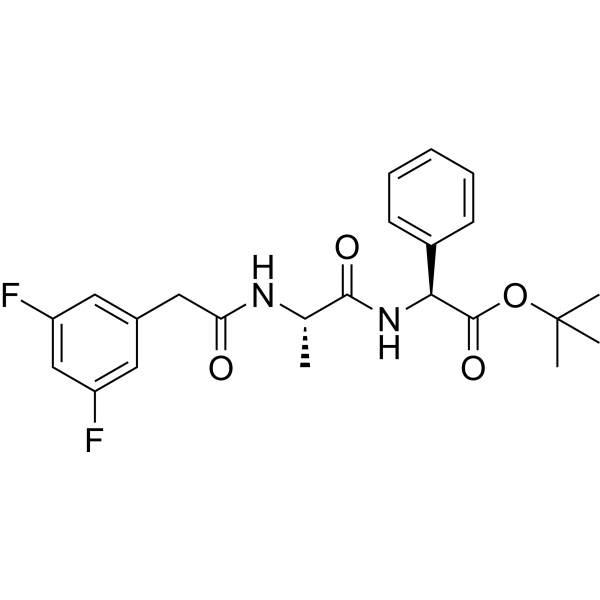
DAPT (GSI-IX) is a potent and orally active γ-secretase inhibitor with IC50s of 115 nM and 200 nM for total amyloid-β (Aβ) and 42, respectively. DAPT inhibits the activation of Notch 1 signaling and induces cell differentiation. DAPT also induces autophagy and apoptosis. DAPT has neuroprotection activity and has the potential for autoimmune and lymphoproliferative diseases, degenerative disease and cancers treatment .
loading...
    loading...
91
91 Cited Publications
Cat. No.: HY-W031727
CAS No.: 118-42-3
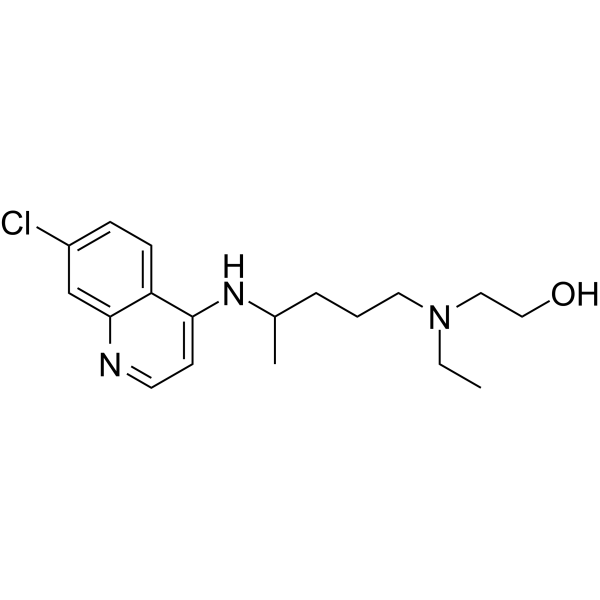
Hydroxychloroquine (HCQ) is a synthetic oral antimalarial drug that can be used in the study of malaria and autoimmune diseases such as systemic lupus erythematosus and rheumatoid arthritis. Hydroxychloroquine is a potent autophagic flux inhibitor with antiviral activity (such as SARS-CoV-2 virus) that inhibits Toll-like receptor 7/9 (TLR7/9) signaling .
loading...
    loading...
52
52 Cited Publications
Cat. No.: HY-10320A
CAS No.: 1283526-53-3
Synonyms: BIRB 796 hydrochloride
Target:  

Autophagy Raf p38 MAPK

Research Areas:  

Inflammation/Immunology

Doramapimod hydrochloride (BIRB 796 hydrochloride) is an anti-inflammatory compound with biological activity through inhibition of p38 MAPK. Doramapimod hydrochloride can significantly inhibit the activities of TNF-α and IL-1β induced by LPS, LTA and PGN. Doramapimod hydrochloride showed a stronger inhibitory effect on inflammation induced by all three bacterial toxins, which was more significant compared with the effects of other compounds. Doramapimod hydrochloride can be used in the research of autoimmune diseases .
loading...
    loading...
40
40 Cited Publications
Cat. No.: HY-108882B
CAS No.: 9003-98-9
Target:  

DNA/RNA Synthesis

Research Areas:  

Inflammation/Immunology

DNase I is an enzyme that degrades DNA. DNase I is mainly produced by digestive system organs, such as the pancreas and parotid gland. Three types of DNase I are known in mammals: pancreatic type, parotid type, and pancreatico-parotid type. DNase I plays a key role in the cleavage of extracellular DNA, and is critical for limiting inflammatory responses and maintaining homeostasis. DNase I is responsible for digesting extracellular nucleoproteins, which may be essential for preventing autoimmune responses. Decreased DNase I activity may be associated with the onset and progression of systemic lupus erythematosus (SLE). DNase I (RNase & Protease free) is a molecular biology-grade DNase I purified by chromatography to remove RNase and protease .
loading...
    loading...
27
27 Cited Publications
Cat. No.: HY-P9970
CAS No.: 170277-31-3
Synonyms: Avakine; CT-P13; SB2; TA-650
Infliximab (Avakine) is a chimeric monoclonal IgG1 antibody that specifically binds to TNF-α. Infliximab prevents the interaction of TNF-α with TNF-α receptor (TNFR1 and TNFR2). Infliximab has the potential for autoimmune, chronic inflammatory diseases and diabetic neuropathy research .
The component ratio of this product is Active ingredient : Excipients = 9 : 47.
loading...
    loading...
27
27 Cited Publications
Cat. No.: HY-P9970A
Synonyms: Avakine (Anti-TNF-α); CT-P13 (Anti-TNF-α)
Infliximab (Anti-TNF-α) (Avakine (Anti-TNF-α)) is a chimeric monoclonal IgG1 antibody that specifically binds to TNF-α. Infliximab (Anti-TNF-α) prevents the interaction of TNF-α with TNF-α receptor (TNFR1 and TNFR2). Infliximab (Anti-TNF-α) has the potential for autoimmune, chronic inflammatory diseases and diabetic neuropathy research .
loading...
    loading...
27
27 Cited Publications
Cat. No.: HY-19569
CAS No.: 1310726-60-3
Synonyms: ABT-494
Target:  

JAK

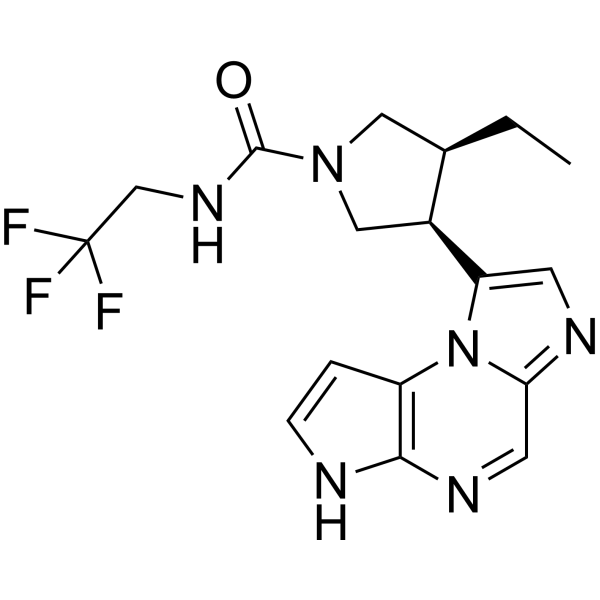
Upadacitinib (ABT-494) is a potent, orally active and selective Janus kinase 1 (JAK1) inhibitor (IC50=43 nM). Upadacitinib (ABT-494) displays approximately 74 fold selective for JAK1 over JAK2 (200 nM) in cellular assays dependent on specific, relevant cytokines. Upadacitinib (ABT-494) can be used for several autoimmune disorders research .
loading...
    loading...
22
22 Cited Publications
Cat. No.: HY-153808
CAS No.: 9007-81-2
Research Areas:  

Inflammation/Immunology

Complete Freund's adjuvant (CFA) is an immunoadjuvant emulsified with antigen by its discoverer Jules T. Freund to enhance an animal's immune response to an antigen. Complete Freund's adjuvant (CFA) is also an inducer of the Th1 immune response and a ligand of TLRs. Complete Freund's adjuvant (CFA) contains heat-killed inactive tuberculosis bacilli and consists of a paraffin oil-in-water emulsion. Complete Freund's adjuvant (CFA) stimulates a strong and durable immune response and can be used to induce persistent inflammatory pain models in mice, experimental autoimmune myocarditis (EAM) models, and more. Incomplete Freund's adjuvant (IFA) (HY-153808A) is another type of Freund's Adjuvant that stimulates a weaker immune response .
loading...
    loading...
18
18 Cited Publications
Cat. No.: HY-101254
CAS No.: 117946-91-5
Purity:  100.0%
Synonyms: N-0774
Target:  

Melatonin Receptor

Research Areas:  

Neurological Disease

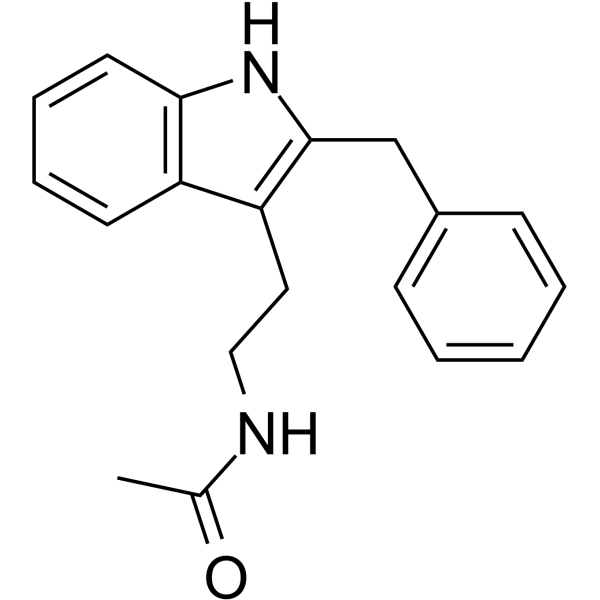
Luzindole (N-0774) is a selective melatonin receptor antagonist. Luzindole preferentially targets MT2 (Mel1b) over MT1 (Mel1a) with Ki values of 10.2 and 158 nM for human MT2 and MT1, respectively. Luzindole suppresses experimental autoimmune encephalomyelitis (EAE), and exerts antidepressant-like activity .
loading...
    loading...
15
15 Cited Publications
Cat. No.: HY-145010
CAS No.: 2249435-90-1
Purity:  99.73%
Target:  

STING

Research Areas:  

Inflammation/Immunology

SN-011 is a potent and selective mouse and human STING inhibitor, with an IC50 of 76 nM for STING signaling. SN-011 competes with cyclic dinucleotide (CDN) for the binding pocket of the STING dimer, blocking CDN binding and STING activation. SN-011 can be used for the research of STING-driven autoimmune and inflammatory disease .
loading...
    loading...
14
14 Cited Publications
Cat. No.: HY-P9913
CAS No.: 174722-31-7
Synonyms: Anti-Human CD20 type I, Chimeric Antibody; HSDB 7455; IDEC-C2B8
Rituximab is an anti-CD20 chimeric monoclonal antibody used for research of certain autoimmune diseases and cancer.
loading...
    loading...
14
14 Cited Publications
Cat. No.: HY-P9913A
CAS No.: 174722-31-7
Rituximab (anti-CD20) is an anti-CD20 chimeric monoclonal antibody used to treat certain autoimmune diseases and types of cancer .
loading...
    loading...
13
13 Cited Publications
Cat. No.: HY-117433
CAS No.: 39800-16-3
Purity:  ≥98.0%
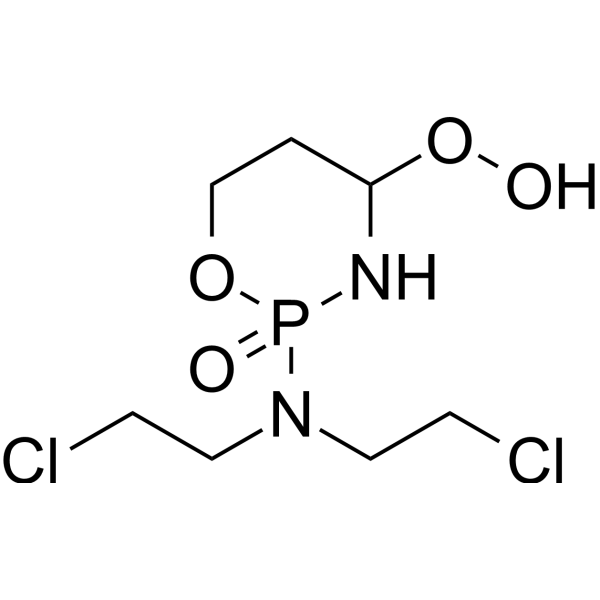
4-Hydroperoxy cyclophosphamide is the active metabolite form of the precursor Cyclophosphamide. 4-Hydroperoxy cyclophosphamide cross-links DNA to induce T cell apoptosis independent of caspase receptor activation, and can activate the mitochondrial death pathway by producing reactive oxygen species (ROS). 4-Hydroperoxy cyclophosphamide can be used in the study of rheumatoid arthritis and autoimmune diseases .
loading...
    loading...
13
13 Cited Publications
Cat. No.: HY-129039
CAS No.: 778649-18-6
Purity:  99.58%
Synonyms: MB-3
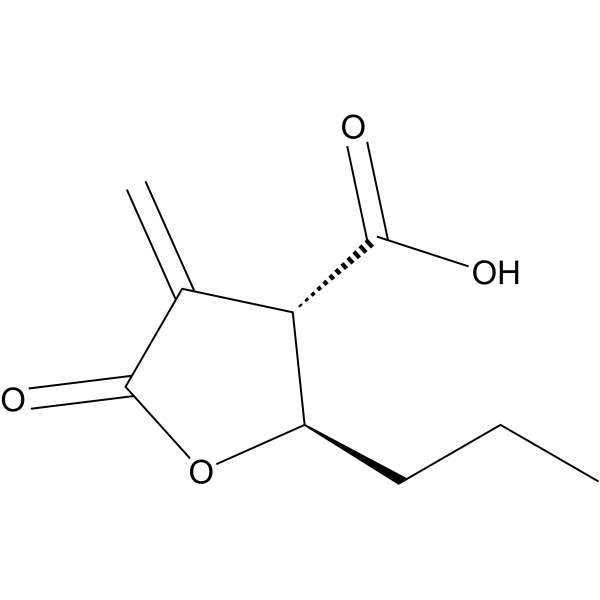
Butyrolactone 3 (MB-3) is a specifical small-molecule inhibitor of the histone acetyltransferase Gcn5 (IC50=100 μM), which has a high affinity to the Gcn5 enzyme comparable to that of its natural substrate, histone H3. Butyrolactone 3 shows weak inhibitory on CBP (IC50=0.5 mM). Butyrolactone 3 can be used in studies of cancer, metabolic, autoimmune and neurological diseases .
loading...
    loading...
11
11 Cited Publications
Cat. No.: HY-101215
CAS No.: 1415823-73-2
Purity:  98.70%
Synonyms: M2951; MSC2364447C
Target:  

Btk

Research Areas:  

Inflammation/Immunology Cancer

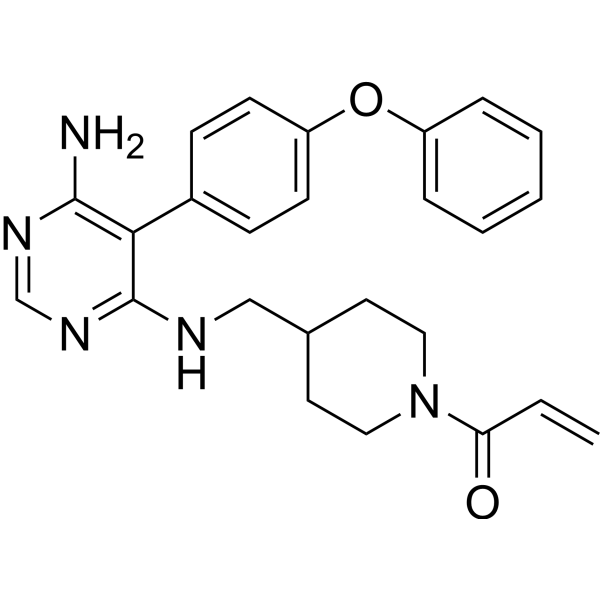
Evobrutinib (M2951) is an orally active, potent, highly selective and irreversibly covalent BTK inhibitor, with an IC50 of 8.9 nM. Evobrutinib (M2951) can be used for the research of autoimmune diseases .
loading...
    loading...
11
11 Cited Publications
Cat. No.: HY-107429
CAS No.: 1622902-68-4
Purity:  99.26%
Synonyms: PF-04965842
Target:  

JAK

Research Areas:  

Inflammation/Immunology

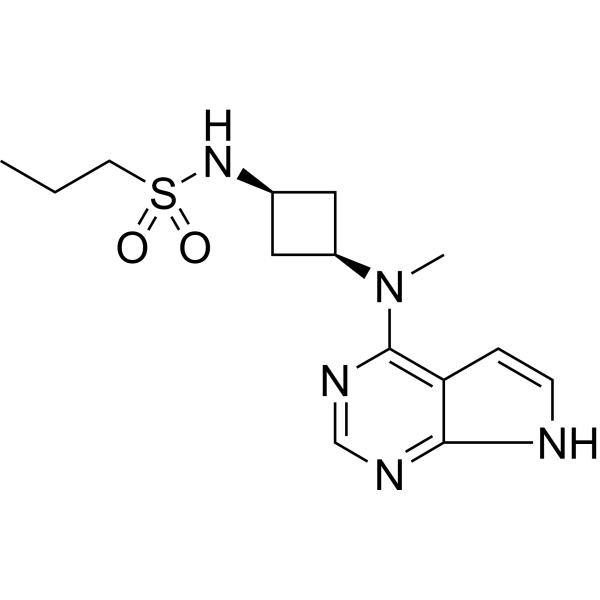
Abrocitinib (PF-04965842) is a potent, orally active and selective JAK1 inhibitor, with IC50s of 29 and 803 nM for JAK1 and JAK2, respectively. Abrocitinib (PF-04965842) exhibits less active effect on TYK2 (IC50, 1.253 μM), and inhibits phosphorylation of STAT1, STAT3 and STAT5 after stimulation. Effective in autoimmune disease .
loading...
    loading...
9
9 Cited Publications
Cat. No.: HY-148335
CAS No.: 2407652-42-8
Purity:  99.69%
Target:  

Drug Derivative

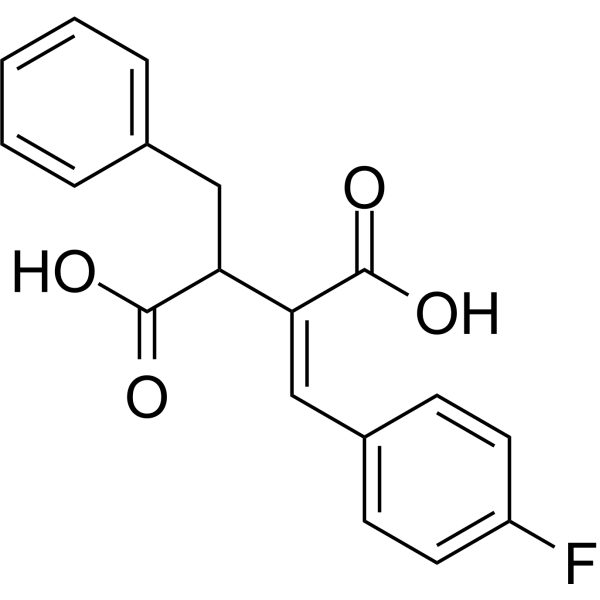
IRG1-IN-1 is an itaconic acid derivative. IRG1-IN-1 can inhibit immune-responsive gene 1 (IRG1) activity. IRG1-IN-1 can be used for the research of cancer, inflammation and autoimmune diseases .
loading...
    loading...
9
9 Cited Publications
Cat. No.: HY-13591
CAS No.: 152918-18-8
Purity:  99.01%
Synonyms: IB-MECA; CF-101
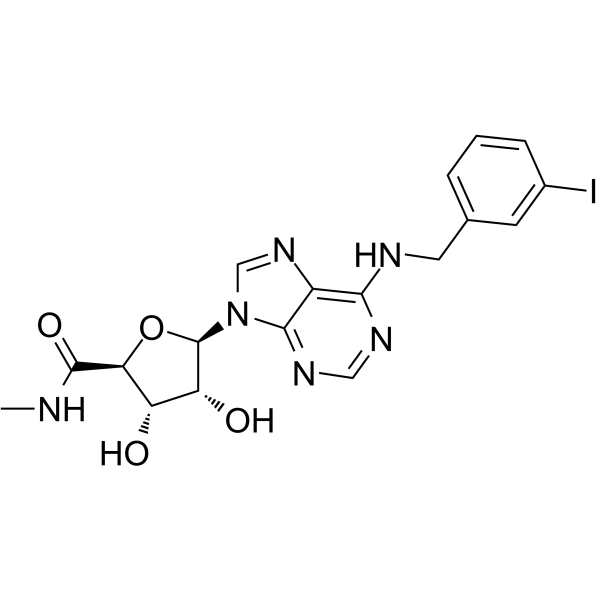
Piclidenoson (IB-MECA) is a first-in-class, orally active and selective A3 adenosine receptor (A3AR) agonist. Piclidenoson exhibits antiproliferative effect and induces apoptosis in different cancer cell types like melanoma, leukemia. Piclidenoson can be used for the research of autoimmune inflammatory diseases and COVID-19 .
loading...
    loading...
9
9 Cited Publications
Cat. No.: HY-P1240A
Synonyms: Myelin Oligodendrocyte Glycoprotein Peptide (35-55), mouse, rat TFA
MOG (35-55) (MOG (35-55)) TFA is a minor component of CNS myelin. MOG (35-55) (TFA) has encephalitogenic activity and induces T cell proliferative. MOG (35-55) (TFA) induces Th1 cytokine response as well as relatively high levels of IgG antibodies. MOG (35-55) (TFA) produces a relapsing-remitting neurological disease with extensive plaque-like demyelination. MOG (35-55) (MOG (35-55)) TFA can be used for experimental autoimmune encephalomyelitis (EAE) modeling .
loading...
    loading...
9
9 Cited Publications
Cat. No.: HY-B1077
CAS No.: 26864-56-2
Synonyms: R-16341
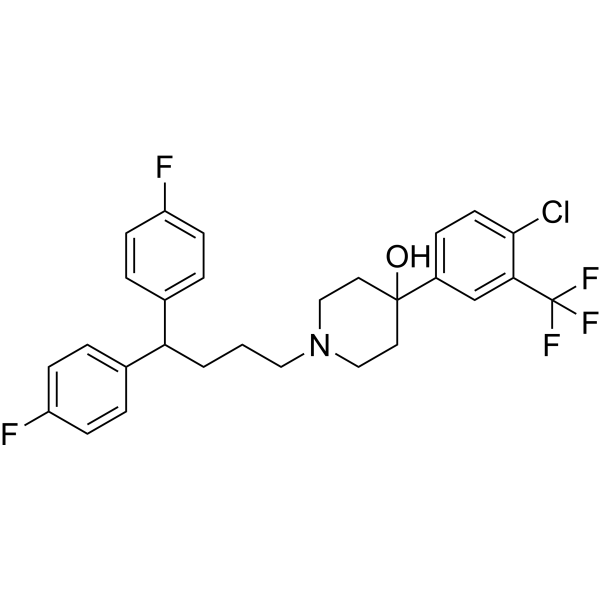
Penfluridol (R-16341) is a potent, long-acting, first-generation, oral diphenylbutylpiperidine antipsychotic agent by targeting D2-like dopamine receptor. Penfluridol effectively inhibits TNFα-induced NF-κB activation and alleviates the severity of arthritis and colitis in vivo. Penfluridol is a Ca2+-calmodulin inhibitor. Penfluridol induces apoptosis and autophagy. Penfluridol is used for chronic schizophrenia, acute psychosis, Tourette syndrome and autoimmune diseases. Penfluridol inhibites the growth of E. faecalis planktonic cells with the MIC of 7.81 μg/ml .
loading...
    loading...

