1. Search Result
Search Result
Results for "

brain-penetrable

" in MedChemExpress (MCE) Product Catalog:

35

Inhibitors & Agonists

1

Natural
Products

1

Isotope-Labeled Compounds

Cat. No. Product Name Target Research Areas Chemical Structure
  • HY-10510
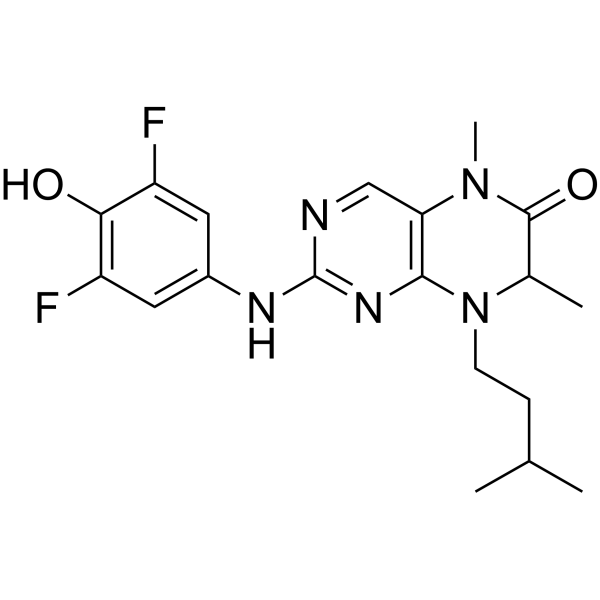
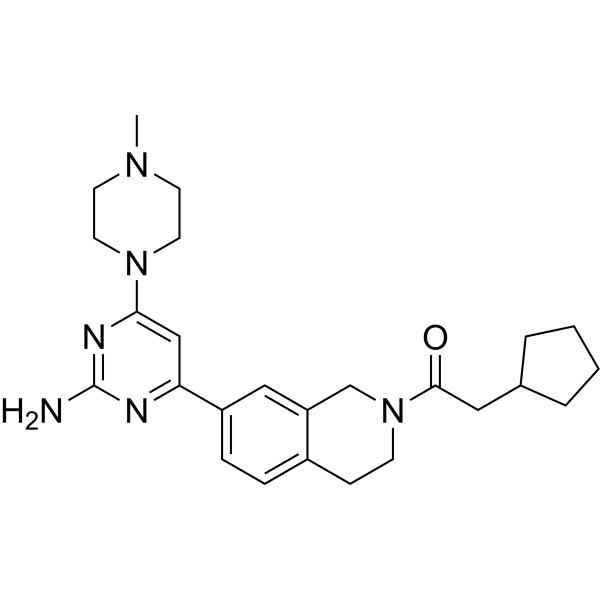
    BI-D1870
    Maximum Cited Publications
    18 Publications Verification

    Ribosomal S6 Kinase (RSK) Autophagy Cancer
    BI-D1870 is an ATP-competitive, cell permeable and brain penetrated inhibitor of RSK isoforms, with IC50s of 31 nM/24 nM/18 nM/15 nM for RSK1/RSK2/RSK3/RSK4, respectively .
    BI-D1870
  • HY-14136
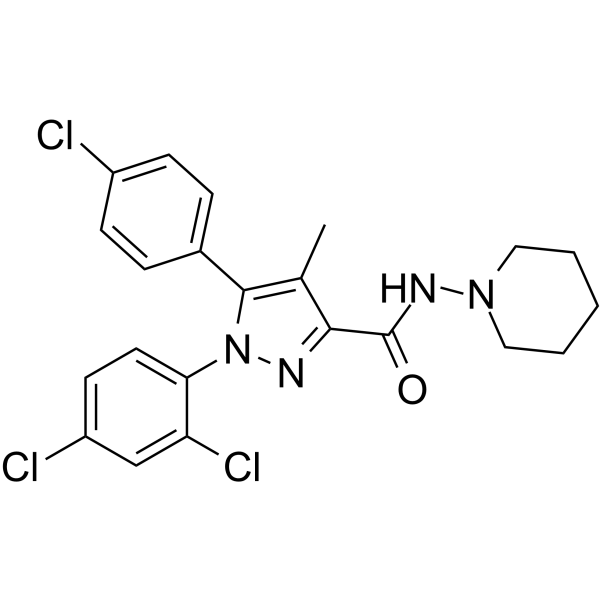
    Rimonabant
    10+ Cited Publications

    SR141716

    Cannabinoid Receptor Bacterial Infection Metabolic Disease Cancer
    Rimonabant (SR141716) is a highly potent, brain penetrated and selective central cannabinoid receptor (CB1) antagonist with a Ki of 1.8 nM. Rimonabant (SR141716) also inhibits Mycobacterial membrane protein Large 3 (MMPL3).
    Rimonabant
  • HY-111540
    LY-3381916
    2 Publications Verification

    IDO1-IN-5

    Indoleamine 2,3-Dioxygenase (IDO) Cancer
    LY-3381916 (IDO1-IN-5) is a potent, selective and brain penetrated inhibitor of IDO1 activity, binds to apo-IDO1 lacking heme rather than mature heme-bound IDO1 .
    LY-3381916
  • HY-120789

    γ-secretase Neurological Disease
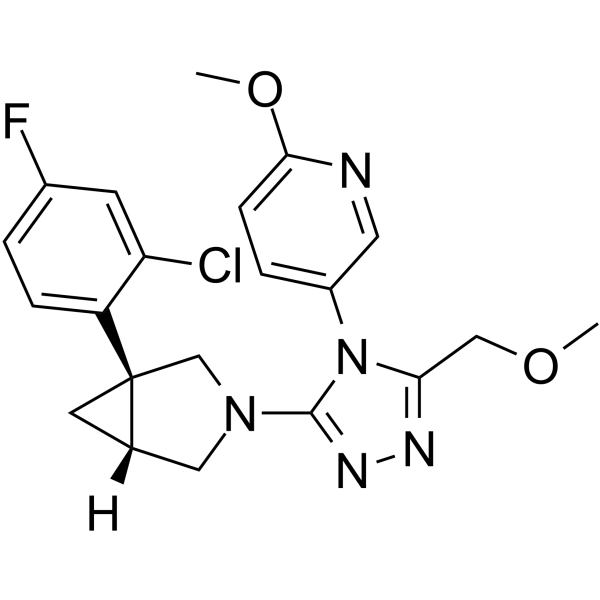
    PF-06648671 is a novel, brain-penetrable, and orally active γ-secretase modulator (GSM). PF-06648671 reduces Aβ42 and Aβ40, with concomitant increases in Aβ37 and Aβ38 in vitro. PF-06648671 is used for the study of Alzheimer’s disease .
    PF-06648671
  • HY-120085
    PFE-360
    3 Publications Verification

    PF-06685360

    LRRK2 Neurological Disease
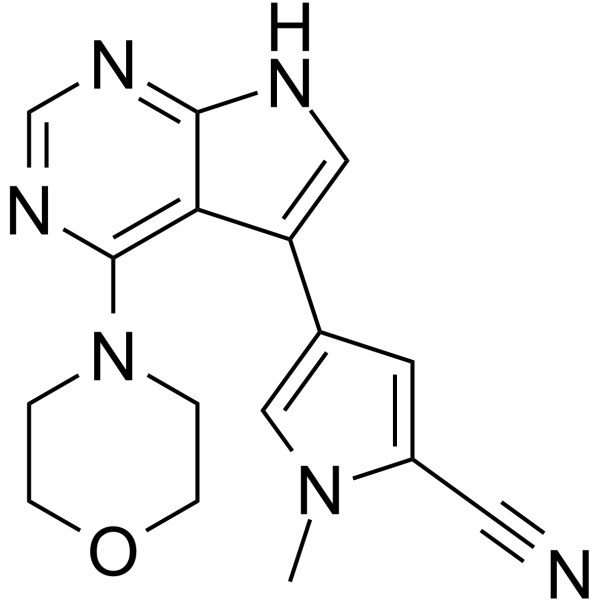
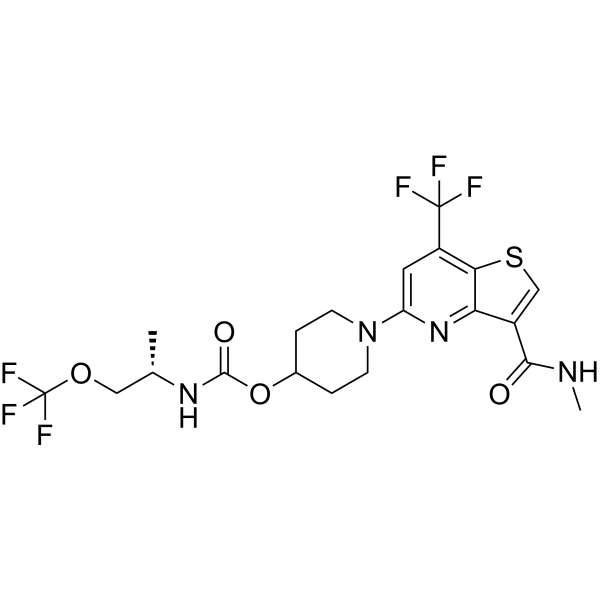
    PFE-360 (PF-06685360) is a potent, selective, brain penetrated and orally active leucine-rich repeat kinase 2 (LRRK2) inhibitor with a mean IC50 of 2.3 nM in vivo .
    PFE-360
  • HY-131703
    UGT8-IN-1
    1 Publications Verification

    UGT Metabolic Disease
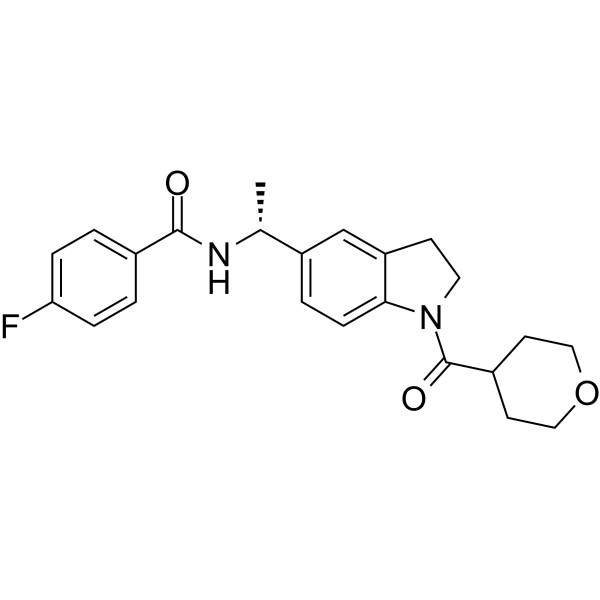
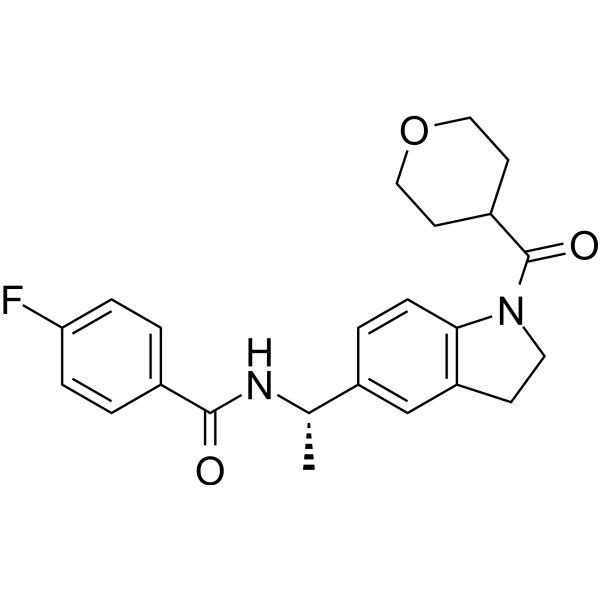
    UGT8-IN-1 is a brain penetrable and orally active inhibitor of ceramide galactosyltransferase enzyme (UGT8). UGT8-IN-1 can be used in the study for lysosomal storage disorders .
    UGT8-IN-1
  • HY-14130

    CRFR Neurological Disease Endocrinology
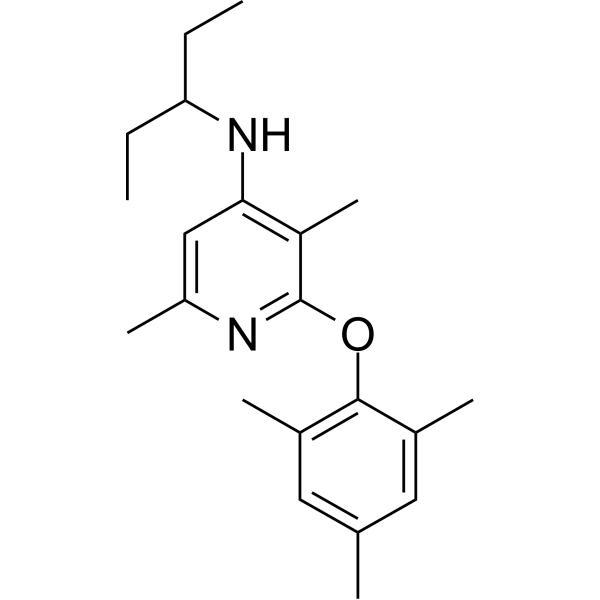
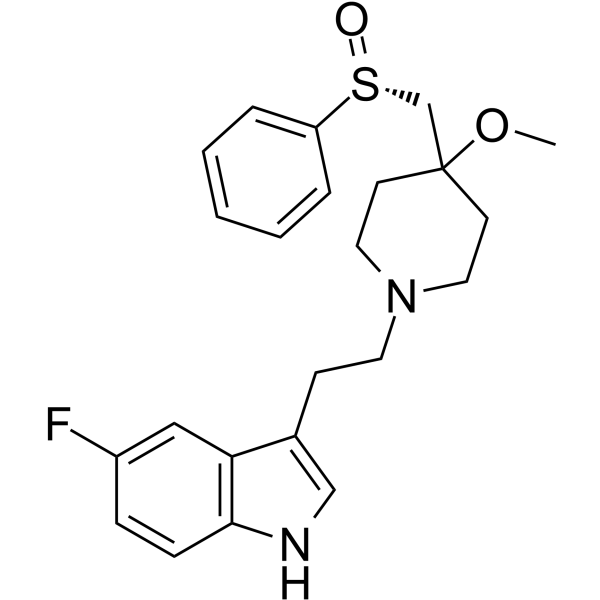
    CP 376395 is a potent, selective, and brain-penetrable Corticotropin releasing factor 1 (CRF1) receptor antagonist .
    CP 376395
  • HY-13488
    HG-10-102-01
    1 Publications Verification

    LRRK2 MNK Neurological Disease
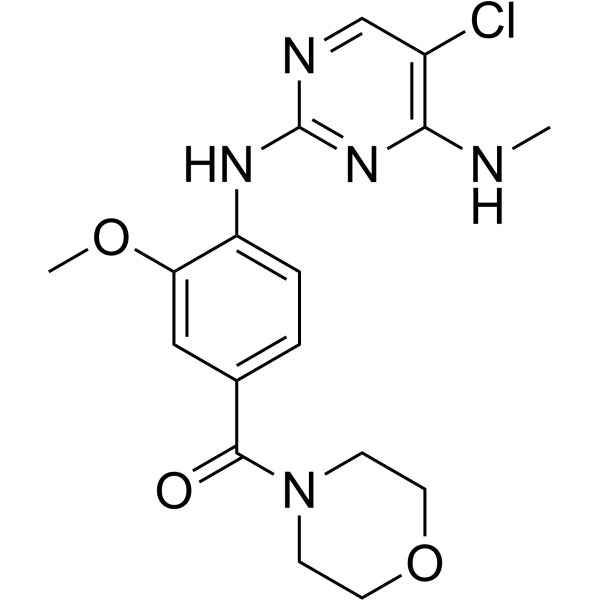
    HG-10-102-01 is a highly potent, selective, and brain-penetrable LRRK2 inhibitor, with IC50 values of 20.3 and 3.2 nM against wild-type LRRK2 and LRRK2[G2019S], respectively. HG-10-102-01 also inhibits MNK2 and MLK1, with IC50 values of 0.6 and 2.1 μM. HG-10-102-01 can be used for Parkinson's disease (PD) research .
    HG-10-102-01
  • HY-124322

    Beta-secretase Amyloid-β Neurological Disease Inflammation/Immunology
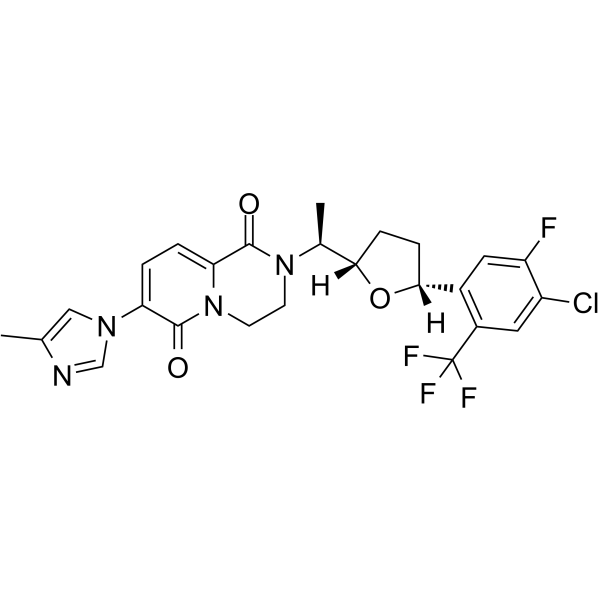
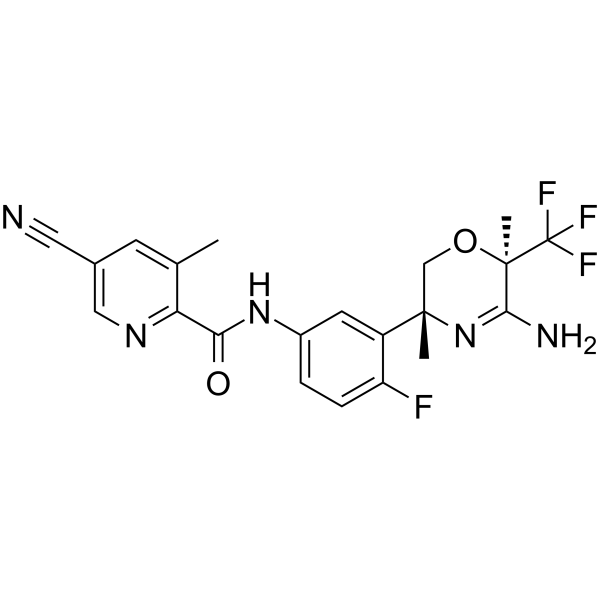
    NB-360 is a potent, brain penetrable and orally active β‐secretase 1/2 (BACE1/BACE2) dual inhibitor with IC50 values of 5 and 6 nM. NB-360 can inhibit amyloid-β protein accumulation. NB-360 can be used for the researches of inflammation and neurological disease, such as Alzheimer's disease .
    NB-360
  • HY-106000

    Histamine Receptor Neurological Disease
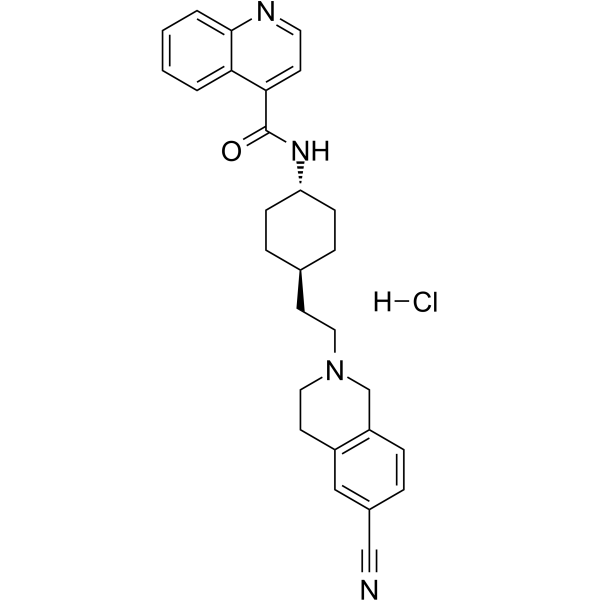
    GSK239512 is a potent and brain penetrated H3 receptor antagonist. GSK239512 can be used for the research of mild-to-moderate Alzheimer's disease (AD) .
    GSK239512
  • HY-10847B
    SB-277011 hydrochloride
    1 Publications Verification

    SB-277011A hydrochloride

    Dopamine Receptor 5-HT Receptor Neurological Disease
    SB-277011 hydrochloride (SB-277011A hydrochloride) is a potent, selective, orally bioavailable and brain penetrate dopamine D3 receptor (D3R) antagonist with Ki values of 10.7 nM and 11.2 nM at rodent and human D3R, respectively. SB-277011 hydrochloride displays 80- to 100-fold selectivity over other dopamine receptors with pKis of 8.0, 6.0, <5.2, and 5.9 for D3, D2, 5-HT1B, and 5-HT1D receptors, respectively .
    SB-277011 hydrochloride
  • HY-136146

    nAChR Neurological Disease
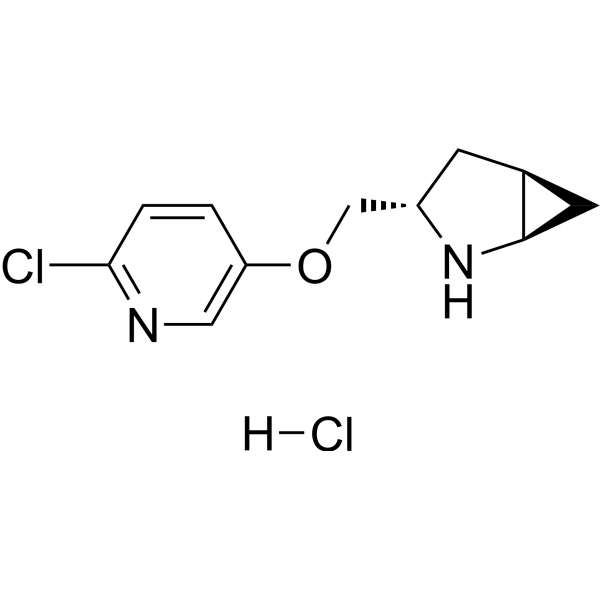
    SUVN-911 is a potent, selective, brain penetrated and orally bioavailable neuronal nicotinic acetylcholine α4β2 receptor antagonist, with a Ki of 1.5 nM. SUVN-911 has antidepressant activity .
    SUVN-911
  • HY-N4134

    NO Synthase Inflammation/Immunology
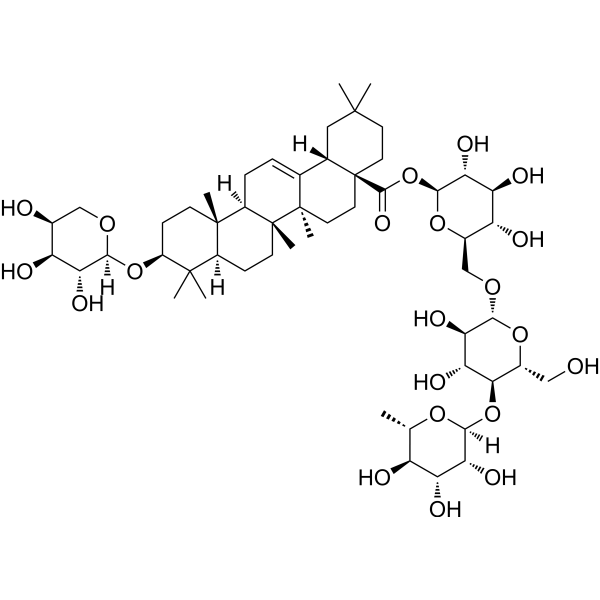
    Ciwujianoside C3, an orally active and brain penetrated compound, is isolated the leaves of Acanthopanax henryi Harms. Ciwujianoside C3 has anti-inflammatory effect and can reinforces object recognition memory .
    Ciwujianoside C3
  • HY-107691

    Neurokinin Receptor Neurological Disease Endocrinology Cancer
    GR 159897 is a highly potent, selective, competitive, brain-penetrated non-peptide neurokinin 2 (NK2) receptor antagonist. GR 159897 has little or no affinity for NK1 and NK3 receptors. GR 159897 inhibits binding of [ 3H]GR100679 to human NK2 (hNK2)-CHO cells and rat colon membranes with pKis of 9.51 and 10, respectively. Antagonizes bronchoconstriction. Anxiolytic-like and anti-tumor effects .
    GR 159897
  • HY-116941

    Dopamine Receptor Neurological Disease
    A-381393 is a potent, selective, brain penetrate dopamine D4 receptor antagonist, with Kis of 1.5, 1.9 and 1.6 nM for human dopamine D4.4, D4.2, and D4.7 receptor, respectively, >2700-fold selectivity over D1, D2, D3 and D5 dopamine receptors. A-381393 shows moderate affinity for 5-HT2A (Ki, 370 nM) .
    A-381393
  • HY-128351
    SHR1653
    1 Publications Verification

    Oxytocin Receptor Neurological Disease Endocrinology
    SHR1653 is a highly potent, selective and brain penetrated oxytocin receptor (OTR) antagonist, with an IC50 of 15 nM for hOTR .
    SHR1653
  • HY-101188

    Histamine Receptor Infection
    INCB38579 is an orally active, highly brain penetrable, and selective histamine H4 receptor (HH4R) antagonist (hH4R IC50=4.8 nM, mH4R IC50=42 nM, rH4R IC50=32 nM). INCB38579 shows anti-inflammatory pain and anti-pruritic activities .
    INCB38579
  • HY-12697

    Dopamine Receptor Neurological Disease
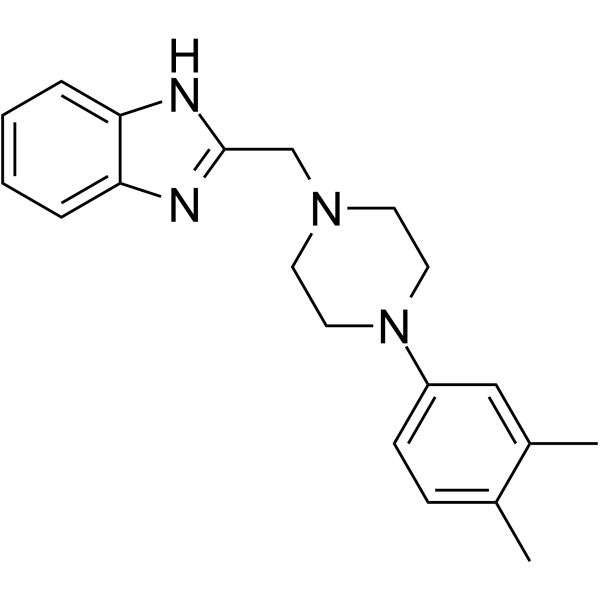
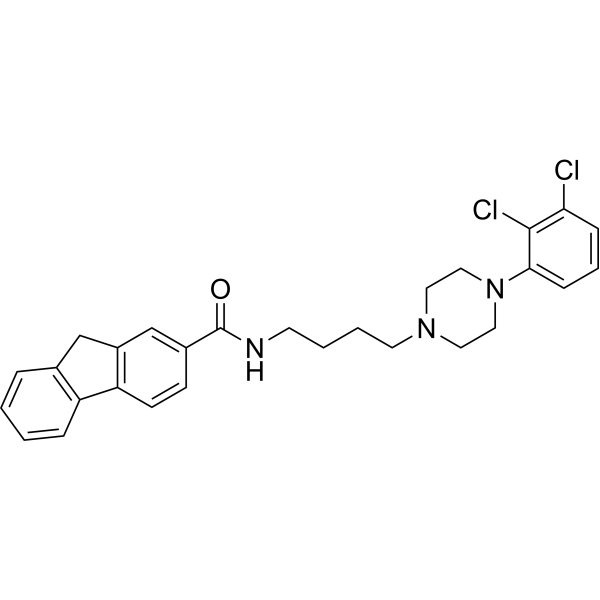
    NGB 2904 is a potent, selective, orally active and brain-penetrated antagonist of dopamine D3 receptor, with a Ki of 1.4 nM. NGB 2904 shows selectivity for D3 over D2, 5-HT2, α1, D4, D1 and D5 receptors (Kis=217, 223, 642, >5000, >10000 and >10000 nM, respectively). NGB 2904 antagonizes Quinpirole-stimulated mitogenesis .
    NGB 2904
  • HY-111540B
    (S)-LY-3381916
    1 Publications Verification

    (S)-IDO1-IN-5

    Indoleamine 2,3-Dioxygenase (IDO) Cancer
    (S)-LY-3381916 ((S)-IDO1-IN-5; Example 1B) is an active S-isomer of LY-3381916. (S)-LY-3381916 binds to IDOL with an IC50 value less than 1.5 µΜ . LY-3381916 is a potent, selective and brain penetrated inhibitor of Indoleamine 2,3-Dioxygenase 1 (IDO1) activity, binds to apo-IDO1 lacking heme rather than mature heme-bound IDO1 .
    (S)-LY-3381916
  • HY-136208

    Opioid Receptor Neurological Disease
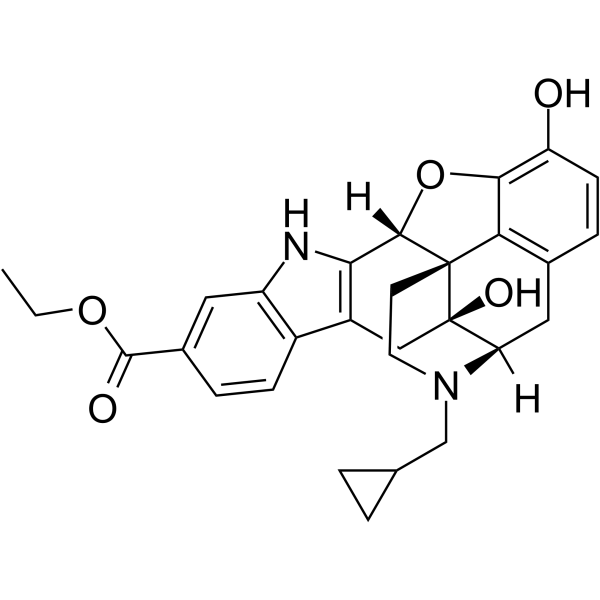
    TAN-452 is an orally active, selective peripherally acting δ-opioid receptor (DOR) antagonist with a Ki of 0.47 nM and a Kb of 0.21 nM. TAN-452 is an antagonist for μ-opioid receptor (MOR; Ki=36.56 nM and Kb=9.43 nM) and κ-opioid receptor (KOR; Ki=5.31 nM and Kb=7.18 nM). TAN-452, a derivative of Naltrindole, demonstrates low brain penetrability and attenuates morphine-induced side effects without affecting pain control .
    TAN-452
  • HY-131204

    Caspase Neurological Disease
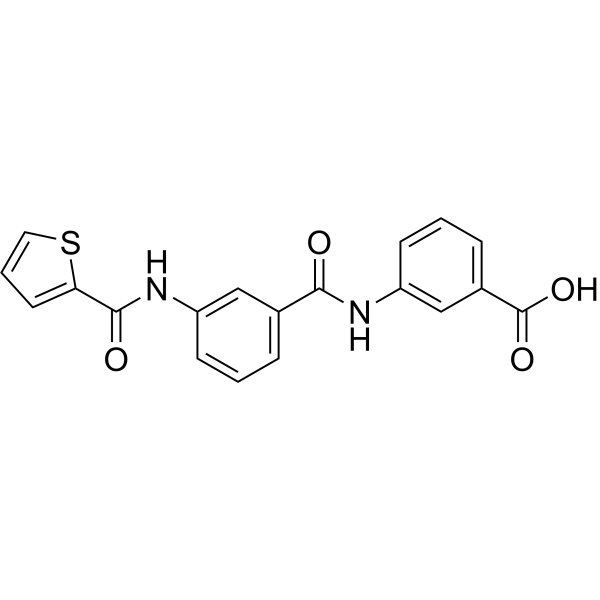
    CZL80, a brain-penetrable caspase-1 inhibitor with an IC50 of 0.01 μM, could be used in the study of febrile seizures and later enhanced epileptogenic susceptibility .
    CZL80
  • HY-100605

    mGluR Others
    VU0483605 is a potent and brain-penetrated mGlu1 receptor positive allosteric modulator (PAM). VU0483605 shows excellent mGlu1 PAM activity at both human and rat, with EC50 values of 390 and 356 nM, respectively .
    VU0483605
  • HY-14136S

    SR141716-d10

    Isotope-Labeled Compounds Cannabinoid Receptor Bacterial Infection Metabolic Disease Cancer
    Rimonabant-d10 is deuterium labeled Rimonabant. Rimonabant (SR141716) is a highly potent, brain penetrated and selective central cannabinoid receptor (CB1) antagonist with a Ki of 1.8 nM. Rimonabant (SR141716) also inhibits Mycobacterial membrane protein Large 3 (MMPL3).
    Rimonabant-d10
  • HY-153856

    EGFR Cancer
    TAS2940 is a brain-penetrable, orally active, irreversible and selective pan-ERBB inhibitor. TAS2940 against wild-type HER2, HER2 V777L, and A775_G776insYVMA with IC50 values of 5.6 nM, 2.1 nM, and 1.0 nM, respectively. TAS2940 can be used for the study of tumors with HER2 and EGFR aberrations .
    TAS2940
  • HY-103379

    CRFR Neurological Disease Endocrinology
    CP 376395 hydrochloride is a potent, selective, and brain-penetrable Corticotropin releasing factor 1 (CRF1) receptor antagonist .
    CP 376395 hydrochloride
  • HY-107623

    MCHR1 (GPR24) Metabolic Disease
    TC-MCH 7c, a phenylpyridone derivative, is an orally available, selective and brain-penetrable MCH1R antagonist with an IC50 of 5.6 nM for hMCH1R . TC-MCH 7c has Kis of 3.4 nM and 3.0 nM of human and mouse MCH1R, respectively .
    TC-MCH 7c
  • HY-149025

    P18

    Phospholipase Inflammation/Immunology Cancer
    DPTIP-proagent 18 (P18) is a orally active and brain-penetrable proagent of DPTIP (HY-131002). DPTIP-proagent 18 is a potent nSMase2 inhibitor. DPTIP-proagent 18 significantly inhibits IL-1β-induced EV (extracellular vesicle) release by inhibition of nSMase2 (neutral sphingomyelinase-2) activity. DPTIP-proagent 18 can be used for brain injury research .
    DPTIP-prodrug 18
  • HY-153856A

    EGFR Cancer
    TAS2940 fumarate is a brain-penetrable, orally active, irreversible and selective pan-ERBB inhibitor. TAS2940 fumarate against wild-type HER2, HER2 V777L, and A775_G776insYVMA with IC50 values of 5.6 nM, 2.1 nM, and 1.0 nM, respectively. TAS2940 fumarate can be used for the study of tumors with HER2 and EGFR aberrations .
    TAS2940 fumarate
  • HY-128349

    Phosphodiesterase (PDE) Neurological Disease
    MT-3014 is a potent, highly selective and brain-penetrated phosphodiesterase 10A (PDE 10A) inhibitor, with IC50s of 0.062 nM and 0.09 nM for human PDE 10A and bovine PDE 10A, respectively .
    MT-3014
  • HY-14136R

    SR141716 (Standard)

    Cannabinoid Receptor Bacterial Reference Standards Infection Metabolic Disease Cancer
    Rimonabant (Standard) is the analytical standard of Rimonabant. This product is intended for research and analytical applications. Rimonabant (SR141716) is a highly potent, brain penetrated and selective central cannabinoid receptor (CB1) antagonist with a Ki of 1.8 nM. Rimonabant (SR141716) also inhibits Mycobacterial membrane protein Large 3 (MMPL3).
    Rimonabant (Standard)
  • HY-10847A

    SB-277011A dihydrochloride

    Dopamine Receptor Neurological Disease
    SB-277011 dihydrochloride (SB-277011A dihydrochloride) is a potent, selective, orally bioavailable and brain penetrate dopamine D3 receptor antagonist, with pKis of 8.0, 6.0, <5.2 and 5.9 for D3, D2, 5-HT1B, and 5-HT1D receptors, respectively.
    SB-277011 dihydrochloride
  • HY-111540A

    (Rac)-IDO1-IN-5

    Indoleamine 2,3-Dioxygenase (IDO) Cancer
    (Rac)-LY-3381916 ((Rac)-IDO1-IN-5; Example 1) is a racemate of LY-3381916 . LY-3381916 is a potent, selective and brain penetrated inhibitor of Indoleamine 2,3-Dioxygenase 1 (IDO1) activity, binds to apo-IDO1 lacking heme rather than mature heme-bound IDO1 .
    (Rac)-LY-3381916
  • HY-12697A

    Dopamine Receptor Neurological Disease
    NGB 2904 hydrochloride is a potent, selective, orally active and brain-penetrated antagonist of dopamine D3 receptor, with a Ki of 1.4 nM. NGB 2904 hydrochloride shows selectivity for D3 over D2, 5-HT2, α1, D4, D1 and D5 receptors (Kis=217, 223, 642, >5000, >10000 and >10000 nM, respectively). NGB 2904 hydrochloride antagonizes Quinpirole-stimulated mitogenesis .
    NGB 2904 hydrochloride
  • HY-10510R

    Autophagy Ribosomal S6 Kinase (RSK) Reference Standards Cancer
    BI-D1870 (Standard) is the analytical standard of BI-D1870 (HY-10510). This product is intended for research and analytical applications. BI-D1870 is an ATP-competitive, cell permeable and brain penetrated inhibitor of RSK isoforms, with IC50s of 31 nM/24 nM/18 nM/15 nM for RSK1/RSK2/RSK3/RSK4, respectively .
    BI-D1870 (Standard)
  • HY-10847BR

    SB-277011A hydrochloride (Standard)

    Reference Standards Dopamine Receptor 5-HT Receptor Neurological Disease
    SB-277011 hydrochloride (Standard) is the analytical standard of SB-277011 (hydrochloride) (HY-10847B). This product is intended for research and analytical applications. SB-277011 hydrochloride (SB-277011A hydrochloride) is a potent, selective, orally bioavailable and brain penetrate dopamine D3 receptor (D3R) antagonist with Ki values of 10.7 nM and 11.2 nM at rodent and human D3R, respectively. SB-277011 hydrochloride displays 80- to 100-fold selectivity over other dopamine receptors with pKis of 8.0, 6.0, <5.2, and 5.9 for D3, D2, 5-HT1B, and 5-HT1D receptors, respectively .
    SB-277011 hydrochloride (Standard)

Inquiry Online

Your information is safe with us. * Required Fields.

Salutation


Country or Region *

Applicant Name *


Organization Name *

Department *


Email Address *


Product Name *

Cat. No.


Requested quantity *

Phone Number *


Remarks

Inquiry Online

Inquiry Information

Product Name:
Cat. No.:
Quantity:
MCE Japan Authorized Agent:

