
Search Result
Results for "
breast cell lines
" in MedChemExpress (MCE) Product Catalog:
3
Biochemical Assay Reagents
8
Isotope-Labeled Compounds
| Cat. No. |
Product Name |
Target |
Research Areas |
Chemical Structure |
-
- HY-138642
-
|
ARV-471
|
PROTACs
Estrogen Receptor/ERR
|
Cancer
|
|
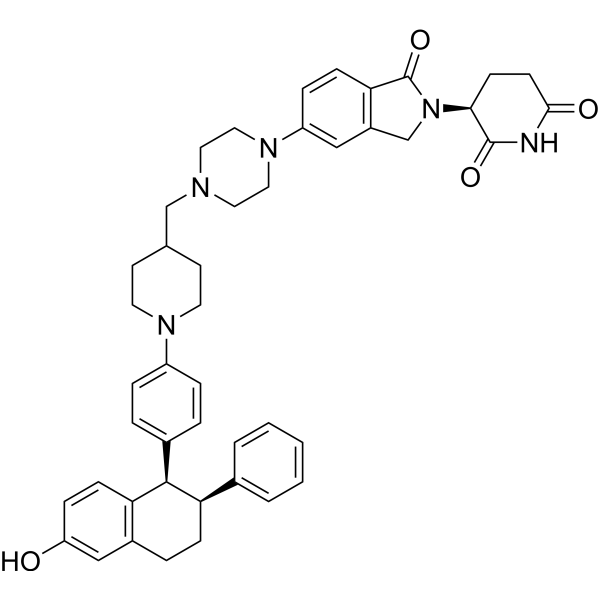
Vepdegestrant (ARV-471) is an orally active PROTAC estrogen receptor degrader against breast cancer. Vepdegestrant is a hetero-bifunctional molecule that facilitates the interactions between estrogen receptor alpha and an intracellular E3 ligase complex. Vepdegestrant leads to the ubiquitylation and subsequent degradation of estrogen receptors via the proteasome. Vepdegestrant robustly degrades ER in ER-positive breast cancer cell lines with a half-maximal degradation concentration (DC50) of about 2 nM .
|
-
-
- HY-19822
-
|
RAD1901
|
Estrogen Receptor/ERR
|
Cancer
|
|
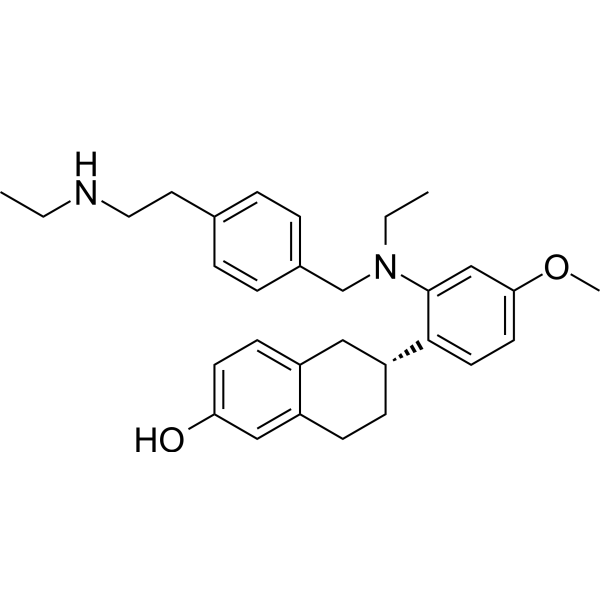
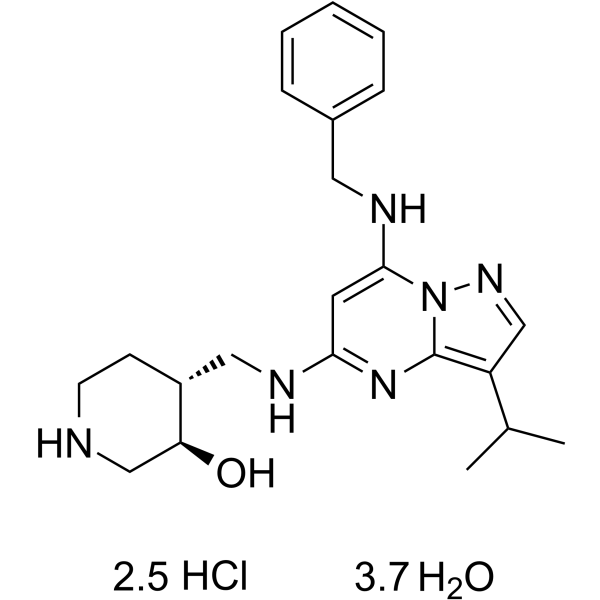
Elacestrant (RAD1901) is an orally available and selective estrogen receptor degrader (SERD) with IC50s of 48 and 870 nM for ERα and ERβ, respectively. Elacestrant also can inhibit growth of ER + breast cancer cell lines in vitro and in vivo .
|
-
-
- HY-108692
-
|
|
Apoptosis
Endogenous Metabolite
|
Cancer
|
|
Enterolactone is a bioactive phenolic metabolite known as a mammalian lignan derived from dietary lignans. Enterolactone has estrogenic properties and anti-breast cancer activity . Enterolactone is a radiosensitizer for human breast cancer cell lines through impaired DNA repair and increased apoptosis .
|
-
-
- HY-100012
-
CBR-5884
Maximum Cited Publications
20 Publications Verification
|
Phosphoglycerate Dehydrogenase (PHGDH)
|
Cancer
|
|
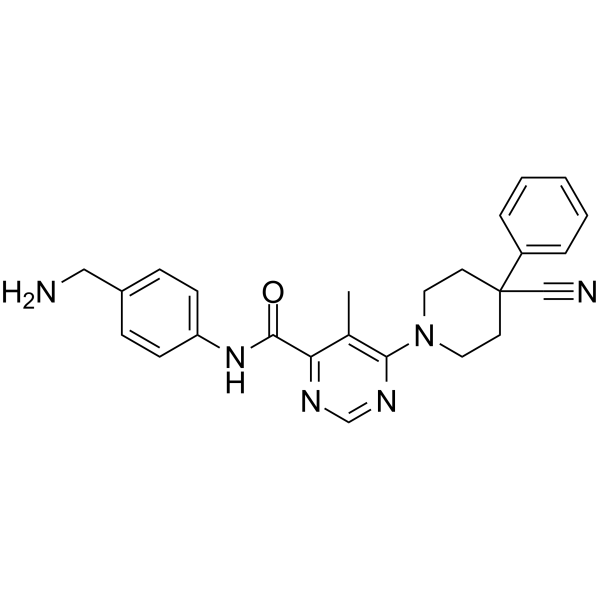
CBR-5884 is an active, selective inhibitor of phosphoglycerate dehydrogenase (PHGDH) with an IC50 of 33 μM. CBR-5884 inhibits de novo serine synthesis in cancer cells and is selectively toxic to cancer cell lines with high serine biosynthetic activity. CBR-5884 selectively inhibits the proliferation of melanoma and breast cancer lines that have a high propensity for serine synthesis .
|
-
-
- HY-N7083
-
-
-
- HY-19822A
-
|
RAD1901 dihydrochloride
|
Estrogen Receptor/ERR
|
Cancer
|
|
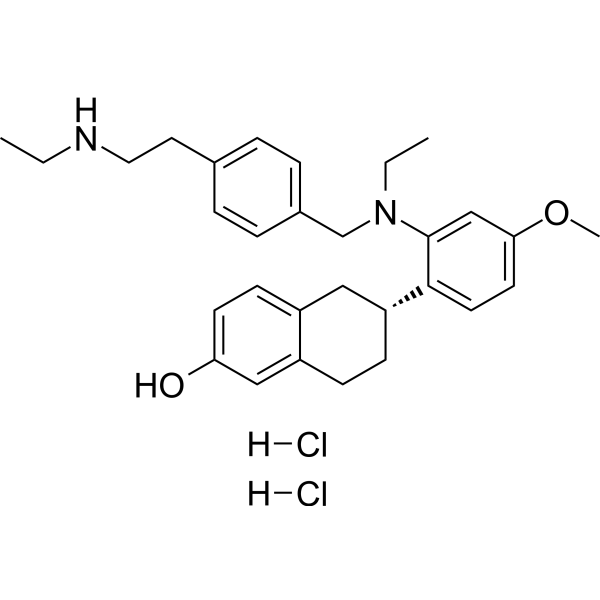
Elacestrant (RAD1901) dihydrochloride is an orally available and selective estrogen receptor degrader (SERD) with IC50s of 48 and 870 nM for ERα and ERβ, respectively. Elacestrant dihydrochloride also can inhibit growth of ER + breast cancer cell lines in vitro and in vivo .
|
-
-
- HY-119272
-
EF24
2 Publications Verification
|
ERK
Caspase
NF-κB
Apoptosis
p38 MAPK
Reactive Oxygen Species (ROS)
|
Inflammation/Immunology
Cancer
|
|
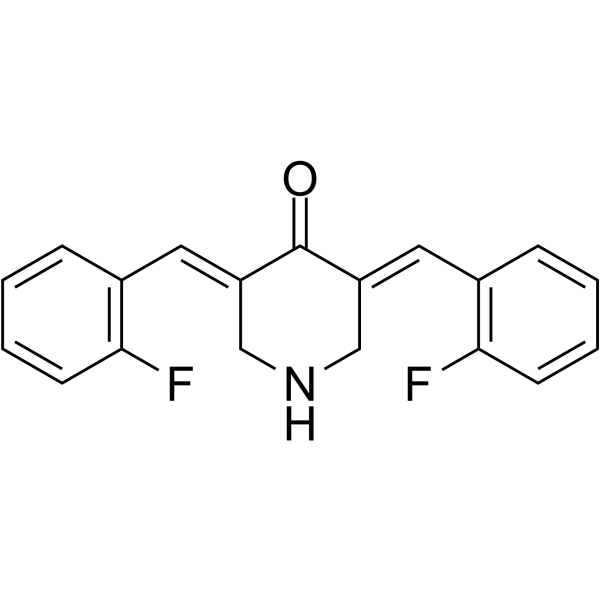
EF24, a curcumin analogue, is an NF-kB inhibitor with great anti-tumor efficacy and oral bioavailability via deactivation of the MAPK/ERK signaling pathway in oral squamous cell carcinoma (OSCC). EF24 is active against melanoma and breast cancer cell lines with GI50 values of 0.7 μM and 0.8 μM, respectively. EF24 induces cell cycle arrest and apoptosis in MDA-MB-231 human breast cancer cells and DU-145 human prostate cancer cells. EF24 increases the levels of activated caspase 3 and 9, and decreases the phosphorylated forms of MEK1 and ERK .
|
-
-
- HY-136420
-
|
|
PROTACs
Raf
Apoptosis
|
Inflammation/Immunology
Cancer
|
|
SJF-0628 is a RAF PROTAC degrader. SJF-0628 induces targeted degradation of BRAF in various cancer cell lines (colorectal cancer cell lines (Colo-205, LS-411N, HT-29, RKO) and triple-negative breast cancer cell line DU-4475). SJF-0628 decreases pMEK and pErk levels in DU-4475 cells. SJF-0628 has anti-tumor activity. SJF-0628 can be used for research of colorectal cancer and triple-negative breast cancer. (Pink: RAF ligand (HY-12057), Blue: VHL Ligand ( HY-125845), Black: Linker (HY-B0912)) .
|
-
-
- HY-120929
-
BI8622
4 Publications Verification
|
E1/E2/E3 Enzyme
c-Myc
|
Inflammation/Immunology
Cancer
|
|
BI8622 is a specific inhibitor of the ubiquitin ligase HUWE1 with an IC50 of 3.1 μM. BI8622 can decrease the protein expression levels of c-myc and glycolytic markers as well as immune modulatory markers after HUWE1 inhibition in triple-negative breast cancer (TNBC) cell lines. BI8622 significantly protects against cisplatin (HY-17394)-induced acute kidney injury (AKI). BI8622 significantly reduces the growth of multiple myeloma (MM) cell lines and induces cell cycle arrest. BI8622 can prevent HUWE1-dependent TTBK2 ubiquitination. BI8622 can be studied in research for various diseases including medulloblastoma, acute kidney injury, breast cancer and MM .
|
-
-
- HY-B1785
-
|
Sulfosalicylic acid; Sulphosalicylic acid; Salicylsulfonic acid
|
Drug Derivative
|
Cancer
|
|
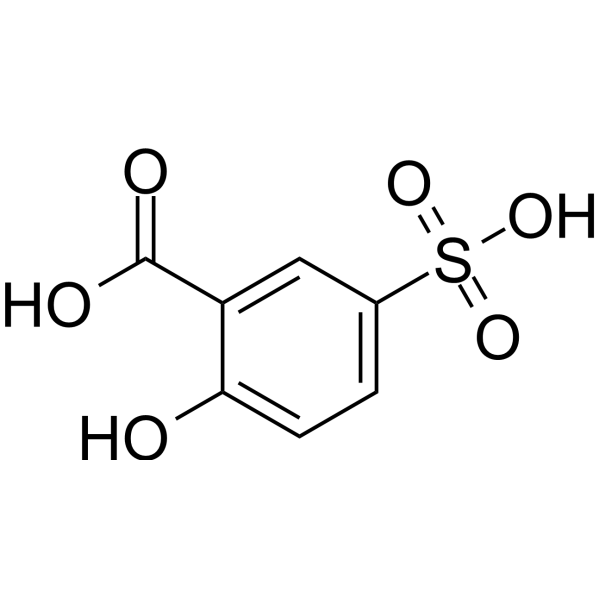
5-Sulfosalicylic acid is a sulfonated salicylic acid derivative. 5-Sulfosalicylic acid is effective against the breast cancer cell lines, with less toxicity . 5-Sulfosalicylic acid has antioxidant activities .
|
-
-
- HY-162250
-
|
|
PROTACs
Histone Methyltransferase
|
Cancer
|
|
MS8847 is a PROTAC degrader and antiproliferative agent targeting EZH2 (DC50=34.4 nM in EOL-1 MLL-rAML cells). MS8847 recruits the E3 ligase von Hippel-Lindau (VHL) to mediate the degradation of EZH2 via the ubiquitin-proteasome system. MS8847 induces antiproliferative effects in MLL-rearranged acute myeloid leukemia cells and inhibits the growth of triple-negative breast cancer cell lines or 3D triple-negative breast cancer models. MS8847 is applicable to research related to MLL-rearranged acute myeloid leukemia and triple-negative breast cancer .
|
-
-
- HY-121250
-
|
|
Fatty Acid Synthase (FASN)
Apoptosis
|
Cancer
|
|
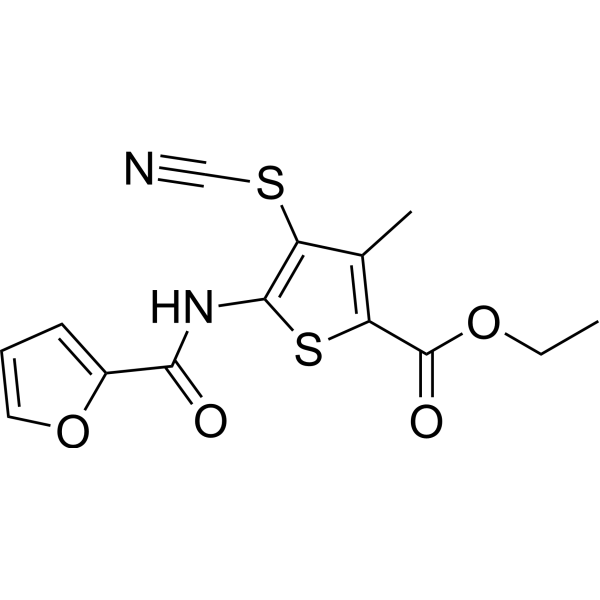
Fasnall is a selective fatty acid synthase (FASN) inhibitor with an IC50 of 3.71 μM. Fasnall induces apoptosis in HER2 + breast cancer cell lines. Fasnall shows potent anti-tumor activities .
|
-
-
- HY-100395
-
|
|
Apoptosis
|
Cancer
|
|
F16 is a potent growth inhibitor of the neu-overexpressing cells and also selectively inhibits proliferation of mammary epithelial as well as a variety of mouse mammary tumor and human breast cancer cell lines.
|
-
-
- HY-119808
-
-
-
- HY-133737
-
|
PROTAC BRD4 Degrader-5
|
PROTACs
Epigenetic Reader Domain
|
Cancer
|
|
GAL-02-221 is a PROTAC connected by ligands for von Hippel-Lindau and BRD4. GAL-02-221 can potent degrade BRD4 in HER2 positive and negative breast cancer cell lines .
|
-
-
- HY-157396
-
|
|
Aurora Kinase
Apoptosis
Caspase
|
Cancer
|
|
JAB-2485 is an orally active and selective Aurora kinase A (AURKA) inhibitor with an IC50 value of 0.327 nM. JAB-2485 exhibits inhibitory activity against various tumor cell lines such as neuroblastoma, triple-negative breast cancer, small cell lung cancer, and epithelial ovarian cancer. JAB-2485 can induce cell cycle arrest and apoptosis in tumor cells. JAB-2485 has antitumor activity .
|
-
-
- HY-135046
-
|
|
DNA/RNA Synthesis
|
Neurological Disease
Inflammation/Immunology
Cancer
|
|
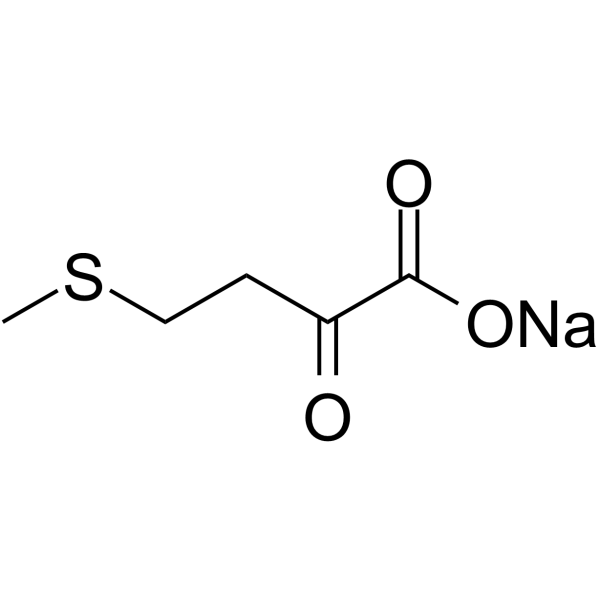
MTOB sodium is a potent C-terminal binding protein (CtBP) inhibitor. MTOB sodium attenuates repetitive head injury-elicited neurologic dysfunction and neuroinflammation via inhibition of the transactivation activity of CtBP1 and CtBP2. MTOB sodium antagonizes the transcriptional regulatory activity of CtBP1 and CtBP2 by eviction from their target promoters in breast cancer cell lines .
|
-
-
- HY-160469
-
|
|
Akt
PROTACs
|
Cancer
|
|
INY-05-040 is an AKT degrader that can selectively and quickly degrade all three AKT isoforms. INY-05-040 exhibits anti-cancer activity. INY-05-040 can inhibit downstream signaling and cell proliferation in 288 cancer cell lines. INY-05-040 can suppress AKT signaling and induces the stress mitogen-activated protein kinase (MAPK) c-Jun N-terminal kinase (JNK). INY-05-040 is effective for breast cancer lines with a low-baseline activation of stress MAPK pathway. INY-05-040 can be studied for anti-cancer research .
|
-
-
- HY-123901
-
|
|
Apoptosis
|
Cancer
|
|
Garcinone E is a natural xanthone found in the rind of the mangosteen fruit. Garcinone E induces apoptosis and inhibits cancer cell migration. Garcinone E has anticancer effects on different human cancer cell lines, including colorectal, breast, and hepatocellular carcinomas .
|
-
-
- HY-117102
-
|
|
Aryl Hydrocarbon Receptor
Checkpoint Kinase (Chk)
|
Cancer
|
|
ANI-7 is an activator of aryl hydrocarbon receptor (AhR) pathway. ANI-7 inhibits the growth of multiple cancer cells, and potently and selectively inhibits the growth of MCF-7 breast cancer cells with a GI50 of 0.56 μM. ANI-7 induces CYP1-metabolizing mono-oxygenases by activating AhR pathway, and also induces DNA damage, checkpoint Kinase 2 (Chk2) activation, S-phase cell cycle arrest, and cell death in sensitive breast cancer cell lines .
|
-
-
- HY-139342
-
|
|
CDK
|
Cancer
|
|
CDK7-IN-4 (compound I) is a potent CDK7 (Cyclin-dependent kinase 7) inhibitor. CDK7-IN-4 shows anticancer activity. CDK7-IN-4 inhibits the in vitro growth of cancer cell lines from a variety of histologies including colon , breast , lung , ovary and stomach , in a dose dependent manner .
|
-
-
- HY-N6990
-
|
|
Others
|
Cancer
|
|
Anhydrosecoisolariciresinol is from the flower of Wedelia biflora, has anti-tumor activities .
Anhydrosecoisolariciresinol decreases the growth of human breast cancer MCF-7 and MDA-MB-231 cell lines .
|
-
-
- HY-147402A
-
|
D-0502 meglumine
|
Estrogen Receptor/ERR
|
Cancer
|
|
Taragarestrant (D-0502) meglumine is a potent, orally active and selective estrogen receptor degrader (SERD). Taragarestrant meglumine shows potent activity in various ER+ breast cancer cell lines and xenograft models .
|
-
-
- HY-165245
-
|
|
Transmembrane Glycoprotein
|
Cancer
|
|
SBI-183 is an orally active inhibitor of QSOX1 (Kd: 20 μM). SBI-183 suppresses the proliferative and invasive phenotype of renal cancer cell lines, including triple negative breast cancer cell line, lung adenocarcinoma cell line and pancreatic ductal adenocarcinoma. SBI-183 inhibits tumor growth in two human xenograft mouse models of renal cell carcinoma in vivo .
|
-
-
- HY-120275
-
|
|
Bcl-2 Family
Apoptosis
|
Cancer
|
|
CYD-2-11 is a selective Bax agonist with a Ki value of 34.1 nM. CYD-2-11 induces cell apoptosis and shows antiproliferative activity to breast cancer MDA-MB-231 and MCF-7 cell lines with IC50 values of 3.22 and 3.81 μM, respectively. CYD-2-11 suppresses tumor growth in MDA-MB-231 tumor models. CYD-2-11 can be used for the research of breast and lung cancer .
|
-
-
- HY-159613
-
|
|
Apoptosis
Estrogen Receptor/ERR
|
Inflammation/Immunology
Cancer
|
|
PELP1-IN-1 is a PELP1 inhibitor and an apoptosis inducer with no cytotoxic activity against non-cancer cell lines. PELP1-IN-1 targets wild-type, mutant and drug-resistant ER + breast cancer, and promotes PELP1 degradation through the proteasome pathway. As an analog of SMIP34 (HY-169903), PELP1-IN-1 is applicable to the research of estrogen receptor α-positive breast cancer .
|
-
-
- HY-N7083R
-
|
|
Reference Standards
Apoptosis
Aldehyde Dehydrogenase (ALDH)
|
Inflammation/Immunology
Cancer
|
|
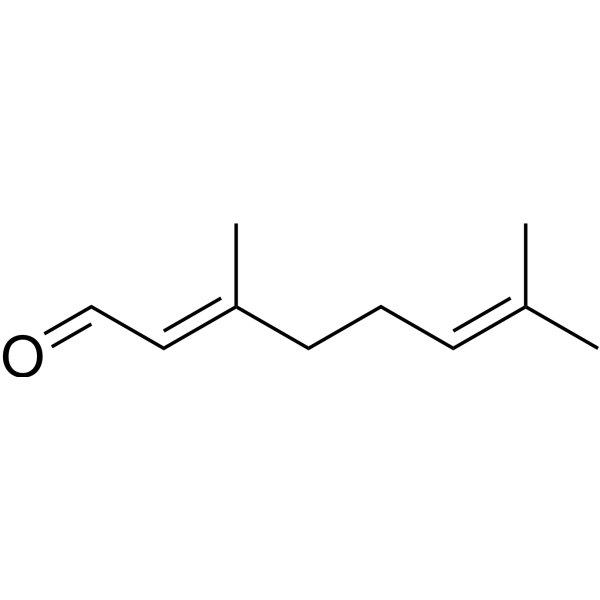
Citral (Standard) is the analytical standard of Citral. This product is intended for research and analytical applications. Citral is an orally active monoterpene compound in lemon grass essential oil and a natural ALDH1A inhibitor, which can induce apoptosis and cycle arrest in breast cancer cell lines, and has analgesic, anti-injurious and anti-inflammatory effects .
|
-
-
- HY-148368
-
|
|
Bcl-2 Family
Apoptosis
|
Cancer
|
|
CYD-4-61 is a novel Bax activator used for breast cancer research. CYD-4-61 inhibits triple-negative breast cancer MDA-MB-231 and ER-positive breast cancer MCF-7 cell lines proliferation. CYD-4-61 activates Bax protein to induce cytochrome c release and regulate apoptotic biomarkers, leading to cancer cell apoptosis .
|
-
-
- HY-109583
-
|
4-Oxo-4-HPR
|
Apoptosis
Reactive Oxygen Species (ROS)
Drug Metabolite
|
Cancer
|
|
4-Oxofenretinide (4-Oxo-4-HPR) is a metabolite of Fenretinide (HY-15373). 4-Oxofenretinide induces cell growth inhibition in ovarian, breast, and neuroblastoma tumor cell lines. 4-Oxofenretinide causes a marked accumulation of cells in G2-M. 4-Oxofenretinide induces cancer cell apoptosis through caspase-9 .
|
-
-
- HY-19671
-
|
SR-45023A; SR 9223i; SK&F-99085
|
HMG-CoA Reductase (HMGCR)
Apoptosis
|
Cancer
|
|
Apomine (SR-45023A) is an orally active antineoplastic agent that inhibits the mevalonate/isoprenoid pathway in cholesterol synthesis. Apomine can accelerate the degradation of 3-hydroxy-3-methylglutaryl-CoA reductase (HMGR). Apomine can also inhibit the growth of various types of cancer cells, including lung cancer, colon cancer, breast cancer, and skin cancer. Apomine is able to induce apoptosis in tumor cell lines derived from leukemia, colon cancer, liver cancer, ovarian cancer, and breast cancer .
|
-
-
- HY-146307
-
|
|
TrxR
|
Cancer
|
|
TrxR-IN-3 (Compound 2c) is a potent inhibitor of TrxR. TrxR-IN-3 exhibits potent antiproliferative activities against five human cancer cell lines, especially against breast tumor cells. TrxR-IN-3 increases ROS levels and resulted in marked apoptosis by regulating apoptosis-related proteins expressed in the breast cancer cells. TrxR-IN-3 also triggers the formation of autophagosomes and autolysosomes by promoting the expression of LC3-II and Beclin-1 and diminishing the expression of LC3-I and p62 proteins .
|
-
-
- HY-125209A
-
|
|
Apoptosis
PARP
DNA/RNA Synthesis
|
Cancer
|
|
TH5427 hydrochloride is a NUDT5 inhibitor with a human target IC50 of 29 nM, ~690-fold selectivity over MTH1 in vitro, and selective functional inhibition over other NUDIX hydrolases including NUDT9 .TH5427 hydrochloride binds to the active site of NUDT5, blocking enzymatic activity related to ADP-ribose metabolism and PAR-derived ATP synthesis .TH5427 hydrochloride blocks progestin-dependent nuclear ATP synthesis, impairs progestin-induced chromatin remodeling, inhibits histone H1 displacement, disrupts progestin-dependent gene regulation, and abrogates progestin-dependent proliferation in breast cancer cells .TH5427 hydrochloride functions as a versatile probe to study nuclear ATP dynamics and ADP-ribose-related metabolism in cells .TH5427 hydrochloride engages NUDT5 at physiological temperatures, as demonstrated by Drug Affinity Responsive Target Stability (DARTS) assay .TH5427 hydrochloride stabilizes NUDT5 against thermal denaturation in cell lysates and intact cells, as shown by cellular thermal shift assay (CETSA) .TH5427 hydrochloride functionally inhibits NUDT5 activity, leading to downstream effects on oxidative DNA damage and DNA replication in triple-negative breast cancer (TNBC) cells .TH5427 hydrochloride suppresses proliferation of TNBC cells without inducing cell death or apoptosis, slows DNA replication in TNBC cells, promotes accumulation of oxidative DNA lesions, and triggers DNA damage response in TNBC cells .TH5427 hydrochloride suppresses growth of TNBC cells in vitro, inhibits growth of TNBC xenograft tumors in nude mice in vivo, and shows greater potency against TNBC cell lines compared to ER-positive and normal-like breast cell lines .TH5427 hydrochloride can be used for the research of breast cancer and triple-negative breast cancer .
|
-
-
- HY-147402
-
|
D-0502
|
Estrogen Receptor/ERR
|
Cancer
|
|
Taragarestrant (D-0502) is a potent, orally active and selective estrogen receptor degrader (SERD). Taragarestrant shows potent activity in various ER+ breast cancer cell lines and xenograft models .
|
-
-
- HY-108692R
-
|
|
Reference Standards
Apoptosis
Endogenous Metabolite
|
Cancer
|
|
Enterolactone (Standard) is the analytical standard of Enterolactone. This product is intended for research and analytical applications. Enterolactone is a bioactive phenolic metabolite known as a mammalian lignan derived from dietary lignans. Enterolactone has estrogenic properties and anti-breast cancer activity . Enterolactone is a radiosensitizer for human breast cancer cell lines through impaired DNA repair and increased apoptosis .
|
-
-
- HY-157297
-
|
|
CDK
|
Cancer
|
|
CDK-IN-13 (compound 32E) is a potent and selective inhibitor of CDK12/cyclinK with an IC50 of 3 nM. CDK-IN-13 inhibits the growth of the HER2-positive breast cancer cell lines .
|
-
-
- HY-123656
-
|
|
Apoptosis
|
Cancer
|
|
Antiproliferative agent-61 is a synthetic β-carlinyl chalcone with significant antiproliferative activity. Antiproliferative agent-61 showed significant effects in a range of solid tumor cell lines, with the most prominent effects in breast cancer. Antiproliferative agent-61 showed IC50 values of 2.25 and 3.29 μM in the human breast cancer MCF-7 cell line. Antiproliferative agent-61 significantly induced DNA fragmentation and apoptosis in breast cancer cells. Antiproliferative agent-61 inhibited the interaction of MDM2 with p53 and promoted the degradation of MDM2 .
|
-
-
- HY-176166
-
|
|
mTOR
PROTACs
Autophagy
|
Cancer
|
|
PD-M6 is a mTOR PROTAC degrader (DC50: 4.8 μM). PD-M6 promotes ubiquitination and degradation of mTOR. PD-M6 downregulates MAPKAP1 and CASTOR1, and induces Autophagy. PD-M6 inhibits the proliferation of cervical cancer, breast cancer and liver cancer cell lines. PD-M6 can be used for the research of cervical cancer, breast cancer and liver cancer .
|
-
-
- HY-175975
-
|
|
PROTACs
Akt
|
Cancer
|
|
PROTAC Akt3 Degrader-1 is a highly efficient and selective PROTAC degrader targeting Akt3. PROTAC Akt3 Degrader-1 shows weak antiproliferative activity in 36 cell lines. PROTAC Akt3 Degrader-1 can be used for the study of Triple-negative breast cancer and melanoma .
|
-
-
- HY-118054
-
|
|
Orphan Nuclear Receptor
|
Cancer
|
|
LRH-1 Inhibitor-3 is a small molecule that inhibits LRH-1 transcriptional activity, thereby decreasing the expression of target genes associated with cell growth and proliferation. LRH-1 Inhibitor-3 has shown potential in reducing cancer cell proliferation in human pancreatic, colon, and breast adenocarcinoma cell lines. LRH-1 Inhibitor-3 serves as a molecular probe for investigating the role of LRH-1 in various malignancies.
|
-
-
- HY-103367
-
|
|
Checkpoint Kinase (Chk)
|
Cancer
|
|
CHK1-IN-7 (Compound 10c) is a potent human CHK1 inhibitor. CHK1-IN-7 shows no single agent effect, potentiates the antiproliferative effect of Gemcitabine HY-17026 in both prostate and breast cancer cell lines. CHK1-IN-7 can be used for the research of cancer .
|
-
-
- HY-120766
-
|
|
Histone Demethylase
|
Cancer
|
|
NCDM-32B is a potent and selective KDM4 inhibitor, with IC50 values of 3.0 μM for KDM4A and 1.0 μM for KDM4C in in vitro enzyme assays. NCDM-32B specifically increases global H3K9me3/me2 levels in basal breast cancer cells. NCDM-32B impairs the viability of KDM4C-amplified basal breast cancer cell lines (HCC1954 and Colo824). NCDM-32B can be used for the study of breast cancer .
|
-
-
- HY-178749
-
|
|
ClpP
Mitochondrial Metabolism
Apoptosis
Caspase
PARP
|
Cancer
|
|
MS6076 is a mitochondrial protease ClpP agonist. MS6076 specifically activates the ClpP protease in the mitochondrial matrix, significantly disrupting mitochondrial Electron Transport Chain (ETC) function by accelerating the degradation of unfolded proteins. MS6076 exhibits potent cytotoxicity against a variety of cancer cell lines. MS6076 induces cell apoptosis, increasing cleavage of caspase 3 and PARP. MS6076 can be used for the research of breast cancer .
|
-
-
- HY-N10304
-
|
|
Apoptosis
|
Cancer
|
|
Isodispar B is an anticancer agent that inhibits the proliferation of nasopharyngeal carcinoma and breast cancer cells and induces cell apoptosis. Isodispar B is cytotoxic to a wide range of cancer cell lines .
|
-
-
- HY-178941
-
|
|
Dihydroorotate Dehydrogenase
Apoptosis
Caspase
Reactive Oxygen Species (ROS)
|
Cancer
|
|
DHODH-IN-32 (Compound A1) is a DHODH inhibitor. DHODH-IN-32 shows significant cytotoxicity against NCI-60 cell lines, especially being sensitive to breast cancer, prostate cancer and leukemia cell lines. DHODH-IN-32 can induce cell apoptosis by activating the Caspase pathway. DHODH-IN-32 causes G0/G1 phase cell cycle arrest and inhibits cellular metabolism by ROS. DHODH-IN-32 exhibits significant anti-tumor properties in mouse breast cancer models. DHODH-IN-32 can be used for the study of breast cancer .
|
-
-
- HY-122703
-
|
|
Epigenetic Reader Domain
|
Cancer
|
|
BETi-211 is an orally active BET inhibitor (Ki: <1 nM). BETi-211 inhibits growth of triple-negative breast cancers (TNBC) cell lines with IC50 < 1 μM. BETi-211 degrades BET proteins and suppress tumor growth in xenograft breast tumors .
|
-
-
- HY-119377
-
|
|
Glutaminase
|
Cancer
|
|
UPGL00004 is a potent allosteric glutaminase C (GAC) inhibitor (IC50=29 nM; Kd=27 nM). UPGL00004 strongly inhibits the proliferation of highly aggressive triple-negative breast cancer cell lines .
|
-
-
- HY-118474
-
|
NSC 721648
|
Aryl Hydrocarbon Receptor
Cytochrome P450
|
Cancer
|
|
GW 610 (NSC 721648), an antitumor agent, is a potent AhR ligand with a Ki of 6.8 nM. GW 610 induces CYP1A1 expression in MCF-7 cells. GW 610 shows potent and selective anticancer activity against lung, colon, and breast cancer cell lines .
|
-
-
- HY-105522
-
|
Tetraplatin; NSC 363812
|
Drug Derivative
|
Cancer
|
|
Ormaplatin (Tetraplatin) is a Platinum (HY-W096169D) analog with anticancer activity. Ormaplatin demonstrates cytotoxic activity in Cisplatin (HY-17394)-sensitive cell lines in vitro and in vivo. Ormaplatin can be used for non-small cell lung, colon, and breast cancer research .
|
-
-
- HY-178104
-
|
|
HDAC
Apoptosis
Caspase
Bcl-2 Family
|
Cancer
|
|
HDAC-IN-93 is a HDAC inhibitor with promising total pan-HDAC inhibitory activity. HDAC-IN-93 demonstrates significant broad-spectrum antiproliferative activity across various cancer cell lines. HDAC-IN-93 induces cell apoptosis along with necrosis. HDAC-IN-93 can be used for the studies of prostate cancer and breast cancer .
|
-
-
- HY-10062
-
|
EBP-921
|
Akt
Farnesyl Transferase
|
Cancer
|
|
AZD3409 is a prenyl inhibitor that exhibits inhibitory activity against both farnesyl transferase and geranylgeranyl transferase I. AZD3409 inhibits the growth of breast cancer cells, with IC50s of 220 nM (MDA-MB-468), 180 nM (MDA-MB-361), and 290 nM (SK-Br-3). AZD3409 significantly reduces the activation level of AKT in breast cancer cell lines. AZD3409 induces G0/G1 phase arrest in MDA-MB-468 cells, causes G2/M phase arrest in MDA-MB-361 cells. AZD3409 can be used for the study of breast cancer .
|
-
- HY-171777
-
|
ErPC3; Erucylphosphohomocholine
|
PI3K
Akt
Ras
Raf
p38 MAPK
|
Cancer
|
|
Erufosine is an inhibitor of PI3K/Akt and Ras/Raf/MAPK signaling pathways. Erufosine inhibits the activity of breast cancer cell lines MCF-7 and MDA-MB 231 (IC50: 40.95/40.8 μM). Erufosine reduces the phosphorylation of PI3K (p85), Akt (PKB), and cRaf. Erufosine can be used in the study of breast cancer and myeloid leukemia .
|
-
- HY-N10777
-
|
|
Others
|
Cancer
|
|
1-Ketoaethiopinone is an abietane-diterpenoid. 1-Ketoaethiopinone has an α, β-unsaturated carbonyl function. 1-Ketoaethiopinone shows cytotoxic activity against human cancer cell lines MOLT-4 (human lymphoblastic leukemia) and MCF-7 (human breast adenocarcinoma) .
|
-
- HY-138642A
-
|
(Rac)-ARV-471
|
Estrogen Receptor/ERR
PROTACs
|
Cancer
|
|
(Rac)-Vepdegestrant is the isomer of Vepdegestrant (HY-138642). Vepdegestrant ((R)-Lavandulol) is an orally active PROTAC estrogen receptor degrader against breast cancer. Vepdegestrant is a hetero-bifunctional molecule that facilitates the interactions between estrogen receptor alpha and an intracellular E3 ligase complex. Vepdegestrant leads to the ubiquitylation and subsequent degradation of estrogen receptors via the proteasome. Vepdegestrant robustly degrades ER in ER-positive breast cancer cell lines with a half-maximal degradation concentration (DC50) of about 2 nM .
|
-
- HY-116896
-
|
|
Estrogen Receptor/ERR
|
Cancer
|
|
LY117018, a Raloxifene analog, is a selective estrogen receptor modulator. LY117018 exerts antiproliferative effects on breast cancer cell lines .
|
-
- HY-116896A
-
|
|
Estrogen Receptor/ERR
|
Cancer
|
|
LY117018 TFA, a Raloxifene analog, is a selective estrogen receptor modulator. LY117018 TFA exerts antiproliferative effects on breast cancer cell lines .
|
-
- HY-108692S
-
|
|
Isotope-Labeled Compounds
Apoptosis
Endogenous Metabolite
|
Cancer
|
|
Enterolactone-d6 is the deuterium labeled Enterolactone. Enterolactone is a bioactive phenolic metabolite known as a mammalian lignan derived from dietary lignans. Enterolactone has estrogenic properties and anti-breast cancer activity . Enterolactone is a radiosensitizer for human breast cancer cell lines through impaired DNA repair and increased apoptosis .
|
-
- HY-172783
-
|
|
Cytochrome P450
Apoptosis
|
Cancer
|
|
Aromatase-IN-5 (Compound 10) is a potent inhibitor of aromatase with an IC50 value of 0.06 μM. Aromatase-IN-5 effectively blocks estrogen production. Aromatase-IN-5 inhibits the proliferation of breast cancer cell lines like MCF-7, arrests the cell cycle at the G1 phase, and induces apoptosis. Aromatase-IN-5 is promising for research of breast cancer .
|
-
- HY-162868
-
|
|
c-Met/HGFR
HDAC
Apoptosis
|
Cancer
|
c-Met/HDAC-IN-4 is a dual inhibitor of c-Met/HDAC. The IC50 value of c-Met/HDAC-IN-4 for c-Met is 28.92 nM. c-Met/HDAC-IN-4 can induce G0/G1 phase cell cycle arrest and apoptosis in MDA-MB-231 breast cancer cells, and it inhibits the proliferation and invasion of breast cancer cell lines .
|
-
- HY-179232
-
|
|
Estrogen Receptor/ERR
|
Cancer
|
|
ERα antagonist 2 (Compound 5b) is an ER-α antagonist with an IC50 value of 1729 nM. ERα antagonist 2 exhibits significant inhibitory activity against breast cancer cell lines, and is still effective against ER-negative cells (MDA-MB-231), suggesting the existence of ER-independent pathways. ERα antagonist 2 can be used for the study of breast cancer .
|
-
- HY-125575
-
|
|
Carbonic Anhydrase
|
Cancer
|
|
FC11409B is an ureido-sulfamate carbonic anhydrase IX (CAIX) inhibitor. FC11409B inhibits proliferation and migration of breast cancer cell lines in both hypoxic (0.5% O2) and normoxic conditions (21% O2). FC11409B also inhibits 3D spheroid of breast cancer subtypes invasion. FC11409B is promising for research of breast and ovarian cancers .
|
-
- HY-108612A
-
|
CAY10593 hydrochloride
|
Phospholipase
|
Cancer
|
|
VU0155069 hydrochloride (CAY10593 hydrochloride) is a potent selective phospholipase D (PLD) inhibitor. The IC50 values for PLD1 and PLD2 are 46 and 933 nM, respectively. VU0155069 hydrochloride inhibits migration of human and mouse breast cancer cell lines .
|
-
- HY-116896R
-
|
|
Estrogen Receptor/ERR
|
Cancer
|
|
LY117018 (Standard) is the analytical standard of LY117018. This product is intended for research and analytical applications. LY117018, a Raloxifene analog, is a selective estrogen receptor modulator. LY117018 exerts antiproliferative effects on breast cancer cell lines .
|
-
- HY-N12200
-
|
|
Others
|
Cancer
|
|
Mollicellin I (compound 1) is a depsidone. The growth inhibitory activity of Mollicellin I on human breast cancer (Bre04), human lung (Lu04) and human neuroma (N04) cell lines is not significant, with GI50s >10 μg/mL .
|
-
- HY-156919
-
|
|
MDM-2/p53
|
Cancer
|
|
p53 Activator 8 (compound 5) is a p53 activator. p53 Activator 8 has potent anti-proliferative activity against MCF7 breast cancer cell lines with an IC 50 value of 0.5 μM .
|
-
- HY-W778286
-
|
|
Isotope-Labeled Compounds
Apoptosis
Endogenous Metabolite
|
Cancer
|
|
Enterolactone- 13C3 is the 13C-labeled Enterolactone (HY-108692). Enterolactone is a bioactive phenolic metabolite known as a mammalian lignan derived from dietary lignans. Enterolactone has estrogenic properties and anti-breast cancer activity . Enterolactone is a radiosensitizer for human breast cancer cell lines through impaired DNA repair and increased apoptosis .
|
-
- HY-173640
-
|
|
Androgen Receptor
Phosphodiesterase (PDE)
|
Cancer
|
|
ID11916 is an orally active androgen receptor (AR) antagonist and a phosphodiesterase 5 (PDE5) inhibitor. ID11916 blocks androgen binding to AR, nuclear translocation, and androgen-dependent transcriptional activity of AR, while increasing intracellular cGMP levels and activating PKG via inhibition. ID11916 shows potent anti-cancer effect in prostate cancer cell lines VCaP and 22Rv1 and in AR-positive breast cancer cell lines SK-BR-3 .
|
-
- HY-179045
-
|
|
Estrogen Receptor/ERR
Apoptosis
|
Cancer
|
ERα degrader 14 (Compound B7) is a potent ERα degrader. ERα degrader 14 exhibits significantly potent and selective anti-proliferative activity on two ERα-positive breast cancer cell lines (MCF-7 and T47D). ERα degrader 14 induces cell cycle arrest, inhibits cell migration, and induces cell apoptosis. ERα degrader 14 effectively inhibits tumor growth in mouse models. ERα degrader 14 can be used for the study of breast cancer .
|
-
- HY-N15759
-
|
|
Biochemical Assay Reagents
|
Cancer
|
|
8,2'-Diprenylquercetin 3-methyl ether is isolated from Sinopodophyllum hexandrum (Royle) Ying (Sinopodophylli Fructus). 8,2'-Diprenylquercetin 3-methyl ether is cytotoxic to MDA-231 and T47D breast cancer cell lines .
|
-
- HY-143247
-
|
|
Microtubule/Tubulin
|
Cancer
|
|
Tubulin polymerization-IN-2 is a potent anticancer agent targeting to β-tubulin with an IC50 value of 0.92 μM. Tubulin polymerization-IN-2 shows promising activity against various leukemia, non-small lung, renal, prostate, and breast cancer cell lines .
|
-
- HY-162105
-
|
|
Cytochrome P450
|
Endocrinology
Cancer
|
|
Aromatase-IN-3 (compound 7d) is an aromatase inhibitor with an IC50 of 54 nM. Through suppressing the conversion of androstenedione to oestrogen caused by aromatase, Aromatase-IN-3 exerts an appreciable tumor growth inhibitory activities against breast cancer cell lines, suggesting its usage for ER+ cancer research .
|
-
- HY-173151
-
|
|
Reactive Oxygen Species (ROS)
|
Cancer
|
|
BRCA2-IN-1 (Compound 3j) is a potential BRCA2 inhibitor that exhibits antiproliferative activity against the breast cancer MCF-7 cell lines. BRCA2-IN-1 also demonstrates DPPH radical scavenging ability, with an IC50 of 12.36 µM .
|
-
- HY-B1785R
-
|
Sulfosalicylic acid (Standard); Sulphosalicylic acid (Standard); Salicylsulfonic acid (Standard)
|
Drug Derivative
Reference Standards
|
Cancer
|
|
5-Sulfosalicylic acid (Standard) is the analytical standard of 5-Sulfosalicylic acid. This product is intended for research and analytical applications. 5-Sulfosalicylic acid is a sulfonated salicylic acid derivative. 5-Sulfosalicylic acid is effective against the breast cancer cell lines, with less toxicity . 5-Sulfosalicylic acid has antioxidant activities .
|
-
- HY-161855
-
|
|
VEGFR
Apoptosis
|
Cancer
|
|
VEGFR-2-IN-50 (Compound 10f) is a VEGFR-2 inhibitor and apoptosis inducer, with an IC50 value of 0.33 μM. VEGFR-2-IN-50 (Compound 10f) has growth inhibitory activity on MCF-7 and MDA-MB-231 breast cancer cell lines, with IC50 values of 19.86 μM and 10.88 μM, respectively, which is expected to be used in the study of breast cancer diseases .
|
-
- HY-19822S2
-
|
RAD1901-d10
|
Estrogen Receptor/ERR
Isotope-Labeled Compounds
|
Cancer
|
|
Elacestrant-d10 is the deuterium labeled of Elacestrant (HY-19822). Elacestrant is an orally available and selective estrogen receptor degrader (SERD) with IC50s of 48 and 870 nM for ERα and ERβ, respectively. Elacestrant also inhibits growth of ER + breast cancer cell lines in vitro and in vivo .
|
-
- HY-117047
-
|
|
Apoptosis
Caspase
|
Cancer
|
|
ALC67 is a cytotoxic thiazolidine compound with an IC50 of approximately 5 μM against liver, breast cancer, colon cancer, and endometrial cancer cell lines. ALC67 induces apoptosis in cancer cells by activating caspase-9 and causing cell cycle arrest at the SubG1/G1 phase, via a pathway that is independent of death receptors. ALC67 can be used in cancer research .
|
-
- HY-147556
-
|
|
Potassium Channel
|
Cancer
|
|
SK3 Channel-IN-1 (compound 7a) is a potent and specific SK3 channel modulator. SK3 Channel-IN-1 has efficient effect on breast cancer MDA-MB-435 cell migration while exhibiting low cytotoxicity in other cell lines. SK3 Channel-IN-1 can modulate ion channels’activity in cancer .
|
-
- HY-114527
-
|
|
Apoptosis
Stearoyl-CoA Desaturase (SCD)
|
Cancer
|
|
TPMP-I-2 is an anticancer agent that induces cancer cell lines Apoptosis and decreases protein levels of stearoyl-CoA desaturase. TPMP-I-2 prolongs the survival time of nude rats in a simulated micrometastatic cervical cancer model and reduces tumor growth in a breast cancer model in nude mice combined with immunotoxins .
|
-
- HY-163760
-
|
|
HuR
MMP
|
Cancer
|
|
ZM-32 is an inhibitor for human antigen R (HuR), that downregulates the expression of VEGF-A and MMP9, and thus inhibits breast cancer tumor angiogenesis. ZM-32 exhibits broad-spectrum anti-proliferative effects in a variety of cancer cell lines, and exhibits antitumor efficacy against MDA-MB-231 in mouse models .
|
-
- HY-N3210
-
|
|
Others
|
Cancer
|
|
Nb-Demethylechitamine is an alkaloid isolated from the methanol extract of Alstonia rostrata twigs. Nb-Demethylechitamine has in vitro cytotoxic activity against several human cancer cell lines, including human myeloid leukemia HL-60, liver cancer SMMC-7721, lung cancer A-549, breast cancer MCF-7, and colon cancer SW480 cells .
|
-
- HY-175220
-
|
|
VEGFR
Apoptosis
EGFR
mTOR
|
Cancer
|
|
4-TCPA is a potent VEGFR2 inhibitor. 4-TCPA induces apoptosis and cell cycle arrest, likely through inhibition of VEGFR2 and EGFR signaling with additional effects on the mTOR pathway. 4-TCPA can inhibit the vitality and proliferation of various cancer cell lines. 4-TCPA can be used for the study of cancers such as lung cancer, breast cancer and leukemia .
|
-
- HY-168043
-
|
|
STAT
|
Cancer
|
|
STAT3-IN-35 is a STAT3 inhibitor that binds to SH2 domain. STAT3-IN-35 inhibits the phosphorylation of STAT3 and possesses antiproliferative activities against triple-negative breast cancer (TNBC) cell lines. STAT3-IN-35 also has a toxicity and potent antitumor activity in a TNBC xenograft model .
|
-
- HY-146452
-
|
|
Apoptosis
|
Cancer
|
|
Anticancer agent 57 (compound 14) potently inhibits MDA-MB-231, MDA-MB-468, and MCF-7 cell lines, with IC50s of 6.43 ~ 8.00 μM. Anticancer agent 57 induces cell cycle arrest and significantly promotes apoptosis. Anticancer agent 57 inhibits tumor growth in nude mice xenografted with MADMB-231 cells. Anticancer agent 57 can be used for researching triple negative breast cancer (TNBC) .
|
-
- HY-N8617
-
|
|
DNA/RNA Synthesis
Caspase
PARP
Bcl-2 Family
Mitochondrial Metabolism
Apoptosis
|
Cancer
|
|
Trijuganone C is a tanshinone-type diterpenoid compound. Trijuganone C can be isolated from the roots of Salvia miltiorrhiza Bunge. Trijuganone C induces chromatin condensation, DNA fragmentation, activation of Caspase-3, -8 and -9, as well as cleavage of PARP. Trijuganone C activates Bid and Bax, leading to loss of mitochondrial membrane potential and inducing the release of cytochrome c from mitochondria into the cytosol. Trijuganone C exerts antiproliferative effects through Apoptosis induction mediated by Mitochondrial dysfunction and Caspase activation. Trijuganone C exhibits significant antiproliferative activity against leukemia cells and colon cancer cells .
|
-
- HY-181893
-
|
|
Apoptosis
|
Cancer
|
|
Apoptosis inducer 60 (Compound 4a) is an Apoptosis inducer. Apoptosis inducer 60 induces concentration-dependent apoptosis in cells. Apoptosis inducer 60 exhibits moderate cytotoxicity against breast cancer cell lines .
|
-
- HY-W727102
-
|
|
Others
|
Others
|
|
(Z)-8-β-D-Glucopyranosyloxycinnamic acid is a phenolic glycoside present in the roots of Codonopsis javanica. (Z)-8-β-D-Glucopyranosyloxycinnamic acid exhibits no toxicity against lung cancer, liver cancer and breast cancer cell lines .
|
-
- HY-N11846
-
|
|
Apoptosis
Caspase
|
Inflammation/Immunology
Cancer
|
|
4′-O-Methylglabridin is an apoptosis inducer with antioxidant, cell cycle-disrupting and anticancer cytotoxic activities. 4′-O-Methylglabridin inhibits various cancer cell lines including liver cancer, breast cancer and colorectal cancer cell lines. By reducing the expression levels of phosphorylated Rb (Ser807/811) and p21 proteins, 4′-O-Methylglabridin promotes cell accumulation at the subG1 and G2/M phases, and triggers caspase-dependent apoptosis via cytochrome C release and caspase-9 activation. 4′-O-Methylglabridin also exerts antioxidant effects by inhibiting lipid peroxide levels and reducing β-carotene consumption, thereby blocking LDL oxidation. 4′-O-Methylglabridin can be used in the research of various cancers and atherosclerotic diseases .
|
-
- HY-111168
-
|
|
GSK-3
|
Cancer
|
|
MLS-2064 is a 3'-substituted 7-haloindirubin with antitumor activity. MLS-2064 induces caspase-independent cell death. MLS-2064 induces dose-dependent cell death in various human cancer cell lines. MLS-2064 shows no significant inhibitory activity against CDK1 and CDK5 kinases, and only weak inhibitory activity against GSK-3 kinase (IC50: 5 μM). MLS-2064 can be used in research related to colon cancer, breast cancer, lung cancer, prostate cancer, liver cancer, and neuroblastoma .
|
-
- HY-181756
-
|
|
PROTACs
Epigenetic Reader Domain
|
Cancer
|
|
LGF308 is a PROTAC degrader of BRD4 that exhibits selective cytotoxicity toward cancer cells over normal cells. LGF308 mediates the formation of a ternary complex between BRD4 and DCAF11 to achieve BRD4 degradation. LGF308 induces tumor cell apoptosis by upregulating apoptosis-related proteins. LGF308 inhibits tumor cell proliferation and migration in breast cancer and triple-negative breast cancer cell lines. LGF308 can be used for the research of breast cancer .
|
-
- HY-W010480
-
|
|
Drug Derivative
|
Neurological Disease
Cancer
|
|
Toluquinone is a Toluquinol analogue. Toluquinone shows lower growth inhibitory activity against a panel of cancer cell lines of breast adenocarcinoma, promyelocytic leukemia, glioblastoma, fibrosarcoma, and colorectal adenocarcinoma than Toluquinol .
|
-
- HY-N18186
-
|
|
Others
|
Cancer
|
|
Neojiangyouaconitine is a diterpenoid alkaloid cytotoxin isolated from Aconitum soongaricum var. pubescens. Neojiangyouaconitine exhibits cytotoxic activity against human breast cancer, prostate cancer and lung cancer cells, with weak inhibitory effect on HeLa cells. Neojiangyouaconitine has the ability to kill specific tumor cell lines and can be applied to the research on the mechanisms of related cancers such as breast cancer, prostate cancer and lung cancer .
|
-
- HY-169293
-
|
|
Apoptosis
|
Cancer
|
|
Antiproliferative agent-63 (compound 4d), a ring-annulated analogue of Cannabidiol, is an anticancer agent. Antiproliferative agent-63 demonstrates a promising activity against breast and colorectal cancer. Antiproliferative agent-63 arrests the G1 phase of the cell cycle and induces apoptosis via the mitochondrial pathway in breast cancer cell lines .
|
-
- HY-179510
-
|
|
Estrogen Receptor/ERR
|
Cancer
|
|
CDD-1274 is an ERα (Estrogen receptor α) variant inhibitor. CDD-1274 induces proteasomal degradation of ERα variants in breast cancer cell lines and causes Y537S ERα degradation. CDD-1274 potently blocks ligand-dependent and ligand-independent ER signaling in endocrine-resistant breast cancer cells. CDD-1274 can be used for the study of breast cancer .
|
-
- HY-181565
-
|
|
CDK
|
Metabolic Disease
Inflammation/Immunology
Cancer
|
|
CDK7-IN-33 (formula Ⅰ) is a pyrimidine derivative and also a CDK7 kinase inhibitor. CDK7-IN-33 is applicable to the research of cancer, inflammation, cardiovascular diseases, infectious diseases, immune diseases and metabolic diseases .
|
-
- HY-182397
-
|
|
Cyclophilin
|
Cancer
|
|
ZX-J-19L is a CyPJ inhibitor with inhibitory activity against a variety of tumor cell lines. ZX-J-19L inhibits the growth of human liver cancer cells, human breast cancer cells, ovarian cancer cells and prostate cancer cells in vitro. ZX-J-19L can be used for tumor research .
|
-
- HY-180535
-
|
|
Cytochrome P450
|
Cancer
|
|
Aromatase-IN-8 is a selective Aromatase inhibitor against an IC50 of 0.05 µM. Aromatase-IN-8 exhibits selective antiproliferative effects against estrogen receptor-positive breast cancer cell lines, while showing no toxicity toward non-tumoral cells. Aromatase-IN-8 suppresses estrogen active, increases testosterone levels, and downregulates estrogen receptor expression and phosphorylation. Aromatase-IN-8 can be used for triple negative breast cancer research .
|
-
- HY-179615
-
|
|
Apoptosis
Bcl-2 Family
Survivin
Reactive Oxygen Species (ROS)
|
Cancer
|
|
Entadamide A-CO-C12 is an Entadamide A (HY-N12125) derivative with potent anti-cancer activity, particularly against breast cancer cell lines. Entadamide A-CO-C12 promotes apoptosis, suppresses migratory ability, sphere formation, and stem-like cell populations. Entadamide A-CO-C12 inhibits tumor growth in a 4T1 mouse model. Entadamide A-CO-C12 can be used for the research of breast cancer .
|
-
- HY-108232R
-
|
|
Organoid
Reference Standards
Akt
Autophagy
Apoptosis
|
Cancer
|
|
MK-2206 (Standard) is the analytical standard of MK-2206 (HY-108232). This product is intended for research and analytical applications. MK-2206 is an orally active, highly potent and selective allosteric Akt inhibitor, with IC50s of 8, 12, and 65 nM for Akt1, Akt2, and Akt3, respectively. Many breast cancer cell lines, and PIK3CA-mutant and cell lines with PTEN loss are sensitive to MK-2206. MK-2206 has anticancer activities .
|
-
- HY-181166
-
|
|
EGFR
Apoptosis
|
Cancer
|
|
EGFR-IN-194 is a potent EGFR tyrosine kinase inhibitor with an IC50 of 54.3 nM against human EGFR. EGFR-IN-194 induces apoptosis, inhibits migration in cancer cells, selectively promotes invasion in cancer cells, and exhibits antiproliferative effects across multiple cancer cell lines. EGFR-IN-194 can be used for the research of prostate adenocarcinoma, non-small cell lung carcinoma, breast carcinoma, chronic myeloid leukemia .
|
-
- HY-182307
-
|
|
Apoptosis
Caspase
TNF Receptor
|
Cancer
|
|
OH14 is a cellular FLICE-like inhibitory protein (cFLIP) inhibitor and TNF-related apoptosis-inducing ligand (TRAIL) sensitizer. OH14 selectively binds to the DED1 pocket of cFLIP, disrupting its recruitment to the TRAIL-death inducing signalling complex without affecting procaspase-8 recruitment to FADD, allowing procaspase-8 activation. OH14 promotes TRAIL-mediated apoptosis and impairs cell viability in breast cancer systems when combined with TRAIL. OH14 can be used for the research of breast cancer .
|
-
- HY-117435
-
|
|
mTOR
|
Cancer
|
|
CIDD-0067106 is a selective mTORC1 pathway inhibitor targeting androgen receptor-positive (AR+) triple-negative breast cancer (TNBC). CIDD-0067106 demonstrates potent inhibition of AR+ TNBC cell lines with an GI50 value of 0.8 μM. CIDD-0067106 is promising for research of AR+ TNBC .
|
-
- HY-W040118
-
|
|
Lactate Dehydrogenase
|
Cancer
|
|
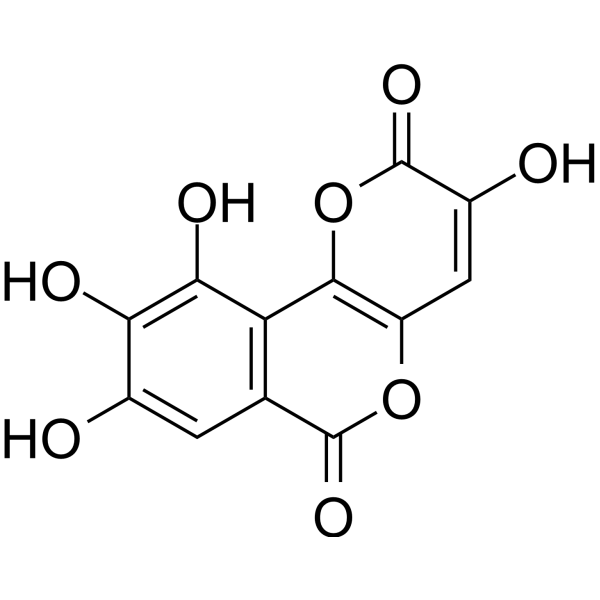
Galloflavin is a potent lactate dehydrogenase (LDH) inhibitor. The calculated Kis for pyruvate are 5.46 μM (LDH-A) and 15.06 μM (LDH-B). Galloflavin hinders the proliferation of cancer cells by blocking glycolysis and ATP production .
|
-
- HY-144306
-
|
|
Estrogen Receptor/ERR
Apoptosis
|
Cancer
|
|
ERα degrader 4 is an excellent and selective estrogen receptor α (ERα) degrader (IC50 of 0.31, 0.41 and 0.48 μM in MDA-MB-231, MCF-7 and MCF-7/ADR cells, respectively). ERα degrader 4 has potent inhibitory activity against MCF-7 cell lines. ERα degrader 4 is a potential SERDs candidate for the research of breast cancer .
|
-
- HY-N12606
-
|
|
Fungal
|
Infection
|
|
Neodidymelliosides A (compound 1)It is a secondary metabolite of fungi and has a significant inhibitory effect on Staphylococcus aureus and Candida albicans biofilms. Neodidymelliosides AIt also has anti-cancer activity and can inhibit KB3.1 (cervix),PC-3 (prostate),MCF-7(breast),SKOV-3 (ovary),A431 (skin )and A549 (lung )Cell viability of cell lines .
|
-
- HY-149497
-
|
|
HDAC
|
Cancer
|
|
HDAC6-IN-19 (Compound 14g) is a HDAC6 inhibitor (IC50: 2.68 nM). HDAC6-IN-19 also inhibits HDAC1, HDAC2 and HDAC3 with IC50s of 61.6 nM, 98.7 nM and 103 nM. HDAC6-IN-19 potently inhibits multiple cancer cell proliferation, including leukemia, colon cancer, melanoma, and breast cancer cell lines .
|
-
- HY-N19463
-
|
|
Caspase
Reactive Oxygen Species (ROS)
Apoptosis
|
Cancer
|
|
Dicatenarin is a caspase‑3 activator with growth‑inhibitory activity against human cancer cells. Dicatenarin increases caspase‑3 activity, induces intracellular ROS generation, and activates the mitochondrial‑mediated apoptotic pathway. Dicatenarin exerts growth‑inhibitory effects against a panel of human cancer cell lines. Dicatenarin can be used in research on pancreatic cancer, lung cancer, colon cancer, breast cancer, prostate cancer, and ovarian cancer .
|
-
- HY-18953
-
|
|
mTOR
|
Cancer
|
|
mTOR inhibitor-23 (compound DHM25) is a selective, competitive, irreversible and covalent inhibitor of mTOR. mTOR inhibitor-23 has the mechanism of inhibition occurs mainly through its capacity to covalently interact with a nucleophilic amino acid inside the ATP pocket. mTOR inhibitor-23 exerts potent antitumor activity against triple-negative breast tumor cell lines .
|
-
- HY-119694
-
|
|
Fungal
|
Cancer
|
|
Rotenolone is an antiproliferative agent. Rotenolone shows antiproliferative activity against the ovarian cancer A2780, breast cancer BT-549, prostate cancer DU 145, NSCLC NCI-H460, and colon cancer HCC-2998 cell lines, with IC50s of 0.95, 1.6, 2.7, 2.0, and 2.9 μM, respectively .
|
-
- HY-160694
-
|
cBu-Cit-PROTAC BRD4 Degrader-5
|
PROTAC-Linker Conjugates for PAC
Epigenetic Reader Domain
|
Cancer
|
|
cBu-Cit-GAL-02-221 is a PROTAC that degrades BRD4 by association with cBu-Cit. cBu-Cit-GAL-02-221 can effectively inhibit BRD4 in HER2 positive and negative breast cancer cell lines. cBu-Cit-GAL-02-221 has a single bond and can be conjugated to an ADC antibody to form a PAC .
|
-
- HY-138642S
-
|
ARV-471-d5
|
Isotope-Labeled Compounds
|
Cancer
|
|
Vepdegestrant-d5 (ARV-471-d5) is the deuterium labeled Vepdegestrant (HY-138642). Vepdegestrant (ARV-471) is an orally active PROTAC estrogen receptor degrader against breast cancer. Vepdegestrant is a hetero-bifunctional molecule that facilitates the interactions between estrogen receptor alpha and an intracellular E3 ligase complex. Vepdegestrant leads to the ubiquitylation and subsequent degradation of estrogen receptors via the proteasome. Vepdegestrant robustly degrades ER in ER-positive breast cancer cell lines with a DC50 of about 2 nM .
|
-
- HY-P991372
-
|
RN927C antibody
|
TROP2
|
Cancer
|
|
Anti-TROP2 Antibody (RN927C antibody) is a human monoclonal antibody targeting Trop-2. Anti-TROP2 Antibody exerts in vitro inhibitory effects on a variety of tumor cell lines. Anti-TROP2 Antibody exhibits anti-tumor activity in mouse pancreatic PDX, ovarian PDX, lung PDX and triple-negative breast cancer (TNB) PDX models. Anti-TROP2 Antibody can be used for research on pancreatic cancer, ovarian cancer, lung cancer and triple-negative breast cancer .
|
-
- HY-P991425
-
|
|
Transmembrane Glycoprotein
|
Cancer
|
|
AT-1413 is a human monoclonal antibody (mAb) targeting CD43. AT-1413 induces antibody-dependent cell-mediated cytotoxicity (ADCC) in melanoma cell lines and acute myeloid leukemia (AML) cells. AT-1413 has antitumor activity in AML mouse models. AT-1413 can be used in Acute myeloid leukaemia, Breast cancer, Malignant melanoma and Myelodysplastic syndromes research. Recommended isotype control: Human IgG1 kappa, Isotype Control (HY-P99001) .
|
-
- HY-175221
-
|
|
Apoptosis
Autophagy
|
Cancer
|
|
WHN-11 is an amino-Artemisinin (HY-B0094) derivative with anti-cancer activity against various cancer cell lines. WHN-11 deprives the cell of ATP, activates autophagy, and causes subsequent cell death by apoptosis. WHN-11 alters cellular protein homeostasis pathways to induce mitochondrial fission and dysfunction. WHN-11's anti-cancer activity is independent of substantive ROS production. WHN-11 can be used for the study of triple-negative breast cancer (TNBC) .
|
-
- HY-N3626
-
|
|
Others
|
Cancer
|
|
Coronalolide is a natural triterpene with anticancer effects. Coronalolide exhibits a broad cytotoxic activity for human breast (BT474), gastric (KATO-3), lung (CHAGO), colon (SW-620), and liver (Hep-G2) cancer cell lines, with IC50 values of 6.59 µg/mL, 5.85 µg/mL, 5.42 µg/mL, 4.98 µg/mL, and 6.41 µg/mL, respectively .
|
-
- HY-19822S3
-
|
RAD1901-d6
|
Isotope-Labeled Compounds
Estrogen Receptor/ERR
|
Cancer
|
|
Elacestrant-d6 (RAD1901-d6) is a deuterated labeled Elacestrant (HY-19822). Elacestrant is a selective estrogen receptor (estrogen receptor, ER) degrader (SERD) with oral activity, with IC50 values of 48 and 870 nM for ERα and ERβ, respectively. Elacestrant can also effectively inhibit the growth of ER + breast cancer cell lines both in vitro and in vivo.
|
-
- HY-181687
-
|
|
HSP
CDK
|
Cancer
|
|
Hsp90-IN-46 is a Hsp90 inhibitor. Hsp90-IN-46 exhibits broad-spectrum antiproliferative activity against tumor cell lines. Hsp90-IN-46 inhibits breast cancer cell proliferation by reducing colony formation and downregulating the proliferation marker Ki-67. Hsp90-IN-46 inhibits Hsp90 and its ATPase activity, downregulates the downstream substrate oncoproteins HER2 and CDK4, and moderately induces the heat shock response. Hsp90-IN-46 shows significant antitumor activity in a mouse model of triple-negative breast cancer tumor xenografts. Hsp90-IN-46 can be used for research on various cancers including triple-negative breast cancer, leukemia, non-small cell lung cancer, colon cancer, ovarian cancer, renal cancer, prostate cancer .
|
-
- HY-110144
-
|
|
Isocitrate Dehydrogenase (IDH)
|
Cancer
|
|
TC-E 5008 is a potent mutant IDH1 inhibitor with Ki values of 190 nM and 120 nM for R132H and R132C IDH1 mutants, respectively. TC-E 5008 exhibits very weak activity against WT-IDH1 with a Ki value of 12.3 μM. TC-E 5008 has anti-proliferative activity on multiple ER positive breast cancer cell lines .
|
-
- HY-125916
-
|
|
Endogenous Metabolite
|
Cancer
|
|
Pseurotin A is a secondary metabolite of Aspergillus and other fungi. Pseurotin A is a competitive inhibitor of chitin synthase and a neuritogenic agent. Pseurotin A inhibits IgE production (IC50 = 3.6 μM). Pseurotin A inhibits the PCSK9-LDLr interaction. Pseurotin A shows dose-dependent reduction of PCSK9, along with increased LDLR levels in hormone-dependent breast cancer cell lines. Pseurotin A exhibits antitumor activity .
|
-
- HY-143232
-
|
|
Fungal
Bacterial
|
Infection
Cancer
|
|
Antibacterial agent 73 (compound 7a) is a potent antimicrobial agent. Antibacterial agent 73 exhibits very good antitubercular activity (MIC=0.65 µg/mL) against Mtb H37Rv. Antibacterial agent 73 shows good activity against fungal and bacterial. Antibacterial agent 73 also shows cytotoxicity in MCF-7 breast cancer cell lines, with IC50 of 8.20 μM .
|
-
- HY-19822S
-
|
RAD1901-d4
|
Isotope-Labeled Compounds
Estrogen Receptor/ERR
|
Cancer
|
|
Elacestrant-d4 (RAD1901-d4) is a deuterated labeled Elacestrant (HY-19822). Elacestrant (RAD1901) is a selective estrogen receptor (estrogen receptor, ER) degrader (SERD) with oral activity, with IC50 values of 48 and 870 nM for ERα and ERβ, respectively. Elacestrant can also effectively inhibit the growth of ER + breast cancer cell lines both in vitro and in vivo.
|
-
- HY-N12198
-
|
|
Others
|
Cancer
|
|
Mollicellin H is a secondary metabolite of the fungus C. brasiliense and has a wide range of biological activities, including immunomodulation, cytotoxicity and anti-tumor effects. The growth inhibitory effects (GI50s) of Mollicellin H on human breast cancer (Bre04), human lung (Lu04) and human neuroma (N04) cell lines are 5.1 μg/mL, 6.5 μg/mL and 2.5 μg/mL respectively .
|
-
- HY-15096
-
|
FJ-776
|
Fluorescent Dye
HSP
|
Cancer
|
|
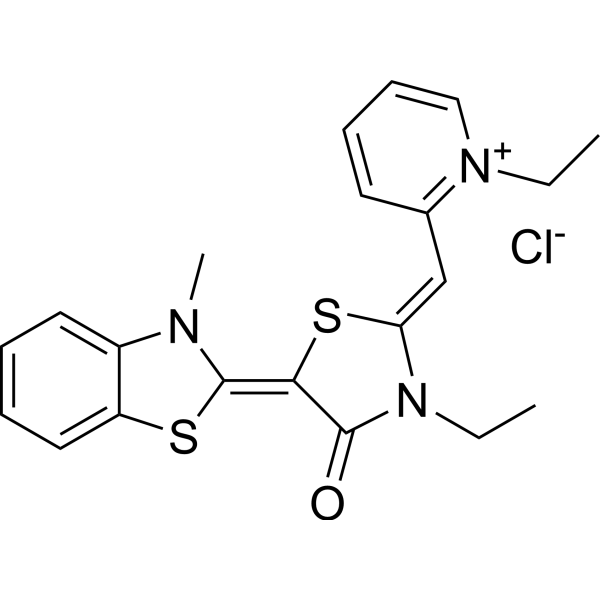
MKT-077 (FJ-776), a highly water-soluble mitochondrial dye, has significant antitumor activity . MKT-077 exhibits low cytotoxicity, and inhibits broad-spectrum human cancer cell lines (colon cancer, breast cancer, pancreatic cancer). MKT-077 inhibits the growth of tumor in nude mice enograft tumor model. Ex/Em=488/543 nm .
|
-
- HY-109583S
-
|
4-Oxo-4-HPR-d4
|
Isotope-Labeled Compounds
Reactive Oxygen Species (ROS)
Drug Metabolite
Apoptosis
|
Cancer
|
|
4-Oxofenretinide-d4 (4-Oxo-4-HPR-d4) is deuterium labeled 4-Oxofenretinide. 4-Oxofenretinide (4-Oxo-4-HPR) is a metabolite of Fenretinide (HY-15373). 4-Oxofenretinide induces cell growth inhibition in ovarian, breast, and neuroblastoma tumor cell lines. 4-Oxofenretinide causes a marked accumulation of cells in G2-M. 4-Oxofenretinide induces cancer cell apoptosis through caspase-9 .
|
-
- HY-169019
-
|
|
PI3K
Apoptosis
|
Cancer
|
XJTU-L453 is a PI3Kα inhibitor with an IC50 value of 0.4 nM. XJTU-L453 can inhibit the proliferation of breast cancer cell lines T47D and MCF7, with IC50 values of 0.2 μM and 0.5 μM, respectively. XJTU-L453 can inhibit the PI3K pathway, induce cell cycle arrest, and trigger cell apoptosis (apoptosis). XJTU-L453 also has antitumor activity in MCF7 xenograft mice .
|
-
- HY-142997
-
|
|
Liposome
|
Cancer
|
|
DOSPA is a cationic lipid. DOSPA can form lipid nanoparticles with DOPE (HY-112005) to serve as a carrier for nucleic acid transfection. DOSPA is applicable in research related to drug delivery .
|
-
- HY-174453
-
|
|
PROTACs
Estrogen Receptor/ERR
Apoptosis
|
Cancer
|
|
PROTAC ERα Degrader-12 is a potent and selective Erα PROTAC degrader. PROTAC ERα Degrader-12 has antiproliferative effects in multiple breast cancer cell lines with wild-type or mutant ERα. PROTAC ERα Degrader-12 can halt the cell cycle and induce cell apoptosis. PROTAC ERα Degrader-12 exhibits excellent antitumor and ERα degradation activity. PROTAC ERα Degrader-12 can be used for research on breast cancer. (Pink: ER ligand-11 (HY-174475); Blue: VHL ligand (HY-112078); Black: Linker (HY-W088749); VHL ligand + Linker ( HY-W998310)) .
|
-
- HY-147165
-
VT02956
1 Publications Verification
|
Ser/Thr Kinase
Large Tumor Suppressor (LATS)
|
Cancer
|
|
VT02956 is a LATS inhibitor (IC50: 0.76 nM for LATS1, 0.52 nM for LATS2). VT02956 targets the Hippo pathway. VT02956 inhibits ESR1 expression and growth of ER+ breast cancer cell lines and patient-derived tumor organoids . VT02956 is a click chemistry reagent, it contains an Alkyne group and can undergo copper-catalyzed azide-alkyne cycloaddition (CuAAc) with molecules containing Azide groups.
|
-
- HY-B0860
-
Diuron
2 Publications Verification
|
Environmental Pollutants
Reactive Oxygen Species (ROS)
Herbicide
MDM-2/p53
|
Cancer
|
|
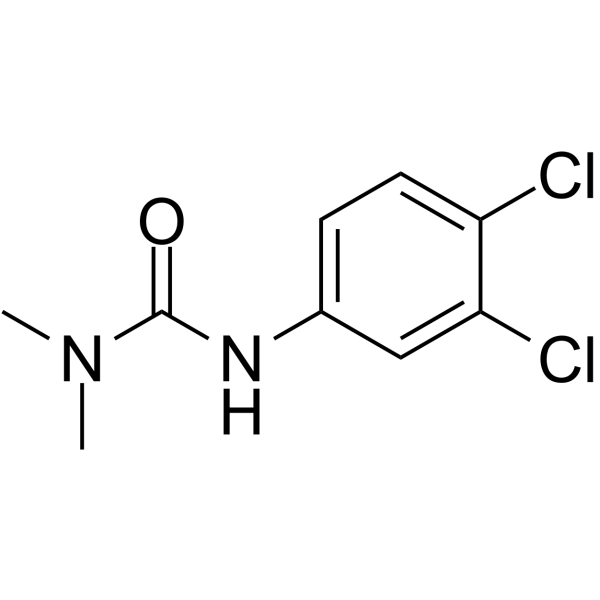
Diuron is an orally active phenylurea herbicide. Diuron inhibits photosynthesis in plants by blocking the formation of ATP and NADH. Diuron increases the production of ROS. Diuron increases expression of p53 in certain cell lines. Diuron has herbicidal activity against annual and perennial broadleaf weeds and grass weeds. Diuron promotes DMBA/BBN-induced bladder cancer. Diuron can be used in breast cancer research .
|
-
- HY-147165A
-
|
|
YAP
Large Tumor Suppressor (LATS)
|
Cancer
|
|
VT02956 is a LATS inhibitor (IC50: 0.76 nM for LATS1, 0.52 nM for LATS2). VT02956 targets the Hippo pathway. VT02956 inhibits ESR1 expression and growth of ER+ breast cancer cell lines and patient-derived tumor organoids . VT02956 is a click chemistry reagent, it contains an Alkyne group and can undergo copper-catalyzed azide-alkyne cycloaddition (CuAAc) with molecules containing Azide groups.
|
-
- HY-175227
-
|
|
STAT
NF-κB
Apoptosis
Caspase
Bcl-2 Family
|
Cancer
|
|
STAT3/NF-κB-IN-1 is a potentSTAT3 and NF-κB inhibitor with IC50s of 5.86 (STAT3) and 4.22 μM (NF-κB) in 4T1 cells. STAT3/NF-κB-IN-1 is able to induce apoptosis via its upregulation on key apoptotic regulators; caspases-3/9, Bax and downregulation of Bcl-2. STAT3/NF-κB-IN-1 exerts considerable anticancer activity against breast cancer cell lines and reduces tumor volume in vivo. STAT3/NF-κB-IN-1 can be used for the study of breast cancer .
|
-
- HY-175253
-
|
|
STAT
Apoptosis
|
Cancer
|
|
YZ-35 is a STAT3 inhibitor, with a Ki value of 0.38 μM. YZ-35 binds directly to STAT3 with high
affinity, exhibiting a dissociation constant (Kd) of 190 nM. YZ-35 directly attenuates the dual phosphorylation of STAT3 (Tyr705 and Ser727). YZ-35 suppresses colony formation, cellular migration, and induces apoptosis in breast cancer cell lines (BCSC). YZ-35 selectively suppresses BCSC self-renewal. YZ-35 inhibits tumor growth in the BCSC xenograft models. YZ-35 can be used for the study of breast cancer .
|
-
- HY-147802
-
|
|
EGFR
Apoptosis
|
Cancer
|
|
EGFR-IN-59 (Compound 8c) is a EGFR inhibitor (IC50=190 nM) and apoptosis inducer. EGFR-IN-59 exhibits cytotoxicity against non-small lung cancer cell lines (A549) and normal lung fibroblasts (WI38) with IC50s of 8.62 and 52.6 µM, respectively. EGFR-IN-59 can be used for the research of various cancers such as non-small cell lung cancer (NSCLC), head and neck cancer, breast cancer and colorectal cancer .
|
-
- HY-179480
-
|
|
Drug Derivative
G-quadruplex
Apoptosis
Telomerase
Ras
Bcl-2 Family
|
Cancer
|
|
G-quadruplex ligand 4 is a chromenone derivative and is a human telomerase reverse transcriptase (hTERT) G4 ligand. G-quadruplex ligand 4 downregulates hTERT expression and exhibits notable cytotoxicity towards triple-negative breast cancer (TNBC) cell lines. G-quadruplex ligand 4 can cause S/G2 cell cycle arrest and induce apoptosis. G-quadruplex ligand 4 downregulates the expression of hTERT, KRAS, and BCL-2. G-quadruplex ligand 4 can be used for the research of TNBC .
|
-
- HY-178112
-
|
|
CDK
Apoptosis
|
Cancer
|
|
CDK2-IN-47 is a potent CDK2 inhibitor with an IC50 of 0.21 μM. CDK2-IN-47 exhibits outstanding anticancer activity against MCF-7, HCT-116, and MGC-803 cell lines. CDK2-IN-47 effectively induces G1 cell cycle arrest, retinoblastoma protein (Rb) dephosphorylation, and significant apoptosis. CDK2-IN-47 can be used for the studies of breast cancer, colorectal cancer and gastric cancer .
|
-
- HY-124053
-
|
|
HDAC
|
Cancer
|
|
BRD2492 (compound 6d) is a potent, selective HDAC1 and HDAC2 inhibitor with IC50s of 13.2 nM and 77.2 nM, respecrtively. BRD2492 exhibits >100-fold selectivity for HDAC1/2 over selectivity over HDAC3 and HDAC6. BRD2492 inhibits breast cancer cell lines growth with IC50s of 1.01 μM and 11.13 μM for T-47D and MCF-7 cells, respectively .
|
-
- HY-160066
-
|
|
Transmembrane Glycoprotein
|
Cancer
|
|
SYL3C aptamer sodium is a DNA aptamer that targets epithelial cell adhesion molecule (EpCAM) on the surface of cancer cells. SYL3C aptamer sodium targets a variety of human cancer cell lines including MDA-MB-231, Kato III, HT-29, T47D and SW480. The Kd values of SYL3C aptamer sodium against breast cancer cell line MDA-MB-231 and gastric cancer cell line Kato III are 38 nM and 67 nM, respectively. SYL3C aptamer sodium possesses stability, high binding affinity and selectivity, and can be used for targeted cancer cell imaging and circulating tumor cell detection .
|
-
- HY-134997
-
|
4-oxo DHA
|
PPAR
|
Cancer
|
|
4-oxo Docosahexaenoic acid (4-oxo DHA) is a putative metabolite of Docosahexaenoic acid (HY-B2167) with antiproliferative and PPARγ agonist activity. It inhibits the growth of several triple negative breast cancer cell lines (MCF-10F, trMCF, bsMCF, MDA-MB-231, and BT549) at 50-100 μM, however it increased proliferation of MCF-7 cells. 4-oxo DHA binds covalently to PPARγ and activates gene transcription in luciferase reporter assays and in dendritic cells with EC50 values of approximately 8-16 μM.
|
-
- HY-103712
-
|
CT7001; ICEC0942
|
CDK
Apoptosis
|
Cancer
|
|
Samuraciclib (CT7001) is a potent, selective, ATP-competitive and orally active CDK7 inhibitor, with an IC50 of 41 nM. Samuraciclib displays 45-, 15-, 230- and 30-fold selectivity over CDK1, CDK2 (IC50 of 578 nM), CDK5 and CDK9, respectively. Samuraciclib inhibits the growth of breast cancer cell lines with GI50 values between 0.2-0.3 μM. Samuraciclib has anti-tumor effects .
|
-
- HY-180158
-
|
|
Parasite
Reactive Oxygen Species (ROS)
|
Infection
Cancer
|
|
Antitrypanosomal agent 28 (Compound 2a) is a trypanocidal agent. Antitrypanosomal agent 28 effectively inhibits Trypanosoma cruzi by inducing the generation of ROS and mitochondrial damage, with an IC₅₀ of 49.4 μM. Antitrypanosomal agent 28 exhibits broad-spectrum anti-tumor activity against various tumor cell lines, especially being sensitive to leukemia, colon cancer, and breast cancer. Antitrypanosomal agent 28 can be used for research on anti-cancer and anti-trypanosome activities .
|
-
- HY-N15636
-
|
(-)-Coccinine
|
Serotonin Transporter
P-glycoprotein
|
Neurological Disease
Cancer
|
|
Coccinine ((-)-Coccinine) is a weak inhibitor of SERT (IC50: 196.3 μM; Ki: 106.8 μM) and P-gp (IC50: 0.96 mM). Coccinine exhibits significant anti-tumor activity against various cancer cell lines, such as breast cancer (MCF7, Hs578T, MDA-MB-231), colon cancer (HCT-15), and lung cancer (A549). Coccinine can be used in the research of tumors and neurological diseases .
|
-
- HY-175465
-
|
|
Interleukin Related
STAT
|
Cancer
|
|
SMI-10B13 is an Oncostatin M (OSM) inhibitor with a KD of 6.6 μM. SMI-10B13 inhibits OSM-mediated STAT3 phosphorylation in T47D and MCF-7 cell lines (IC50 = 136 and 164 nM, respectively). SMI-10B13 shows anti-tumor effect in human breast cancer mice models .
|
-
- HY-103712A
-
|
CT7001 hydrochloride; ICEC0942 hydrochloride
|
CDK
Apoptosis
|
Cancer
|
|
Samuraciclib hydrochloride (CT7001 hydrochloride) is a potent, selective, ATP-competitive and orally active CDK7 inhibitor, with an IC50 of 41 nM. Samuraciclib hydrochloride displays 45-, 15-, 230- and 30-fold selectivity over CDK1, CDK2 (IC50 of 578 nM), CDK5 and CDK9, respectively. Samuraciclib hydrochloride inhibits the growth of breast cancer cell lines with GI50 values between 0.2-0.3 µM. Samuraciclib hydrochloride has anti-tumor effects .
|
-
- HY-103712C
-
|
CT7001 hydrochloride hydrate; ICEC0942 hydrochloride hydrate
|
CDK
Apoptosis
|
Cancer
|
|
Samuraciclib (CT7001) hydrochloride hydrate is a potent, selective, ATP-competitive and orally active CDK7 inhibitor, with an IC50 of 41 nM. Samuraciclib hydrochloride hydrate displays 45-, 15-, 230- and 30-fold selectivity over CDK1, CDK2 (IC50 of 578 nM), CDK5 and CDK9, respectively. Samuraciclib hydrochloride hydrate inhibits the growth of breast cancer cell lines with GI50 values between 0.2-0.3 μM. Samuraciclib hydrochloride hydrate has anti-tumor effects .
|
-
- HY-164717
-
|
|
Poly(ADP-ribose) Glycohydrolase (PARG)
|
Cancer
|
|
FORX-428 is a selective and orally active Poly (ADP-ribose) glycohydrolase (PARG) inhibitor. FORX-428 exhibits strong and reversible binding to the catalytic domain of human PARG, and thereby inhibits PARG´s enzymatic activity. FORX-428 leads to the excessive accumulation of PAR chains and activates DNA damage and replication stress responses. FORX-428 selectively inhibits the proliferation of various cancer cell lines, including breast, ovarian, and gastric cancer .
|
-
- HY-103712B
-
|
CT7001 hydrochloride dihydrate; ICEC0942 hydrochloride dihydrate
|
CDK
Apoptosis
|
Cancer
|
|
Samuraciclib (CT7001) hydrochloride hydrate is a potent, selective, ATP-competitive and orally active CDK7 inhibitor, with an IC50 of 41 nM. Samuraciclib hydrochloride hydrate displays 45-, 15-, 230- and 30-fold selectivity over CDK1, CDK2 (IC50 of 578 nM), CDK5 and CDK9, respectively. Samuraciclib hydrochloride hydrate inhibits the growth of breast cancer cell lines with GI50 values between 0.2-0.3 μM. Samuraciclib hydrochloride hydrate has anti-tumor effects .
|
-
- HY-164202
-
|
|
Antibody-Drug Conjugates (ADCs)
|
Cancer
|
|
ORM-5029 is a first-in-class human epidermal growth factor receptor 2 (HER2)-targeted antibody-drug conjugate (ADC) comprised of SMol006, a highly potent GSPT1 degrader, conjugated to Pertuzumab (HY-P9912). ORM-5029 exhibits robust efficacy across 14 HER2-positive breast cancer cell lines, with IC50 values ranging from 0.3 to 14.4 nM.ORM-5029 demonstrates anti-tumor activity in the BT474 xenograft model. ORM-5029 can be used for study of breast cancer .
|
-
- HY-N13772
-
|
(+)-Dihydroisorhamnetin
|
Apoptosis
|
Cancer
|
|
3'-O-Methyltaxifolin ((+)-Dihydroisorhamnetin) is a dihydroflavanol found in Pulicaria jaubertii. A mixture of these alcohol compounds including 3'-O-Methyltaxifolin found in Pulicaria jaubertii exhibits antitumor activity with IC50 values of 19.1 μg, 20.0 μg, and 24.1 μg against prostate cancer (PC-3), breast cancer (MCF-7), and hepatocellular carcinoma (HepG-2) cell lines, respectively. Furthermore, 3'-O-Methyltaxifolin can induce cell apoptosis, making it a promising candidate for anticancer research. .
|
-
- HY-156418
-
|
|
DNA/RNA Synthesis
Ferroptosis
Apoptosis
Reactive Oxygen Species (ROS)
|
Cancer
|
|
KY386 is a DHX33 helicase inhibitor with an IC50 of 0.019 μM. KY386 inhibits the cell viability of various cancer cells. KY386 induces ferroptosis in cancer cells, and induces apoptosis in some cancer cell lines. KY386 increases the intracellular levels of ROS, LPO and Fe 2+, and decreases the level of GSH in cancer cells . KY386 inhibits the growth of gastric cancer and colon cancer xenografts in nude mice. KY386 is applicable to the related research on liver cancer, lung cancer, pancreatic cancer, colorectal cancer, gastric cancer, breast cancer, leukemia, renal cancer, prostate cancer, esophageal cancer, cervical cancer, brain cancer (glioblastoma) and melanoma .
|
-
- HY-NP163A
-
|
WGA-AF488
|
Fluorescent Dye
|
Cancer
|
Wheat germ agglutinin-AF488 (WGA-AF488) is a cell membrane-specific staining agent prepared by conjugating wheat germ agglutinin with the Alexa Fluor 488 (HY-D1304) fluorescent dye, and it binds to cell surface glycoproteins with high affinity. Wheat germ agglutinin-AF488 is applied in fluorescence microscopy and confocal imaging techniques, and it can clearly label the membrane structures of various cells including breast cancer cells, enabling high-resolution visual observation. Wheat germ agglutinin-AF488 is used in studies of breast cancer and triple-negative breast cancer to observe cell morphology and membrane dynamic changes .
|
-
- HY-141551
-
|
|
Estrogen Receptor/ERR
|
Cancer
|
|
GNE-274 is a structural analog of the ER degrader GDC-0927 and is a non-degrader. GNE-274 does not induce conversion of ER in breast cancer cell lines and functions as a partial ER agonist (partial ER agonist). GNE-274 increases the chromatin accessibility of ER-DNA binding sites, whereas GDC-0927 does not. GNE-274 is an effective ER ligand binding domain (LBD) inhibitor. GNE-274 can be used in cancer research.
|
-
- HY-144791
-
|
|
Bcl-2 Family
MDM-2/p53
Caspase
Apoptosis
|
Cancer
|
|
Bcl-2-IN-6 (compound 10) is a potent Bcl-2 (B-cell lymphoma-2) inhibitor. Bcl-2-IN-7 down-regulates the expression of Bcl-2, and increases the expression of p53, Bax, and caspase-7 mRNA. Bcl-2-IN-7 induces cell cycle arrest and apoptosis in breast cancer MCF-7 cells. Bcl-2-IN-7 shows good anticancer activity, with IC50 values of 20.91, 22.30, 42.29, and 48.00 μM against MCF-7, LoVo, HepG2, and A549 cell lines, respectively .
|
-
- HY-144792
-
|
|
Bcl-2 Family
MDM-2/p53
Caspase
Apoptosis
|
Cancer
|
|
Bcl-2-IN-7 (compound 6) is a potent Bcl-2 (B-cell lymphoma-2) inhibitor. Bcl-2-IN-7 down-regulates the expression of Bcl-2, and increases the expression of p53, Bax, and caspase-7 mRNA. Bcl-2-IN-7 induces cell cycle arrest and apoptosis in breast cancer MCF-7 cells. Bcl-2-IN-7 shows good anticancer activity, with IC50 values of 20.17, 22.64, 45.57, and 51.50 μM against MCF-7, LoVo, HepG2, and A549 cell lines, respectively .
|
-
- HY-177345
-
|
|
Sigma Receptor
Apoptosis
Caspase
|
Cancer
|
|
SV119 is a selective sigma-2 (σ₂) receptor ligand (Ki ≈ 5-10 nM). SV119 induces apoptosis in various human cancer cell lines by activating caspase-3 and promoting mitochondrial depolarization. SV119 can enhance the effects of chemotherapeutic agents such as Paclitaxel (HY-B0015), increasing their cytotoxicity against tumor cells. SV119 significantly inhibits tumor growth in mouse xenograft models, both alone and in combination. SV119 is useful in the research of cancers such as breast, prostate, and pancreatic cancer .
|
-
- HY-175857
-
|
|
HDAC
Apoptosis
|
Cancer
|
|
HDAC-IN-92 is a pan-HDAC inhibitor with an IC50 of 12.58 µM in A2780 cells. HDAC-IN-92 demonstrates broad-spectrum, notable cytotoxic activity against a range of human cancer cell lines, including ovarian, liver, and breast carcinomas. HDAC-IN-92 causes apoptosis and demonstrates a notable decrease in tumor cell colony formation. HDAC-IN-92 inhibits the formation of blood vessels in the chick chorioallantoic membrane (CAM). HDAC-IN-92 exhibits anti-tumor effect in a 4T1 tumor-bearing mouse model. HDAC-IN-92 can be used for research targeting solid tumor .
|
-
- HY-153468
-
|
TEQ103; Sera2
|
Sodium Channel
TRP Channel
|
Cancer
|
|
ErSO-TFPy (TEQ103) is an ERα+ tumor cell inhibitor with low nanomolar cytotoxic activity against ERα+ breast cancer cells. ErSO-TFPy activates the sodium channel TRPM4, causes an imbalance of intracellular calcium and sodium ions. ErSO-TFPy dysregulates calcium homeostasis in ERα+ tumor cells, triggers the anticipatory unfolded protein response, and induces rapid immune cell-independent necrotic cell death. ErSO-TFPy can be used for the research of estrogen receptor alpha positive breast cancer .
|
-
- HY-B0860S
-
|
|
Isotope-Labeled Compounds
Herbicide
Reactive Oxygen Species (ROS)
MDM-2/p53
|
Cancer
|
|
Diuron-d6 is the deuterium labeled Diuron (HY-B0860). Diuron is an orally active phenylurea herbicide. Diuron inhibits photosynthesis in plants by blocking the formation of ATP and NADH. Diuron increases the production of ROS. Diuron increases expression of p53 in certain cell lines. Diuron has herbicidal activity against annual and perennial broadleaf weeds and grass weeds. Diuron promotes DMBA/BBN-induced bladder cancer. Diuron can be used in breast cancer research .
|
-
- HY-169021
-
|
|
JNK
|
Cancer
|
|
JNK-1-IN-3 (Compound 9e) is an inhibitor of JNK1 that downregulates JNK1 gene expression and inhibits the protein levels of its phosphorylated form, concurrently reducing the expression of its downstream targets, c-Jun and c-Fos, in tumors while restoring p53 activity. JNK-1-IN-3 exhibits broad-spectrum antiproliferative activity, particularly with high inhibitory activity against renal and breast cancer cell lines, demonstrating both in vivo and in vitro anticancer activity .
|
-
- HY-134601
-
|
|
HuR
|
Cancer
|
|
KH-3 is a potent RNA-binding protein Hu antigen R (HuR) inhibitor with an IC50 value of 0.35 μM. KH-3 has anti-proliferative activity. KH-3 suppresses breast cancer cell invasion as well as delays the initiation of lung colonies by disrupting HuR-FOXQ1 mRNA interaction .
|
-
- HY-103712AR
-
|
CT7001 hydrochloride (Standard); ICEC0942 hydrochloride (Standard)
|
Reference Standards
CDK
Apoptosis
|
Cancer
|
|
Samuraciclib hydrochloride (Standard) is the analytical standard of Samuraciclib hydrochloride (HY-103712A). This product is intended for research and analytical applications. Samuraciclib hydrochloride (CT7001 hydrochloride) is a potent, selective, ATP-competitive and orally active CDK7 inhibitor, with an IC50 of 41 nM. Samuraciclib hydrochloride displays 45-, 15-, 230- and 30-fold selectivity over CDK1, CDK2 (IC50 of 578 nM), CDK5 and CDK9, respectively. Samuraciclib hydrochloride inhibits the growth of breast cancer cell lines with GI50 values between 0.2-0.3 µM. Samuraciclib hydrochloride has anti-tumor effects .
|
-
- HY-B0860R
-
|
|
Herbicide
Reference Standards
Reactive Oxygen Species (ROS)
MDM-2/p53
|
Cancer
|
|
Diuron (Standard) is the analytical standard of Diuron (HY-B0860). This product is intended for research and analytical applications. Diuron is an orally active phenylurea herbicide. Diuron inhibits photosynthesis in plants by blocking the formation of ATP and NADH. Diuron increases the production of ROS. Diuron increases expression of p53 in certain cell lines. Diuron has herbicidal activity against annual and perennial broadleaf weeds and grass weeds. Diuron promotes DMBA/BBN-induced bladder cancer. Diuron can be used in breast cancer research .
|
-
- HY-172562
-
|
|
PROTACs
Epigenetic Reader Domain
|
Cancer
|
|
BTR2004 is a selective BET family (BRD2/3/4) protein PROTAC degrader. BTR2004 forms a ternary complex with BRD proteins and KLHL20, inducing ubiquitination and proteasomal degradation through the UPS pathway. BTR2004 is promising for research of PC3 prostate cancer and MDA-MB-231 breast cancer cell lines. Pink: (+)-JQ1-OH (HY-161125); Blue: BTR2000 (HY-172563); Black: Linker (HY-W015236) .
|
-
- HY-173492
-
|
|
EGFR
Apoptosis
|
Cancer
|
|
EGFR-IN-156 (Compound 7f) is an EGFR inhibitor that also has inhibitory activity against mutations EGFRL858R and EGFRT790M (IC50 values are 0.186, 0.131, and 0.107 μM, respectively). EGFR-IN-156 has significant anticancer activity against human cancer cell lines HepG-29 (liver cancer), MCF-7 (breast cancer), and HCT-116 (colon cancer) (IC50 values are 1.67, 5.32, and 6.56 μM, respectively). EGFR-IN-156 inhibits cancer cell proliferation by inducing cell cycle arrest at the G/G1 phase and triggering apoptosis. EGFR-IN-156 shows promise in EGFR-related cancers .
|
-
- HY-112589
-
|
|
Bacterial
|
Infection
Cancer
|
|
BRITE-338733 is an inhibitor of E. coli RecA ATPase activity (IC50: 4.7 μM). BRITE-338733 also inhibits the ATP hydrolysis activity of RSC chromatin remodeling enzyme by binding to its ATP-binding pocket and DNA (IC50: 0.316 μM). BRITE-338733 exhibits cytotoxicity against MCF-7 and MDA-MB-231 breast cancer cells. BRITE-338733 can be used in studies on antibacterial adjuvants and anticancer research .
|
-
- HY-174870
-
|
|
PROTACs
Estrogen Receptor/ERR
Apoptosis
Fluorescent Dye
|
Cancer
|
|
PROTAC ERα Degrader-11 is a selective and intrinsically fluorescent (Ex: 366 nm, Em: 440 nm) ERα PROTAC degrader. PROTAC ERα Degrader-11 shows good antiproliferative activity, selective ERα degradation and imaging capabilities in MCF-7 breast cancer cell lines. PROTAC ERα Degrader-11 induces G2/M phase arrest and induces apoptosis in MCF-7 cells. PROTAC ERα Degrader-11 is well-tolerated up to a dose of 500 mg/ kg with no acute toxicity in athymic nude mice. PROTAC ERα Degrader-11 can be used for the study of breast cancer.(Pink: ERα ligand (HY-167701), Blue: CRBN Ligand (HY-150831), Black: Linker, E3 ligase ligand-linker conjugate (HY-174880)) .
|
-
- HY-181252
-
|
|
P-glycoprotein
|
Cancer
|
|
P-gp-IN-35 is a P-glycoprotein (P-gp) inhibitor. P-gp-IN-35 exhibits cytotoxicity against sensitive breast cancer and colorectal cancer cells, and can reverse multidrug resistance in breast cancer cells with P-gp overexpression. P-gp-IN-35 can be used in research related to multidrug-resistant breast cancer and colon cancer .
|
-
- HY-183317
-
|
|
Indoleamine 2,3-Dioxygenase (IDO)
Interleukin Related
Apoptosis
Caspase
PARP
|
Cancer
|
|
IDO1-IN-34 is a selective IDO1 inhibitor with an IC50 of 0.093 μM. IDO1-IN-34 exhibits cytotoxicity against various cancer cell lines. IDO1-IN-34 inhibits the kynurenine (kynurenine) pathway and activates IL-2. IDO1-IN-34 induces cell apoptosis via the endogenous mitochondrial pathway, while increasing the levels of cytochrome c, caspase-3, caspase-9 and PARP-1. IDO1-IN-34 can be used for research on liver cancer, lung cancer, breast cancer, prostate cancer, colon cancer and leukemia .
|
-
- HY-183765
-
|
|
PARP
Pyruvate Kinase
|
Cancer
|
|
PARP1/PKM2-IN-1 is a dual PARP1/PKM2 inhibitor, with an IC50 of 39.5 nM against PARP1, and IC50 values of 261 nM (recombinant PKM2) and 50 nM (dimeric PKM2) against PKM2. PARP1/PKM2-IN-1 reduces the dimerization of PKM2 and decreases its nuclear accumulation level. PARP1/PKM2-IN-1 also selectively downregulates PKM2 mRNA and impairs poly (ADP-ribose)-mediated nuclear retention of PKM2. PARP1/PKM2-IN-1 exhibits antiproliferative activity and inhibits the formation of 3D cancer spheroids. PARP1/PKM2-IN-1 can be used in research related to mammary adenocarcinoma, triple-negative breast cancer, BRCA1-mutant triple-negative breast cancer, and prostate adenocarcinoma .
|
-
- HY-118713
-
|
|
DNA/RNA Synthesis
Apoptosis
|
Cancer
|
|
Kuanoniamine A is a pyridoacridine alkaloid and also an anticancer agent. Kuanoniamine A inhibits DNA synthesis, induces apoptosis, and regulates the cell cycle by reducing the proportion of cells in the G2/M phase. Kuanoniamine A inhibits the proliferation of human lymphocytes. Kuanoniamine A can be used in research related to breast cancer, glioma, non-small cell lung cancer, and melanoma .
|
-
- HY-182368
-
|
|
PI3K
Akt
Apoptosis
|
Cancer
|
|
PI3Kα-IN-30 is an orally active, selective PI3Kα inhibitor with an IC50 of 2.8 nM. PI3Kα-IN-30 inhibits cancer cell proliferation, as well as the phosphorylation of Akt (S473) and pS6 (S240/244). PI3Kα-IN-30 shows low growth inhibitory activity against normal somatic cell lines at a concentration of 30 μM. PI3Kα-IN-30 induces cancer cell apoptosis and exerts anti-tumor efficacy in xenograft models. PI3Kα-IN-30 can be used for the research of breast cancer .
|
-
- HY-175302
-
|
|
Trk Receptor
Apoptosis
|
Cancer
|
|
TRK-IN-32 is a potent TRK inhibitor. TRK-IN-32 potently inhibits TRK WT, TRK G595R and TRK G667C with IC50 values of 0.08 nM, 2.14 nM and 0.68 nM, respectively. TRK-IN-32 also demonstrates antiproliferative activity against a panel of Ba/F3 cell lines transformed with wild type, xDFG, solvent-front as well as gatekeeper mutant TRK fusion proteins. TRK-IN-32 induces apoptosis of Ba/F3-TRKA WT and Ba/F3-TRKA G667C cells.TRK-IN-32 can be used for the study of various cancers (such as thyroid cancer, secretory breast carcinoma) .
|
-
- HY-117085
-
|
|
Phosphatase
TMV
Lipoxygenase
|
Cancer
|
|
Lobaric acid is a depsipeptide metabolite isolated from Stereocaulon lichen with antioxidant, antiproliferative, antiviral and enzyme inhibitory activities. Lobaric acid scavenges superoxide free radicals (IC50=97.9 μM) and inhibits cancer cell proliferation (EC50 of 15.2-63.9 μg/mL against leukemia, colorectal, gastric, breast, ovarian, prostate, pancreatic and lung cancer cell lines). Lobaric acid inhibits protein tyrosine phosphatase 1B (PTP1B; IC50=0.87 μM for human recombinant enzyme) and 12(S)-HETE produced by 12(S)-lipoxygenase (IC50=28.5 μM). Lobaric acid (250 μM) also reduced pathological changes in tobacco leaves infected with tobacco mosaic virus (TMV).
|
-
- HY-178142
-
|
|
EGFR
VEGFR
Trk Receptor
CDK
FAK
Akt
GSK-3
Apoptosis
Caspase
Bcl-2 Family
|
Cancer
|
|
Multi-kinase-IN-7 is a multikinase inhibitor with IC50s of 2.19, 2.95, 3.59 and 9.31 μM against EGFR, VEGFR2, TrKA and CDK2, respectively. Multi-kinase-IN-7 shows moderate and weaker activity against FAK, AKT1, GSK3β and CDK5 with IC50 values of 6.3, 9.2, 11.7 and 23.4 μM, respectively. Multi-kinase-IN-7 displays broad spectrum antiproliferative potential against NCI cancer cell lines. Multi-kinase-IN-7 induces cell cycle arrest, apoptosis and necrosis. Multi-kinase-IN-7 Inhibitor can be used for the study of breast cancer .
|
-
- HY-179507
-
|
|
MDM-2/p53
Apoptosis
|
Cancer
|
|
p53 Activator 17 is a p53-Y220C activator. p53 Activator 17 exhibits selective cytotoxicity and pro-apoptotic activity in p53-Y220C mutant cancer cell lines, with minimal effects in wild-type or p53-null cells. p53 Activator 17 induces a mutant-to-wild-type conformational shift in cellular p53-Y220C, accompanied by transcriptional activation of canonical p53 target genes, including BBC3 (PUMA) and MDM2. p53 Activator 17 can be used for the study of hepatocellular carcinoma and breast cancer .
|
-
- HY-178004
-
|
|
VEGFR
Apoptosis
|
Cancer
|
|
VEGFR-2-IN-73 is a potent and selective VEGFR-2 inhibitor, showing selectively inhibition of VEGFR-2 (IC50 = 0.0787 μM) over EGFR (IC50 = 1.31 μM). VEGFR-2-IN-73 demonstrates potent antiproliferative activity across multiple cancer cell lines. VEGFR-2-IN-73 induces G2/M and Pre-G1 phase arrest and significantly enhances apoptosis. VEGFR-2-IN-73 can be used in cancer research, such as colorectal carcinoma, hepatocellular carcinoma, and breast cancer .
|
-
- HY-N6748
-
-
- HY-P99974
-
|
Nanoparticle albumin-bound Paclitaxel; Nanoparticle albumin-bound ABI-007
|
Microtubule/Tubulin
Apoptosis
Autophagy
|
Cancer
|
|
Nab-Paclitaxel (Nanoparticle albumin-bound Paclitaxel) is an albumin-bound nanoparticle formulation of Paclitaxel (HY-B0015). Nab-Paclitaxel is composed of albumin and the active pharmaceutical ingredient Paclitaxel, in which human albumin is used as an excipient to disperse and stabilize particles and carry the main drug. Nab-Paclitaxel is a solvent-free taxane with higher response rates and improved tolerability. Nab-Paclitaxel displays less toxicity and greater antitumor activity. Nab-Paclitaxel is more readily available for tumor cell uptake in three rhabdomyosarcoma, seven neuroblastoma cell lines, and one ostersarcoma cell line Nab-Paclitaxel can be studied in cancer research for example breast cancer and solid tumors. (The product specifications below only indicate the effective content of Paditaxel, the actual albumin quality depends on the batch; the ratio of each ingredient in this product is Paditaxel: albumin -1:7~1:11) .
|
-
- HY-146260
-
|
|
PI3K
|
Cancer
|
|
NVP-CLR457 (compound 40) is an orally active, potent and balanced pan-class I PI3K inhibitor. NVP-CLR457 shows a clear dose-dependent PK/PD/efficacy relationship. NVP-CLR457 has antitumor activity .
|
-
- HY-164530
-
|
|
Src
VEGFR
Raf
p38 MAPK
|
Cancer
|
|
SKLB646 is an orally active multi-target kinase inhibitor. SKLB646 shows significant inhibitory effects on SRC and VEGFR2 with IC50 values ??of 0.002 μmol/L and 0.012 μmol/L, respectively. SKLB646 also shows significant inhibitory effects on B-Raf and C-Raf with IC50 values ??of 0.022 μmol/L and 0.019 μmol/L, respectively. SKLB646 inhibits the activation of the SRC signaling pathway and blocks the MAPK signaling pathway by inhibiting Raf kinase. In addition, SKLB646 can inhibit the proliferation, migration and invasion of human umbilical vein endothelial cells (HUVEC) to inhibit tumor-induced angiopoietic formation. SKLB646 shows significant anti-proliferative and anti-survival activities against triple-negative breast cancer (TNBC) cell lines .
|
-
- HY-N2374
-
|
|
Apoptosis
NF-κB
MMP
Adrenergic Receptor
|
Inflammation/Immunology
Cancer
|
|
Eupatorin is an orally active flavonoid with antiproliferative and vasodilatory properties. Eupatorin downregulates the expression levels of NF-κB, MMP9, IL-1β and TNF-α. Eupatorin induces apoptosis, G2/M phase cell cycle arrest, and reactive oxygen species (ROS) production. Eupatorin modulates the activities of muscarinic receptors and β-adrenergic receptors; inhibits sarcoplasmic reticulum calcium release and calcium channels; and activates the NO/sGC/cGMP pathway, indomethacin-sensitive pathway, and potassium channel pathway. Eupatorin exerts cytotoxic effects on cancer cell lines, and is metabolized by CYP1A1 and CYP1 family enzymes to form metabolites with antiproliferative activity. Eupatorin can be used in research related to breast cancer, hypertension, and leukemia .
|
-
- HY-182468
-
|
|
Histone Acetyltransferase
Estrogen Receptor/ERR
CDK
|
Cancer
|
|
OP-3136 is a selective KAT6 inhibitor. OP-3136 reduces the proliferative capacity of cancer cells and inhibits cell growth in ER + breast cancer cell models with overexpressed KAT6. When combined with ER antagonists/degraders or CDK4/6 inhibitors, OP-3136 exhibits synergistic anti-tumor activity in mouse xenograft models. OP-3136 can be used in studies related to HR +/HER2 - breast cancer .
|
-
- HY-182745
-
|
|
VEGFR
Apoptosis
|
Cancer
|
|
VEGFR-2-IN-85 is a strong VEGFR-2 inhibitor, with an IC50 value of 0.23 μM. VEGFR-2-IN-85 exhibits potent cytotoxic activity against multiple cancer cell lines with minimal toxicity toward normal cells. VEGFR-2-IN-85 also impairs cancer cell migration, likely through modulation of the VEGFR-2/p-Akt pathway. VEGFR-2-IN-85 can induce apoptosis through modulation of Caspase-3, Bax and Bcl-2. VEGFR-2-IN-85 arrests cell cycle at the G2/M phase and has anti-angiogenic activity. VEGFR-2-IN-85 is a targeted radiosensitizer enhancing radiation-induced cytotoxicity. VEGFR-2-IN-85 can be used for research on cancers such as non-small cell lung cancer, breast cancer, and liver cancer .
|
-
- HY-150609
-
|
|
SHP2
Phosphatase
CDK
|
Cancer
|
|
SHP2/CDK4-IN-1 (compound 10) is an orally active and potent SHP2 and CDK4 dual inhibitor, with IC50 values of 4.3 and 18.2 nM, respectively. SHP2/CDK4-IN-1 effectively induces G0/G1 arrest to prevent the proliferation of TNBC cell lines. SHP2/CDK4-IN-1 shows significant antitumor efficacy in the EMT6 syngeneic mouse model. SHP2/CDK4-IN-1 can be used for triple-negative breast cancer (TNBC) research .
|
-
- HY-179430
-
|
|
Mps1
|
Cancer
|
|
TTK-IN-5 is an orally active covalent threonine tyrosine kinase (TTK) inhibitor with selectivity (IC50 = 8.918 nM). TTK-IN-5 exhibits anti-proliferative potencies against MDA-MB-231, A2780, HCT116, HCC1569 and MKN1 cell lines (IC50 values of 0.113 μM, 0.476 μM, 3.136 μM, 3.649 μM, and 1.856 μM, respectively). TTK-IN-5 potently suppresses tumor growth without notable toxicity in A2780 and MDA-MB-231 xenograft mouse models. TTK-IN-5 can be used for the research of cancer such as breast cancer and ovarian cancer .
|
-
- HY-177585
-
|
BLD1102
|
ADC Payload
Topoisomerase
|
Cancer
|
|
BCPT02 (BLD1102) is a Topoisomerase-I inhibitor and ADC payload (ADC Payload). BCPT02 can form the ADC BCG041. BCPT02 is applicable to cancer-related research .
|
-
- HY-171955
-
|
|
Lipoxygenase
Apoptosis
Reactive Oxygen Species (ROS)
FAK
|
Cancer
|
|
LXG6403 is an orally active and irreversible LOX inhibitor (IC50 = 1.3 μM). LXG6403 is ~3.5-fold more specific for LOX than LOXL2 and does not inhibit LOXL1. LXG6403 inhibits FAK signaling and induces ROS generation and DNA damage, leading to G1 arrest and apoptosis in chemoresistant triple-negative breast cancer (TNBC) cell lines. LXG6403 alters the extracellular matrix (ECM) and collagen structure, reducing collagen cross-linking and deposition, thereby increasing drug penetration and reducing tumor stiffness. LXG6403 overcomes Doxorubicin (HY-15142) resistance in chemoresistant TNBC PDX in vivo and can be used to study high-stiffness resistant tumors .
|
-
- HY-181842
-
|
|
PARP
ERK
Apoptosis
|
Cancer
|
|
PARP1/ERK IN-1 is a dual PARP1/ERK inhibitor, with a PARP1 IC50 of 0.9 nM and an ERK2 IC50 of 1.8 nM. PARP1/ERK IN-1 inhibits proliferation and migration of various cancer cell lines, and induces apoptosis and DNA damage. PARP1/ERK IN-1 suppresses tumor growth in mouse models of colorectal cancer, and reduces the expression of Ki‑67, BRCA1 and Rad51. PARP1/ERK IN-1 can be used in the research of colorectal cancer, triple-negative breast cancer and pancreatic cancer .
|
-
- HY-112338
-
|
CPD188
|
STAT
Apoptosis
|
Cancer
|
|
C188 (CPD188) is a STAT3 inhibitor with anticancer effects. C188 inhibits STAT3 SH2/pY-peptide binding (IC50 of 20 µM against pY-peptide binding) and IL-6-mediated STAT3 phosphorylation. C188 is selective for STAT3 over STAT1. C188 inhibits nuclear-to-cytoplasmic translocation of Stat3. C188 shows highly active induces apoptosis in breast cancer cell lines with constitutive Stat3 activation (EC50s of 0.73 µM, 3.96 µM, and 7.01 µM in MDA-MB-468, MDA-MB-231, and MDA-MB-435 cultures, respectively) .
|
-
- HY-146740
-
|
|
PD-1/PD-L1
|
Cancer
|
|
PD-1/PD-L1-IN-27 is a potent PD-1/PD-L1 inhibitor with an IC50 value of 134 nM. PD-1/PD-L1-IN-27 shows antitumor effects with low T cell cytotoxicity. PD-1/PD-L1-IN-27 has the ability to activate CD8 + T cells and reduces T cell exhaustion .
|
-
- HY-181460
-
|
|
HyT
PARP
|
Cancer
|
|
PARP1 degrader-2 (Compound 11e) is a potent, selective PARP1 HYT degrader (DC50: 2.16 μM). PARP1 degrader-2 selectively binds to and degrades PARP1 but not PARP2. PARP1 degrader-2 mediates the degradation of PARP1 via the ubiquitin-proteasome system (UPS). PARP1 degrader-2 exhibits anticancer activity against triple-negative breast cancer and colon cancer (hydrophobic tag: (HY-W022007); PARP1 ligand: (HY-75706); Linker: (HY-W015300)) .
|
-
- HY-117087
-
|
|
Phosphatase
PANoptosis
|
Cancer
|
|
K103 is an inhibitor discovered from the screen that is an analog of the serotonin antagonist benzazocine. K103 exhibited inhibition of SHIP homologues, labelling it a pan-SHIP1/2 inhibitor, but the molecule had no effect on another 5' inositol phosphatase, OCRL. In line with the "two PIPs hypothesis", the molecule exhibited significant anti-tumour effects against a variety of cell lines, particularly breast cancer cells. Additional studies with K103 revealed that inhibition of SHIP1/2 in multiple myeloma cells resulted in G2/M cell cycle arrest followed by extensive apoptosis via activation of the caspase cascade. K103 fits the commonly used small molecule agent property profile, but while this work was being conducted, it was discovered that K103 caused psychoactive effects in mice, which limited the utility of the molecule in vivo. Therefore, certain synthetic studies were conducted on this tryptamine to identify the features that needed to be present in the molecule to maintain pan-SHIP1/2 inhibition in order to design an inhibitor with favourable pharmacodynamic properties and an improved side effect profile.
|
-
- HY-181947
-
|
|
Indoleamine 2,3-Dioxygenase (IDO)
|
Cancer
|
|
IDO1-IN-33 (Compound YC-16) is a IDO1 inhibitor (with an IC50 of 0.18 μM for IDO1 in HeLa cells). IDO1-IN-33 acts as an apo-IDO1 inhibitor by slowly and competitively displacing heme from mature holo-IDO1 and rapidly binding to the heme-binding site of immature apo-IDO1, without altering the expression level of IDO1. IDO1-IN-33 can be used for the research of hepatocellular carcinoma, non-small cell lung cancer, triple-negative breast cancer, and cervical cancer .
|
-
- HY-B0633D
-
|
|
CD44
Endogenous Metabolite
Bacterial
Akt
PI3K
|
Neurological Disease
Metabolic Disease
Inflammation/Immunology
Cancer
|
|
Hyaluronic acid sodium (MW 200-1560) is a biopolymer composed of repeating disaccharide units, with a molecular weight of 200-1560. Hyaluronic acid sodium is a major component of the extracellular matrix (ECM). It is synthesized on the plasma membrane. Hyaluronic acid sodium exerts its effects by binding to receptors CD44 and RHAMM. Hyaluronic acid sodium activates PI3K-Akt signaling. Hyaluronic acid sodium also enhances cell invasion and angiogenesis by promoting or stimulating the binding of proteolytic MMP-9 to the cell surface. Elevated hyaluronic acid levels are associated with tumor cell growth, adhesion, migration, invasion, and angiogenesis in digestive system cancers. Hyaluronic acid sodium is involved in tissue remodeling and rapid cell proliferation in several physiological processes, including embryonic morphogenesis and wound healing. Hyaluronic acid sodium can be used as a regulator of cancer-associated lymphangiogenesis. Hyaluronic acid sodium can be used as a drug delivery carrier for sodium butyrate, enhancing its anti-proliferative activity against breast cancer cell lines. Hyaluronic acid sodium can lubricate the corneal endothelium. Hyaluronic acid sodium can improve tissue hydration and enhance the resistance of cells to mechanical damage. Hyaluronic acid sodium has been conjugated with antibodies to ensure that the active compound continues to exert its effects at the site of inflammation. Hyaluronic acid sodium can be used in research in the fields of osteoarthritis, ophthalmology, cosmetic dermatology, oncology, and liver diseases .
|
-
- HY-B0633E
-
|
Hyaluronan, low endotoxin; Hyaluronate, low endotoxin
|
Endogenous Metabolite
CD44
Bacterial
Akt
PI3K
|
Neurological Disease
Metabolic Disease
Inflammation/Immunology
Cancer
|
|
Hyaluronic acid, low endotoxin (Hyaluronan, low endotoxin) is a biopolymer composed of repeating disaccharide units containing low levels of endotoxin. Hyaluronic acid is a major component of the extracellular matrix (ECM). It is synthesized on the plasma membrane. Hyaluronic acid exerts its effects by binding to receptors CD44 and RHAMM. Hyaluronic acid activates PI3K-Akt signaling. Hyaluronic acid also enhances cell invasion and angiogenesis by promoting or stimulating the binding of proteolytic MMP-9 to the cell surface. Elevated hyaluronic acid levels are associated with tumor cell growth, adhesion, migration, invasion, and angiogenesis in digestive system cancers. Hyaluronic acid is involved in tissue remodeling and rapid cell proliferation in several physiological processes, including embryonic morphogenesis and wound healing. Hyaluronic acid can be used as a regulator of cancer-associated lymphangiogenesis. Hyaluronic acid can be used as a drug delivery carrier for sodium butyrate, enhancing its anti-proliferative activity against breast cancer cell lines. Hyaluronic acid can lubricate the corneal endothelium. Hyaluronic acid can improve tissue hydration and enhance the resistance of cells to mechanical damage. Hyaluronic acid has been conjugated with antibodies to ensure that the active compound continues to exert its effects at the site of inflammation. Hyaluronic acid can be used in research in the fields of osteoarthritis, ophthalmology, cosmetic dermatology, oncology, and liver diseases .
|
-
- HY-N19853
-
|
|
Drug Derivative
|
Cancer
|
|
Mangiferonic acid is a triterpenoid found in the stems of Vatica diospyroides. Mangiferonic acid can be used for cancer research .
|
-
- HY-111090
-
|
|
Polo-like Kinase (PLK)
NEKs
|
Cancer
|
|
GSK461364 analogue 1 is a thiophene-based PLK1 inhibitor with a PLK1 IC50 of 2 nM and a PLK3 IC50 of 630 nM. GSK461364 analogue 1 also acts as an inhibitor of Nek2 kinase (IC50: 21 nM). GSK461364 analogue 1 has a solubility of ≥190 μM in pH 7.4 PBS and a human plasma protein binding rate of 91.5%. GSK461364 analogue 1 can be used in studies related to colon cancer, lung cancer, breast cancer and ovarian cancer .
|
-
- HY-13774
-
|
|
P-glycoprotein
BCRP
|
Cancer
|
|
WK-X-34 is a low-toxicity, highly effective multidrug resistance reversal agent. By potently inhibiting the transport functions of P-glycoprotein (P-gp, ABCB1) and breast cancer resistance protein (BCRP), WK-X-34 significantly increases the intracellular accumulation of anticancer drugs and radiotracers in drug-resistant cells. WK-X-34 exerts no significant effect on MRP transporters. WK-X-34 not only restores the chemosensitivity of multidrug-resistant ovarian cancer cells, but also significantly enhances the uptake of 99mTc-Sestamibi in P-gp-positive xenograft tumors, brain and intestinal tissues. WK-X-34 exhibits extremely low toxicity and favorable safety profiles both in vitro and in mice (at doses up to 50 mg/kg), and can be used for research on overcoming multidrug resistance in ovarian cancer .
|
-
- HY-P992340
-
|
|
Radionuclide-Drug Conjugates (RDCs)
TNF Receptor
|
Cancer
|
|
CTB006 is a monoclonal antibody targeting a humanized chimeric recombinant anti-DR5. CTB006 specifically binds to and activates DR5, thereby inducing tumor cell apoptosis, inhibiting tumor growth and reducing tumor drug resistance. 177Lu-radiolabeled CTB006 can deliver targeted radiotherapy to tumor cells; while 89Zr- or 177Lu-labeled CTB006 can serve as a PET/CT imaging agent for detecting DR5 expression levels in preclinical tumor models and screening cancers with DR5 overexpression. CTB006 can be applied to research related to gastrointestinal cancer, colorectal cancer and other solid tumors .
|
-
- HY-182285A
-
|
|
5-HT Receptor
DNA/RNA Synthesis
|
Cancer
|
|
FOXM1-IN-4 hydrochloride is a selective 5-HT7 receptor inhibitor with a Ki of 92 nM. FOXM1-IN-4 hydrochloride blocks 5-HT7 receptor signaling to reduce FOXM1, p-FOXM1, cyclin B1, and cdc25B levels. FOXM1-IN-4 hydrochloride acts as an antiproliferative, clonogenic inhibitor, and cell cycle inhibitor that induces G2/M arrest, reduces G0/G1 population. FOXM1-IN-4 hydrochloride can be used for the research of triple-negative breast cancer .
|
-
- HY-D3182
-
|
|
Fluorescent Dye
Aldehyde Dehydrogenase (ALDH)
|
Cancer
|
|
AldeRed 588-A is a fluorescent labeling reagent and a substrate for aldehyde dehydrogenase (ALDH). AldeRed 588-A is metabolized by functionally active ALDH enzymes, thereby specifically labeling viable ALDH bright cell populations with red-shifted fluorescence. AldeRed 588-A supports one-step isolation and sorting of ALDH-expressing cells (including normal stem cells and cancer stem cells), and can be used in combination with green fluorophores for multicolor experimental applications. AldeRed 588-A is widely applicable to research related to various cancers such as bladder cancer, breast cancer, and head and neck cancer .
|
-
- HY-156617A
-
|
SHR169265
|
ADC Payload
Topoisomerase
|
Cancer
|
(αR)-Cyclopropaneacetamide-Exatecan (SHR169265) is a DNA Topoisomerase I inhibitor with enhanced membrane permeability (with an IC50 of 1.34 μM against the human DNA Topoisomerase I). (αR)-Cyclopropaneacetamide-Exatecan exerts cytotoxic effects by inhibiting the enzymatic activity of Topoisomerase I, and this anticancer effect is independent of the expression level of HER2. (αR)-Cyclopropaneacetamide-Exatecan is an ADC Cytotoxin derived from Exatecan (HY-13631), which can be used in research related to advanced cancers such as breast cancer, gastric cancer, colorectal cancer and non-small cell lung cancer .
|
-
- HY-45661
-
|
NUV-422
|
CDK
|
Neurological Disease
Cancer
|
|
Inixaciclib (NUV-422) is a blood-brain barrier-penetrant inhibitor of CDK2, CDK4 and CDK6. Inixaciclib inhibits cancer cell growth. Inixaciclib induces anti-tumor activity in xenograft models of glioblastoma, CDK4/CDK6 inhibitor-resistant HR + HER2 - metastatic breast cancer, and anti-androgen-resistant prostate cancer. Inixaciclib can be used for the research of relapsed or metastatic castration-resistant prostate cancer .
|
-
- HY-N4246
-
|
|
Aquaporin
PKC
Akt
PI3K
Apoptosis
Monoamine Oxidase
Pregnane X Receptor (PXR)
|
Cardiovascular Disease
Neurological Disease
Inflammation/Immunology
Cancer
|
Bacopaside I is an orally active aquaporin AQP1 inhibitor and PKC modulator with neuroprotective and anticancer activities. Bacopaside I specifically blocks the water channel and cGMP-gated ion channel activities of AQP1 without affecting AQP4, thereby inhibiting the migration of colon cancer cells expressing AQP1. Bacopaside I activates the Akt pathway by interacting with PI3K, specifically inhibits MAO-A, effectively alleviates neuron necrosis and apoptosis induced by oxygen-glucose deprivation, reduces oxidative stress, and regulates the surface expression of neuroreceptors. When combined with Bacopaside II (HY-N6016), Bacopaside I significantly reduces the viability, proliferation and invasion ability of breast cancer cells, and binds to the pregnane X receptor (PXR). Bacopaside I is applicable to the research of colon cancer, breast cancer, vascular dementia, cerebral ischemia and other related diseases .
|
-
- HY-N17074
-
|
|
Others
|
Cancer
|
|
Ethyl (10E,12E)-9-oxooctadeca-10,12-dienoate is a conjugated ketonic fatty acid that can be found in the leaves of Vernicia fordii. Ethyl (10E,12E)-9-oxooctadeca-10,12-dienoate shows no significant cytotoxic activity against cancer cells .
|
-
- HY-182264
-
|
Nordihydroguaiaretic acid tetrapivalate
|
IGF-1R
EGFR
Drug Metabolite
|
Cancer
|
|
Masoprocol tetrapivalate (Nordihydroguaiaretic acid tetrapivalate) is a catecholic butane metabolite and also a tyrosine kinase activity inhibitor of IGF-1R and EGFR. Masoprocol tetrapivalate regulates tyrosine kinase signaling pathways associated with cell proliferation. Masoprocol tetrapivalate can be used in the research of proliferative diseases, including malignant, precancerous or benign cancers, and solid tumors .
|
-
- HY-182763
-
|
|
EGFR
Raf
Caspase
Apoptosis
Bcl-2 Family
|
Cancer
|
|
EGFR/BRAFV600E-IN-7 is a dual EGFR and BRAF V600E kinase inhibitor with human IC50 values of 0.12 μM, 0.80 μM, 1.20 μM for EGFR and 0.05 μM, 0.22 μM, 0.78 μM for BRAF V600E.EGFR/BRAFV600E-IN-7 interacts with key ATP-binding site residues of EGFR and BRAF V600E, including hydrogen bonding with EGFR Met769 and BRAF V600E Cys532.EGFR/BRAFV600E-IN-7 induces apoptosis via caspase-3/8/9 activation, modulates Bax and Bcl-2 expression, scavenges free radicals, and exhibits antiproliferative activity against human cancer cell lines.EGFR/BRAFV600E-IN-7 displays drug-likeness with no PAINS/Brenk structural alerts per in silico predictions.EGFR/BRAFV600E-IN-7 can be used for the research of colon cancer, pancreatic cancer, lung cancer, breast cancer .
|
-
- HY-P991864
-
|
MDX-124
|
Formyl Peptide Receptor (FPR)
|
Cancer
|
|
Annexuzlimab is a humanised IgG1 monoclonal antibody which specifically binds to ANXA1 disrupting its interaction with formyl peptide receptors 1 and 2 (FPR1/2). Annexuzlimab arrests cell cycle progression with cancer cells accumulating in the G1 phase. Annexuzlimab targets secreted ANXA1, preventing FPR1/2 activation and reducing cancer progression. Annexuzlimab can be used for the research of triple negative breast cancer, pancreatic cancer and osteosarcoma .
|
-
| Cat. No. |
Product Name |
Type |
-
- HY-15096
-
|
FJ-776
|
Fluorescent Dyes
|
|
MKT-077 (FJ-776), a highly water-soluble mitochondrial dye, has significant antitumor activity . MKT-077 exhibits low cytotoxicity, and inhibits broad-spectrum human cancer cell lines (colon cancer, breast cancer, pancreatic cancer). MKT-077 inhibits the growth of tumor in nude mice enograft tumor model. Ex/Em=488/543 nm .
|
-
- HY-D3182
-
|
|
Fluorescent Dyes
|
|
AldeRed 588-A is a fluorescent labeling reagent and a substrate for aldehyde dehydrogenase (ALDH). AldeRed 588-A is metabolized by functionally active ALDH enzymes, thereby specifically labeling viable ALDH bright cell populations with red-shifted fluorescence. AldeRed 588-A supports one-step isolation and sorting of ALDH-expressing cells (including normal stem cells and cancer stem cells), and can be used in combination with green fluorophores for multicolor experimental applications. AldeRed 588-A is widely applicable to research related to various cancers such as bladder cancer, breast cancer, and head and neck cancer .
|
| Cat. No. |
Product Name |
Type |
-
- HY-B0633E
-
|
Hyaluronan, low endotoxin; Hyaluronate, low endotoxin
|
Biochemical Assay Reagents
|
|
Hyaluronic acid, low endotoxin (Hyaluronan, low endotoxin) is a biopolymer composed of repeating disaccharide units containing low levels of endotoxin. Hyaluronic acid is a major component of the extracellular matrix (ECM). It is synthesized on the plasma membrane. Hyaluronic acid exerts its effects by binding to receptors CD44 and RHAMM. Hyaluronic acid activates PI3K-Akt signaling. Hyaluronic acid also enhances cell invasion and angiogenesis by promoting or stimulating the binding of proteolytic MMP-9 to the cell surface. Elevated hyaluronic acid levels are associated with tumor cell growth, adhesion, migration, invasion, and angiogenesis in digestive system cancers. Hyaluronic acid is involved in tissue remodeling and rapid cell proliferation in several physiological processes, including embryonic morphogenesis and wound healing. Hyaluronic acid can be used as a regulator of cancer-associated lymphangiogenesis. Hyaluronic acid can be used as a drug delivery carrier for sodium butyrate, enhancing its anti-proliferative activity against breast cancer cell lines. Hyaluronic acid can lubricate the corneal endothelium. Hyaluronic acid can improve tissue hydration and enhance the resistance of cells to mechanical damage. Hyaluronic acid has been conjugated with antibodies to ensure that the active compound continues to exert its effects at the site of inflammation. Hyaluronic acid can be used in research in the fields of osteoarthritis, ophthalmology, cosmetic dermatology, oncology, and liver diseases .
|
-
- HY-142997
-
|
|
Biochemical Assay Reagents
|
|
DOSPA is a cationic lipid. DOSPA can form lipid nanoparticles with DOPE (HY-112005) to serve as a carrier for nucleic acid transfection. DOSPA is applicable in research related to drug delivery .
|
-
- HY-NP163A
-
|
WGA-AF488
|
Biochemical Assay Reagents
|
Wheat germ agglutinin-AF488 (WGA-AF488) is a cell membrane-specific staining agent prepared by conjugating wheat germ agglutinin with the Alexa Fluor 488 (HY-D1304) fluorescent dye, and it binds to cell surface glycoproteins with high affinity. Wheat germ agglutinin-AF488 is applied in fluorescence microscopy and confocal imaging techniques, and it can clearly label the membrane structures of various cells including breast cancer cells, enabling high-resolution visual observation. Wheat germ agglutinin-AF488 is used in studies of breast cancer and triple-negative breast cancer to observe cell morphology and membrane dynamic changes .
|
| Cat. No. |
Product Name |
Target |
Research Area |
-
- HY-N6748
-
-
- HY-P11658
-
|
Peptoid 1
|
Peptides
|
Cancer
|
|
Anticancer peptoid 1 (Peptoid 1) is a peptoid with antitumor activity. Anticancer peptoid 1 exerts cytotoxicity primarily via plasma membrane damage. Anticancer peptoid 1 exerts cytotoxicity against a broad range of cancer cell lines, including those with multidrug resistance. Anticancer peptoid 1 inhibits tumor growth in a human breast cancer xenotransplantation mouse model without noticeable acute adverse effects. Anticancer peptoid 1 can be used for the research of cancer, such as breast cancer, and prostate cancer .
|
| Cat. No. |
Product Name |
Target |
Research Area |
Image |
-
- HY-P99974
-
|
Nanoparticle albumin-bound Paclitaxel; Nanoparticle albumin-bound ABI-007
|
Microtubule/Tubulin
Apoptosis
Autophagy
|
Cancer
|
|
Nab-Paclitaxel (Nanoparticle albumin-bound Paclitaxel) is an albumin-bound nanoparticle formulation of Paclitaxel (HY-B0015). Nab-Paclitaxel is composed of albumin and the active pharmaceutical ingredient Paclitaxel, in which human albumin is used as an excipient to disperse and stabilize particles and carry the main drug. Nab-Paclitaxel is a solvent-free taxane with higher response rates and improved tolerability. Nab-Paclitaxel displays less toxicity and greater antitumor activity. Nab-Paclitaxel is more readily available for tumor cell uptake in three rhabdomyosarcoma, seven neuroblastoma cell lines, and one ostersarcoma cell line Nab-Paclitaxel can be studied in cancer research for example breast cancer and solid tumors. (The product specifications below only indicate the effective content of Paditaxel, the actual albumin quality depends on the batch; the ratio of each ingredient in this product is Paditaxel: albumin -1:7~1:11) .
|
-
(5)
-
- HY-P991372
-
|
RN927C antibody
|
TROP2
|
Cancer
|
|
Anti-TROP2 Antibody (RN927C antibody) is a human monoclonal antibody targeting Trop-2. Anti-TROP2 Antibody exerts in vitro inhibitory effects on a variety of tumor cell lines. Anti-TROP2 Antibody exhibits anti-tumor activity in mouse pancreatic PDX, ovarian PDX, lung PDX and triple-negative breast cancer (TNB) PDX models. Anti-TROP2 Antibody can be used for research on pancreatic cancer, ovarian cancer, lung cancer and triple-negative breast cancer .
|
-
(5)
-
- HY-P991425
-
|
|
Transmembrane Glycoprotein
|
Cancer
|
|
AT-1413 is a human monoclonal antibody (mAb) targeting CD43. AT-1413 induces antibody-dependent cell-mediated cytotoxicity (ADCC) in melanoma cell lines and acute myeloid leukemia (AML) cells. AT-1413 has antitumor activity in AML mouse models. AT-1413 can be used in Acute myeloid leukaemia, Breast cancer, Malignant melanoma and Myelodysplastic syndromes research. Recommended isotype control: Human IgG1 kappa, Isotype Control (HY-P99001) .
|
-
(5)
-
- HY-P992340
-
|
|
Radionuclide-Drug Conjugates (RDCs)
TNF Receptor
|
Cancer
|
|
CTB006 is a monoclonal antibody targeting a humanized chimeric recombinant anti-DR5. CTB006 specifically binds to and activates DR5, thereby inducing tumor cell apoptosis, inhibiting tumor growth and reducing tumor drug resistance. 177Lu-radiolabeled CTB006 can deliver targeted radiotherapy to tumor cells; while 89Zr- or 177Lu-labeled CTB006 can serve as a PET/CT imaging agent for detecting DR5 expression levels in preclinical tumor models and screening cancers with DR5 overexpression. CTB006 can be applied to research related to gastrointestinal cancer, colorectal cancer and other solid tumors .
|
-
(5)
-
- HY-P991864
-
|
MDX-124
|
Formyl Peptide Receptor (FPR)
|
Cancer
|
|
Annexuzlimab is a humanised IgG1 monoclonal antibody which specifically binds to ANXA1 disrupting its interaction with formyl peptide receptors 1 and 2 (FPR1/2). Annexuzlimab arrests cell cycle progression with cancer cells accumulating in the G1 phase. Annexuzlimab targets secreted ANXA1, preventing FPR1/2 activation and reducing cancer progression. Annexuzlimab can be used for the research of triple negative breast cancer, pancreatic cancer and osteosarcoma .
|
-
(5)
| Cat. No. |
Product Name |
Category |
Target |
Chemical Structure |
-
- HY-108692
-
-
-
- HY-N7083
-
-
-
- HY-N2374
-
-
-
- HY-N6748
-
-
-
- HY-N4246
-
|
|
Triterpenes
Structural Classification
Terpenoids
Scrophulariaceae
Plants
Bacopa monnieri (Linn.) Wettst.
Source Classification
|
Aquaporin
PKC
Akt
PI3K
Apoptosis
Monoamine Oxidase
Pregnane X Receptor (PXR)
|
Bacopaside I is an orally active aquaporin AQP1 inhibitor and PKC modulator with neuroprotective and anticancer activities. Bacopaside I specifically blocks the water channel and cGMP-gated ion channel activities of AQP1 without affecting AQP4, thereby inhibiting the migration of colon cancer cells expressing AQP1. Bacopaside I activates the Akt pathway by interacting with PI3K, specifically inhibits MAO-A, effectively alleviates neuron necrosis and apoptosis induced by oxygen-glucose deprivation, reduces oxidative stress, and regulates the surface expression of neuroreceptors. When combined with Bacopaside II (HY-N6016), Bacopaside I significantly reduces the viability, proliferation and invasion ability of breast cancer cells, and binds to the pregnane X receptor (PXR). Bacopaside I is applicable to the research of colon cancer, breast cancer, vascular dementia, cerebral ischemia and other related diseases .
|
-
-
- HY-123901
-
-
-
- HY-N6990
-
-
-
- HY-N7083R
-
-
-
- HY-108692R
-
-
-
- HY-N13772
-
|
(+)-Dihydroisorhamnetin
|
Flavanonols
Flavonoids
Pulicaria jaubertii E.Gamal-Eldin
Asteraceae
Plants
Source Classification
|
Apoptosis
|
|
3'-O-Methyltaxifolin ((+)-Dihydroisorhamnetin) is a dihydroflavanol found in Pulicaria jaubertii. A mixture of these alcohol compounds including 3'-O-Methyltaxifolin found in Pulicaria jaubertii exhibits antitumor activity with IC50 values of 19.1 μg, 20.0 μg, and 24.1 μg against prostate cancer (PC-3), breast cancer (MCF-7), and hepatocellular carcinoma (HepG-2) cell lines, respectively. Furthermore, 3'-O-Methyltaxifolin can induce cell apoptosis, making it a promising candidate for anticancer research. .
|
-
-
- HY-N10304
-
-
-
- HY-N10777
-
-
-
- HY-125916
-
-
-
- HY-N12200
-
-
-
- HY-N15759
-
-
-
- HY-N3210
-
-
-
- HY-N8617
-
-
-
- HY-N12606
-
|
|
Microorganisms
Saccharides
Monosaccharides
Source Classification
|
Fungal
|
|
Neodidymelliosides A (compound 1)It is a secondary metabolite of fungi and has a significant inhibitory effect on Staphylococcus aureus and Candida albicans biofilms. Neodidymelliosides AIt also has anti-cancer activity and can inhibit KB3.1 (cervix),PC-3 (prostate),MCF-7(breast),SKOV-3 (ovary),A431 (skin )and A549 (lung )Cell viability of cell lines .
|
-
-
- HY-N3626
-
|
|
Triterpenes
Terpenoids
Rubiaceae
Gardenia sootepensis hutchins.
Plants
Source Classification
|
Others
|
|
Coronalolide is a natural triterpene with anticancer effects. Coronalolide exhibits a broad cytotoxic activity for human breast (BT474), gastric (KATO-3), lung (CHAGO), colon (SW-620), and liver (Hep-G2) cancer cell lines, with IC50 values of 6.59 µg/mL, 5.85 µg/mL, 5.42 µg/mL, 4.98 µg/mL, and 6.41 µg/mL, respectively .
|
-
-
- HY-N12198
-
|
|
Natural Products
Microorganisms
Source Classification
|
Others
|
|
Mollicellin H is a secondary metabolite of the fungus C. brasiliense and has a wide range of biological activities, including immunomodulation, cytotoxicity and anti-tumor effects. The growth inhibitory effects (GI50s) of Mollicellin H on human breast cancer (Bre04), human lung (Lu04) and human neuroma (N04) cell lines are 5.1 μg/mL, 6.5 μg/mL and 2.5 μg/mL respectively .
|
-
-
- HY-N15636
-
-
-
- HY-W727102
-
-
-
- HY-N11846
-
|
|
Structural Classification
Natural Products
Glycyrrhiza glabra Linn.
Leguminosae
Plants
Source Classification
|
Apoptosis
Caspase
|
|
4′-O-Methylglabridin is an apoptosis inducer with antioxidant, cell cycle-disrupting and anticancer cytotoxic activities. 4′-O-Methylglabridin inhibits various cancer cell lines including liver cancer, breast cancer and colorectal cancer cell lines. By reducing the expression levels of phosphorylated Rb (Ser807/811) and p21 proteins, 4′-O-Methylglabridin promotes cell accumulation at the subG1 and G2/M phases, and triggers caspase-dependent apoptosis via cytochrome C release and caspase-9 activation. 4′-O-Methylglabridin also exerts antioxidant effects by inhibiting lipid peroxide levels and reducing β-carotene consumption, thereby blocking LDL oxidation. 4′-O-Methylglabridin can be used in the research of various cancers and atherosclerotic diseases .
|
-
-
- HY-N18186
-
-
-
- HY-N19463
-
-
-
- HY-118713
-
-
-
- HY-N19853
-
-
-
- HY-N17074
-
-
| Cat. No. |
Product Name |
Chemical Structure |
-
- HY-B0860S
-
|
|
|
Diuron-d6 is the deuterium labeled Diuron (HY-B0860). Diuron is an orally active phenylurea herbicide. Diuron inhibits photosynthesis in plants by blocking the formation of ATP and NADH. Diuron increases the production of ROS. Diuron increases expression of p53 in certain cell lines. Diuron has herbicidal activity against annual and perennial broadleaf weeds and grass weeds. Diuron promotes DMBA/BBN-induced bladder cancer. Diuron can be used in breast cancer research .
|
-
-
- HY-138642S
-
|
|
|
Vepdegestrant-d5 (ARV-471-d5) is the deuterium labeled Vepdegestrant (HY-138642). Vepdegestrant (ARV-471) is an orally active PROTAC estrogen receptor degrader against breast cancer. Vepdegestrant is a hetero-bifunctional molecule that facilitates the interactions between estrogen receptor alpha and an intracellular E3 ligase complex. Vepdegestrant leads to the ubiquitylation and subsequent degradation of estrogen receptors via the proteasome. Vepdegestrant robustly degrades ER in ER-positive breast cancer cell lines with a DC50 of about 2 nM .
|
-
-
- HY-19822S
-
|
|
|
Elacestrant-d4 (RAD1901-d4) is a deuterated labeled Elacestrant (HY-19822). Elacestrant (RAD1901) is a selective estrogen receptor (estrogen receptor, ER) degrader (SERD) with oral activity, with IC50 values of 48 and 870 nM for ERα and ERβ, respectively. Elacestrant can also effectively inhibit the growth of ER + breast cancer cell lines both in vitro and in vivo.
|
-
-
- HY-108692S
-
|
|
|
Enterolactone-d6 is the deuterium labeled Enterolactone. Enterolactone is a bioactive phenolic metabolite known as a mammalian lignan derived from dietary lignans. Enterolactone has estrogenic properties and anti-breast cancer activity . Enterolactone is a radiosensitizer for human breast cancer cell lines through impaired DNA repair and increased apoptosis .
|
-
-
- HY-W778286
-
|
|
|
Enterolactone- 13C3 is the 13C-labeled Enterolactone (HY-108692). Enterolactone is a bioactive phenolic metabolite known as a mammalian lignan derived from dietary lignans. Enterolactone has estrogenic properties and anti-breast cancer activity . Enterolactone is a radiosensitizer for human breast cancer cell lines through impaired DNA repair and increased apoptosis .
|
-
-
- HY-19822S2
-
|
|
|
Elacestrant-d10 is the deuterium labeled of Elacestrant (HY-19822). Elacestrant is an orally available and selective estrogen receptor degrader (SERD) with IC50s of 48 and 870 nM for ERα and ERβ, respectively. Elacestrant also inhibits growth of ER + breast cancer cell lines in vitro and in vivo .
|
-
-
- HY-19822S3
-
|
|
|
Elacestrant-d6 (RAD1901-d6) is a deuterated labeled Elacestrant (HY-19822). Elacestrant is a selective estrogen receptor (estrogen receptor, ER) degrader (SERD) with oral activity, with IC50 values of 48 and 870 nM for ERα and ERβ, respectively. Elacestrant can also effectively inhibit the growth of ER + breast cancer cell lines both in vitro and in vivo.
|
-
-
- HY-109583S
-
|
|
|
4-Oxofenretinide-d4 (4-Oxo-4-HPR-d4) is deuterium labeled 4-Oxofenretinide. 4-Oxofenretinide (4-Oxo-4-HPR) is a metabolite of Fenretinide (HY-15373). 4-Oxofenretinide induces cell growth inhibition in ovarian, breast, and neuroblastoma tumor cell lines. 4-Oxofenretinide causes a marked accumulation of cells in G2-M. 4-Oxofenretinide induces cancer cell apoptosis through caspase-9 .
|
-
| Cat. No. |
Product Name |
|
Classification |
-
- HY-179232
-
|
|
|
Tetrazine
|
|
ERα antagonist 2 (Compound 5b) is an ER-α antagonist with an IC50 value of 1729 nM. ERα antagonist 2 exhibits significant inhibitory activity against breast cancer cell lines, and is still effective against ER-negative cells (MDA-MB-231), suggesting the existence of ER-independent pathways. ERα antagonist 2 can be used for the study of breast cancer .
|
| Cat. No. |
Product Name |
|
Classification |
-
- HY-142997
-
|
|
|
Cationic Lipids
|
|
DOSPA is a cationic lipid. DOSPA can form lipid nanoparticles with DOPE (HY-112005) to serve as a carrier for nucleic acid transfection. DOSPA is applicable in research related to drug delivery .
|
-
- HY-160066
-
|
|
|
Aptamers
|
|
SYL3C aptamer sodium is a DNA aptamer that targets epithelial cell adhesion molecule (EpCAM) on the surface of cancer cells. SYL3C aptamer sodium targets a variety of human cancer cell lines including MDA-MB-231, Kato III, HT-29, T47D and SW480. The Kd values of SYL3C aptamer sodium against breast cancer cell line MDA-MB-231 and gastric cancer cell line Kato III are 38 nM and 67 nM, respectively. SYL3C aptamer sodium possesses stability, high binding affinity and selectivity, and can be used for targeted cancer cell imaging and circulating tumor cell detection .
|
Your information is safe with us. * Required Fields.
Inquiry Information
- Product Name:
- Cat. No.:
- Quantity:
- MCE Japan Authorized Agent:

