1. Search Result
Search Result
Results for "

c-met

" in MedChemExpress (MCE) Product Catalog:

190

Inhibitors & Agonists

3

Screening Libraries

3

Fluorescent Dye

1

Biochemical Assay Reagents

2

Peptides

13

Inhibitory Antibodies

3

Natural
Products

38

Recombinant Proteins

8

Isotope-Labeled Compounds

8

Antibodies

2

Click Chemistry

2

Oligonucleotides

Targets Recommended:
Cat. No. Product Name Target Research Areas Chemical Structure
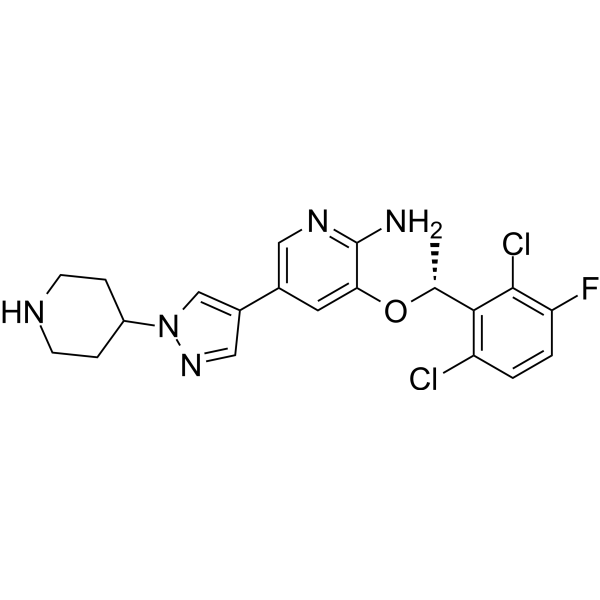
  • HY-50878
    Crizotinib
    Maximum Cited Publications
    86 Publications Verification

    PF-02341066

    Ligands for Target Protein for PROTAC Anaplastic lymphoma kinase (ALK) c-Met/HGFR ROS Kinase Cancer
    Crizotinib (PF-02341066) is an orally bioavailable, ATP-competitive ALK and c-Met inhibitor with IC50s of 20 and 8 nM, respectively. Crizotinib inhibits tyrosine phosphorylation of NPM-ALK and tyrosine phosphorylation of c-Met with IC50s of 24 and 11 nM in cell-based assays, respectively. Crizotinib is also a ROS1 inhibitor. Crizotinib has effective tumor growth inhibition .
    Crizotinib
  • HY-13404
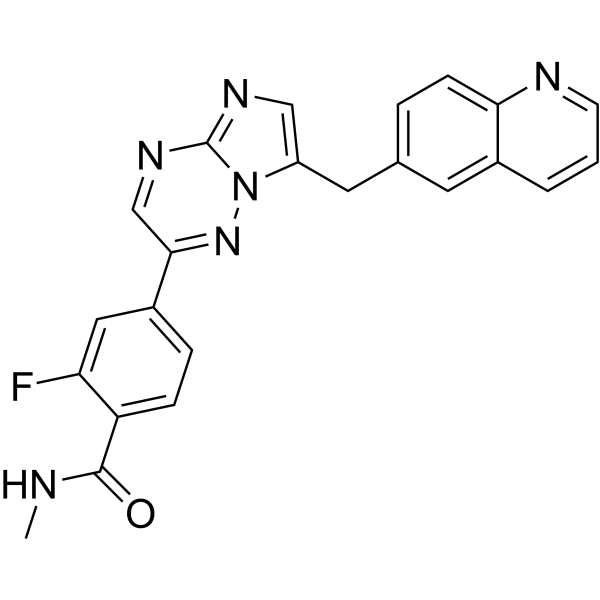
    Capmatinib
    20+ Cited Publications

    INC280; INCB28060

    c-Met/HGFR Apoptosis Cancer
    Capmatinib (INC280; INCB28060) is a potent, orally active, selective, and ATP competitive c-Met kinase inhibitor (IC50=0.13 nM). Capmatinib can inhibit phosphorylation of c-MET as well as c-MET pathway downstream effectors such as ERK1/2, AKT, FAK, GAB1, and STAT3/5. Capmatinib potently inhibits c-MET-dependent tumor cell proliferation and migration and effectively induces apoptosis. Antitumor activity. Capmatinib is largely metabolized by CYP3A4 and aldehyde oxidase .
    Capmatinib
  • HY-15959
    Savolitinib
    5+ Cited Publications

    Volitinib; HMPL-504; AZD-6094

    c-Met/HGFR Cancer
    Savolitinib (AZD-6094) is a potent, highly selective, and orally bioavailable c-Met inhibitor with IC50 s of 5 nM and 3 nM for c-Met and p-Met, respectively. Savolitinib (AZD-6094) selectively binds to and inhibits the activation of c-Met in an ATP-competitive manner, and disrupts c-Met signal transduction pathways. Antineoplastic activity .
    Savolitinib
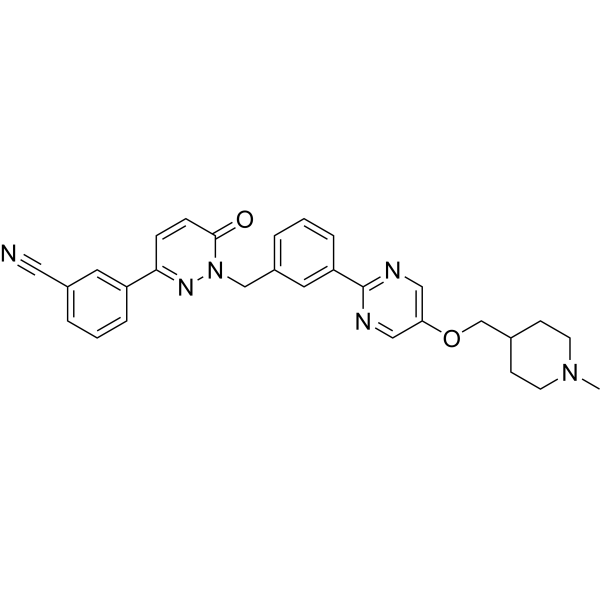
  • HY-14721
    Tepotinib
    5+ Cited Publications

    EMD-1214063

    c-Met/HGFR Autophagy Cancer
    Tepotinib (EMD-1214063) is an orally active and highly selective, reversible, ATP-competitive c-Met inhibitor with an IC50 of 3 nM, >200-fold selective for c-Met than IRAK4, TrkA, Axl, IRAK1, and Mer. Tepotinib inhibits c-Met phosphorylation and induces autophagy. Tepotinib has antitumor effects .
    Tepotinib
  • HY-P99391

    ABT-700; ABBV-400 Antibody

    c-Met/HGFR Apoptosis Cancer
    Telisotuzumab (ABT-700) is a bivalent humanized IgG1 anti-c-Met monoclonal antibody. Telisotuzumab binds cellular c-Met and disrupts its productive dimerization and activation induced by HGF or by the high density of c-Met on the cell surface independent of ligand. Telisotuzumab induces apoptosis. Telisotuzumab can be used for the study of cancers harboring amplified MET, such as gastric and lung cancers .
    Telisotuzumab
  • HY-11107
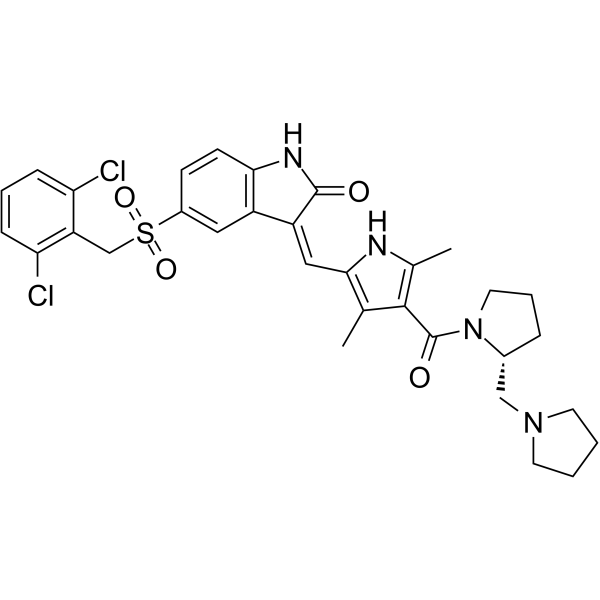
    PHA-665752
    10+ Cited Publications

    c-Met/HGFR Autophagy Apoptosis Cancer
    PHA-665752 is a selective, ATP-competitive, and active-site inhibitor of the catalytic activity of c-Met kinase (Ki=4 nM; IC50=9 nM). PHA-665752 exhibits >50-fold selectivity for c-Met compared with a panel of diverse tyrosine and serine-threonine kinases. PHA-665752 induces apoptosis and cell cycle arrest, and exhibits cytoreductive antitumor activity .
    PHA-665752
  • HY-50683
    JNJ-38877605
    5+ Cited Publications

    c-Met/HGFR Metabolic Disease Cancer
    JNJ-38877605 is an orally active ATP-competitive inhibitor of c-Met with an IC50 of 4 nM, 600-fold selective for c-Met than 200 other tyrosine and serine-threonine kinases . JNJ-38877605 inhibits c-Met phosphorylation and regulates lipid accumulation. JNJ-38877605 can be used for tumor and metabolic disease reseach .
    JNJ-38877605
  • HY-50686
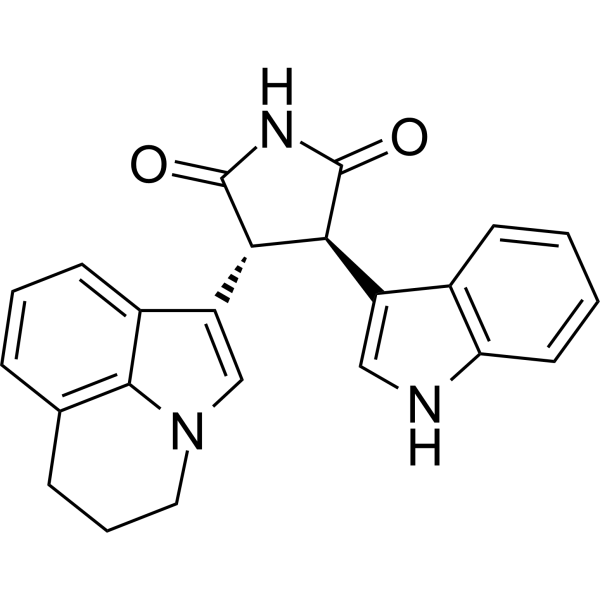
    Tivantinib
    5+ Cited Publications

    ARQ 197; (3R,4R)-ARQ 198

    c-Met/HGFR Apoptosis Cancer
    Tivantinib is a highly selective c-Met tyrosine kinase inhibitor with a Ki of 355 nM.
    Tivantinib
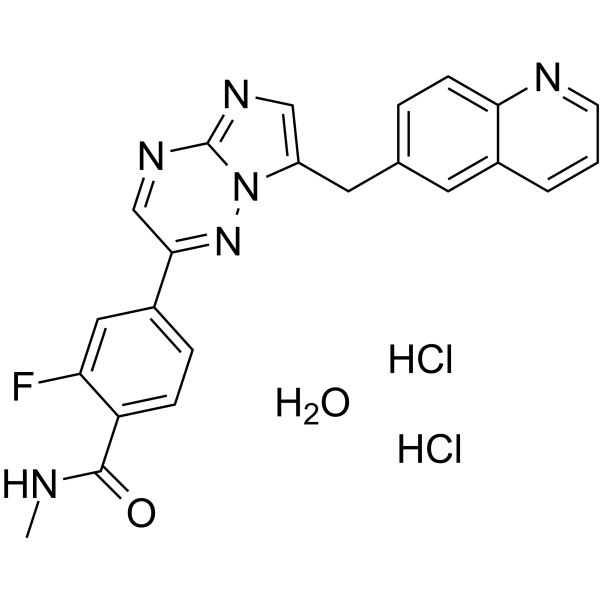
  • HY-13404C

    INC280 dihydrochloride hydrate; INCB-28060 dihydrochloride hydrate

    c-Met/HGFR Apoptosis Cancer
    Capmatinib (INC280; INCB28060) dihydrochloride hydrate is a potent, orally active, selective, and ATP competitive c-Met kinase inhibitor (IC50=0.13 nM). Capmatinib dihydrochloride hydrate can inhibit phosphorylation of c-MET as well as c-MET pathway downstream effectors such as ERK1/2, AKT, FAK, GAB1, and STAT3/5. Capmatinib dihydrochloride hydrate potently inhibits c-MET-dependent tumor cell proliferation and migration and effectively induces apoptosis. Antitumor activity. Capmatinib dihydrochloride hydrate is largely metabolized by CYP3A4 and aldehyde oxidase .
    Capmatinib dihydrochloride hydrate
  • HY-13068
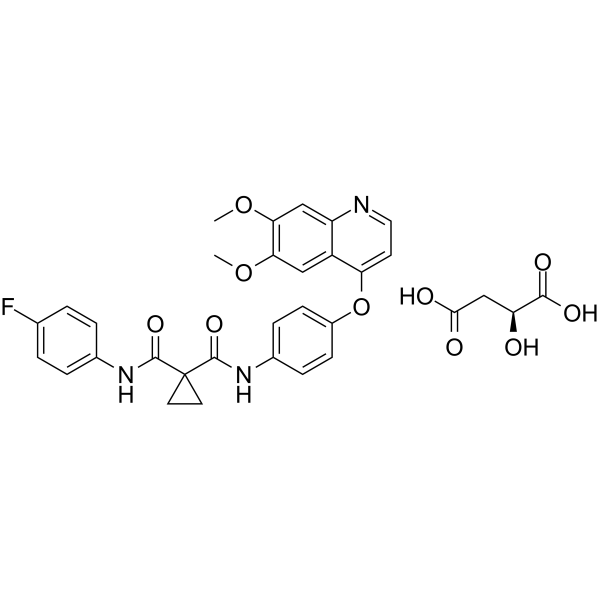
    Golvatinib
    4 Publications Verification

    E-7050

    c-Met/HGFR VEGFR Cancer
    Golvatinib (E-7050) is a potent dual inhibitor of both c-Met and VEGFR2 kinases with IC50s of 14 and 16 nM, respectively.
    Golvatinib
  • HY-15735
    c-Met inhibitor 1
    1 Publications Verification

    c-Met/HGFR Cancer
    c-Met inhibitor 1 is an orally active c-Met inhibitor. c-Met inhibitor 1 can inhibit c-Met phosphorylation with an IC50 of 0.010 μM. c-Met inhibitor 1 has antitumor activity and can be used for the research of tumors such as gastric cancer, pancreatic cancer and malignant glioma .
    c-Met inhibitor 1
  • HY-18711A

    metatinib anhydrous; c-met inhibitor 2

    c-Met/HGFR VEGFR Cancer
    SCR-1481B1 (Metatinib anhydrous) is a potent compound that has activity against cancers dependent upon Met activation and also has activity against cancers as a VEGFR inhibitor.
    SCR-1481B1
  • HY-116000
    Glumetinib
    2 Publications Verification

    Gumarontinib; SCC244

    c-Met/HGFR Cancer
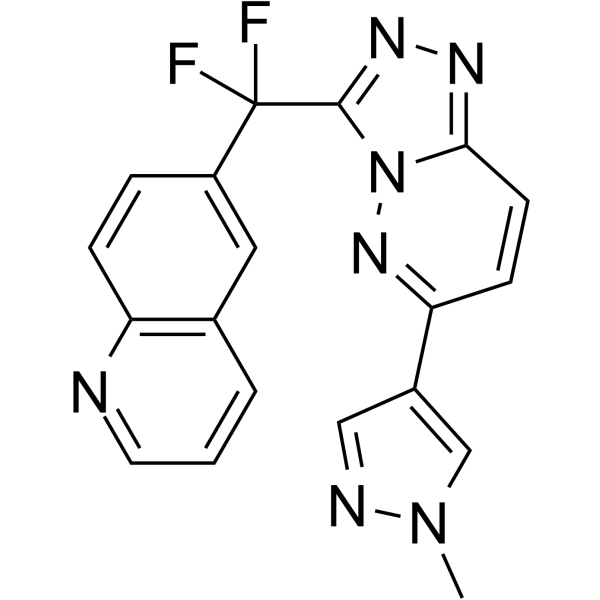
    Glumetinib (SCC244) is a highly selective, orally bioavailable, ATP-competitive c-Met inhibitor with an IC50 of 0.42 nM. Glumetinib has greater than 2400-fold selectivity for c-Met over those 312 kinases evaluated, including the c-Met family member RON and highly homologous kinases Axl, Mer, TyrO3. Antitumor activity .
    Glumetinib
  • HY-15240
    c-Kit-IN-1
    1 Publications Verification

    c-Kit c-Met/HGFR Cancer
    c-Kit-IN-1 is a potent inhibitor of c-Kit and c-Met with IC50s of <200 nM.
    c-Kit-IN-1
  • HY-100946
    CEP-40783
    2 Publications Verification

    RXDX-106

    TAM Receptor c-Met/HGFR Cancer
    CEP-40783 is a potent, selective and orally available inhibitor of AXL and c-Met with IC50 values of 7 nM and 12 nM, respectively.
    CEP-40783
  • HY-137455

    ANG-3777

    c-Met/HGFR Inflammation/Immunology
    Terevalefim (ANG-3777), an hepatocyte growth factor (HGF) mimetic, selectively activates the c-Met receptor .
    Terevalefim
  • HY-12017
    PF-04217903
    2 Publications Verification

    c-Met/HGFR Cancer
    PF-04217903 is a potent ATP-competitive c-Met kinase inhibitor with Ki of 4.8 nM for human c-Met. PF-04217903 shows more than 1,000-fold selectivity relative to 208 kinases. Antiangiogenic properties .
    PF-04217903
  • HY-14723

    c-Met/HGFR Cancer
    AMG-458 is a potent, selective and orally bioavailable c-Met inhibitor, with Ki values of 1.2 nM and 2.0 nM for human and mouse c-Met, respectively .
    AMG-458
  • HY-168135

    PROTACs c-Met/HGFR Cancer
    PROTAC c-Met degrader-1 is a selective and orally active c-Met PROTAC degrader with a DC50 of 6.21 nM against c-Met. PROTAC c-Met degrader-1 induces CRBN-dependent ubiquitination and proteasomal degradation of c-Met. PROTAC c-Met degrader-1 induces G0/G1 phase arrest in c-Met-dependent cancer cells. PROTAC c-Met degrader-1 kills c-Met-dependent cancer cells. PROTAC c-Met degrader-1 inhibits tumor growth in animal models. PROTAC c-Met degrader-1 can be used for the research of gastric cancer .
    PROTAC c-Met degrader-1
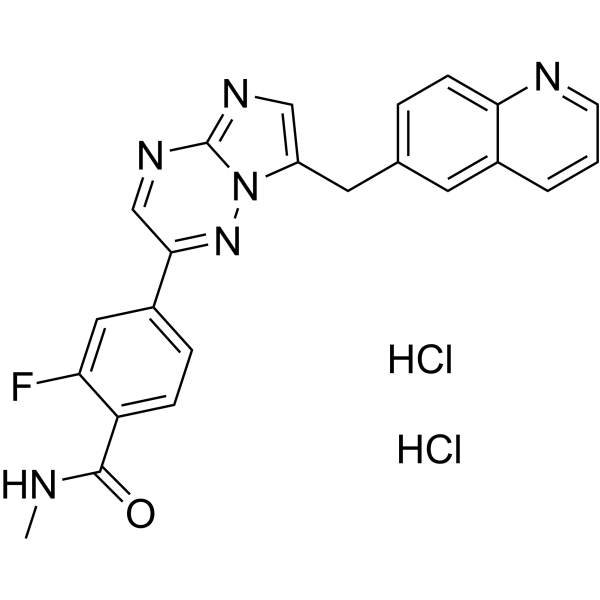
  • HY-13404A
    Capmatinib dihydrochloride
    20+ Cited Publications

    INC280 dihydrochloride; INCB28060 dihydrochloride

    c-Met/HGFR Apoptosis Cancer
    Capmatinib (INC280; INCB28060) dihydrochloride is a potent, orally active, selective, and ATP competitive c-Met kinase inhibitor (IC50=0.13 nM). Capmatinib dihydrochloride can inhibit phosphorylation of c-MET as well as c-MET pathway downstream effectors such as ERK1/2, AKT, FAK, GAB1, and STAT3/5. Capmatinib dihydrochloride potently inhibits c-MET-dependent tumor cell proliferation and migration and effectively induces apoptosis. Antitumor activity. Capmatinib dihydrochloride is largely metabolized by CYP3A4 and aldehyde oxidase .
    Capmatinib dihydrochloride
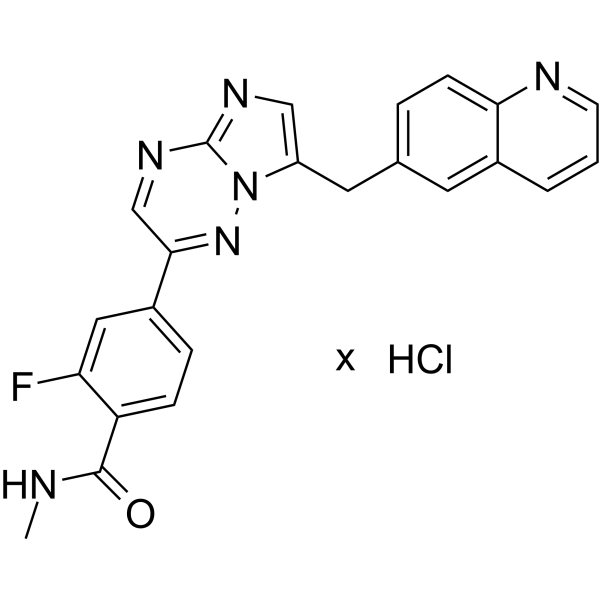
  • HY-13404B
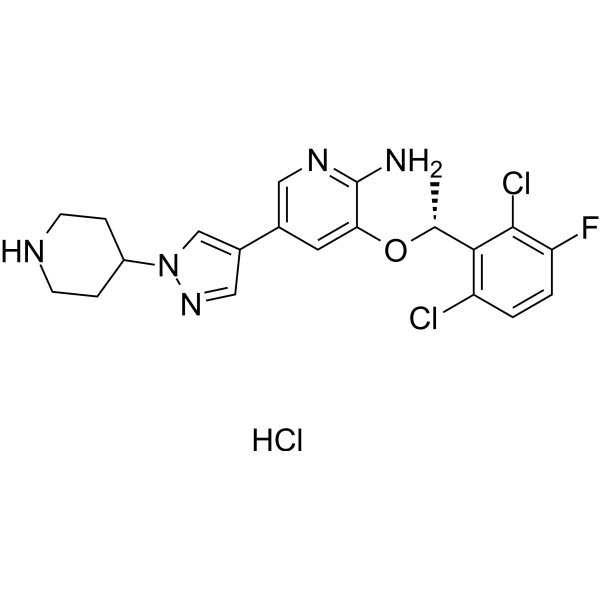
    Capmatinib hydrochloride
    20+ Cited Publications

    INC280 hydrochloride; INCB-28060 hydrochloride

    c-Met/HGFR Apoptosis Cancer
    Capmatinib (INC280; INCB28060) hydrochloride is a potent, orally active, selective, and ATP competitive c-Met kinase inhibitor (IC50=0.13 nM). Capmatinib hydrochloride can inhibit phosphorylation of c-MET as well as c-MET pathway downstream effectors such as ERK1/2, AKT, FAK, GAB1, and STAT3/5. Capmatinib hydrochloride potently inhibits c-MET-dependent tumor cell proliferation and migration and effectively induces apoptosis. Antitumor activity. Capmatinib hydrochloride is largely metabolized by CYP3A4 and aldehyde oxidase .
    Capmatinib hydrochloride
  • HY-P99196

    c-Met/HGFR Cancer
    Ficlatuzumab is a monoclonal antibody (McAb) targeting human hepatocyte growth factor (HGF). Ficlatuzumab blocks the activation of the HGF/c-Met signaling pathway, and inhibits c-Met receptor-mediated cancer cell proliferation, migration, and invasion .
    Ficlatuzumab
  • HY-12035
    AMG-208
    1 Publications Verification

    c-Met/HGFR Cytochrome P450 Cancer
    AMG-208 is an orally active c-Met/RON dual selective inhibitor with an IC50 of 9 nM for c-Met. AMG-208 is a CYP3A4 inhibitor with an IC50 of 32 μM. AMG-208 has anti-cancer activity .
    AMG-208
  • HY-50703
    MK-2461
    1 Publications Verification

    c-Met/HGFR Cancer
    MK-2461 is an ATP-competitive, selective and orally active wild-type and mutant c-Met inhibitor (IC50s: 0.4-2.5 nM). MK-2461 also inhibits Ron (IC50 of 7 nM) and Flt1 (IC50 of 10 nM), MK-2461 shows selective for c-MET over other kinases (lC50s = 22-7800 nM). MK-2461 can be used for the study of cancer, such as gastric cancer .
    MK-2461
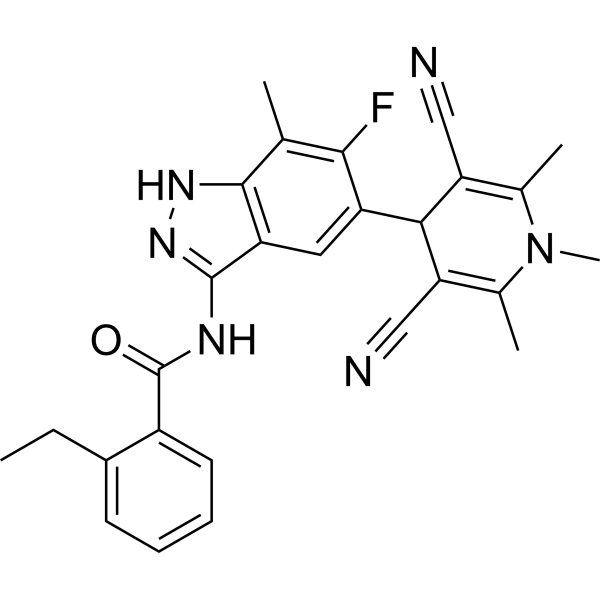
  • HY-147259

    c-Met/HGFR Cancer
    Dalmelitinib is an orally active selective c-Met kinase inhibitor (IC50: 2.9 nM) that binds to the ATP-binding region of c-Met. Dalmelitinib induces the phosphorylation of MET, partially or completely inhibits the phosphorylation of AKT and ERK. Dalmelitinib potently inhibits cancer cell (c-Met oncogene amplification) proliferation, and is used for the research of cancers like human non-small cell lung cancer (NSCLC) .
    Dalmelitinib
  • HY-14721R

    EMD-1214063 (Standard)

    Reference Standards c-Met/HGFR Autophagy Cancer
    Tepotinib (Standard) is the analytical standard of Tepotinib. This product is intended for research and analytical applications. Tepotinib (EMD-1214063) is an orally active and highly selective, reversible, ATP-competitive c-Met inhibitor with an IC50 of 3 nM, >200-fold selective for c-Met than IRAK4, TrkA, Axl, IRAK1, and Mer. Tepotinib inhibits c-Met phosphorylation. Tepotinib has antitumor effects .
    Tepotinib (Standard)
  • HY-124761

    Polo-like Kinase (PLK) Autophagy Mitosis Cancer
    Poloppin is a potent, cell penetrant inhibitor of the mitotic Polo-like kinase (PLK) (IC50=26.9 μM) and prevents the protein-protein interaction via the Polo-box domain (PBD) (Kd= 29.5 μM). Poloppin selectively kills cells expressing mutant KRAS, enhancing death in mitosis. Poloppin is used for the study of KRAS-mutant cancers as single agents, or in combination with c-MET inhibitors .
    Poloppin
  • HY-175321

    PROTACs c-Met/HGFR Apoptosis Cancer
    PROTAC c-Met degrader-6 is a potent and orally active c-Met PROTACdegrader. PROTAC c-Met degrader-6 significantly induces the degradation of the c-Met protein with DC50s of 0.52 nM and 0.45 nM in EBC-1 and Hs746T. PROTAC c-Met degrader-6 almost abrogates the migratory and invasion abilities of tumor cells and significantly induces the apoptosis and blocks the cell cycle in the G0/G1 phase. PROTAC c-Met degrader-6 can be used for the study of various cancers such as non-small cell lung cancer and stomach cancer (Pink: c-Met ligand (HY-W425461); Blue: E3 ligand (HY-14658); Black: Linker (HY-20797)) .
    PROTAC c-Met degrader-6
  • HY-14721A

    EMD-1214063 hydrochloride

    c-Met/HGFR Autophagy Cancer
    Tepotinib (EMD-1214063) hydrochloride is an orally active and highly selective, reversible, ATP-competitive c-Met inhibitor with an IC50 of 3 nM, >200-fold selective for c-Met than IRAK4, TrkA, Axl, IRAK1, and Mer. Tepotinib hydrochloride inhibits c-Met phosphorylation and induces autophagy. Tepotinib hydrochloride has antitumor effects .
    Tepotinib hydrochloride
  • HY-175333

    Target Protein Ligand-Linker Conjugates c-Met/HGFR Cancer
    c-Met ligand-Linker Conjugate 1 is an Target Protein Ligand-Linker Conjugate that incorporates a ligand for c-Met (HY-W425461) and a PROTAC linker (HY-151862), which recruits E3 ligases. c-Met ligand-Linker Conjugate 1 can be used for synthesis of PROTAC c-Met degrader-5 (HY-175320) .
    c-Met ligand-Linker Conjugate 1
  • HY-175320

    PROTACs c-Met/HGFR Apoptosis STAT Cancer
    PROTAC c-Met degrader-5 (Compound D19) is an orally active c-Met PROTAC degrader with DC50s of 0.42 and 0.32 nM in EBC-1 and Hs746T cells, respectively. PROTAC c-Met degrader-5 significantly induces cell apoptosis, G1 cell cycle arrest, and inhibits cell migration and invasion. PROTAC c-Met degrader-5 has potent antiproliferative and degradation efficacy against c-Met-addicted cancer cells and Tepotinib (HY-14721)-resistant cancer cells . Pink: c-Met ligand (HY-W425461); Blue: CRBN ligase ligand (HY-14658); Black: linker
    PROTAC c-Met degrader-5
  • HY-18711

    metatinib free base; c-met inhibitor 2 free base

    c-Met/HGFR VEGFR Cancer
    SCR-1481B1 free base, also known as Metatinib free base, is a small molecule receptor kinase inhibitor that targets both c-MET and vascular endothelial growth factor receptor 2 (VEGFR2) .
    SCR-1481B1 free base
  • HY-168910

    PROTACs c-Met/HGFR Cancer
    PROTAC c-Met degrader-3 (Compound 22b) is a c-Met PROTAC degrader. PROTAC c-Met degrader-3 promotes ubiquitination and degradation of c-Met (DC50 of 0.59 nM in EBC-1 cells). PROTAC c-Met degrader-3 can be used for the research of lung cancer (Pink: c-Met ligand (HY-14721); Blue: E3 ligase CRBN ligand (HY-W249500); linker + E3 ligase ligand (HY-168911)) .
    PROTAC c-Met degrader-3
  • HY-170335

    PROTACs c-Met/HGFR Others
    PROTAC c-Met degrader-2 (PROTAC2) is a PROTAC-based c-Met degrader, with a DC50 of 50 nM (Pink: Foretinib (HY-10338); Black: linker (HY-45124); Blue: CRBN ligand Thalidomide-4-O-C2-NH2 (HY-136162A)) .
    PROTAC c-Met degrader-2
  • HY-133083
    BAY-474
    1 Publications Verification

    c-Met/HGFR Cancer
    BAY-474 is a tyrosine-protein kinase c-Met inhibitor. BAY-474 acts as an epigenetics probe .
    BAY-474
  • HY-18307

    c-Met/HGFR Cancer
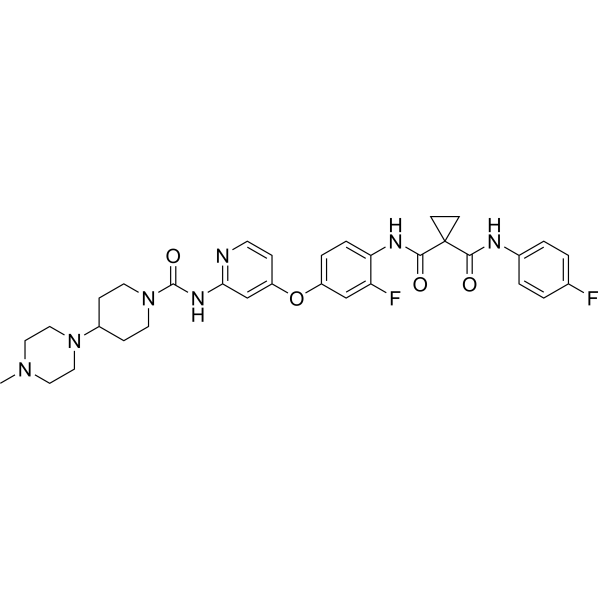
    SYN1143 is a potent, selective and orally active dual inhibitor of c-Met/RON, with IC50s of 4 and 9 nM, respectively. SYN1143 has weak inhibitory activity on Lck, Tie2, Src, and BTK with IC50s ranging from 160 to 710 nM. SYN1143 can be used for the research of cancers that RON and c-Met are activated .
    SYN1143
  • HY-174387

    c-Met/HGFR Cancer
    KIN-8741 is a highly selective Type IIb c-Met inhibitor. KIN-8741 has broad activity against c-Met kinase mutations. KIN-8741 shows antitumor activity in MET gene amplified and exon 14 deleted non-small cell lung cancer models. KIN-8741 can be used in the research of c-Met driven cancers, especially advanced tumors carrying MET exon 14 jump mutations, acquired drug resistance mutations, etc .
    KIN-8741
  • HY-162679

    c-Met/HGFR Apoptosis Cancer
    c-Met degrader-1 (Compound H11) is an orally active c-Met degrader (through the ubiquitin proteasome system). c-Met degrader-1 has anti-hepatocellular carcinoma activity (HCC) and inhibits tumor growth in MHCC97H xenografts. c-Met degrader-1 inhibits HCC cell growth, arrests cell cycle, and induces apoptosis. c-Met degrader-1 may overcome resistance to type Ib inhibitors .
    c-Met degrader-1
  • HY-161141

    c-Met/HGFR Cancer
    EGFR/ C-Met-in-2 (Compound H-22) is a dual inhibitor of EGFR/c-Met. EGFR/c-Met-IN-2 inhibits cell proliferation by arresting G2/M phase. EGFR/c-Met-IN-2 has antitumor activity .
    EGFR/c-Met-IN-2
  • HY-175337

    Target Protein Ligand-Linker Conjugates c-Met/HGFR Cancer
    c-Met ligand-Linker Conjugate 2 is a synthesized target protein ligand-linker conjugate that can be used for synthesis of PROTACs, such as PROTAC c-Met degrader-6 (HY-175321). PROTAC c-Met degrader-6 is a c-Met PROTAC degrader with anti-tumor activity [1] .
    c-Met ligand-Linker Conjugate 2
  • HY-P991565

    c-Met/HGFR Cancer
    CE-355621 is a humanized anti-c-Met IgG1 monoclonal antibody. CE-355621 can effectively bind with human c-Met (KD = 200 pM, IC50 = 466 pM) in A549 cells and cyno c-Met (KD = 610 pM) in cynomolgus kidney cells. CE-355621 inhibits the c-Met signaling pathway by blocking HGF binding. CE-355621 significantly inhibits the growth of tumors dependent on the c-Met/HGF pathway. CE-355621 can be used for research on cancer such as glioblastoma and gastric cancer .
    CE-355621
  • HY-149880

    c-Met/HGFR Cancer
    c-Met-IN-18 is ATP competitive type-III c-MET inhibitor of WT and D1228V mutant c-MET. c-Met-IN-18 has inhibitory for WT/D1228V with an IC50 value of 0.013/0.20 e.c-Met-IN-18 can be used for the research of c-MET driven cancers . c-Met-IN-18 is a click chemistry reagent, it contains an Alkyne group and can undergo copper-catalyzed azide-alkyne cycloaddition (CuAAc) with molecules containing Azide groups.
    c-Met-IN-18
  • HY-144394

    Apoptosis c-Met/HGFR Cancer
    Antitumor agent-45 (Compound 21) could induce and stimulate A549 cells apoptosis in G0/G1 and G2/M phase. Antitumor agent-45 (Compound 21) inhibits c-Met expression to regulate the growth of tumor cells .
    Antitumor agent-45
  • HY-177134

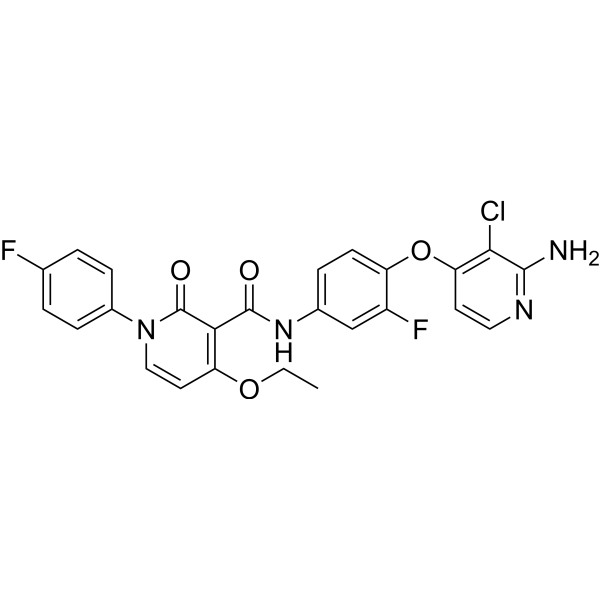
    VEGFR c-Met/HGFR Cancer
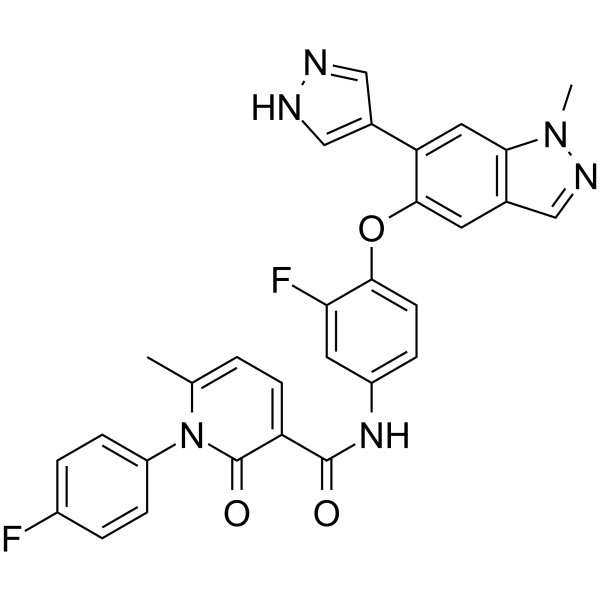
    Taligantinib (Compound Example 70) is an orally active and selective dual inhibitor targeting vascular endothelial growth factor receptor 2 (VEGFR-2) and hepatocyte growth factor receptor (c-Met). Taligantinib suppresses tumor angiogenesis and cell proliferation. Taligantinib is promising for research of solid tumors such as non-small cell lung cancer and hepatocellular carcinoma .
    Taligantinib
  • HY-150582

    c-Met/HGFR c-Kit FLT3 Apoptosis Cancer
    c-Met-IN-14 (compound 26af) is a selective inhibitor of c-Met kinase from N-sulfonylamidine-based derivatives, with an IC50 value of 2.89 nM. c-Met-IN-14 shows anticancer activity by blocking phosphorylation of c-Met, and arrests cell cycle at G2/M phase. c-Met-IN-14 induces apoptosis of A549 cells in a dose-dependent manner .
    c-Met-IN-14
  • HY-115937

    c-Met/HGFR Apoptosis Cancer
    c-Met-IN-9, a 4-phenoxypyridine derivative, is a c-Met kinas inhibitor with an IC50 of 12 nM. c-Met-IN-9 induces cells apoptosis, and has antitumor activities .
    c-Met-IN-9
  • HY-12017A
    PF-04217903 mesylate
    2 Publications Verification

    c-Met/HGFR Cancer
    PF-04217903 mesylate is a potent ATP-competitive c-Met kinase inhibitor with Ki of 4.8 nM for human c-Met. PF-04217903 mesylate shows more than 1,000-fold selectivity relative to 208 kinases. Antiangiogenic properties .
    PF-04217903 mesylate
  • HY-157302

    c-Met/HGFR Cancer
    c-Met-IN-21 (compound 54) is a c-met inhibitor with an IC50 value of 0.45? nM, and shows anti-tumor efficacy in vivo .
    c-Met-IN-21
  • HY-P99391A

    ABT-700 (powder)

    c-Met/HGFR Apoptosis Cancer
    Telisotuzumab (ABT-700) (powder) is a bivalent humanized IgG1 anti-c-Met monoclonal antibody. Telisotuzumab (powder) binds cellular c-Met and disrupts its productive dimerization and activation induced by HGF or by the high density of c-Met on the cell surface independent of ligand. Telisotuzumab (powder) induces apoptosis. Telisotuzumab (powder) can be used for the study of cancers harboring amplified MET, such as gastric and lung cancers .
    Telisotuzumab (powder)
  • HY-13404R

    INC280 (Standard); INCB28060 (Standard)

    Reference Standards c-Met/HGFR Apoptosis Cancer
    Capmatinib (Standard) is the analytical standard of Capmatinib. This product is intended for research and analytical applications. Capmatinib (INC280; INCB28060) is a potent, orally active, selective, and ATP competitive c-Met kinase inhibitor (IC50=0.13 nM). Capmatinib can inhibit phosphorylation of c-MET as well as c-MET pathway downstream effectors such as ERK1/2, AKT, FAK, GAB1, and STAT3/5. Capmatinib potently inhibits c-MET-dependent tumor cell proliferation and migration and effectively induces apoptosis. Antitumor activity. Capmatinib is largely metabolized by CYP3A4 and aldehyde oxidase .
    Capmatinib (Standard)

Inquiry Online

Your information is safe with us. * Required Fields.

Salutation


Country or Region *

Applicant Name *


Organization Name *

Department *


Email Address *


Product Name *

Cat. No.


Requested quantity *

Phone Number *


Remarks

Inquiry Online

Inquiry Information

Product Name:
Cat. No.:
Quantity:
MCE Japan Authorized Agent:

