1. Search Result
Search Result
Results for "

central activity

" in MedChemExpress (MCE) Product Catalog:

240

Inhibitors & Agonists

3

Screening Libraries

1

Fluorescent Dye

5

Biochemical Assay Reagents

16

Peptides

3

Inhibitory Antibodies

43

Natural
Products

19

Isotope-Labeled Compounds

Cat. No. Product Name Target Research Areas Chemical Structure
  • HY-N0035
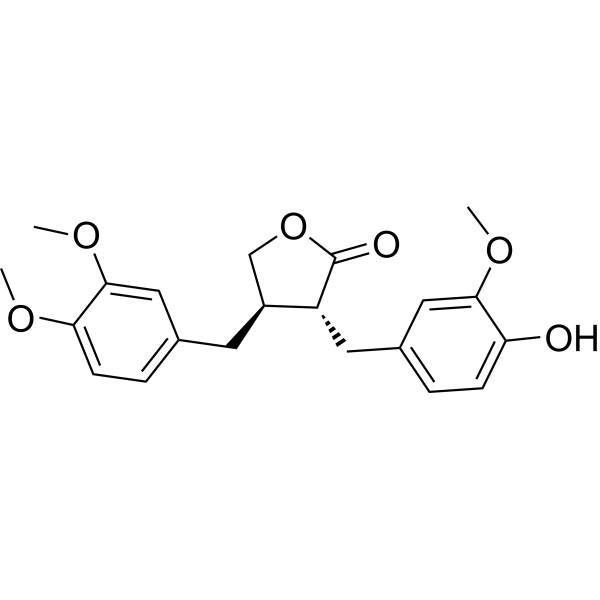
    Arctigenin
    Maximum Cited Publications
    15 Publications Verification

    (-)-Arctigenin

    MMP Influenza Virus Autophagy Apoptosis Infection Neurological Disease Metabolic Disease Inflammation/Immunology Cancer
    Arctigenin ((-)-Arctigenin), a biologically active lignan, can be used as an antitumor agent. Arctigenin exhibits potent antioxidant, anti-inflammatory and antiviral (influenza A virus) activities. Arctigenin can be used for the research of metabolic disorders, and central nervous system dysfunctions .
    Arctigenin
  • HY-N0152
    Myricitrin
    3 Publications Verification

    PKC NO Synthase TNF Receptor Parasite Infection Neurological Disease Inflammation/Immunology
    Myricitrin, a naturally occurring flavonoid, is an orally active nitric oxide (NO) and PKC inhibitor. Myricitrin has central nervous system activity, including anxiolytic-like action. Myricitrin possesses antioxidant, anti-inflammatory, antifibrotic and anti-malarial effects .
    Myricitrin
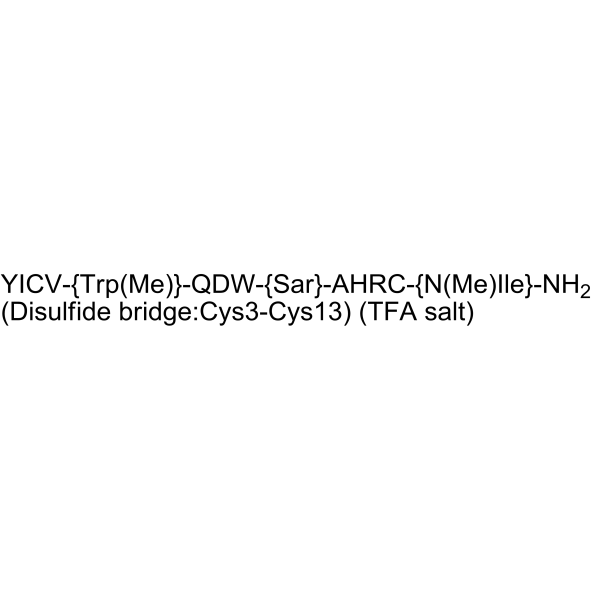
  • HY-P1717
    AMY-101
    Maximum Cited Publications
    7 Publications Verification

    Cp40

    Complement System SARS-CoV Inflammation/Immunology
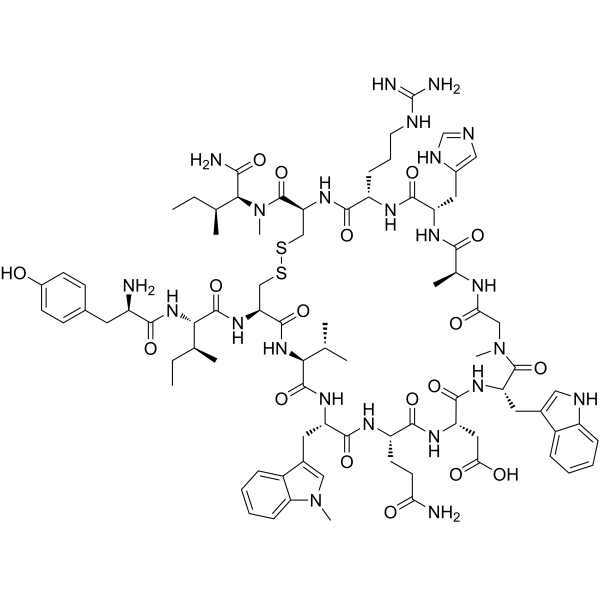
    AMY-101 (Cp40), a peptidic inhibitor of the central complement component C3 (KD = 0.5 nM), inhibits naturally occurring periodontitis in non-human primates (NHPs). AMY-101 (Cp40) exhibits a favorable anti-inflammatory activity in models with COVID-19 severe pneumonia with systemic hyper inflammation .
    AMY-101
  • HY-B1330
    Proglumide
    1 Publications Verification

    Cholecystokinin Receptor Neurological Disease Endocrinology Cancer
    Proglumide is a nonpeptide and orally active cholecystokinin (CCK)-A/B receptors antagonist. Proglumide selective blocks CCK’s effects in the central nervous system (CNS). Proglumide has ability to inhibit gastric secretion and to protect the gastroduodenal mucosa. Proglumide also has antiepileptic and antioxidant activities .
    Proglumide
  • HY-B1139
    Tolperisone hydrochloride
    2 Publications Verification

    Apoptosis Neurological Disease
    Tolperisone hydrochloride is a centrally acting muscle relaxant studied in neurological disorders causing pathological rhabdomyosclerosis (pyramidal tract injury, multiple sclerosis, myelopathy, encephalomyelitis), spastic paralysis, and other muscle dystonia-related Encephalopathy. Tolperisone hydrochloride also has antiviral activity .
    Tolperisone hydrochloride
  • HY-B0061
    Tandospirone citrate
    3 Publications Verification

    SM-3997 citrate

    5-HT Receptor Neurological Disease Metabolic Disease
    Tandospirone (SM-3997) citrate is a potent and selective 5-HT1A receptor partial agonist, with a Ki of 27 nM. Tandospirone citrate has anxiolytic and antidepressant activities. Tandospirone citrate can be used for the research of the central nervous system disorders and the underlying mechanisms .
    Tandospirone citrate
  • HY-14951
    Firategrast
    5+ Cited Publications

    SB 683699

    Integrin Neurological Disease
    Firategrast (SB 683699) is an orally active and specific α4β1/α4β7 integrin antagonist. Firategrast reduces trafficking of lymphocytes into the central nervous system (CNS) and decreases multiple sclerosis (MS) activity .
    Firategrast
  • HY-125269
    TED-347
    10+ Cited Publications

    YAP Cancer
    TED-347 is a potent, irreversible, covalent and allosteric inhibitor at YAP-TEAD protein-protein interaction with an EC50 of 5.9 μM for TEAD4⋅Yap1 protein-protein interaction. TED-347 specifically and covalently bonds with Cys-367 within the central pocket of TEAD4 with a Ki of 10.3 μM. TED-347 blocks TEAD transcriptional activity and has antitumor activity .
    TED-347
  • HY-P1146
    Semax
    1 Publications Verification

    Amyloid-β Cardiovascular Disease Neurological Disease Inflammation/Immunology
    Semax is a BBB-penetrable adrenocorticotropic hormone-like peptide and can form stable complexes with Cu 2+. Semax is a synthetic peptide analog of Adrenocorticotropic hormone (ACTH) (4-10). Semax has immunomodulatory, nootropic and neuroprotective activities. Semax can be used in the research of central nervous system diseases such as Alzheimer's disease and cerebral ischemia .
    Semax
  • HY-B0901
    Bromperidol
    2 Publications Verification

    R-11333

    Dopamine Receptor Bacterial Infection Neurological Disease
    Bromperidol (R-11333) possesses antipsychotic activity, with a high affinity for central dopamine receptors D2. Bromperidol can kill Mycobacteria in a synergistic manner with Spectinomycin .
    Bromperidol
  • HY-B0770
    Artemotil
    1 Publications Verification

    β-Arteether; (+)-Arteether; Arteether

    CXCR Parasite Infection Cancer
    Artemotil (β-Arteether) has antimalarial activity for the treatment of chloroquine-resistant Plasmodium falciparum malaria with an IC50 of 1.61 nM. Artemotil also has central nervous system (CNS) neurotoxicity and anorectic toxicity in rats, dogs and monkeys .
    Artemotil
  • HY-107523
    WAY-213613
    3 Publications Verification

    EAAT Neurological Disease
    WAY-213613 is a potent and selective human EAAT2 inhibitor. WAY-213613 has potent EAAT2 inhibitory activity with an IC50 value of 85 nM. WAY-213613 can be used for the research of central nervous system
    WAY-213613
  • HY-14558
    Tandospirone
    3 Publications Verification

    SM-3997

    5-HT Receptor Neurological Disease
    Tandospirone (SM-3997) is a potent and selective 5-HT1A receptor partial agonist, with a Ki of 27 nM. Tandospirone has anxiolytic and antidepressant activities. Tandospirone can be used for the research of the central nervous system disorders and the underlying mechanisms .
    Tandospirone
  • HY-113323
    3-Methoxy-4-hydroxyphenylglycol
    2 Publications Verification

    HMPG; MHPG; MOPEG

    Endogenous Metabolite Neurological Disease
    3-Methoxy-4-hydroxyphenylglycol (HMPG) is a metabolite of norepinephrine degradation in the brain. 3-Methoxy-4-hydroxyphenylglycol is an indicators of central nervous system noradrenergic activity. 3-Methoxy-4-hydroxyphenylglycol can be used for research of depression, chronic schizophrenia, etc .
    3-Methoxy-4-hydroxyphenylglycol
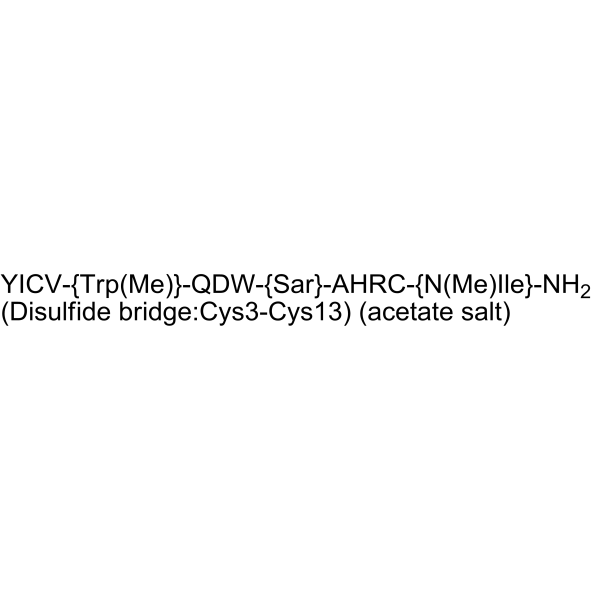
  • HY-P1717B
    AMY-101 acetate
    Maximum Cited Publications
    7 Publications Verification

    Cp40 acetate

    Complement System SARS-CoV Inflammation/Immunology
    AMY-101 acetate (Cp40 acetate), a peptidic inhibitor of the central complement component C3 (KD = 0.5 nM), inhibits naturally occurring periodontitis in non-human primates (NHPs). AMY-101 acetate (Cp40 acetate) exhibits a favorable anti-inflammatory activity in models with COVID-19 severe pneumonia with systemic hyper inflammation .
    AMY-101 acetate
  • HY-B1111

    BTS-27419

    Environmental Pollutants Adrenergic Receptor Parasite Monoamine Oxidase Infection Endocrinology
    Amitraz is a non-systemic acaricide and insecticide with alpha-adrenergic agonist activity that interacts with octopamine receptors in the central nervous system and inhibits monoamine oxidase and prostaglandin synthesis .
    Amitraz
  • HY-B0799

    Ergoloid mesylates

    GABA Receptor Chloride Channel Adrenergic Receptor Dopamine Receptor Phosphodiesterase (PDE) Cardiovascular Disease Neurological Disease
    Dihydroergotoxine mesylate (Ergoloid mesylates) is an α-adrenergic blocking agent. Dihydroergotoxine mesylate binds with high affinity to the GABAA receptor associated Cl - channel. Dihydroergotoxine mesylate also interacts with central dopaminergic and serotonergic receptors. Dihydroergotoxine mesylate displays antiproliferative, antihypertensive and neuroprotective activity .Dihydroergotoxine mesylate (Ergoloid mesylates) is an α-adrenergic blocking agent. Dihydroergotoxine mesylate binds with high affinity to the GABAA receptor associated Cl - channel. Dihydroergotoxine mesylate also interacts with central dopaminergic and serotonergic receptors. Dihydroergotoxine mesylate displays antiproliferative, antihypertensive and neuroprotective activity .
    Dihydroergotoxine mesylate
  • HY-18977
    KML29
    3 Publications Verification

    MAGL Metabolic Disease Inflammation/Immunology
    KML29 is an extremely selective, orally active and irreversible MAGL inhibitor, with IC50 values of 15 nM, 43 nM and 5.9 nM for mouse, rat and human MAGL, respectively. KML29 exhibits minimal cross-reactivity toward other central and peripheral serine hydrolases, including no detectable activity against FAAH .
    KML29
  • HY-109189
    Rezivertinib
    1 Publications Verification

    BPI-7711

    EGFR Cancer
    Rezivertinib (BPI-7711) is an orally active, highly selective and irreversible third-generation EGFR tyrosine kinase inhibitor (TKI). Rezivertinib exhibits high potency against the common activation EGFR and the resistance T790M mutations. Rezivertinib has excellent central nervous system (CNS) penetration and has antitumor activity .
    Rezivertinib
  • HY-W012848

    DL-α-Methylbenzylamine

    Endogenous Metabolite Neurological Disease Cancer
    1-Phenylethanamine is a potential central nervous system stimulant and a related compound of β-phenylethylamine. Due to the replacement of its benzene ring with an indole group, its brain glycogenolytic activity is significantly reduced. Therefore, 1-Phenylethanamine can be used to study the impact of the chemical structure of phenylethylamine derivatives on central nervous system activity. In addition, 1-Phenylethanamine can also be used to synthesize the tyrosine kinase (tyrosine kinase) inhibitor CLM3 (HY-164413) .
    1-Phenylethanamine
  • HY-B1427

    Gamma-amino-beta-hydroxybutyric acid

    Drug Derivative Neurological Disease
    Gamibetal (Gamma-amino-beta-hydroxybutyric acid) is γ-amino-β-hydroxybutyric acid (GABOB), a hydroxylated derivative of GABA (γ-aminobutyric acid). Gamibetal exhibits central inhibitory and anticonvulsant activities. Gamibetal can be used in research on epilepsy, neuralgia, and other conditions .
    Gamibetal
  • HY-10900
    TCS 1102
    1 Publications Verification

    Orexin Receptor (OX Receptor) Neurological Disease Endocrinology
    TCS 1102 is a potent, dual orexin receptor antagonist, with Ki values of 0.2 nM and 3 nM for OX2 and OX1 receptors, respectively. TCS 1102 demonstrates excellent blood-brain barrier penetrability and moderate bioavailability in rats .
    TCS 1102
  • HY-118545

    STAT Inflammation/Immunology Cancer
    Butamirate is an orally active antitussive agent that acts centrally through the receptors in the brainstem. Butamirate also reduces the resistance in the airways by inhibiting bronchospasm and anti-inflammatory effect. Butamirate inhibits glioblastoma (GBM) growth and STAT3 activity. Butamirate can be used for the study of glioblastoma .
    Butamirate
  • HY-N0443
    N-Methylcytisine
    2 Publications Verification

    Caulophylline

    nAChR Inflammation/Immunology
    N-Methylcytisine (Caulophylline), a tricyclic quinolizidine alkaloid, exerts hypoglycaemic, analgesic and anti-inflammatory activities. N-methylcytisine is a selective ligand of nicotinic receptors of acetylcholine in the central nervous system and has a high affinity (Kd = 50 nM) to nicotinic acetylcholine receptors (nAChR) from squid optical ganglia .
    N-Methylcytisine
  • HY-103354
    Proglumide sodium
    1 Publications Verification

    Cholecystokinin Receptor Neurological Disease Endocrinology Cancer
    Proglumide sodium is a nonpeptide and orally active cholecystokinin (CCK)-A/B receptors antagonist. Proglumide sodium selective blocks CCK’s effects in the central nervous system (CNS). Proglumide sodium has ability to inhibit gastric secretion and to protect the gastroduodenal mucosa. Proglumide sodium also has antiepileptic and antioxidant activities .
    Proglumide sodium
  • HY-W017389S

    Isotope-Labeled Compounds Cancer
    Xanthine- 13C, 15N2 is a 15N-labeled and 13C-labled Xanthine (HY-W017389). Xanthine is a plant alkaloid with mild stimulant activity of the central nervous system. Xanthine also acts as an intermediate product on the pathway of purine degradation .
    Xanthine-13C,15N2
  • HY-132308
    DYRK1-IN-1
    3 Publications Verification

    DYRK Neurological Disease
    DYRK1-IN-1 is a highly selective and ligand-efficient DYRK1A inhibitor. DYRK1-IN-1 inhibits DYRK1A phosphorylation activity with an IC50 value of 220 nM. DYRK1-IN-1 can be used for the research of central nervous system penetrant DYRK1A chemical probe .
    DYRK1-IN-1
  • HY-B1343

    Cholinesterase (ChE) Neurological Disease
    Pridinol mesylate is an orally active, blood-brain permeable, muscarinic acetylcholine receptor (mAChR)-directed muscle relaxant. Pridinol mesylate reduces the conduction of impulses to spinal motor neurons and exerts muscle relaxant activity. Pridinol mesylate inhibits skeletal muscle contractures in diseases of both central and peripheral origin and can be used in research in the field of musculoskeletal diseases .
    Pridinol mesylate
  • HY-W294348

    2,2-Diethyl-1,3-propanediol

    Drug Derivative Neurological Disease
    Prenderol is a potent central-nervous-system depressant. Prenderol has anticonvulsant activity .
    Prenderol
  • HY-150036

    Antibiotic Cholecystokinin Receptor Cancer
    Anthramycin, a member of the pyrolobenzodiazepine (PBD) family, is a potent antibiotic. Anthramycin has potent antitumor activity. Anthramycin can act as an potent antagonist of cholecystokinin in the central nervous system in mice .
    Anthramycin
  • HY-107523A
    WAY-213613 hydrochloride
    3 Publications Verification

    EAAT Neurological Disease
    WAY-213613 (hydrochloride) is a potent and selective human EAAT2 inhibitor. WAY-213613 has potent EAAT2 inhibitory activity with an IC50 value of 85 nM. WAY-213613 can be used for the research of central nervous system .
    WAY-213613 hydrochloride
  • HY-113995
    (-)-Vesamicol
    1 Publications Verification

    (-)-AH5183

    mAChR Neurological Disease
    (-)-Vesamicol (AH5183) is a vesicular acetylcholine transporter inhibitor. (-)-Vesamicol reversibly and non-competitively inhibits the transport of acetylcholine into circulating synaptic vesicles and blocks the activity of vesicular acetylcholine transporters in medial amygdala neurons. (-)-Vesamicol is applicable to research related to central precocious puberty .
    (-)-Vesamicol
  • HY-W105505

    Biochemical Assay Reagents Neurological Disease Inflammation/Immunology
    SAMe-1,4-Butanedisulfonate, a natural compound, is a methyl donor in the central nervous system. SAMe-1,4-Butanedisulfonate has antidepressant activity. SAMe-1,4-Butanedisulfonate can be used for research of CNS disorders .
    SAMe-1,4-Butanedisulfonate
  • HY-118545A

    STAT Inflammation/Immunology Cancer
    Butamirate citrate is an orally active antitussive agent that acts centrally through the receptors in the brainstem. Butamirate citrate also reduces the resistance in the airways by inhibiting bronchospasm and anti-inflammatory effect. Butamirate citrate inhibits glioblastoma (GBM) growth and STAT3 activity. Butamirate citrate can be used for the study of glioblastoma .
    Butamirate citrate
  • HY-Z16070

    Drug Derivative Cardiovascular Disease Neurological Disease
    Hydronopol is a saturated alcohol terpene derivative. Hydronopol shows central inhibitory, anticonvulsant, analgesic, anticholinergic and antihypertensive activities. Hydronopol can be used for the researches of neurological and cardiovascular disease .
    Hydronopol
  • HY-B1111S1

    BTS-27419-d3

    Isotope-Labeled Compounds Adrenergic Receptor Monoamine Oxidase Parasite Infection Endocrinology
    Amitraz-d3 is the deuterium labeled Amitraz. Amitraz is a non-systemic acaricide and insecticide, with alpha-adrenergic agonist activity, interaction with octopamine receptors of the central nervous system and inhibition of monoamine oxidases and prostaglandin synthesis.
    Amitraz-d3
  • HY-W317853

    Proton Pump Others
    Protonstatin-1 is a selective plasma membrane (PM) H +-ATPase inhibitor (IC50 of 3.9 μM) that inhibits auxin transport. Protonstatin-1 interacts with the PM H +-ATPase central loop and may thus impede the functions of the N- and/or P-domain to inhibit the pump activity .
    Protonstatin-1
  • HY-A0235

    Stakane

    COX Neurological Disease
    Antrafenine (Stakane) is a non-narcotic analgesic. Antrafenine demonstrates central analgesic effects in acetic acid writhing test and mouse hot plate test experiments. Antrafenine significantly alleviates the pain of osteoarthritis. Antrafenine exhibits mild anti-inflammatory activity in a rat toe edema model. Antrafenine can be used in pain and anti-inflammatory research .
    Antrafenine
  • HY-100797

    (±)-CPP

    iGluR Neurological Disease
    (RS)-CPP ((±)-CPP) is a potent and selective NMDA antagonist. (RS)-CPP inhibits central neuron responses, and has anticonvulsant activity .
    (RS)-CPP
  • HY-N10743

    Parasite Infection
    Pipercide is an amide of piper nigrum fruits. Pipercide has larvicidal activity to mosquito. Pipercide acts on the nervous system and induces repetitive discharge on the central nerve cord. Pipercide can be used as an insecticide .
    Pipercide
  • HY-175763

    RGS Protein Neurological Disease Metabolic Disease
    Z55660043 is a Regulator of G protein signaling-14 (RGS14) inhibitor with an IC50 of 2.3  μM. Z55660043 selectively and non-covalently inhibits RGS14 GTPase-accelerating protein (GAP) activity without measurable cytotoxicity. Z55660043 can be used for central nervous system and metabolic disorders research .
    Z55660043
  • HY-134042

    Drug Derivative Neurological Disease
    GP130 (G130) is a psychostimulant agent, exhibiting antagonist activity against central nervous system depressing agents [2.
    G 130
  • HY-P991711

    Trk Receptor Neurological Disease Inflammation/Immunology
    Povovetug is a humanized IgG1κ chimeric monoclonal antibody inhibitor targeting NGF/bNGF. Povovetug has a significant analgesic activity. Povovetug can be used for central neuroinflammation like chronic radicular pain research .
    Povovetug
  • HY-116561

    Drug Derivative Neurological Disease
    Adamantylmethamphetamine hydrochloride is a psychotic compound. Adamantylmethamphetamine hydrochloride has effects on hexobarbital sleeping time, spontaneous motor activity, and the potentiation of metrazole and antifatigue activity .
    Adamantylmethamphetamine hydrochloride
  • HY-169914

    JO 1784 hydrochloride

    Sigma Receptor Neurological Disease
    Igmesine hydrochloride (JO 1784) is an orally active σ-receptor ligand capable of blocking the increase in colonic electromechanical activity induced by emotional stress. Igmesine hydrochloride also eliminates the colonic motility stimulation induced by dopamine, as well as the stimulation induced by centrally injected D1 or D2 receptor agonists. Furthermore, Igmesine hydrochloride can block the colonic motility responses induced by corticotropin-releasing factor (CRF) and ES through central cholecystokinin (CCK) release and/or activation of supraspinal CCK pathways .
    Igmesine hydrochloride
  • HY-N2433

    Potassium Channel Neurological Disease
    Paederosidic acid methyl ester is a ATP‐sensitive K + channel activator, isolated from P. scandens. Paederosidic acid methyl ester exhibits significant central analgesic activity, and enhances the threshold of pain by activating ATP‐sensitive K + channel in the brain and spinal cord level .
    Paederosidic acid methyl ester
  • HY-B1111R

    BTS-27419 (Standard)

    Reference Standards Adrenergic Receptor Monoamine Oxidase Parasite Infection Endocrinology
    Amitraz (Standard) is the analytical standard of Amitraz. This product is intended for research and analytical applications. Amitraz is a non-systemic acaricide and insecticide with alpha-adrenergic agonist activity that interacts with octopamine receptors in the central nervous system and inhibits monoamine oxidase and prostaglandin synthesis.
    Amitraz (Standard)
  • HY-N6032

    Phytolaccoside B

    Cholinesterase (ChE) JNK NF-κB Fungal Infection Neurological Disease Inflammation/Immunology
    Esculentoside B (Phytolaccoside B) is a natural product from the roots of Phytolacca acinosa Roxb. Esculentoside B is neurotoxic to zebrafish larvae, and impairs their central nervous system development. Esculentoside B inhibits inflammatory response and has antifungal activity .
    Esculentoside B
  • HY-110053

    SM-3997 hydrochloride

    5-HT Receptor Neurological Disease
    Tandospirone (SM-3997) hydrochloride is a potent and selective 5-HT1A receptor partial agonist, with a Ki of 27 nM. Tandospirone hydrochloride has anxiolytic and antidepressant activities. Tandospirone hydrochloride can be used for the research of the central nervous system disorders and the underlying mechanisms .
    Tandospirone hydrochloride
  • HY-19231

    Org 41793

    Opioid Receptor Neurological Disease
    DPI-3290 (Org 41793) is a potent and specific opioid receptors agonist with Ki values of 0.18 nM, 0.46 nM, and 0.62 nM for δ-, μ-, and κ-opioid receptors, respectively. DPI-3290 is one of a series of novel centrally acting agents with potent antinociceptive activity .
    DPI-3290

Inquiry Online

Your information is safe with us. * Required Fields.

Salutation


Country or Region *

Applicant Name *


Organization Name *

Department *


Email Address *


Product Name *

Cat. No.


Requested quantity *

Phone Number *


Remarks

Inquiry Online

Inquiry Information

Product Name:
Cat. No.:
Quantity:
MCE Japan Authorized Agent:

