1. Search Result
Search Result
Results for "

cerebral vasospasm

" in MedChemExpress (MCE) Product Catalog:

9

Inhibitors & Agonists

1

Peptides

1

Natural
Products

Cat. No. Product Name Target Research Areas Chemical Structure
  • HY-P1032
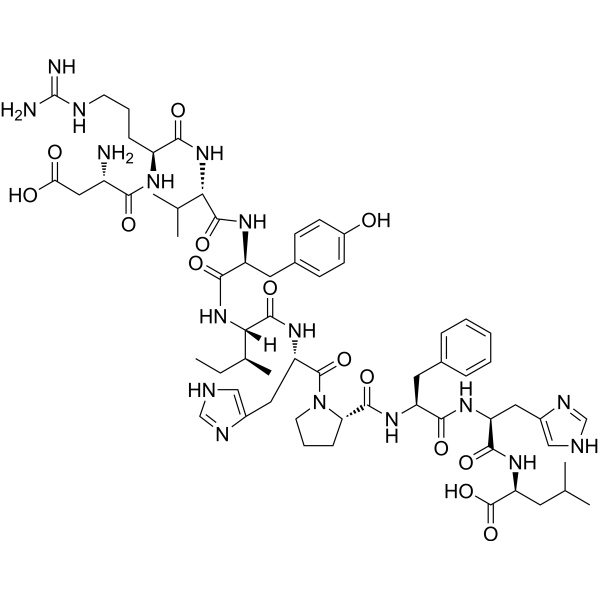
    Angiotensin I (human, mouse, rat)
    3 Publications Verification

    Endogenous Metabolite Angiotensin-converting Enzyme (ACE) Cardiovascular Disease
    Angiotensin I is a decapeptide hormone. Angiotensin I is the precursor of Angiotensin II (HY-13948). Angiotensin I can be used in the study of cardiovascular diseases such as hypertension and vasospasm .
    Angiotensin I (human, mouse, rat)
  • HY-17352

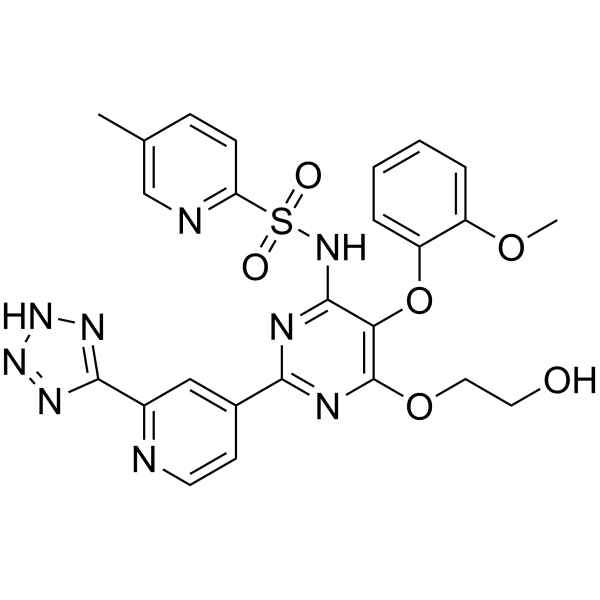
    Ro 61-1790; VML 588; AXV-034343

    Endothelin Receptor Cardiovascular Disease
    Clazosentan (Ro 61-1790) is a selective endothelin A (ETA) receptor antagonist. Clazosentan inhibits ET-1-mediated vasoconstriction. Clazosentan prevents cerebral vasospasm, vasospasm-related cerebral infarction .
    Clazosentan
  • HY-17352A

    Ro 61-1790 disodium; VML 588 disodium; AXV-034343 disodium

    Endothelin Receptor Cardiovascular Disease
    Clazosentan disodium (Ro 61-1790) is a selective endothelin A (ETA) receptor antagonist. Clazosentan disodium inhibits ET-1-mediated vasoconstriction. Clazosentan disodium prevents cerebral vasospasm, vasospasm-related cerebral infarction .
    Clazosentan disodium
  • HY-17352R

    Ro 61-1790 (Standard); VML 588 (Standard); AXV-034343 (Standard)

    Endothelin Receptor Reference Standards Cardiovascular Disease
    Clazosentan (Standard) is the analytical standard of Clazosentan. This product is intended for research and analytical applications. Clazosentan (Ro 61-1790) is a selective endothelin A (ETA) receptor antagonist. Clazosentan inhibits ET-1-mediated vasoconstriction. Clazosentan prevents cerebral vasospasm, vasospasm-related cerebral infarction .
    Clazosentan (Standard)
  • HY-102092

    PD 147953

    Endothelin Receptor Cardiovascular Disease
    FR139317 (PD 147953) is a selective ETA receptor antagonist. FR139317 inhibits cerebral activation by intraventricular endothelin-1 in conscious rats. FR139317 also ameliorates cerebral vasospasm in dogs .
    FR139317
  • HY-19099

    E 5880

    Platelet-activating Factor Receptor (PAFR) Cardiovascular Disease Neurological Disease
    Minopafant (E 5880) is a PAF receptor antagonist. Minopafant can be used in studies of cerebral vasospasm following subarachnoid hemorrhage .
    Minopafant
  • HY-14474

    Endothelin-Converting Enzyme (ECE) Cardiovascular Disease
    CGS 26303 is an endothelin-converting enzyme (ECE) inhibitor. CGS 26303 increases the expression of endothelin-converting enzyme-1 in endothelial cells. CGS 26303 attenuates cerebral vasospasm in a rabbit subarachnoid hemorrhage model. CGS 26303 improves birth survival and alleviates pulmonary hypoplasia in newborn rats in a rat model of congenital diaphragmatic hernia. CGS 26303 can be used for research on cardiovascular and cerebrovascular diseases and congenital diaphragmatic hernia .
    CGS 26303
  • HY-135446

    Endothelin Receptor Cardiovascular Disease Endocrinology
    BQ-610 is a selective antagonist of the endothelin A receptor (ETA receptor). BQ-610 specifically blocks the ETA receptor, competitively inhibiting the binding of endothelin-1 (ET-1) (a vasoconstrictive peptide) to the receptor, thereby blocking the effects of ET-1 such as vascular smooth muscle contraction, cell mitosis, and inhibition of hormone secretion. BQ-610 significantly alleviates cerebral vasospasm in rabbits. BQ-610 blocks the bronchial epithelial and pulmonary vascular cell proliferation caused by cigarette smoke in rat models. BQ-610 can delay the natural luteal regression in the cow's uterus. BQ-610 can be used for research on vasospasm, abnormal cell proliferation, and reproductive endocrine disorders .
    BQ-610
  • HY-N16779

    Others Cardiovascular Disease Neurological Disease
    Angustine is a monoterpene indole alkaloid vasodilator. Angustine exhibits potent vasodilatory activity on isolated rat aorta at a concentration of 10 μM (vasodilation rate exceeding 90%). Angustine can be used in the study of diseases such as hypertension, cerebral vasospasm, and peripheral circulatory disorders. Angustine can be naturally extracted from the bark of Nauclea officinalis and is also present in plants of the genera Mitragyna, Uncaria, and Strychnos .
    Angustine

Inquiry Online

Your information is safe with us. * Required Fields.

Salutation


Country or Region *

Applicant Name *


Organization Name *

Department *


Email Address *


Product Name *

Cat. No.


Requested quantity *

Phone Number *


Remarks

Inquiry Online

Inquiry Information

Product Name:
Cat. No.:
Quantity:
MCE Japan Authorized Agent:

