19 Results for "

chromosome breakage

" in MedChemExpress (MCE) Product Catalog:
Products (19)

19 Results for "chromosome breakage" in MCE Product Catalog:

4
4 Cited Publications
Cat. No.: HY-N6779
CAS No.: 149-29-1
Synonyms: Terinin
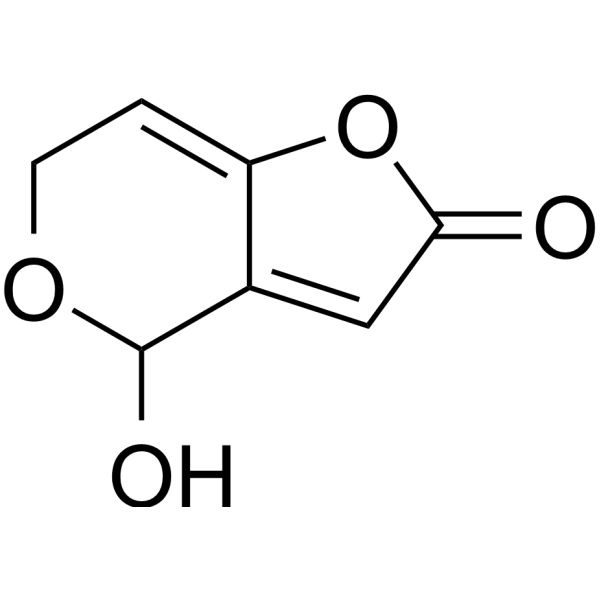
Patulin (Terinin) is a mycotoxin produced by fungi including the Aspergillus, Penicillium, and Byssochlamys species, causes chromosome breakage, mutation, teratogenic and cytotoxic. Patulin induces autophagy-dependent apoptosis through lysosomal-mitochondrial axis, and causes DNA damage .
loading...
    loading...
3
3 Cited Publications
Cat. No.: HY-D0186
CAS No.: 951-78-0
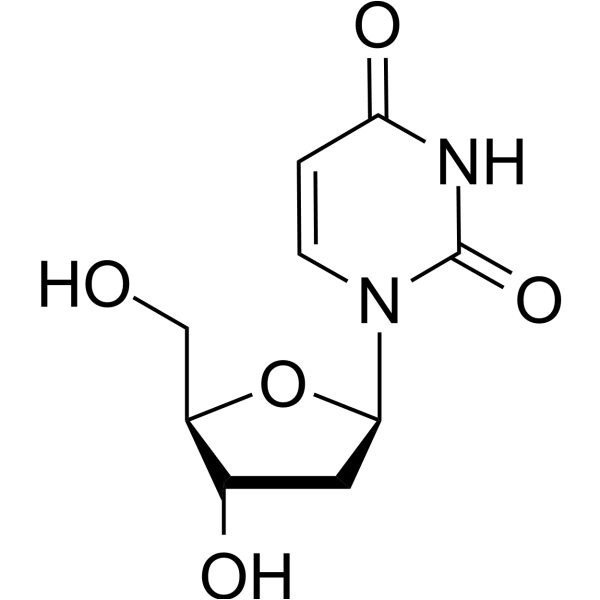
2’-deoxyuridine is a brain-penetrant pyrimidines nucleotide that is associated with nervous system diseases. 2'-Deoxyuridine could increase chromosome breakage and results in a decreased thymidylate synthetase activity. 2'-Deoxyuridine is a precursor in the synthesis of Edoxudine (HY-B1011) and also an analogue of 5-ethynyl-2'-deoxyuridine, EdU (HY-118411). 2’-deoxyuridine reduces microglial activation and improve oxidative stress damage by modulating glycolytic metabolism on the Aβ25-35-induced brain injury, which is promising for research of Alzheimer’s disease (AD) .
loading...
    loading...
Cat. No.: HY-N6779R
CAS No.: 149-29-1
Synonyms: Terinin (Standard)
Patulin (Standard) is the analytical standard of Patulin. This product is intended for research and analytical applications. Patulin (Terinin) is a mycotoxin produced by fungi including the Aspergillus, Penicillium, and Byssochlamys species, causes chromosome breakage, mutation, teratogenic and cytotoxic. Patulin induces autophagy-dependent apoptosis through lysosomal-mitochondrial axis, and causes DNA damage .
loading...
    loading...
Cat. No.: HY-D0186R
CAS No.: 951-78-0
2'-Deoxyuridine (Standard) is the analytical standard of 2'-Deoxyuridine. This product is intended for research and analytical applications. 2’-deoxyuridine is a brain-penetrant pyrimidines nucleotide that is associated with nervous system diseases. 2'-Deoxyuridine could increase chromosome breakage and results in a decreased thymidylate synthetase activity. 2'-Deoxyuridine is a precursor in the synthesis of Edoxudine (HY-B1011) and also an analogue of 5-ethynyl-2'-deoxyuridine, EdU (HY-118411). 2’-deoxyuridine reduces microglial activation and improve oxidative stress damage by modulating glycolytic metabolism on the Aβ25-35-induced brain injury, which is promising for research of Alzheimer’s disease (AD) . In Vitro:The interaction between the 2-deoxyuridine and the column increases the duration of retention of 2-deoxyuridine .
Gradient elution with sodium acetate buffer-ACN eluent on two ZIC-HILIC homemade columns separates 2-deoxyuridine in under 9 min .
In Vivo:2'-Deoxyuridine (34.42 ng/mL, gavage, 15 min) passes the blood-brain barrier (BBB) to enter the hippocampus of mice brain .
2'-Deoxyuridine (20 mg/kg, gavage, daily for 4 weeks) improves cognition and memory loss and attenuates the damage to the hippocampus in Aβ25-35-induced mice model .
loading...
    loading...
Cat. No.: HY-122817
CAS No.: 73226-73-0
Target:  

Antibiotic Parasite

Research Areas:  

Infection

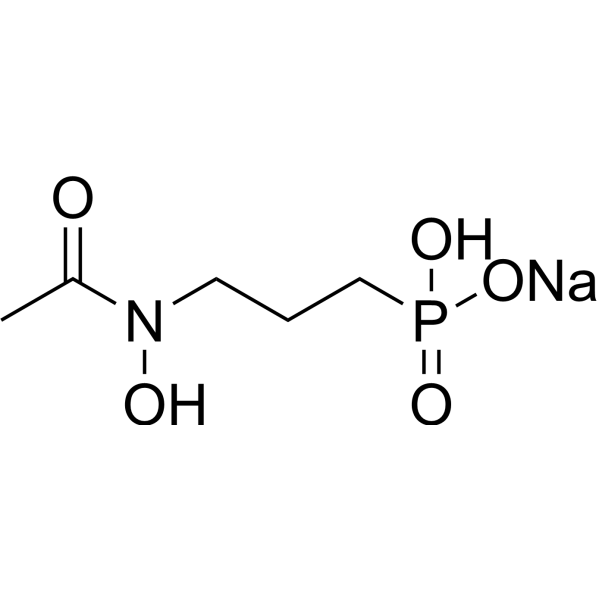
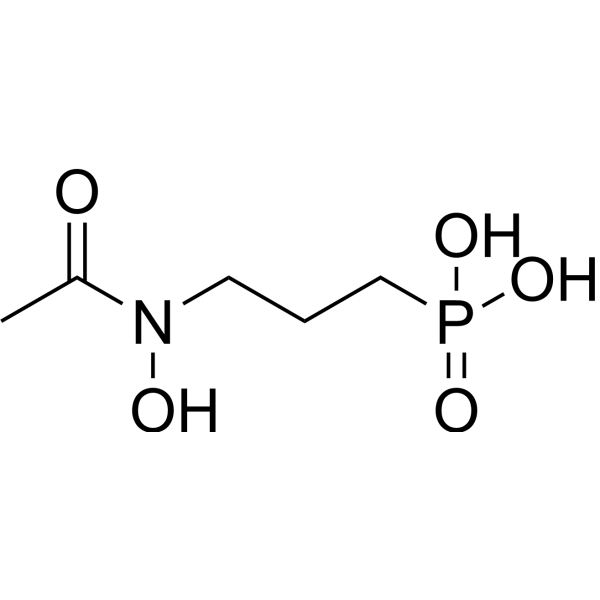
FR900098 sodium is an antimalarial agent that inhibits 1-deoxy-d-xylulose-5-phosphate (DXP) reductoisomerase. FR900098 sodium has no significant acute toxicity or genotoxicity, and does not have the ability to cause chromosome breakage or heterogeneity. FR900098 sodium has no effect on bone marrow red blood cells in NMRI mice .
loading...
    loading...
Cat. No.: HY-134013
CAS No.: 3564-96-3
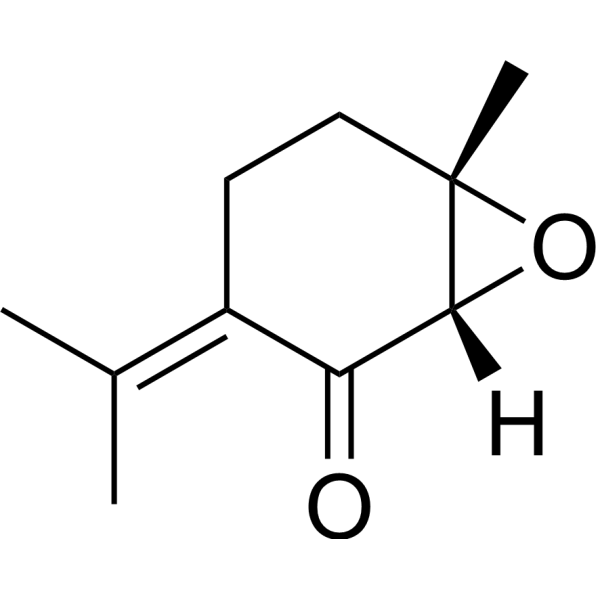
Piperitenone oxide is an orally active monoterpene ketone. Piperitenone oxide can be isolated from the essential oils of plants belonging to Mentha x villosa and Ziziphora clinopodioides. Piperitenone oxide induces differentiation. Piperitenone oxide induces chromosome breakage damage, aneuploidy damage and DNA single-strand breaks. Piperitenone oxide reduces ET-1 levels. Piperitenone oxide exerts antihypertensive effects. Piperitenone oxide can be used in studies related to colon cancer .
loading...
    loading...
Cat. No.: HY-D0186S4
CAS No.: 478511-30-7
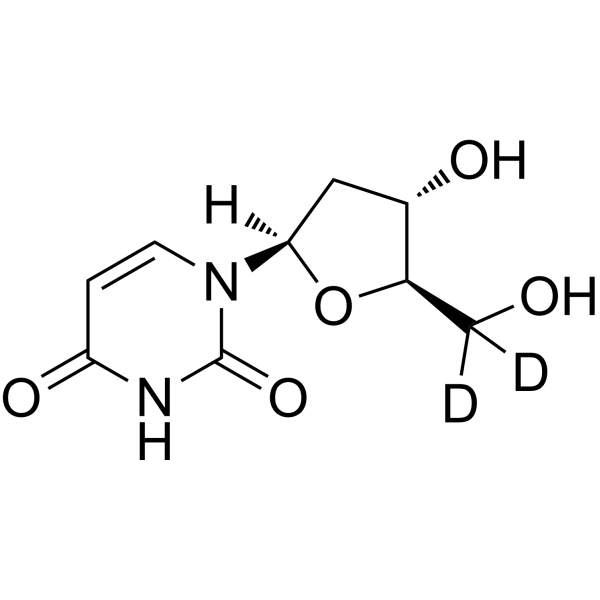
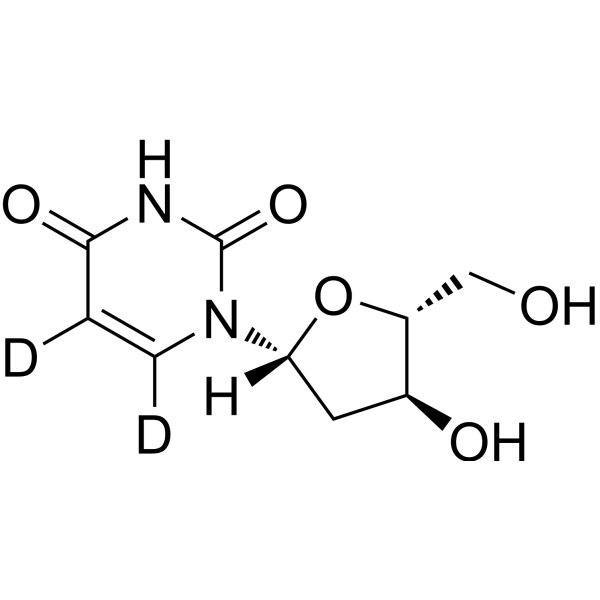
2'-Deoxyuridine-d2 is the deuterium labeled 2'-Deoxyuridine. 2'-Deoxyuridine could increase chromosome breakage and results in a decreased thymidylate synthetase activity. A known use of 2'-Deoxyuridine is as a precursor in the synthesis of Edoxud
loading...
    loading...
Cat. No.: HY-D0186S7
CAS No.: 369656-76-8
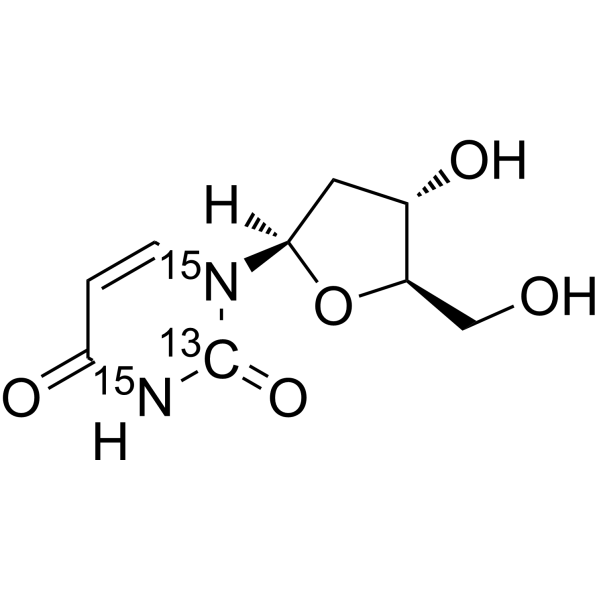
2'-Deoxyuridine- 13C, 15N2 is the 13C and 15N labeled 2'-Deoxyuridine . 2'-Deoxyuridine could increase chromosome breakage and results in a decreased thymidylate synthetase activity. A known use of 2'-Deoxyuridine is as a precursor in the synthesis of Edoxudine .
loading...
    loading...
Cat. No.: HY-W778990
CAS No.: 478510-94-0
2-Deoxyuridine-1,2,3,4,5- 13C5 is the 13C-labeled 2'-Deoxyuridine (HY-D0186). 2’-deoxyuridine is a brain-penetrant pyrimidines nucleotide that is associated with nervous system diseases. 2'-Deoxyuridine could increase chromosome breakage and results in a decreased thymidylate synthetase activity. 2'-Deoxyuridine is a precursor in the synthesis of Edoxudine (HY-B1011) and also an analogue of 5-ethynyl-2'-deoxyuridine, EdU (HY-118411). 2’-deoxyuridine reduces microglial activation and improve oxidative stress damage by modulating glycolytic metabolism on the Aβ25-35-induced brain injury, which is promising for research of Alzheimer’s disease (AD) .
loading...
    loading...
Cat. No.: HY-D0186S5
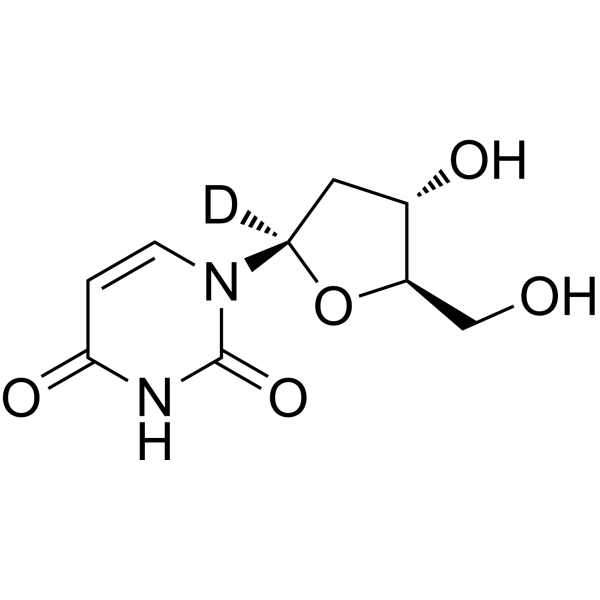
2'-Deoxyuridine-d is the deuterium labeled 2'-Deoxyuridine. 2'-Deoxyuridine could increase chromosome breakage and results in a decreased thymidylate synthetase activity. A known use of 2'-Deoxyuridine is as a precursor in the synthesis of Edoxud <
loading...
    loading...
Cat. No.: HY-D0186S
CAS No.: 478510-85-9
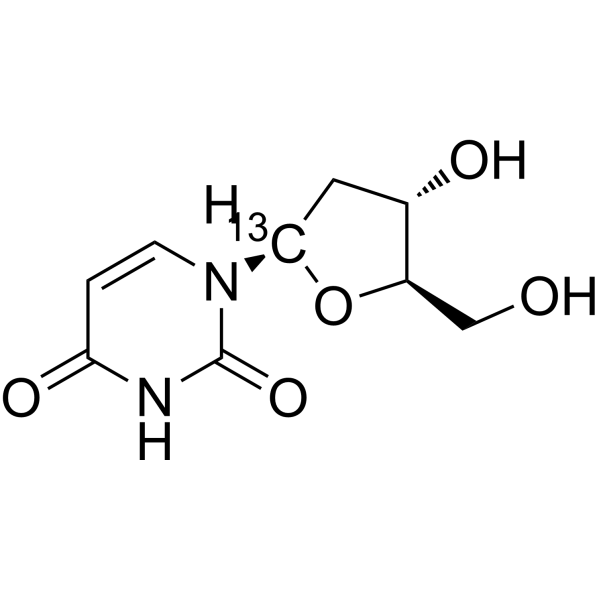
2'-Deoxyuridine-1′- 13C is the 13C labeled 2'-Deoxyuridine. 2'-Deoxyuridine could increase chromosome breakage and results in a decreased thymidylate synthetase activity. A known use of 2'-Deoxyuridine is as a precursor in the synthesis of Edoxud[1]
loading...
    loading...
Cat. No.: HY-D0186S1
CAS No.: 478510-87-1
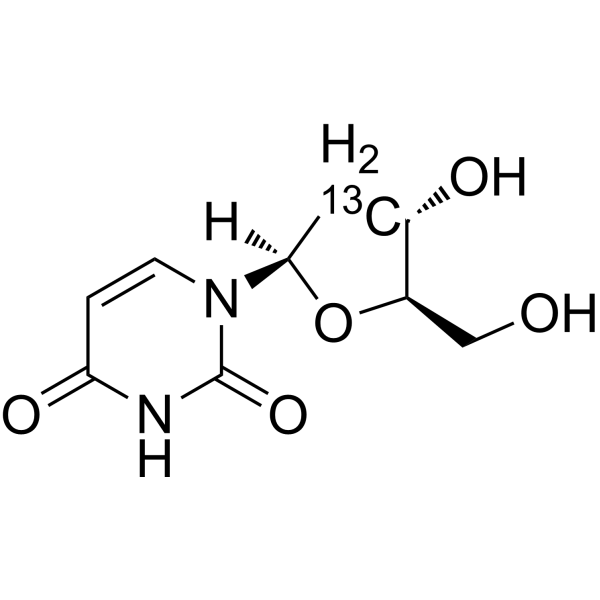
2'-Deoxyuridine-2′- 13C is the 13C labeled 2'-Deoxyuridine. 2'-Deoxyuridine could increase chromosome breakage and results in a decreased thymidylate synthetase activity. A known use of 2'-Deoxyuridine is as a precursor in the synthesis of Edoxud[1]
loading...
    loading...
Cat. No.: HY-D0186S2
CAS No.: 478510-89-3
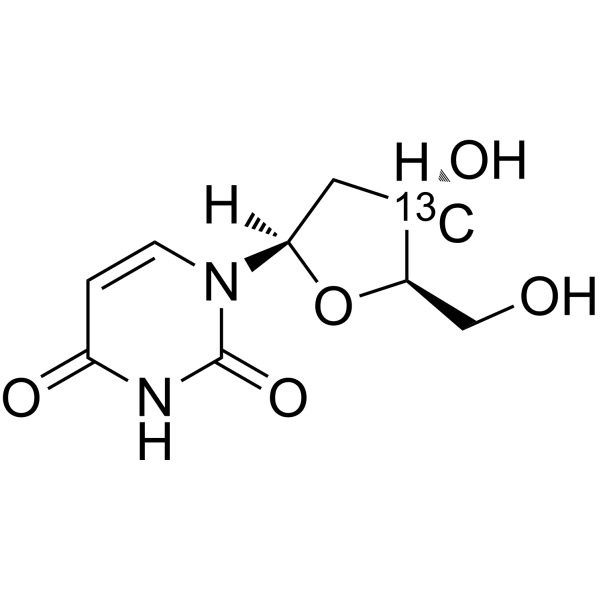
2'-Deoxyuridine-3′- 13C is the 13C labeled 2'-Deoxyuridine. 2'-Deoxyuridine could increase chromosome breakage and results in a decreased thymidylate synthetase activity. A known use of 2'-Deoxyuridine is as a precursor in the synthesis of Edoxud[1]
loading...
    loading...
Cat. No.: HY-D0186S3
CAS No.: 478510-91-7
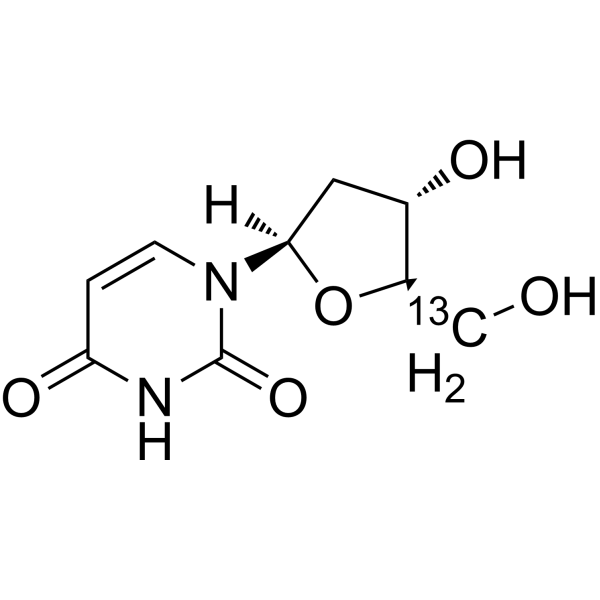
2'-Deoxyuridine-5′- 13C is the 13C labeled 2'-Deoxyuridine. 2'-Deoxyuridine could increase chromosome breakage and results in a decreased thymidylate synthetase activity. A known use of 2'-Deoxyuridine is as a precursor in the synthesis of Edoxud[1]
loading...
    loading...
Cat. No.: HY-W795264
CAS No.: 66508-32-5
Target:  

Parasite

Research Areas:  

Infection

FR900098 is an antimalarial agent that inhibits 1-deoxy-d-xylulose-5-phosphate (DXP) reductoisomerase. FR900098 has no significant acute toxicity or genotoxicity, and does not have the ability to cause chromosome breakage or heterogeneity. FR900098 has no effect on bone marrow red blood cells in NMRI mice .
loading...
    loading...
Cat. No.: HY-W653736
CAS No.: 56525-09-8
Target:  

DNA/RNA Synthesis

Research Areas:  

Others

N-Nitrosoatrazine is an Atrazine nitrosation product. Exposure to N-Nitrosoatrazine led to notable increases in chromosome breakage levels.
loading...
    loading...
Cat. No.: HY-D0186S8
CAS No.: 40632-23-3
2'-Deoxyuridine-d2-1 is the deuterium labeled 2'-Deoxyuridine . 2'-Deoxyuridine could increase chromosome breakage and results in a decreased thymidylate synthetase activity. A known use of 2'-Deoxyuridine is as a precursor in the synthesis of Edoxudine .
loading...
    loading...
Cat. No.: HY-N19084
Category:  

Extract

Target:  

Others

Piper longum fruit extract contains a variety of bioactive compounds, including piperine, flavonoids, phenolic compounds, and various alkaloids. Piper longum fruit extract has applications such as antioxidant activity, anti-inflammatory effects, antitumor and immunomodulatory properties, hepatoprotective effects, and anti-chromosome breakage activity.
loading...
    loading...
Cat. No.: HY-P78942
Purity:  ≥ 95%, as determined by reducing SDS-PAGE.
Synonyms: POLA1; N Syndrome (Mental Retardation, Malformations, chromosome breakage); Prev. POLA; Polymerase (DNA-Directed), Alpha (70kD); Prev. NSX; Polymerase (DNA Directed), Alpha; P180; Alternative Protein POLA1; Polymerase (DNA) Alpha 1, Catalytic Subunit; DNA
Species:  
Others
Source:  
E. coli
loading...
    loading...
  • 1

