1. Search Result
Search Result
Results for "

classes

" in MedChemExpress (MCE) Product Catalog:

1857

Inhibitors & Agonists

46

Screening Libraries

57

Fluorescent Dye

601

Biochemical Assay Reagents

80

Peptides

42

Inhibitory Antibodies

132

Natural
Products

120

Isotope-Labeled Compounds

19

Click Chemistry

62

Oligonucleotides

20

GMP Molecules

Cat. No. Product Name Target Research Areas Chemical Structure
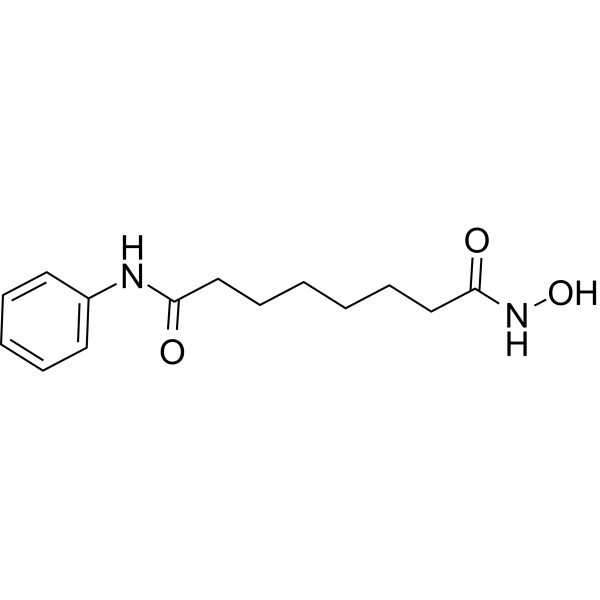
  • HY-10221
    Vorinostat
    155+ Cited Publications

    SAHA; Suberoylanilide hydroxamic acid

    HDAC Autophagy Mitophagy Filovirus Apoptosis HPV Infection Cancer
    Vorinostat (SAHA) is a potent and orally active pan-inhibitor of HDAC1, HDAC2 and HDAC3 (Class I), HDAC6 and HDAC7 (Class II) and HDAC11 (Class IV), with ID50 values of 10 nM and 20 nM for HDAC1 and HDAC3, respectively. Vorinostat induces cell apoptosis . Vorinostat is also an effective inhibitor of human papillomaviruse (HPV)-18 DNA amplification .
    Vorinostat
  • HY-P1489
    OVA Peptide(257-264)
    Maximum Cited Publications
    15 Publications Verification

    MHC Inflammation/Immunology
    OVA Peptide(257-264) is a class I (Kb)-restricted peptide epitope of OVA, an octameric peptide can be from ovalbumin presented by the class I MHC molecule, H-2Kb.
    OVA Peptide(257-264)
  • HY-B0232
    Dofetilide
    5+ Cited Publications

    UK 68789

    Potassium Channel Cardiovascular Disease
    Dofetilide (UK 68789), as a class III antiarrhythmic agent, is an orally active, potent and specific IKr blocker. Dofetilide can be used for the research of cardiovascular disease .
    Dofetilide
  • HY-16752
    Relebactam
    25+ Cited Publications

    MK-7655

    Beta-lactamase Bacterial Infection
    Relebactam is a diazabicyclooctane inhibitor with activity against a wide spectrum of β-lactamases, including class A (extended-spectrum β-lactamases and KPC) and class C (AmpC) enzymes. Relebactam shows antibacterial activity .
    Relebactam
  • HY-117974
    Durlobactam sodium
    5+ Cited Publications

    ETX2514

    Bacterial Infection
    Durlobactam sodium salt (ETX2514) is a broad-spectrum β-lactamase inhibitor with IC50s of 4, 14 and 190 nM for Class A KPC-2, Class C AmpC and Class D OXA-24, respectively. For the treatment of drug-resistant Gram-negative bacteria including Acinetobacter baumannii .
    Durlobactam sodium
  • HY-P1489A
    OVA Peptide(257-264) TFA
    Maximum Cited Publications
    15 Publications Verification

    MHC Inflammation/Immunology
    OVA Peptide(257-264) TFA is a class I (Kb)-restricted peptide epitope of OVA, an octameric peptide can be from ovalbumin presented by the class I MHC molecule, H-2Kb.
    OVA Peptide(257-264) TFA
  • HY-161111

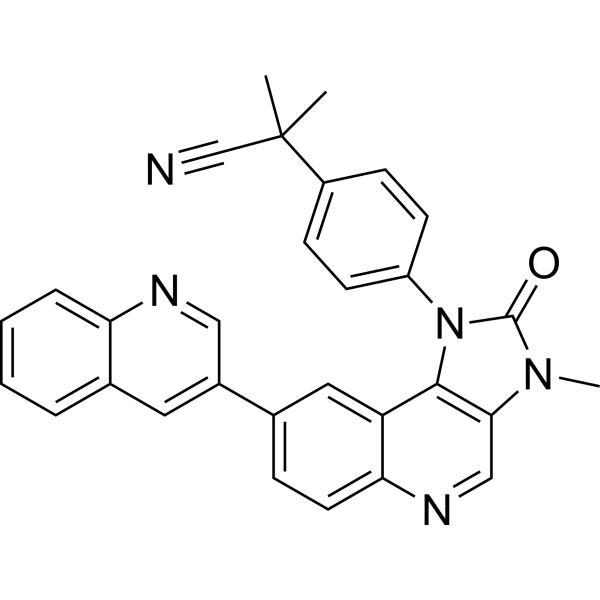
    Ser/Thr Kinase Cancer
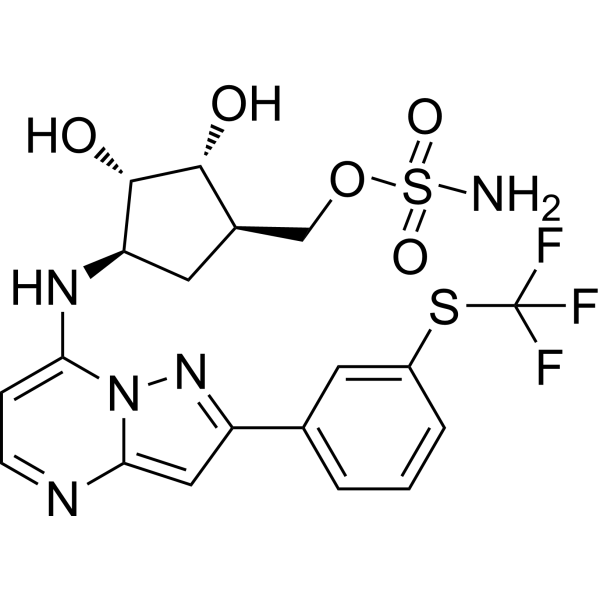
    KVS0001 is a selective SMG1 inhibitor. KVS0001 elevates the expression of transcripts and proteins resulting from truncating mutations. KVS0001 increased the presentation of immune-targetable HLA class I-associated peptides from nonsense-mediated decay (NMD)-downregulated proteins on the surface of cancer cells. KVS0001 exerts anti-tumor properties and can be studied in research for NMD-related diseases, including cancer and inherited diseases .
    KVS0001
  • HY-12795
    Vps34-IN-1
    10+ Cited Publications

    PI3K Autophagy Cancer
    Vps34-IN-1 is a potent and selective inhibitor of class III Vps34 PI3K. Vps34-IN-1 inhibits phosphorylation of PtdIns by recombinant insect cell expressed Vps34-Vps15 complex with an IC50 of ~25 nM. Vps34-IN-1 can suppress SGK3 activation by reducing PtdIns(3)P levels via lowering phosphorylation of T-loop and hydrophobic motifs. Vps34-IN-1 modulates autophagy .
    Vps34-IN-1
  • HY-N4067

    isoCDCA

    FXR Endogenous Metabolite Metabolic Disease
    Isochenodeoxycholic acid (isoCDCA) is a FXR agonist. Isochenodeoxycholic acid activates the activity of FXR and induces the mRNA expression of FXR target genes (Ostβ and Kng1). Isochenodeoxycholic acid serves as a substrate for the liver class I ADH γγ isozyme-mediated 3β-dehydrogenation reaction .
    Isochenodeoxycholic acid
  • HY-153341

    CFT1946

    PROTACs Raf Cancer
    Tagarafdeg (CFT1946) is an orally active, CRBN-based and mutant-selective bifunctional degradation activating compound (BiDAC) degrader of BRAF V600E with a DC50 of 14 nM in A375 cells. Tagarafdeg is capable of degrading BRAF V600E (Class I), G469A (Class II), G466V (Class III) mutations, and the p61-BRAF V600E splice variant. Tagarafdeg can be used in tumor research .
    Tagarafdeg
  • HY-P990195

    MHC Others
    Anti-Mouse MHC Class I (H-2) Antibody (M1/42.3.9.8) is a rat-derived IgG2a κ type antibody inhibitor, targeting to mouse MHC Class I. Anti-Mouse MHC Class I (H-2) Antibody (M1/42.3.9.8) reacts with the mouse H-2 MHC class I alloantigen (all haplotypes). Anti-Mouse MHC Class I (H-2) Antibody (M1/42.3.9.8) can be used for the flow cytometry and immunofluorescence experiments .
    Anti-Mouse MHC Class I (H-2) Antibody (M1/42.3.9.8)
  • HY-B0254
    Glipizide
    2 Publications Verification

    CP 28720; K 4024

    Potassium Channel Metabolic Disease Cancer
    Glipizide (CP 2872; K 4024)?a potent, orally active and sulfonylurea class anti-diabetic agent and can be used for type 2?diabetes mellitus research but not type 1. Glipizide acts by partially blocking ATP-sensitive potassium?(KATP) channels among β cells of pancreatic islets of Langerhans .
    Glipizide
  • HY-P3715
    OVA peptide
    2 Publications Verification

    MHC Inflammation/Immunology
    OVA peptide mainly exists in egg white, it is a class I (Kb)-restricted peptide epitope of ovalbumin presented by the class I MHC (major histocompatibility complex) molecule, H-2Kb (class I genes of the mouse MHC). OVA peptide has been widely studied in allergy research .
    OVA peptide
  • HY-P4193

    MHC Inflammation/Immunology Cancer
    AH1 is an immunodominant MHC class I-restricted nonamer peptide recognized by CD8 + cytotoxic T lymphocytes. AH1 derives from the envelope protein (gp70) of an endogenous ecotropic murine leukemia virus and is presented by the MHC class I L d molecule. AH1 can be used for the research of colorectal carcinoma .
    AH1
  • HY-P6312

    MHC Inflammation/Immunology
    ESAT6 Epitope is a ESAT6 CD4 + T cell epitope. ESAT6 Epitope binds to MHC class I molecules with an IC50 value of approximately 180 nM. ESAT6 Epitope has weak immunogenicity. ESAT6 Epitope can be used in studies related to pulmonary tuberculosis .
    ESAT6 Epitope
  • HY-P99613

    MK-4280; Mavezelimab

    LAG-3 Cancer
    Favezelimab (MK-4280) is a humanized monoclonal antibody targeting LAG-3. Favezelimab blocks the interaction between LAG-3 and its ligand, MHC class II molecules. Favezelimab is applicable to research on relapsed/refractory classical Hodgkin lymphoma, relapsed/refractory diffuse large B-cell lymphoma, and relapsed/refractory indolent B-cell lymphoma . For the isotype control of Favezelimab, refer to Human IgG4 (S228P) kappa, Isotype Control (HY-P99003).
    Favezelimab
  • HY-124600
    NVR 3-778
    3 Publications Verification

    HBV Infection
    NVR 3-778 is a first-in-Class and oral bioavailable HBV CAM (capsid assembly modulator) belonging to the SBA (sulfamoylbenzamide) class, with anti-HBV activity .
    NVR 3-778
  • HY-119939
    CHDI-390576
    1 Publications Verification

    CHDI00390576

    HDAC Cancer
    CHDI-390576, a potent, cell permeable and CNS penetrant class IIa histone deacetylase (HDAC) inhibitor with IC50s of 54 nM, 60 nM, 31 nM, 50 nM for class IIa HDAC4, HDAC5, HDAC7, HDAC9, respectively, shows >500-fold selectivity over class I HDACs (1, 2, 3) and ~150-fold selectivity over HDAC8 and the class IIb HDAC6 isoform .
    CHDI-390576
  • HY-15466
    Izorlisib
    3 Publications Verification

    CH5132799

    PI3K Cancer
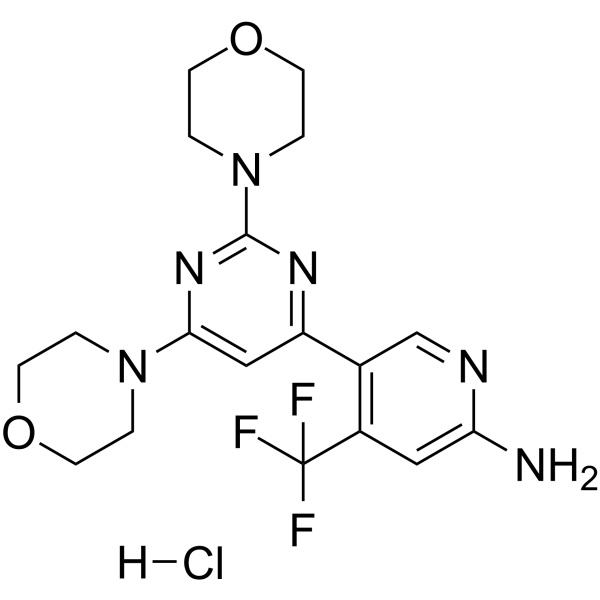
    Izorlisib (CH5132799) is a selective class I PI3K inhibitor. Izorlisib inhibits class I PI3Ks, particularly PI3Kα, with an IC50 of 14 nM.
    Izorlisib
  • HY-B2148

    Environmental Pollutants Fungal Infection
    Myclobutanil is a conazole class fungicide widely used as an agrichemical.
    Myclobutanil
  • HY-118052

    PKD HDAC Cardiovascular Disease
    BPKDi is an inhibitor of PKD. BPKDi inhibits three members of the PKD family, PKD1, PKD2, and PKD3, with IC50 values of 1 nM, 9 nM, and 1 nM, respectively. BPKDi blocks signal-dependent phosphorylation and nuclear export of class IIa HDACs in cardiomyocytes and concomitantly suppresses hypertrophy of these cells .
    BPKDi
  • HY-169259

    HDAC DNA/RNA Synthesis Reactive Oxygen Species (ROS) Apoptosis Caspase p38 MAPK Cancer
    HDAC9-IN-1 is a selective class IIa HDAC inhibitor that binds to HDAC9 with an IC50 of 40 nM. HDAC9-IN-1 potently inhibits HDACs 4 and 7 while showing weak activity against HDAC6 (IC50 values: 180 nM (HDAC4), 190 nM (HDAC7), 970 nM (HDAC6)). HDAC9-IN-1 significantly inhibits several human cancer cells, induces apoptosis and DNA damage in human cancer cells, and modulates caspase-related proteins and p38 in human cancer cells. HDAC9-IN-1 can be used for the research of oral cancer, breast cancer, gastric cancer .
    HDAC9-IN-1
  • HY-115669
    Pentachloropseudilin
    2 Publications Verification

    Antibiotic A 15104 Y; PClP

    Myosin TGF-β Receptor Cancer
    Pentachloropseudilin (Antibiotic A 15104 Y; PClP) is a reversible and allosteric potent inhibitor of Myo1s (class 1 myosins) with IC50s range from 1 to 5 μM for mammalian class-1 myosins and greater than 90 μM for class-2 and class-5 myosins. Pentachloropseudilin is a potent inhibitor of transforming growth factor-β (TGF-β)-stimulated signaling, with an IC50 of 0.1 to 0.2 μM for TGF-β .
    Pentachloropseudilin
  • HY-134807

    P2X Receptor 5-HT Receptor Autophagy Cancer
    Indophagolin is a potent, indoline-containing autophagy inhibitor (IC50=140 nM). Indophagolin antagonizes the purinergic receptor P2X4 as well as P2X1 and P2X3 with IC50s of 2.71, 2.40 and 3.49 μM, respectively. Indophagolin also antagonizes the Gq-protein-coupled P2Y4, P2Y6, and P2Y11 receptors (IC50s =3.4~15.4 μM). Indophagolin has a strong antagonistic effect on serotonin receptor 5-HT6 (IC50=1.0 μM) and a moderate effect on receptors 5-HT1B, 5-HT2B, 5-HT4e, and 5-HT7 .
    Indophagolin
  • HY-B1460
    Sulconazole mononitrate
    3 Publications Verification

    (±)-Sulconazole mononitrate

    Fungal Bacterial Infection
    Sulconazole mononitrate ((±)-Sulconazole mononitrate), an imidazole derivative, is a broad-spectrum fungicide. Sulconazole mononitrate can be used for the research of dermatomycoses, pityriasis versicolor, and cutaneous candidiasis .
    Sulconazole mononitrate
  • HY-B1109
    N-Acetylprocainamide
    1 Publications Verification

    Acecainide; NAPA

    Potassium Channel Drug Metabolite Cardiovascular Disease
    N-Acetylprocainamide is a class III antiarrhythmic, which blocks K + channels.
    N-Acetylprocainamide
  • HY-P990187

    MHC Influenza Virus Infection Inflammation/Immunology
    Anti-Mouse MHC Class II (I-A/I-E) Antibody (M5/114) is a rat-derived IgG2b type antibody inhibitor, targeting to mouse MHC Class II. Anti-Mouse MHC Class II (I-A/I-E) Antibody (M5/114) reacts with mouse MHC Class II haplotypes I-Ab, I-Ad, I-Aq, I-Ed, and I-Ek. Anti-Mouse MHC Class II (I-A/I-E) Antibody (M5/114) does not react with I-Af, I-Ak, or I-As haplotypes. Anti-Mouse MHC Class II (I-A/I-E) Antibody (M5/114) blocks MHC Class II and inhibit T cell generation. Anti-Mouse MHC Class II (I-A/I-E) Antibody (M5/114) can be used for the researches of infection and immunology, such as influenza A virus (IAV) infection .
    Anti-Mouse MHC Class II (I-A/I-E) Antibody (M5/114)
  • HY-13592

    Chidamide impurity

    HDAC Cancer
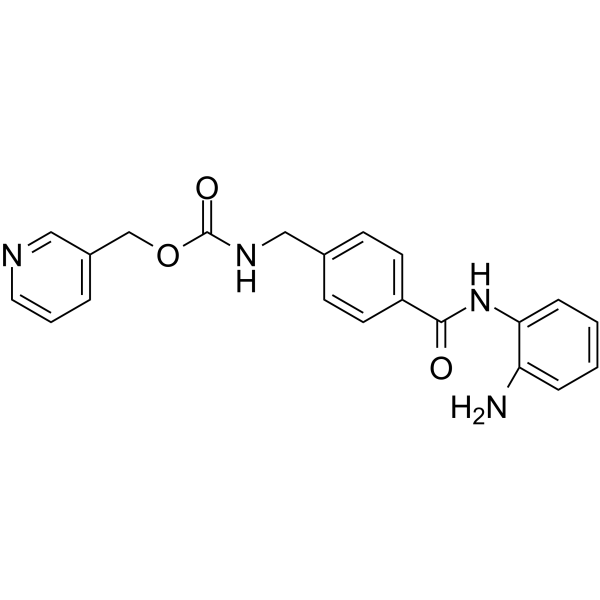
    HDAC-IN-7 (Chidamide impurity) is an impurity of Chidamide. Chidamide is a potent and orally bioavailable HDAC enzymes class I (HDAC1/2/3) and class IIb (HDAC10) inhibitor.
    HDAC-IN-7
  • HY-P1826

    CD74 Inflammation/Immunology Cancer
    CLIP (86-100) is amino acids 86 to 100 fragment of class II-associated invariant chain peptide (CLIP). CLIP is a small self-peptide and cleavage product of the invariant chain that resides in the HLA-II antigen binding groove and is believed to play a critical role in the assembly and transport of MHC class II alphabetaIi complexes through its interaction with the class II peptide-binding site .
    CLIP (86-100)
  • HY-113278

    Endogenous Metabolite Others
    Leucyl-phenylalanine belongs to the class of organic compounds known as dipeptides.
    Leucyl-phenylalanine
  • HY-P990832

    MHC Inflammation/Immunology
    Anti-MHC Class I Antibody (W6/32) is a kind of mouse IgG2a κ chimeric antibody inhibitor, targeting to human MHC Class I. Anti-MHC Class I Antibody (W6/32) reacts with the human major histocompatibility complex (MHC) class I, HLA-A, B, and C. Anti-MHC Class I Antibody (W6/32) increases adherence of monocytes to human endothelial cells. Anti-MHC Class I Antibody (W6/32) can be used for the research of immunology .
    Anti-MHC Class I Antibody (W6/32)
  • HY-P990188

    MHC Inflammation/Immunology
    Anti-Mouse MHC class II (I-A) Antibody (Y-3P) is a mouse-derived IgG2a κ type antibody inhibitor, targeting to mouse MHC class II. Anti-Mouse MHC class II (I-A) Antibody (Y-3P) reacts with mouse MHC Class II haplotypes I-Ab, I-Af, I-Ap, I-Aq, I-Ar, I-As, I-Au, I-Av, and weakly with I-Ak. Anti-Mouse MHC class II (I-A) Antibody (Y-3P) blocks MHC class II and inhibits expansion of regulate T cells. Anti-Mouse MHC class II (I-A) Antibody (Y-3P) can be used for the immunology research .
    Anti-Mouse MHC class II (I-A) Antibody (Y-3P)
  • HY-P990189

    MHC Apoptosis Reactive Oxygen Species (ROS) Infection Cancer
    Anti-Monkey/Human MHC class II (HLA-DR) Antibody (L243) is a mouse-derived IgG2a κ type antibody inhibitor, targeting to monkey/human MHC class II. Anti-Monkey/Human MHC class II (HLA-DR) Antibody (L243) can inhibits tumor cells proliferation and induce apoptosis. Anti-Monkey/Human MHC class II (HLA-DR) Antibody (L243) increases cellular reactive oxygen species (ROS) and loss of mitochondrial membrane potential in human endothelial cells. Anti-Monkey/Human MHC class II (HLA-DR) Antibody (L243) can be used for the researches of cancer and infection, such as lymphoma .
    Anti-Monkey/Human MHC class II (HLA-DR) Antibody (L243)
  • HY-157269

    Hapten Inflammation/Immunology
    J10-1 is a hapten small molecule. J10-1 accelerates peptide exchange in MHC class II molecules in an HLA-DM-independent manner, and its effect is not affected by the polymorphism of the P1 pocket of MHC class II molecules. J10-1 enhances the processes of peptide dissociation, peptide binding and peptide association of MHC class II molecules on the surface of B cells. J10-1 can be used for research on immunoregulation .
    J10-1
  • HY-130335

    MJ9067

    Sodium Channel Cardiovascular Disease
    Encainide (MJ9067) is an antiarrhythmic agent with class IC activity. Encainide blocks voltage-dependent potassium channels. Encainide has the potential for life-threatening ventricular arrhythmias, symptomatic ventricular arrhythmias and supraventricular arrhythmias research .
    Encainide
  • HY-B0254R

    CP 28720 (Standard); K 4024 (Standard)

    Reference Standards Potassium Channel Metabolic Disease
    Glipizide (Standard) is the analytical standard of Glipizide. This product is intended for research and analytical applications. Glipizide (CP 2872; K 4024) a potent, orally active and sulfonylurea class anti-diabetic agent and can be used for type 2 diabetes mellitus research but not type 1. Glipizide acts by partially blocking ATP-sensitive potassium (KATP) channels among β cells of pancreatic islets of Langerhans .
    Glipizide (Standard)
  • HY-149208

    HDAC Apoptosis Cancer
    HDAC-IN-53 is an orally active, and selective HDAC1-3 inhibitor with IC50 values of 47 nM, 125 nM, and 450 nM, respectively. HDAC-IN-53 does not inhibit class II HDACs (HDAC4, 5, 6, 7, 9; IC50>10 μM). HDAC-IN-53 induces caspase-dependent apoptosis. HDAC-IN-53 significantly inhibits the growth of human tumor xenografts in nude mice and murine tumor growth in immune-competent mice bearing MC38 colon cancer .
    HDAC-IN-53
  • HY-108062A

    Beta-lactamase Bacterial Infection
    BLI-489 hydrate, a penem β-lactamase inhibitor, is active against class A and class C as well as some class D β-lactamases. The combination of Piperacillin and BLI-489 hydrate is efficacious against murine infections caused by class A (including extended-spectrum β-lactamases), class C (AmpC), and class D β-lactamase-expressing pathogens .
    BLI-489 hydrate
  • HY-P5410

    MHC Others
    OVA-Q4 Peptide is a biological active peptide. (Q4 Peptide (SIIQFEKL) is a variant of the agonist ovalbumin (OVA) peptide (257-264), SIINFEKL. OVA Peptide is a class I (Kb)-restricted peptide epitope of ovalbumin presented by the class I MHC (major histocompatibility complex) molecule, H-2Kb (class I genes of the mouse MHC).)
    OVA-Q4 Peptide
  • HY-W015675

    Endogenous Metabolite Metabolic Disease
    4-Hydroxycyclohexanecarboxylic acid belongs to the class of organic compounds known as cyclohexanols.
    4-Hydroxycyclohexanecarboxylic acid
  • HY-P99135

    MHC Inflammation/Immunology
    Anti-Mouse MHC Class I (H-2Kb) Antibody (Y-3) is a mouse-derived IgG2b antibody inhibitor, targeting to mouse MHC Class I (H-2Kb). Anti-Mouse MHC Class I (H-2Kb) Antibody (Y-3) reacts with the mouse H-2Kb, H-2Kk, H-2Kq, H-2Kr, H-2ks MHC class I alloantigens and not H-2Kd. Anti-Mouse MHC Class I (H-2Kb) Antibody (Y-3) can block MHC Class I. Anti-Mouse MHC Class I (H-2Kb) Antibody (Y-3) can be used for immunology research .
    Anti-Mouse MHC Class I (H-2Kb) Antibody (Y-3)
  • HY-125604

    Beta-lactamase Bacterial Infection Inflammation/Immunology
    WCK-4234 is a diazabicyclooctane β-lactamase inhibitor and susceptibility restorer. WCK-4234 lacks direct antibacterial activity. WCK-4234 inhibits class A, C, D β-lactamases and extended-spectrum β-lactamases to potentiate Imipenem (HY-B1369A) and Meropenem (HY-13678) activity against Gram-negative pathogens. WCK-4234 can be used for the research of gram-negative bacterial infections and β-lactamase-mediated carbapenem-resistant bacterial infections .
    WCK-4234
  • HY-W764182

    Bacterial Infection
    Cephalosporinase, bacillus are enzymes produced by bacillus, inactivated and degrade the ability of the cephalosporin class of antibiotics. Cephalosporins are a class of β-lactam antibiotics that are widely used to study bacterial infections .
    Cephalosporinase,bacillus
  • HY-152226

    HDAC Apoptosis Cancer
    MC2590 is a potent pyridine-containing histone deacetylase (HDAC) inhibitor. MC2590 is a inhibitor of HDAC1-3, -6, -8, and -10 (class I/IIb-selective inhibitor) with IC50s of 0.015 μM-0.156 μM. MC2590 also inhibits HDAC isoforms HDAC4, HDAC5, HDAC7, HDAC9, HDAC11 with IC50s of 1.35 μM-3.98 μM. MC2625 induces G2/M cell cycle arrest and modulates pro- and anti-apoptotic microRNAs towards apoptosis induction .
    MC2590
  • HY-U00221

    Win49375

    Bacterial Infection
    Amifloxacin (Win49375) is a synthetic antibacterial agent of the quinolone class.
    Amifloxacin
  • HY-N16008

    Biochemical Assay Reagents Others
    C20:4 Anandamide (AEA) is a class of anandamides.
    C20:4 Anandamide (AEA)
  • HY-P5453

    CD3 Others
    CFP10 (71–85) is a biological active peptide. (CFP1071–85, that elicited IFN-γ production and CTL activity by both CD4+ and CD8+ T cells from persons expressing multiple MHC class II and class I molecules)
    CFP10 (71–85)
  • HY-145158

    Bacterial Antibiotic Drug Derivative Beta-lactamase Infection
    Temocillin is a derivative of Ticarcillin (HY-100577) and a β-lactamase-resistant Antibiotic. Temocillin blocks water molecules from entering the active sites of Ambler class A and class C serine-dependent β-lactamases, resisting hydrolysis by these enzymes. Temocillin exhibits antibacterial activity against Enterobacteriaceae and Neisseria gonorrhoeae. Temocillin shows antagonistic effects against some isolated strains when used in combination with Ticarcillin (HY-100577) or Cefazolin (HY-B1892). Temocillin can be used in research related to sepsis, urinary tract infections, and lower respiratory tract infections .
    Temocillin
  • HY-123849

    PI3K mTOR Cancer
    SN32976 is a potent and selective class I PI3K and mTOR inhibitor with IC50s of 15.1 nM, 461 nM, 110 nM, 134 nM and 194 nM for PI3Kα, PI3Kβ, PI3Kγ, PI3Kδ and mTOR, respectively. SN32976 shows high selectivity among other 442 kinases. SN32976 shows anticancer effects .
    SN32976
  • HY-106718

    Sodium Channel Cardiovascular Disease
    Barucainide is an Ib-class anti-arrhythmic agent (moderately blocking sodium channel). Barucainide exhibits concentration-dependent inhibitory effects on the maximum upstroke velocity (Vmax) of Purkinje fibers and ventricular muscle in dogs. Barucainide significantly shortens the action potential duration (APD). Barucainide significantly inhibits the pacemaker activity frequency of atrial tissue in rabbits and the enhanced automaticity of Purkinje fibers under normal resting potential in response to isoproterenol. Barucainide cannot inhibit the abnormal automaticity emission frequency of canine Purkinje fibers induced by barium. Barucainide can be used for research on arrhythmias .
    Barucainide

Inquiry Online

Your information is safe with us. * Required Fields.

Salutation


Country or Region *

Applicant Name *


Organization Name *

Department *


Email Address *


Product Name *

Cat. No.


Requested quantity *

Phone Number *


Remarks

Inquiry Online

Inquiry Information

Product Name:
Cat. No.:
Quantity:
MCE Japan Authorized Agent:

