1. Search Result
Search Result
Results for "

complex III

" in MedChemExpress (MCE) Product Catalog:

73

Inhibitors & Agonists

5

Fluorescent Dye

6

Biochemical Assay Reagents

4

Peptides

1

Inhibitory Antibodies

9

Natural
Products

1

Recombinant Proteins

1

Isotope-Labeled Compounds

4

Antibodies

Cat. No. Product Name Target Research Areas Chemical Structure
  • HY-N6716
    Filipin complex
    45+ Cited Publications

    Fungal Antibiotic Infection
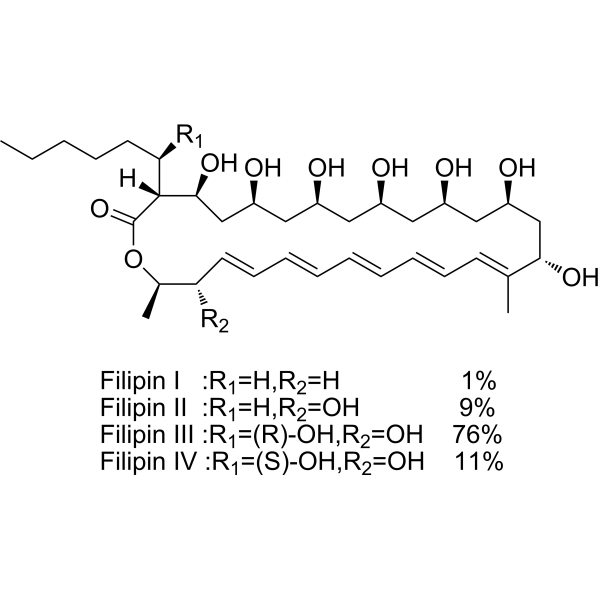
    Filipin complex is a potent polyene macrolide antifungal antibiotic. Filipin complex inserts into membranes and sequester cholesterol into complexes and inhibits PRRSV entry. The Filipin complex consists of about 75.8% Filipin III (HY-N6718), 10.8% Filipin IV, 9.1% Filipin II, and 1.2% Filipin I (Ex/Em = 380/430 nm) .
    Filipin complex
  • HY-110282

    Oxidative Phosphorylation Mitochondrial Metabolism Metabolic Disease
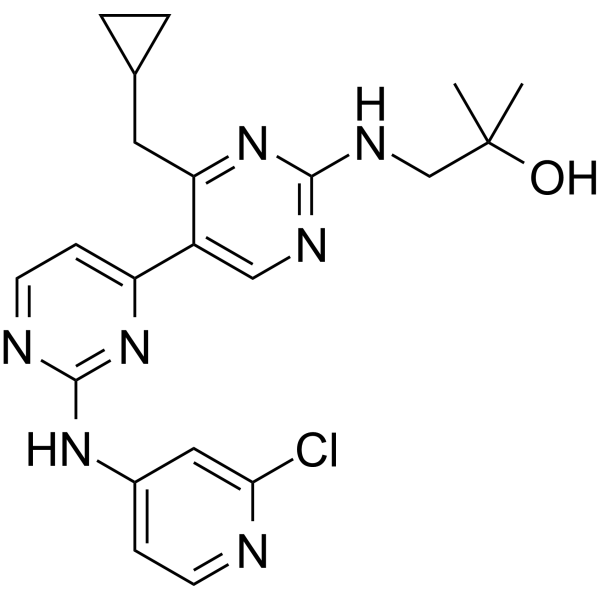
    S3QEL-2, a suppressor of superoxide production from mitochondrial complex III, potently and selectively suppresses site IIIQo superoxide production (IC50=1.7 μM). S3QEL-2 does not affect oxidative phosphorylation, and normal electron flux. S3QEL-2 inhibits HIF-1α accumulation .
    S3QEL-2
  • HY-101180
    C2 Ceramide
    2 Publications Verification

    Ceramide 2

    Phosphatase Mitochondrial Metabolism Apoptosis Autophagy Metabolic Disease Endocrinology
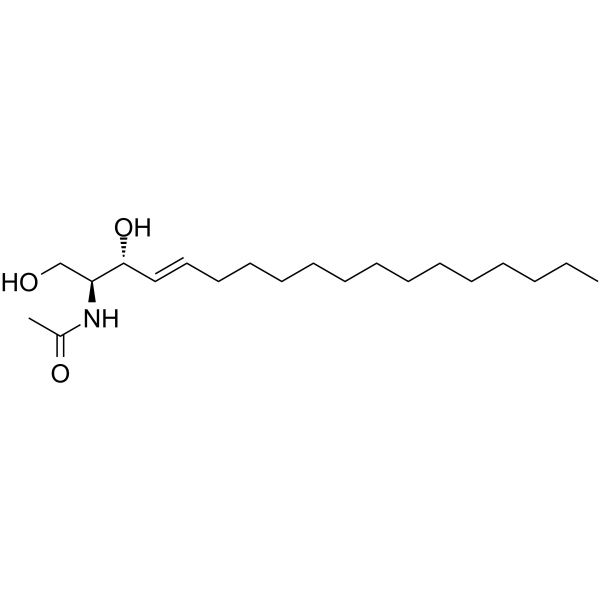
    C2 Ceramide (Ceramide 2) is the main lipid of the stratum corneum and a protein phosphatase 1 (PP1) activator. C2 Ceramide activates PP2A and ceramide-activated protein phosphatase (CAPP). C2 Ceramide induces cells differentiation, autophagy and apoptosis, inhibits mitochondrial respiratory chain complex III. C2 Ceramide is also a skin conditioning agent that protects the epidermal barrier from water loss .
    C2 Ceramide
  • HY-12795
    Vps34-IN-1
    10+ Cited Publications

    PI3K Autophagy Cancer
    Vps34-IN-1 is a potent and selective inhibitor of class III Vps34 PI3K. Vps34-IN-1 inhibits phosphorylation of PtdIns by recombinant insect cell expressed Vps34-Vps15 complex with an IC50 of ~25 nM. Vps34-IN-1 can suppress SGK3 activation by reducing PtdIns(3)P levels via lowering phosphorylation of T-loop and hydrophobic motifs. Vps34-IN-1 modulates autophagy .
    Vps34-IN-1
  • HY-112177

    Fungal Mitochondrial Metabolism Antibiotic Infection
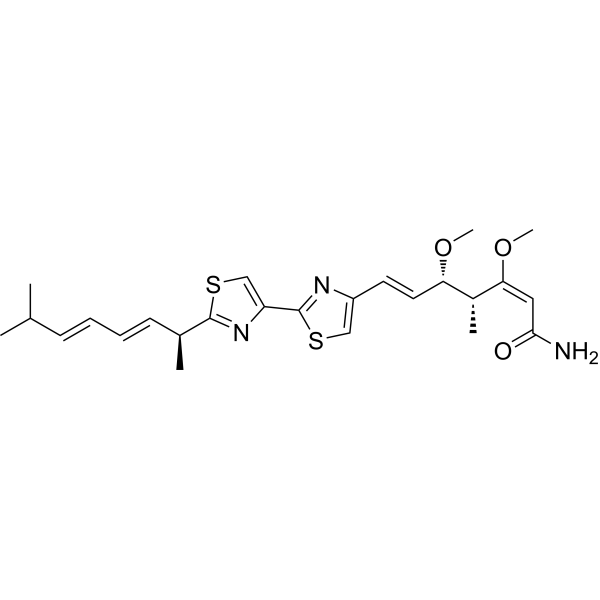
    Myxothiazol, an antifungal antibiotic, is a mitochondrial electron transport chain complex III (bc1 complex) inhibitor. Myxothiazol inhibits the growth of many yeasts and fungi at concentrations between 0.01 and 3 μg/ml .
    Myxothiazol
  • HY-Y1101B

    N-Methylmorpholine N-Oxide; MMNO; 4-Methylmorpholine 4-oxide

    Biochemical Assay Reagents Others
    4-Methylmorpholine N-oxide (N-Methylmorpholine N-Oxide; MMNO; 4-Methylmorpholine 4-oxide) is an amine oxide ligand and ozonation reagent. 4-Methylmorpholine N-oxide forms coordination complexes with lanthanum (III) nitrate and yttrium (III) nitrate via its nitroso oxygen atom. The metal-ligand bonds are dominated by electrostatic interactions with a small covalent component. 4-Methylmorpholine N-oxide is applicable in ozonation reactions for the synthesis of methyl 9-oxononanoate .
    4-Methylmorpholine N-oxide
  • HY-132989

    Biochemical Assay Reagents Bacterial Cardiovascular Disease Infection Inflammation/Immunology
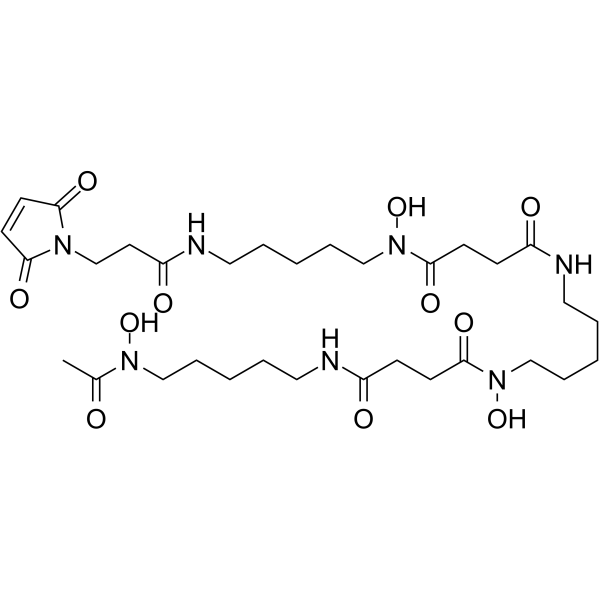
    Mal-Deferoxamine is a maleimide-functionalized trihydroxamate siderophore derivative that can be isolated from Streptomyces pilosus. Mal-Deferoxamine possesses highly specific Fe (III) chelating ability, and the stability of complexes formed between it and non-Fe (III) metal ions is significantly lower. Mal-Deferoxamine exhibits growth inhibitory effects against Gram-positive bacteria, but shows no obvious inhibitory activity against Gram-negative bacteria (MIC>50 μM). Mal-Deferoxamine is mainly suitable for scientific research in hematology and related fields .
    Mal-Deferoxamine
  • HY-N2787
    8-​Prenylnaringenin
    1 Publications Verification

    PI3K Akt AMPK Sirtuin Reactive Oxygen Species (ROS) SOD Cardiovascular Disease Neurological Disease Metabolic Disease Endocrinology Cancer
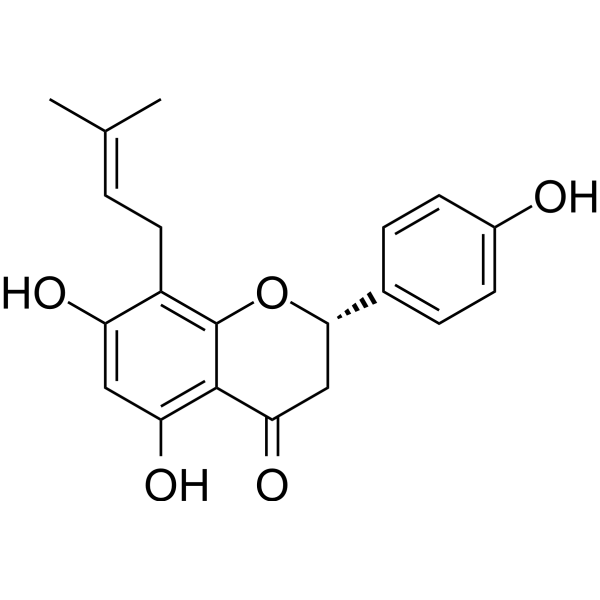
    8-Prenylnaringenin is an orally active prenyl flavonoid. 8-Prenylnaringenin can be isolated from the hop spike Humulus lupulus. 8-Prenylnaringenin activates the PI3K/Akt pathway and the AMPK pathway, upregulates OXPHOS complexes (II, III, and V) and Sirt1, and reduces ROS production and SOD activity. 8-Prenylnaringenin improves muscle atrophy and obesity and inhibits angiogenesis. 8-Prenylnaringenin exhibits anticancer activity against glioblastoma and colon cancer. 8-Prenylnaringenin also has LH/FSH regulatory activity. 8-prenylnaringenin may be used in bone health research .
    8-​Prenylnaringenin
  • HY-130055
    HQNO
    2 Publications Verification

    Mitochondrial Metabolism Infection
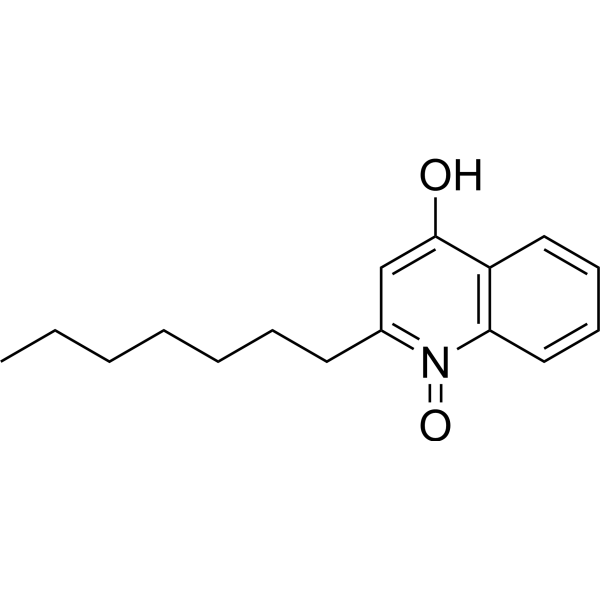
    HQNO, secreted by P. aeruginosa, is a potent electron transport chain inhibitor with a Kd of 64 nM for complex III . HQNO is a potent inhibitor of mitochondrial NDH-2 in many species .
    HQNO
  • HY-164569

    Radionuclide-Drug Conjugates (RDCs) Cancer
    NH2 DOTA-GA is a DOTA-based metal chelator that can be used to prepare radionuclide drug conjugates (RDCs) whose carboxylic acid groups can complex metal ions, for example, NH2 DOTA-GA complexes Gd(III) ions.
    NH2 DOTA-GA
  • HY-W007596

    Ir(ppy)3; Tris[2-(pyridin-2-yl)phenyl]iridium

    Biochemical Assay Reagents Others
    Tris(2-phenylpyridinato-C2,N)iridium(III) (Ir(ppy)3) is an iridium(III) containing organometallic complex, which is used as a phosphorescent light-emitting material. Tris(2-phenylpyridinato-C2,N)iridium(III) exhibits high luminous efficiency and good thermal stability, that can be used in organic optoelectronics, especially in improving the luminescence efficiency and stability of organic light-emitting diodes (OLEDs) .
    Tris(2-phenylpyridinato-C2,N)iridium(III)
  • HY-D0202

    Fluorescent Dye Others
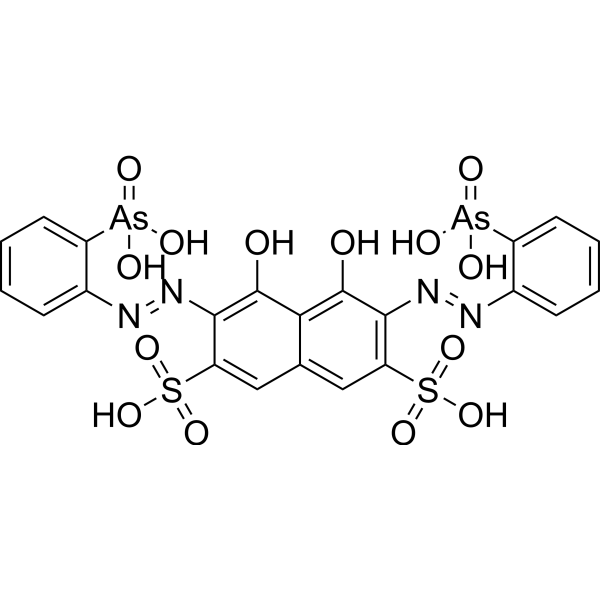
    Arsenazo III is an azo derivative of chromotropic acid, a metal chrome dye, a chelating agent, and a cation complexing agent. Arsenazo III forms stable 1:1 complexes with Ca 2+, Mg 2+, Sr 2+, Ba 2+, K +, and Na +, and its binding affinity for Ca 2+ depends on pH, alkali metal cation concentration, and buffer parameters. Arsenazo III serves as a colorimetric indicator for micromolar ionized Ca 2+ in cells .
    Arsenazo III
  • HY-W250149

    Biochemical Assay Reagents Cancer
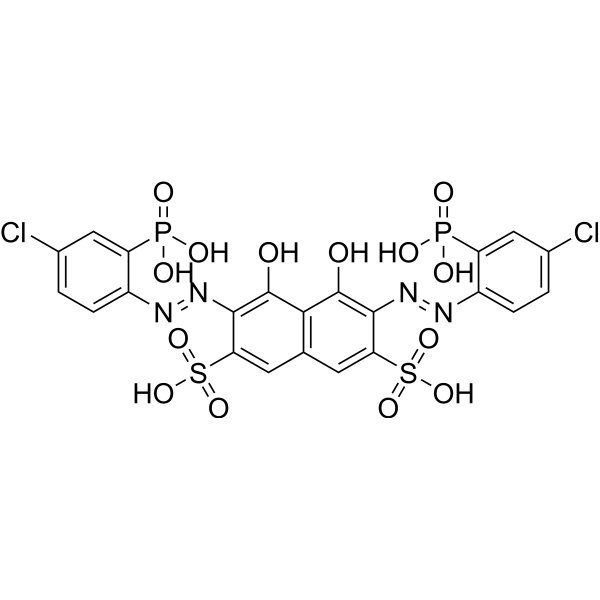
    Chlorophosphonazo III is a cell membrane-permeable contrast agent and spectrophotometric reagent. Chlorophosphonazo III forms stable 1:1 complexes with intracellular calcium, magnesium, uranium, titanium, zirconium, thorium, scandium, equivalent actinides and protactinium. Chlorophosphonazo III generates photoacoustic signals correlated with Ca 2+ concentrations, which is applicable for imaging 3D tumor cell cultures and tumor spheroids. Chlorophosphonazo III exhibits no cytotoxicity, can be used for spectrophotometric detection of target ions, and the absorbance of its complexes remains stable for up to one week within the pH range of 2.2 to 7.0 .
    Chlorophosphonazo III
  • HY-W012161

    L-Alanyl-L-phenylalanine; H-Ala-Phe-OH

    Endogenous Metabolite Drug Intermediate Others
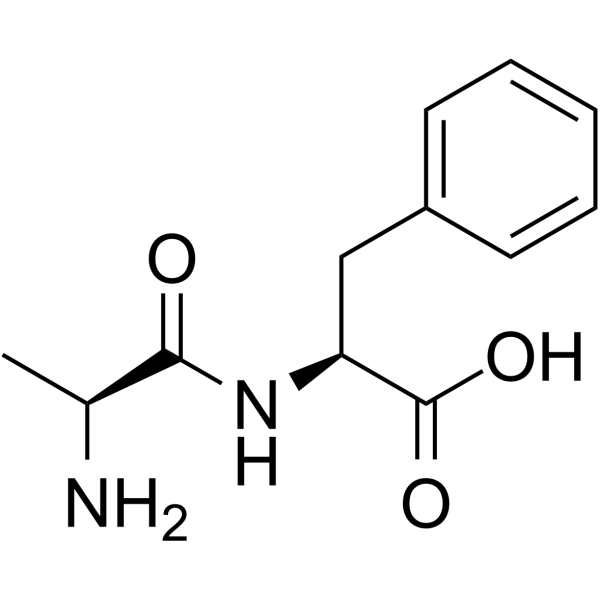
    Alanylphenylalanine (L-Alanyl-L-phenylalanine) is a dipeptide. Alanylphenylalanine forms a mononuclear Au (III) complex through bidentate coordination via its carboxyl oxygen atom and deprotonated amide nitrogen atom .
    Alanylphenylalanine
  • HY-119687

    Environmental Pollutants GABA Receptor Reactive Oxygen Species (ROS) Mitochondrial Metabolism Insecticide Na+/K+ ATPase Infection Cardiovascular Disease
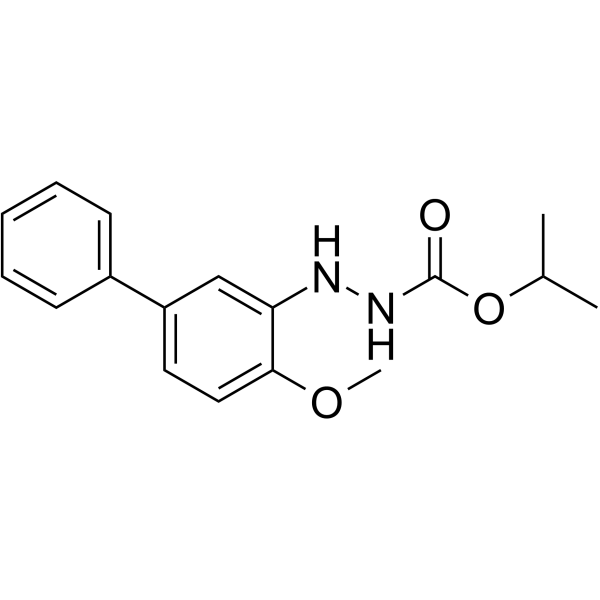
    Bifenazate is a carbazate acaricide that control 100% of mites at a concentration of 25 ppm . Bifenazate is a positive allosteric modulator of GABA receptor . Bifenazate is the inhibitor for the mitochondrial electron transport chain complex III .
    Bifenazate
  • HY-N10661

    Ipom-F

    SARS-CoV Infection Cancer
    Ipomoeassin F is a potent and selective endoplasmic reticulum (ER) protein-translocation inhibitor by targeting the pore-forming subunit of the Sec61 complex (Sec61α) at the ER membrane. Ipomoeassin F selectively inhibits the ER membrane translocation of SARS-CoV-2 proteins. Ipomoeassin F block the ER translocation of secretory proteins and type I transmembrane proteins (TMPs), but not type III TMPs .
    Ipomoeassin F
  • HY-125776

    BAS 490 F

    Environmental Pollutants Mitochondrial Metabolism Fungal Infection
    Kresoxim-methyl (BAS 490 F), a Strobilurin-based fungicide, inhibits the respiration at the complex III (cytochrome bc1 complex). Kresoxim-methyl binds to complex III from yeast with an apparent Kd of 0.07 μM proving a high affinity for this enzyme .
    Kresoxim-methyl
  • HY-P1858A

    CRFR Cardiovascular Disease Neurological Disease Endocrinology
    Urocortin III, mouse TFA is a corticotropin-releasing factor (CRF)-related peptide. Urocortin III preferentially binds and activates CRF-R2 . Urocortin III (Ucn3) is a known component of the behavioral stress response system. Urocortin III and CRF-R2 in the medial amygdala regulate complex social dynamics .
    Urocortin III, mouse TFA
  • HY-P1858

    CRFR Cardiovascular Disease Neurological Disease Endocrinology
    Urocortin III, mouse is a corticotropin-releasing factor (CRF)-related peptide. Urocortin III preferentially binds and activates CRF-R2 . Urocortin III (Ucn3) is a known component of the behavioral stress response system. Urocortin III and CRF-R2 in the medial amygdala regulate complex social dynamics .
    Urocortin III, mouse
  • HY-115853

    Biochemical Assay Reagents Others
    Pyclen forms kinetically and thermodynamically stable nine-coordinate Ln (III) complexes, as well as Mn (II)-based MRI contrast agents. Pyclen-Based Mn(II) Complexes can be used for liver-specific MRI .
    Pyclen
  • HY-D0179

    Biochemical Assay Reagents Infection Cardiovascular Disease
    Cyclam is a metal chelator that forms metal complexes with a variety of metal ions. Cyclam metal complexes exhibits anti-HIV (such as AMD3100), nitric oxide (NO) releasing and scavenging (such as Zn(II)-Cyclam and Ru(II)-Cyclam), and SOD mimetic (such as Mn(III)-Cyclam and Zn(II)-Cyclam) activities .
    Cyclam
  • HY-DY1017

    Antibiotic Fungal Infection
    Filipin complex (solution) is a potent polyene macrolide antifungal antibiotic. Filipin complex inserts into membranes and sequester cholesterol into complexes and inhibits PRRSV entry. The Filipin complex consists of about 75.8% Filipin III (HY-N6718) , 10.8% Filipin IV, 9.1% Filipin II, and 1.2% Filipin I (Ex/Em = 380/430 nm) .
    Solvent and concentration: DMSO: 5 mg/mL
    Filipin complex (solution)
  • HY-W127790

    Biochemical Assay Reagents Others
    Bathophenanthrolinedisulfonic acid disodium salt (BPS) is a colorimetric reagent for iron detection, with a wavelength of 535 nm for iron complex. It can be used for iron determination in aqueous solution systems without the need for extraction solvents. BPS can serve as a precursor to prepare Europium(III) tris(dibenzoylmethanate) bis(bathophenanthrolinedisulfonate) complex and ruthenium(II) tris(bathophenanthrolinedisulfonate), or participate in the catalytic oxidation of 2-hexanol by forming water-soluble complexes with palladium .
    Bathophenanthrolinedisulfonic acid disodium
  • HY-P6351

    Integrin Cancer
    c(avb6)-DOTA TFA is a conjugate of the αvβ6 integrin selective peptide ring modified with DOTA chelator. The Lu(III) complex of c(avb6)-DOTA TFA has a comparable affinity for αvβ6 integrin (IC50=0.8 nM) and can be used as a tumor diagnostic .
    c(avb6)-DOTA TFA
  • HY-146145

    Fungal Mitochondrial Metabolism Infection
    Metyltetraprole is a promising fungicide with EC50 values of both 0.002 ppm against sensitive wild-type and G143A mutant of Zymoseptoria tritici. Metyltetraprole is effective against QoI (quinone outside inhibitor) resistant strains. Metyltetraprole inhibits the respiratory chain via complex III .
    Metyltetraprole
  • HY-107966A

    Nadroparin calcium (MW 3600-5000)

    Thrombin Factor Xa Autophagy Bacterial Cardiovascular Disease Cancer
    Heparin (Nadroparin) calcium (MW 3600-5000) is an anticoagulant which binds reversibly to antithrombin III (ATIII) to form a heparin-antithrombin III complex. The complex binds to and irreversibly inactivates thrombin and other activated clotting factors IX, X, XI, and XII and prevents the transformation of fibrinogen to fibrin .
    Heparin calcium (MW 3600-5000)
  • HY-125857B

    Biochemical Assay Reagents Apoptosis Caspase Metabolic Disease
    Cytochrome C (Saccharomyces cerevisiae) is a type C cytochrome located in the intermembrane space of the mitochondria. As an electron carrier, Cytochrome C (Saccharomyces cerevisiae) transfers electrons between complex III (cytochrome c reductase) and complex IV (cytochrome c oxidase, CIV) of the respiratory chain. Cytochrome C (Saccharomyces cerevisiae) can play a crucial role in triggering apoptosis by being released from the mitochondria into the cytosol .
    Cytochrome C (Saccharomyces cerevisiae)
  • HY-117897
    CK-2-68
    1 Publications Verification

    Parasite Infection
    CK-2-68 is an inhibitor for complex III in protozoan mitochondrial respiratory chain, by targeting the alternative NADH dehydrogenase (NDH2) of the malarial parasite Plasmodium. CK-2-68 exhibits antimalaria efficacy, that inhibits Plasmodium falciparum infected erythrocytes with an IC50 of 40 nM .
    CK-2-68
  • HY-162066

    Parasite Infection
    DNDI-6174 is an orally active Leishmania cytochrome b (Qi site of cytochrome bc1 complex/complex III) inhibitor. DNDI-6174 binds to the Qi site of Leishmania cytochrome b, inhibits cytochrome bc1 complex activity in the parasite's electron transport chain across promastigote and axenic amastigote stages. DNDI-6174 reduces parasite burden in rodent models, inhibits growth of various Leishmania species, drug-resistant clinical isolates, and Trypanosoma cruzi, with marginal activity against Trypanosoma brucei. DNDI-6174 can be used for the research of visceral leishmaniasis, cutaneous leishmaniasis .
    DNDI-6174
  • HY-112847B

    (E/Z)-Sulfo-N-succinimidyl oleate sodium

    Transmembrane Glycoprotein Mitochondrial Metabolism Drug Isomer Inflammation/Immunology
    (E/Z)-Sulfosuccinimidyl oleate sodium is the racemate of (E)-Sulfosuccinimidyl oleate sodium and (Z)-Sulfosuccinimidyl oleate sodium. Sulfosuccinimidyl oleate sodium (Sulfo-N-succinimidyl oleate sodium) is a long-chain fatty acid that inhibits fatty acid transport into cells. Sulfosuccinimidyl oleate sodium is a potent and irreversible inhibitor of the mitochondrial respiratory chain. Sulfosuccinimidyl oleate sodium binds to the CD36 receptor on the surface of microglial cells. Sulfosuccinimidyl oleate sodium exhibits anti-inflammatory effects .
    (E/Z)-Sulfosuccinimidyl oleate sodium
  • HY-16336

    PCI 0120; Gadolinium texaphyrin; Gd-Tex

    Reactive Oxygen Species (ROS) Cancer
    Motexafin gadolinium (PCI 0120) is a potent antitumor agent. Motexafin gadolinium is a specific texaphyrin in complex with gadolinium(III). Motexafin gadolinium increases intracellular ROS production. Motexafin gadolinium enhances sensitivity of tumor cells to ionizing radiation .
    Motexafin gadolinium
  • HY-148365

    Mixed Lineage Kinase RIP kinase CDK Cancer
    NecroIr1 is an iridium(III) complex, serves as necroptosis inducers in Cisplatin (HY-17394)-resistant lung cancer cells (A549R). NecroIr1 selectively accumulates in mitochondria, leading to oxidative stress and loss of mitochondrial membrane potential (MMP). NecroIr1 activates receptor-interacting serine-threonine kinase 3 (RIPK3) and Mixed Lineage Kinase (MLKL), and regulates CDK4 expression .
    NecroIr1
  • HY-148366

    Mixed Lineage Kinase RIP kinase CDK Cancer
    NecroIr2 is an iridium(III) complex, serves as necroptosis inducers in Cisplatin (HY-17394)-resistant lung cancer cells (A549R). NecroIr2 selectively accumulates in mitochondria, leading to oxidative stress and loss of mitochondrial membrane potential (MMP). NecroIr2 activates receptor-interacting serine-threonine kinase 3 (RIPK3) and mixed lineage kinase domain-like pseudokinase (MLKL), and regulates CDK4 expression .
    NecroIr2
  • HY-Y1312

    PhI; 2PZ

    Biochemical Assay Reagents Others
    2-Phenylimidazole (PhI) is a corrosion inhibitor for brass and can be used to prepare complexes with ruthenium (III) .
    2-Phenylimidazole
  • HY-W012232

    Biochemical Assay Reagents Drug Intermediate Others
    2,6-Diphenylpyridine is a proton acceptor (log(P) = 5) and a tridentate [C^N^C] dianionic ligand. 2,6-Diphenylpyridine efficiently transfers protons through a direct pathway at the interface of two immiscible electrolyte solutions. 2,6-Diphenylpyridine as a tridentate ligand and can form mononuclear and binuclear complexes with gold(III). 2,6-Diphenylpyridin is applicable to research in electrochemical ion transfer kinetics and organometallic chemistry .
    2,6-Diphenylpyridine
  • HY-115945

    Mitochondrial Metabolism Fungal Infection
    Complex III-IN-1 (Compd 4c-2) is a complex III inhibitor. Complex III-IN-1 shows antifungal activity with an EC50 of 18.53 mg/L against sclerotinia sclerotiorum .
    Complex III-IN-1
  • HY-115946

    Mitochondrial Metabolism Fungal Infection
    Complex III-IN-2 (Compd 4d-2) is a complex III inhibitor. Complex III-IN-2 shows antifungal activity with an EC50 of 29.98 mg/L and 29.31 mg/L against sclerotinia sclerotiorum and R. solani, respectively .
    Complex III-IN-2
  • HY-107966

    Nadroparin calcium (MW 15000-19000)

    Thrombin Factor Xa Autophagy Bacterial Cardiovascular Disease Cancer
    Heparin calcium (MW 15000-19000) is an anticoagulant which binds reversibly to antithrombin III (ATIII) to form a heparin-antithrombin III complex. The complex binds to and irreversibly inactivates thrombin and other activated clotting factors IX, X, XI, and XII and prevents the transformation of fibrinogen to fibrin .
    Heparin calcium (MW 15000-19000)
  • HY-W009022

    Biochemical Assay Reagents Others
    Diantipyrylmethane is a chromogenic reagent commonly used for the determination of the contents of metals such as Au (III), Ti (IV), Ir, Fe (III), molybdenum, neodymium, U (IV), iridium, platinum and rhenium via spectrophotometry and extraction photometry. Diantipyrylmethane can also form a fluorescent complex with Er (III) ions, which is applied to the determination of erbium .
    Diantipyrylmethane
  • HY-174393

    Parasite Mitochondrial Metabolism Infection
    Gamhepathiopine is a thienopyrimidinone compound. Gamhepathiopine exerts antimalarial effects by targeting the Qo site of Plasmodium falciparum cytochrome b and inhibiting the activity of complex III in the electron transport chain .
    Gamhepathiopine
  • HY-123562

    Cytochrome P450 Others
    GNF7686 is a cytochrome b inhibitor. GNF7686 exhibits inhibitory activity against complex III in the extracts of L. donovani and T. cruzi .
    GNF7686
  • HY-130055R

    Reference Standards Mitochondrial Metabolism Infection
    HQNO (Standard) is the analytical standard of HQNO. This product is intended for research and analytical applications. HQNO, secreted by P. aeruginosa, is a potent electron transport chain inhibitor with a Kd of 64 nM for complex III[1]. HQNO is a potent inhibitor of mitochondrial NDH-2 in many species[2].
    HQNO (Standard)
  • HY-125776R

    BAS 490 F (Standard)

    Reference Standards Fungal Mitochondrial Metabolism Infection
    Kresoxim-methyl (Standard) is the analytical standard of Kresoxim-methyl. This product is intended for research and analytical applications. Kresoxim-methyl (BAS 490 F), a Strobilurin-based fungicide, inhibits the respiration at the complex III (cytochrome bc1 complex). Kresoxim-methyl binds to complex III from yeast with an apparent Kd of 0.07 μM proving a high affinity for this enzyme .
    Kresoxim-methyl (Standard)
  • HY-W112277

    Endogenous Metabolite Biochemical Assay Reagents Others
    5,10,15,20-Tetrakis(4-methoxyphenyl)-21H,23H-porphine iron(III) chloride is a type of metalloporphyrin complex that features iron(III) at its core.
    5,10,15,20-Tetrakis(4-methoxyphenyl)-21H,23H-porphine iron(III) chloride
  • HY-115853A

    Biochemical Assay Reagents Others
    Pyclen dihydrochloride forms kinetically and thermodynamically stable nine-coordinate Ln (III) complexes, as well as Mn (II)-based MRI contrast agents. Pyclen-Based Mn(II) Complexes can be used for liver-specific MRI .
    Pyclen dihydrochloride
  • HY-148340

    Biochemical Assay Reagents Others
    24RBPyBC is a dinucleating macrocyclic ligand, it contains phenolate pyridine, bipyridine, and amino groups form dinuclear Fe(II) and Fe(III) complexes .
    24RBPyBC
  • HY-W725476

    Reactive Oxygen Species (ROS) Infection
    Bifenazate-d5 is the deuterium labeled Bifenazate (HY-119687). Bifenazate is a carbazate acaricide that control 100% of mites at a concentration of 25 ppm . Bifenazate is a positive allosteric modulator of GABA receptor . Bifenazate is the inhibitor for the mitochondrial electron transport chain complex III .
    Bifenazate-d5
  • HY-119687R

    Reference Standards GABA Receptor Mitochondrial Metabolism Na+/K+ ATPase Reactive Oxygen Species (ROS) Insecticide Infection Cardiovascular Disease
    Bifenazate (Standard) is the analytical standard of Bifenazate. This product is intended for research and analytical applications. Bifenazate is a carbazate acaricide that control 100% of mites at a concentration of 25 ppm . Bifenazate is a positive allosteric modulator of GABA receptor . Bifenazate is the inhibitor for the mitochondrial electron transport chain complex III .
    Bifenazate (Standard)
  • HY-162463

    PD-1/PD-L1 Cancer
    Ir-UA is an usnic acid-derived iridium(III) complex that enhances PD-L1 expression and converts "cold tumors" into "hot tumors." Ir-UA stimulates PD-L1 expression by explicitly regulating the PD-L1 transcription factor .
    Ir-UA
  • HY-172115

    TrxR Apoptosis Cancer
    BGC4 is a biphenyl-based gold(III) complex. BGC4 inhibits human recombinant thioredoxin reductase (TrxR) with an IC50 of 10.7 μM, exhibits cytotoxicity (IC50 for MDA-MB-231 is 5.4 μM), and induces apoptosis. BGC4 exhibits antitumor efficacy in mouse models .
    BGC4

Inquiry Online

Your information is safe with us. * Required Fields.

Salutation


Country or Region *

Applicant Name *


Organization Name *

Department *


Email Address *


Product Name *

Cat. No.


Requested quantity *

Phone Number *


Remarks

Inquiry Online

Inquiry Information

Product Name:
Cat. No.:
Quantity:
MCE Japan Authorized Agent:

