1. Search Result
Search Result
Pathways Recommended: Membrane Transporter/Ion Channel
Results for "

delayed rectifier potassium channels

" in MedChemExpress (MCE) Product Catalog:

22

Inhibitors & Agonists

2

Peptides

1

Natural
Products

Cat. No. Product Name Target Research Areas Chemical Structure
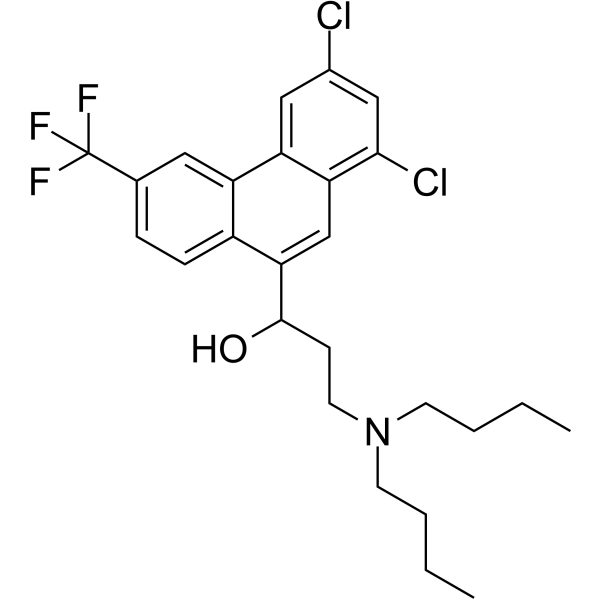
  • HY-A0148A
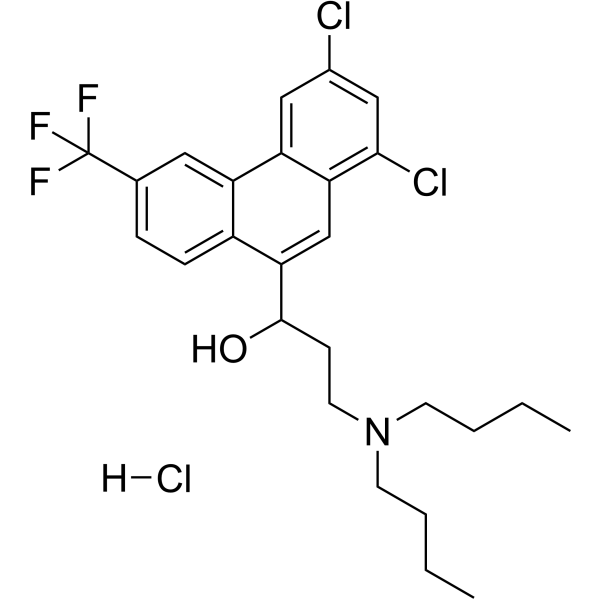
    Halofantrine hydrochloride
    2 Publications Verification

    SKF-102886; WR-171669 hydrochloride

    Parasite Fungal Reactive Oxygen Species (ROS) Potassium Channel Infection
    Halofantrine hydrochloride (SKF-102886 hydrochloride; WR-171669 hydrochloride) is a blocker that delays the delayed rectifier potassium current by inhibiting human ERG channels, and it is a potent antimalarial agent with oral activity. Halofantrine hydrochloride inhibits the Cap1-dependent oxidative stress response of Candida albicans, suppresses ROS responses, and enhances the antifungal (Fungal) activity of oxidative damage agents. Halofantrine hydrochloride exhibits antifungal activity in the Galleria mellonella model, and shows antimalarial activity against Plasmodium strains both in vitro and in animal models. Halofantrine hydrochloride can be used in studies related to invasive candidiasis, falciparum malaria, and vivax malaria .
    Halofantrine hydrochloride
  • HY-B0432
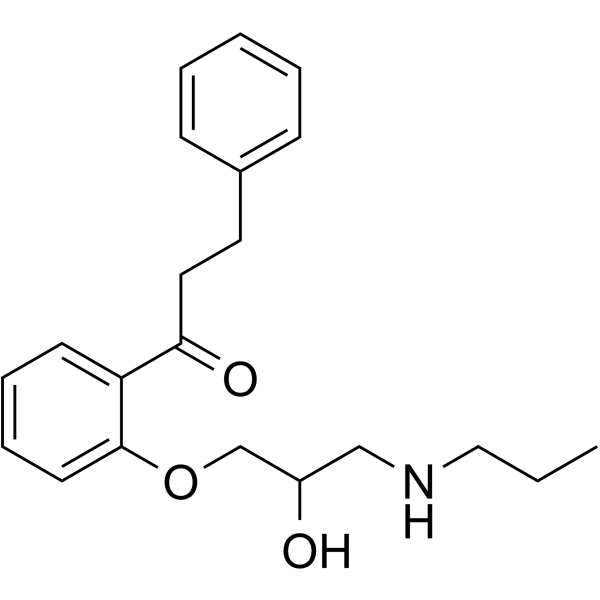
    Propafenone
    2 Publications Verification

    SA-79

    Sodium Channel Adrenergic Receptor Potassium Channel Cardiovascular Disease Cancer
    Propafenone (SA-79), a sodium-channel blocker, acts an antiarrhythmic agent. Propafenone also has high affinity for the β receptor (IC50=32 nM) . Propafenone blocks the transient outward current (Ito) and the sustained delayed rectifier K current (Isus) with IC50 values of 4.9 μm and 8.6 μm, respectively . Propafenone suppresses esophageal cancer proliferation through inducing mitochondrial dysfunction and induce apoptosis .
    Propafenone
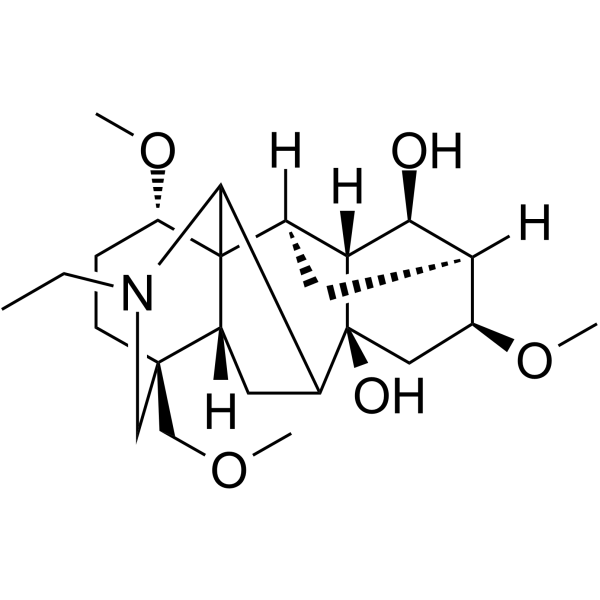
  • HY-N0663

    Mitochondrial Metabolism Cyclophilin Potassium Channel Cardiovascular Disease Neurological Disease Inflammation/Immunology
    Talatisamine is an orally active cyclophilin D activator isolated from the roots of Aconitum carmichaeli Debx. Talatisamine exerts biological functions by activating cyclophilin D, inhibiting Ca 2+-dependent opening of the mitochondrial permeability transition pore (mPTP) (IC50=78 μM), and blocking delayed rectifier K + channels (IC50=146 μM). Talatisamine possesses both antioxidant and membrane-stabilizing properties, effectively inhibits lipid peroxidation and protects mitochondrial membrane function. Talatisamine exhibits multiple activities including antiarrhythmic, hypotensive, anti-inflammatory, anticancer and neuroprotective effects. Talatisamine finds applications in the research of ischemic diseases, rheumatoid arthritis, inflammation-related diseases and Alzheimer's disease .
    Talatisamine
  • HY-108575
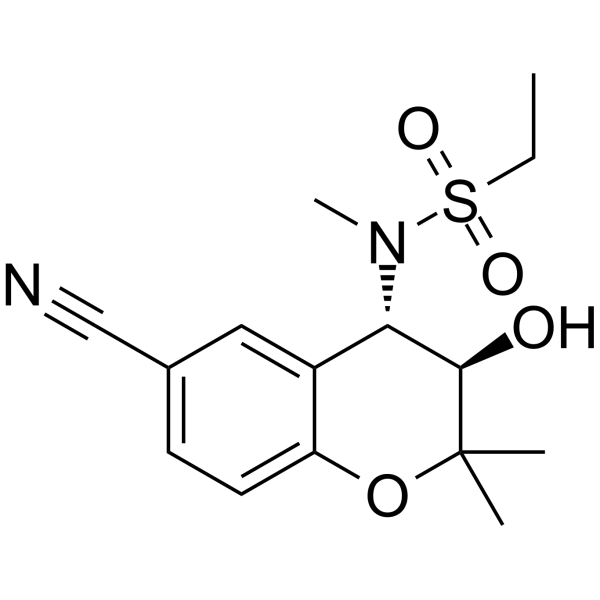
    Chromanol 293B
    1 Publications Verification

    Potassium Channel CFTR Cardiovascular Disease
    Chromanol 293B is a selective blocker of the slow delayed rectifier K + current (IKs) with IC50 of 1-10 μM and a weak inhibitor of KATP channel. Chromanol 293B also blocks the CFTR chloride current with an IC50 of 19 μM .
    Chromanol 293B
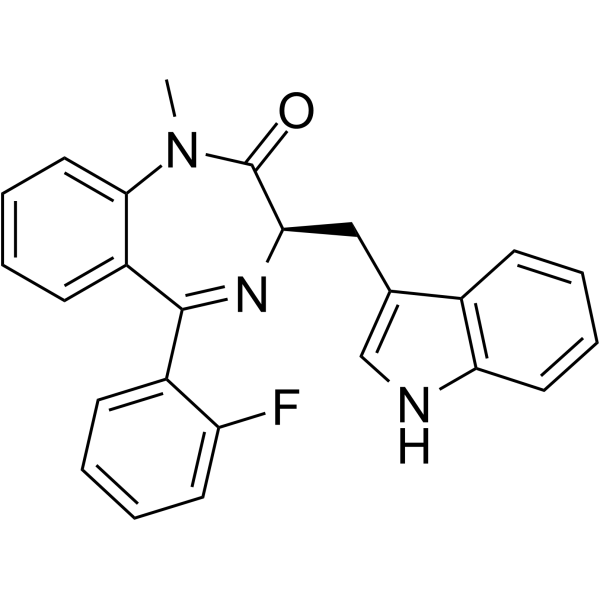
  • HY-108591

    R-L3

    Potassium Channel Cardiovascular Disease
    L-364,373 (R-L3) is a voltage-gated Kv7.1 (KCNQ1)/mink channels activator. L-364,373 activates Iks (slow delayed rectifier potassium current) and shortens action potential duration in guinea pig cardiac myocytes, and suppresses early afterdepolarizations in rabbit ventricular myocytes .
    L-364,373
  • HY-101253
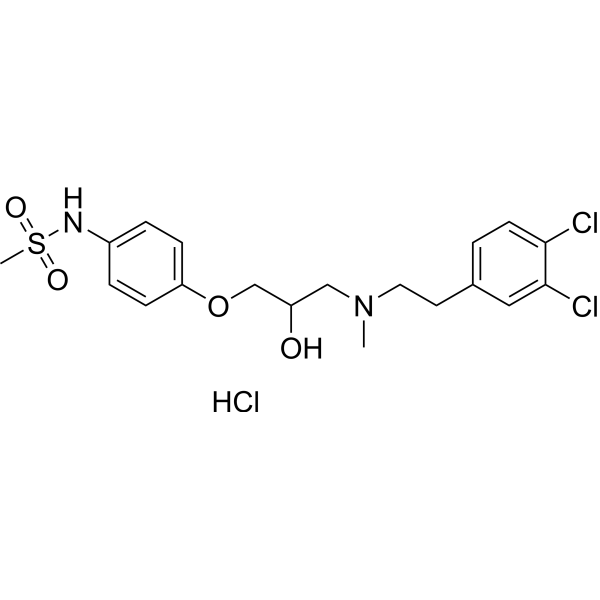
    AM-92016 hydrochloride
    1 Publications Verification

    Potassium Channel Cardiovascular Disease
    AM-92016 hydrochloride is a specific blocker of rectifier potassium current (IK). AM-92016 hydrochloride delays rectifier potassium channel (IK), repolarizes the membrane thereby restricting the duration of the nerve impulse thereby restricting the duration of the nerve impulse .
    AM-92016 hydrochloride
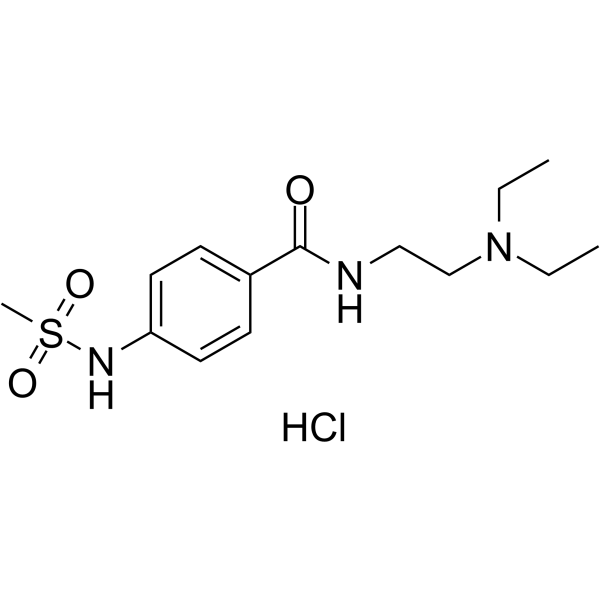
  • HY-101436A

    CK-1752 hydrochloride

    Potassium Channel Cardiovascular Disease
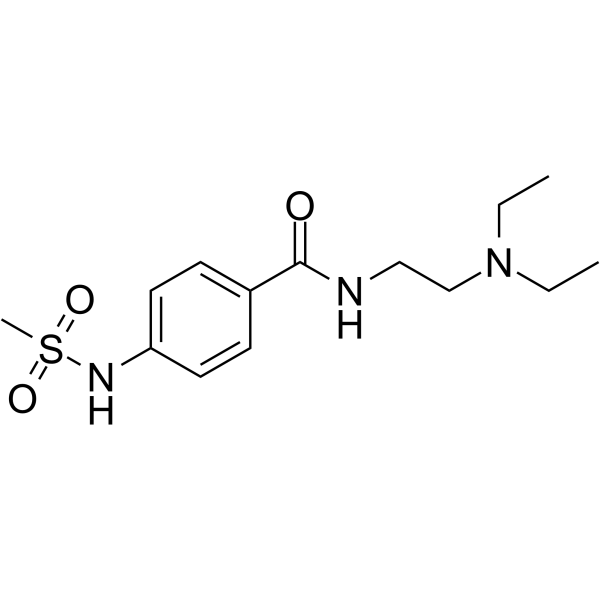
    Sematilide hydrochloride (CK-1752 hydrochloride) is a selective IKr channel blocker. Sematilide causes a concentration-dependent inhibition of the delayed rectifier K + current (IC50=25 μM). Sematilide is a class III antiarrhythmic agent .
    Sematilide hydrochloride
  • HY-A0148

    SKF-102886 free base; WR-171669

    Parasite Fungal Potassium Channel Reactive Oxygen Species (ROS) Infection Cancer
    Halofantrine (SKF-102886 hydrochloride; WR-171669 hydrochloride) is a blocker that delays the delayed rectifier potassium current by inhibiting human ERG channels, and it is a potent antimalarial agent with oral activity. Halofantrine inhibits the Cap1-dependent oxidative stress response of Candida albicans, suppresses ROS responses, and enhances the antifungal (Fungal) activity of oxidative damage agents. Halofantrine exhibits antifungal activity in the Galleria mellonella model, and shows antimalarial activity against Plasmodium strains both in vitro and in animal models. Halofantrine can be used in studies related to invasive candidiasis, falciparum malaria, and vivax malaria .
    Halofantrine
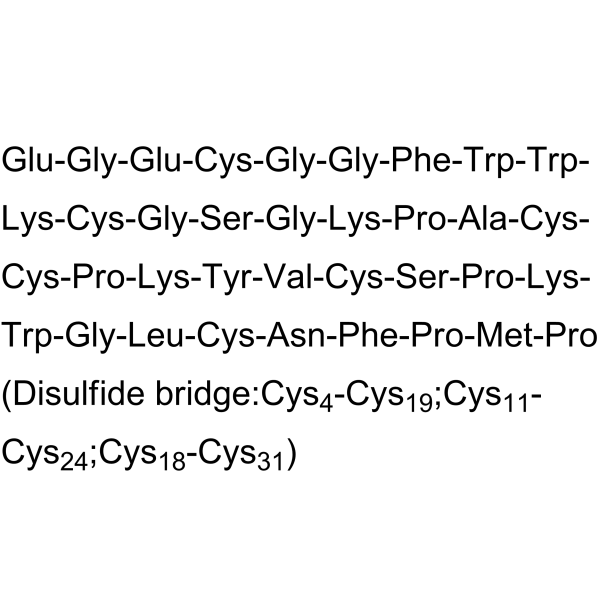
  • HY-P1427

    Potassium Channel Neurological Disease
    Guangxitoxin 1E is a potent and selective blocker of KV2.1 and KV2.2 channels. Guangxitoxin 1E inhibits KV2 with an IC50 of 1-3 nM. KV2 channels underlie delayed-rectifier potassium currents in various neurons .
    Guangxitoxin 1E
  • HY-106855

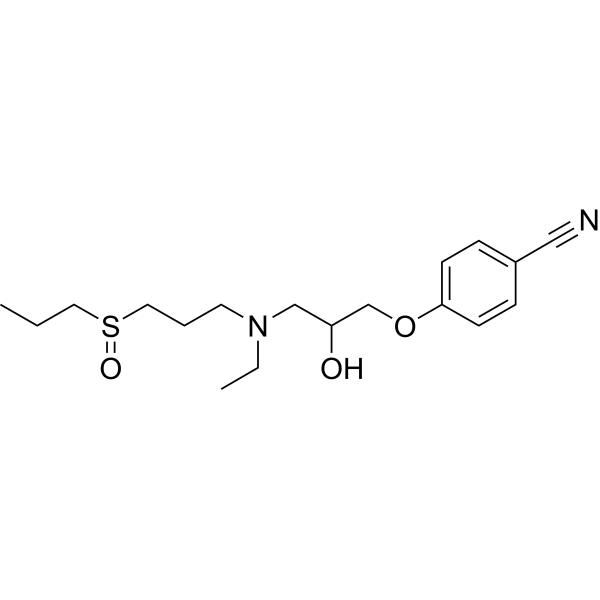
    H 234​/09

    Potassium Channel Cardiovascular Disease
    Almokalant is a class III antiarrhythmic agent, acts as a potassium channel blocker, and inhibits a specific component (Ikr) of the time-dependent delayed rectifier K + current.
    Almokalant
  • HY-101436

    CK-1752

    Potassium Channel Cardiovascular Disease
    Sematilide (CK-1752) is a selective IKr channel blocker. Sematilide causes a concentration-dependent inhibition of the delayed rectifier K + current (IC50=25 μM). Sematilide is a class III antiarrhythmic agent .
    Sematilide
  • HY-108163A

    Calcium Channel Potassium Channel Neurological Disease
    SB-237376 is a blocker of potassium and calcium channels. SB-237376 inhibits the rapidly activating delayed rectifier potassium current I(Kr) (IC50: 0.42 μM) and blocks the L-type calcium current I(Ca,L) at high concentrations .
    SB-237376
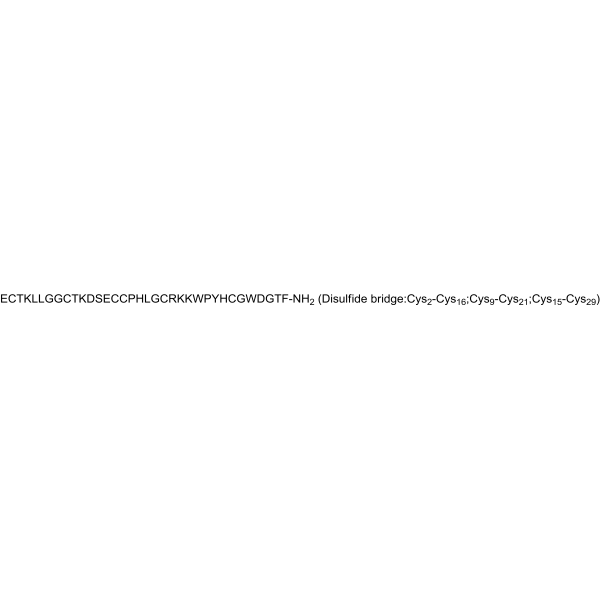
  • HY-P5771

    Sodium Channel Neurological Disease
    Jingzhaotoxin-IX, a C-terminally amidated peptide composed of 35 amino acid residues, is a neurotoxin. Jingzhaotoxin-IX inhibits voltage-gated sodium channels (both tetrodotoxin-resistant and tetrodotoxin-sensitive isoforms) and Kv2.1 channel. Jingzhaotoxin-IX has no effect on delayed rectifier potassium channel Kv1.1, 1.2 and 1.3 .
    Jingzhaotoxin-IX
  • HY-182646

    Potassium Channel Cardiovascular Disease
    NE-10133 is a ISK and IKS potassium channel (Potassium Channel) inhibitor. NE-10133 inhibits voltage-dependent and slowly activated delayed rectifier potassium currents. NE-10133 exhibits class III antiarrhythmic activity. NE-10133 is applicable for research related to arrhythmias .
    NE-10133
  • HY-101436AR

    CK-1752 hydrochloride (Standard)

    Reference Standards Potassium Channel Cardiovascular Disease
    Sematilide (hydrochloride) (Standard) is the analytical standard of Sematilide (hydrochloride). This product is intended for research and analytical applications. Sematilide hydrochloride (CK-1752 hydrochloride) is a selective IKr channel blocker. Sematilide causes a concentration-dependent inhibition of the delayed rectifier K+ current (IC50=25 μM). Sematilide is a class III antiarrhythmic agent .
    Sematilide hydrochloride (Standard)
  • HY-118148

    Potassium Channel Cardiovascular Disease
    UK-66914, is a class III antiarrhythmic agent that specifically acts on the delayed rectifier potassium current (I_K). UK-66914 is designed to prolong action potential duration (APD) and increase cardiac refractory period, thereby potentially terminating the reentry mechanism in arrhythmias without affecting the serious side effects of antiarrhythmic drugs associated with other ion channels such as Na+ and Ca2+ currents .
    UK-66914
  • HY-A0148AR

    SKF-102886 (Standard); WR-171669 hydrochloride (Standard)

    Reference Standards Parasite Fungal Potassium Channel Reactive Oxygen Species (ROS) Infection
    Halofantrine hydrochloride (Standard) is the analytical standard of Halofantrine hydrochloride. This product is intended for research and analytical applications. Halofantrine hydrochloride (SKF-102886 hydrochloride; WR-171669 hydrochloride) is a blocker that delays the delayed rectifier potassium current by inhibiting human ERG channels, and it is a potent antimalarial agent. Halofantrine hydrochloride inhibits the Cap1-dependent oxidative stress response of Candida albicans, suppresses ROS responses, and enhances the antifungal (Fungal) activity of oxidative damage agents. Halofantrine hydrochloride exhibits antifungal activity in the Galleria mellonella model, and shows antimalarial activity against Plasmodium strains both in vitro and in animal models. Halofantrine hydrochloride can be used in studies related to invasive candidiasis, falciparum malaria, and vivax malaria.
    Halofantrine hydrochloride (Standard)
  • HY-B0432R

    SA-79 (Standard)

    Reference Standards Sodium Channel Adrenergic Receptor Potassium Channel Cardiovascular Disease Cancer
    Propafenone (Standard) is the analytical standard of Propafenone. This product is intended for research and analytical applications. Propafenone (SA-79), a sodium-channel blocker, acts an antiarrhythmic agent. Propafenone also has high affinity for the β receptor (IC50=32 nM) . Propafenone blocks the transient outward current (Ito) and the sustained delayed rectifier K current (Isus) with IC50 values of 4.9 μm and 8.6 μm, respectively . Propafenone suppresses esophageal cancer proliferation through inducing mitochondrial dysfunction and induce apoptosis .
    Propafenone (Standard)
  • HY-124940

    Calcium Channel Potassium Channel Cardiovascular Disease
    CPU-228 is a complex class III antiarrhythmic agent. CPU-228 concentration-dependently blocks the activities of the rapid component 50 of the delayed rectifier potassium channel (IKr) and the L-type calcium channel (ICa,L), with an IC50 value of 0.909 μM for ICa,L current. CPU-228 produces negative inotropic effects and induces mild, non-frequency-dependent prolongation of the effective refractory period (ERP) in isolated left atria. CPU-228 reduces the incidence of torsades de pointes (TDP) in anesthetized rabbits and inhibits ischemia/reperfusion-induced arrhythmias in rats. CPU-228 can be used in studies related to torsades de pointes .
    CPU-228
  • HY-108163

    Calcium Channel Potassium Channel Cardiovascular Disease
    SB-237376 (free base) is a potassium and calcium channel blocker. SB-237376 (free base) can inhibit the rapidly activating delayed rectifier potassium current I(Kr) (IC50 is 0.42 μM), and at high concentrations, it blocks the L-type calcium current I(Ca,L). In the rabbit ventricular model, SB-237376 (free base) can induce early afterdepolarizations (EADs) at a concentration of 3 µM. Compared to other IKr inhibitors such as dl-sotalol, SB-237376 has a lower proarrhythmic risk. SB-237376 (free base) holds potential for research in the field of arrhythmia-related diseases .
    SB-237376 free base
  • HY-W714853

    Akt Src STAT EGFR Drug Isomer Neurological Disease Inflammation/Immunology
    (+)-Theta-cypermethrin is a stereoisomer of Cypermethrin (HY-B0829) that possesses blood-brain barrier penetration ability and binds to AKT1, SRC, STAT3 and EGFR with high affinity. (+)-Theta-cypermethrin reduces the amplitude of delayed rectifier potassium channel currents, shifts the steady-state activation curve to negative potentials, and shifts the steady-state inactivation curve to negative potentials at higher concentrations. (+)-Theta-cypermethrin induces abnormal electrical activity in rat hippocampal neurons. (+)-Theta-cypermethrin causes chronic respiratory system damage and exhibits neurotoxicity .
    (+)-Theta-cypermethrin
  • HY-108591R

    R-L3 (Standard)

    Reference Standards Potassium Channel Cardiovascular Disease
    L-364,373 (Standard) is the analytical standard of L-364,373 (HY-108591). This product is intended for research and analytical applications. L-364,373 (R-L3) is a voltage-gated Kv7.1 (KCNQ1)/mink channels activator. L-364,373 activates Iks (slow delayed rectifier potassium current) and shortens action potential duration in guinea pig cardiac myocytes, and suppresses early afterdepolarizations in rabbit ventricular myocytes .
    L-364,373 (Standard)

Inquiry Online

Your information is safe with us. * Required Fields.

Salutation


Country or Region *

Applicant Name *


Organization Name *

Department *


Email Address *


Product Name *

Cat. No.


Requested quantity *

Phone Number *


Remarks

Inquiry Online

Inquiry Information

Product Name:
Cat. No.:
Quantity:
MCE Japan Authorized Agent:

