1. Search Result
Search Result
Results for "

discriminative

" in MedChemExpress (MCE) Product Catalog:

17

Inhibitors & Agonists

3

Natural
Products

Cat. No. Product Name Target Research Areas Chemical Structure
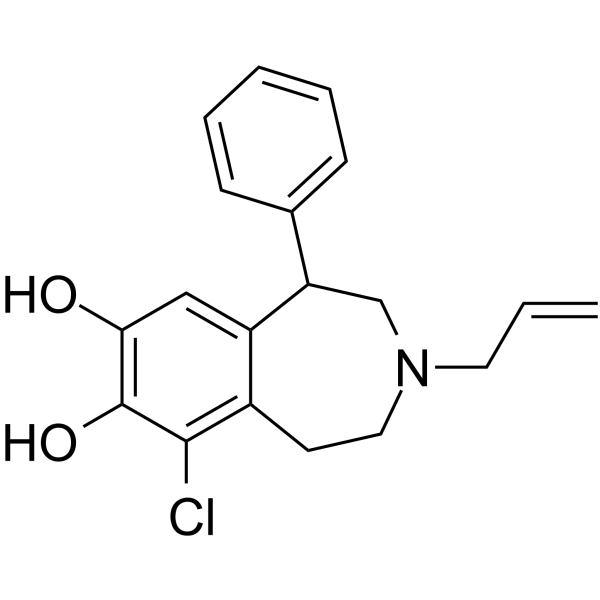
  • HY-10435A
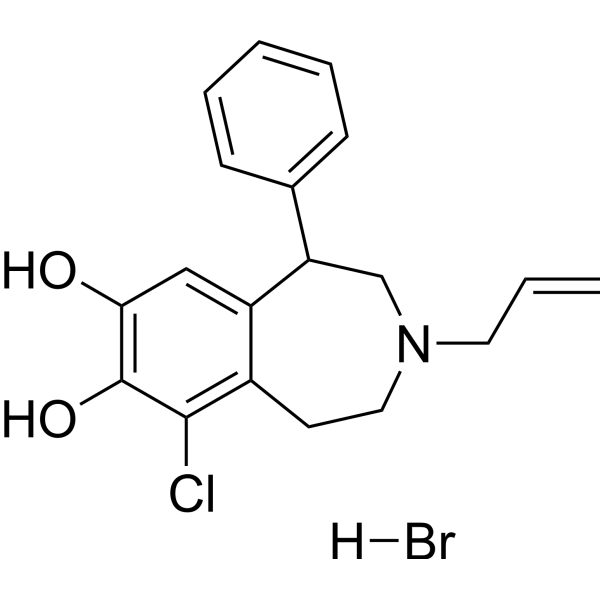
    SKF-82958 hydrobromide
    4 Publications Verification

    (±)-SKF-82958 hydrobromide; Chloro-APB hydrobromide

    Dopamine Receptor Neurological Disease
    SKF-82958 ((±)-SKF 82958) hydrobromide is a dopamine D1 receptor full agonist (K0.5=4 nM), displays selective for D1 over D2 receptors (K0.5=73 nM). SKF-82958 hydrobromide induces dopamine D1 receptor-dependent adenylate cyclase activity in rat striatal membranes (EC50=491 nM) .
    SKF-82958 hydrobromide
  • HY-108254

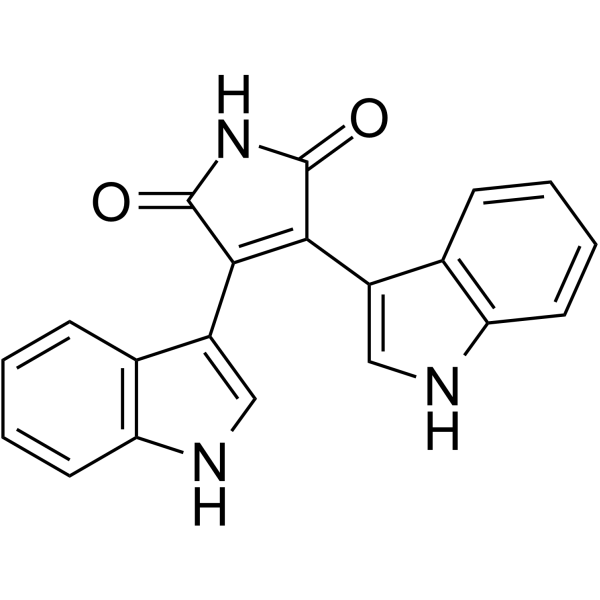
    Arcyriarubin A

    PKC CMV Infection
    Bisindolylmaleimide IV (Arcyriarubin A) is a potent protein kinase C (PKC) inhibitor, with IC50s ranging from 0.1 to 0.55 μM. Bisindolylmaleimide IV also inhibits PKA (IC50=3.1-11.8μM) . Bisindolylmaleimide IV is a potent, selective inhibitor of human cytomegalovirus (HCMV) replication in cell culture with an IC50 of 0.2 μM .
    Bisindolylmaleimide IV
  • HY-112052
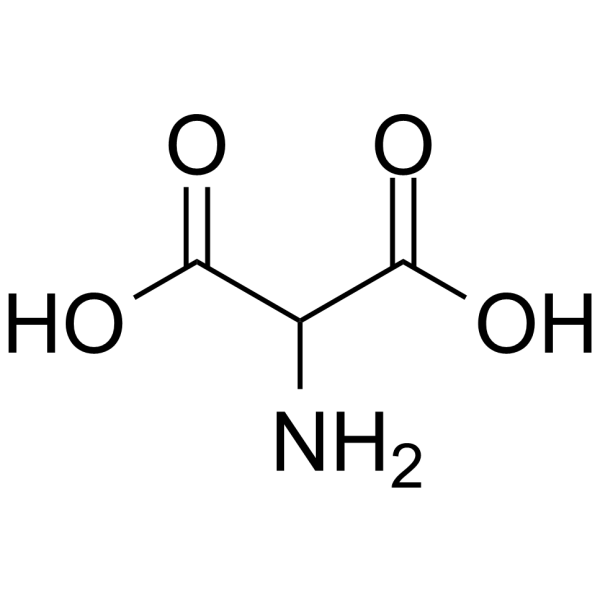
    Aminomalonic acid
    1 Publications Verification

    Endogenous Metabolite Cancer
    Aminomalonic acid is an amino endogenous metabolite, acts as a strong inhibitor of L-asparagine synthetase from Leukemia 5178Y/AR (Ki= 0.0023 M) and mouse pancreas (Ki= 0.0015 M) in vitro. Aminomalonic acid is a potential biomarker to discriminate between different stages of melanoma metastasis .
    Aminomalonic acid
  • HY-17549

    CRL 40028

    Adrenergic Receptor Neurological Disease
    Adrafinil (CRL 40028) is an orally active vigilance promoting agent. Adrafinil enhances central noradrenergic transmission, improves spontaneous activity, exploratory behavior, discriminative learning ability and response motivation, but impairs visuospatial working memory. Adrafinil antagonizes Prazosin (HY-B0193)-induced hypoactivity and hypothermia, exerts anticonvulsant effects, and induces sustained enhancement of high-frequency electrocortical activity. Adrafinil can be used for research on decreased alertness and specific cognitive deficits .
    Adrafinil
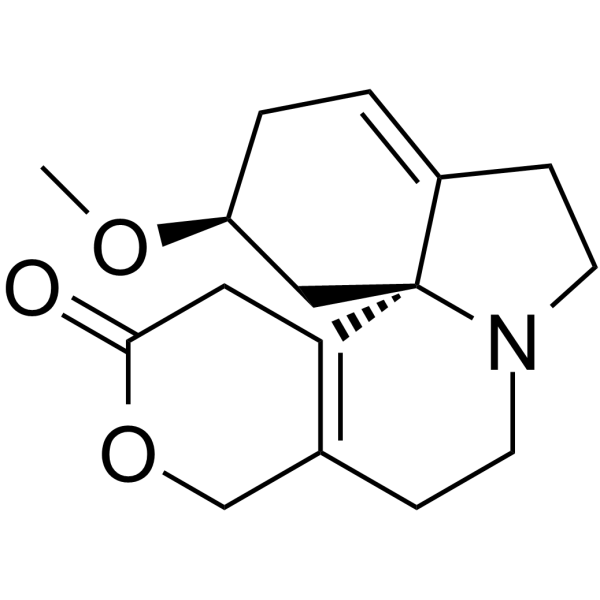
  • HY-N10497

    nAChR Neurological Disease
    Dihydro-β-erythroidine is a a competitive nicotinic receptor antagonist. Dihydro-β-erythroidine blocks the discriminative stimulus properties of nicotine. Dihydro-β-erythroidine inhibits the anxiolytic effect of nicotine induced .
    Dihydro-β-erythroidine
  • HY-10435

    (±)-SKF-82958; Chloro-APB

    Dopamine Receptor Neurological Disease
    SKF-82958 ((±)-SKF 82958) is a dopamine D1 receptor full agonist (K0.5=4 nM), displays selective for D1 over D2 receptors (K0.5=73 nM). SKF-82958 induces dopamine D1 receptor-dependent adenylate cyclase activity in rat striatal membranes (EC50=491 nM) .
    SKF-82958
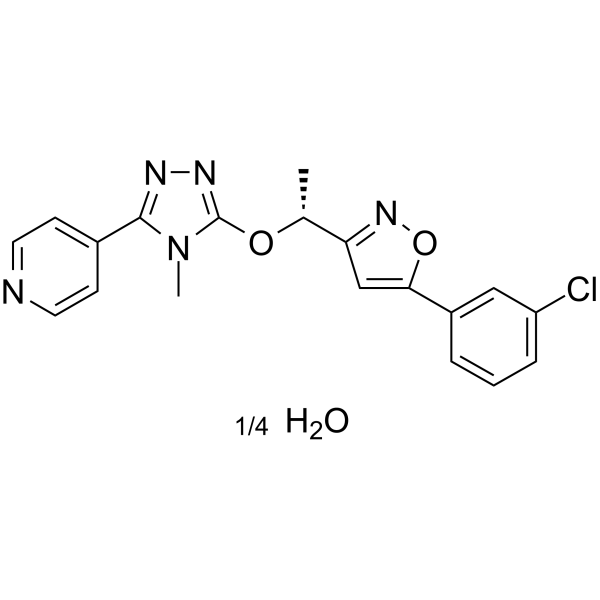
  • HY-110255
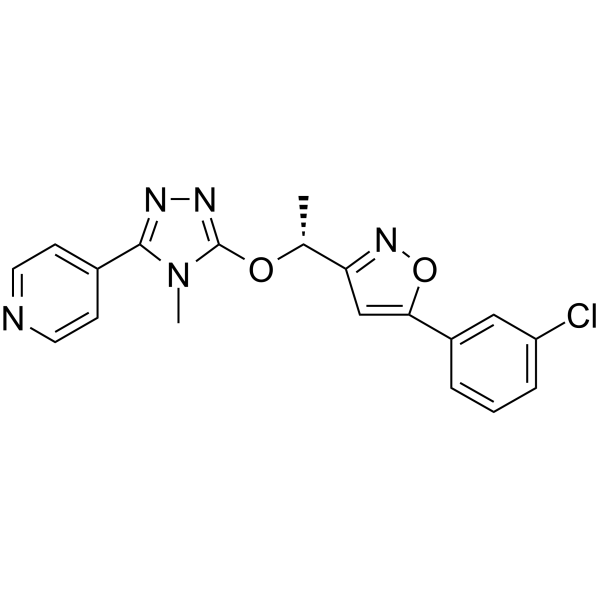
    AZD 2066
    1 Publications Verification

    mGluR Calcium Channel Trk Receptor Neurological Disease
    AZD-2066 is a selective, orally active and blood-brain barrier-permeating mGluR5 antagonist. AZD 2066 activates the BDNF/trkB signaling pathway. AZD 2066 can be used in the research of neuropathic pain, major depressive disorder and gastroesophageal reflux disease .
    AZD 2066
  • HY-165527

    Dopamine Receptor 5-HT Receptor Neurological Disease
    S18327 is a multi-target antipsychotic agent. S18327 exerts its efficacy by acting on multiple neurotransmitter systems in the brain, and it has antagonistic effects on dopamine receptors (particularly the D2 receptor) and 5-hydroxytryptamine 2A receptors (5-HT2A receptor). S18327 can counteract excessive dopamine activity and hypo-function of glutamate. S18327 exhibits a multi-parameter pharmacological profile that is highly similar to that of Clozapine (HY-14539). S18327 can produce the same discriminative stimulus as Clozapine, improve cognitive filtering deficits associated with schizophrenia, and display anxiolytic properties. S18327 has relatively weak affinity for histaminergic receptors and muscarinic receptors, which avoids the side effects of Clozapine .
    S18327
  • HY-120792

    mAChR Others
    DAU 5884 is a muscarinic receptor antagonist with activity that discriminates between different muscarinic receptor subtypes. DAU 5884 discriminates between M4 and M2 receptor sites and is a highly potent M1-selective antagonist with specific activity at different muscarinic receptors characterized by radioligand binding studies and functional assays.
    DAU 5884
  • HY-B1573A

    AY-23,028; dl-Butaclamol hydrochloride

    Adrenergic Receptor Dopamine Receptor Neurological Disease
    (±)-Butaclamol hydrochloride (AY-23,028) is the antagonist for adrenergic receptor and dopamine receptor. (±)-Butaclamol hydrochloride antagonizes amphetamine or Apomorphine (HY-12723)-induced stereotyped behaviors and emesis, inhibits discriminative avoidance behavior, and induces catalepsy in rats models .
    (±)-Butaclamol hydrochloride
  • HY-10435AR

    (±)-SKF-82958 hydrobromide (Standard); Chloro-APB hydrobromide (Standard)

    Reference Standards Dopamine Receptor Neurological Disease
    SKF-82958 (hydrobromide) (Standard) is the analytical standard of SKF-82958 (hydrobromide). This product is intended for research and analytical applications. SKF-82958 ((±)-SKF 82958) hydrobromide is a dopamine D1 receptor full agonist (K0.5=4 nM), displays selective for D1 over D2 receptors (K0.5=73 nM). SKF-82958 hydrobromide induces dopamine D1 receptor-dependent adenylate cyclase activity in rat striatal membranes (EC50=491 nM) .
    SKF-82958 hydrobromide (Standard)
  • HY-108254R

    Arcyriarubin A (Standard)

    PKC CMV Reference Standards Infection
    Bisindolylmaleimide IV (Standard) is the analytical standard of Bisindolylmaleimide IV. This product is intended for research and analytical applications. Bisindolylmaleimide IV (Arcyriarubin A) is a potent protein kinase C (PKC) inhibitor, with IC50s ranging from 0.1 to 0.55 μM. Bisindolylmaleimide IV also inhibits PKA (IC50=3.1-11.8μM) . Bisindolylmaleimide IV is a potent, selective inhibitor of human cytomegalovirus (HCMV) replication in cell culture with an IC50 of 0.2 μM .
    Bisindolylmaleimide IV (Standard)
  • HY-112052R

    Reference Standards Endogenous Metabolite Cancer
    Aminomalonic acid (Standard) is the analytical standard of Aminomalonic acid (HY-112052). This product is intended for research and analytical applications. Aminomalonic acid is an amino endogenous metabolite, acts as a strong inhibitor of L-asparagine synthetase from Leukemia 5178Y/AR (Ki= 0.0023 M) and mouse pancreas (Ki= 0.0015 M) in vitro. Aminomalonic acid is a potential biomarker to discriminate between different stages of melanoma metastasis .
    Aminomalonic acid (Standard)
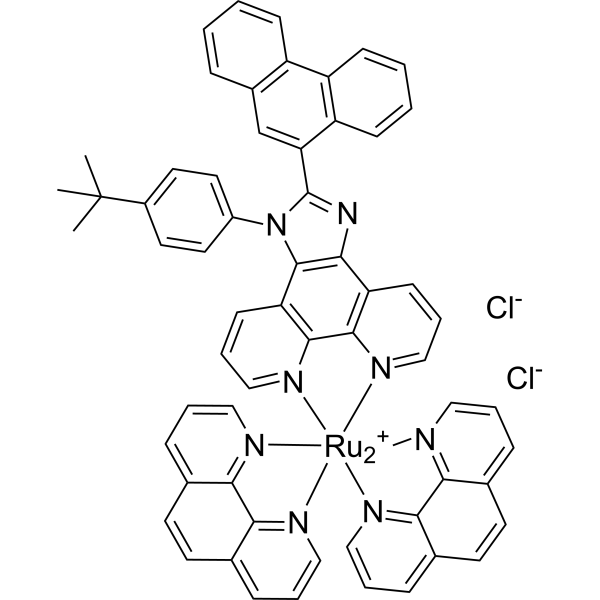
  • HY-149801A

    Bacterial Infection
    Antibacterial agent 140 chloride is a promising antibacterial agent. Antibacterial agent 140 chloride is also the first Ru-based AIEgen?photosensitizer?for simultaneous dual applications of?Gram-positive bacteria (G+)?detection. Antibacterial agent 140 chloride uniquely selective discriminates and efficient exterminates Gram-positive bacteria (G+)?from other bacteria due to its interaction with?lipoteichoic acids?(LTA). Antibacterial agent 140 chloride ?also possessed robust?antibacterial activity?for?G+ under?light irradiation .
    Antibacterial agent 140 chloride
  • HY-110255A

    mGluR Calcium Channel Trk Receptor Neurological Disease
    AZD-2066 hydrate is a selective, orally active and blood-brain barrier-permeating mGluR5 antagonist. AZD 2066 hydrate activates the BDNF/trkB signaling pathway. AZD 2066 hydrate can be used in the research of neuropathic pain, major depressive disorder and gastroesophageal reflux disease .
    AZD 2066 hydrate
  • HY-110255B

    mGluR Calcium Channel Trk Receptor Neurological Disease
    AZD-2066 hydrochloride is a selective, orally active and blood-brain barrier-permeating mGluR5 antagonist. AZD 2066 hydrochloride activates the BDNF/trkB signaling pathway. AZD 2066 hydrochloride can be used in the research of neuropathic pain, major depressive disorder and gastroesophageal reflux disease .
    AZD-2066 hydrochloride
  • HY-W680886

    Monoamine Transporter Serotonin Transporter Dopamine Transporter 5-HT Receptor Neurological Disease
    6-APDB is a class of monoamine neurotransmitter releaser and Monoamine Transporter modulator that exerts selective effects on human monoamine transporters and acts as a partial agonist at 5-HT2 family receptors. For NET, 6-APDB has an IC50 of 0.56 μM and a Ki of 18 μM; for SERT, it has an IC50 of 2.3 μM and a Ki of 23 μM; for DAT, it has an IC50 of 33 μM and a Ki of >30 μM, and affinity for rat and mouse TAAR1, with Ki values of 1.0 μM and 0.21 μM, respectively. 6-APDB inhibits norepinephrine and 5-HT reuptake, mediates the release of three types of monoamine neurotransmitters, shows a dose-dependent biphasic locomotor effect in mice, and fully substitutes the discriminative stimulus effect of MDMA. 6-APDB shows no significant cytotoxicity at high concentrations, and possesses empathogenic psychoactivity, potential hallucinogenic effects, and behavioral effects associated with intermittent abuse .
    6-APDB

Inquiry Online

Your information is safe with us. * Required Fields.

Salutation


Country or Region *

Applicant Name *


Organization Name *

Department *


Email Address *


Product Name *

Cat. No.


Requested quantity *

Phone Number *


Remarks

Inquiry Online

Inquiry Information

Product Name:
Cat. No.:
Quantity:
MCE Japan Authorized Agent:

