
9 Results for "

epithelial hyperplasia

" in MedChemExpress (MCE) Product Catalog:
Products (9)

9 Results for "epithelial hyperplasia" in MCE Product Catalog:

6
6 Cited Publications
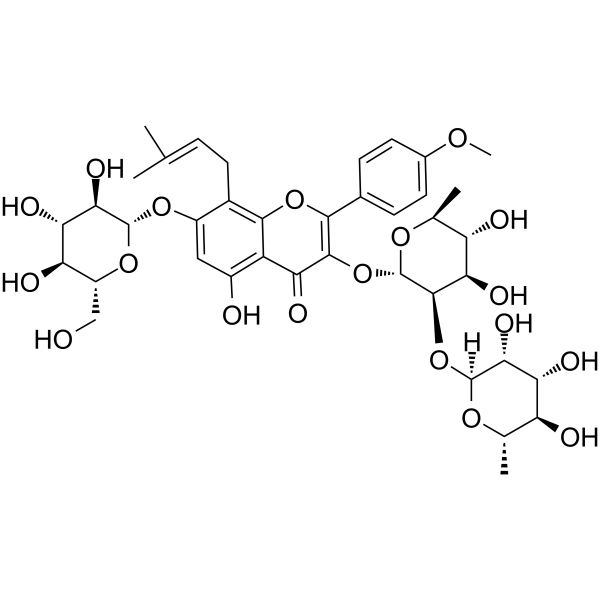
Cat. No.: HY-N0260
CAS No.: 110642-44-9
Synonyms: Epimedin-C; Baohuoside-VI
Epmedin C (Epimedin-C; Baohuoside-VI) is an orally active anti-inflammatory agent and immunomodulator that binds to multiple key proteins including UCP1, Caspase-1, CDK2 and Keap1. Epmedin C inhibits epithelial cell proliferation by disrupting the complex function of CDK2/Cyclin E. Epmedin C also upregulates Nrf2 expression, reduces ROS levels and inhibits pro-inflammatory cytokine secretion, thereby effectively restoring antibody production and alleviating tissue damage. Epmedin C has good safety with no hepatotoxicity or skin sensitization, and it has been used in studies on diseases such as obesity, Deoxynivalenol (HY-N6684)-induced immunotoxicity and mammary hyperplasia .
loading...
    loading...
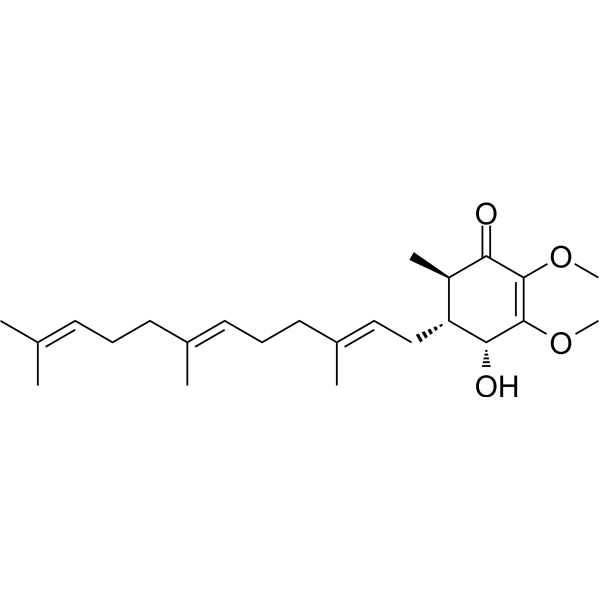
Cat. No.: HY-19893
CAS No.: 1010081-09-0
Synonyms: (+)-Antroquinonol
Target:  

Keap1-Nrf2

Research Areas:  

Inflammation/Immunology Cancer

Antroquinonol ((+)-Antroquinonol), a ubiquinone derivative from the mushroom Antrodia camphorata, has hepatoprotective, anti-inflammatory, and anti-cancer effects . Antroquinonol can be used for the research of colon cancer . Antroquinonol reduces oxidative stress by enhancing the Nrf2 signaling pathway and inhibits inflammation and sclerosis in focal segmental glomerulosclerosis mice .
loading...
    loading...
Cat. No.: HY-W250121
CAS No.: 9000-65-1
Tragacanth gum is an orally active anionic composite polysaccharide and multifunctional biomaterial. Tragacanth gum exhibits biocompatibility, mucoadhesion and renoprotective effects, and effectively promotes wound closure and tissue healing. Tragacanth gum can be isolated from Astragalus gummifer. Tragacanth gum acts as an emulsifier and drug delivery carrier, and is also widely used in fields such as 3D scaffolds, tissue engineering and green nanoparticle preparation. High doses of Tragacanth gum may induce reversible forestomach squamous epithelial hyperplasia in mice, but show no mutagenic or carcinogenic activity. Tragacanth gum is commonly used in studies related to diseases including systemic candidiasis, rheumatoid arthritis and osteosarcoma .
loading...
    loading...
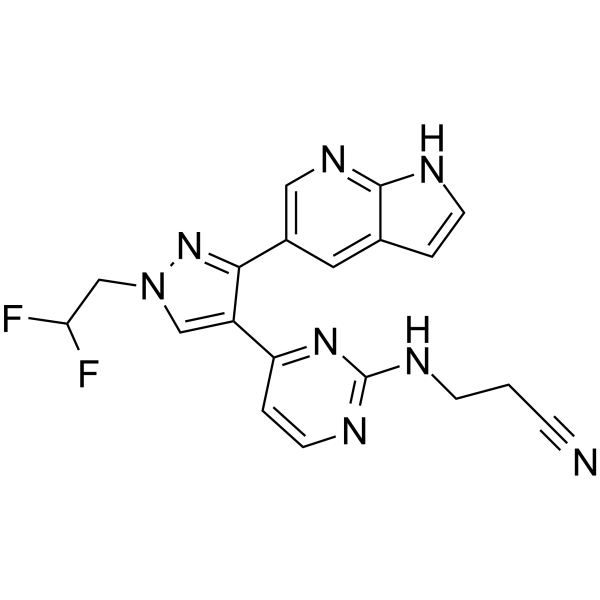
Cat. No.: HY-13810
CAS No.: 1111636-35-1
Target:  

Raf

Research Areas:  

Cancer

PF-04880594 is a potent and selective RAF inhibitor. PF-04880594 inhibits both wild-type and mutant BRAF and CRAF. PF-04880594 shows antitumor activity .
loading...
    loading...
Cat. No.: HY-N0260R
CAS No.: 110642-44-9
Synonyms: Epimedin-C (Standard); Baohuoside-VI (Standard)
Epmedin C (Standard) is the analytical standard of Epmedin C. This product is intended for research and analytical applications. Epmedin C (Epimedin-C; Baohuoside-VI) is an orally active anti-inflammatory agent and immunomodulator that binds to multiple key proteins including UCP1, Caspase-1, CDK2 and Keap1. Epmedin C inhibits epithelial cell proliferation by disrupting the complex function of CDK2/Cyclin E. Epmedin C also upregulates Nrf2 expression, reduces ROS levels and inhibits pro-inflammatory cytokine secretion, thereby effectively restoring antibody production and alleviating tissue damage. Epmedin C has good safety with no hepatotoxicity or skin sensitization, and it has been used in studies on diseases such as obesity, Deoxynivalenol (HY-N6684)-induced immunotoxicity and mammary hyperplasia .
loading...
    loading...
Cat. No.: HY-184870
CAS No.: 31621-87-1
Target:  

Others

Research Areas:  

Inflammation/Immunology

Polydioxanone is a colorless, crystalline semi-crystalline thermoplastic poly (ether-ester) bioabsorbable polymer. Polydioxanone serves as a hemostatic agent, biodegradable agent, degradant, lumen patency maintainer, as well as a temporary inducer of tracheal tissue injury and inflammation. Polydioxanone controls bone bleeding in biocompatible matrices, degrades via random hydrolytic scission and end-chain scission, with accelerated degradation occurring at pH <1.67, maintains tracheal lumen patency, and induces reversible tracheal epithelial necrosis, inflammation, fibrous tissue hyperplasia, and goblet cell hyperplasia. Polydioxanone can be used in research on bone bleeding, non-malignant tracheal stenosis, tracheobronchial stenosis, tracheobronchomalacia, and airway obstruction associated with vascular compression .
loading...
    loading...
Cat. No.: HY-184897
CAS No.: 312724-83-7
Target:  

Chloride Channel NF-κB

Research Areas:  

Inflammation/Immunology

YS-01 is an inhibitor of pendrin (SLC26A4) with pulmonary protective activity. YS-01 inhibits pendrin-mediated anion exchange activity, reduces pendrin expression, and suppresses the activation of NF-κB and the production of proinflammatory cytokines. YS-01 alleviates lipopolysaccharide-induced and ventilator-induced lung injury. YS-01 attenuates ovalbumin-induced airway hyperresponsiveness, inflammatory infiltration, epithelial thickening and goblet cell hyperplasia, and reduces eosinophil and neutrophil counts. YS-01 decreases MUC5AC transcription levels induced by IL-4, reverses the reduction of airway surface liquid volume, and inhibits the increase of apical SCN concentration in epithelial cells. YS-01 can be used in studies related to lung injury and allergic asthma .
loading...
    loading...
Cat. No.: HY-W133921
CAS No.: 25265-71-8
Research Areas:  

Others

Dipropylene glycol is a mixture of three structural isomers (2-(2-hydroxypropoxy)-1-propanol, 1,1'-oxybis (2-propanol), and 2,2'-oxybis (1-propanol)). Dipropylene glycol induces liver and kidney damage as well as reproductive toxicity in rodents. Dipropylene glycol can be used in chemical industry-related research, such as for plasticizers, polyester resins, cosmetics, fragrances, polyurethane polyols, and alkyd resins .
loading...
    loading...
Cat. No.: HY-106391
CAS No.: 33765-68-3
Synonyms: TSAA-291
Target:  

Androgen Receptor

Research Areas:  

Endocrinology

Oxendolone (TSAA-291) is a steroidal antiandrogen with partial agonist properties, exhibiting a Ki value of 1.4 nM for the androgen receptor. Oxendolone exerts tissue-specific androgen receptor activity, induces unique androgen receptor conformational changes, and drives differential cofactor recruitment. Oxendolone is recruited to the androgen receptor in a PIAS1-dependent manner. Oxendolone increases levator ani muscle weight in castrated mice. Oxendolone can be used for research on benign prostatic hyperplasia .
loading...
    loading...

