
1. Search Result
Search Result
Results for "

extension

" in MedChemExpress (MCE) Product Catalog:

58

Inhibitors & Agonists

1

Screening Libraries

3

Fluorescent Dyes

8

Biochemical Assay Reagents

7

Peptides

7

Natural
Products

1

Recombinant Proteins

2

Isotope-Labeled Compounds

3

Antibodies

1

Click Chemistry

9

Oligonucleotides

Cat. No. Product Name Target Research Areas Chemical Structure
  • HY-A0162
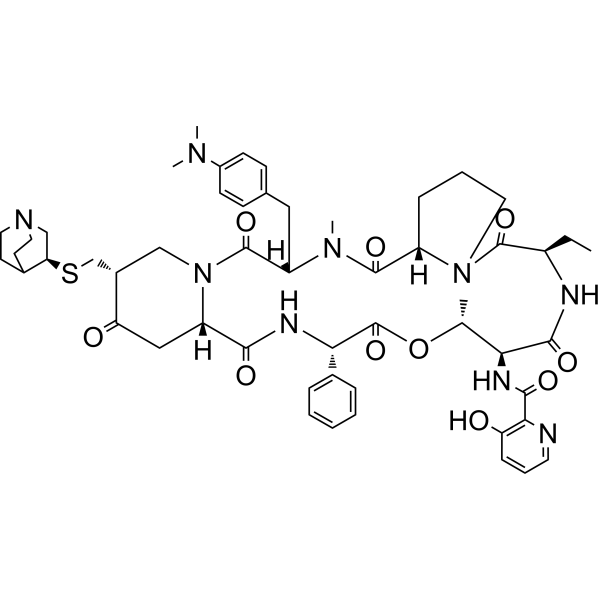
    Quinupristin
    1 Publications Verification

    Bacterial Infection
    Quinupristin is a streptogramin antibiotic. Quinupristin blocks peptide bond synthesis to prevent the extension of polypeptide chains and promote the detachment of incomplete protein chains in the bacterial ribosomal subunits .
    Quinupristin
  • HY-N8804

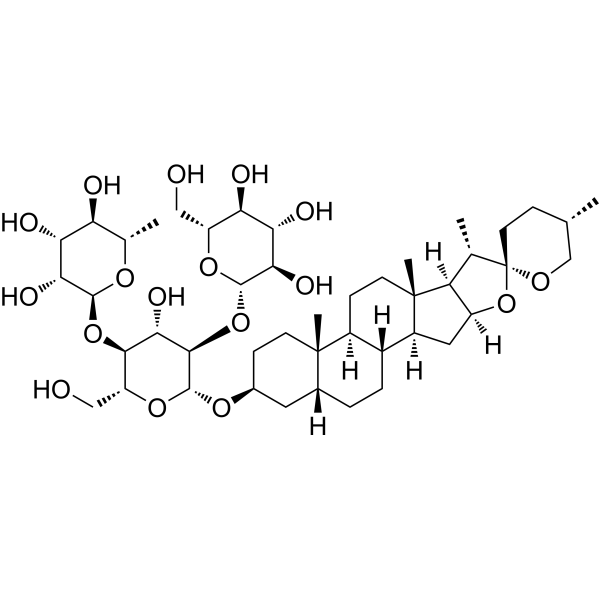
    Asparanin B

    Reactive Oxygen Species (ROS) Neurological Disease Cancer
    Shatavarin IV is a steroidal saponin, that can be isolated from the roots of Asparagus racemosus (Liliaceae). Shatavarin IV shows anticancer activity. Shatavarin IV elicits lifespan extension and alleviates Parkinsonism in Caenorhabditis elegans .
    Shatavarin IV
  • HY-D0199

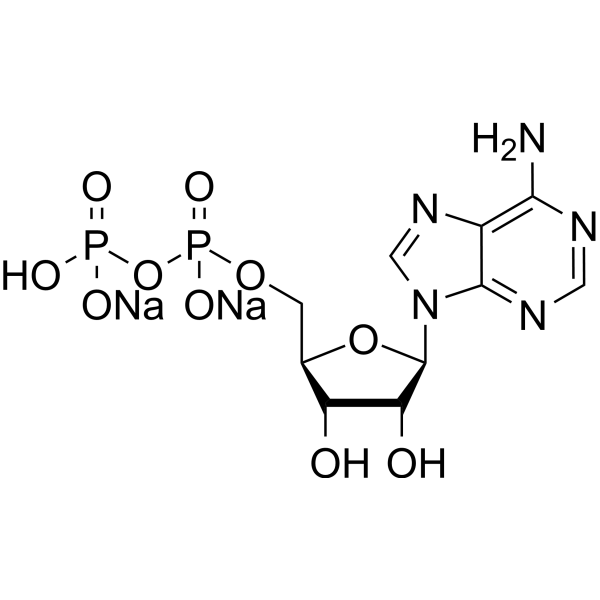
    Adenosine diphosphate disodium; ADP disodium

    Endogenous Metabolite Cardiovascular Disease
    Adenosine 5'-diphosphate disodium is a nucleoside diphosphate. Adenosine 5'-diphosphate disodium is the product of ATP dephosphorylation by ATPases. Adenosine 5'-diphosphate disodium is a platelet aggregation agent for hemostasis and the development and extension of arterial thrombosis .
    Adenosine 5'-diphosphate disodium
  • HY-W406070

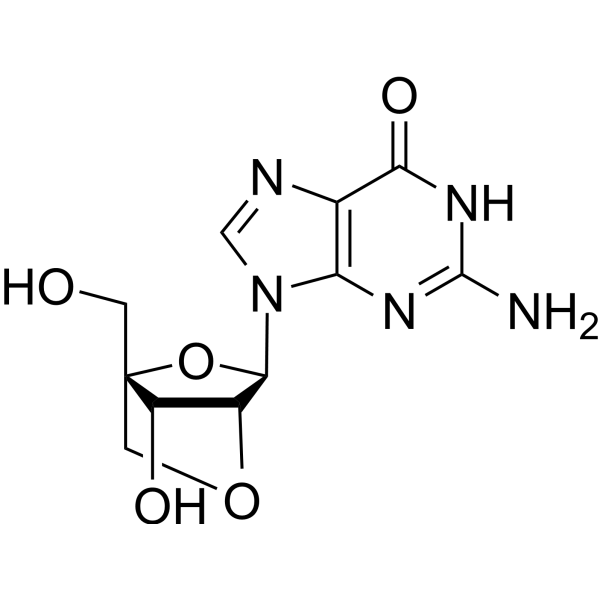
    LNA-G

    Nucleoside Antimetabolite/Analog DNA/RNA Synthesis Others
    2′-O,4′-C-Methyleneguanosine (LNA-G) is a reverse guanine analog, where LNA (locked nucleic acid) is a nucleic acid analog. LNA modification can be widely used in various fields, such as effective binding affinity with complementary sequences and stronger nuclease resistance than natural nucleotides, providing great potential for application in disease diagnosis and research. 2'-O,4'-C-Methyleneguanosine is a substrate for KOD DNA polymerase, which incorporates LNA-G nucleotides into growing DNA strands, including consecutive incorporations , to generate full-length extension products .
    2'-O,4'-C-Methyleneguanosine
  • HY-158712

    Others
    3'-ONH2-dATP (sodium) solution (100 mM) is a 3'-O-blocked reversible terminator deoxynucleotide triphosphate.3'-ONH2-dATP (sodium) solution (100 mM) stops DNA polymerization after single-nucleotide addition to an initiator strand, and its 3'-ONH2 blocking group can be removed to restore a free 3'-OH for subsequent extension.3'-ONH2-dATP (sodium) solution (100 mM) incorporates into an oligonucleotide chain by engineered terminal deoxynucleotidyl transferase from Zonotrichia albicollis to enable template-free, stepwise de novo enzymatic DNA synthesis .
    3'-ONH2-dATP sodium solution (100 mM)
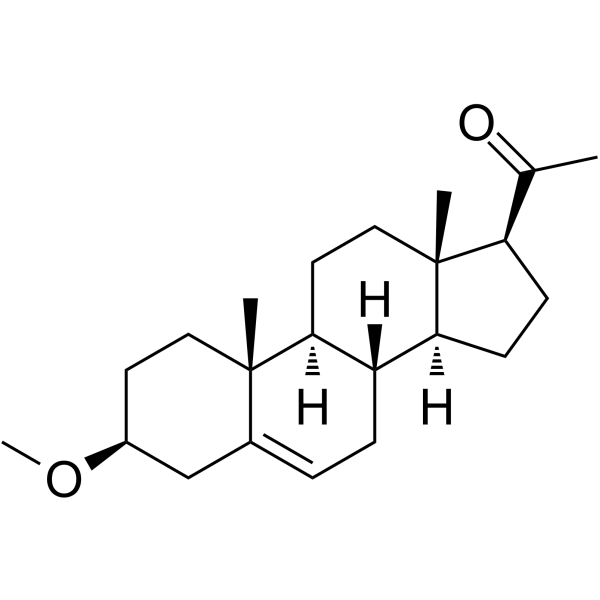
  • HY-107116

    Microtubule/Tubulin Neurological Disease
    MAP4343 is the 3-methylether derivative of Pregnenolone. MAP4343 binds in vitro to microtubule-associated protein 2 (MAP2), stimulates the polymerization of tubulin, enhances the extension of neurites and protects neurons against neurotoxic agents .
    MAP4343
  • HY-D2381

    Fluorescent Dye Others
    AF 488 maleimide is a thiol-reactive dye used to label SH groups of proteins, which can attach the AF 488 fluorophore to cysteine residue-containing proteins and peptides as well as other thiolated molecules. AF 488 maleimide enables real-time visualization of dynamic pilus extension and retraction in live bacterial cells via epifluorescence microscopy (Ex/Em = 470/520 nm) .
    AF 488 maleimide
  • HY-N0307

    Bcl-2 Family NF-κB DNA/RNA Synthesis Apoptosis Cardiovascular Disease Neurological Disease
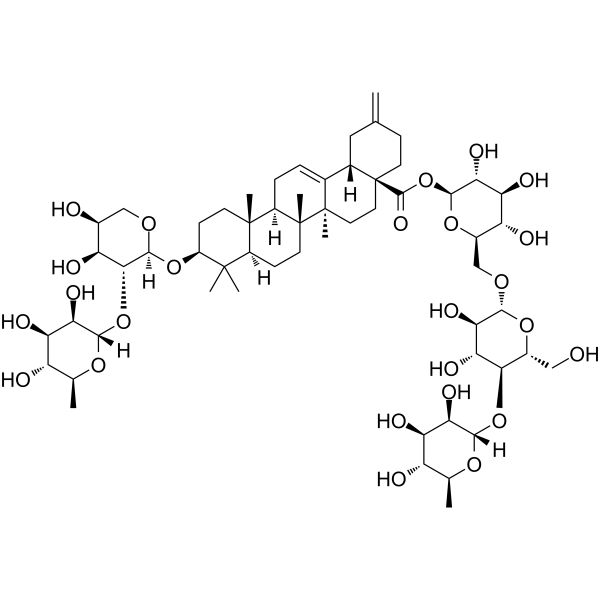
    Ciwujianoside B is an orally active, blood-brain barrier penetrable radioprotective agent and memory enhancer. Ciwujianoside B reduces radiation-induced DNA damage, cell cycle arrest and apoptosis, downregulates NF-κB and the Bax/Bcl-2 ratio, and enhances the proliferative capacity of bone marrow cells. Ciwujianoside B enhances object recognition memory in normal mice and induces dendritic extension in primary cultured cortical neurons. Ciwujianoside B can be used in studies related to hematopoietic system radiation injury and memory enhancement .
    Ciwujianoside B
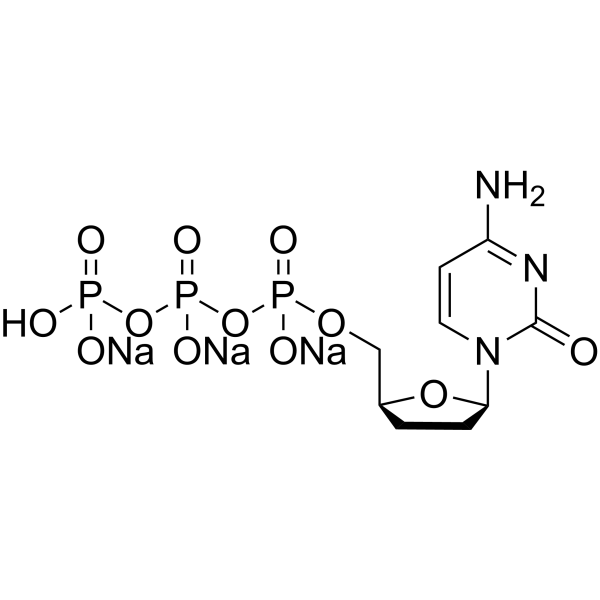
  • HY-137697D

    HIV DNA/RNA Synthesis Nucleoside Antimetabolite/Analog Drug Metabolite HIV Protease Infection
    ddCTP trilithium solution (100 mM) is a chain-terminating dideoxynucleotide. ddCTP trilithium is a type of chain-terminating deoxynucleotide. ddCTP trilithium can be incorporated into the extension primer chain that lacks the 3'-hydroxyl group, thereby terminating primer extension, viral genome replication, and DNA synthesis. ddCTP trilithium can distinguish almost identical RNA through distinguishable extension products in primer extension inhibition experiments. ddCTP trilithium is the active metabolite of Zalcitabine (HY-17392), which can competitively inhibit HIV reverse transcriptase, terminate the synthesis of viral DNA chains, and thereby inhibit HIV replication .
    ddCTP trisodium solution (100 mM)
  • HY-119506
    KL044
    1 Publications Verification

    Cryptochrome Metabolic Disease
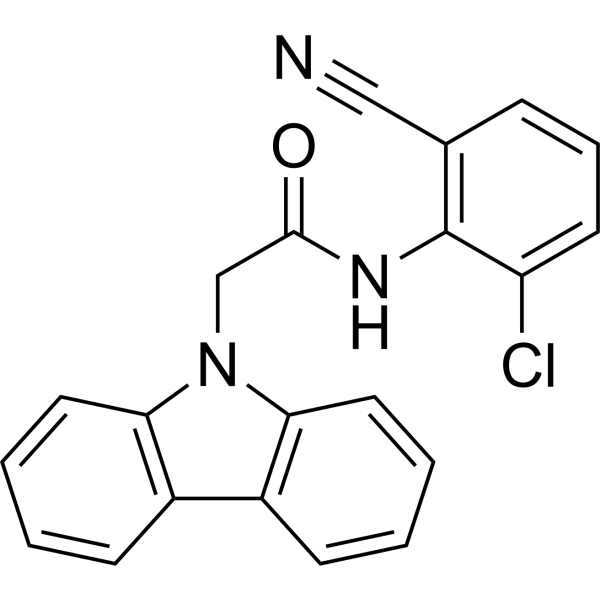
    KL044, a stabilizer of the clock protein cryptochrome (CRY) , is a potent chemical probe with a pEC50 value of 7.32, leading to the extension of the circadian period and repression of Per2 activity .
    KL044
  • HY-N7864

    all-cis-4,7,10,13,16-Docosapentaenoic acid

    Biochemical Assay Reagents Others
    Docosapentaenoic acid (DPA) is a 22-carbon fatty acid found in fish oil. It is a minor component of total serum unsaturated fatty acids in humans, ranging from 0.1% to 1%, and increasing with dietary supplementation. all-cis-4,7,10,13,16-DPA, also known as Austrian acid, is an isomer of DPA. It is an omega-6 fatty acid formed by the extension and desaturation of arachidonic acid. During fatty acid desaturase syndrome, levels of this fatty acid may be reduced, which may affect development. Upregulated hepatic elongate expression of very long fatty acid protein 6 and elevated levels of very long chain fatty acids, including all-cis 4,7,10,13,16-DPA, are characteristic of nonalcoholic steatohepatitis, a precancerous disease of hepatocellular carcinoma.
    Osbond acid
  • HY-131920A

    Polyuridylic acid potassium

    DNA/RNA Synthesis Others
    Polyuridylic acid potassium is a polynucleotide. In protein synthesis systems based on active mammalian ribosomes, Polyuridylic acid potassium acts as a specific messenger to induce the biosynthesis of polyphenylalanine, with no effect on the incorporation of non-phenylalanine amino acids. Polyuridylic acid potassium serves as a template to promote the non-enzymatic synthesis of oligoadenylates .
    Poly(U) potassium
  • HY-W089353
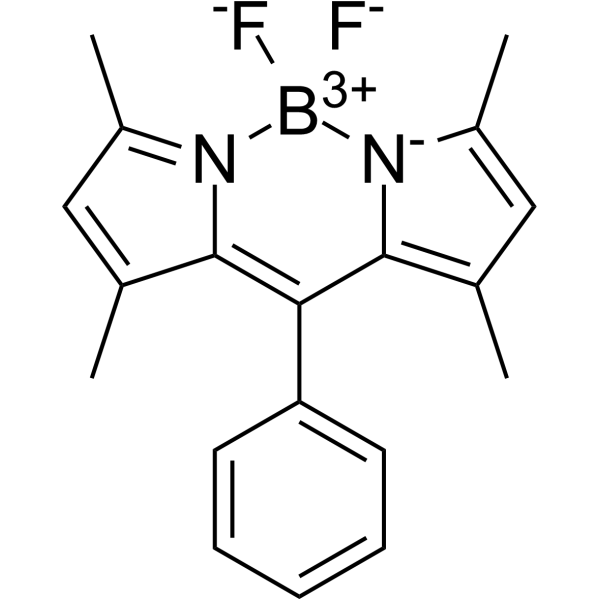
    8-Phenyl-BODIPY 505/515
    1 Publications Verification

    MOFs Fluorescent Dye Others
    8-Phenyl-BODIPY 505/515 is a molecular rotor based on the BODIPY scaffold, specifically used as a microviscosity probe. The working principle of 8-Phenyl-BODIPY 505/515 is based on the restriction of molecular motion by viscosity: in a high-viscosity environment, the rotational freedom of its chemical bonds is inhibited, which leads to a significant extension of fluorescence lifetime. This property makes 8-Phenyl-BODIPY 505/515 an effective tool for monitoring changes in the viscosity of intracellular microenvironments via fluorescence lifetime imaging (FLIM) technology .
    8-Phenyl-BODIPY 505/515
  • HY-137697

    Nucleoside Antimetabolite/Analog DNA/RNA Synthesis HIV Protease HIV Drug Metabolite Infection
    ddCTP is a type of chain-terminating deoxynucleotide. ddCTP can be incorporated into the extension primer chain that lacks the 3'-hydroxyl group, thereby terminating primer extension, viral genome replication, and DNA synthesis. ddCTP can distinguish almost identical RNA through distinguishable extension products in primer extension inhibition experiments. ddCTP is the active metabolite of Zalcitabine (HY-17392), which can competitively inhibit HIV reverse transcriptase, terminate the synthesis of viral DNA chains, and thereby inhibit HIV replication .
    ddCTP
  • HY-13247

    ANA598

    DNA/RNA Synthesis HCV SARS-CoV Infection
    Setrobuvir (ANA598) is an orally active non-nucleosidic HCV NS5B polymerase inhibitor. ANA-598 inhibits both de novo RNA synthesis and primer extension, with IC50s between 4 and 5 nM. Setrobuvir also shows excellent binding affinity to SARS-CoV-2 RdRp and induces RdRp inhibition .
    Setrobuvir
  • HY-W128400

    DNA/RNA Synthesis HCV Infection
    3′-Deoxy-3′-fluoroguanosine exhibits antiviral activity against tick-borne encephalitis virus (TBEV), through interaction with NS5B RdRp of HCV, resulting in suppression of viral RNA synthesis by disruption of further extension of the replicating viral RNA .
    3′-Deoxy-3′-fluoroguanosine
  • HY-B1740

    Microtubule/Tubulin Neurological Disease
    Pregnenolone acetate (compound #43), a nonmetabolized Pregnenolone (HY-B0151) analog, can promote neurite extension and induce a change in growth cone morphology in primary cultures of cerebellar granule neurons. Pregnenolone acetate, a neurosteroid, increases microtubule polymerization. Pregnenolone acetate has the potential for neurodevelopmental diseases research .
    Pregnenolone acetate
  • HY-D0199R

    Adenosine diphosphate disodium (Standard); ADP disodium (Standard)

    Endogenous Metabolite Reference Standards Cardiovascular Disease
    Adenosine 5'-diphosphate (disodium) (Standard) is the analytical standard of Adenosine 5'-diphosphate (disodium). This product is intended for research and analytical applications. Adenosine 5'-diphosphate disodium is a nucleoside diphosphate. Adenosine 5'-diphosphate disodium is the product of ATP dephosphorylation by ATPases. Adenosine 5'-diphosphate disodium is a platelet aggregation agent for hemostasis and the development and extension of arterial thrombosis .
    Adenosine 5'-diphosphate disodium (Standard)
  • HY-W048513

    DNA/RNA Synthesis Cancer
    7-Deaza-2'-deoxyadenosine is an isosteric dATP analog of 2'-deoxyadenosine. 7-Deaza-2'-deoxyadenosine is recognized by various DNA polymerases and incorporated into DNA strands as a substrate. 7-Deaza-2'-deoxyadenosine undergoes a bioorthogonal inverse electron demand Diels-Alder reaction with tetrazine-modified molecules, enabling site-specific labeling of DNA, surface antibody immobilization and intracellular fluorescent labeling. 7-Deaza-2'-deoxyadenosine reduces the DNA curvature of d(A6)·d(T6) fragments and the stability of DNA/RNA double helices, and leads to decreased antisense activity against SV40 T Antigen. 7-Deaza-2'-deoxyadenosine finds application in the research field of SV40 T Antigen-related cancers .
    7-Deaza-2'-deoxyadenosine
  • HY-124089

    Cannabinoid Receptor Metabolic Disease
    Eicosapentaenoyl ethanolamide, an omega-3 fatty acid, is one of N-acylethanolamines (NAEs). Eicosapentaenoyl ethanolamide is cannabinoid CB1/CB2 receptor agonist. Eicosapentaenoyl ethanolamide acts as a metabolic signal. Eicosapentaenoyl ethanolamide inhibits dietary restriction (DR)-induced lifespan extension in wild type animals and suppresses lifespan extension in a TOR pathway mutant .
    Eicosapentaenoyl ethanolamide
  • HY-151682

    Amino Acid Derivatives Others
    H-L-Lys(Norbornene-methoxycarbonyl)-OH is a Norbornene (HY-W013021)-derivatized lysine that can be click-functionalized. H-L-Lys(Norbornene-methoxycarbonyl)-OH can be used for the mild and selective modification of proteins in a copper-free click reaction .
    H-L-Lys(Norbornene-methoxycarbonyl)-OH
  • HY-W048492

    7-Deaza-7-Iodo-2'-deoxyguanosine

    DNA/RNA Synthesis Nucleoside Antimetabolite/Analog Others
    7-Iodo-7-deaza-2'-deoxyguanosine (7-Deaza-7-Iodo-2'-deoxyguanosine) is a modified deoxyguanosine nucleoside. 7-Iodo-7-deaza-2'-deoxyguanosine is used in DNA synthesis and sequencing reactions .
    7-Iodo-7-deaza-2'-deoxyguanosine
  • HY-P4582

    Suc-FAAF-pNA

    Ser/Thr Protease Others
    Suc-Phe-Ala-Ala-Phe-pNA (Suc-FAAF-pNA) is a chromogenic polypeptide substrate that can be used for the quantitative activity assay of intracellular subtilisin (ISP) and neutral metalloprotease (NPS) derived from Saccharomonospora canescens. Suc-Phe-Ala-Ala-Phe-pNA is hydrolyzed by the catalytic triad of mature proteases to release the chromophore pNA. Suc-Phe-Ala-Ala-Phe-pNA is applicable to enzymological studies .
    Suc-Phe-Ala-Ala-Phe-pNA
  • HY-137697B

    HIV DNA/RNA Synthesis Nucleoside Antimetabolite/Analog Drug Metabolite HIV Protease Infection
    ddCTP trilithium is a type of chain-terminating deoxynucleotide. ddCTP trilithium can be incorporated into the extension primer chain that lacks the 3'-hydroxyl group, thereby terminating primer extension, viral genome replication, and DNA synthesis. ddCTP trilithium can distinguish almost identical RNA through distinguishable extension products in primer extension inhibition experiments. ddCTP trilithium is the active metabolite of Zalcitabine (HY-17392), which can competitively inhibit HIV reverse transcriptase, terminate the synthesis of viral DNA chains, and thereby inhibit HIV replication .
    ddCTP trilithium
  • HY-116603

    5-HT Receptor Others
    SB-236057 is an inverse agonist of the 5-HT1B receptor that exhibits strong skeletal teratogenicity in rodents and rabbits. SB-236057 affects gene expression during embryonic development through interference with the Notch signaling pathway and interaction with r-esp1. SB-236057 induces somatic patterning and tail extension defects in rat embryos during early organogenesis .
    SB-236057
  • HY-137695

    Nucleoside Antimetabolite/Analog Others
    ddGTPαS, a nucleotide analog, can be used for chain extension in PCR assays .
    ddGTPαS
  • HY-137911

    Bacterial Infection Cancer
    Sparsomycin is a metabolite of the bacterium Streptomyces sparsogenes. Sparsomycin inhibits protein synthesis in both eukaryotic cells and bacteria. Sparsomycin inhibits the translation extension of ribosome PTC .
    Sparsomycin
  • HY-155869

    5-Fluoro-2′-deoxycytidine 5′-triphosphate

    DNA/RNA Synthesis Others
    5-fluoro-dCTP is a fluorinated pyrimidine dNTP that can be used as a substrate for the incorporation of fluorine modification into specific DNA sequences by primer extension (PEX) catalyzed by Pwo polymerase .
    5-fluoro-dCTP
  • HY-P10828

    Virus Protease Infection Inflammation/Immunology
    MAPI is a polypeptide irreversible 3C cysteine protease (SV3CP) inhibitor. MAPI inhibits SV3CP by covalently binding its C-terminal Michael-acceptor extension to the active site thiol of SV3CP Cys 139. MAPI is promising for research of noroviruses infection .
    MAPI
  • HY-138263

    Biochemical Assay Reagents Others
    Allyl 2-acetamido-2-deoxy-β-D-glucopyranoside is a NodC substrate and chitooligosaccharide chain initiator. Allyl 2-acetamido-2-deoxy-β-D-glucopyranoside acts as an initial acceptor to enable the extension of chitooligosaccharide chains and the synthesis of allyl penta-N-acetylchitopentaose .
    Allyl 2-acetamido-2-deoxy-β-D-glucopyranoside
  • HY-172333

    Fluorescent Dye Others
    HCy-Lyso is a lysosome-targeting turn-on fluorescent probe based on hydrocyanine. HCy-Lyso integrates a hydrocyanine moiety for selective recognition of hydroxyl radicals (•OH) and a morpholine group for lysosome targeting. Upon reacting with •OH, HCy-Lyso undergoes an extension of its π-conjugation system, producing a strong fluorescence signal at 598 nm when excited at 510 nm .
    HCy-Lyso
  • HY-131561

    Ara-uridine triphosphate

    DNA/RNA Synthesis Others
    Ara-UTP is a sugar-modified nucleotide triphosphate that deceives RNA polymerases and blocks chain extension.
    Ara-UTP
  • HY-137693

    Nucleoside Antimetabolite/Analog Others
    ddTTPαS is a sulfur-containing nucleoside triphosphate derivative. ddTTPαS can be used for chain extension in PCR assays .
    ddTTPαS
  • HY-137693A

    Nucleoside Antimetabolite/Analog Others
    ddTTPαS tetrasodium is a sulfur-containing nucleoside triphosphate derivative. ddTTPαS tetrasodium can be used for chain extension in PCR assays .
    ddTTPαS tetrasodium
  • HY-124089S

    Isotope-Labeled Compounds Cannabinoid Receptor Metabolic Disease
    Eicosapentaenoyl ethanolamide-d4 is the deuterium labeled Eicosapentaenoyl ethanolamide. Eicosapentaenoyl ethanolamide, an omega-3 fatty acid, is one of N-acylethanolamines (NAEs). Eicosapentaenoyl ethanolamide is cannabinoid CB1/CB2 receptor agonist. Eicosapentaenoyl ethanolamide acts as a metabolic signal. Eicosapentaenoyl ethanolamide inhibits dietary restriction (DR)-induced lifespan extension in wild type animals and suppresses lifespan extension in a TOR pathway mutant .
    Eicosapentaenoyl ethanolamide-d4
  • HY-A0162A

    Bacterial Infection
    Quinupristin mesylate is a streptogramin antibiotic. Quinupristin mesylate blocks peptide bond synthesis to prevent the extension of polypeptide chains and promote the detachment of incomplete protein chains in the bacterial ribosomal subunits .
    Quinupristin mesylate
  • HY-155869A

    5-Fluoro-2′-deoxycytidine 5′-triphosphate sodium

    DNA/RNA Synthesis Others
    5-fluoro-dCTP sodium is a fluorinated pyrimidine dNTP that can be used as a substrate for the incorporation of fluorine modification into specific DNA sequences by primer extension (PEX) catalyzed by Pwo polymerase .
    5-fluoro-dCTP sodium
  • HY-P5637

    Bacterial Infection
    Tur1A is an antimicrobial peptide derived from bottlenose dolphins Tursiops truncates. Tur1A inhibits bacterial protein synthesis by binding to ribosomes and blocking the transition from the initiation stage to the extension stage .
    Tur1A
  • HY-172452

    RSV Infection
    RSV L-protein-6 (Compound 19a) is a respiratory syncytial virus polymerase inhibitor, with an IC50 of 13 nM in SPA primer extensions enzymatic assay. RSV L-protein-6 can inhibit RSV replication in Hela cells .
    RSV L-protein-6
  • HY-147835

    Bacterial Infection
    Antibacterial agent 109 (Compound C-2) is a potent antibacterial agent against both gram-positive and gram negative bacteria, and non-mutagenic. Antibacterial agent 109 inhibits protein synthesis by blocking the extension of new peptide chains .
    Antibacterial agent 109
  • HY-107116S

    Isotope-Labeled Compounds Microtubule/Tubulin Neurological Disease
    MAP4343-d4 is the deuterium labeled MAP4343. MAP4343 is the 3-methylether derivative of Pregnenolone. MAP4343 binds in vitro to microtubule-associated protein 2 (MAP2), stimulates the polymerization of tubulin, enhances the extension of neurites and protects neurons against neurotoxic agents .
    MAP4343-d4
  • HY-W721681

    Amyloid-β Neurological Disease
    Dehydro nicardipine is a dihydropyridine metabolite of Nicardipine (HY-12515) and belongs to the dihydropyridine class of compounds. Dehydro nicardipine can selectively inhibit the aggregation of Aβ monomers, specifically regulate the extension and binding of Aβ soluble aggregates, change the morphology of Aβ aggregates, and inhibit the growth of aggregate length. Dehydro nicardipine can be used in the study of Alzheimer's disease (AD) .
    Dehydro nicardipine
  • HY-P10823

    Amyloid-β Neurological Disease
    RI-OR2, a retro-inverso peptide, is an amyloid-β (Aβ) oligomerization inhibitor. RI-OR2 binds to immobilized β-Amyloid (1-42) (HY-P1363A) monomers and fibrils, with an apparent Kd of 9-12 μM, and also acted as an inhibitor of Aβ(1-42) fibril extension .
    RI-OR2
  • HY-168473

    SARS-CoV DNA/RNA Synthesis Infection
    13-TP is an inhibitor of SARS-CoV-2. 13-TP effectively inhibits the SARS-CoV-2 central replication transcription complex (C-RTC, nsp12-nsp7-nsp82) catalyzed in vitro RNA synthesis. 13-TP completely inhibits the RdRp polymerization activity. 13-TP blocks the full extension of some of the primer RNA .
    13-TP
  • HY-120883

    Others Infection
    Rhizopodin is a new cytostatic compound isolated from the culture fluid of the slime mold Myxococcus stipitatus. Rhizopodin inhibits the growth of various animal cell cultures without killing the cells, with an ID50 value of 12 to 30 ng/ml, depending on the cell line. In particular, fibroblast-like cells show typical morphological changes, with cells becoming larger and forming long branched reticular extensions within hours, and these morphological changes are irreversible. Rhizopodin inhibits bleb formation in K-562 cells, possibly through interaction with protein phosphorylation.
    Rhizopodin
  • HY-N0307R

    Reference Standards Bcl-2 Family NF-κB DNA/RNA Synthesis Apoptosis Cardiovascular Disease Neurological Disease
    Ciwujianoside B (Standard) is the analytical standard of Ciwujianoside B. This product is intended for research and analytical applications. Ciwujianoside B is an orally active, blood-brain barrier penetrable radioprotective agent and memory enhancer. Ciwujianoside B reduces radiation-induced DNA damage, cell cycle arrest and apoptosis, downregulates NF-κB and the Bax/Bcl-2 ratio, and enhances the proliferative capacity of bone marrow cells. Ciwujianoside B enhances object recognition memory in normal mice and induces dendritic extension in primary cultured cortical neurons. Ciwujianoside B can be used in studies related to hematopoietic system radiation injury and memory enhancement.
    Ciwujianoside B (Standard)
  • HY-178016

    Histamine Receptor Neurological Disease
    H3R antagonist 8 is a selective nonimidazole histamine H3 receptor antagonist (IC50 = 0.35 μM). H3R antagonist 8 exhibits hERG channel blockade activity (IC50 = 0.67 μM). H3R antagonist 8 inhibits seizures by antagonizing H3 receptor. H3R antagonist 8 reduces tonic hind limb extension (THLE) in mice in the maximal electroshock seizure (MES) model (ED50 = 20.21 mg/kg) and and shortens pentylenetetrazol (PTZ)-induced total movement distance in AB strain zebrafish larvae. H3R antagonist 8 can be used for the study of epilepsy .
    H3R antagonist 8
  • HY-185272

    DNA/RNA Synthesis Others
    3'-O-(2-Nitrobenzyl)-dCTP is a reversible terminator. 3'-O-(2-Nitrobenzyl)-dCTP can be recognized and incorporated by polymerases, thereby temporarily terminating primer extension during DNA synthesis. After incorporation into the extending DNA strand, 3'-O-(2-Nitrobenzyl)-dCTP temporarily halts the DNA polymerase extension reaction, and its 3'-O-(2-nitrobenzyl) blocking group can be removed by laser irradiation to regenerate a free 3'-OH for subsequent primer extension cycles. 3'-O-(2-Nitrobenzyl)-dCTP is applicable for resolving homopolymeric regions in DNA templates .
    3'-O-(2-Nitrobenzyl)-dCTP
  • HY-185273

    DNA/RNA Synthesis Others
    3'-O-(2-Nitrobenzyl)-dGTP is a reversible terminator. 3'-O-(2-Nitrobenzyl)-dGTP can be recognized and incorporated by DNA polymerases, thereby temporarily terminating DNA primer extension; after the 2-nitrobenzyl blocking group is removed via laser irradiation, a free 3'-OH can be regenerated to allow subsequent polymerase-mediated extension. 3'-O-(2-Nitrobenzyl)-dGTP can be used in DNA sequencing studies .
    3'-O-(2-Nitrobenzyl)-dGTP
  • HY-137697A

    Drug Metabolite HIV Nucleoside Antimetabolite/Analog HIV Protease DNA/RNA Synthesis Infection
    ddCTP tetrasodium is a type of chain-terminating deoxynucleotide. ddCTP tetrasodium can be incorporated into the extension primer chain that lacks the 3'-hydroxyl group, thereby terminating primer extension, viral genome replication, and DNA synthesis. ddCTP tetrasodium can distinguish almost identical RNA through distinguishable extension products in primer extension inhibition experiments. ddCTP tetrasodium is the active metabolite of Zalcitabine (HY-17392), which can competitively inhibit HIV reverse transcriptase, terminate the synthesis of viral DNA chains, and thereby inhibit HIV replication .
    ddCTP tetrasodium

Inquiry Online

Your information is safe with us. * Required Fields.

Salutation


Country or Region *

Applicant Name *


Organization Name *

Department *


Email Address *


Product Name *

Cat. No.


Requested quantity *

Phone Number *


Remarks

Inquiry Online

Inquiry Information

Product Name:
Cat. No.:
Quantity:
MCE Japan Authorized Agent:

