9 Results for "

formaldehyde-releasing

" in MedChemExpress (MCE) Product Catalog:
Products (9)

9 Results for "formaldehyde-releasing" in MCE Product Catalog:

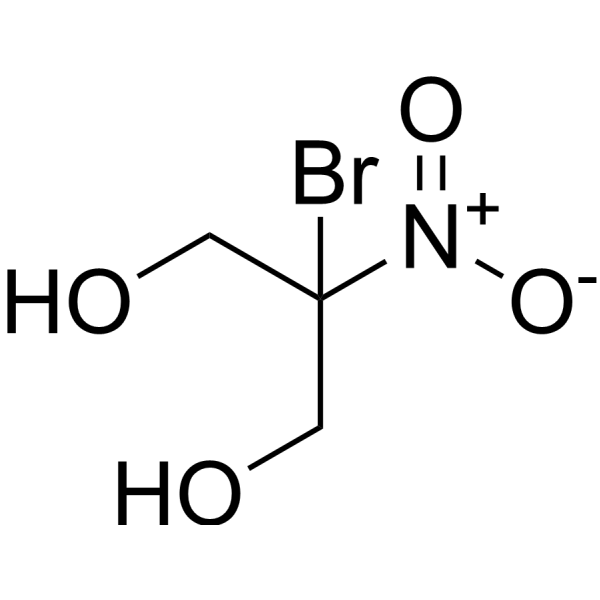
Cat. No.: HY-B1217
CAS No.: 52-51-7
Synonyms: BNPD; BNPK
Research Areas:  

Infection

Bronopol is an antibacterial agent with low toxicity (to mammals) and high activity (especially against Gram-negative bacteria). Bronopol oxidizes protein thiols, inhibits enzymatic activity, and exhibits antibacterial activity. Bronopol is also a formaldehyde releaser .
loading...
    loading...
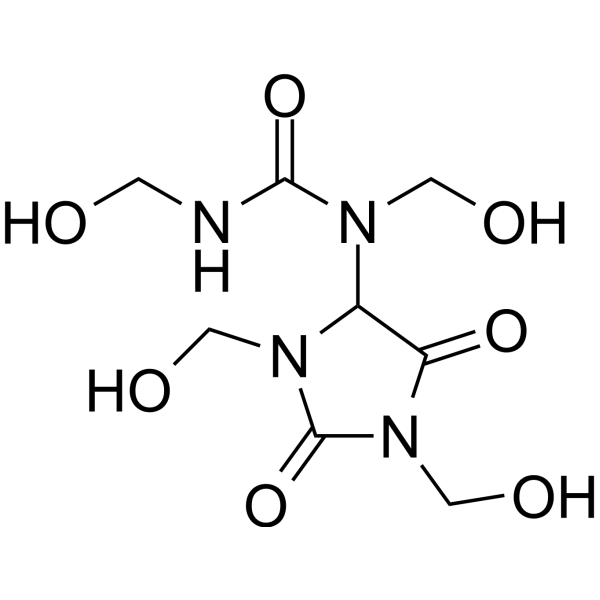
Cat. No.: HY-W009350
CAS No.: 78491-02-8
Target:  

Bacterial

Research Areas:  

Infection

Diazolidinyl urea is a broad-spectrum preservative commonly used in cosmetics. Diazolidinyl urea exerts antibacterial effects by decomposing and releasing formaldehyde. Diazolidinyl urea is effective against most contaminating microorganisms, especially Pseudomonas .
loading...
    loading...
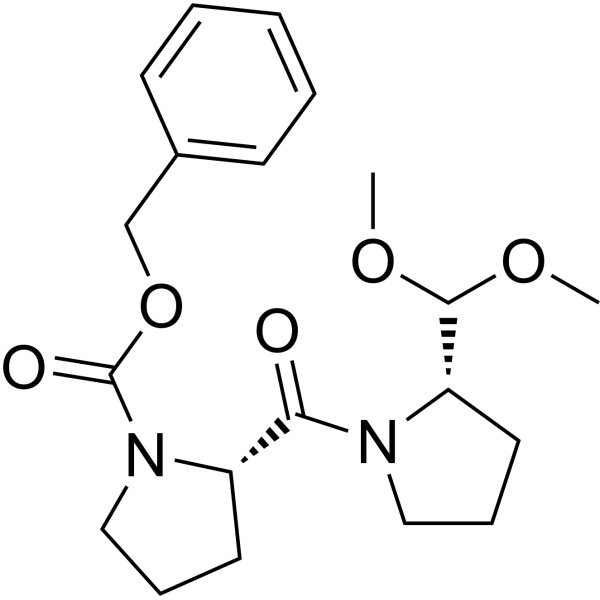
Cat. No.: HY-P4308
CAS No.: 170116-63-9
Research Areas:  

Neurological Disease

Z-Pro-Pro-aldehyde-dimethyl acetal is a potent inhibitor of prolyl endopeptidase (PREP), a cytoplasmic serine endoprotease (IC50= 12 nM). Z-Pro-Pro-aldehyde-dimethyl acetal plays an important role in cognitive dysfunction in aging and neurodegenerative diseases including Alzheimer's disease .
loading...
    loading...
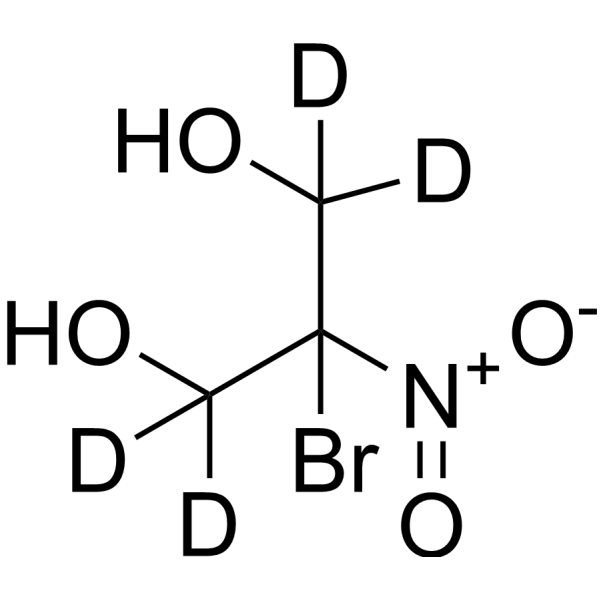
Cat. No.: HY-B1217S
Synonyms: BNPD-d4; BNPK-d4
Bronopol-d4 is deuterium labeled Bronopol. Bronopol is an antibacterial agent with low toxicity (to mammals) and high activity (especially against Gram-negative bacteria). Bronopol oxidizes protein thiols, inhibits enzymatic activity, and exhibits antibacterial activity. Bronopol is also a formaldehyde releaser .
loading...
    loading...
Cat. No.: HY-W070554
CAS No.: 116-25-6
Target:  

Drug Metabolite

Research Areas:  

Others

1-(Hydroxymethyl)-5,5-dimethylhydantoin is a degradation product of 1,3-dimethylol-5,5-dimethylhydantoin, which is a formaldehyde-releasing antimicrobial preservative.
loading...
    loading...
Cat. No.: HY-B1217R
CAS No.: 52-51-7
Synonyms: BNPD (Standard); BNPK (Standard)
Research Areas:  

Infection

Bronopol (Standard) is the analytical standard of Bronopol. This product is intended for research and analytical applications. Bronopol is an antibacterial agent with low toxicity (to mammals) and high activity (especially against Gram-negative bacteria). Bronopol oxidizes protein thiols, inhibits enzymatic activity, and exhibits antibacterial activity. Bronopol is also a formaldehyde releaser .
loading...
    loading...
Cat. No.: HY-P4251
CAS No.: 102579-48-6
Target:  

Inhibitory Antibodies

Research Areas:  

Others

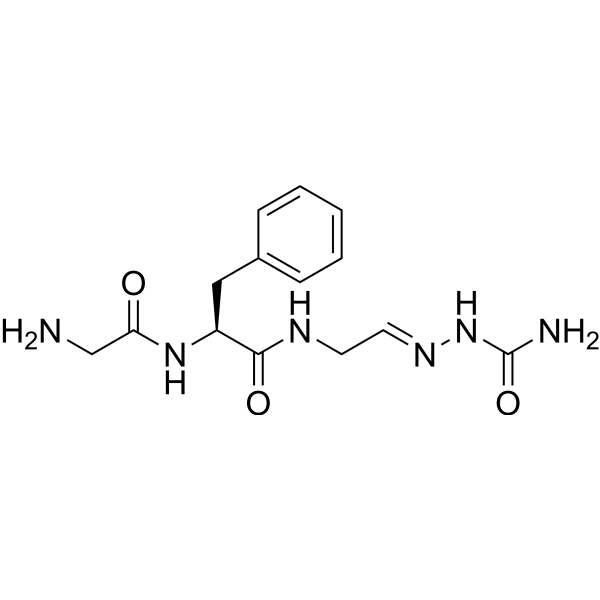
Gly-Phe-Gly-Aldehyde semicarbazone is a peptide.
loading...
    loading...
Cat. No.: HY-116235
CAS No.: 140-95-4
Synonyms: Dimethylolurea
Research Areas:  

Others

Oxymethurea (Dimethylolurea) is a formaldehyde-releasing protein modification reagent. Under acidic conditions, Oxymethurea promotes nucleophilic substitution of tyrosine via protonation of its hydroxymethyl group, while under alkaline conditions, it promotes protein crosslinking by converting the phenolic hydroxyl group of tyrosine into a more nucleophilic phenoxide ion. Oxymethurea can be used in studies related to protein chemical modification, protein crosslinking, protein protection and genotoxicity .
loading...
    loading...
Cat. No.: HY-W040536
CAS No.: 6440-58-0
Synonyms: Dimethyloldimethyl hydantoin
DMDM hydantoin (Dimethyloldimethyl hydantoin) is a hydantoin-derived formaldehyde-releasing preservative and allergen. DMDM hydantoin releases formaldehyde via hydrolysis in water, including under physiological pH conditions, and the release amount is affected by pH, concentration, composition, temperature and storage duration. DMDM hydantoin exerts bactericidal effects by mediating the cross-linking of proteins, RNA and DNA through the released formaldehyde, thereby inhibiting metabolism and cell division. DMDM hydantoin can induce allergic contact dermatitis directly, via the released formaldehyde, or through both pathways simultaneously. DMDM hydantoin is skin-irritating, and the released formaldehyde brings toxicological risks including carcinogenicity, mutagenicity and reproductive toxicity after entering the body. DMDM hydantoin can be used in studies related to allergic contact dermatitis .
loading...
    loading...

