



Bronopol

Based on 1 Customer Validation
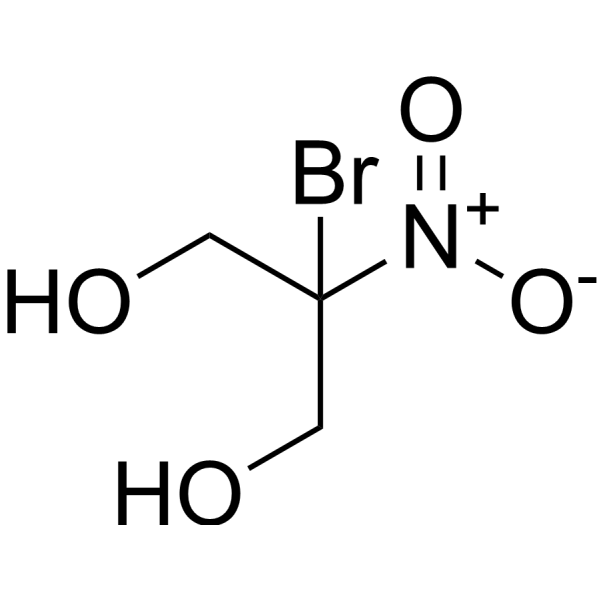
Bronopol is an antibacterial agent with low toxicity (to mammals) and high activity (especially against Gram-negative bacteria). Bronopol oxidizes protein thiols, inhibits enzymatic activity, and exhibits antibacterial activity. Bronopol is also a formaldehyde releaser.
Nur für Forschungszwecke. Wir verkaufen nicht an Patienten.
- Reinheit : 98.0%
- CAS. Nr.: 52-51-7
- Formel: C3H6BrNO4
- Molecular Weight:199.99
-
Speicherung:Powder -20°C, 3 years , 4°C, 2 years ; In solvent -80°C, 2 years , -20°C, 1 year

To place orders, for customer services and technical support, please contact: MedChemExpress USA
Tel: 609-228-6898 E-mail: [email protected] [email protected]


-
 Biologische Aktivität
-
Chemical Information
-
Lösungsmittel & Löslichkeit
- Protokoll
- Reinheit & Dokumentation
- Verweise
-
 Help & FAQs


-

HY-B1217R
Bronopol (Standard)Bacterial Inhibitor -
HY-W017758
1,3-PropanediolSolvent -

HY-W017758R
1,3-Propanediol (Standard) -
HY-W004260
Arachidic acidReceptor/Ion Channel Effector -

HY-W585827
2-Chloro-1,3-propanediolDrug Derivative -
HY-B0860
DiuronPhenylurea Herbicide -
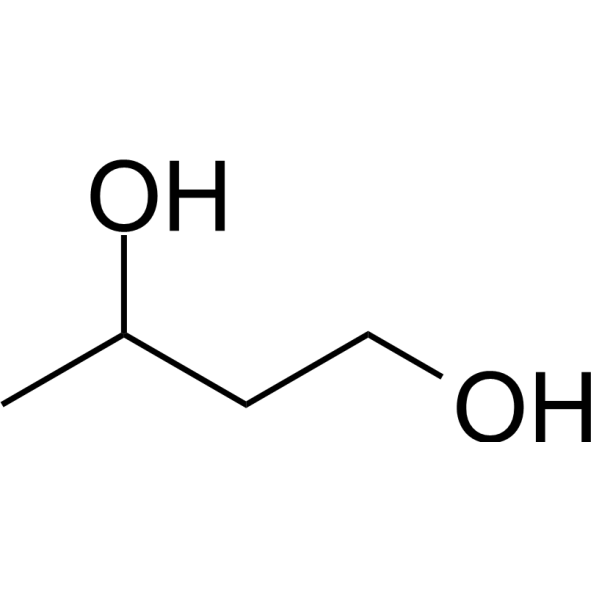
HY-77490A
1,3-Butanediolβ-Hydroxybutyrate Producer -
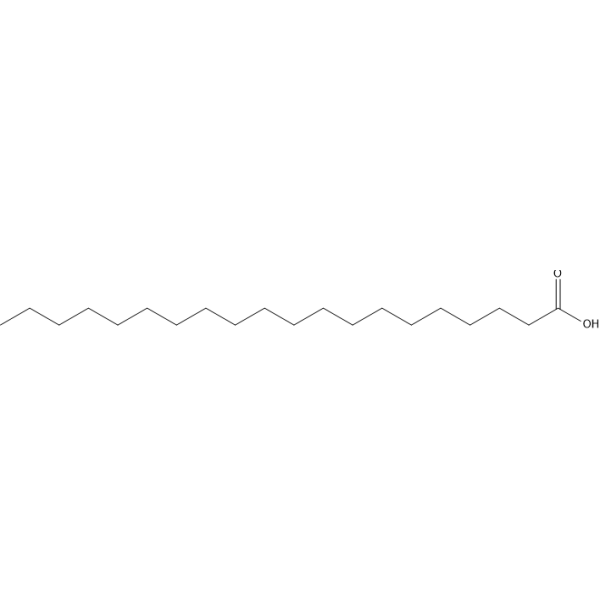
HY-W004260R
Arachidic acid (Standard)Analytical Standard -
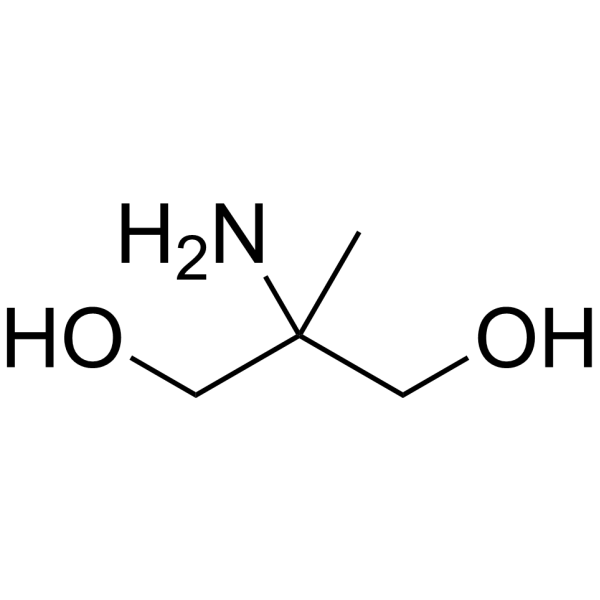
HY-W017054
2-Amino-2-methyl-1,3-propanediolSolid-solid Phase Change Material -
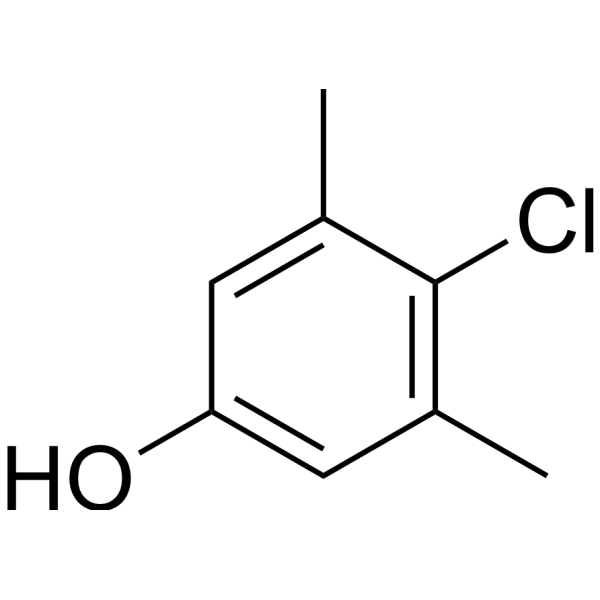
HY-B1414
ChloroxylenolAntibacterial Agent -

HY-W585827R
2-Chloro-1,3-propanediol (Standard)Reference Standard -
HY-W089856
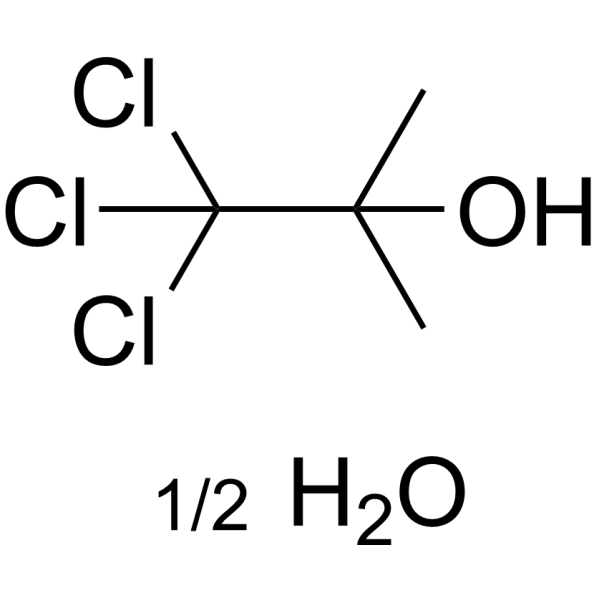
Chlorobutanol hemihydrateAntimicrobial Agent


Biologische Aktivität
Beschreibung
In Vitro
Bronopol (12.5-50 μM, 24 h) activates THP-1 cell, increases the expression of CD86, induces the secretion of IL-8, and promotes the early expression of HMOX1 and HSPA6 genes[2].
MedChemExpress (MCE) has not independently confirmed the accuracy of these methods. They are for reference only.
-
Cell Line:THP-1
-
Concentration:12.5-50 μM
-
Incubation Time:24 h
-
Result:Increased the expression of IL-8, HMOX1 and HSPA6.
In Vivo
Bronopol (10-160 mg/kg, po, drinking water for 90 days) causes toxic reactions such as gastrointestinal damage, peritonitis, hemorrhage, edema, gastric irritation, weight changes, food intake changes in rats models[4].
MedChemExpress (MCE) has not independently confirmed the accuracy of these methods. They are for reference only.
-
Animal Model:Sprague-Dawley rats models[3]
-
Dosage:3-25 mg/kg
-
Administration:ip, single dose
-
Result:Triggered aggressive response, and caused convulsions in the peritoneal cavity and dorsal musculature.


Chemical Information
-
CAS. Nr. 52-51-7
-
Appearance Solid
-
Molecular Weight 199.99
-
Formel C3H6BrNO4
-
Color White to off-white
-
SMILES
OCC([N+]([O-])=O)(Br)CO
-
Synonyms
BNPD; BNPK
-
Versand
Room temperature in continental US; may vary elsewhere.
-
Speicherung
Powder -20°C 3 years 4°C 2 years In solvent -80°C 2 years -20°C 1 year


Lösungsmittel & Löslichkeit
In Vitro:
DMSO : 100 mg/mL (500.03 mM; Need ultrasonic; Hygroscopic DMSO has a significant impact on the solubility of product, please use newly opened DMSO)
H2O : 100 mg/mL (500.03 mM; Need ultrasonic)
Please refer to the solubility information to select the appropriate solvent. Once prepared, please aliquot and store the solution to prevent product inactivation from repeated freeze-thaw cycles.
Storage method and period of stock solution: -80°C, 2 years; -20°C, 1 year. When stored at -80°C, please use it within 2 years. When stored at -20°C, please use it within 1 year.
* Note: If you choose water as the stock solution, please dilute it to the working solution, then filter and sterilize it with a 0.22 μm filter before use.
Please refer to the solubility information to select the appropriate solvent. Once prepared, please aliquot and store the solution to prevent product inactivation from repeated freeze-thaw cycles.
Storage method and period of stock solution: -80°C, 2 years; -20°C, 1 year. When stored at -80°C, please use it within 2 years. When stored at -20°C, please use it within 1 year.
* Note: If you choose water as the stock solution, please dilute it to the working solution, then filter and sterilize it with a 0.22 μm filter before use.
Konzentration (Stammlösung) × Volumen (Stammlösung) = Konzentration (Ziellösung) × Volumen (Ziellösung)
In Vivo:
Select the appropriate dissolution method based on your experimental animal and administration route.
- For the following dissolution methods, please ensure to first prepare a clear stock solution using an In Vitro approach and then sequentially add co-solvents:
- To ensure reliable experimental results, the clarified stock solution can be appropriately stored based on storage conditions. As for the working solution for In Vivo experiments, it is recommended to prepare freshly and use it on the same day.
- The percentages shown for the solvents indicate their volumetric ratio in the final prepared solution. If precipitation or phase separation occurs during preparation, heat and/or sonication can be used to aid dissolution.
Add each solvent one by one: 10% DMSO 40% PEG300 5% Tween-80 45% Saline
Solubility: ≥ 2.5 mg/mL (12.50 mM); Clear solution
This protocol yields a clear solution of ≥ 2.5 mg/mL (saturation unknown).
Taking 1 mL working solution as an example, add 100 μL DMSO stock solution (25.0 mg/mL) to 400 μL PEG300, and mix evenly; then add 50 μL Tween-80 and mix evenly; then add 450 μL Saline to adjust the volume to 1 mL.
Preparation of Saline: Dissolve 0.9 g sodium chloride in ddH₂O and dilute to 100 mL to obtain a clear Saline solution.
Add each solvent one by one: 10% DMSO 90% (20% SBE-β-CD in Saline)
Solubility: ≥ 2.5 mg/mL (12.50 mM); Clear solution
This protocol yields a clear solution of ≥ 2.5 mg/mL (saturation unknown).
Taking 1 mL working solution as an example, add 100 μL DMSO stock solution (25.0 mg/mL) to 900 μL 20% SBE-β-CD in Saline, and mix evenly.
Preparation of 20% SBE-β-CD in Saline (4°C, storage for one week): 2 g SBE-β-CD powder is dissolved in 10 mL Saline, completely dissolve until clear.
For the following dissolution methods, please prepare the working solution directly:
It is recommended to prepare fresh solutions and use them promptly within a short period of time.
The percentages shown for the solvents indicate their volumetric ratio in the final prepared solution. If precipitation or phase separation occurs during preparation, heat and/or sonication can be used to aid dissolution.
Add each solvent one by one: PBS
Solubility: 50 mg/mL (250.01 mM); Clear solution; Need ultrasonic
In Vivo Dissolution Calculator
Please enter the basic information of animal experiments:
-
-
-
-
Recommended: Prepare an additional quantity of animals to account for potential losses during experiments.
Working solution concentration: 0.22 mg/mL
This product has good water solubility, please refer to the measured solubility data in water/PBS/Saline for details.


Reinheit & Dokumentation
-
Data Sheet (274 KB)
-
SDS (620 KB)
- English - EN (620 KB)
- Français - FR (620 KB)
- Deutsch - DE (620 KB)
- Norwegian - NO (620 KB)
- Español - ES (620 KB)
- Swedish - SV (620 KB)
- Italian - IT (620 KB)
- Korean - KR (620 KB)
- Portuguese - PT (620 KB)
-
Handling Instructions (2659 KB)
Verweise
[1]. Shepherd JA, et al. Antibacterial action of 2-bromo-2-nitropropane-1,3-diol (bronopol). Antimicrob Agents Chemother. 1988 Nov;32(11):1693-8. [Content Brief]
[2]. Kireche M, et al., Evidence for chemical and cellular reactivities of the formaldehyde releaser bronopol, independent of formaldehyde release. Chem Res Toxicol. 2011 Dec 19;24(12):2115-28. [Content Brief]
[3]. Nieminen L, et al., The pain aggression induced by bronopol in the rat. Acta Pharmacol Toxicol (Copenh). 1975 Sep;37(3):237-41. [Content Brief]


Complete Stock Solution Preparation Table
Please refer to the solubility information to select the appropriate solvent. Once prepared, please aliquot and store the solution to prevent product inactivation from repeated freeze-thaw cycles.
Storage method and period of stock solution: -80°C, 2 years; -20°C, 1 year. When stored at -80°C, please use it within 2 years. When stored at -20°C, please use it within 1 year.
| Optional Solvent | Concentration Solvent Mass | 1 mg | 5 mg | 10 mg | 25 mg |
|---|---|---|---|---|---|
| DMSO / H2O | 1 mM | 5.0002 mL | 25.0012 mL | 50.0025 mL | 125.0062 mL |
| 5 mM | 1.0000 mL | 5.0002 mL | 10.0005 mL | 25.0012 mL | |
| 10 mM | 0.5000 mL | 2.5001 mL | 5.0002 mL | 12.5006 mL | |
| 15 mM | 0.3333 mL | 1.6667 mL | 3.3335 mL | 8.3337 mL | |
| 20 mM | 0.2500 mL | 1.2501 mL | 2.5001 mL | 6.2503 mL | |
| 25 mM | 0.2000 mL | 1.0000 mL | 2.0001 mL | 5.0002 mL | |
| 30 mM | 0.1667 mL | 0.8334 mL | 1.6667 mL | 4.1669 mL | |
| 40 mM | 0.1250 mL | 0.6250 mL | 1.2501 mL | 3.1252 mL | |
| 50 mM | 0.1000 mL | 0.5000 mL | 1.0000 mL | 2.5001 mL | |
| 60 mM | 0.0833 mL | 0.4167 mL | 0.8334 mL | 2.0834 mL | |
| 80 mM | 0.0625 mL | 0.3125 mL | 0.6250 mL | 1.5626 mL | |
| 100 mM | 0.0500 mL | 0.2500 mL | 0.5000 mL | 1.2501 mL |
* Note: If you choose water as the stock solution, please dilute it to the working solution, then filter and sterilize it with a 0.22 μm filter before use.


Bronopol Related Classifications
HY-B1217 Related Classifications
 Powered by Bioz