1. Search Result
Search Result
Results for "

glutamate-induced excitotoxicity

" in MedChemExpress (MCE) Product Catalog:

13

Inhibitors & Agonists

3

Peptides

5

Natural
Products

1

Isotope-Labeled Compounds

1

Click Chemistry

Cat. No. Product Name Target Research Areas Chemical Structure
  • HY-N6746

    NSC 186

    Bacterial Fungal Endogenous Metabolite Apoptosis Infection Neurological Disease Cancer
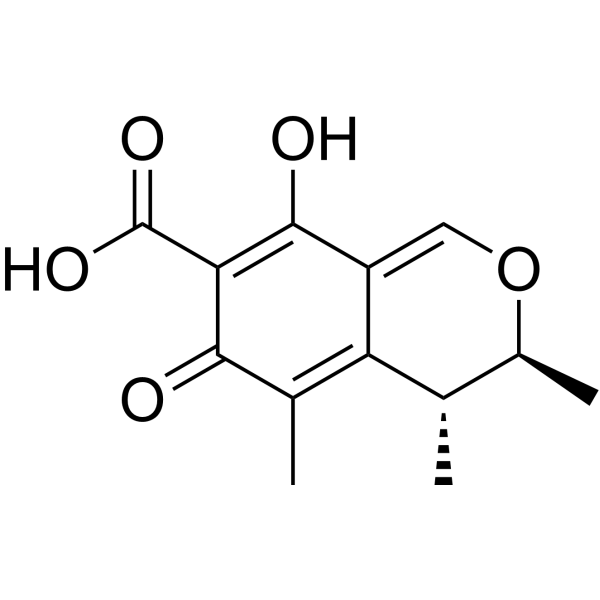
    Citrinin (NSC 186) is a mycotoxin that causes food contamination and has different toxic effects. Citrinin is an effective oral anticancer agent. Citrinin has various regulatory effects on mouse immune system, including regulating the number of immune cells, inducing apoptosis and autophagy of immune cells, altering toll-like receptor expression and cytokine production. Citrinin can induce oxidative stress and lead to early apoptosis of oocytes. Low doses of Citrinin have neuroprotective effects against glutamate-induced excitotoxicity in rat cortical neurons. In addition, Citrinin also has antibacterial activity .
    Citrinin
  • HY-P10638

    CaMK Cardiovascular Disease Neurological Disease
    TAT-CN21 is a potent CaMKII inhibitor with an IC50 of 77.2 nM. TAT-CN21 inhibits both calcium/calmodulin-dependent and autonomously activated CaMKII, blocks glutamate-induced translocation of CaMK IIα, and reverses the enhanced phosphorylation of CaMKII at Thr286 following excitotoxic injury. TAT-CN21 shows application potential in studies related to ischemic stroke by reducing neuronal excitotoxicity and exacerbating pre-existing long-term neuronal death prior to injury. TAT-CN21 improves definitive behaviors in rats with residual nerve injury without altering indicators such as mechanical/thermal hyperalgesia or spatial memory. TAT-CN21 can also be used in studies related to neuropathic pain .
    TAT-CN21
  • HY-120553
    B-355252
    1 Publications Verification

    Apoptosis Neurological Disease
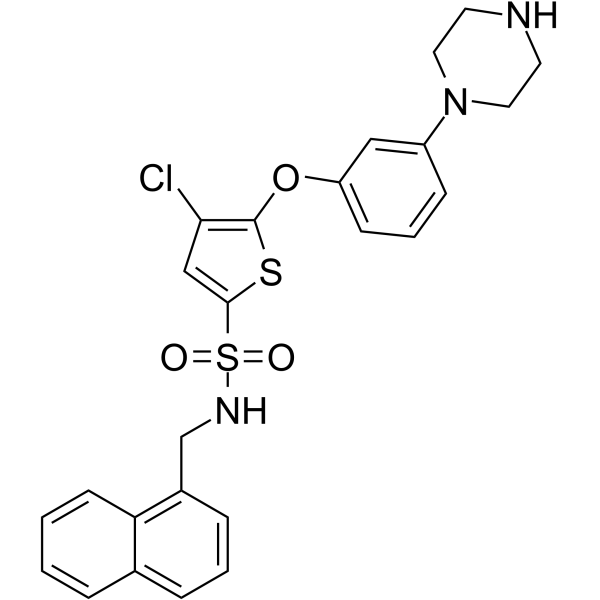
    B355252, a phenoxy thiophene sulfonamide small molecule, is a potent NGF receptor agonist. B355252 potentiates NGF-induced neurite outgrowth. B355252 protects ischemic neurons from neuronal loss by attenuating DNA damage, reducing ROS production and the LDH level, and preventing neuronal apoptosis. B355252 has anti-apoptotic effects in glutamate-induced excitotoxicity, as well as in a murine hippocampal cell line (HT22) model of Parkinson disease (PD) .
    B-355252
  • HY-118783

    (±)-2-Hexyl-4-pentynoic acid

    HDAC HSP Neurological Disease Cancer
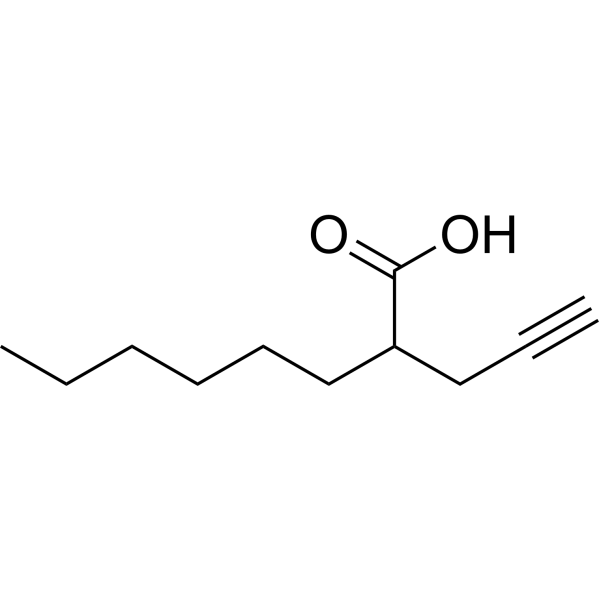
    2-Hexyl-4-pentynoic acid ((±)-2-Hexyl-4-pentynoic acid), a Valproic acid (HY-10585) derivative, exhibits potential roles of HDAC inhibition (IC50 = 13 μM) and HSP70 induction. 2-Hexyl-4-pentynoic acid causes histone hyperacetylation and protect against glutamate-induced excitotoxicity in cultured neurons. 2-Hexyl-4-pentynoic acid can be used for the study of breast carcinoma. 2-Hexyl-4-pentynoic acid is a click chemistry reagent, it contains an Alkyne group and can undergo copper-catalyzed azide-alkyne cycloaddition (CuAAc) with molecules containing Azide groups .
    2-Hexyl-4-pentynoic acid
  • HY-N12635

    Cytochrome P450 Neurological Disease
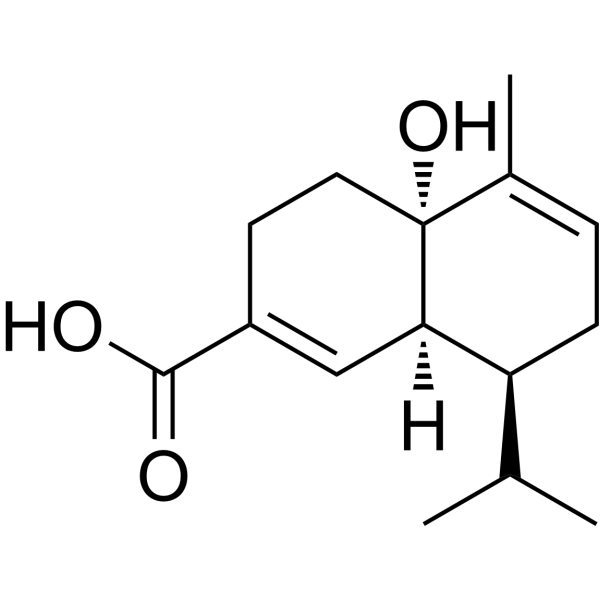
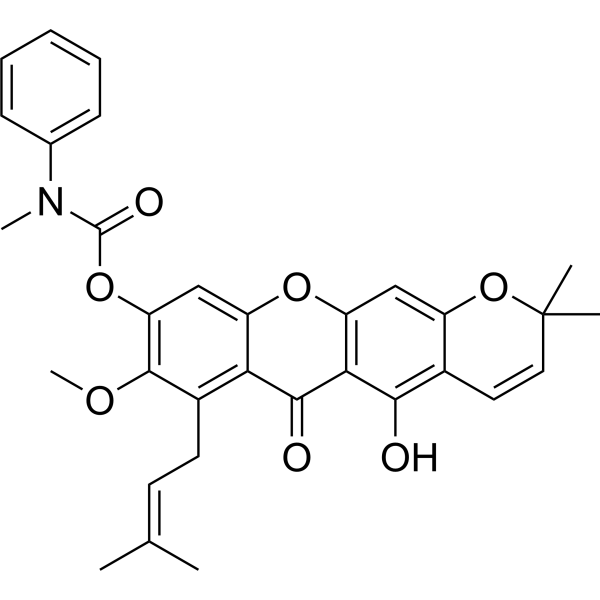
    Levinoid C is a Cytochrome P450-modified bacterial terpenoid. Levinoid C shows moderate neuroprotective activity against glutamate-induced excitotoxicity cell model with an EC50 of 21 μM .
    Levinoid C
  • HY-149094

    Drug Derivative Cardiovascular Disease
    Neuroprotective agent 1 (2), a promising neuroprotective agent for the study of ischemic stroke, shows promising neuroprotective activity with the EC50 value of 16.07 μM in the model of glutamate-induced excitotoxicity and 19.30 μM in the model of H2O2-induced oxidative damage .
    Neuroprotective agent 1
  • HY-W005255R

    Reference Standards Endogenous Metabolite Cardiovascular Disease
    Citrinin (Standard) is the analytical standard of Citrinin. This product is intended for research and analytical applications. Citrinin (NSC 186) is a mycotoxin that causes food contamination and has different toxic effects. Citrinin is an effective oral anticancer agent. Citrinin has various regulatory effects on mouse immune system, including regulating the number of immune cells, inducing apoptosis and autophagy of immune cells, altering toll-like receptor expression and cytokine production. Citrinin can induce oxidative stress and lead to early apoptosis of oocytes. Low doses of Citrinin have neuroprotective effects against glutamate-induced excitotoxicity in rat cortical neurons. In addition, Citrinin also has antibacterial activity .
    3-(3-Hydroxyphenyl)propionic acid (Standard)
  • HY-N6746R

    NSC 186 (Standard)

    Reference Standards Bacterial Fungal Endogenous Metabolite Apoptosis Infection Neurological Disease Cancer
    Citrinin (Standard) is the analytical standard of Citrinin. This product is intended for research and analytical applications. Citrinin (NSC 186) is a mycotoxin that causes food contamination and has different toxic effects. Citrinin is an effective oral anticancer agent. Citrinin has various regulatory effects on mouse immune system, including regulating the number of immune cells, inducing apoptosis and autophagy of immune cells, altering toll-like receptor expression and cytokine production. Citrinin can induce oxidative stress and lead to early apoptosis of oocytes. Low doses of Citrinin have neuroprotective effects against glutamate-induced excitotoxicity in rat cortical neurons. In addition, Citrinin also has antibacterial activity .
    Citrinin (Standard)
  • HY-N6746S1

    NSC 186-13C13

    Isotope-Labeled Compounds Apoptosis Bacterial Autophagy Infection Neurological Disease Cancer
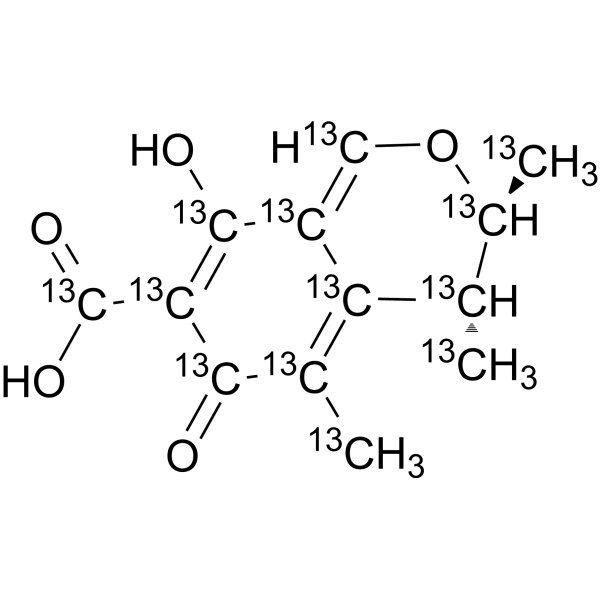
    Citrinin- 13C13 (NSC 186- 13C13) is the 13C labeled Citrinin (HY-N6746). Citrinin (NSC 186) is a mycotoxin that causes food contamination and has different toxic effects. Citrinin is an effective oral anticancer agent. Citrinin has various regulatory effects on mouse immune system, including regulating the number of immune cells, inducing apoptosis and autophagy of immune cells, altering toll-like receptor expression and cytokine production. Citrinin can induce oxidative stress and lead to early apoptosis of oocytes. Low doses of Citrinin have neuroprotective effects against glutamate-induced excitotoxicity in rat cortical neurons. In addition, Citrinin also has antibacterial activity .
    Citrinin-13C13
  • HY-N12696

    Reactive Oxygen Species (ROS) Neurological Disease
    Cistanoside H is a phenylethanoid glycoside neuroprotective agent that can be isolated from the leaves and twigs of Callicarpa dichotoma. Cistanoside H can alleviate glutamate-induced oxidative stress and protect rat cortical cells from neurotoxic damage. Cistanoside H protects nerve cells against excitotoxic damage and can be applied in research related to neurodegenerative diseases (such as Alzheimer's disease and Parkinson's disease).
    Cistanoside H
  • HY-183871

    iGluR Apoptosis Calcium Channel Neurological Disease Metabolic Disease
    WMS-1410 is a selective GluN2B-containing NMDA receptor inhibitor with an IC50 of 18.4 nM. WMS-1410 regulates intracellular calcium levels and protects cells from Apoptosis. WMS-1410 inhibits glutamate-induced excitotoxicity. WMS-1410 reverses NMDA/glycine-induced reduction in glucose-stimulated insulin secretion without altering physiological insulin secretion or baseline redox status, but fails to counteract insulin content loss induced by glucolipotoxicity. WMS-1410 exhibits analgesic activity against advanced neuropathic pain. WMS-1410 can be used in studies related to stroke, brain injury, Alzheimer's disease, Parkinson's disease, type 2 diabetes, and neuropathic pain .
    WMS-1410
  • HY-175824

    iGluR NO Synthase Apoptosis Reactive Oxygen Species (ROS) Neurological Disease
    PSD-95/nNOS PPI-IN-1 is a inhibitor targeting the PSD-95/nNOS interaction with potential blood-brain barrier penetration. PSD-95/nNOS PPI-IN-1 binds to the PSD-95 PDZ2 domain with high affinity (Ki = 19.45 μM). PSD-95/nNOS PPI-IN-1 inhibits glutamate-induced excitotoxicity by reducing intracellular ROS levels and inhibiting apoptosis. PSD-95/nNOS PPI-IN-1 significantly reduces cerebral infarct volume in rat tMCAO models. PSD-95/nNOS PPI-IN-1 can be used for the study of acute ischemic stroke .
    PSD-95/nNOS PPI-IN-1
  • HY-P11848

    iGluR Apoptosis Reactive Oxygen Species (ROS) Cardiovascular Disease Neurological Disease
    P3LC7LC-P is a blood-brain barrier-permeable BRAG2 ligand with a KD of 6.14 μM. P3LC7LC-P binds to BRAG2, thereby disrupting its interaction with the GluA2 subunit of the AMPA receptor and inhibiting glutamate-induced GluA2 endocytosis. P3LC7LC-P exerts neuroprotective effects in oxygen-glucose deprivation-induced and glutamate-induced neurotoxicity models, reduces ROS accumulation and inhibits apoptosis, and reduces cerebral infarct size in a rat model of transient middle cerebral artery occlusion. P3LC7LC-P can be used for the research of ischemic stroke .
    P3LC7LC-P

Inquiry Online

Your information is safe with us. * Required Fields.

Salutation


Country or Region *

Applicant Name *


Organization Name *

Department *


Email Address *


Product Name *

Cat. No.


Requested quantity *

Phone Number *


Remarks

Inquiry Online

Inquiry Information

Product Name:
Cat. No.:
Quantity:
MCE Japan Authorized Agent:

