



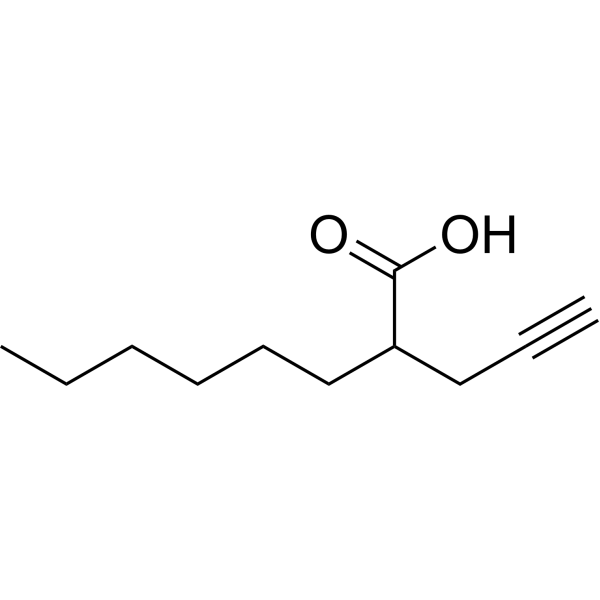
2-Hexyl-4-pentynoic acid

Based on 1 Customer Validation
2-Hexyl-4-pentynoic acid ((±)-2-Hexyl-4-pentynoic acid), a Valproic acid (HY-10585) derivative, exhibits potential roles of HDAC inhibition (IC50 = 13 μM) and HSP70 induction. 2-Hexyl-4-pentynoic acid causes histone hyperacetylation and protect against glutamate-induced excitotoxicity in cultured neurons. 2-Hexyl-4-pentynoic acid can be used for the study of breast carcinoma. 2-Hexyl-4-pentynoic acid is a click chemistry reagent, it contains an Alkyne group and can undergo copper-catalyzed azide-alkyne cycloaddition (CuAAc) with molecules containing Azide groups.
For research use only. We do not sell to patients.
- Purity : 98.0%
- CAS No.: 96017-59-3
- Formula: C11H18O2
- Molecular Weight:182.26
-
Storage:Pure form -20°C, 3 years ; In solvent -80°C, 6 months , -20°C, 1 month

To place orders, for customer services and technical support, please contact: MedChemExpress USA
Tel: 609-228-6898 E-mail: [email protected] [email protected]


-
 Biological Activity
-
Chemical Information
-
Solvent & Solubility
- Protocols
- Purity & Documentation
- References
-
 Help & FAQs


-
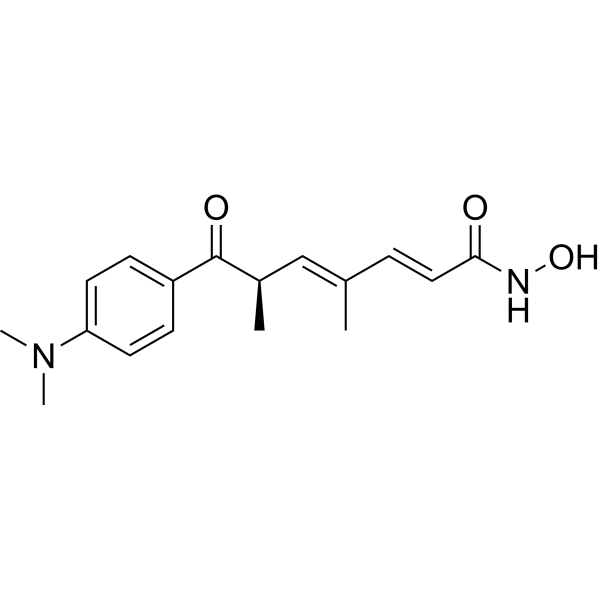
HY-15144
Trichostatin AHDAC Class I/II Inhibitor -
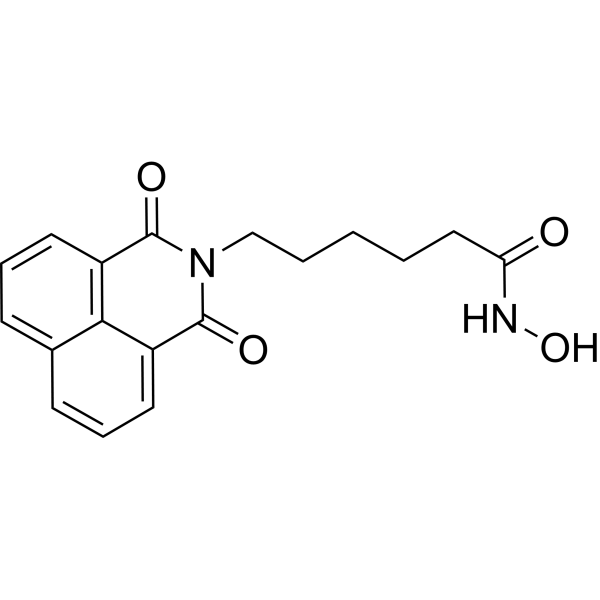
HY-15489
ScriptaidAutophagy Inducer -
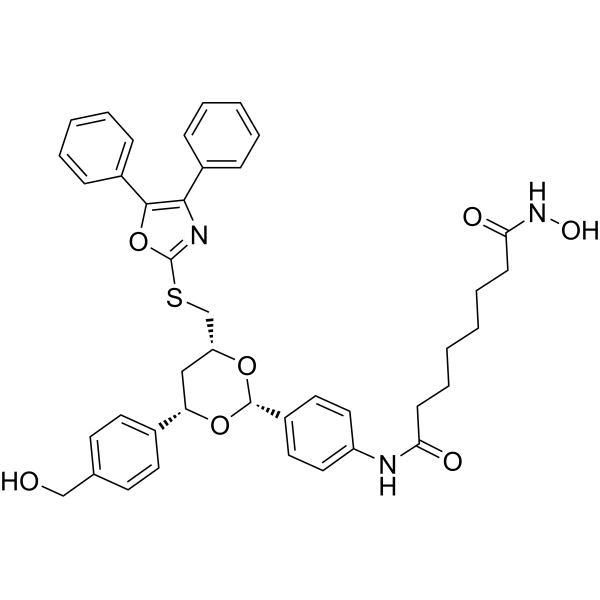
HY-13428
TubacinHDAC6 Inhibitor -
HY-19350
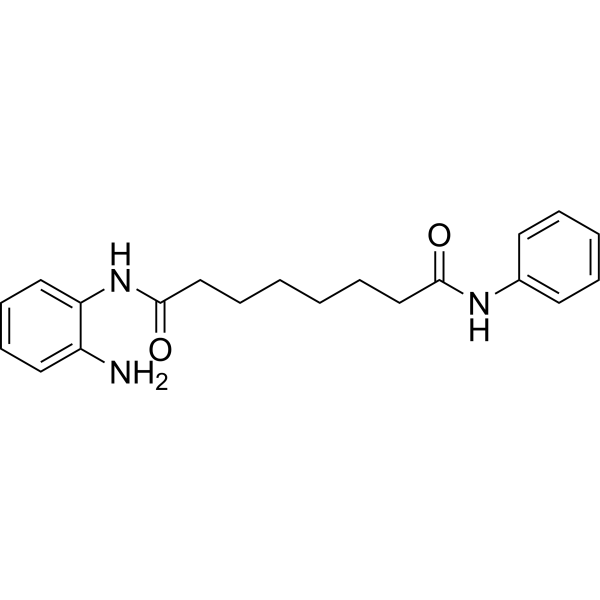
BML-210HDAC Inhibitor -
HY-19747
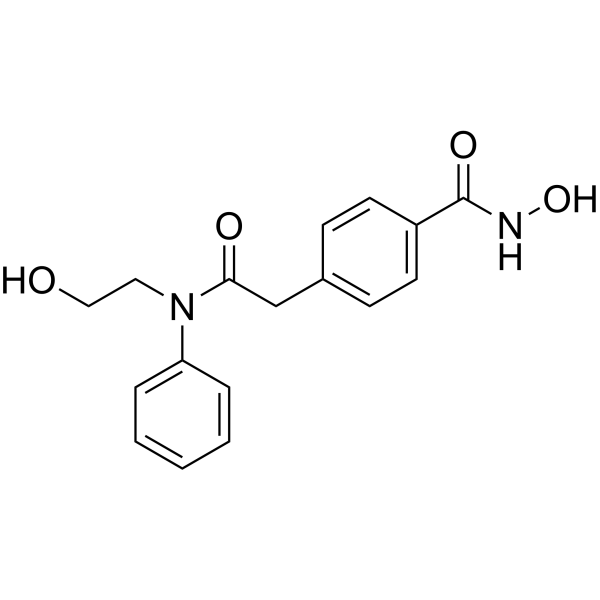
HPOBHDAC6 Inhibitor -
HY-12954
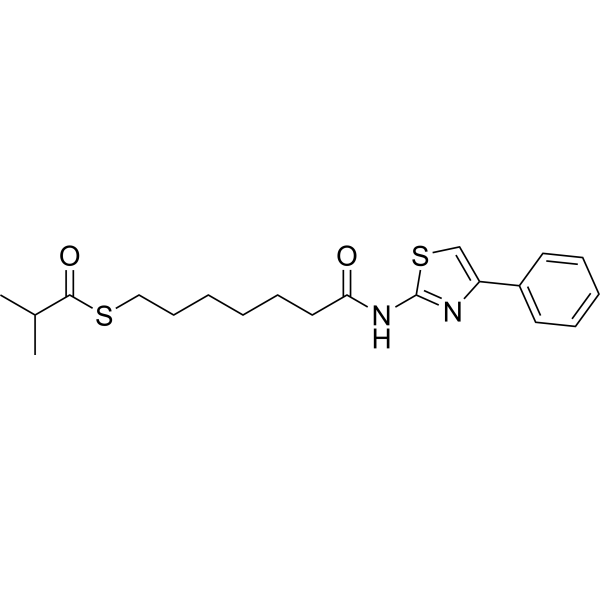
PTACHHIV Activator -
HY-W002586
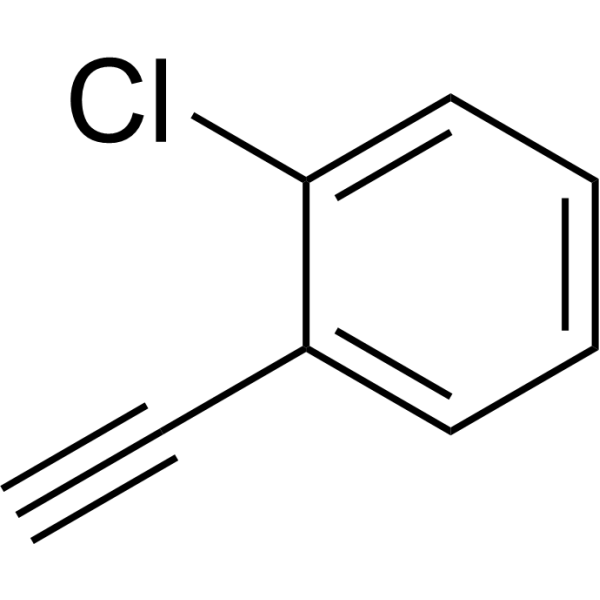
1-Chloro-2-ethynylbenzeneBiochemical Reagent -
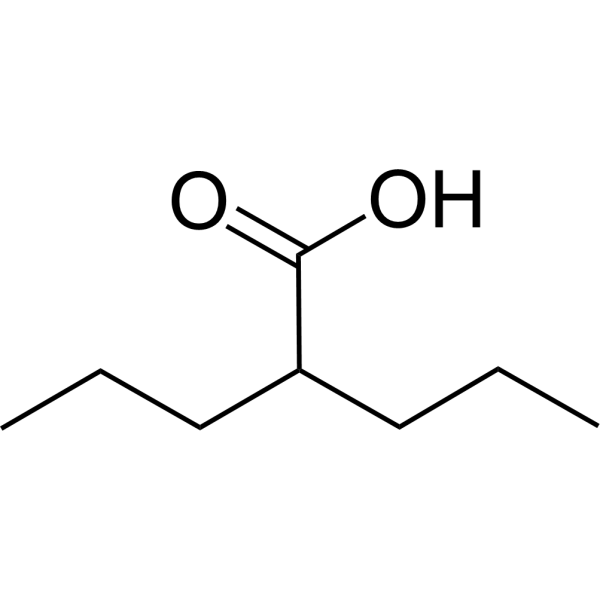
HY-10585
Valproic acidHDAC Inhibitor -
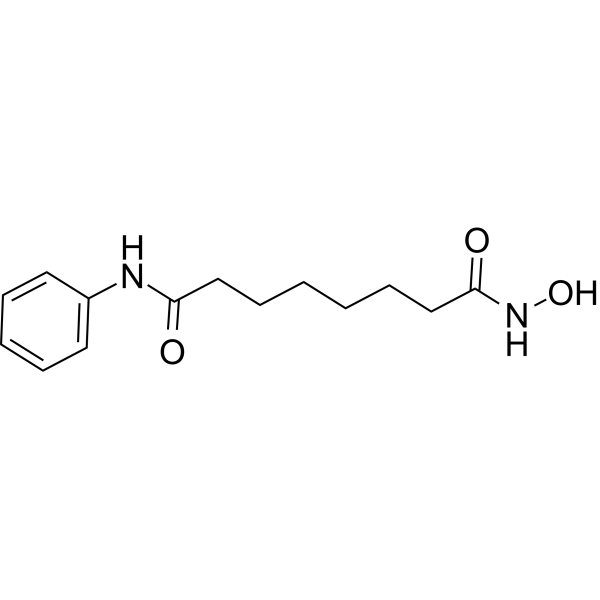
HY-10221
VorinostatHDAC Inhibitor -
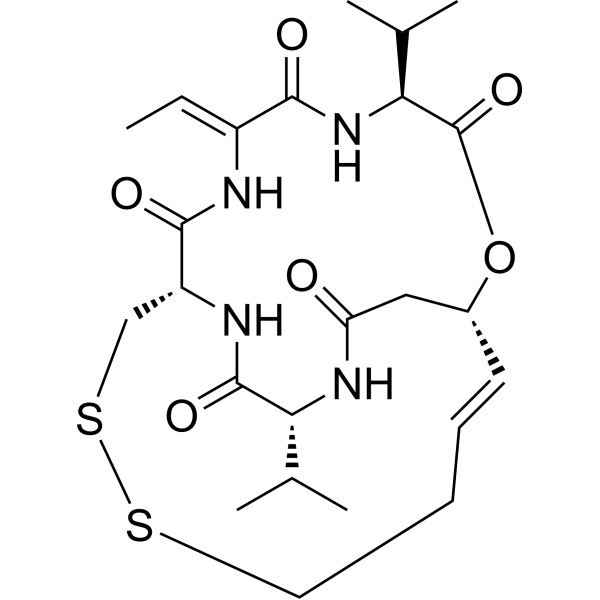
HY-15149
RomidepsinHDAC Inhibitor -
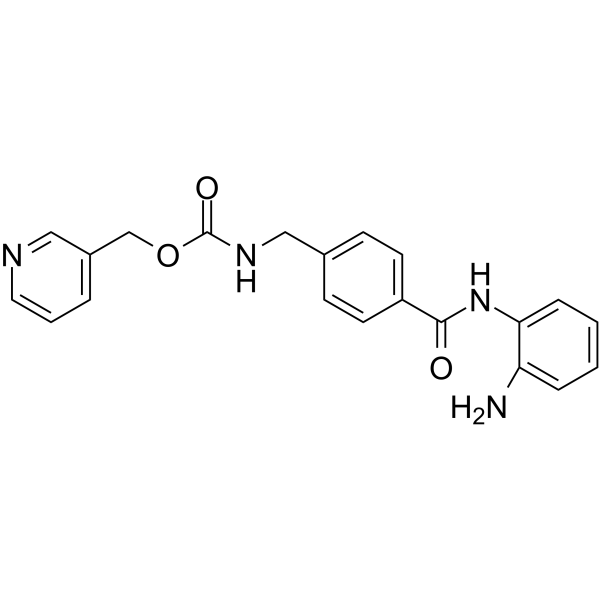
HY-12163
EntinostatHDAC Class I Inhibitor -
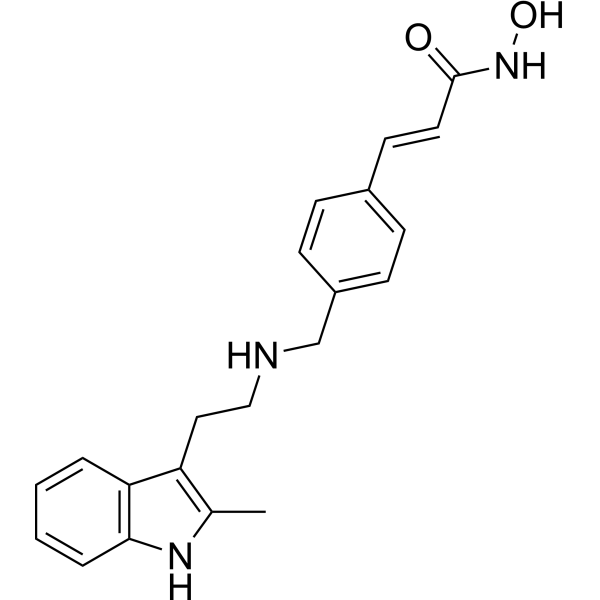
HY-10224
PanobinostatHDAC Inhibitor


Biological Activity
Description
In Vitro
2-Hexyl-4-pentynoic acid (10-100 μM; 7 days) blocks glutamate-induced cell death in cerebellar granule cells[1].
2-Hexyl-4-pentynoic acid (5 μM, 10 μM, 25 μM, 50 μM, 100 μM) increases acetylated histone H3 (Ac-H3) levels in cerebellar granule cells[1].
2-Hexyl-4-pentynoic acid (50 μM) increases HSP70-1a and HSP70-1b mRNA levels[1].
2-Hexyl-4-pentynoic acid (HPTA; 15 μM) inhibits breast cancer cell growth and sensitizing the tumor cells to Hydroxyurea (HY-B0313) on MCF7 cells, EUFA423 cells, MCF7 cells with defective RPA2-p gene and primary culture cells derived from tissue-transformed breast tumor cells. 2-Hexyl-4-pentynoic acid induces DNA double-strand breaks, the homologous recombination is inhibited through the interference of the hyperphosphorylation of replication protein A2 and recombinase Rad51[2].
MedChemExpress (MCE) has not independently confirmed the accuracy of these methods. They are for reference only.
-
Cell Line:Cerebellar granule cells induced with Glutamate
-
Concentration:10 μM, 25 μM, 50 μM, 100 μM
-
Incubation Time:7 days
-
Result:Completely blocked glutamate-induced cell death.


Chemical Information
-
CAS No. 96017-59-3
-
Appearance Liquid (Density: 0.964g/cm3)
-
Molecular Weight 182.26
-
Formula C11H18O2
-
Color Colorless to light yellow
-
SMILES
CCCCCCC(CC#C)C(O)=O
-
Synonyms
(±)-2-Hexyl-4-pentynoic acid
-
Shipping
Room temperature in continental US; may vary elsewhere.
-
Storage
Pure form -20°C 3 years In solvent -80°C 6 months -20°C 1 month


Solvent & Solubility
In Vitro:
DMSO : 100 mg/mL (548.67 mM; Need ultrasonic; Hygroscopic DMSO has a significant impact on the solubility of product, please use newly opened DMSO)
Please refer to the solubility information to select the appropriate solvent. Once prepared, please aliquot and store the solution to prevent product inactivation from repeated freeze-thaw cycles.
Storage method and period of stock solution: -80°C, 6 months; -20°C, 1 month. When stored at -80°C, please use it within 6 months. When stored at -20°C, please use it within 1 month.
Please refer to the solubility information to select the appropriate solvent. Once prepared, please aliquot and store the solution to prevent product inactivation from repeated freeze-thaw cycles.
Storage method and period of stock solution: -80°C, 6 months; -20°C, 1 month. When stored at -80°C, please use it within 6 months. When stored at -20°C, please use it within 1 month.
Concentration (start) × Volume (start) = Concentration (final) × Volume (final)
In Vivo:
Select the appropriate dissolution method based on your experimental animal and administration route.
- For the following dissolution methods, please ensure to first prepare a clear stock solution using an In Vitro approach and then sequentially add co-solvents:
- To ensure reliable experimental results, the clarified stock solution can be appropriately stored based on storage conditions. As for the working solution for In Vivo experiments, it is recommended to prepare freshly and use it on the same day.
- The percentages shown for the solvents indicate their volumetric ratio in the final prepared solution. If precipitation or phase separation occurs during preparation, heat and/or sonication can be used to aid dissolution.
Add each solvent one by one: 10% DMSO 90% (20% SBE-β-CD in Saline)
Solubility: ≥ 2.5 mg/mL (13.72 mM); Clear solution
This protocol yields a clear solution of ≥ 2.5 mg/mL (saturation unknown).
Taking 1 mL working solution as an example, add 100 μL DMSO stock solution (25.0 mg/mL) to 900 μL 20% SBE-β-CD in Saline, and mix evenly.
Preparation of 20% SBE-β-CD in Saline (4°C, storage for one week): 2 g SBE-β-CD powder is dissolved in 10 mL Saline, completely dissolve until clear.
In Vivo Dissolution Calculator
Please enter the basic information of animal experiments:
-
-
-
-
Recommended: Prepare an additional quantity of animals to account for potential losses during experiments.
Please enter your animal formula composition:
-
%DMSO +
Recommended: Keep the proportion of DMSO in working solution below 2% if your animal is weak.
-
%+
-
+%Tween-80 + +
-
%Saline +
The co-solvents required include: DMSO, . All of co-solvents are available by MedChemExpress (MCE). , Tween 80. All of co-solvents are available by MedChemExpress (MCE).
Working solution concentration: 0.22 mg/mL
Method for preparing stock solution: mg drug dissolved in μL DMSO. Stock solution concentration: mg/mL.
1. Take μL DMSO stock solution;
2. Add μL .
μL , mix evenly;
3. Then add μL Tween 80, mix evenly;
4. Then add μL
Please ensure that the stock solution in the first step is dissolved to a clear state, and add co-solvents in sequence. You can use ultrasonic heating (ultrasonic cleaner, recommended frequency 20-40 kHz), vortexing, etc. to assist dissolution.


Purity & Documentation
-
Data Sheet (271 KB)
-
SDS (393 KB)
- English - EN (393 KB)
- Français - FR (393 KB)
- Deutsch - DE (393 KB)
- Norwegian - NO (393 KB)
- Español - ES (393 KB)
- Swedish - SV (393 KB)
- Italian - IT (393 KB)
- Korean - KR (393 KB)
- Portuguese - PT (393 KB)
-
Handling Instructions (2659 KB)
References
[1]. Yan Leng, et al. Potent neuroprotective effects of novel structural derivatives of valproic acid: potential roles of HDAC inhibition and HSP70 induction. Neurosci Lett. 2010 Jun 7;476(3):127-32. [Content Brief]
[2]. Ding W, et al. 2-hexyl-4-pentynoic acid, a potential therapeutic for breast carcinoma by influencing RPA2 hyperphosphorylation-mediated DNA repair. DNA Repair (Amst). 2020 Nov;95:102940. [Content Brief]


Complete Stock Solution Preparation Table
Please refer to the solubility information to select the appropriate solvent. Once prepared, please aliquot and store the solution to prevent product inactivation from repeated freeze-thaw cycles.
Storage method and period of stock solution: -80°C, 6 months; -20°C, 1 month. When stored at -80°C, please use it within 6 months. When stored at -20°C, please use it within 1 month.
| Optional Solvent | Concentration Solvent Mass | 1 mg | 5 mg | 10 mg | 25 mg |
|---|---|---|---|---|---|
| DMSO | 1 mM | 5.4867 mL | 27.4333 mL | 54.8667 mL | 137.1667 mL |
| 5 mM | 1.0973 mL | 5.4867 mL | 10.9733 mL | 27.4333 mL | |
| 10 mM | 0.5487 mL | 2.7433 mL | 5.4867 mL | 13.7167 mL | |
| 15 mM | 0.3658 mL | 1.8289 mL | 3.6578 mL | 9.1444 mL | |
| 20 mM | 0.2743 mL | 1.3717 mL | 2.7433 mL | 6.8583 mL | |
| 25 mM | 0.2195 mL | 1.0973 mL | 2.1947 mL | 5.4867 mL | |
| 30 mM | 0.1829 mL | 0.9144 mL | 1.8289 mL | 4.5722 mL | |
| 40 mM | 0.1372 mL | 0.6858 mL | 1.3717 mL | 3.4292 mL | |
| 50 mM | 0.1097 mL | 0.5487 mL | 1.0973 mL | 2.7433 mL | |
| 60 mM | 0.0914 mL | 0.4572 mL | 0.9144 mL | 2.2861 mL | |
| 80 mM | 0.0686 mL | 0.3429 mL | 0.6858 mL | 1.7146 mL | |
| 100 mM | 0.0549 mL | 0.2743 mL | 0.5487 mL | 1.3717 mL |


2-Hexyl-4-pentynoic acid Related Classifications
HY-118783 Related Classifications
 Powered by Bioz