
1. Search Result
Search Result
Results for "

hepatocarcinomas

" in MedChemExpress (MCE) Product Catalog:

18

Inhibitors & Agonists

2

Biochemical Assay Reagents

3

Inhibitory Antibodies

6

Natural
Products

Cat. No. Product Name Target Research Areas Chemical Structure
  • HY-W250111

    Biochemical Assay Reagents Apoptosis Reactive Oxygen Species (ROS) Bcl-2 Family Caspase Cancer
    Carboxymethyl chitosan is a derivative of chitosan. Carboxymethyl chitosan inhibits Apoptosis and ROS. Carboxymethyl chitosan increases the expression of Bcl-2 and reduces the expression of Bax, cytochrome c and caspase-3. Carboxymethyl chitosan inhibits the migration of various cells. Carboxymethyl chitosan exerts antitumor effects on Lewis tumors and hepatocarcinoma .
    Carboxymethyl chitosan
  • HY-B0689
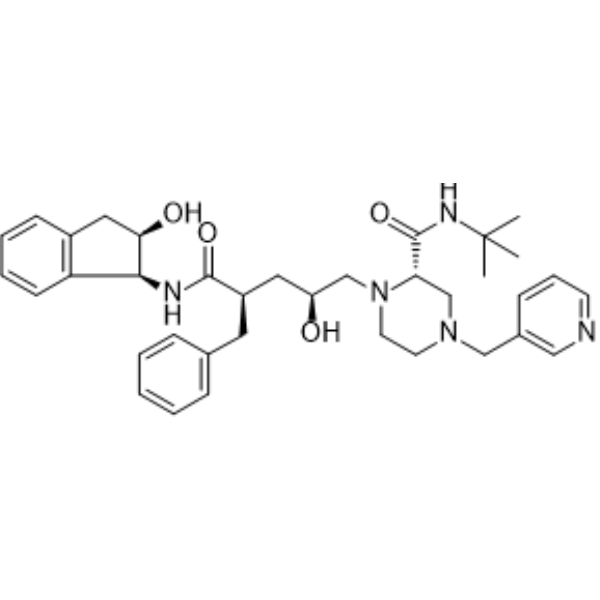
    Indinavir
    Maximum Cited Publications
    8 Publications Verification

    MK-639 free base; L-735524 free base

    HIV HIV Protease Apoptosis MMP SARS-CoV Inflammation/Immunology Cancer
    Indinavir (MK-639 free base) is an orally active and selective HIV-1 protease inhibitor with a Ki of 0.54 nM for PR. Indinavir exhibits anticancer activity by inhibiting the activation of MMPs-2 hydrolysis, anti-angiogenesis and inducing apoptosis. Indinavir is also a SARS-CoV 3CL pro inhibitor .
    Indinavir
  • HY-B0689A
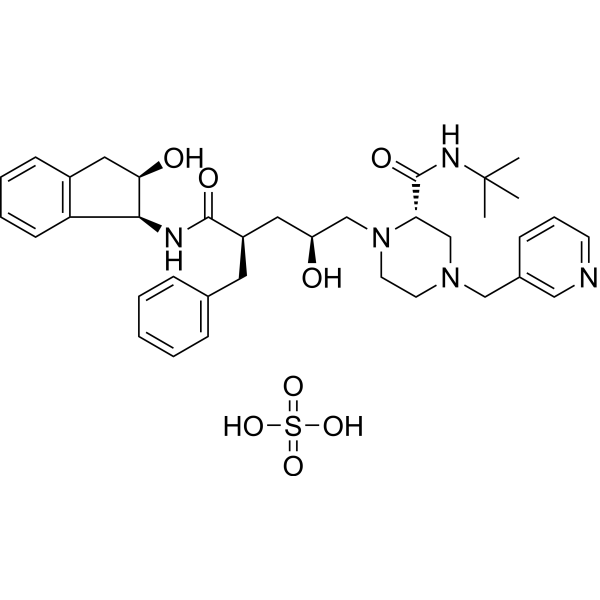
    Indinavir sulfate
    Maximum Cited Publications
    8 Publications Verification

    MK-639; L735524

    HIV HIV Protease SARS-CoV Apoptosis MMP Infection Cancer
    Indinavir sulfate (MK-639) is an orally active and selective HIV-1 protease inhibitor with a Ki of 0.54 nM for PR. Indinavir sulfate exhibits anticancer activity by inhibiting the activation of MMPs-2 hydrolysis, anti-angiogenesis and inducing apoptosis. Indinavir sulfate is also a SARS-CoV 3CL pro inhibitor .
    Indinavir sulfate
  • HY-N2547
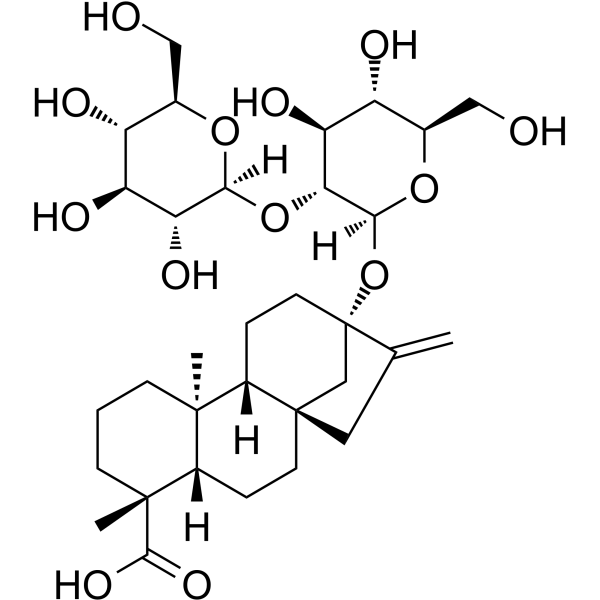
    Steviolbioside
    1 Publications Verification

    Drug Intermediate Bacterial Infection Metabolic Disease Inflammation/Immunology Cancer
    Steviolbioside is a sweetener and also an important pharmaceutical intermediate. Steviolbioside can inhibit the proliferation of various tumor cells. Steviolbioside has an MIC of 3.8 µg/mL for Mycobacterium tuberculosis. Steviolbioside also has antidiabetic activity. Steviolbioside can be used in the research of tuberculosis, diabetes and tumors such as breast cancer .
    Steviolbioside
  • HY-W075903

    Cobalt hexammine trichloride; Hexaamminecobalt trichloride

    Biochemical Assay Reagents SOD Glutathione S-transferase Metabolic Disease Cancer
    Hexaamminecobalt (III) chloride is an orally active cobalt coordination compound. Hexaamminecobalt (III) chloride restores the activities of liver antioxidant enzymes (SOD, Catalase) and detoxification enzyme GST. Hexaamminecobalt (III) chloride restores GSH content and reduces DAG. Hexaamminecobalt (III) chloride impairs renal function. Hexaamminecobalt (III) chloride exerts anti-carcinogenic effects in Diethylnitrosamine (HY-N7434)-induced hepatocarcinoma .
    Hexaamminecobalt(III) chloride
  • HY-131113
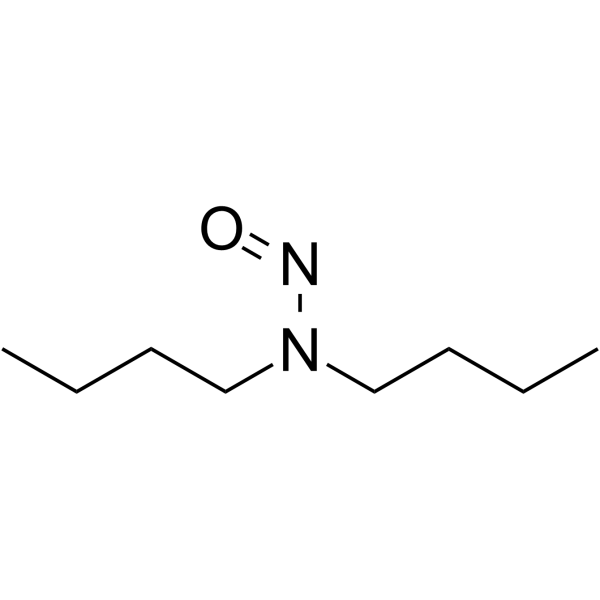
    N-Nitrosodibutylamine
    1 Publications Verification

    N-Nitroso-di-n-butylamine

    Caspase Apoptosis Cancer
    N-Nitrosodibutylamine (N-Nitroso-di-n-butylamine) is a nitrosamine enriched in the drinking water. N-Nitrosodibutylamine regulates caspase pathway. N-Nitrosodibutylamine induces Apoptosis. N-Nitrosodibutylamine induces hepatocarcinoma and oxidative DNA damage .
    N-Nitrosodibutylamine
  • HY-154825

    20(OH)D3; 20S-Hydroxyvitamin D3

    VD/VDR Aryl Hydrocarbon Receptor NF-κB Cytochrome P450 Inflammation/Immunology Cancer
    20-Hydroxyvitamin D3 (20(OH)D3), a product of vitamin D3 hydroxylation, is a noncalcemic immunomodulator. 20-Hydroxyvitamin D3 binds to vitamin D receptor (VDR), activates VDR and aryl hydrocarbon receptor (AhR) signaling, stimulates CYP24A1 expression, and drives VDR nuclear translocation. 20-Hydroxyvitamin D3 inhibits NF-κB activity via IκBα upregulation. 20-Hydroxyvitamin D3 acts as a substrate for CYP27B1 and rat CYP24A1, undergoing hydroxylation to form dihydroxy-derivatives. 20-Hydroxyvitamin D3 inhibits cell proliferation, colony formation, migration, and tumor growth, and induces cell differentiation in cancer cells. 20-Hydroxyvitamin D3 can be used for the research of inflammatory and autoimmune diseases, melanoma, breast carcinomas, and hepatocarcinoma .
    20-Hydroxyvitamin D3
  • HY-131055

    ADC Payload PI3K Apoptosis Cancer
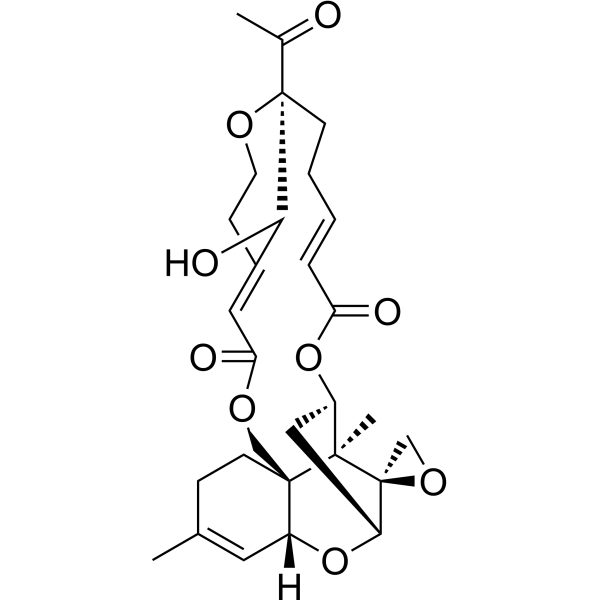
    Mytoxin B is an ADC cytotoxin. Mytoxin B is a satratoxin-type trichothecene macrolide and is similar to the effect of LY294002 (HY-10108). Mytoxin B induces cell apoptosis via PI3K/Akt pathway .
    Mytoxin B
  • HY-N6802

    Keap1-Nrf2 Cancer
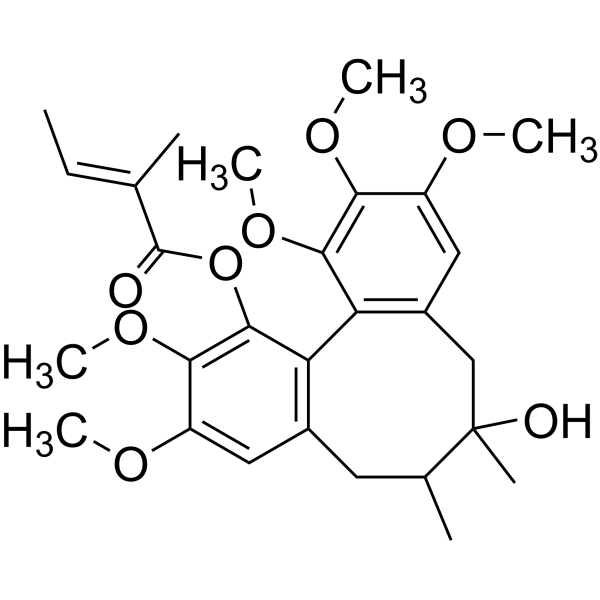
    Tigloylgomisin H is a lignan isolated from the fruits of S. chinensis, can induce quinone reductase (QR) activity in Hepa1c1c7 mouse hepatocarcinoma cells. Tigloylgomisin H functions as a monofunctional inducer that specifically upregulates phase II detoxification enzyme NQO1 through the NF-E2-related factor 2 (Nrf2)-ARE pathway, thus represents a potential liver cancer prevention agent .
    Tigloylgomisin H
  • HY-N2547R

    Reference Standards Drug Intermediate Bacterial Infection Metabolic Disease Inflammation/Immunology Cancer
    Steviolbioside (Standard) is the analytical standard of Steviolbioside (HY-N2547). This product is intended for research and analytical applications. Steviolbioside is a sweetener and also an important pharmaceutical intermediate. Steviolbioside can inhibit the proliferation of various tumor cells. Steviolbioside has an MIC of 3.8 µg/mL for Mycobacterium tuberculosis. Steviolbioside also has antidiabetic activity. Steviolbioside can be used in the research of tuberculosis, diabetes and tumors such as breast cancer .
    Steviolbioside (Standard)
  • HY-N1833

    Others Cancer
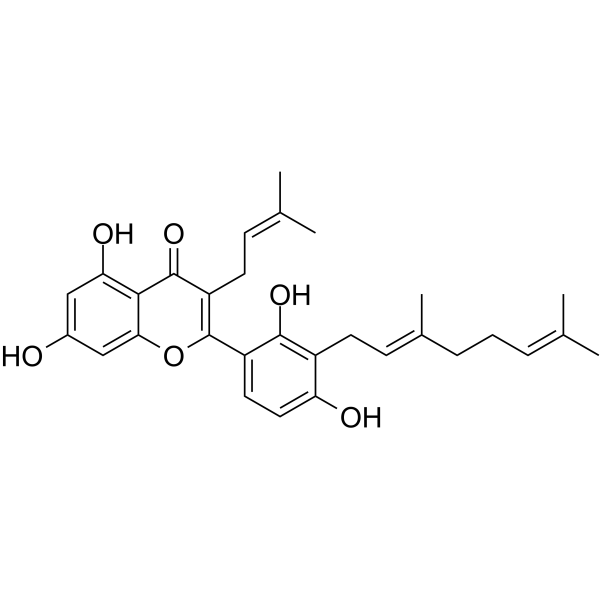
    3'-Geranyl-3-prenyl-2',4',5,7-tetrahydroxyflavone displays cytotoxicity of 1.32, 3.92 and 5.22 μm against the human cervical carcinoma HeLa, human breast carcinoma MCF-7, and human hepatocarcinoma Hep3B cells .
    3'-Geranyl-3-prenyl-2',4',5,7-tetrahydroxyflavone
  • HY-156029

    Phosphatase Cancer
    IA1-8H2 is a non-covalent, non-competitive inhibitor of PHPT1 (IC50: 3.4 μM). IA1-8H2 can be used for research of lung cancer, hepatocarcinoma, and renal cancer .
    IA1-8H2
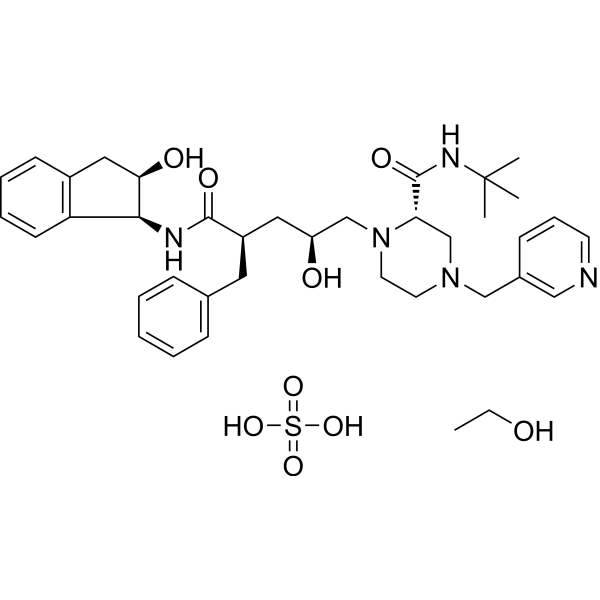
  • HY-B0689B

    MK-639 ethanolate; L735524 ethanolate

    Apoptosis MMP HIV HIV Protease SARS-CoV Infection Cancer
    Indinavir sulfate ethanolate (MK-639 ethanolate) is an orally active and selective HIV-1 protease inhibitor with a Ki of 0.54 nM for PR. Indinavir sulfate ethanolate exhibits anticancer activity by inhibiting the activation of MMPs-2 hydrolysis, anti-angiogenesis and inducing apoptosis. Indinavir sulfate ethanolate is also a SARS-CoV 3CL pro inhibitor .
    Indinavir sulfate ethanolate
  • HY-N17973

    Others Cancer
    (-)-Folicanthine is a dimeric tryptamine-related alkaloid found in the fruits of Chimonanthus praecox. (-)-Folicanthine shows cytotoxic against cancer cells. (-)-Folicanthine can be used for the research of cancer, such as gastric carcinoma and hepatocarcinoma .
    (-)-Folicanthine
  • HY-P991863

    ADC Antibody TGF-β Receptor Cancer
    GM103 Antibody is a humanized IgG1 antibody against AMHRII. GM103 Antibody can generate antibody drug conjugate (ADC) (GM103) with a potent auristatin derivative. GM103 Antibody can be used for the study of ovarian cancer and hepatocarcinoma .
    GM103 antibody
  • HY-P992434

    PD-1/PD-L1 SHP1 Interleukin Related Cancer
    OSE-279 is a high-affinity humanized monoclonal bivalent antibody targeting PD-1, the recommended isotype control is HY-P99003. OSE-279 blocks PD-1 ligand binding, inhibits PDL1-induced SHP1 phosphorylation, restores T cell activation, and promotes reactivation of primary T cell effector functions. OSE-279 binds hFcRn receptor, predicts long half-life, induces CD4 and CD8 T cell proliferation, and promotes interleukin 2 and interferon gamma secretion. OSE-279 can be used for the research of advanced malignancies, colon cancer, hepatocarcinoma, mesothelioma .
    OSE-279
  • HY-P992372

    Drug Derivative Transmembrane Glycoprotein Cancer
    huAA98 is a humanized monoclonal antibody and also a CD146 inhibitor. huAA98 binds to human CD146, regulates its activity and inhibits cancer-related angiogenesis, as well as tube formation, motility, proliferation and migration of endothelial cells. huAA98 inhibits angiogenesis in the chick chorioallantoic membrane assay and reduces microvessel density in human tumor xenograft models. huAA98 shows immunoreactivity only to neovascular vessels within tumors and inhibits the growth of tumor xenograft models. huAA98 can be used in studies related to cancer-related angiogenesis, liver cancer, leiomyosarcoma and pancreatic cancer .
    huAA98
  • HY-N17442

    Topoisomerase Caspase PARP Fungal DNA/RNA Synthesis Infection Cancer
    Echinoside A is a saponin. Echinoside A can be isolated from sea cucumber. Echinoside A inhibits the catalytic activity of Top2α, reduces the noncovalent binding of Top2α to DNA. Echinoside A activates Caspase-3 and induces PARP cleavage. Echinoside A induces Apoptosis. Echinoside A has anticancer activity against prostate cancer, hepatocellular carcinoma, and S-180 sarcoma. Echinoside A exhibits antifungal activity against a variety of fungi, with a minimum growth inhibitory concentration range of 3.12 to 50.0 μg/mL, including potent activity against Aspergillus and Penicillium species .
    Echinoside A

Inquiry Online

Your information is safe with us. * Required Fields.

Salutation


Country or Region *

Applicant Name *


Organization Name *

Department *


Email Address *


Product Name *

Cat. No.


Requested quantity *

Phone Number *


Remarks

Inquiry Online

Inquiry Information

Product Name:
Cat. No.:
Quantity:
MCE Japan Authorized Agent:

