1. Search Result
Search Result
Results for "

histidine decarboxylase

" in MedChemExpress (MCE) Product Catalog:

13

Inhibitors & Agonists

5

Natural
Products

Cat. No. Product Name Target Research Areas Chemical Structure
  • HY-N0575
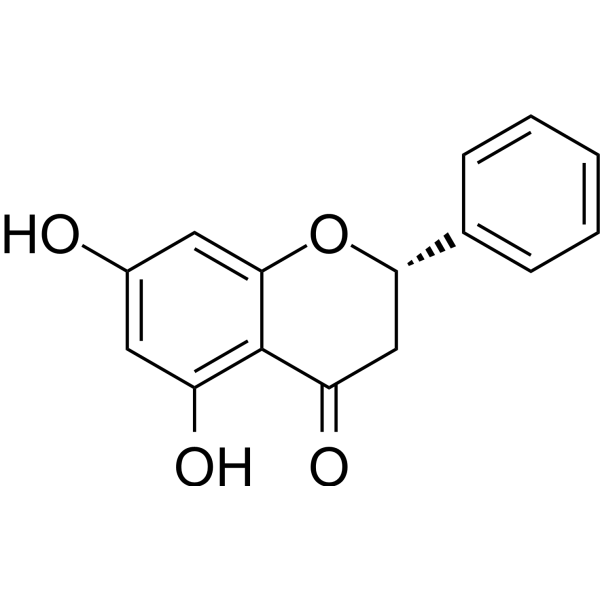
    Pinocembrin
    10+ Cited Publications

    (+)-Pinocoembrin; Dihydrochrysin; Galangin flavanone

    Bacterial Reactive Oxygen Species (ROS) Autophagy Infection Inflammation/Immunology Cancer
    Pinocembrin ((+)-Pinocoembrin) is a flavonoid found in propolis, acts as a competitive inhibitor of histidine decarboxylase, and is an effective anti-allergic agent, with antioxidant, antimicrobial and anti-inflammatory properties .
    Pinocembrin
  • HY-115822

    Amino Acid Decarboxylase Neurological Disease Metabolic Disease
    α-Fluoromethylhistidine dihydrochloride is an orally active histidine decarboxylase inhibitor. α-Fluoromethylhistidine dihydrochloride depletes histamine in enterochromaffin-like (ECL) cells, reduces the number and volume density of secretory vesicles in ECL cells, and does not affect histamine storage in mast cells. α-Fluoromethylhistidine dihydrochloride abolishes Omeprazole (HY-B0113)-induced vacuolization of ECL cells and decreases gastrin-induced histamine efflux from ECL cells. α-Fluoromethylhistidine dihydrochloride does not alter the granular characteristics of ECL cells, omeprazole-induced hypertrophy of ECL cells, gastrin-induced pancreastatin-like immunoreactivity efflux, nor does it affect gastric acid secretion induced by histamine or vagal stimulation. α-Fluoromethylhistidine dihydrochloride inhibits basal and gastrin-stimulated gastric acid secretion, reduces acid output induced by gastrin+IBMX (HY-12318), but does not directly affect acid generation in isolated parietal cells .
    α-Fluoromethylhistidine dihydrochloride
  • HY-103355
    YM022
    2 Publications Verification

    CCR Metabolic Disease
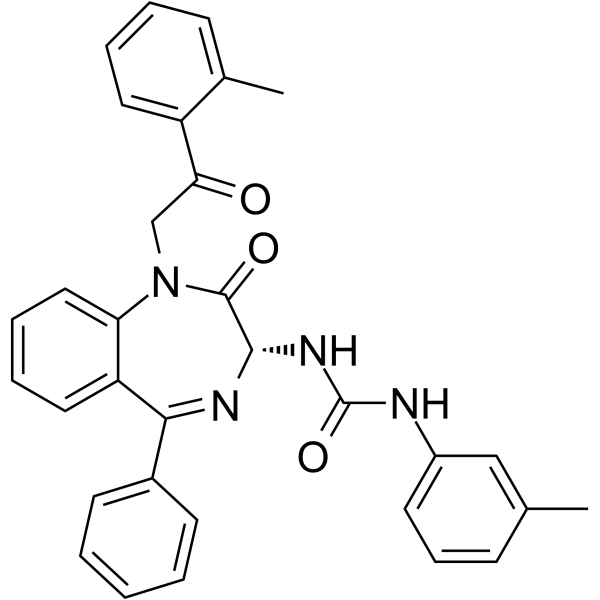
    YM022 is a highly potent, selective and orally active gastrin/cholecystokinin (CCK)-B receptor (CCK-BR) antagonist. YM022 shows the Ki values of 68 pM and 63 nM for CCK-B and CCK-A receptor, respectively . YM022 can inhibit gastrin-induced gastric acid secretion and histidine decarboxylase activation in vivo .
    YM022
  • HY-W003445

    Endogenous Metabolite Neurological Disease
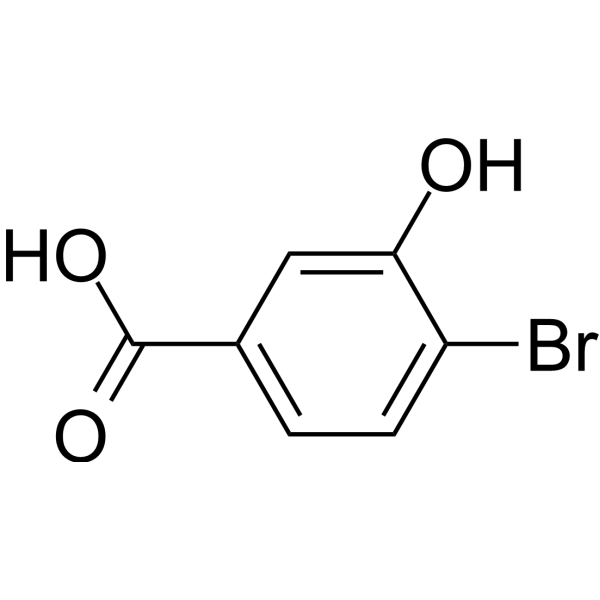
    4-Bromo-3-hydroxybenzoic acid is a metabolite of Brocresine and a histidine decarboxylase (HDC) inhibitor with IC50s of 1 mM for both rat fetal and rat gastric HDC. 4-Bromo-3-hydroxybenzoic acid also inhibits aromatic-L-amino acid decarboxylase from hog kidney and rat gastric mucosa in vitro with IC50s of 1 mM for both enzymes .
    4-Bromo-3-hydroxybenzoic acid
  • HY-N3394

    Others Infection
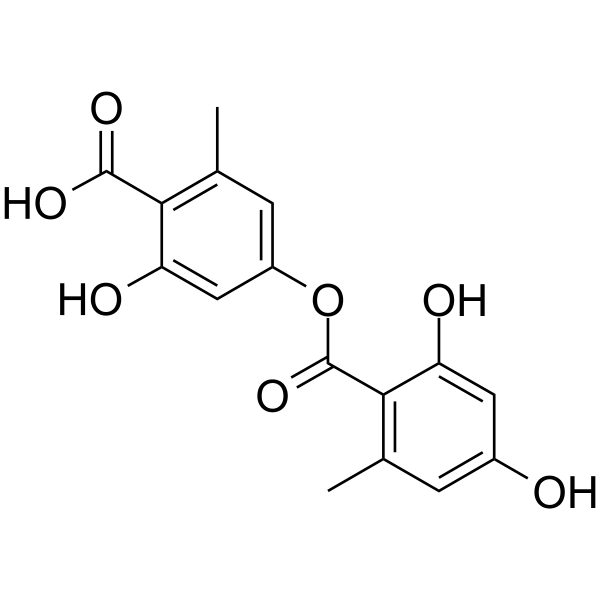
    Lecanoric acid is a histidine-decarboxylase inhibitor isolated from fungus. The inhibition by lecanoric acid is competitive with histidineand noncompetitive with pyridoxal phosphate. Lecanoric acid did not inhibit aromatic amino acid decarboxylase .
    Lecanoric acid
  • HY-W1015419

    α-Fluoromethylhistidine

    Amino Acid Decarboxylase Cardiovascular Disease Neurological Disease
    α-FMH (α-Fluoromethylhistidine) is an orally active histidine decarboxylase inhibitor. α-FMH depletes histamine in enterochromaffin-like (ECL) cells, reduces the number and volume density of secretory vesicles in ECL cells, and does not affect histamine storage in mast cells. α-FMH abolishes Omeprazole (HY-B0113)-induced vacuolization of ECL cells and decreases gastrin-induced histamine efflux from ECL cells. α-FMH does not alter the granular characteristics of ECL cells, omeprazole-induced hypertrophy of ECL cells, gastrin-induced pancreastatin-like immunoreactivity efflux, nor does it affect gastric acid secretion induced by histamine or vagal stimulation. α-FMH inhibits basal and gastrin-stimulated gastric acid secretion, reduces acid output induced by gastrin+IBMX (HY-12318), but does not directly affect acid generation in isolated parietal cells .
    α-FMH
  • HY-U00065

    Inhibostamin; Hypostamine

    Amino Acid Decarboxylase Inflammation/Immunology
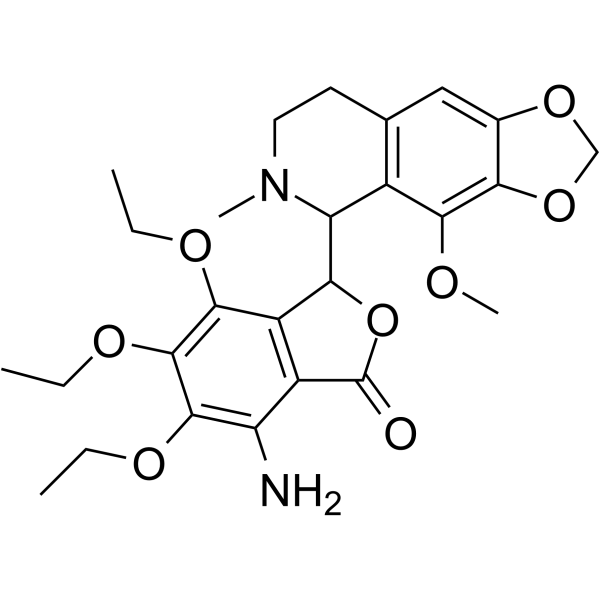
    Tritoqualine is a histidine decarboxylase inhibitor, that inhibits the release of histidine .
    Tritoqualine
  • HY-122968

    NSD-1065

    Endogenous Metabolite Neurological Disease
    Brocresine (NSD-1065) is an orally active histidine decarboxylase inhibitor and inhibits the formation of histamine from histidine. Brocresine is also a L-amino acid decarboxylase inhibitor with both a peripheral and central action. Brocresine inhibits gastric secretory response to administration of exogenous gastrin .
    Brocresine
  • HY-N0575R

    (+)-Pinocoembrin (Standard); Dihydrochrysin (Standard); Galangin flavanone (Standard)

    Reference Standards Bacterial Reactive Oxygen Species (ROS) Autophagy Infection Inflammation/Immunology Cancer
    Pinocembrin (Standard) is the analytical standard of Pinocembrin. This product is intended for research and analytical applications. Pinocembrin ((+)-Pinocoembrin) is a flavonoid found in propolis, acts as a competitive inhibitor of histidine decarboxylase, and is an effective anti-allergic agent, with antioxidant, antimicrobial and anti-inflammatory properties .
    Pinocembrin (Standard)
  • HY-E70999

    Endogenous Metabolite Metabolic Disease
    L-Histidine Decarboxylase, Lactobacillus 30a (EC 4.1.1.22) catalyzes the conversion of histidine to histamine with the help of vitamin B6. The specific reaction is as follows: Histidine decarboxylase catalyzes the conversion of histidine to histamine.
    L-Histidine Decarboxylase, Lactobacillus 30a
  • HY-103355R

    Reference Standards CCR Metabolic Disease
    YM022 (Standard) is the analytical standard of YM022 (HY-103355). This product is intended for research and analytical applications. YM022 is a highly potent, selective and orally active gastrin/cholecystokinin (CCK)-B receptor (CCK-BR) antagonist. YM022 shows the Ki values of 68 pM and 63 nM for CCK-B and CCK-A receptor, respectively . YM022 can inhibit gastrin-induced gastric acid secretion and histidine decarboxylase activation in vivo .
    YM022 (Standard)
  • HY-W003445R

    Endogenous Metabolite Reference Standards Neurological Disease
    4-Bromo-3-hydroxybenzoic acid (Standard) is the analytical standard of 4-Bromo-3-hydroxybenzoic acid (HY-W003445). This product is intended for research and analytical applications. 4-Bromo-3-hydroxybenzoic acid is a metabolite of Brocresine and a histidine decarboxylase (HDC) inhibitor with IC50s of 1 mM for both rat fetal and rat gastric HDC. 4-Bromo-3-hydroxybenzoic acid also inhibits aromatic-L-amino acid decarboxylase from hog kidney and rat gastric mucosa in vitro with IC50s of 1 mM for both enzymes .
    4-Bromo-3-hydroxybenzoic acid (Standard)
  • HY-186122

    Cholecystokinin Receptor Neurological Disease Inflammation/Immunology
    CCK2R agonist-1 (Compound 2S) is a CCK2R agonist, with an IC50 of 48 nM against wild-type CCK-2R and an IC50 of 450 nM against mutant CCK-2R (N353L). CCK2R agonist-1 stimulates the production of inositol phosphate. The changes in pH and HDC induced by CCK2R agonist-1 in mice are comparable to those induced by the full-length peptide agonist Gastrin. CCK2R agonist-1 can be used in studies of gastric diseases and pain .
    CCK2R agonist-1

Inquiry Online

Your information is safe with us. * Required Fields.

Salutation


Country or Region *

Applicant Name *


Organization Name *

Department *


Email Address *


Product Name *

Cat. No.


Requested quantity *

Phone Number *


Remarks

Inquiry Online

Inquiry Information

Product Name:
Cat. No.:
Quantity:
MCE Japan Authorized Agent:

