1. Search Result
Search Result
Results for "

hyperuricemic

" in MedChemExpress (MCE) Product Catalog:

20

Inhibitors & Agonists

4

Natural
Products

3

Isotope-Labeled Compounds

Cat. No. Product Name Target Research Areas Chemical Structure
  • HY-B0174
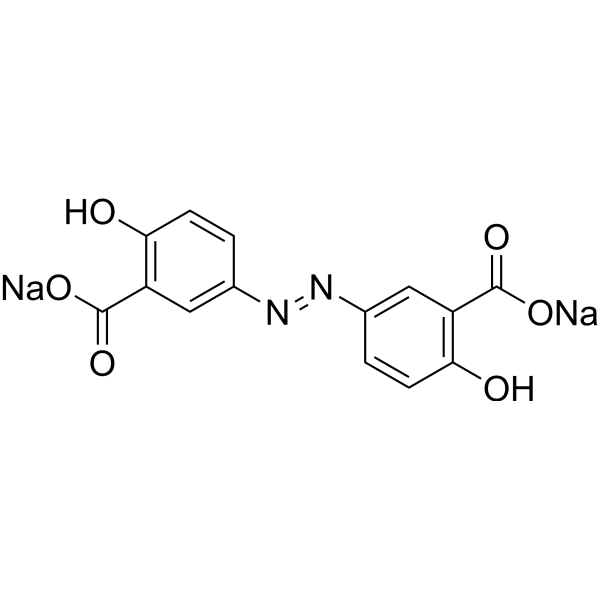
    Olsalazine Disodium
    2 Publications Verification

    Apoptosis Metabolic Disease Inflammation/Immunology Cancer
    Olsalazine Disodium is an orally active prodrug of 5-ASA (HY-15027). Olsalazine Disodium can inhibit cells proliferation and induce apoptosis. Olsalazine Disodium can reduce DAI and MPO activity and inhibit inflammatory cytokines levels. Olsalazine Disodium can be used for the researches of cancer, inflammation and metabolic disease, such as colorectal cancer, inflammatory bowel disease (IBD) and hyperuricemic .
    Olsalazine Disodium
  • HY-B0174A
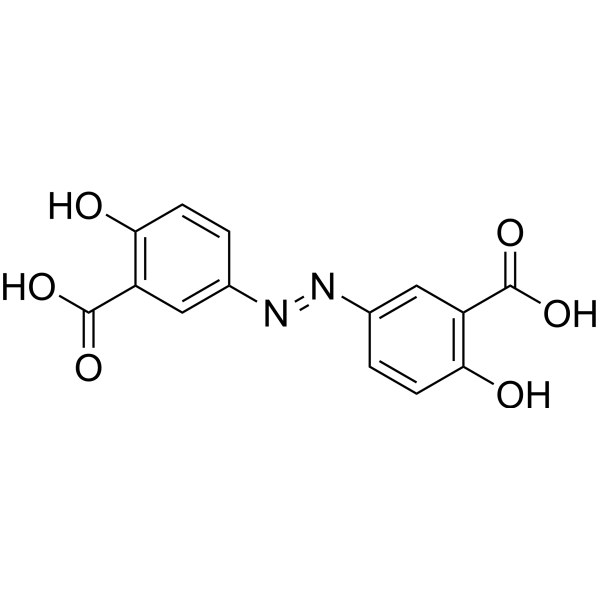
    Olsalazine
    2 Publications Verification

    Apoptosis Metabolic Disease Inflammation/Immunology Cancer
    Olsalazine is an orally active prodrug of 5-ASA (HY-15027). Olsalazine can inhibit cells proliferation and induce apoptosis. Olsalazine can reduce DAI and MPO activity and inhibit inflammatory cytokines levels. Olsalazine can be used for the researches of cancer, inflammation and metabolic disease, such as colorectal cancer, inflammatory bowel disease (IBD) and hyperuricemic .
    Olsalazine
  • HY-N5116

    Others Metabolic Disease Inflammation/Immunology
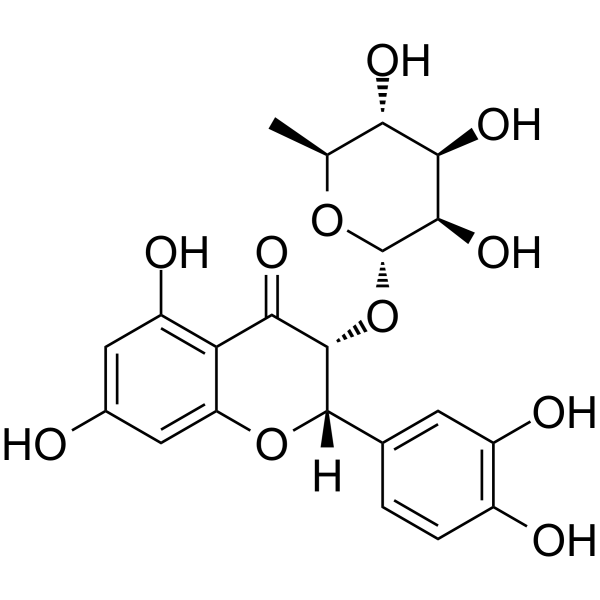
    Neoisoastilbin possesses antioxidant, anti-hyperuricemic and anti-Inflammatory activities .
    Neoisoastilbin
  • HY-116694

    Apoptosis Reactive Oxygen Species (ROS) Reverse Transcriptase Xanthine Oxidase URAT1 Infection Metabolic Disease Inflammation/Immunology Cancer
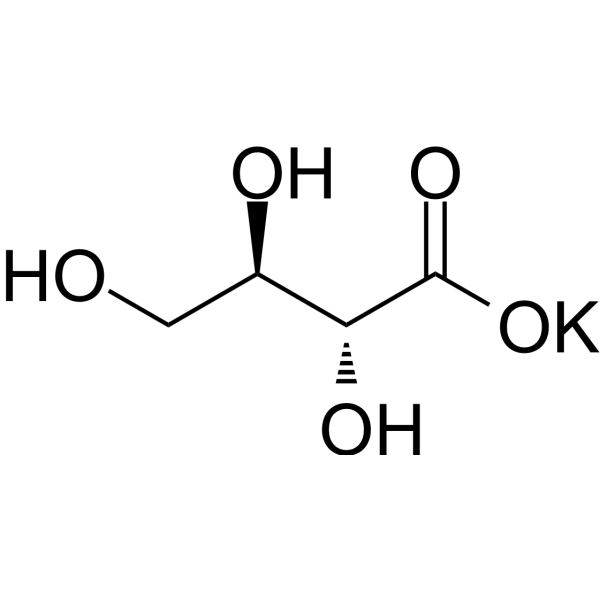
    Digallic acid is an antioxidant, antimutagenic, antigenotoxic, and anti-hyperuricemic compound. Digallic acid is a reverse transcriptase and XOD, URAT1 (IC50: 5.34 μM) inhibitor. Digallic acid scavenges DPPH· and O2·− radicals. Digallic acid induces apoptosis. Digallic acid can be isolated from the fruits of Pistascia lentiscus .
    Digallic acid
  • HY-178342

    Xanthine Oxidase Reactive Oxygen Species (ROS) SOD Metabolic Disease Inflammation/Immunology Cancer
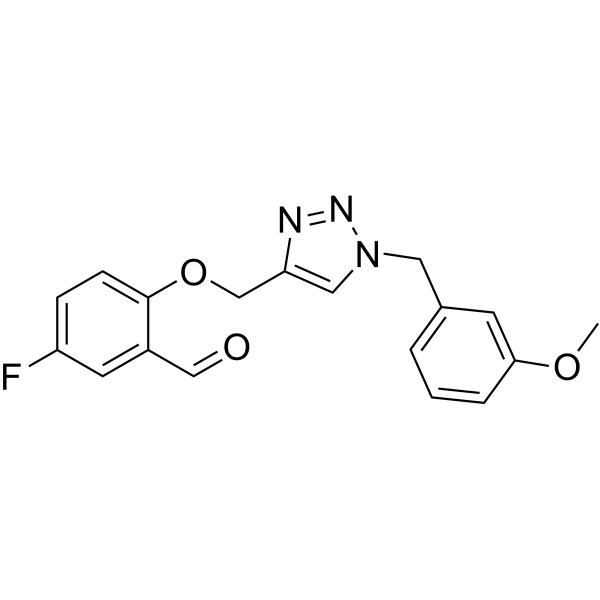
    Xanthine oxidase-IN-18 is a potent orally activeXanthine oxidase (XO) inhibitor (IC50 = 0.263 μM). Xanthine oxidase-IN-18 exerts inhibition by directly and stably binding to the xanthine oxidase Mo-co active site. Xanthine oxidase-IN-18 exhibits reactive oxygen species (ROS) scavenging activity. Xanthine oxidase-IN-18 shows anti-hyperuricemia effects in a Potassium oxonate (HY-17511)-induced hyperuricemic rat model. Xanthine oxidase-IN-18 can be used for hyperuricemia, breast and lung cancer research .
    Xanthine oxidase-IN-18
  • HY-B0174AR

    Reference Standards Apoptosis Metabolic Disease Inflammation/Immunology Cancer
    Olsalazine (Standard) is an orally active prodrug of 5-ASA (HY-15027). Olsalazine (Standard) can inhibit cells proliferation and induce apoptosis. Olsalazine (Standard) can reduce DAI and MPO activity and inhibit inflammatory cytokines levels. Olsalazine (Standard) can be used for the researches of cancer, inflammation and metabolic disease, such as colorectal cancer, inflammatory bowel disease (IBD) and hyperuricemic .
    Olsalazine (Standard)
  • HY-B0174R

    Reference Standards Apoptosis Metabolic Disease Inflammation/Immunology Cancer
    Olsalazine Disodium (Standard) is an orally active prodrug of 5-ASA (HY-15027). Olsalazine Disodium (Standard) can inhibit cells proliferation and induce apoptosis. Olsalazine Disodium (Standard) can reduce DAI and MPO activity and inhibit inflammatory cytokines levels. Olsalazine Disodium (Standard) can be used for the researches of cancer, inflammation and metabolic disease, such as colorectal cancer, inflammatory bowel disease (IBD) and hyperuricemic .
    Olsalazine Disodium (Standard)
  • HY-106300

    Others Cardiovascular Disease
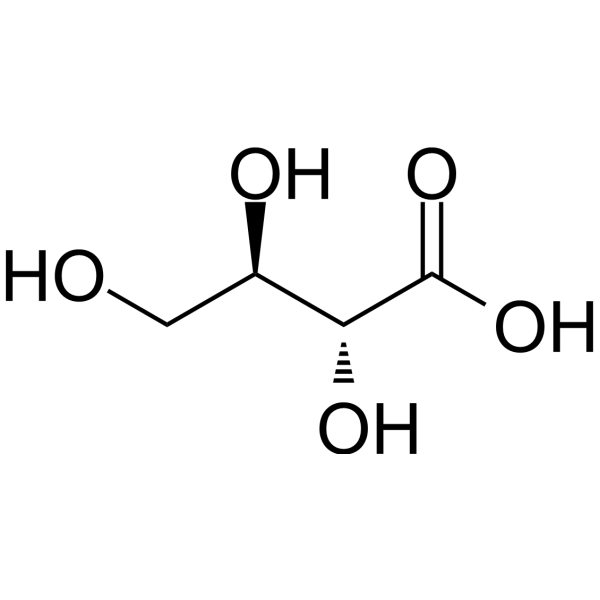
    AA 193 is a uricosuric agent. AA 193 increases urate excretion in hyperuricemic rats .
    AA 193
  • HY-168740

    URAT1 Metabolic Disease
    URAT1 inhibitor 11 (Compound 7) is a URAT1 inhibitor with an IC50 value of 0.18 μM. URAT1 inhibitor 11 exhibits potent hypouricemic effects in hyperuricemic zebrafish induced by Potassium oxonate (HY-17511) and Xanthine sodium salt (HY-W017389) .
    URAT1 inhibitor 11
  • HY-144456

    Xanthine Oxidase Metabolic Disease
    Xanthine oxidase-IN-5 is an effective and orally active xanthine oxidase (XO) inhibitor with IC50 value of 0.70 μM. Xanthine oxidase-IN-5 displays favorable agent-like properties with ligand efficiency (LE) and lipophilic ligand efficiency (LLE) values of 0.33 and 3.41, respectively. Xanthine oxidase-IN-5 shows potent hypouricemic effects in hyperuricemic rat model .
    Xanthine oxidase-IN-5
  • HY-B0174AS

    Isotope-Labeled Compounds Apoptosis Others Metabolic Disease Inflammation/Immunology Cancer
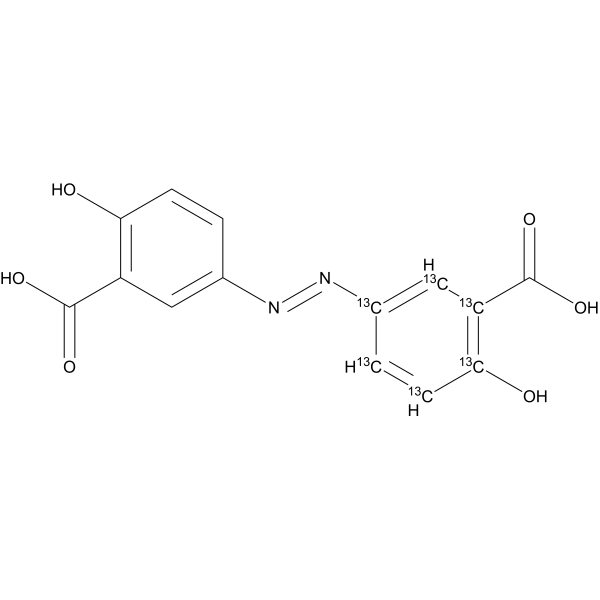
    Olsalazine- 13C6 is the 13C labeled Olsalazine (HY-B0174A). Olsalazine is an orally active prodrug of 5-ASA (HY-15027). Olsalazine can inhibit cells proliferation and induce apoptosis. Olsalazine can reduce DAI and MPO activity and inhibit inflammatory cytokines levels. Olsalazine can be used for the researches of cancer, inflammation and metabolic disease, such as colorectal cancer, inflammatory bowel disease (IBD) and hyperuricemic .
    Olsalazine-13C6
  • HY-B0174AS2

    Isotope-Labeled Compounds Apoptosis Metabolic Disease Inflammation/Immunology Cancer
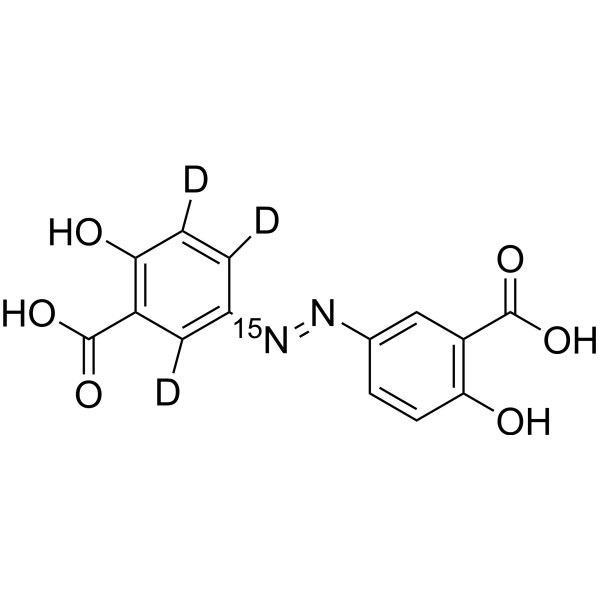
    Olsalazine-d3, 15N is 15N and deuterated labeled Olsalazine (HY-B0174A). Olsalazine is an orally active prodrug of 5-ASA (HY-15027). Olsalazine can inhibit cells proliferation and induce apoptosis. Olsalazine can reduce DAI and MPO activity and inhibit inflammatory cytokines levels. Olsalazine can be used for the researches of cancer, inflammation and metabolic disease, such as colorectal cancer, inflammatory bowel disease (IBD) and hyperuricemic .
    Olsalazine-d3,15N
  • HY-153972

    URAT1 Xanthine Oxidase Metabolic Disease Inflammation/Immunology
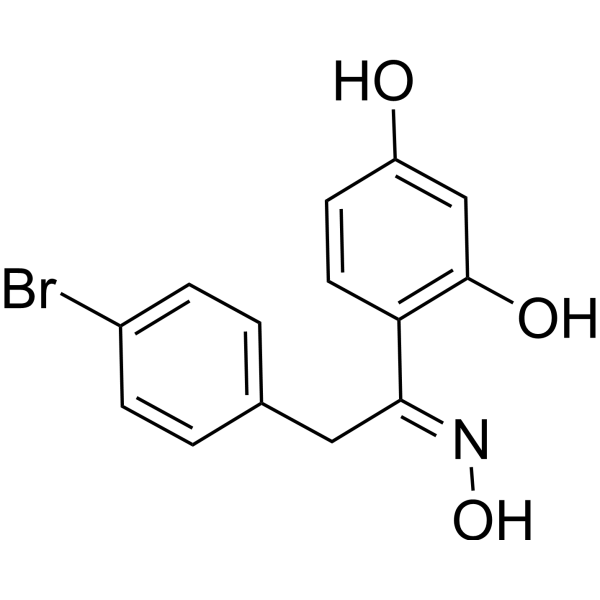
    URAT1&XO inhibitor 2 (Compound BDEO) is a dual inhibitor of xanthine oxidase and URAT1, with IC50 of 3.3 μM for xanthine oxidase. URAT1&XO inhibitor 2 blocks uptake of uric acid in HEK293 cells expressing URAT1, with a Ki value of 0.145 μM. URAT1&XO inhibitor 2 decreases serum urate level and uric acid excretion in hyperuricemic mice. URAT1&XO inhibitor 2 can be used for research of hyperuricemia .
    URAT1&XO inhibitor 2
  • HY-183543

    URAT1 GLUT Metabolic Disease Endocrinology
    URAT1/GLUT9-IN-2 (Compound 42) is a selective, orally active URAT1/GLUT9 inhibitor, with an IC50 of 2.81 μM against URAT1 and an IC50 of 12.53 μM against GLUT9. URAT1/GLUT9-IN-2 reduces serum uric acid levels and protects renal function. URAT1/GLUT9-IN-2 can be used in research related to hyperuricemia and hyperuricemic nephropathy .
    URAT1/GLUT9-IN-2
  • HY-182294

    URAT1 Metabolic Disease Inflammation/Immunology
    HYJ-2 is a URAT1 inhibitor and urate-lowering agent. HYJ-2 inhibits URAT1-mediated urate transport and interacts with key residues within the URAT1 binding pocket. HYJ-2 reduces serum urate levels in hyperuricemic mice without inducing liver or kidney injury. HYJ-2 shows low cytotoxicity to hepatocytes and renal cells. HYJ-2 does not significantly induce hepatocyte apoptosis or mitochondrial dysfunction. HYJ-2 can be used in studies related to hyperuricemia and gout .
    HYJ-2
  • HY-183658

    URAT1 GLUT Metabolic Disease Inflammation/Immunology
    URAT1/GLUT9-IN-3 is an orally active URAT1/GLUT9 dual inhibitor with IC50 values of 4.01 and 1.60 μM. URAT1/GLUT9-IN-3 inhibits URAT1-mediated uric acid uptake and GLUT9-mediated uric acid transport, reducing renal urate reabsorption. URAT1/GLUT9-IN-3 reduces serum uric acid levels in hyperuricemic mice. URAT1/GLUT9-IN-3 can be used for the researches of gout and hyperuricemia .
    URAT1/GLUT9-IN-3
  • HY-182000

    Xanthine Oxidase BCRP GLUT Metabolic Disease
    Xanthine oxidase-IN-23 (Compound BPF) is an orally active, reversible, mixed-type Xanthine oxidase inhibitor with an IC50 of 3.33 μM. Xanthine oxidase-IN-23 directly binds to XOD in a reversible mixed-type manner to inhibit its catalytic activity. Xanthine oxidase-IN-23 upregulates ABCG2 and downregulates GLUT9 to promote renal urate excretion. Xanthine oxidase-IN-23 reduces serum urate levels and improves renal function in hyperuricemic mice. Xanthine oxidase-IN-23 can be used in the research of hyperuricemia .
    Xanthine oxidase-IN-23
  • HY-B0174AS3

    Isotope-Labeled Compounds Apoptosis Metabolic Disease Inflammation/Immunology Cancer
    Olsalazine-d6 is the deuterium labeled Olsalazine (HY-B0174A). Olsalazine is an orally active prodrug of 5-ASA (HY-15027). Olsalazine can inhibit cells proliferation and induce apoptosis. Olsalazine can reduce DAI and MPO activity and inhibit inflammatory cytokines levels. Olsalazine can be used for the researches of cancer, inflammation and metabolic disease, such as colorectal cancer, inflammatory bowel disease (IBD) and hyperuricemic.
    Olsalazine-d6
  • HY-N17914

    Xanthine Oxidase Metabolic Disease
    Smilaxchinoside A is an orally active steroidal glycoside found in the roots of S. riparia. Smilaxchinoside A reduces serum uric acid levels and shows potent uricosuric activity. Smilaxchinoside A inhibits XOD activity and downregulates renal mURAT1 expression. Smilaxchinoside A can be used for the research of hyperuricemia .
    Smilaxchinoside A
  • HY-N17383

    Toll-like Receptor (TLR) NF-κB Collagen Interleukin Related Cadherin NOD-like Receptor (NLR) TGF-β Receptor FXR Apoptosis Metabolic Disease Inflammation/Immunology
    Ligusticum cycloprolactam is a potent, orally active, and CNS-penetrant TLR4/NF-κB inhibitor, exhibiting anti-inflammatory and neuroprotective activity. Ligusticum cycloprolactam reduces FPR1 expression, inhibits NLRP3 inflammasome, TLR4/NF-κB, hepatic MAPK and TGF-β signaling, and selectively activates hepatic FXR. Ligusticum cycloprolactam attenuates pro-inflammatory mediator production, enhances anti-inflammatory cytokine secretion, regulates renal uric acid transporters, and preserves intestinal microbiota composition. Ligusticum cycloprolactam can be used for the research of ischemic stroke, hyperuricemic nephropathy, neuroinflammation, and metabolic dysfunction-associated fatty liver disease .
    Ligusticum cycloprolactam

Inquiry Online

Your information is safe with us. * Required Fields.

Salutation


Country or Region *

Applicant Name *


Organization Name *

Department *


Email Address *


Product Name *

Cat. No.


Requested quantity *

Phone Number *


Remarks

Inquiry Online

Inquiry Information

Product Name:
Cat. No.:
Quantity:
MCE Japan Authorized Agent:

