
1. Search Result
Search Result
Results for "

immune evasion

" in MedChemExpress (MCE) Product Catalog:

15

Inhibitors & Agonists

3

Screening Libraries

1

Biochemical Assay Reagents

1

Isotope-Labeled Compounds

2

Click Chemistry

Cat. No. Product Name Target Research Areas Chemical Structure
  • HY-D0195

    Environmental Pollutants Biochemical Assay Reagents Neurological Disease Metabolic Disease Inflammation/Immunology Cancer
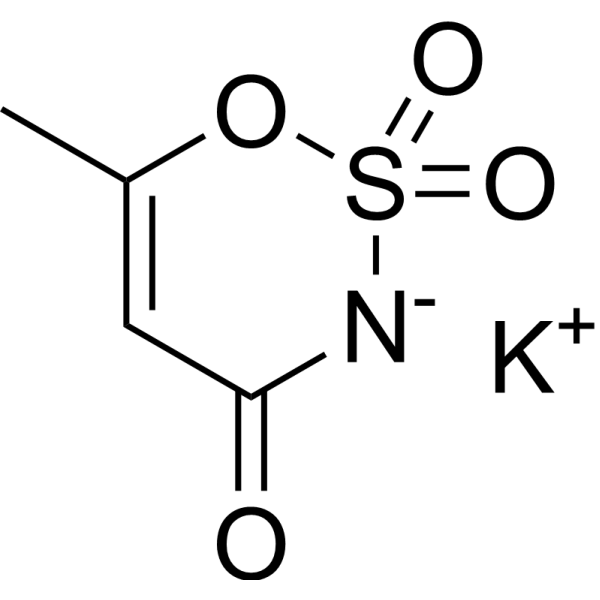
    Acesulfame potassium is a synthetic sweetener. Long-term use of Acesulfame potassium can affect cognitive function, possibly by altering the neurometabolic functions in mice. Acesulfame potassium can suppress autophagic degradation of PD-L1 in RIL-175 and SK-Hep1 cells through the ERK1/2-mTORC1-ULK1 pathway, which may be related to immune evasion in cancer cells. Acesulfame potassium can be used in research on neurological diseases, metabolic disorders, cancer, and immune evasion .
    Acesulfame potassium
  • HY-D1056B3

    LPS, from bacterial (Klebsiella pneumoniae)

    Toll-like Receptor (TLR) Inflammation/Immunology
    Lipopolysaccharides, from Klebsiella pneumoniae (LPS, from bacterial (Klebsiella pneumoniae)) are lipopolysaccharide endotoxins and TLR4 activators derived from Klebsiella pneumoniae, and are classified as S-type LPS. Lipopolysaccharides, from Klebsiella pneumoniae exhibit a typical three-part structure: O-antigen, core oligosaccharide, and lipid A. Lipopolysaccharides, from Klebsiella pneumoniae may participate in bacterial immune evasion by inhibiting complement-mediated killing and suppressing the host's secretion of antimicrobial peptides, thereby allowing the bacteria to escape immune defenses. Lipopolysaccharides, from Klebsiella pneumoniae possess high viscosity and resistance to serum-mediated killing, which may lead to sepsis. Lipopolysaccharides, from Klebsiella pneumoniae can be used to construct Acute Lung Injury Model .
    It is recommended to prepare a solution with concentration ≥2 mg/mL. Vortex thoroughly for more than 10 minutes. Due to the adsorption characteristics of LPS, silanized container or low adsorption centrifuge tubes should be used for aliquoting and storage, and mix thoroughly before use.
    Lipopolysaccharides, from Klebsiella pneumoniae
  • HY-176786

    PROTACs Ras Apoptosis PERK p38 MAPK Caspase TNF Receptor Cancer
    MCB-36 is a VHL-recruiting pan-KRAS PROTAC degrader without affecting KRAS transcription. MCB-36 exhibits minimal effects on HRAS and NRAS protein levels. MCB-36 binds to the GDP-loaded state of G12D, G12C, G12V, and wild-type KRAS with high affinities Kd ≈ 1 pM). MCB-36 decreases p-ERK levels, leading to cell apoptosis. MCB-36 effectively suppress KRAS G12C inhibitor-resistant cancer cells and remodel the tumor immune microenvironment. MCB-36 can be used for the study of colorectal cancer and lung cancer (Pink: Target protein ligand; Blue: E3 ligand (HY-112078); Black: Linker (HY-W091879)) .
    MCB-36
  • HY-162080
    METTL1-WDR4-IN-1
    1 Publications Verification

    DNA Methyltransferase Pyruvate Kinase Cancer
    METTL1-WDR4-IN-1 (Compound 1) is a selective competitive inhibitor of the methyltransferase complex METTL1-WDR4 (IC50 = 144 μM). METTL1-WDR4-IN-1 inhibits the m 7G methyltransferase activity of the METTL1-WDR4 complex, blocking m 7G modification of PKM mRNA, reducing PKM2 protein expression, disrupting the METTL1/PKM2/H3K9la positive feedback loop, and simultaneously inhibiting PKM2 nuclear translocation-mediated CD155 transcriptional activation. METTL1-WDR4-IN-1 can inhibit tumor cell proliferation, weaken glycolytic metabolism, reverse tumor immune evasion (restoring NK cell and CD8 + T cell function), and regulate RNA epigenetic modification and the tumor immune microenvironment. METTL1-WDR4-IN-1 can be used in immunotherapy research for cancers such as colorectal cancer, and is particularly suitable for use in combination with PKM2 inhibitors to enhance anti-tumor treatment efficacy .
    METTL1-WDR4-IN-1
  • HY-176785S

    Ras Apoptosis p38 MAPK Caspase TNF Receptor Cancer
    MCB-294 is a dual-state pan-KRAS inhibitor that selectively inhibits KRAS over NRAS and HRAS. MCB-294 capable of binding both the active (GTP-bound) and inactive (GDP-bound) forms of KRAS with Kds of approximately 1 pM and 10 nM, respectively. MCB-294 broadly impairs the growth of hTERT-HPNE cells expressing G12D, G12C, G12V, G12S, G13D, and wild-type KRAS, with IC50s of approximately 700 nM. MCB-294 induces irreversible apoptosis in KRAS-mutated tumors. MCB-294 effectively suppress KRAS G12C inhibitor-resistant cancer cells and remodel the tumor immune microenvironment. MCB-294 can be used for the study of pancreatic cancer, colorectal cancer and lung cancer .
    MCB-294
  • HY-172767

    PROTACs STAT Apoptosis Cancer
    STAT3-D11-PROTAC-VHL (Compound D11-PROTAC) is a PROTAC degrader targeting Signal Transducer and Activator of Transcription 3 (STAT3). STAT3-D11-PROTAC-VHL exhibits anti-tumor activity with IC50 values of 1335 nM and 1973 nM against HeLa and MCF-7 cells, respectively. STAT3-D11-PROTAC-VHL binds to the DNA-binding domain of STAT3 and recruits the E3 ligase VHL to form a ternary complex, leading to the ubiquitination of STAT3 and subsequent degradation by the proteasome. STAT3-D11-PROTAC-VHL also inhibits tumor cell growth, induces cell cycle arrest and apoptosis, and suppresses tumor immune evasion .
    STAT3-D11-PROTAC-VHL
  • HY-161774

    CD73 Cancer
    ST80 is an inhibitor for interaction of OTUD4 and CD73. ST80 decreases CD73 protein level, increases CD73 protein turnover, reduces immune evasion of tumor cells, and thus exhibits antitumor efficacy against immunosuppressive triple-negative breast cancer (TNBC) .
    ST80
  • HY-178160

    SARS-CoV Virus Protease Infection
    SARS-CoV-2 PLpro-IN-2 (Compound 12) is a highly selective SARS-CoV-2 papain-like protease (PLpro) inhibitor of (IC50=0.06 μM). SARS-CoV-2 PLpro-IN-2 inhibits viral replication and immune evasion. SARS-CoV-2 PLpro-IN-2 exhibits antiviral efficacy in HeLa-ACE2 cells (EC50=2.9 μM). SARS-CoV-2 PLpro-IN-2 is promising for research of COVID-19 .
    SARS-CoV-2 PLpro-IN-2
  • HY-176874

    Phosphodiesterase (PDE) Inflammation/Immunology Cancer
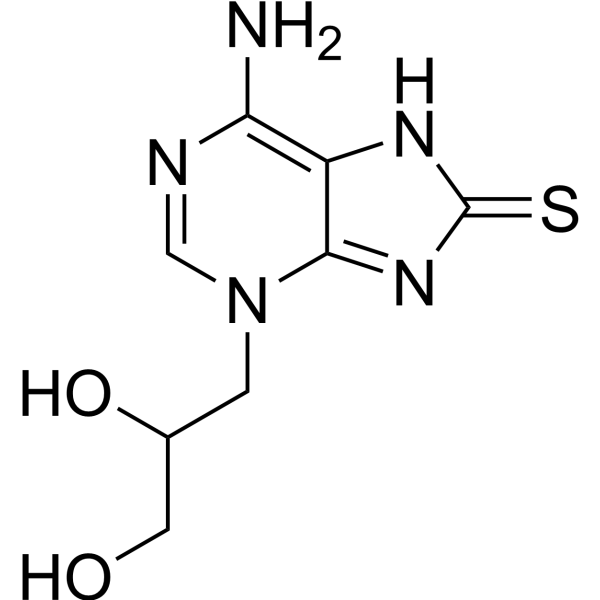
    Enpp-1-IN-29 (Compound 1) is a highly selective ectonucleotide pyrophosphatase/phosphodiesterase 1 (ENPP1) inhibitor (IC50=0.05 nM). Enpp-1-IN-29 is promising for research of ENPP1-overexpressing cancers (e.g., breast cancer, head/neck cancer, metastatic chromosome-unstable tumors) and immune-related diseases (e.g., autoimmune disorders, tumor immune evasion) .
    Enpp-1-IN-29
  • HY-W550739

    PD-1/PD-L1 ERK mTOR Autophagy Neurological Disease Metabolic Disease Inflammation/Immunology Cancer
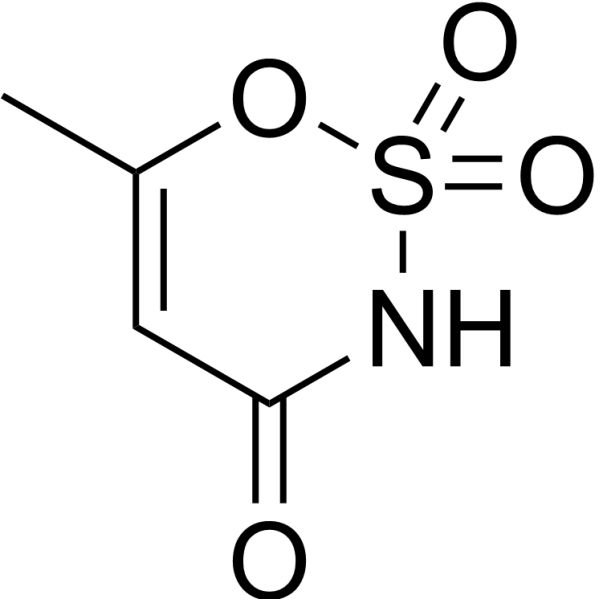
    Acesulfame is a synthetic sweetener. Long-term use of Acesulfame can affect cognitive function. Acesulfame potassium can suppress autophagic degradation of PD-L1 in RIL-175 and SK-Hep1 cells through the ERK1/2-mTORC1-ULK1 pathway, which may be related to immune evasion in cancer cells. Acesulfame can be used in research on neurological diseases, metabolic disorders, cancer, and immune evasion .
    Acesulfame
  • HY-149362

    SARS-CoV Infection
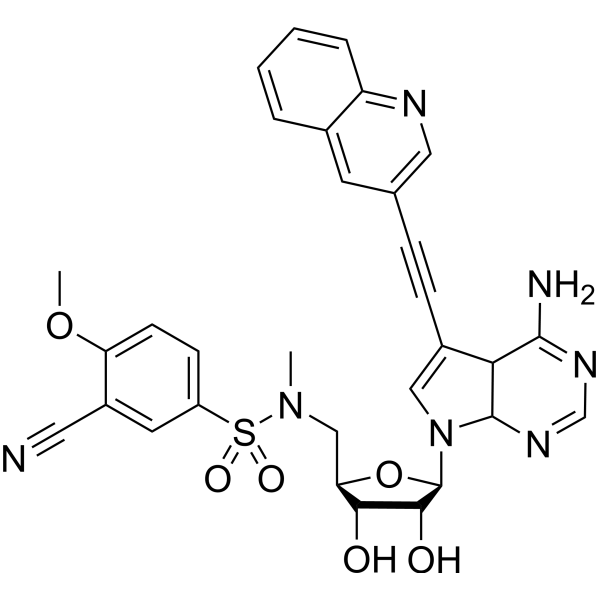
    MTase-IN-1 (compound 26) is a potent and selective inhibitor of coronavirus nsp14 N7-methyltransferases, with an IC50 of 0.72 nM. MTase-IN-1 impairs viral RNA translation and immune evasion .
    MTase-IN-1
  • HY-D0195R

    Biochemical Assay Reagents Reference Standards Neurological Disease Metabolic Disease Inflammation/Immunology Cancer
    Acesulfame potassium (Standard) is the analytical standard of Acesulfame potassium (HY-D0195). This product is intended for research and analytical applications. Acesulfame potassium is a synthetic sweetener. Long-term use of Acesulfame potassium can affect cognitive function, possibly by altering the neurometabolic functions in mice. Acesulfame potassium can suppress autophagic degradation of PD-L1 in RIL-175 and SK-Hep1 cells through the ERK1/2-mTORC1-ULK1 pathway, which may be related to immune evasion in cancer cells. Acesulfame potassium can be used in research on neurological diseases, metabolic disorders, cancer, and immune evasion .
    Acesulfame potassium (Standard)
  • HY-174313

    Bacterial Toll-like Receptor (TLR) Collagen Infection Inflammation/Immunology
    Antibacterial agent 284 (Compound 7) is an Antibacterial agent. Antibacterial agent 284 has a zinc-binding structure and potent inhibitory activity against Legionella pneumophila metalloprotease ProA (IC50: 0.96 μM) with zinc-binding structure. Antibacterial agent 284 significantly inactivates the cleavage of collagen IV and flagellin (ProA substrates) and reduces immune evasion from the TLR5-NF-κB pathway and PMN-mediated inflammation in human lung tissue explants. Antibacterial agent 284 is promising for Legionnaires' disease research .
    Antibacterial agent 284
  • HY-169262

    Phospholipase Apoptosis Cancer
    PLD-IN-1 (Compound 3r) is an orally active inhibitor for phospholipase D with an IC50 of 1.97 μM. PLD-IN-1 reduces the expression of CD24, CD47 and PD-L1, enhances the calreticulin expression, and thus modulates the immune evasion mechanism in lung cancer cells by promoting the phagocytosis of cancer cells by macrophages. PLD-IN-1 inhibits the cell viability of lung cancer cell A549, HCC44, H460 and HCC15 with IC50 of 18.44, 22.31, 24.85 and 21.45 μM, respectively. PLD-IN-1 can induce apoptosis and inhibits migration in cell A549. PLD-IN-1 enhances the level of pro-inflammatory M1 macrophages and decreases the level of anti-inflammatory M2 macrophages, exhibits antitumor efficacy in mouse model .
    PLD-IN-1
  • HY-162080A
    METTL1-WDR4-IN-1 TFA
    1 Publications Verification

    DNA Methyltransferase Pyruvate Kinase Cancer
    METTL1-WDR4-IN-1 (Compound 1) TFA is a selective competitive inhibitor of the methyltransferase complex METTL1-WDR4 (IC50=144 μM). METTL1-WDR4-IN-1 TFA inhibits the m 7G methyltransferase activity of the METTL1-WDR4 complex, blocking the m 7G modification of PKM mRNA, reducing PKM2 protein expression, disrupting the METTL1/PKM2/H3K9la positive feedback loop, and simultaneously inhibiting PKM2 nuclear translocation-mediated CD155 transcriptional activation. METTL1-WDR4-IN-1 TFA can inhibit tumor cell proliferation, weaken glycolytic metabolism, reverse tumor immune evasion (restoring NK cell and CD8 + T cell function), and regulate RNA epigenetic modification and the tumor immune microenvironment. METTL1-WDR4-IN-1 TFA can be used in immunotherapy research for cancers such as colorectal cancer, and is particularly suitable for use in combination with PKM2 inhibitors to enhance anti-tumor treatment efficacy .
    METTL1-WDR4-IN-1 TFA

Inquiry Online

Your information is safe with us. * Required Fields.

Salutation


Country or Region *

Applicant Name *


Organization Name *

Department *


Email Address *


Product Name *

Cat. No.


Requested quantity *

Phone Number *


Remarks

Inquiry Online

Inquiry Information

Product Name:
Cat. No.:
Quantity:
MCE Japan Authorized Agent:

