23 Results for "

inactivator

" in MedChemExpress (MCE) Product Catalog:
Products (23)

23 Results for "inactivator" in MCE Product Catalog:

3
3 Cited Publications
Cat. No.: HY-N2229
CAS No.: 500-65-2
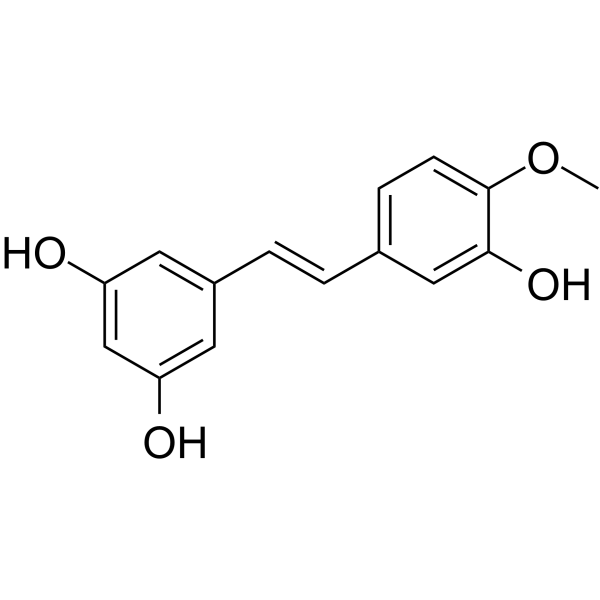
Rhapontigenin is a natural analog of resveratrol with anticancer, antioxidant, antifungal and antibacterial activities. Rhapontigenin is amechanism-based, potent and selective cytochrome P450 1A1 inactivator (IC50  = 400 nM). Rhapontigenin exhibits 400-fold and 23-fold selectivity for P450 1A1 over P450 1A2 and P450 1B1, respectively .
loading...
    loading...
1
1 Cited Publications
Cat. No.: HY-107931
CAS No.: 57-57-8
Purity:  99.36%
Synonyms: β-propiolactone; 2-Oxetanone; Betaprone
Research Areas:  

Infection

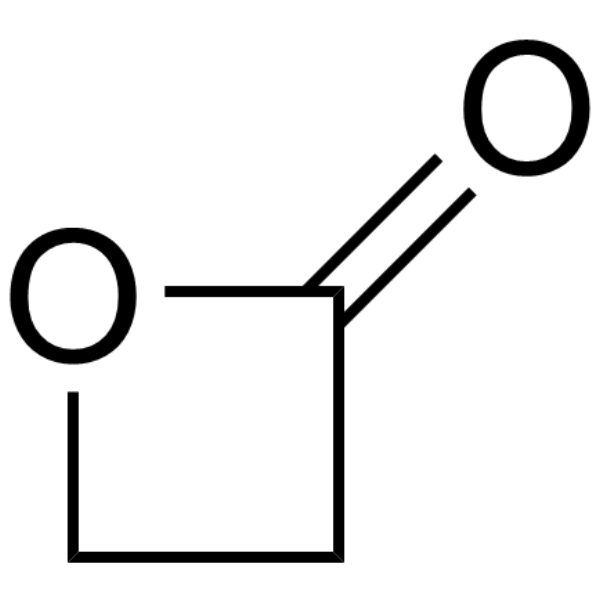
Propiolactone (β-propiolactone; 2-Oxetanone) is a viral chemical inactivator that causes the infectious inactivation of viruses. Propiolactone was co-incubated with SARS-CoV at a ratio of 1:1000 (v:v) and used as a bacteriostatic agent to formulate the BPL-inactivated influenza virus vaccine (Flu-BPL) .
loading...
    loading...
1
1 Cited Publications
Cat. No.: HY-N8278
CAS No.: 54328-33-5
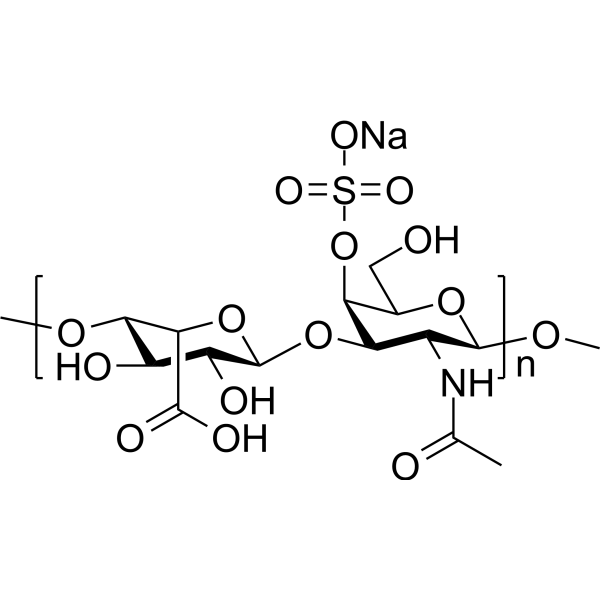
Dermatan sulphate sodium is an oral active glycosaminoglycan and thrombin inactivator with antithrombotic activity. It selectively catalyzes the heparin cofactor II-mediated inactivation of thrombin without interacting with antithrombin III. Dermatan sulphate sodium promotes stem cell differentiation, exhibits high bioavailability, and alleviates pulmonary fibrosis injury induced by Bleomycin (HY-108345). Dermatan sulphate sodium can be used in research related to cardiovascular diseases, inflammation, and stem cell differentiation .
loading...
    loading...
1
1 Cited Publications
Cat. No.: HY-135334
CAS No.: 2230757-47-6
Purity:  98.41%
Research Areas:  

Cancer

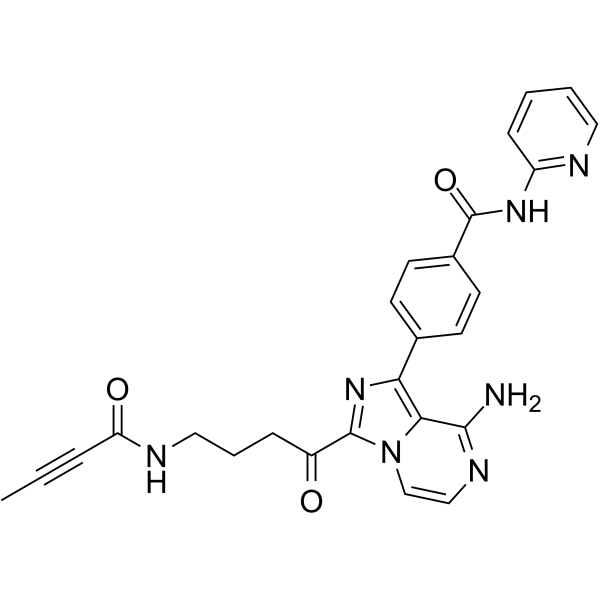
ACP-5862 is a major active, circulating, pyrrolidine ring-opened metabolite of Acalabrutinib with an IC50 of 5.0 nM for Bruton tyrosine kinase (BTK). ACP‐5862 is a weak time‐dependent inactivator of CYP3A4 and CYP2C8. Acalabrutinib is an orally active, irreversible, and highly selective BTK inhibitor, with an IC50 of 3 nM and EC50 of 8 nM .
loading...
    loading...
1
1 Cited Publications
Cat. No.: HY-137265
CAS No.: 62442-61-9
Target:  

Flavivirus

Research Areas:  

Infection

Aminomethyltrioxsalen hydrochloride is a psoralen derivative. Aminomethyltrioxsalen hydrochloride can penetrate intact cells and react with nucleic acid secondary structures in vivo without disrupting the tissue structure of natural nucleoproteins. Aminomethyltrioxsalen hydrochloride inactivates viruses by crosslinking nucleic acid pyrimidine residues after exposure to UV-A radiation. Aminomethyltrioxsalen hydrochloride can be used in research related to dengue virus infection .
loading...
    loading...
1
1 Cited Publications
Cat. No.: HY-W012738
CAS No.: 149-87-1
Research Areas:  

Infection

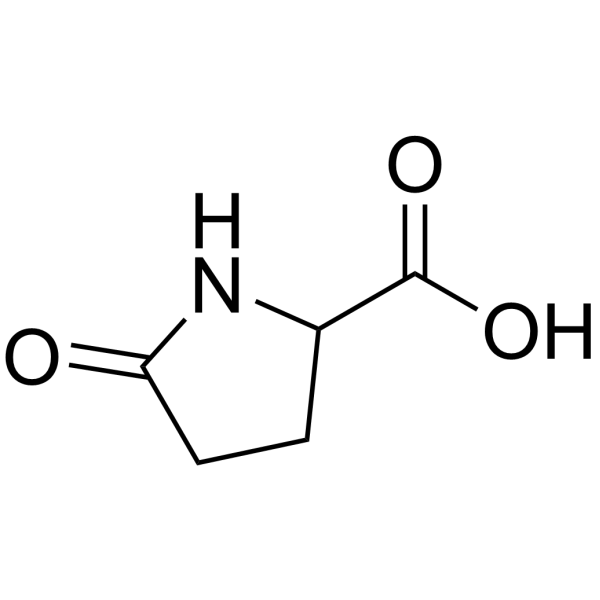
DL-Pyroglutamic acid (CAE) as an inactivator of hepatitis B surface, inactivates vaccinia virus, herpes simplex virus, and influenza virus except poliovirus. DL-Pyroglutamic acid is also a possible inhibitor of GABA transaminase, increases GABA amount with antiepileptic action .
loading...
    loading...
1
1 Cited Publications
Cat. No.: HY-N2233
CAS No.: 94356-22-6
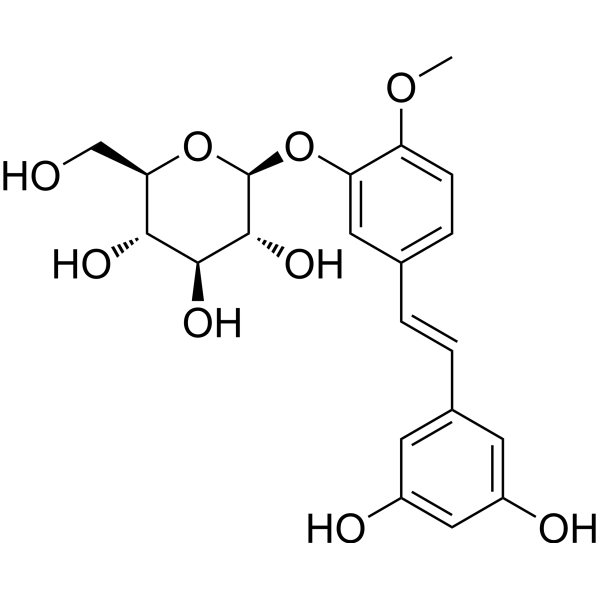
Rhapontigenin 3'-O-glucoside is a derivative of Rhapontigenin. Rhapontigenin is a potent inactivator of human P450 1A1 and is a good candidate for a cancer chemopreventive agent .
loading...
    loading...
Cat. No.: HY-169798
CAS No.: 23481-50-7
Target:  

Fluorescent Dye VSV

Research Areas:  

Infection

1,9-Dimethylmethylene blue is a photosensitizer, virus inactivator and hemoglobin oxidant derived from methylene blue. When activated, 1,9-Dimethylmethylene blue generates reactive oxygen species including singlet oxygen, and acts as a metachromatic dye. When activated in monomeric or dimeric form, 1,9-Dimethylmethylene blue induces photoinactivation of R17 phage and vesicular stomatitis virus and oxidizes hemoglobin via non-singlet oxygen reactive oxygen species or singlet oxygen-mediated pathways, respectively. The monomeric form, with higher nucleic acid affinity, achieves virus inactivation under specific conditions without forming methemoglobin. 1,9-Dimethylmethylene blue binds to substances such as glycosaminoglycans to produce color changes. Although it is susceptible to interference from non-glycosaminoglycan components in urine, it is still applicable to spectrophotometric analysis for glycosaminoglycan quantification. With these unique photochemical and binding properties, 1,9-Dimethylmethylene blue is widely used in studies of viral infections and related biochemical analyses .
loading...
    loading...
Cat. No.: HY-41404
CAS No.: 94-53-1
Synonyms: 2H-1,3-benzodioxole-5-carboxylic acid
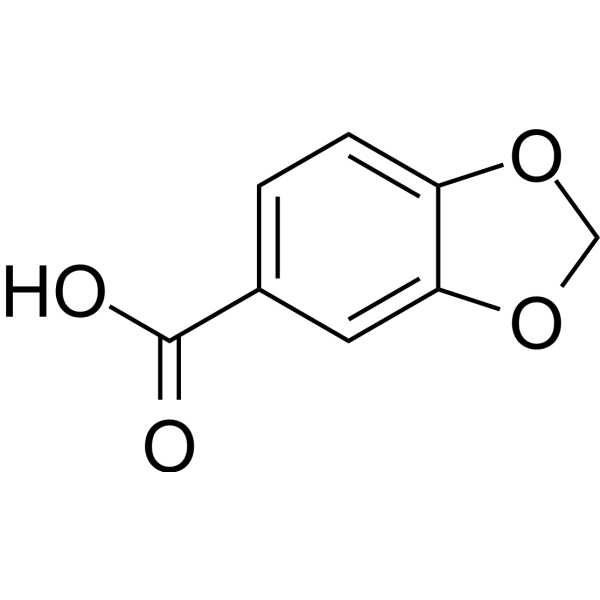
Piperonylic acid is a natural molecule bearing a methylenedioxy function that closely mimics the structure of trans-cinnamic acid. Piperonylic Acid is a selective, mechanism-based inactivator of the trans-cinnamate 4-Hydroxylase. Piperonylic acid has anticancer, antioxidant and antibacterial activities .
loading...
    loading...
Cat. No.: HY-134421
CAS No.: 102680-35-3
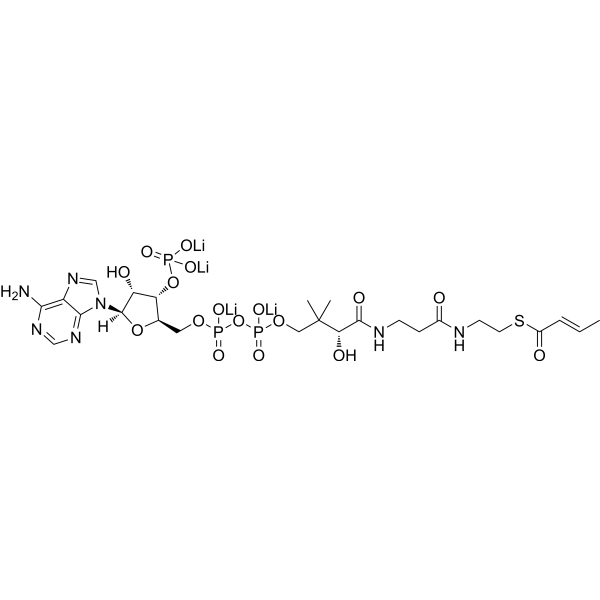
2-Butenoyl coenzyme A lithium is an inactivator and a substrate of Plasmodium falciparum enoyl-β-hydroxyacyl-acyl carrier protein (ACP) reductase and other enoyl-CoA reductases, and it is also the lithium salt of trans-2-methyl-2-butenoyl coenzyme A. 2-Butenoyl coenzyme A lithium acts on short-chain and medium-chain coenzyme A dehydrogenases as well as glutaryl-CoA dehydrogenase, and shows no activity against wild-type isovaleryl-CoA dehydrogenase. 2-Butenoyl coenzyme A lithium functions as a metabolite in the L-isoleucine catabolic pathway, and can serve as a substrate in the activity assay of 3-ketothiolase. 2-Butenoyl coenzyme A lithium is applicable to research related to 3-ketothiolase deficiency .
loading...
    loading...
Cat. No.: HY-N2620
CAS No.: 33237-37-5
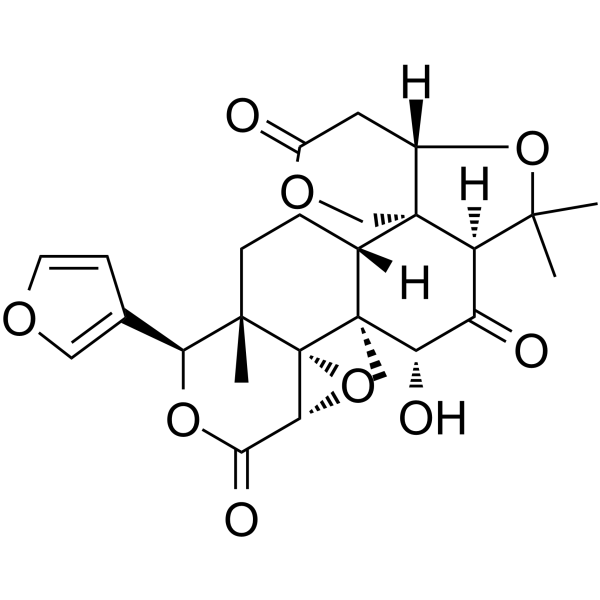
Rutaevin is an antifungal toxin and CYP3A4 inactivator. Rutaevin requires NADPH-dependent bioactivation to generate cis-but-2-ene-1,4-dial, which then covalently modifies and mechanism-based inactivates human CYP3A4 (IC50=4.48 μM, Ki=15.98 μM), and interacts with substances such as glutathione. Rutaevin disrupts the cellular structure of Sirococcus conigenus, accumulates linearly in resistant larch after pathogen exposure, and induces liver toxicity in mice via oral administration. Rutaevin can be applied to research in fields related to larch shoot blight and other associated areas .
loading...
    loading...
Cat. No.: HY-179215
CAS No.: 2093928-29-9
Target:  

GABA Receptor

Research Areas:  

Neurological Disease

OV329 hydrochloride is a potent GABA aminotransferase inactivator. OV329 hydrochloride is a Vigabatrin (HY-15399) analogue. OV329 hydrochloride can increase brain GABA levels and block abnormal intracerebral hyperexcitability. OV329 hydrochloride exhibits anticonvulsant and antiepileptic activities. OV329 hydrochloride can be used for the research of neurological disease, such as seizure .
loading...
    loading...
Cat. No.: HY-179215A
CAS No.: 2093928-28-8
Target:  

GABA Receptor

Research Areas:  

Neurological Disease

OV329 is a potent GABA aminotransferase inactivator. OV329 is a Vigabatrin (HY-15399) analogue. OV329 can increase brain GABA levels and block abnormal intracerebral hyperexcitability. OV329 exhibits anticonvulsant and antiepileptic activities. OV329 can be used for the research of neurological disease, such as seizure .
loading...
    loading...
Cat. No.: HY-116910
CAS No.: 640897-20-7
Target:  

GABA Receptor

Research Areas:  

Neurological Disease

CPP-115 is a GABA transaminase inactivator with higher affinity and lower retinal toxicity than Vigabatrin (HY-15399). CPP-115 increases brain GABA levels by inhibiting GABA transaminase catabolism. CPP-115 can be used in the study of drug addiction and infantile spasms .
loading...
    loading...
Cat. No.: HY-40269
CAS No.: 7149-65-7
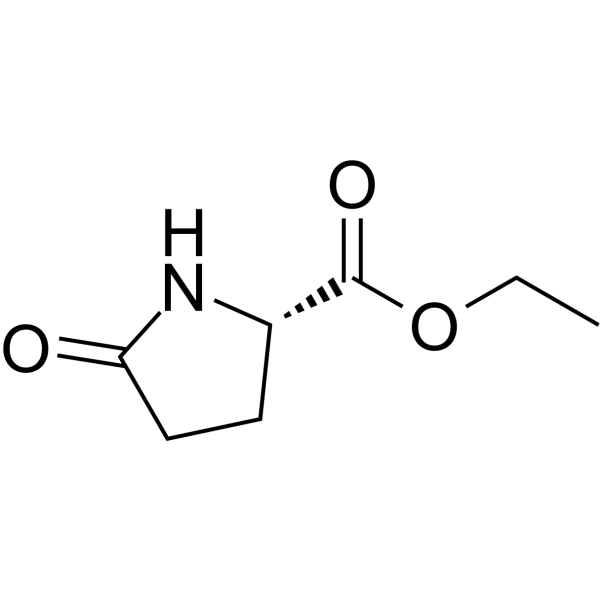
L-Pyroglutamic acid ethyl ester (Compound 2c) is an intermediate. L-Pyroglutamic acid ethyl ester is involved in the synthesis of γ-aminobutyrate transaminase inactivators. L-Pyroglutamic acid ethyl ester can be used in epilepsy and Huntington's disease research .
loading...
    loading...
Cat. No.: HY-41404R
CAS No.: 94-53-1
Synonyms: 2H-1,3-benzodioxole-5-carboxylic acid (Standard)
Piperonylic acid (Standard) is the analytical standard of Piperonylic acid. This product is intended for research and analytical applications. Piperonylic acid is a natural molecule bearing a methylenedioxy function that closely mimics the structure of trans-cinnamic acid. Piperonylic Acid is a selective, mechanism-based inactivator of the trans-cinnamate 4-Hydroxylase. Piperonylic acid has anticancer, antioxidant and antibacterial activities .
loading...
    loading...
Cat. No.: HY-114056
CAS No.: 926657-43-4
Target:  

Others

Research Areas:  

Cancer

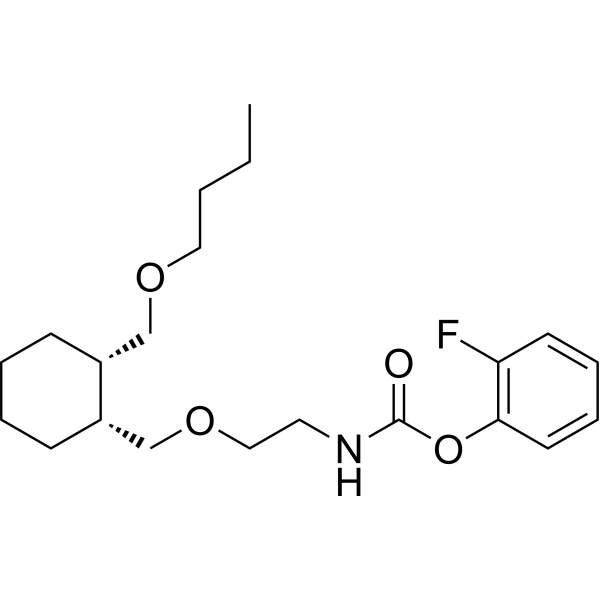
AS115 is a potent and selective KIAA1363 inactivator with IC50 value of 150 nM. KIAA1363 is a 2-acetyl monoacylglycerol ether (MAGE) hydrolase that is upregulated in aggressive cancers of various tissues .
loading...
    loading...
Cat. No.: HY-143438
CAS No.: 134467-58-6
Target:  

Monoamine Oxidase

Research Areas:  

Neurological Disease

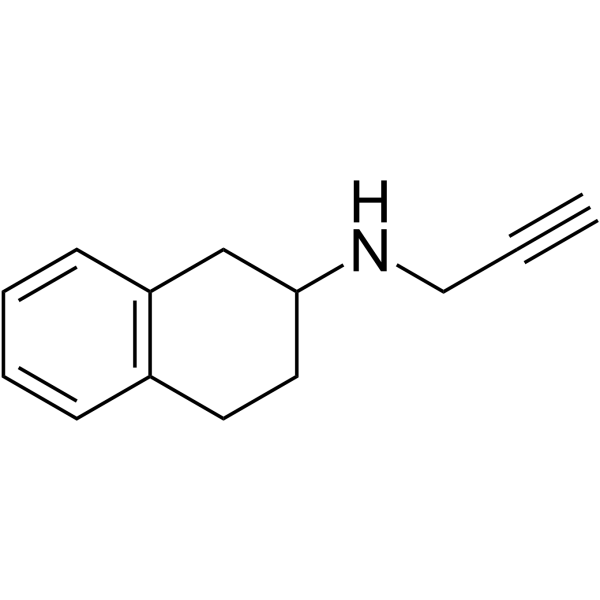
2-PAT, an analogue of Rasagiline and Selegiline, a reversible MAO-A inhibitor with an IC50 of 0.721 µM. 2-PAT is an inactivator of MAO-B with an IC50 of 14.6 µM. 2-PAT has the potential for Parkinson’s disease and depression research .
loading...
    loading...
Cat. No.: HY-107931R
CAS No.: 57-57-8
Synonyms: β-propiolactone (Standard); 2-Oxetanone (Standard); Betaprone (Standard)
Research Areas:  

Infection

Propiolactone (Standard) is the analytical standard of Propiolactone. This product is intended for research and analytical applications. Propiolactone (β-propiolactone; 2-Oxetanone) is a viral chemical inactivator that causes the infectious inactivation of viruses. Propiolactone was co-incubated with SARS-CoV at a ratio of 1:1000 (v:v) and used as a bacteriostatic agent to formulate the BPL-inactivated influenza virus vaccine (Flu-BPL) .
loading...
    loading...
Cat. No.: HY-135334S
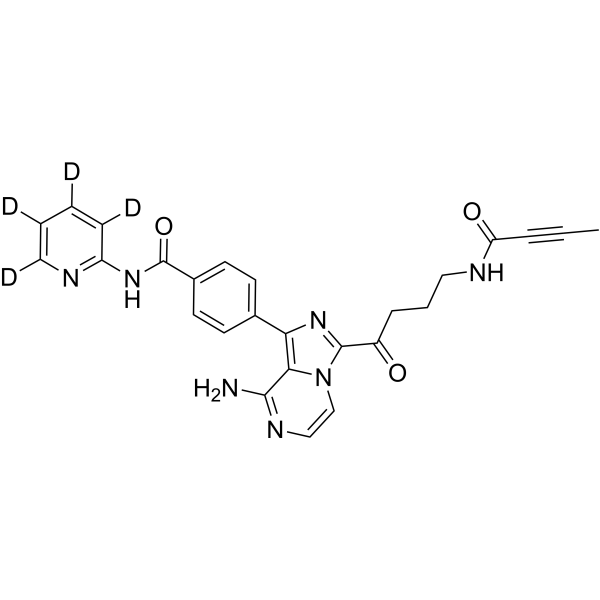
ACP-5862-d4 is deuterium labeled ACP-5862. ACP-5862 is a major active, circulating, pyrrolidine ring-opened metabolite of Acalabrutinib with an IC50 of 5.0 nM for Bruton tyrosine kinase (BTK). ACP‐5862 is a weak time‐dependent inactivator of CYP3A4 and CYP2C8. Acalabrutinib is an orally active, irreversible, and highly selective BTK inhibitor, with an IC50 of 3 nM and EC50 of 8 nM .
loading...
    loading...

